标签: Suriname

苏里南

  • Centrale Bank  tevreden over afhandeling geldtransportzaak 2018

    Centrale Bank tevreden over afhandeling geldtransportzaak 2018

    The Central Bank of Suriname (CBvS) has expressed profound satisfaction with the resolution of the protracted 2018 money transport case, culminating in the return of seized funds to three major Surinamese financial institutions following out-of-court settlements with Dutch authorities.

    In an official statement released Wednesday, the central bank confirmed it had been notified of the successful extrajudicial agreements reached between the Netherlands Public Prosecution Service and Hakrinbank, Finabank, and De Surinaamsche Bank. The CBvS clarified that its role throughout the proceedings had been strictly limited to that of a monetary transport intermediary.

    Over the past several years, Suriname’s monetary authority has engaged in intensive consultations with the affected commercial banks to ensure meticulous and transparent management of the complex legal dossier. The resolution, achieved through separate financial transactions that secured the release of previously frozen assets, represents what the central bank characterizes as a significant positive development.

    This outcome substantially contributes to the ongoing reinforcement of Suriname’s anti-money laundering framework and enhances the overall resilience of the nation’s financial ecosystem, according to the CBvS statement. The bank emphasized its proactive efforts in recent years to systematically strengthen financial infrastructures while concurrently mitigating risks associated with money laundering and terrorist financing.

    Through collaborative initiatives with private banking institutions, Suriname has implemented comprehensive enhancements across multiple domains including cash handling protocols, Know Your Customer (KYC) verification procedures, and corporate governance standards. These coordinated measures collectively foster a more transparent, robust financial system while bolstering confidence in the sector’s integrity and compliance capabilities.

  • Regering stelt crisisteam in om gevolgen oliecrisis op te vangen

    Regering stelt crisisteam in om gevolgen oliecrisis op te vangen

    The Surinamese government has activated a specialized crisis response team to mitigate the economic repercussions of soaring global oil prices triggered by ongoing Middle Eastern hostilities. President Jennifer Simons announced the formation of this ministerial-level task force through an official statement on March 18th.

    President Simons emphasized that international geopolitical developments are exerting substantial pressure on the nation’s economy, particularly through rapidly escalating fuel costs. The newly assembled team—comprising key ministers and senior advisors—will maintain continuous monitoring of the situation while developing strategic policy options to address the crisis.

    The administration has prioritized minimizing adverse effects on both national stability and citizen welfare throughout all phases of the global energy crisis. In immediate response measures, the government will accelerate disbursement of previously planned subsidies while the Ministry of Finance designs additional community support mechanisms.

    Simons noted that the velocity of recent price fluctuations necessitates flexible yet calculated governmental action. The crisis team will serve as the central coordination body for preparing and implementing subsequent interventions based on evolving market conditions.

    Official communications underscore that the duration of Middle Eastern conflict will be the primary determinant of Suriname’s economic exposure. The government is maintaining collaborative surveillance with relevant international institutions to track developments and calibrate responses accordingly.

  • China biedt Taiwanezen energiezekerheid aan in ruil voor ‘vreedzame hereniging’

    China biedt Taiwanezen energiezekerheid aan in ruil voor ‘vreedzame hereniging’

    Amid global energy shortages exacerbated by Middle East conflicts and strategic maritime chokepoints, China has presented Taiwan with a new proposition: guaranteed energy security in exchange for accepting Chinese sovereignty. The offer, made Wednesday by Chen Binhua, spokesperson for China’s Taiwan Affairs Office, represents Beijing’s latest attempt to promote reunification benefits during a period of worldwide energy instability.

    Speaking at a Beijing press conference, Chen articulated that “peaceful reunification” would enable Taiwan to benefit from the resource security of a “strong motherland,” ensuring stable and reliable energy supplies for improved living standards. This proposition emerges as Taiwan faces potential energy challenges due to its dependence on Qatari liquefied natural gas (LNG), which constitutes approximately one-third of its imports.

    Taiwanese President Lai Ching-te responded indirectly during a Democratic Progressive Party meeting, asserting that energy supplies for coming months remain secured through diversified sourcing strategies. The administration emphasized upcoming increased LNG imports from the United States, Taiwan’s primary international ally, beginning in June.

    The Chinese proposal reiterates Beijing’s longstanding “one country, two systems” framework, which would maintain Taiwan’s autonomy while bringing it under Chinese control—a model rejected by all major Taiwanese political parties. The offer follows October revelations by China’s Xinhua News Agency outlining purported reunification benefits, including economic support contingent on governance by “patriots.”

    Notably, China continues to prioritize its own energy security during the global crisis. As the world’s largest oil importer, Beijing recently banned fuel exports until at least late March to prevent domestic shortages—a measure highlighting the seriousness with which China approaches energy stability after recording $22 billion in fuel exports last year.

  • NMA traint personeel voor betere milieuregels en controle

    NMA traint personeel voor betere milieuregels en controle

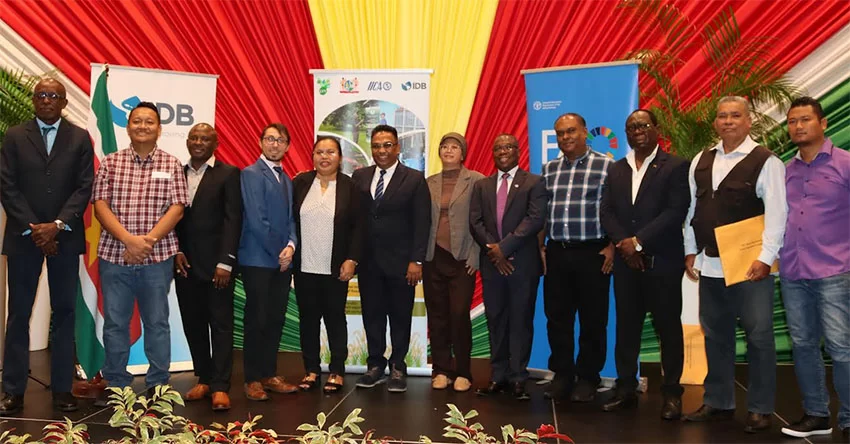
    The National Environmental Authority (NMA) has initiated a comprehensive four-day training program designed to enhance staff capabilities in converting environmental impact assessments (EIAs) into actionable and enforceable licensing conditions. Commencing on March 16, 2026, this specialized training is being conducted through a collaborative effort between the Netherlands Commission for Environmental Assessment and WWF-Guianas.

    The core curriculum focuses on three critical areas: strengthening the evaluation of environmental reports, formulating more precise project conditions, and improving monitoring and enforcement mechanisms. The NMA emphasizes that environmental impact assessments should not be considered final documents but rather foundational tools for policy development and implementation.

    According to agency officials, the primary objective of this initiative is to ensure that environmental reports are effectively utilized in practical applications rather than remaining dormant in archives. Deputy Director Iwan Samoender stressed that this knowledge enhancement is essential for balancing economic development with environmental protection and sustainable management of natural resources.

    ‘The transformation of assessment data into enforceable parameters represents a significant advancement in our regulatory approach,’ Samoender noted. ‘This training ensures that theoretical assessments translate into concrete environmental safeguards.’

    The program, which concludes on March 19, 2026, represents a strategic investment in regulatory capacity building that could establish new standards for environmental governance throughout the region.

  • VS breidt $15.000-visumborgstellingsprogramma uit

    VS breidt $15.000-visumborgstellingsprogramma uit

    The Trump administration has announced a significant expansion of its visa bond program, adding twelve new countries to the existing list of nations whose citizens must pay a $15,000 security deposit when applying for U.S. business or tourism visas. The policy change, confirmed by a State Department official on Wednesday, will take effect April 2nd.

    The newly added countries include Cambodia, Ethiopia, Georgia, Grenada, Lesotho, Mauritius, Mongolia, Mozambique, Nicaragua, Papua New Guinea, Seychelles, and Tunisia. These nations join 38 previously designated countries, primarily across Africa, bringing the total to 50 countries subject to the financial requirement for B1/B2 visa applications.

    According to an anonymous official, the program aims to reduce visa overstays by creating a substantial financial incentive for compliance. Travelers who adhere to their visa conditions and depart the United States on schedule will receive their full deposit refund. The administration claims the bond system has already contributed to a measurable decrease in visa violations since its implementation.

    This expansion represents the latest development in President Trump’s stringent immigration agenda, which has included enhanced deportations, visa revocations, social media screenings, and the controversial travel ban affecting citizens from 19 predominantly Muslim-majority countries implemented in June 2017.

    While human rights organizations have criticized these measures as restrictive to due process and potentially discriminatory, administration officials maintain they are essential for national security. The visa bond program specifically targets nations with historically high rates of visa overstays, seeking to improve compliance while reducing immigration enforcement costs.

    The complete list of previously designated countries includes Algeria, Bangladesh, Cuba, Nigeria, and Venezuela, among others. The program’s expansion continues the administration’s pattern of implementing increasingly rigorous immigration controls since President Trump took office in January 2017.

  • Narcoticabrigade vernietigt grote hoeveelheid drugs in Para

    Narcoticabrigade vernietigt grote hoeveelheid drugs in Para

    In a significant blow to narcotics trafficking operations, Suriname’s Narcotics Brigade conducted a massive drug destruction operation on Tuesday in Kraka, Para District. The operation, supervised under the direct authority of Public Prosecutor Melanie van Dijk, targeted illicit substances seized during a comprehensive three-month crackdown from December 9, 2025, to March 16, 2026.

    The destroyed contraband included substantial quantities of high-value narcotics: 58.3 kilograms of cocaine, 17.3 kilograms of marijuana, and 57.6 kilograms of hashish. Additionally, authorities eliminated various other psychoactive substances comprising 2,372 milliliters of liquid cocaine, 245 ecstasy tablets, 12.3 grams of MDMA powder, methamphetamine (known locally as Sukru), and ketamine.

    The meticulously coordinated destruction ceremony represented the culmination of extensive investigative efforts by Surinamese law enforcement agencies. Prosecutor van Dijk emphasized that such operations demonstrate the government’s unwavering commitment to combating drug trafficking networks that threaten regional security and public health.

    This systematic disposal of confiscated narcotics follows international protocols for eliminating controlled substances while preventing environmental contamination. The operation’s transparency under judicial supervision reinforces institutional accountability in the ongoing war against organized crime and substance abuse throughout the Caribbean region.

  • Seafoodfestival moet sector en horeca dichter bij elkaar brengen

    Seafoodfestival moet sector en horeca dichter bij elkaar brengen

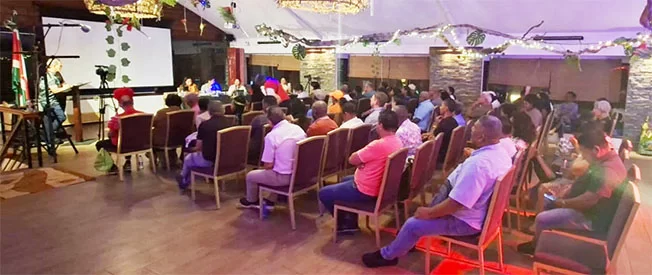
    Three major Surinamese organizations have formed a strategic alliance to launch the groundbreaking Easter Seafood Festival 2026 in Paramaribo. SAIL N.V., the Suriname Hospitality & Tourism Training Centre (SHTTC), and the Suriname Hospitality & Tourism Association (SHATA) have formalized their partnership through a Memorandum of Understanding signed by their respective leaders.

    The landmark agreement was executed by SAIL Director Ifuel Alberg, SHTTC Acting Director Nazara Kranenburg, and SHATA Chairman Egon Von Foidl. The festival is scheduled for Saturday, March 28th at SAIL’s premises on Cornelis Jongbawstraat, representing a significant development in Suriname’s culinary tourism landscape.

    This collaborative initiative aims to achieve multiple objectives: boosting the seafood sector’s visibility, strengthening hospitality industry partnerships, and creating an innovative platform for culinary excellence. SAIL’s leadership emphasizes strategic expansion through this venture, seeking not only to enhance product positioning but also to actively engage with the broader hospitality community.

    The educational component forms a crucial aspect of the festival, with SHTTC focusing on providing hands-on experience for hospitality students. The event offers students unprecedented opportunities to collaborate with industry professionals and gain practical skills in authentic working environments.

    From SHATA’s perspective, the festival serves as a strategic convergence point for producers, hospitality businesses, and educational institutions. This tripartite collaboration is expected to drive innovation, foster cooperation, and stimulate sector-wide growth through shared expertise and resources.

    The festival program features diverse attractions including a Live Cooking Arena, Student Chef Showdown competition, demonstrations by professional chefs, and extensive seafood tasting sessions. Additionally, the event will facilitate networking opportunities and serve as a catalyst for new business partnerships.

    This alliance represents a concerted effort to create a more integrated and robust hospitality sector in Suriname, combining production, education, and industry expertise to elevate the country’s culinary tourism offerings.

  • Argentinië stapt officieel uit Wereldgezondheidsorganisatie, volgt VS in breuk

    Argentinië stapt officieel uit Wereldgezondheidsorganisatie, volgt VS in breuk

    Argentina has formally completed its withdrawal from the World Health Organization (WHO), aligning with the United States in a significant move that severs ties with the global health body. Argentine Foreign Minister Pablo Quirno announced the completion on Tuesday, marking exactly one year since the nation submitted its formal notification.

    The decision, initially announced in February last year and formally communicated in March 2023, reflects the libertarian and right-wing stance of President Javier Milei’s administration. Milei has been a vocal critic of the WHO’s COVID-19 pandemic management, labeling the organization a ‘shadowy institution’ that conducted ‘the greatest experiment in social control in history.’ This criticism specifically targeted global measures including mask mandates, social distancing protocols, and vaccination campaigns—policies frequently criticized by right-wing movements worldwide.

    While the WHO primarily functions as an advisory body without enforcing binding policies on member states, the withdrawal undermines international public health collaboration. WHO Director-General Tedros Adhanom Ghebreyesus had previously warned of such risks when the U.S. announced its departure, stating that withdrawal reasons were ‘misguided’ and would make both the departing nation and the world less safe.

    Despite exiting the WHO, Foreign Minister Quirno emphasized Argentina’s continued commitment to international health cooperation through bilateral agreements and regional forums. This approach, he noted, allows Argentina to maintain full sovereignty and policy autonomy while engaging in global health initiatives.

    The move reduces WHO membership to 194 nations, with Argentina following the precedent set by the United States earlier this year. The development signals growing tensions between global health governance and national sovereignty advocates in the post-pandemic era.

  • Suriname en Nederland willen samenwerking verdiepen na eerste gesprek Simons en Jetten

    Suriname en Nederland willen samenwerking verdiepen na eerste gesprek Simons en Jetten

    In a significant diplomatic development, Surinamese President Jennifer Simons and Dutch Prime Minister Rob Jetten held their inaugural official discussion on Tuesday, marking a new chapter in bilateral relations. The high-level telephone conference, attended by Surinamese Foreign Minister Melvin Bouva, focused on enhancing cooperation across multiple sectors including education, scientific research, tourism, agricultural production, culture, and investments.

    The dialogue acknowledged the profound historical connections between the two nations while building upon the momentum generated by King Willem-Alexander’s royal state visit to Suriname in December last year. Minister Bouva characterized the exchange as exceptionally productive and conducted in an atmosphere of mutual respect and friendship.

    Central to the discussions was the Makandra cooperation program, with both parties reviewing current progress and outlining ambitious plans for its continued implementation. The visa processing system emerged as another critical agenda item, with the Netherlands committing to streamline application procedures particularly for urgent cases while maintaining visa liberalization as an ongoing dialogue point.

    Both governments have arranged to convene in-person meetings in the foreseeable future, demonstrating their shared commitment to deepening the strategic partnership based on reciprocal benefits and strengthened diplomatic engagement.

  • President grijpt in bij stijgende brandstofprijzen, price cap afgesproken

    President grijpt in bij stijgende brandstofprijzen, price cap afgesproken

    The Surinamese government has enacted emergency measures to stabilize domestic fuel prices as global oil market volatility intensifies due to ongoing Middle East conflicts. President Jennifer Simons, following consultations with cabinet members and oil companies, authorized a price cap mechanism effective March 17, 2026, establishing fixed maximum rates of SRD 53.27 per liter for diesel and SRD 48.32 for unleaded gasoline. The stabilization measure excludes super unleaded fuel products.

    Under the newly implemented system, the government will subsidize price differentials through its Government Take mechanism when international benchmarks exceed the established cap. This intervention aims to cushion consumers from immediate pump price fluctuations while maintaining national economic stability.

    Despite these measures, inflationary pressures are already emerging throughout supply chains. Construction material suppliers have implemented transport surcharges, driving noticeable price increases for sand, gravel, and other building commodities this week.

    Economic Affairs Minister Andrew Baasaron issued stern warnings against unjustified price manipulations, emphasizing that most retail goods currently in circulation were imported under previous freight and insurance rates. “Arbitrary price increases are unacceptable,” Baasaron stated, revealing that the Economic Control Service (ECD) will enforce compliance through audits based on original purchase costs and authorized profit margins.

    The minister confirmed exchange rate stability remains intact, noting that fuel price impacts haven’t yet materially affected import costs. However, excavation and logistics firms counter that already-elevated fuel costs are significantly impacting operational expenses.

    A presidential crisis task force is monitoring developments and preparing contingency plans, including targeted subsidies for vulnerable populations should inflationary trends persist. The government acknowledges further price increases are likely and stands ready to implement additional protective measures as the international energy situation evolves.