标签: Suriname

苏里南

  • Chandrikapersad Santokhi: Van ‘The Sheriff’ tot Staatsman

    Chandrikapersad Santokhi: Van ‘The Sheriff’ tot Staatsman

    Suriname and the Caribbean region mourn the sudden passing of President Chandrikapersad ‘Chan’ Santokhi on March 30, 2026. The 67-year-old leader from Lelydorp leaves behind a remarkable political legacy characterized by unwavering commitment to justice, economic reform, and regional cooperation.

    Santokhi’s journey from police academy graduate in Apeldoorn, Netherlands to national leadership was marked by exceptional dedication to law enforcement. His early career saw rapid advancement within Suriname’s police force, eventually becoming head of national criminal investigation and police commissioner. His tough-on-crime approach earned him the nickname ‘The Sheriff’ – a moniker he embraced, stating: ‘People want law and order. Hence the call for security, the call for sheriff.’

    As Minister of Justice from 2005-2010, Santokhi achieved significant milestones including removing Suriname from the U.S. blacklist of drug transit countries. His most notable contribution was initiating the criminal proceedings against former dictator Desi Bouterse for the December 1982 murders, demonstrating his steadfast commitment to accountability.

    Elected president in 2020, Santokhi ended the Bouterse era and inherited a financially exhausted nation. He implemented an unpopular but necessary IMF reform program, acknowledging communication shortcomings while maintaining his conviction: ‘We could have chosen a populist course aimed at winning elections. But that would have been irresponsible given our situation.’

    His regional leadership as CARICOM Chairman in 2022 strengthened Caribbean unity, particularly enhancing relations with Guyana. President Irfaan Ali of Guyana described him as ‘a brother forged by conviction’ who worked wholeheartedly for regional progress.

    Survived by his wife Mellisa Seenacherry and two children, Santokhi’s legacy extends beyond family to national transformation. His son Rishano remembered him as a man with strong legal vision whose principles continue to shape Suriname and the Caribbean.

    Santokhi’s philosophy centered on inclusive nation-building: ‘We cannot build a nation while tolerating major disparities. Structurally disadvantaged groups require targeted support strategies – not as favor but as duty.’ His passing creates a leadership void, but his exemplary dedication to justice and development endures.

  • Russische olietanker arriveert in Cuba temidden van Amerikaanse blokkade

    Russische olietanker arriveert in Cuba temidden van Amerikaanse blokkade

    A Russian oil tanker carrying 730,000 barrels of crude oil successfully docked in Cuba on Monday, marking the first fuel shipment to reach the island nation since January amid severe energy shortages. The Anatoly Kolodkin, described by Russian transport authorities as delivering “humanitarian cargo,” arrived at Matanzas port despite an effective U.S. fuel blockade against the Caribbean island.

    The Kremlin welcomed the tanker’s arrival, with spokesperson Dmitry Peskov confirming Russia’s commitment to maintaining oil supplies to Cuba—a topic reportedly discussed during negotiations with the United States. Remarkably, President Donald Trump stated he had no objections to the Russian shipment, though he simultaneously criticized Cuba’s leadership, predicting the regime’s imminent collapse.

    Cuba’s current energy crisis stems from January, when the U.S. effectively neutralized Venezuelan leader Nicolás Maduro, Cuba’s primary regional ally and oil supplier. This triggered Washington’s de facto blockade on oil sales to Cuba, resulting in severe fuel shortages that have crippled transportation, caused seven nationwide blackouts in 2024 alone, and sparked rare public protests.

    President Miguel Diaz-Canel has implemented emergency measures including strict gasoline rationing to address the crisis. Soaring fuel prices, reduced public transportation, and suspended airline flights have further strained Cuba’s fragile economy.

    The Russian tanker, which departed from Primorsk port on March 8, traveled under escort by a Russian naval vessel through the English Channel before proceeding independently. According to unnamed U.S. officials, the Coast Guard permitted the sanctioned vessel to reach Cuban waters.

    Energy experts estimate the Russian crude will require 15-20 days for refining and an additional 5-10 days for distribution. The shipment could yield approximately 250,000 barrels of diesel—enough to meet 12.5 days of current demand. This presents Cuban authorities with a difficult decision: whether to allocate the diesel to power generators reducing blackouts or to transportation networks keeping the economy functional.

    Meanwhile, another Russian fuel tanker originally bound for Cuba with diesel supplies redirected to Venezuela this week, highlighting the complex geopolitical dynamics affecting Cuba’s energy security.

  • ICT-centrum in Albina moet digitale kloof verkleinen en kansen vergroten

    ICT-centrum in Albina moet digitale kloof verkleinen en kansen vergroten

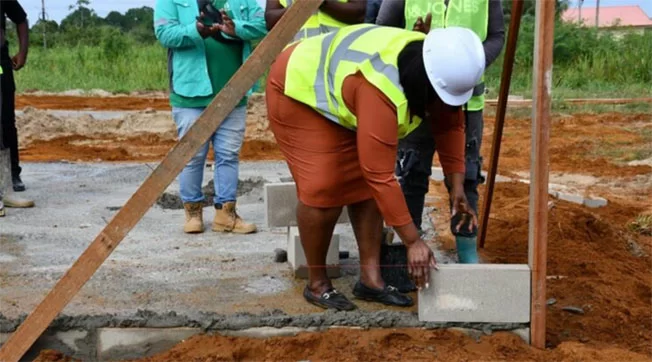
    Suriname has taken a significant step toward digital inclusion with the groundbreaking ceremony for a new ICT center in Albina, spearheaded by Transport, Communication, and Tourism Minister Raymond Landveld. The facility represents a strategic effort to bridge the urban-rural digital divide and provide equitable technological access for inland communities.

    As part of the broader Digital Accessibility Interior Project, the center will focus on enhancing digital literacy and technological infrastructure in Suriname’s district regions. Minister Landveld emphasized that the initiative extends beyond symbolic significance, calling it “the beginning of a crucial development” that prioritizes digitalization and equal opportunities.

    The center specifically targets youth development, preparing younger generations for educational advancement and labor market integration through improved digital skills training. Community members will gain enhanced access to information, educational resources, and digital tools, thereby expanding their personal and professional development prospects.

    Landveld highlighted the government’s deliberate decentralization strategy, noting that development should not be concentrated solely in Paramaribo. “By establishing this center, we bring opportunities closer to people and reduce the digital divide,” he stated during the ceremonial beer sprinkling ritual that accompanied the cornerstone laying.

    The ministry anticipates active community utilization, particularly among youth, to maximize the center’s potential in fostering regional growth and technological empowerment.

  • Amerikaanse militaire opbouw ‘losgekoppeld’ van politieke doelen

    Amerikaanse militaire opbouw ‘losgekoppeld’ van politieke doelen

    The escalating Middle East tensions between the United States and Iran reveal a fundamental strategic imbalance characterized by contrasting approaches to regional engagement. While Iran pursues well-defined political objectives through calibrated military and proxy operations, American military deployments appear disconnected from any coherent political strategy, creating dangerous uncertainty about conflict resolution pathways.

    According to security analysts including Ross Harrison of the Middle East Institute, Tehran maintains concrete geopolitical goals: exerting sufficient pressure to influence US policy decisions while advancing favorable regional power dynamics. Conversely, with regime change no longer an explicit policy objective, Washington’s substantial military presence—including troop reinforcements and airstrikes—lacks corresponding political direction. This strategic misalignment grants Iran superior positioning, as the Islamic Republic advances clear ambitions while American actions operate without definitive political endpoints.

    The limitations of this approach become evident in critical security challenges. Military operations alone likely cannot secure essential objectives like safeguarding the Strait of Hormuz without complementary diplomatic engagement. This reality fuels discussions within policy circles regarding potential ground invasion scenarios—though analysts remain deeply divided on feasibility and consequences.

    Critics highlight extreme risks associated with ground operations, potentially triggering prolonged conflicts reminiscent of Iraq and Afghanistan. Iran’s substantial conventional military, combined with sophisticated proxy networks including Lebanon’s Hezbollah and Yemen’s Houthis, could rapidly expand hostilities into regional warfare. Former Pakistani ambassador to Iran Asif Durrani emphasizes these proxy forces remain operational despite recent setbacks and continue posing significant threats.

    Furthermore, some experts warn invasion could strengthen Tehran’s regime by fostering nationalist unity against external aggression while potentially boosting extremist recruitment. The political and humanitarian costs would be substantial, likely triggering international condemnation.

    Alternatively, some voices contend ground operations might represent last-resort options should diplomacy fail and limited military pressure prove insufficient to counter nuclear ambitions or restore security. However, this remains widely viewed as an extremely hazardous option requiring broad political and military consensus among US allies.

    Iran demonstrates negotiating willingness but strictly on terms preserving national interests and preventing future attacks. Mehran Kamrava of the Arab Center for Research and Policy Studies notes Iran’s military actions aim establishing pain thresholds that deter US and Israeli operations. Recent precision strikes against oil infrastructure and military bases exemplify this strategy.

    The Houthis, as key Iranian proxies, maintain significant operational capabilities despite setbacks, their continued involvement adding conflict complexity and escalation risks.

    Diplomatic channels simultaneously gain prominence. Four-nation talks in Islamabad— involving Pakistan, Turkey, Saudi Arabia and Egypt—demonstrate regional de-escalation efforts aiming facilitate US-Iran dialogue. Pakistan’s mediation role proves crucial, emphasizing Islamic unity and regional stability.

    Successful diplomacy could create space for political solutions transcending military confrontation, though uncertainty persists regarding Washington and Tehran’s willingness to make concessions necessary for conflict resolution.

  • Diepe verslagenheid in de regio na overlijden van voormalig president Santokhi

    Diepe verslagenheid in de regio na overlijden van voormalig president Santokhi

    Guyanese President Irfaan Ali has expressed profound sorrow following the passing of former Surinamese President Chandrikapersad Santokhi, who died at age 67 after being rushed to the emergency department of Paramaribo Academic Hospital. In an official statement, President Ali memorialized Santokhi as both a trusted personal friend and an instrumental regional partner whose leadership significantly strengthened bilateral relations between the neighboring nations.

    President Ali extended heartfelt condolences on behalf of Guyana’s government and citizens to the people of Suriname and Santokhi’s family, emphasizing the collaborative working relationship the two leaders maintained. Their joint commitment focused on advancing regional unity and cooperation through platforms including CARICOM and various international forums.

    Under Santokhi’s presidency, the bilateral partnership between Guyana and Suriname flourished, with both countries leveraging their shared historical ties and economic interests to pursue common developmental objectives. President Ali characterized the late leader as a figure of quiet strength and humility who served his nation with unwavering dedication and conviction.

    The Guyanese head of state noted that Santokhi’s passing represents not just a loss for Suriname, but for the entire Caribbean community, which has been deprived of a significant voice in regional affairs. Ali emphasized that Guyana has lost a genuine friend whose leadership and partnership substantially contributed to Caribbean progress.

    Concluding his tribute, President Ali offered words of comfort to Santokhi’s family, encouraging them to draw strength from the enduring legacy he leaves behind. The former president’s example, friendship, and dedication to public service will continue to resonate throughout the region, according to Ali.

  • LVV werkt aan regulering zaaizaad voor rijstproductie

    LVV werkt aan regulering zaaizaad voor rijstproductie

    The Surinamese Ministry of Agriculture, Animal Husbandry and Fisheries (LVV) has initiated a comprehensive program to regulate rice seed production and combat illegal seed imports that have plagued the country’s agricultural sector. Minister Mike Noersalim announced the government’s plan to strengthen the Anne van Dijk Rice Research Center Nickerie (Adron) and potentially amend existing seed legislation this year.

    The developments emerged during high-level consultations between LVV officials and the Association of Interest Groups of Nickerie Rice Growers (VBPN). Minister Noersalim recalled that rice mill operators had previously indicated they would offer premium prices for paddy rice of Adron quality. “If the market pays more for paddy derived from Adron seeds, shouldn’t farmers prioritize planting Adron-certified seeds? While yields might be slightly lower compared to non-Adron seeds, we must evaluate whether the higher market price compensates for this difference,” the minister stated.

    Farmers raised significant concerns during the meeting, revealing that Adron currently lacks adequate seed supplies and suitable rice varieties for cultivation. The research institute has suffered from chronic underinvestment in recent years, severely hampering its capacity to develop new seed varieties. Rice expert Nicholaas Pinas proposed sending specialists abroad for advanced training if domestic expertise remains insufficient.

    VBPN President Hansraj Jagmohansingh requested that Adron organize informational sessions to keep rice farmers updated on current developments. He further recommended that the research center conduct more extensive studies and provide growers with essential information about optimal rice varieties for cultivation. Notably, it was revealed that during the previous administration, Adron received government funding to produce seeds for only three rice mill operators.

    The seed regulation initiative and Adron revitalization form part of a broader package of measures designed to create structural solutions for the rice sector’s challenges. “We need a fundamental approach. While short-term solutions are necessary, we must also consider medium and long-term strategies. This represents one of the fundamental long-term solutions,” emphasized Minister Noersalim.

  • Olieprijs stijgt boven $116 per vat te midden van spanningen tussen VS en Iran

    Olieprijs stijgt boven $116 per vat te midden van spanningen tussen VS en Iran

    Global oil markets witnessed a significant surge on Monday, with Brent crude prices climbing over 3% to exceed $116 per barrel—marking the highest level in nearly two weeks. This price escalation stems from escalating geopolitical tensions between the United States and Iran, exacerbating what analysts describe as the most severe global energy crisis in decades.

    The price increase follows provocative statements from Iranian parliamentary leadership, including warnings that Tehran stands prepared to confront any American ground invasion with forceful retaliation. The situation deteriorated further over the weekend when Iranian-backed Houthi rebels launched missiles toward Israel for the first time, coinciding with Israel’s expanded military operations in southern Lebanon.

    At the heart of the crisis lies Iran’s effective closure of the Strait of Hormuz, a critical maritime passage responsible for approximately one-fifth of global oil and liquefied natural gas (LNG) shipments. This strategic blockade has triggered worldwide energy supply disruptions and driven fuel prices to unprecedented levels.

    Since the initial outbreak of hostilities, oil prices have skyrocketed by nearly 60%, compelling nations worldwide to implement emergency energy conservation measures. Market analysts caution that prices will likely continue their upward trajectory until normal shipping traffic resumes through the vital waterway.

    U.S. President Donald Trump has threatened to “devastate” Iran’s energy infrastructure unless the blockade is lifted by April 6th, though he recently extended this deadline by ten days while proposing a 15-point peace plan. Iran has rejected these overtures, demanding war reparations and formal recognition of its authority over the strategic strait.

    Greg Newman, CEO of Onyx Capital Group, emphasized that the full impact of supply disruptions is gradually materializing in global markets. “Physical oil trading operates in cycles, and Europe is only beginning to experience the genuine consequences of the shortage. Brent crude already reflects this reality and will likely continue climbing toward $120 and beyond,” Newman stated.

    Despite the ongoing conflict, Iran has permitted limited passage for vessels from nations not aligned with the U.S. or Israel. Pakistan’s Foreign Minister announced Iran’s agreement to allow twenty Pakistani ships through the strait, characterizing the decision as a “meaningful step toward peace.” Malaysian vessels have also received similar transit permissions.

    Prior to the conflict, an average of 120 ships navigated the Strait of Hormuz daily. Current transit numbers remain at a fraction of this pre-crisis volume, maintaining pressure on global energy supplies.

  • In staat van beschuldigingstelling – zwakke strategie?

    In staat van beschuldigingstelling – zwakke strategie?

    Suriname’s judicial institutions confront a pivotal moment as impeachment proceedings against three prominent political figures—Bronto Somohardjo, Riad Nurmohamed, and Gillmore Hoefdraad—raise fundamental questions about the Public Prosecutor’s Office’s capacity to effectively prosecute high-ranking officials.

    The impeachment process operates at the intersection of law and politics, requiring approval from De Nationale Assemblee (DNA) before prosecution can commence. This dual nature demands not only legal rigor but also political persuasiveness and clarity in presenting cases.

    Legal experts identify eight critical shortcomings in the prosecution’s approach: excessive charging without prioritization, lack of clear focal accusations, overreliance on witness statements rather than forensic financial evidence, premature filing of incomplete investigations, repetitive legal formulations, inadequate distinction between systemic failures and personal culpability, overwhelming complexity that undermines persuasiveness, and insufficient consideration of political thresholds.

    Case-specific analysis reveals varying strengths and weaknesses. Somohardjo’s case demonstrates concrete factual descriptions but lacks financial auditing evidence. Nurmohamed’s file presents broad legal framework but suffers from weak personal connection to alleged acts. Hoefdraad’s dossier contains extensive financial investigation but risks collapsing under its own complexity.

    The central deficiency appears to be an overly broad approach where charging everything potentially dilutes the core accusations and creates room for reasonable doubt. impeachment procedures require conviction rather than comprehensiveness.

    The ultimate test occurs not in the courtroom but in the political arena of DNA, where the prosecution must first persuade parliamentarians. Failure at this stage would represent not merely legal setback but evidence of systemic inability to hold political power accountable.

    The outcome carries profound implications for Suriname’s rule of law: success would strengthen judicial institutions, while failure would signal structural incapacity to enforce political accountability. The notably weaker case against Nurmohamed, a VHP party member, raises questions about potential political considerations.

    The prosecution faces a clear choice: continue with broad, complex cases risking failure or return to essentials—focus, precision, and persuasiveness. As legal expert Dr. J. van Dijk-Silos concludes, sometimes less proves more in establishing judicial credibility.

  • Kinderafdeling AZP krijgt renovatie en eigen spoedpost

    Kinderafdeling AZP krijgt renovatie en eigen spoedpost

    The Academic Hospital Paramaribo (AZP) has announced a major modernization initiative for its pediatric care facilities, funded by a $13 million capital injection from TotalEnergies. Hospital Director Claudia Redan revealed that the project will establish a dedicated emergency post for children, separating them from the general Emergency Department where they currently receive treatment.

    The announcement came during AZP’s 5-kilometer walk event celebrating the institution’s 60th anniversary. Redan, who completed the entire route herself, emphasized that despite significant challenges including staff shortages and facility limitations, the hospital remains committed to expanding and improving healthcare services.

    Government support has been crucial in advancing these improvements. Following a visit from President Jennifer Simons, several stalled projects have been reactivated, including the expansion of the Emergency Department. Additional resources have been allocated for essential medical supplies and steps are being taken toward salary adjustments for staff.

    Significant progress has already been made in maternal and child care, with the maternity ward returning to the AZP complex in February after 13 years of operation at the Military Hospital.

    The TotalEnergies-funded project, named GranMorgu, will dedicate $10 million of the total investment specifically to AZP’s pediatric department upgrades. ‘We will completely upgrade our children’s ward, with the pediatric emergency post as a central component. Children will no longer need to go to the adult emergency department but will receive care in their own specialized environment,’ Director Redan stated.

    The walkathon concluded a series of anniversary activities that included honoring long-serving staff, interfaith prayer services, academic symposiums, and field visits to the Central Market.

  • Column: Het kruis van de lijdende mens

    Column: Het kruis van de lijdende mens

    As Christians worldwide enter Holy Week and Muslims conclude Ramadan, the tragic timing of the Middle East conflict’s eruption during these sacred periods reveals a painful paradox. While wars have historically been waged in religion’s name, suffering itself recognizes no faith—it permeates every street, household, and broken soul regardless of religious or ethnic background.

    The cross carried by Jesus—Christianity’s ultimate symbol of unconditional sacrifice—weighs no less heavily than the burdens borne by millions of innocent civilians today. Children orphaned by violence, mothers weeping amidst the rubble of their homes, and families abandoning lifetimes of memories in search of safety remain trapped between the iron fists of world leaders whose egos blind them to unfolding human tragedies.

    While those in power sleep securely in comfortable palaces, untouched by bombings or gunfire, ordinary men, women, and children huddle in dark shelters with empty stomachs and hearts filled with terror. Uncertain of survival and unable to envision peaceful futures, their eyes reflect both despair and hope—a paradoxical burden no human should bear.

    This Holy Week, traditionally a period of reflection and compassion, demands actions that transcend symbolic gestures. It calls for concrete deeds to break cycles of violence, for while wars persist and egos overshadow humanity, innocent suffering continues unabated.

    The heartbreaking transformation of our world into battlegrounds stems not from necessity but from the stubbornness of few. Those who believe themselves victorious instead crush lives, shatter families, and destroy dreams. The true casualties are measured not in political losses but in children’s tears, orphans’ silence, and entire peoples’ forgotten existence.

    Christian teachings find meaning in injustice and pain, yet contemporary society remains silent as millions carry their crosses. History demonstrates that power without compassion proves destructive, and true victory emerges not from imposed dominance but from restored peace and protected innocents. The price is invariably paid not by war-initiating leaders but by ordinary people seeking only to return to their homes, families, and lives.

    As Erich Maria Remarque profoundly observed: ‘War will never claim the guilty, but always the innocent.’ This Holy Week must serve not merely as historical remembrance but as present-day call to action—choosing humanity over ego, advocating peace over conflict. Only then can we hope for a world where ordinary people no longer suffer from the powerful’s mistakes.