标签: Suriname

苏里南

  • DIN: Zijn lichaam is ons ontvallen, maar zijn missie leeft voort

    DIN: Zijn lichaam is ons ontvallen, maar zijn missie leeft voort

    AMSTERDAM – April 6 – The Diaspora Institute Netherlands (DIN) has released a statement mourning the passing of former Suriname President Chandrikapersad Santokhi, remembering his transformative vision for Suriname’s development through global collaboration with its diaspora community.

    Drawing on an ancient Vedic teaching that frames human death as occurring in three stages — first when a person draws their final breath, second when their body is buried or cremated, and third when all memory of them fades — DIN emphasized that Santokhi will never experience this final passing. His ideas and vision remain embedded in the work of the institution he helped found, and will continue to shape Suriname’s future for generations to come.

    The institute was formally established on September 11, 2021, during Santokhi’s first state visit to the Netherlands. Then-serving President Santokhi installed the organization at the Ons Suriname community center in Amsterdam, after recognizing the untapped potential of the global Surinamese diaspora to drive national growth. It was on this historic occasion that he shared his defining vision in one powerful, memorable statement: “We will build Suriname with 1 million Surinamese.”

    Since that day, Santokhi’s words have formed the foundational inspiration for all of DIN’s work. The organization’s core mission is to connect Surinamese communities spread across the globe, and channel their resources, energy and expertise to accelerate inclusive development in Suriname — a mission that grew directly from Santokhi’s clear, unifying vision. Today, even after his passing, DIN confirms it will continue to advance that mission, with Santokhi’s goal of building a stronger Suriname in partnership with all Surinamese worldwide remaining its guiding north star.

    Santokhi’s ideology lives on in the hearts and actions of everyone who continues to work toward his ideal. As long as his vision is upheld and put into practice, he will remain a lasting presence in Suriname’s future, the statement notes.

    The institute extended its deepest condolences to all Surinamese people around the world who mourn this great loss, while reaffirming its unwavering commitment to carrying forward Santokhi’s work. “His body has left us, but his mission lives on. His voice has fallen silent, but his message echoes onward. Chan will never die. Jai Ho Chan! DIN connects.” the statement concluded.

    The message was signed by the DIN Board: John Brewster, Uriel Sabajo, and Ranjan Akloe.

  • OPEC+ gaat olieproductie licht verhogen ondanks risico voor trage marktgroei

    OPEC+ gaat olieproductie licht verhogen ondanks risico voor trage marktgroei

    On a fuel market in Erbil, Iraq, vendors and shoppers move past stacked barrels of heating oil and vehicle fuel, a daily reminder of the uncertainty gripping global energy markets. Against this backdrop, the Organization of the Petroleum Exporting Countries (OPEC) and its partner producers, collectively known as OPEC+, announced a 206,000 barrel per day increase to crude oil production quotas for May, a move widely characterized as largely symbolic given the current geopolitical disruption.

    Since late February, the Strait of Hormuz — the world’s most critical chokepoint for global oil trade, responsible for moving roughly 15% of the world’s total daily crude supply — has been effectively closed to most commercial shipping amid escalating conflict between the United States, Israel, and Iran. This prolonged closure has already choked off oil exports from major OPEC+ producers including Saudi Arabia, the United Arab Emirates, Kuwait, and Iraq. Current estimates indicate the blockade has removed between 12 and 15 million barrels of daily crude from global markets, a devastating supply cut that has sent prices skyrocketing.

    In a joint statement released Sunday, signed by eight core OPEC+ members including Saudi Arabia, Russia, Iraq, the UAE, Kuwait, Kazakhstan, Algeria, and Oman, the coalition reaffirmed its commitment to closely monitoring market conditions and maintaining long-term stability in global energy markets. The participating nations also issued a joint statement expressing deep concern over recent targeted attacks on regional energy infrastructure. Industry analysts note that repairing damaged energy facilities requires extensive time and massive capital investment, which further tightens already constrained global crude supplies.

    While the 206,000 barrel per day production increase for May amounts to less than 2% of the total supply lost to the Hormuz blockade, industry observers say the move sends a clear signal that OPEC+ stands ready to ramp up output as soon as the strait reopens to safe commercial navigation. This planned May increase matches the quota adjustment that the group agreed to implement in April, a consistency held despite the expanding disruptions to global oil trade.

    Geopolitical tensions have already pushed global crude oil prices to a four-year high, with benchmark crude trading near $120 per barrel as of early April. This sharp price increase has directly translated to higher costs for transport fuel for consumers and businesses worldwide. Leading financial services firm JPMorgan has warned that if the Strait of Hormuz blockade continues through mid-May, global benchmark prices could climb above $150 per barrel — a new all-time record for crude.

    In a small sign of potential de-escalation, Iran has granted limited exemptions to allow a small number of regional nations to use the strategic waterway. Iraq is among the countries granted permission to resume limited transit through the strait, and shipping tracking data confirmed an Iraqi crude oil tanker transited the waterway on Monday morning.

    Diplomatic efforts to resolve the blockade are already underway. On Sunday, Oman’s Ministry of Foreign Affairs announced that deputy-level ministerial talks with Iranian officials are being held to explore pathways to restore unimpeded transit for all commercial vessels through the strait. However, diplomatic progress is being overshadowed by rising geopolitical rhetoric: former U.S. President Donald Trump issued a new threat over the weekend, warning that the U.S. will escalate military strikes against Iran, including targeting civilian infrastructure such as bridges and energy power plants, if the strait is not reopened to full traffic by Monday.

  • De zonsondergang als spiegel van ons leven

    De zonsondergang als spiegel van ons leven

    Every morning, we greet the break of dawn with a quiet flicker of hope and the promise of a fresh start. As the sky softens into hues of tangerine, blush pink, and occasionally vivid crimson, we stop to marvel at this timeless natural spectacle. Hours later, when the sun dips low to kiss the horizon, we are once again enchanted by the sunset—a quiet moment of stillness that marks the close of another day. Yet all too often, we overlook the deeper meaning woven into this steady rhythm of light and darkness, of rising and falling. The stretch of time between sunrise and sunset, after all, serves as a stunning metaphor for human existence: it is the finite window we are given, the lifespan in which we get to show what it means to be fully human. More often than not, we are only forced to confront this truth when someone dies unexpectedly. Without warning, the fragility of life is laid bare before us, a harsh, painful wake-up call that jolts us into remembering how precious and delicate our existence really is. But how quickly do we forget that lesson? How quickly do we slip back into our daily routines, acting as if life will go on undisturbed forever, as if we are immortal? This slide back into old habits may be the hardest part of all. The reckoning with our own mortality rarely sinks deep enough to fundamentally change how we live. And yet, that awareness is one of the most valuable gifts we can have. If we truly internalize that our time is limited, that our lives mirror the sun that rises and sets every single day, we gain the power to choose how we fill that time. There is only one certainty in life: time is finite. It is far too short to hold onto resentment, petty irritation, negativity, and division. It is far too precious to waste on unnecessary conflict or indifference. What if we chose instead to fill our days with empathy, love, connection, and purpose? As society prepares to say goodbye to former president Chan Santokhi, the fleeting nature of life has once again come into sharp focus. Throughout his term in office and long after he left office, Santokhi bore the brunt of widespread public criticism. Every misstep the nation faced was often pinned solely on his shoulders. Yet it was Santokhi who, despite pushing through unpopular policies and facing lonely personal battles, found the courage to make hard choices no other leader dared to make. The phrase “It’s always Chan’s fault after Chan” became a common saying—no matter what went wrong, he carried the blame. But behind the public headlines and official portraits was a human being, just like all of us, moving steadily toward his own sunset. A sunset does not call for melancholy; it calls for reflection. It does not ask us to look back with regret, but to live intentionally right now, to pay full attention to the people around us and the world we share. We get that chance every single day, from the moment the sun crests the horizon to the moment it slips below it. Let us choose to fill our lives the way we admire a sunset sky: with color, warmth, and beauty. So that when our own sun finally sets, the legacy we leave behind becomes a light that inspires others long after we are gone.

  • Rekenkamer: Structurele knelpunten in financieel beheer overheid blijven bestaan

    Rekenkamer: Structurele knelpunten in financieel beheer overheid blijven bestaan

    In its 2025 annual public accountability report released on April 6, the Netherlands Court of Audit (De Rekenkamer) has outlined a mixed picture of the Dutch government’s financial management: while incremental progress has been made in strengthening regulatory frameworks and professionalizing oversight, deep-rooted structural flaws continue to plague public financial governance across national institutions. The report identifies two particularly pressing areas for urgent reform: persistent misalignment between policy design and budget implementation, and widespread weaknesses in internal control systems across government departments. The court notes that the adoption of the Accountability Act (Comptabiliteitswet) and the implementation of the single-audit principle represent meaningful milestones in professionalizing national financial oversight. Even with these regulatory advances, however, the court warns that weak internal control mechanisms within central ministries have prevented early detection of errors and irregularities, leaving gaps that allow non-compliance to persist. Beyond core financial management, the report documents significant ongoing challenges around integrity and adherence to national laws and regulations across multiple policy areas. Investigations into the allocation of domain land, administration of social benefits, and distribution of public subsidies to educational institutions have consistently uncovered repeated irregularities and procedural shortcomings that have yet to be resolved. Another longstanding critical issue, the court confirms, is the failure of many semi-autonomous state institutions (parastatale instellingen) to comply fully with the requirements of the Annual Reporting Act. The court emphasizes that full transparency and robust public accountability are non-negotiable foundations for sustaining citizen trust in government, and stresses that previous recommendations from audit reports must be translated into tangible, actionable reform rather than left unaddressed. The oversight body further underscores the central role of discharge approval by the Netherlands’ National Assembly (De Nationale Assemblee) in completing the state’s financial accountability cycle. Without this formal final step, the entire process of public audit and accountability remains incomplete, undermining the integrity of the overall governance framework. Closing its assessment, the Court of Audit argues that a resilient, well-functioning public finance management system is a prerequisite for long-term healthy economic performance in the Netherlands. To achieve this, the court identifies three core priorities for reform: meaningful strengthening of internal control systems across all government bodies, improved cross-departmental coordination within the public service, and more consistent, strict enforcement of existing regulatory requirements.

  • Cultuurdrager en ondernemer Claudetta Toney (88) overleden

    Cultuurdrager en ondernemer Claudetta Toney (88) overleden

    Influential Surinamese entrepreneur and cultural icon Claudetta Toney passed away on the morning of April 5 at the age of 88, just one month shy of her 89th birthday. Toney leaves behind a decades-long legacy of public service, educational advancement and cultural preservation across the South American nation, with close associates remembering her as a driven yet compassionate leader dedicated to lifting up communities.

    Kortencia Sumter-Griffith, Toney’s long-time right-hand, described her late mentor as a straightforward, goal-oriented figure with a deeply rooted commitment to social good. Renowned for her meticulous organizational skills, Toney planned and arranged every detail of her own funeral service in advance, a reflection of her characteristic foresight and clear sense of purpose, Sumter told local outlet Starnieuws. “She was a woman who always knew exactly what she wanted, and we will honor every one of her instructions as we lay her to rest,” Sumter added.

    One of Toney’s most prominent crowning achievements came to fruition just months before her passing. In September of the previous year, the Claudetta Toney University of Suriname for Chemistry, Engineering & Research held its official opening, marking the fulfillment of a long-held dream for the advocate. Beyond higher education, Toney dedicated decades of work to advancing public access to alternative healthcare: through the SAGK foundation, she led advocacy efforts to push for national legislation that would grant formal recognition to alternative medicine practitioners.

    Toney was also a passionate steward of Surinamese cultural heritage. Through her work with the Fiti Fu Wini foundation, she spearheaded initiatives focused on preserving local cultural traditions and supporting their ongoing development for future generations. She also contributed to the development of a formal Code of Ethics for funeral directors, bringing professional standards to the sector.

    Active across multiple public and private sectors, Toney never lost sight of individual community needs. Beyond her large-scale institutional work, she provided direct, personal support to countless individuals and families facing hardship across Suriname. “She was juggling dozens of projects and initiatives at any given time, but she always made time to see people who needed help,” Sumter said. Following Toney’s pre-planned arrangements, funeral organizers will move forward with finalizing services in line with her explicit written instructions.

  • Vermiste Amerikaanse piloot gered in Iran na hevige vuurgevechten

    Vermiste Amerikaanse piloot gered in Iran na hevige vuurgevechten

    On April 5, 2026, U.S. President Donald Trump announced a landmark military achievement: the second pilot of an American F-15E Strike Eagle shot down over southern Iran just three days prior had been successfully recovered by U.S. rescue forces after 48 hours of searching. Trump hailed the operation as one of the boldest rescue missions in modern U.S. military history, marking a high-stakes success amid a rapidly escalating regional conflict that has gripped the Middle East for nearly six weeks.

    The F-15E was downed by Iranian air defense systems on a Friday, contradicting earlier U.S. military claims that Iran’s integrated air defense network had already been fully destroyed in prior strikes. The first crew member of the jet was evacuated shortly after the crash, but the second pilot remained missing for two full days, triggering an urgent search-and-rescue operation deep inside Iranian territory. During the extraction mission, U.S. Black Hawk rescue helicopters came under hostile fire, yet all U.S. aircraft exited Iranian airspace without sustaining damage, according to initial U.S. accounts. Multiple regional outlets including Al Jazeera have since confirmed that the operation escalated into intense direct firefights between U.S. special operations forces and Iranian military personnel on the ground. The rescued pilot sustained non-life-threatening injuries during the incident, and military officials expect a full recovery.

    Iran has not issued an official confirmation of the pilot’s successful rescue, but the country’s military has confirmed separate developments tied to the operation: it claims a U.S. Air Force Lockheed C-130 Hercules transport aircraft supporting the rescue attempt was shot down over Iranian territory. Additionally, local Iranian reports note nine civilian and military fatalities in airstrikes targeting southwestern Iran that officials link directly to the U.S. rescue mission.

    The hunt for the missing pilot represented a major strategic and political risk for the Trump administration, as public support for the six-week conflict continues to decline among U.S. voters. Iranian authorities launched a widespread domestic manhunt for the airman, calling on local populations to assist in capturing the pilot and offering a substantial cash reward for information leading to his detention. Nomadic tribes in the mountainous search zone responded to the government’s call, opening fire on U.S. rescue helicopters operating in the area.

    The successful rescue came just days after Trump issued a stark ultimatum to the Iranian government: reach a negotiated settlement and reopen the Strait of Hormuz within 48 hours, or face expanded U.S. military strikes that would target critical Iranian energy infrastructure, including national power plants. The ultimatum was widely interpreted by global analysts as a major escalation of the ongoing conflict, which began in late February 2026 when a joint U.S.-Israeli strike killed Iranian Supreme Leader Ayatollah Ali Khamenei. Since the opening of hostilities, thousands of people on all sides have been killed, and the conflict has expanded into a full regional war, with Iran launching retaliatory strikes against Gulf states that host U.S. military assets and American interests.

    Iran rejected Trump’s ultimatum outright in an official statement from Foreign Minister Abbas Araqchi. Araqchi clarified that Iran has never refused to enter into negotiations, but any talks must be built around terms that deliver a “decisive and lasting end” to what Tehran describes as an illegal war of aggression against the country. He emphasized that Iran will never concede to one-sided demands imposed by Washington, and reaffirmed that the Iranian people remain fully determined to defend the country’s territorial integrity and national sovereignty against foreign invasion.

  • Paus Leo roept op tot vrede te midden van oorlogen in de wereld

    Paus Leo roept op tot vrede te midden van oorlogen in de wereld

    On the holiest night of the Catholic liturgical calendar, Pope Leo XIV used his address during the Easter Vigil at Vatican City’s St. Peter’s Basilica to deliver a urgent plea to global Catholic communities, urging people not to grow numb to the human suffering caused by active conflicts across the world — most notably the escalating war roiling the Middle East. In his remarks delivered Saturday evening, the pontiff called for intentional, active pursuit of peace, warning against the paralysis that fear and mutual distrust can sow in global relations.

  • Goodbye brother Chan

    Goodbye brother Chan

    For nearly two decades, Ramon (Radjkumar) Ramsodit has maintained a close, trust-based friendship and working relationship with Chan Santokhi, the prominent Surinamese political leader, tracing their connection back to their first meeting in 2006. In this personal tribute, Ramsodit shares intimate insights into Santokhi’s character, political leadership, and lifelong commitment to uniting Suriname and its diaspora community in the Netherlands.

    When they first met in 2006, Santokhi served as Suriname’s Minister of Justice and Police, and Ramsodit immediately noticed his rare combination of expertise, calm demeanor, professional competence, and genuine dedication to advancing the well-being of both Suriname and its global diaspora community. Years later, when Santokhi took the helm as chairman of the Surinamese Progressive Party (VHP), he personally reached out to Ramsodit to invite him to contribute to the party’s work and to Suriname’s national development. Santokhi was fully aware that Ramsodit’s political views aligned more closely with social democratic ideals and the National Democratic Party (NDP), but this ideological gap never created a barrier. Instead, this open invitation underscored Santokhi’s inclusive approach to politics and his unique ability to unite people across ideological divides.

    In recognition of Santokhi’s decades of work connecting Suriname and the Netherlands—particularly his engagement with the diaspora community based in Rotterdam—Ramsodit and other community leaders honored Santokhi with three distinct awards: the Diaspora Certificate, the Rotterdam Four Lions Pin, and the SuRo Pin. These honors were a public reflection of the deep appreciation community members held for Santokhi’s consistent efforts to build lasting bridges between the two nations.

    For Ramsodit, what stands out most beyond Santokhi’s proven governing skills is his fundamental humanity. Even with the heavy demands of high public office, Santokhi remained consistently thoughtful and engaged. He regularly turned to Ramsodit for support drafting texts and researching complex policy questions, never failed to send a personal birthday greeting each year, and even surprised Ramsodit with a beautiful bouquet of flowers for his 50th birthday. One of Ramsodit’s most cherished memories is a late-night meeting in Lelydorp held on his birthday, where their conversation stretched into the early hours until the date shifted to May 17 in the Netherlands. With his characteristic good humor, Santokhi pointed out that the day was also Queen Máxima’s birthday and encouraged Ramsodit to send his congratulations to the queen. The chairman of the Satya Dharma Netherlands organization was also present at this gathering.

    When Ramsodit worked to nominate Santokhi for a royal honor from the Netherlands, Santokhi pushed back, noting that the award could be weaponized for political gain against him. This response revealed both his sharp understanding of political realities and his personal humility. Instead of accepting the nomination for himself, Santokhi suggested that Ramsodit put forward other VHP members based in the Netherlands—an act that reflected his genuine respect for the work of his peers.

    The pair’s relationship was built on deep personal trust and mutual respect, with both addressing each other by their first names. Their final in-person conversation took place on Friday, November 21, 2025, at the De Olifant venue. During that meeting, Santokhi thanked Ramsodit for his work supporting the state visit of the King and Queen of the Netherlands to Suriname, as well as his efforts to nominate diaspora members and Suriname-based residents for royal honors. At Santokhi’s request, part of this conversation was recorded for posterity.

    Santokhi’s trust in Ramsodit extended even to personal family matters. When Santokhi’s daughter Shanylla Santokhi graduated from Leiden University, Santokhi was unable to attend the ceremony in person. He asked Ramsodit and Ram Rambarstsingh to be present on his behalf, so he could follow the milestone moment remotely via video call.

    Looking back on nearly 20 years of collaboration and friendship, Ramsodit emphasizes that his work with Santokhi has been incredibly valuable. Even when the pair held differing views, they always maintained mutual respect, trust, and a shared commitment to advancing the interests of Suriname and its people. Their friendship has remained genuine and durable, standing the test of time since 2006.

    For Ramsodit, Santokhi is far more than just a skilled political leader. He remains, above all, a warm, engaged, and deeply principled human being. The tribute closes with two rallying cries: “Jai Jai Chan, Jai Jai Sarnam” from Ramon (Radjkumar) Ramsodit.

  • PRO prijst Santokhi als verdediger van rechtsstaat

    PRO prijst Santokhi als verdediger van rechtsstaat

    The sudden passing of former Surinamese President Chan Santokhi has prompted an outpouring of condolences and public recognition from the nation’s Party for Law and Development (PRO), with party leaders hailing Santokhi as a fearless champion of the rule of law and a unifying force for Suriname’s diverse society.

    PRO Chair Gerold Sewcharan confirmed that the news of Santokhi’s death came as a profound, unexpected shock to the country’s political community, noting that Santokhi had appeared in full health and remained active in public life just days before his passing. On Saturday, a full delegation of PRO’s national board traveled to the VHP (Vereenigde Hindostaanse Partij) party headquarters, known locally as De Olifant, to sign the official condolence register honoring Santokhi’s legacy.

    Across his decades-long public career, which spanned roles as a senior law enforcement official and a national elected leader, Santokhi consistently demonstrated unwavering courage and commitment to upholding Suriname’s legal order, Sewcharan emphasized. “He never shied away from standing up to defend Suriname’s rule of law, and that commitment deserves lasting recognition,” the PRO chair said. Even during his tenure as President of Suriname, Sewcharan added, Santokhi centered his policy agenda on strengthening independent legal institutions, maintaining that public safety and equal legal protection are non-negotiable foundations for sustained national development – a principle Santokhi promoted consistently throughout his time in public life.

    Beyond his advocacy for the rule of law, PRO highlights Santokhi’s unique ability to bridge divides across Suriname’s multi-ethnic society. In the lead-up to the country’s 2025 general elections, Santokhi successfully united diverse ethnic factions within the VHP, demonstrating his skill at building consensus across differing communities, the party noted.

    PRO has extended its deepest sympathy to Santokhi’s immediate family, the entire VHP political movement, and all Surinamese citizens who grieve the loss of the former president.

  • Minister Huur verkent internationale samenwerking voor landbouw en local content

    Minister Huur verkent internationale samenwerking voor landbouw en local content

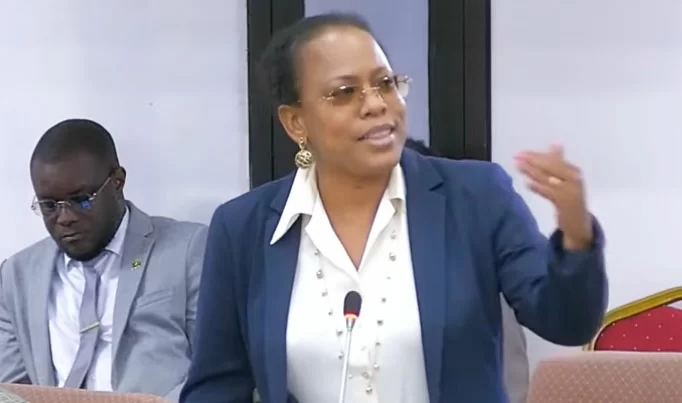
    On April 4, a high-level diplomatic meeting focused on advancing cross-regional sustainable development and local capacity building took place, bringing together Suriname’s Minister of Regional Development Miquella Huur and an international delegation consisting of representatives from Oando Trading Nigeria, the African Export-Import Bank (Afreximbank), and an independent international development consultant.

    At the core of the day’s discussions was a shared goal to unlock inclusive economic opportunities for grassroots communities across Suriname. A key priority that anchored the talks was strengthening local content frameworks, which aim to expand the participation of domestic Surinamese entrepreneurs and smallholder farmers in upcoming regional and international development projects. Both sides emphasized that embedding local stakeholders into supply chains and development initiatives is critical to ensuring long-term, community-centered growth rather than extractive, externally led development.

    The conversation delved into concrete collaboration opportunities specifically within Suriname’s agricultural sector, which forms a backbone of the country’s domestic economy and rural livelihoods. Participants explored prospects for developing highland rice cultivation, as well as expanding production and market access for cassava and breadfruit, two staple crops with significant untapped export potential. Attendees also highlighted the urgent need to improve smallholder access to modern agricultural inputs, from improved seed varieties to sustainable farming technologies, and to scale up national production capacity to meet both domestic demand and international trade standards.

    Members of the African delegation underscored the rapidly growing strategic importance of deepening trade and investment ties between African and Caribbean nations. They noted that the Africa-Caribbean partnership is built on mutual benefit, centered on reciprocal cross-border investment and two-way knowledge sharing that allows both regions to leverage their respective comparative advantages in agriculture, natural resources, and sustainable development.

    Following the conclusion of the talks, Minister Huur expressed optimism that the discussions would lay a solid foundation for long-term, mutually beneficial sustainable collaboration between all parties. Both sides also formalized a shared intention to conduct an on-the-ground visit to Suriname’s inland regions in the near future. This upcoming visit will allow the delegation to assess local development opportunities firsthand, gather on-site data, and tailor future cooperation projects to the specific needs of inland communities.