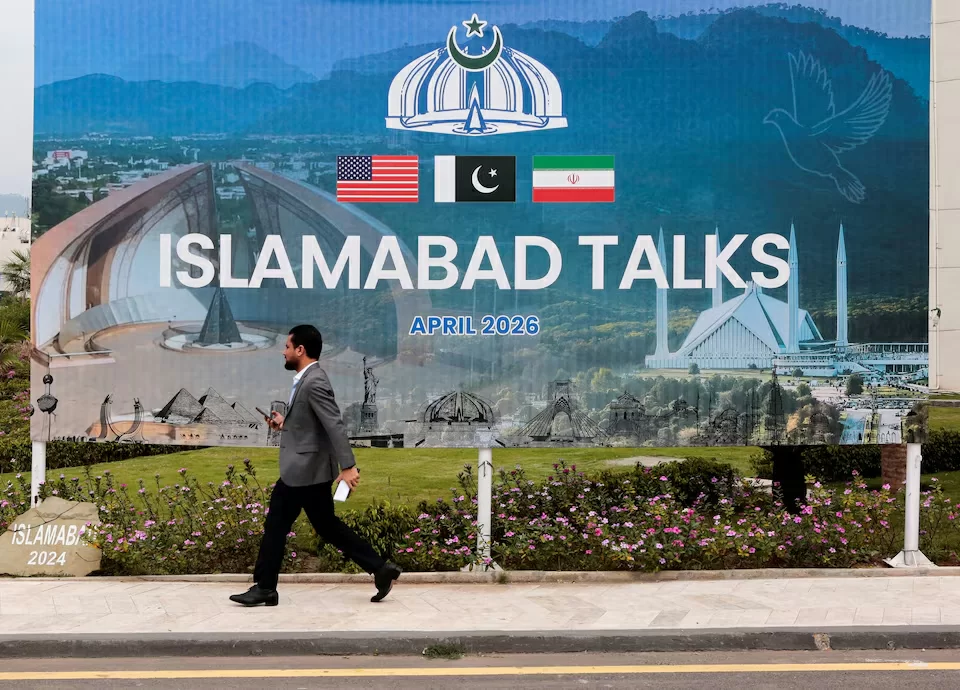
After 14 hours of landmark direct negotiations hosted by Pakistan in Islamabad, the first round of high-level peace talks between the United States and Iran has wrapped up, with both sides agreeing to resume discussions at a later date to resolve outstanding sticking points. The talks, the first direct high-level encounter between the two nations in more than a decade and the highest-level meeting since Iran’s 1979 Islamic Revolution, aimed to end a six-week open conflict that has killed thousands and roiled global energy markets.
As the region remains under a fragile two-week-old ceasefire, the outcome of these negotiations carries profound implications for the stability of global energy supplies, particularly through the Strait of Hormuz — the strategic chokepoint that carries roughly 20% of the world’s daily oil shipments, which Iran has effectively blocked since the start of the conflict. The six-week war has already sent global crude prices spiking and left thousands dead on both sides.
In an early Sunday statement posted to the social platform X, Iran’s government confirmed the conclusion of the first round of talks, noting that technical teams from both delegations will now exchange drafted documentation. “Negotiations will continue despite a number of remaining differences,” the statement read, without providing a specific timeline for the resumption of talks. This account contradicts an earlier report from Iranian state television, which claimed talks would continue on Sunday.
According to a source from Pakistan, which served as the neutral mediator for the talks, the US delegation was led by Vice President JD Vance, special envoy Steve Witkoff, and Jared Kushner — President Donald Trump’s son-in-law. They held a two-hour opening session with Iran’s top negotiators, including Parliament Speaker Mohammad Baqer Qalibaf and Foreign Minister Abbas Araqchi, before entering a recess. The Trump administration has not yet issued any official public comment on the outcome of the talks or the details of outstanding disagreements.
In a symbolic demonstration of mourning, the Iranian delegation arrived in Islamabad on Friday dressed entirely in black. The gesture honored the recent passing of Iran’s Supreme Leader Ayatollah Ali Khamenei, as well as all Iranians killed during the conflict. Delegates also brought the shoes and bags of student victims killed in a US airstrike that hit a school adjacent to an Iranian military compound. The Pentagon has launched an investigation into the strike, which Reuters reports was almost certainly carried out by American forces. The Pakistani source added that the first day of talks saw shifting moods, with negotiations marked by fluctuating emotions amid deep-rooted mutual distrust.
To secure the unprecedented diplomatic gathering, Pakistani authorities locked down large swathes of Islamabad, deploying thousands of paramilitary forces and regular troops across the capital. The hosting role marks a notable shift for Pakistan, which was widely sidelined in international diplomacy just one year ago.
The status of the Strait of Hormuz has emerged as the central sticking point in negotiations. The US military announced it has been laying the groundwork to clear the strait of blockades, saying two US warships have already transited the waterway and mine clearance operations are underway. Iran has outright denied that any American military vessels have passed through the strait.
Ahead of the talks, a senior Iranian official told Reuters that Washington had agreed to unfreeze billions of dollars in Iranian assets held in Qatar and other foreign banks, a claim that a senior US official immediately denied. Per Iranian state media and senior officials, Tehran’s core demands also include full Iranian sovereign control over the Strait of Hormuz, war reparations from the US, a region-wide ceasefire that includes clashes in Lebanon, and the right to collect transit tolls from commercial ships passing through the waterway.
For the Trump administration, core negotiating goals have shifted over the course of the conflict, but the non-negotiable priorities remain guaranteed unimpeded transit for global commercial shipping through the strait, and the permanent disabling of Iran’s uranium enrichment program to prevent it from developing a nuclear weapon. Israel, the US’s closest regional ally which has participated in strikes on Iran and continues to bombard Hezbollah positions in Lebanon, has stated that its military campaign is not covered by the current US-Iran ceasefire.
Despite the opening of diplomatic dialogue, decades of deep mutual suspicion between Washington and Tehran remain largely unaddressed, casting uncertainty over whether the current ceasefire will hold and whether a lasting peace deal can be reached.