标签: Suriname

苏里南

  • Colombia bereidt zich voor op vluchtelingeninstroom

    Colombia bereidt zich voor op vluchtelingeninstroom

    Colombia has initiated major military and humanitarian preparations along its 2,200-kilometer border with Venezuela, anticipating a potential refugee crisis following recent U.S. airstrikes and the abduction of Venezuelan President Nicolás Maduro. Defense Minister Pedro Sánchez announced the deployment of 30,000 soldiers to reinforce border security while the government establishes emergency response mechanisms.

    The Simon Bolívar International Bridge connecting Cúcuta, Colombia, with Venezuela maintained normal pedestrian and vehicular traffic despite heightened military presence, including three Colombian M1117 armored vehicles stationed at the crossing. However, underlying tensions permeate the region after U.S. President Donald Trump threatened additional strikes unless newly inaugurated interim leader Delcy Rodriguez demonstrates compliance.

    Security forces have been placed on high alert to prevent potential retaliatory actions from armed groups operating in Venezuela, including the National Liberation Army (ELN) and Segunda Marquetalia—a dissident faction of the former FARC guerrilla group. Colombian intelligence agencies warn that the possible collapse of Maduro’s government could trigger the return of these groups’ leaders to Colombia as their Venezuelan safe havens become compromised.

    The Colombian government has established five emergency commissions in border municipalities to coordinate humanitarian and security operations. Minister of Equality and Justice Juan Carlos Florian traveled to Cúcuta to implement a comprehensive ‘border plan’ addressing potential migration crises stemming from U.S. military intervention.

    With support from the UN’s International Organization for Migration, Colombia is activating 17 nationwide assistance centers providing food, education, employment training, and violence prevention services. Although no immediate surge in border crossings has been observed, authorities estimate up to 1.7 million additional refugees could enter Colombia, which already hosts three million Venezuelans—the largest share of the eight million who have fled the country.

    Humanitarian organizations are similarly mobilizing resources. The Colombian Red Cross in North Santander department has activated emergency response protocols, utilizing an initial $111,000 from the UN’s Central Emergency Response Fund to enhance capacity for delivering basic humanitarian assistance to refugees near the border.

    Juan Carlos Torres, the organization’s disaster management director, noted that while current conditions remain normal, the situation could evolve rapidly within days. The trajectory of population movements, he explained, will depend on whether Venezuela stabilizes or descends into further instability, potentially triggering new waves of displacement.

    Local residents like Mary Esperaza, who crossed the bridge from Venezuela to Colombia on Monday, express cautious uncertainty about future developments. ‘We’re waiting to see what happens,’ she remarked. ‘Apparently everything is calm, but we don’t know what tomorrow will bring.’

  • Alberg nieuwe directeur van SAIL: Focus op herstel visverwerking en export

    Alberg nieuwe directeur van SAIL: Focus op herstel visverwerking en export

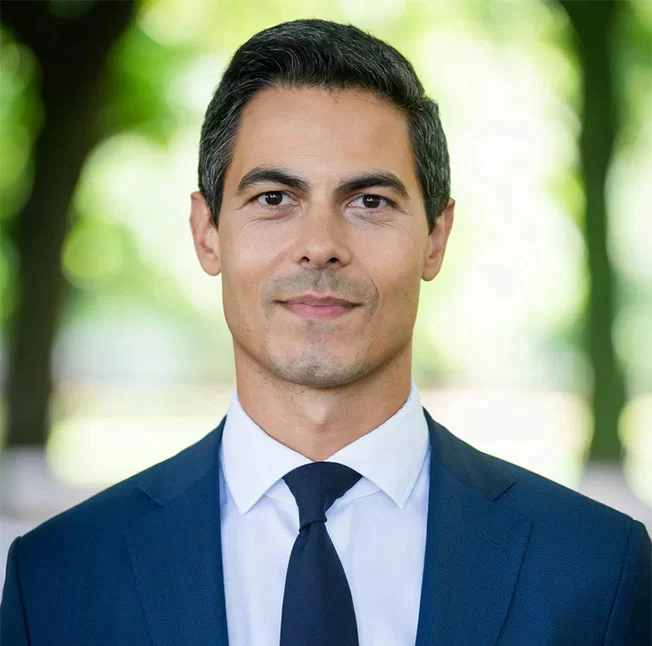
    Suriname American Industries Ltd (SAIL NV) has ushered in a new era of leadership with the formal appointment of Ifuel Alberg as its Managing Director. The ceremonial presentation, held today, positions Alberg as the executive tasked with revitalizing the financially distressed state-owned enterprise.

    In his inaugural address, Alberg expressed both pride and determination in accepting the leadership role. He characterized his appointment as a pivotal new beginning for an organization many had considered beyond redemption. “My fundamental objective is to restore perspective and viability to SAIL, for the enterprise itself and for its dedicated workforce,” Alberg declared.

    A cornerstone of his revival strategy involves resuscitating the company’s fish processing operations. Alberg emphasized the critical need to return to SAIL’s traditional operational model, which encompasses in-house processing, domestic sales, and direct export channels. “Reestablishing this integrated chain is absolutely essential for achieving a sustainable recovery,” he stated in comments disseminated by Suriname’s Communication Service.

    The new director also highlighted significant external challenges, particularly geopolitical tensions involving Venezuela. These have disrupted the supply chain for key species like red snapper, partly due to SAIL’s dependency on fishing vessels affiliated with the Venezuelan state enterprise NOA (Nueva Organización de Atunes).

    Beyond operational restart, Alberg pledged to bring greater organization to Suriname’s fish sales sector. While acknowledging everyone’s right to livelihood, he stressed that all commercial activities must adhere to stringent hygienic and orderly standards. As a certified enterprise, SAIL intends to play an active role in guaranteeing healthy and safe fish products for Surinamese consumers.

    To achieve this, Alberg plans to forge robust collaborations with the Fish Inspection Institute, the Ministry of Agriculture, Animal Husbandry and Fisheries, and other relevant stakeholders.

    Looking ahead, Alberg outlined ambitious two-year goals: first, to firmly reestablish SAIL’s presence in the domestic market, followed by resuming independent export operations. “SAIL must reclaim control over its production and export functions,” the director asserted, committing to keep the public informed through timely and transparent updates. “We invite all stakeholders to participate in the regrowth and redevelopment of SAIL.”

    The appointment ceremony was attended by District Commissioner Glenda Kranenburg, representatives from various state-owned enterprises, and members of the Board of Commissioners, led by Chairman Gordon Touw Ngie Tjouw.

  • Parlementaire commissie volgt Caricom-standpunt over Venezuela

    Parlementaire commissie volgt Caricom-standpunt over Venezuela

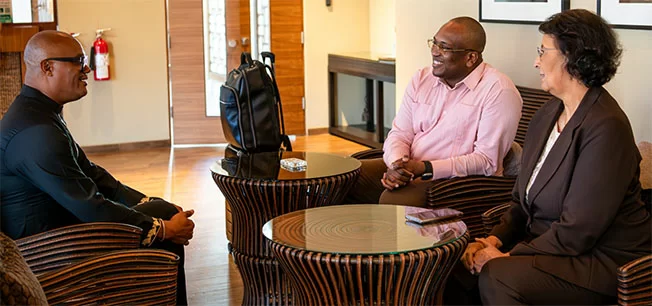
    Suriname’s Parliamentary Standing Committee for Foreign Affairs has endorsed the government’s decision to maintain alignment with the Caribbean Community (CARICOM) regarding the Venezuela situation rather than adopting an independent national position. Foreign Minister Melvin Bouva emphasized during Monday’s committee hearing that Suriname will uphold the collective stance of the regional bloc while continuously monitoring developments in the neighboring nation.

    Committee Chairman Ebu Jones confirmed that discussions with Minister Bouva highlighted the critical importance of safeguarding Suriname’s national interests within international decision-making frameworks. “Suriname must remain vigilant. Our strength derives from established international norms,” Jones stated in an interview with Starnieuws.

    The Ministry of Foreign Affairs has acknowledged recent statements by Delcy Rodríguez, Venezuela’s interim president, who appealed to the international community—particularly U.S. President Donald Trump—to collaborate on Venezuela’s development and future prospects.

    Regarding citizen safety, officials confirmed that three Surinamese nationals are officially registered in Venezuela, with one additional individual employed at Suriname’s diplomatic mission. Minister Bouva assured the committee that all Surinamese citizens in Venezuela currently reside in secure circumstances.

    The government has also developed contingency plans addressing potential increases in Venezuelan migration toward Suriname. Minister Bouva committed to ongoing consultations with the parliamentary committee to regularly assess evolving developments in Venezuela and their regional implications.

  • Nederland stopt gezamenlijke anti-drugsacties met VS in Caribisch gebied

    Nederland stopt gezamenlijke anti-drugsacties met VS in Caribisch gebied

    The Netherlands has announced the immediate suspension of its collaborative counter-narcotics operations with the United States in Caribbean waters, marking a significant shift in regional security cooperation. This decisive move comes in response to controversial changes in U.S. enforcement tactics that involve the use of lethal force against suspected drug smuggling vessels in international waters.

    According to confirmed reports from Dutch defense authorities, Netherlands naval vessels will now restrict their activities exclusively to monitoring and protecting territorial waters surrounding the Caribbean islands of Aruba, Curaçao, and Bonaire. The policy change was formally announced by outgoing Defense Minister Ruben Brekelmans during his official visit to Aruba.

    The suspension follows growing concerns over modified U.S. operational procedures that have reportedly resulted in more than one hundred fatalities during interdiction missions. Unlike previous protocols that emphasized interception and arrest, current American tactics involve direct engagement with suspected vessels without prior judicial review or due process.

    Minister Brekelmans emphasized the fundamental divergence in operational philosophies: “The Americans have chosen a different approach. While that remains their sovereign decision, we cannot participate in such operations that conflict with our principles and legal standards.”

    This development concludes five years of intensive bilateral cooperation that yielded significant counter-narcotics successes. Dutch naval forces previously played an integral role in regional operations, often acting on U.S. intelligence to intercept tens of thousands of kilograms of cocaine annually. Apprehended suspects were typically transferred to American authorities for prosecution.

    Concurrently, the Dutch government is closely monitoring regional security dynamics following recent U.S. military actions near Caracas, Venezuela. Outgoing Foreign Minister Caspar van Weel has informed Parliament that multiple contingency plans are being prepared, including potential refugee scenarios and temporary isolation of the Caribbean territories.

    The caretaker cabinet in The Hague has issued calls for all involved parties to prevent further escalation and adhere strictly to international legal frameworks governing maritime operations and use of force.

  • LVV: Geen algemeen exportverbod: Suriname mag vis blijven exporteren naar de VS

    LVV: Geen algemeen exportverbod: Suriname mag vis blijven exporteren naar de VS

    Suriname’s seafood export industry continues its trade relationship with the United States despite temporary restrictions affecting specific fishing operations that fail to meet American marine protection standards. The Ministry of Agriculture, Animal Husbandry and Fisheries (LVV) has clarified that no comprehensive export ban exists, contrary to potential misconceptions.

    The United States enforces stringent regulations under the Marine Mammal Protection Act (MMPA), requiring exporting nations to demonstrate equivalent protective measures for marine mammals. This compliance verification process, known as ‘comparability finding,’ has been successfully obtained for most Surinamese fisheries.

    However, two specific categories face export limitations: Suriname’s coastal driftnet fishery (SK-driftnet fishery) and red snapper catches by Venezuelan vessels in Surinamese waters. American authorities identified non-compliant net lengths and insufficient mitigation measures in the SK-driftnet operations, particularly regarding bycatch prevention for marine mammals including dolphins.

    Venezuelan-flagged vessels present a separate jurisdictional challenge. As flag state, Venezuela bears responsibility for submitting comparability documentation to US authorities, but has neither applied for certification nor shared relevant information to date.

    Surinamese authorities have implemented comprehensive corrective measures including mandatory acoustic deterrent devices (pingers), adjusted net specifications meeting US standards, and enhanced electronic monitoring systems. While these measures increase operational costs, LVV is exploring financial support mechanisms through funding programs and collaborative partnerships.

    All updated compliance documentation has been submitted for American reassessment, aiming to secure full certification for the SK-driftnet fishery. Meanwhile, LVV’s Fisheries Directorate must issue Certificates of Admissibility for each US-bound shipment, verifying exclusion from prohibited categories. This additional administrative requirement will be eliminated upon successful comparability certification, streamlining future export procedures.

  • Internationale kritiek op ontvoering Maduro tijdens spoedbijeenkomst VN-Veiligheidsraad

    Internationale kritiek op ontvoering Maduro tijdens spoedbijeenkomst VN-Veiligheidsraad

    The United Nations Security Council convened an emergency session in New York following the controversial apprehension of Venezuelan President Nicolás Maduro and his wife by US special forces. The operation, which multiple member states characterized as a violation of international law, has sparked unprecedented diplomatic backlash against Washington.

    Venezuela’s UN Ambassador Samuel Moncada denounced the mission during Monday’s urgent meeting, labeling it “an illegitimate armed assault without any legal justification.” This sentiment found resonance across the diplomatic spectrum, with unusual allies Russia, China, Cuba, and Colombia jointly condemning the action.

    The criticism extended beyond traditional US adversaries. Mexico and Denmark—typically aligned with American interests—delivered sharp rebukes. Mexican representatives emphasized the Security Council’s obligation to avoid double standards, while Danish diplomats pointedly referenced border inviolability, an apparent allusion to former President Trump’s previous threats regarding Greenland.

    France, initially supportive of Maduro’s detention, recalibrated its position, noting the military operation contravened principles of peaceful conflict resolution and prohibitions on unilateral force.

    Only the United States defended the operation, with Ambassador Mike Waltz characterizing it as a “surgical enforcement action” targeting two fugitive suspects. The White House justified the mission and accompanying airstrikes as essential for national security, despite presenting no verified evidence linking Maduro to “narcoterrorist” cartels.

    British and Latvian representatives redirected focus to Venezuela’s internal affairs, citing widespread repression, corruption, and drug trafficking under Maduro’s administration. The UK ambassador explicitly described Maduro’s claim to power as fraudulent.

    The Venezuelan government has called for international sanctions against the US and warned of escalating regional tensions. Both pro-Maduro loyalists and opposition factions within Venezuela remain on high alert, anticipating potential further conflict.

    Human rights organizations and numerous nations advocate for diplomatic solutions, cautioning against military intervention in an already volatile region. The Security Council remains divided, with permanent members threatening vetoes against additional measures.

    These developments highlight deteriorating international norms concerning sovereignty and the potential for destabilization throughout Latin America.

  • Galibi al twee weken zonder water en stroom: Alles staat stil, dit is een ramp

    Galibi al twee weken zonder water en stroom: Alles staat stil, dit is een ramp

    The indigenous village of Galibi in Suriname’s Marowijne district has descended into a severe humanitarian crisis, enduring over two weeks without electricity and running water despite the recent completion of a solar energy project. Village Captain Ricardo Pané describes the situation as catastrophic, with daily life completely paralyzed.

    The power outage has triggered a chain reaction of problems: perishable food in refrigerators and freezers is spoiling, causing significant financial losses for households. Residents have been forced to rely on rainwater collection, while some families resort to using well water for cooking. Captain Pané emphasized the inequality in access, noting that not every household has a well, and many cannot afford frequent trips to Albina to purchase drinking water and ice.

    This crisis forced the community to endure the recent holiday season without basic utilities. Technical teams from the Ministry of Natural Resources have attempted twice to repair a defective generator, but both efforts proved unsuccessful. The electrical failure has simultaneously crippled the water supply system, leading to school closures and severely limited operations at government offices and health services.

    The situation is particularly frustrating given that PowerChina completed a solar panel project in November, which included a successful 72-hour trial operation. Captain Pané expressed bewilderment at the continued attempts to fix the old generator when a functional alternative exists. Additionally, the water installation has been malfunctioning for an extended period, with collaborative efforts underway with Total Energy to acquire a larger compressor to restore water pumping capabilities.

    “The government is fully aware of this emergency,” Pané stated. “Why must it reach this breaking point? We have urgently contacted both the district commissioner and the minister, and now await their response. This cannot continue—households are completely immobilized. Sanitation, laundry, everything has stopped. This is nothing short of a disaster.”

  • Column: Wie mag een president uit bed lichten?

    Column: Wie mag een president uit bed lichten?

    The recent detention of Venezuelan President Nicolás Maduro and his wife by United States authorities has ignited a profound debate about sovereignty, power politics, and the erosion of international legal norms. While Washington justifies the action as part of anti-narcotics operations, the incident represents a dangerous precedent in international relations.

    Maduro, despite controversies surrounding his administration, remains the democratically elected leader of a sovereign nation. International law explicitly protects sitting heads of state from foreign arrest and prosecution, establishing clear protocols through treaties, diplomatic channels, and international courts for addressing allegations against foreign leaders. The unilateral action bypasses these established mechanisms, substituting legal process with power-based intervention.

    The global response has been notably muted, revealing a troubling hypocrisy in the international community’s application of principles. Many nations that rightly condemned Russia’s invasion of Ukraine now demonstrate selective outrage when the United States violates international norms. This double standard undermines the very foundation of global governance.

    The United Nations Security Council remains paralyzed, particularly when a veto-wielding permanent member is directly involved in such actions. This institutional impotence exposes the fundamental flaw in the international system: rules only bind those without power to ignore them.

    Historical patterns suggest economic motivations behind the intervention, with Venezuela’s vast oil reserves and strategic location likely influencing the calculus. This echoes previous US military interventions in Iraq, Afghanistan, and Libya, which consistently produced chaos rather than democracy or stability.

    The silence of neighboring countries, including Suriname and CARICOM nations, carries significant implications. While caution is understandable, failure to defend sovereignty principles ultimately legitimizes their violation. Smaller nations particularly depend on a rules-based international order where might doesn’t automatically equal right.

    The operation reportedly resulted in casualties, though details remain scarce—another characteristic of interventions where accountability often follows action rather than preceding it.

    This situation transcends Venezuela or Maduro personally. It represents a critical test for whether international law maintains meaningful authority or merely serves as convenient rhetoric when aligned with powerful interests. The normalization of arbitrary power today establishes dangerous precedents that could affect any nation tomorrow.

  • Wereldwijde machtsstrijd: Venezuela en Groenland centraal

    Wereldwijde machtsstrijd: Venezuela en Groenland centraal

    In a dramatic geopolitical development, Delcy Rodríguez has been sworn in as Venezuela’s interim president following the capture of President Nicolás Maduro by U.S. special forces. The ceremony took place before the National Assembly, dominated by Maduro loyalists, where Rodríguez condemned American intervention and vowed to pursue peace and stability.

    Meanwhile, Maduro appeared in a New York courtroom pleading not guilty to serious charges including narco-terrorism and weapons possession. The U.S. government alleges Maduro collaborated with drug cartels to smuggle thousands of tons of cocaine into the United States over an extended period.

    President Donald Trump indicated willingness to work temporarily with Rodríguez but issued a clear warning that her tenure depends on compliance with American demands. The U.S. administration confirmed it would temporarily govern Venezuela until a secure and just transition can be established, including access for American oil companies to Venezuela’s substantial reserves.

    The political crisis follows disputed elections marred by fraud allegations that triggered widespread protests and severe government crackdowns. The U.S. operation resulted in approximately 80 casualties, including 32 Cuban military personnel who had provided personal security for Maduro. The U.S. State Department is preparing to reopen its Caracas embassy pending political stability.

    Simultaneously, renewed U.S. interest in Greenland has created additional geopolitical friction. President Trump reiterated his desire to annex the autonomous Danish territory, valued for its strategic location and mineral resources. Greenlandic Prime Minister Jens Frederik Nielsen firmly rejected the proposition, stating Greenland is “not for sale” and maintains the right to determine its own future.

    Danish Prime Minister Mette Frederiksen and European allies, including British Prime Minister Keir Starmer and Germany’s Foreign Minister, emphasized the importance of sovereignty and democratic decision-making. Though not an independent NATO member, Greenland’s strategic significance is amplified through its association with Denmark and its resource-rich Arctic position.

    These parallel developments illustrate escalating global power competition over influence, resources, and security. From Latin America to the Arctic, local leaders are asserting self-determination principles and demanding respect for international law amid great power rivalry.

  • China’s oliebelangen in Venezuela: grote investeerder en belangrijke afnemer

    China’s oliebelangen in Venezuela: grote investeerder en belangrijke afnemer

    Amidst Venezuela’s political turmoil following the U.S.-led military intervention that ousted President Nicolás Maduro in January 2026, China has emerged as a critical economic lifeline and strategic partner for the South American nation’s crippled oil industry. Despite Washington’s efforts to reshape Venezuela’s political landscape and control its energy resources, Beijing maintains substantial leverage through both oil purchases and infrastructure investments.

    Venezuela’s oil production has experienced a dramatic collapse, plummeting from approximately 3.5 million barrels per day in the 1990s to just 1.1 million barrels daily in 2025. This decline stems from chronic mismanagement, insufficient investment, and stringent U.S. sanctions that have crippled the country’s primary economic engine.

    China has become Venezuela’s most significant oil customer, with Vortexa energy data indicating imports of approximately 470,000 barrels per day in 2025—representing about 4.5% of China’s total seaborne crude imports. Much of this oil flows to independent Chinese refineries known as ‘teapots,’ which capitalize on discounted prices. Additionally, portions of these shipments serve as repayment for Venezuela’s estimated $10 billion debt to China.

    Chinese state-owned enterprises maintain dominant positions in Venezuela’s energy sector. Sinopec and CNPC control the largest oil entitlement reserves among foreign companies, holding 2.8 billion and 1.6 billion barrels respectively. Since 2016, Chinese firms have invested approximately $2.1 billion in Venezuela’s oil infrastructure despite mounting political risks.

    Although CNPC ceased direct oil imports from Venezuela in 2019 due to sanctions, it continues production operations through the Sinovensa joint venture with Venezuela’s state oil company PDVSA. Similarly, Sinopec maintains significant oil reserves through its joint venture arrangements. Several private Chinese companies—including China Concord Resources Corp., Kerui Petroleum, and Anhui Erhuan Petroleum Group—also hold oil production and service contracts, though their current operational status remains unclear.

    The geopolitical implications extend far beyond energy markets. China’s deepening involvement in Venezuela represents a strategic challenge to U.S. influence in Latin America. While the Trump administration pursued regime change to reorient Venezuela’s political alignment, China has positioned itself as a stabilizing force committed to respecting Venezuela’s sovereignty and international law.

    Beijing’s investments form part of a broader strategy to secure access to vital energy resources while expanding economic influence in regions traditionally dominated by Western powers. These partnerships simultaneously bolster Venezuela’s resilience against American sanctions and political pressure.

    The post-intervention landscape remains highly volatile, with uncertainty surrounding Venezuela’s political future and China’s ability to maintain its economic interests amid escalating U.S.-China tensions. Despite Chinese investments, Venezuela’s oil industry continues to grapple with infrastructure deficiencies and economic instability, suggesting that recovery will require more than foreign investment alone.