标签: Suriname

苏里南

  • Caribisch gebied moet zich klaarstomen voor drogere, warmere jaren

    Caribisch gebied moet zich klaarstomen voor drogere, warmere jaren

    As a powerful El Niño weather pattern develops across the Pacific basin, regional climate scientists are sounding an urgent alarm: the entire Caribbean must accelerate preparations for an extended stretch of hotter, drier conditions spanning 2026 and 2027. The joint warning comes from two leading regional climate research bodies, the Caribbean Institute of Meteorology and Hydrology (CIMH) and the Climate Studies Group Mona at the University of the West Indies (UWI CSGM), which outline that the shifting climate conditions triggered by El Niño will carry far-reaching, serious risks for water access, agricultural production, public health, and the regional economy.

    Cedric Van Meerbeeck, a senior climatologist at CIMH, explained that El Niño will almost certainly drive extended periods of below-average rainfall paired with increasingly oppressive, humid heat across the Caribbean. This combination amplifies the likelihood of multiple overlapping extreme events: severe droughts, long-lasting heatwaves, increased wildfire risk, and marine heatwaves that can trigger widespread coral bleaching across the region’s fragile reef ecosystems. Historical precedent underscores the severity of these risks: past major El Niño events, including the 2009-2010 and 2014-2016 cycles, brought crippling drought and record-breaking extreme heat that caused widespread damage to local ecosystems and disrupted daily life for communities across the region.

    The potential impacts of the coming El Niño are broad and interconnected, cutting across every core sector of Caribbean societies. The agricultural industry, which relies on consistent rainfall and stable temperatures to maintain output, faces a high risk of significant production losses that threaten regional food security. Water and energy infrastructure will also come under intense strain: demand for electricity for cooling will surge, while many Caribbean nations rely heavily on hydropower or freshwater for energy generation, creating a supply-demand gap that could lead to widespread outages. Public health risks are also projected to rise, with deteriorating water quality, increased transmission of vector-borne diseases, and a spike in heat-related illnesses putting additional pressure on local healthcare systems.

    Professor Michael Taylor, leading researcher at UWI CSGM, emphasized that the Caribbean is now facing what he calls a “multi-hazard regime”, where heat, drought, and marine stressors interact and amplify one another, creating risks greater than the sum of their individual parts. Addressing these interconnected threats requires an integrated, cross-sector coordinated response and strengthened collaborative action across all national and regional stakeholders, he added.

    From an economic perspective, the coming El Niño is also expected to disrupt three core pillars of the Caribbean economy: tourism, commercial fishing, and maritime shipping. Global climate-driven disruptions could throw regional trade and supply chains off balance, driving up costs for consumers across the Caribbean. A recent example of this vulnerability already played out on the global stage: severe drought disrupted operations at the Panama Canal, a critical transport artery for goods moving through the Caribbean and along the U.S. East Coast, highlighting the far-reaching ripple effects of water scarcity in the region.

    To address these growing risks, climate experts are calling on national governments, private sector businesses, agricultural producers, and local households to take the projected threats seriously and begin proactive preparation measures immediately. Forecasters note that El Niño projections typically gain significant accuracy starting in May 2026, giving stakeholders a narrow window to act before conditions begin to worsen. Later that month, CIMH will host the annual Caribbean Climate Outlook Forum (CariCOF) during the week of May 24, where regional climate scientists will share updated projections and guidance with national and international stakeholders, ahead of the coming wet and Atlantic hurricane seasons.

    David Farrell, Director of CIMH, stressed that timely, actionable climate data is the foundation of effective decision-making to reduce disaster risk. He highlighted the strategic expansion of CIMH’s services focused on water resource management, marine ecosystem monitoring, and Earth observation, all of which are helping to strengthen regional early warning systems for extreme weather. “Proactive measures are absolutely essential to reduce the impact of extreme weather events on vulnerable sectors and communities across the Caribbean,” Farrell said.

    Farrell added that strengthening early warning infrastructure and expanding public access to clear, timely climate information are critical to boosting the region’s overall resilience to a changing climate and increasingly frequent extreme weather events. CIMH currently works in close partnership with national governments across the Caribbean and international development partners to advance these resilience-building efforts.

  • Iran grijpt schepen in Straat van Hormuz na afgelasting aanvallen door Trump

    Iran grijpt schepen in Straat van Hormuz na afgelasting aanvallen door Trump

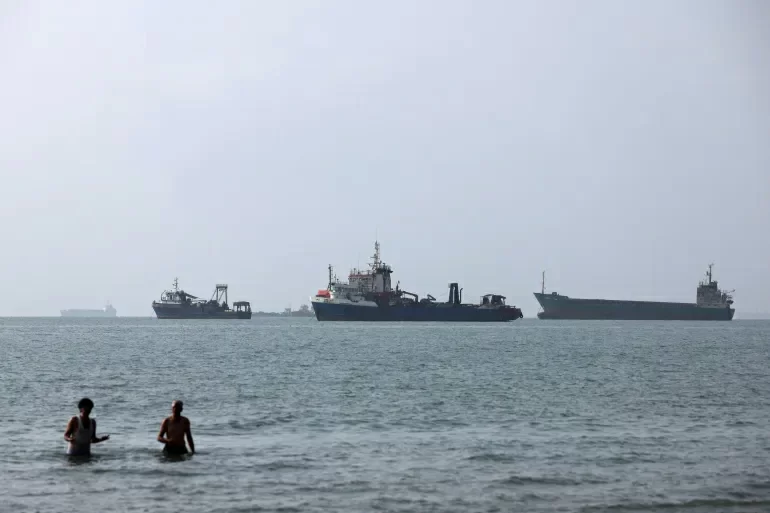
    On Wednesday, just days after US President Donald Trump announced an indefinite suspension of planned military strikes against Iran, Iranian forces seized two commercial ships in the strategically vital Strait of Hormuz. This incident marks the first time Iran has seized foreign-flagged vessels in the key waterway since the outbreak of open hostilities in late February, escalating already heightened tensions between Tehran and Washington at a moment when regional peace efforts have already stalled.\n\nAccording to Iran’s semi-official Tasnim News Agency, the Islamic Revolutionary Guard Corps intercepted the two vessels over alleged maritime violations and escorted them to Iranian coastal ports. Earlier reports from British maritime security officials had already confirmed that three separate commercial ships came under fire in the straat earlier this week, adding new urgency to global concerns over freedom of navigation in the world’s most critical energy chokepoint.\n\nDespite Trump’s announcement of a paused military campaign and a temporary two-week ceasefire, the US leader confirmed via social media that Washington will maintain its full maritime blockade of Iran. Just days before the seizure, the US Navy intercepted and seized an Iranian cargo vessel in the region, and on Tuesday, American forces boarded and inspected a large Iranian oil tanker transiting the Indian Ocean. Tehran has decried the US blockade as an outright act of war, and has pledged to keep restricting transit through the strait for as long as the American blockade remains in place. Around 20% of global oil and liquefied natural gas supplies pass through the 21-mile-wide waterway, and Iran’s restrictions have already triggered a global energy crisis that has driven up fuel prices worldwide.\n\nPeace brokering efforts led by Pakistan, which stepped in as a neutral mediator between the two nations, have hit a major impasse. Planned peace talks scheduled this week in Islamabad, set to take place just before the temporary two-week ceasefire was set to expire, collapsed entirely when neither side sent delegations to the negotiating table. A luxury Islamabad hotel had been fully secured and prepared for the negotiations, but Iran never formally accepted the invitation to attend, while the US delegation led by Vice President JD Vance opted to remain in Washington. Security measures at the prepared venue have since been scaled back, though the site remains closed to the public.\n\nSpeaking to Reuters on condition of anonymity, a senior Pakistani official acknowledged the collapse of talks came as an unexpected setback. “Iran never issued an official refusal, and has repeatedly stated it remains open to coming to the table,” the official said, adding that Pakistani mediators are continuing to work aggressively to bridge gaps between the two sides while accommodating core security and political sensitivities of both Tehran and Washington.\n\nIran’s response to Trump’s ceasefire announcement has been marked by deep caution and open skepticism. Tasnim News has emphasized that Iran never requested a ceasefire extension, and has repeated threats to use military force to break the US blockade. A senior advisor to Iranian parliamentary speaker and chief nuclear negotiator Mohammad Baqer Qalibaf warned that Trump’s announcement could be a deliberate trick to buy time for a surprise military strike on Iranian infrastructure.\n\nSince the start of the conflict, Iran has effectively closed the Strait of Hormuz to unauthorized commercial traffic, targeting vessels that attempt to transit the waterway without Tehran’s permission. On Wednesday, the UK Maritime Trade Operations (UKMTO) confirmed that at least three container ships had been fired on by Iranian forces in recent days. One vessel was approached by an Iranian gunboat and hit with machine gun fire and grenade launchers, causing significant damage to the ship’s bridge. No crew casualties or environmental damage were reported in the incident, while the two other attacked ships also reported no injuries among their crews. Tehran has condemned recent US actions at sea, including the boarding of an Iran-bound oil tanker heading to Singapore, as “state-sponsored piracy and terrorism.”\n\nTrump’s latest ceasefire announcement marks the second time in as many weeks that the US president has backed away from last-minute threats to bomb Iranian civilian energy infrastructure and key bridges. Those threats drew widespread international condemnation, with many global leaders warning that targeting civilian infrastructure could constitute a war crime under international law. Iran had responded to the threats by pledging to launch retaliatory strikes against US allies in the Arab Gulf if any civilian infrastructure in the country was targeted.\n\nIn the immediate aftermath of the ceasefire announcement, global oil prices fell below $100 a barrel for the first time in weeks, though global stock markets and US dollar exchange rates continued to see high volatility amid ongoing uncertainty over the future of the conflict. Even with calls for an extension of the temporary ceasefire, the collapse of planned Islamabad talks has left the broader peace process on extremely shaky ground.\n\nA senior Iranian official told Reuters that Tehran remains open to a new round of peace negotiations, but only if Washington abandons its current policy of maximum pressure and coercive threats. The first round of talks, held 11 days earlier, failed to produce any breakthrough agreement. Washington’s core demand is that Iran surrender its stockpiles of highly enriched uranium to prevent Tehran from developing a nuclear weapon. Iran has repeatedly insisted that its nuclear program is entirely peaceful, and that developing a civilian nuclear program is a sovereign right guaranteed to Iran under the Treaty on the Non-Proliferation of Nuclear Weapons. Tehran’s core demands include a full end to hostilities, the lifting of all international and US sanctions, war reparations for damages caused by the conflict, and formal international recognition of Iran’s full sovereignty over the Strait of Hormuz.

  • Strategische winst, sociale zorgen: de balans van vertrekkend bevelhebber Werner Kioe A Sen

    Strategische winst, sociale zorgen: de balans van vertrekkend bevelhebber Werner Kioe A Sen

    When Werner Kioe A Sen took office as commander of the Surinamese National Army in October 2022, he laid out an ambitious promise: to lift the institution to a brand new “next level”. This Friday, after almost four years at the helm, Kioe A Sen will formally transfer command to his successor, Colonel Mitchell Labadie, offering a candid, comprehensive reflection on his tenure that balances progress achieved with goals left unmet.

    Looking back on his term, which focused heavily on professionalization, academic advancement, organizational reform, and targeted investment in personnel and leadership capacity, the outgoing commander highlighted key foundational gains that have strengthened the National Army. With consistent support from successive defense ministers Krishna Mathoera and Uraiqit Ramsaran, as well as collaboration from the military leadership and defense staff, Kioe A Sen’s administration built a structural foundation that will support the force for years to come.

    One of the most significant milestones of his tenure was the 2023 launch of the Command and Staff Course, a specialized training program designed to prepare officers for senior political-strategic roles, alongside targeted investments in higher academic development for mid-career and senior officers. “This is a critical step forward in boosting the knowledge and innovation capacity of the entire defense sector,” Kioe A Sen noted. The non-commissioned officer corps also received a major boost through the implementation of a new staff adjutant structure, which is intended to improve internal mentorship and advisory capabilities across the force.

    Despite these clear gains, Kioe A Sen openly acknowledged that not all of his initial policy ambitions were realized. In particular, progress on improving core facilities including troop infrastructure and catering has fallen short of expectations, held back by limited budget resources and broader administrative constraints that were outside the command’s direct control. Even so, the commander emphasized that he remains satisfied with the strategic direction set during his tenure, especially when it comes to long-term sustainable investments in force quality and leadership development. “The full impact of these changes will only become visible over the longer term, but the foundation is now in place,” he said.

    Kioe A Sen explained that his administration deliberately prioritized broadening the service’s foundational capacity, with a focus on leadership development, personnel welfare, structural reform and process improvement – changes that he argues are essential to addressing the increasingly unpredictable nature of modern security threats. These threats span both traditional military and non-military domains. The long-running territorial dispute over the Tigri region remains a persistent priority for the force; while the issue is being addressed through diplomatic channels, Kioe A Sen noted that from a defense perspective, credible deterrence plays a key role in strengthening the country’s negotiating position, a lever whose use ultimately remains a policy decision at the political level.

    Non-military threats, particularly transnational crime and environmental crime, have proven far more complex to address than initially anticipated. Kioe A Sen stressed that these challenges are deeply rooted, linked to structural weaknesses across multiple state institutions, limited operational capacity, cross-agency coordination gaps, and integrity risks. Even so, targeted operations such as Sparimakka and Ocelot have demonstrated that focused deployment can deliver tangible results, though sustained structural improvement will require broader cross-sector collaboration to achieve.

    Over the past four years, the National Army has deliberately focused on strengthening its core constitutional mandates, which has translated into a significant expansion of operational activity across the country. Over the past five years, the force has conducted more than 100 deployments, ranging from patrols in gold-mining regions like Marbonsu, border presence at Marai on the eastern frontier, Operation Piranha supporting the public prosecutor’s office in cracking down on environmental crime, humanitarian relief missions as part of Gran Mati, to the destruction of illegal airstrips in Operation Ocelot. This expanded operational footprint has made the army a more visible presence across Suriname, and Kioe A Sen says this record provides a solid baseline for his successor to build on.

    In pre-handover discussions with Labadie, the two leaders have reviewed the current state of the force, ongoing strategic priorities, operational capacity, and active projects. Kioe A Sen stressed that continuity in policy and implementation is essential to consolidate and expand on the progress made over the past term.

    On the social welfare front, affordable, accessible housing remains one of the most pressing unaddressed issues for military personnel. “While we launched new initiatives to support service members with land acquisition for housing, these processes have not delivered the results we hoped for,” Kioe A Sen admitted. Delays stemmed from reliance on multiple external stakeholders and bureaucratic procedures, as well as broader administrative and policy constraints across government. He noted that delivering more concrete progress on housing will be a key priority for Labadie, as the issue remains central to the well-being of troops and their families.

    The outgoing commander acknowledged that many troops may question whether he did enough to improve their daily conditions during his tenure, and called this a reasonable and fair question. “Given the resources and opportunities available to me, I pushed as hard as I could to deliver meaningful improvements. At the same time, I had to operate within broader constraints and conditions that were often outside my sphere of influence,” he explained. His connection to ordinary troops remains strong, forged over 28 years of service in operational units, 24 of which he spent serving alongside rank-and-file soldiers.

    In October 2024, Kioe A Sen was promoted from colonel to brigadier general, the highest military rank in the Surinamese National Army. Though the command handover is imminent, he says he is not retiring, and will remain available to serve at the request of the defense minister and the president. Reflecting on his time leading the force, Kioe A Sen concluded: “I worked to deliver meaningful structural improvements to this institution, and I understand that not every desired goal can be achieved in a single term. The foundation is laid, and it is now up to the next leadership to carry this work forward.”

  • Mandarijncursus moet samenwerking tussen Suriname en China verdiepen

    Mandarijncursus moet samenwerking tussen Suriname en China verdiepen

    A new beginner-level Mandarin Chinese training course has officially kicked off in Suriname, designed as a targeted initiative to strengthen the longstanding cooperative partnership between the South American nation and China. Running through July 15, the program is co-hosted by the local Confucius Institute and the Suriname Diplomat Institute (SDI), bringing together roughly 30 government officials from multiple public sector agencies.
    Beyond just building basic Mandarin language proficiency, the course centers its curriculum on boosting intercultural awareness between the two countries. Organizers frame the training as a core component of broader national efforts to equip Suriname’s public sector professionals with the skills needed to thrive in an increasingly interconnected, globalized working environment.
    At the opening ceremony of the program, Chinese Ambassador to Suriname Lin Ji emphasized that Mandarin language learning acts as a vital people-to-people bridge connecting the two nations. “Mastering Mandarin delivers far more than practical professional advantages,” Ambassador Lin noted during his remarks. “It lays the groundwork for stronger bilateral ties and deeper mutual understanding between our peoples.”
    Jenny Maikoe, SDI’s program coordinator, echoed this perspective, highlighting language’s unique power to connect communities and nations. Maikoe explained that the training directly supports public sector capacity building, giving participating officials the tools to engage more effectively in cross-border communication and international diplomatic settings.
    According to event organizers, the benefits of Mandarin proficiency extend past institutional cooperation, opening new pathways for both personal development and professional advancement for participants. For this reason, the course is widely viewed as a meaningful milestone in the ongoing work to deepen the positive bilateral relationship between Suriname and China.

  • VS verlengt wapenstilstand met Iran, militaire top over Hormuz

    VS verlengt wapenstilstand met Iran, militaire top over Hormuz

    On Wednesday, military planners from over 30 countries convened in London for a two-day summit focused on laying the groundwork for an international mission aimed at reopening and securing the strategically critical Strait of Hormuz, a global chokepoint for maritime oil trade. The UK Ministry of Defense confirmed that more than 12 nations have already committed to joining the operation, which will be led jointly by the United Kingdom and France once operational conditions allow for deployment.

    This London conference builds on diplomatic progress achieved just one week prior, during a video call attended by roughly 50 nations spanning Europe, Asia, and the Middle East. That earlier diplomatic push was partly intended to send a clear message to Washington, coming after former U.S. President Donald Trump stated that the U.S. did not require any assistance from allied partners for security efforts in the region.

    British Defense Secretary John Healey outlined that the core objective of the London gathering is to translate preliminary diplomatic agreements into tangible military plans. These plans center on guaranteeing unimpeded, free passage for all commercial and civilian vessels through the Strait of Hormuz, while also supporting the establishment of a lasting, durable ceasefire between conflict parties. Delegates are set to discuss a range of critical operational details, including contributing military capabilities, establishing unified command structures, and evaluating potential troop deployments to the region.

    In an unexpected twist that reshapes regional diplomatic dynamics just one day ahead of the London summit, President Trump announced Tuesday that he would extend the temporary ceasefire with Iran indefinitely. The ceasefire had been set to expire imminently, and the extension opens space for continued peace negotiations amid rising regional tensions. This decision came only hours after Trump had publicly stated he was unwilling to extend the truce, and had confirmed that U.S. military forces were “ready for action” if the ceasefire lapsed.

    Trump, who jointly launched the war against Iran alongside Israel on February 28, explained his reversal by noting that the Iranian government is “seriously divided, which is not unexpected”. His comment references recent U.S. and Israeli assassination strikes that killed multiple senior Iranian leaders, including former Supreme Leader Ayatollah Ali Khamenei, who has since been succeeded by his son.

    Negotiations mediated by Pakistan in its capital Islamabad have hit a key stumbling block over the ongoing U.S. blockade of Iranian ports, though a second round of talks is currently being planned. The ceasefire extension came at the formal request of Pakistan, which serves as the neutral mediator for the ongoing peace talks.

    Earlier, United Nations Secretary-General António Guterres and other global leaders had condemned Trump’s repeated threats to bomb Iranian energy infrastructure, noting that international humanitarian law explicitly prohibits attacks on civilian populations and critical civilian infrastructure.

    In a post on social media, Pakistani Prime Minister Shehbaz Sharif thanked Trump for agreeing to the ceasefire extension request. Sharif expressed hope that both Iran and the U.S.-Israel coalition would uphold the terms of the truce, and that a comprehensive peace deal could be reached during the upcoming second round of negotiations. As of Wednesday, no firm date has been set for the next negotiating session.

  • Volledige RvC Canawaima ontslagen na ingrijpen regering

    Volledige RvC Canawaima ontslagen na ingrijpen regering

    In a swift decision following allegations of misconduct at state-owned ferry operator Canawaima, all three members of the company’s Supervisory Board (Raad van Commissarissen, RvC) have been removed from their posts. The action was finalized on 22 April following closed consultations between Raymond Landveld, Suriname’s Minister of Transport, Communication and Tourism, and national President Jennifer Simons.

    Union leadership confirmed the government’s intervention to local outlet Starnieuws, noting that the ruling came in direct response to concerns raised by organized labor just days prior. Dayanand Dwarka, chair of the Canawaima workers’ union, confirmed that Minister Landveld had officially notified him of the dismissal order. Just this Monday, the union had formally withdrawn all confidence in the incumbent RvC over reports of widespread wrongdoing at the state-run enterprise, which operates the critical ferry link between South Drain in Suriname and neighboring Guyana. After meeting with Landveld to discuss the allegations, union representatives agreed to pause planned industrial action that would have disrupted ferry services to avoid harming the thousands of passengers who rely on the cross-border connection. In the meeting, the minister had given a formal commitment that the government would step in to address the union’s concerns.

    To the surprise of many observers, the government delivered on that promise in less than a week. The union has praised the rapid response from the country’s executive branch. Dwarka emphasized that both Minister Landveld and President Simons acted decisively to resolve the crisis. Even as the union celebrates this outcome, however, Dwarka warned that the problems at Canawaima are not an isolated incident. Across multiple state-owned enterprises in Suriname, he argued, national interests are often not prioritized, opening the door to mismanagement and graft.

    Dwarka, who also serves as deputy chair of Suriname’s largest trade union center C-47, said the incident has made it clear that systemic reform is needed across the country’s state-owned sector. C-47 is calling for permanent structural changes, including a requirement that trade unions get a permanent seat on the supervisory boards of all state enterprises. For frontline workers, good governance is not an abstract policy goal: it directly determines their job security and long-term livelihoods, Dwarka explained.

    The speed of the RvC’s dismissal has drawn particular attention: the entire board took office less than two months before corruption allegations emerged. Dwarka called that timeline deeply worrying, noting that improper activity began almost immediately after the board assumed oversight responsibilities. The union has pushed for tangible, long-term changes to strengthen the company’s oversight function rather than just replacing the dismissed board members.

    Minister Landveld has signaled openness to the union’s core demand: he has confirmed that he will discuss the proposal to add a union representative to Canawaima’s newly formed supervisory board with President Simons as the process to appoint a new RvC moves forward.

  • Laatste Rotterdamse 4 Leeuwenspeld uitgereikt aan Ram Ramlal

    Laatste Rotterdamse 4 Leeuwenspeld uitgereikt aan Ram Ramlal

    After more than three decades of honoring community-minded changemakers in Rotterdam, the final presentation of the iconic Rotterdam 4 Leeuwenspeld (4 Lions Pin) took place on Tuesday evening, bringing a longstanding local tradition to a dignified close. Organized by the Rotterdam-based community group Satya Dharma, the ceremony presented the last 4 Lions Pin to Ram Ramlal, a community leader recognized for decades of dedicated service to local and cross-cultural communities.

    Initiator Ramon Ramsodit, who co-founded the 4 Lions Pin award in 1993 alongside Oesha Bhikhie and Ram Rambartsingh, emphasized that the honor is far more than a symbolic gesture. He opened his remarks by celebrating Ramlal as “a great son of Suriname and his birth district of Nickerie,” underscoring the widespread public respect Ramlal has earned for his decades of contributions to public life.

    The 4 Lions Pin draws its name from the four lions that appear on Rotterdam’s official coat of arms, a imagery chosen to represent the core values of the award: strength, courage, and social solidarity. For 31 years, the award has recognized individuals who have made extraordinary contributions to community development, cultural preservation, and social connection across Rotterdam, building a legacy of elevating grassroots leaders that have shaped the region’s social fabric.

    Wednesday’s ceremony carried unique emotional weight, marking not only the recognition of a well-respected leader but also the end of an era. For many attendees, the event served as an opportunity to reflect on the hundreds of changemakers honored over the past three decades, and the impact the award has had in strengthening community bonds across the city.

    Koemar Khargi, chair of Satya Dharma, noted that the final ceremony was about more than just recognition: it was a moment of gratitude, collective memory, and intergenerational transmission of core cultural values. The 31-year tradition closed on a high note with the selection of Ramlal, a choice that organizers say aligned perfectly with the award’s original mission.

    Rather than ending the practice of honoring community leaders entirely, Satya Dharma has replaced the 4 Lions Pin with a new award: the SuRo Pin, short for the Suriname-Rotterdam Pin. The updated award retains the core mission of recognizing outstanding service to society, but narrows its focus to contributions that advance cultural exchange, knowledge development, community building, and stronger ties between Suriname and the Netherlands — with a particular focus on the Surinamese diaspora community in Rotterdam. Through the new SuRo Pin, Satya Dharma will carry forward the original 4 Lions Pin’s legacy of celebration and recognition, reoriented to prioritize the cross-border connection that has long been a core part of the organization’s work.

  • Simons brengt begin juni officieel bezoek aan Dominicaanse Republiek

    Simons brengt begin juni officieel bezoek aan Dominicaanse Republiek

    Suriname and the Dominican Republic are moving forward with plans to deepen their bilateral ties, with a high-stakes presidential visit scheduled for early June to formalize new collaborative agreements. Suriname’s President Jennifer Simons will travel to the Dominican Republic on June 1 and 2 to hold official talks with her Dominican counterpart President Luis Abinader, marking a key milestone in the growing relationship between the two Caribbean nations.

    To lay the groundwork for the presidential summit, Suriname’s Minister of Foreign Affairs, International Trade and Cooperation Melvin Bouva already held a series of preparatory working meetings in the Dominican Republic. During these discussions, the two sides signed a joint declaration that outlines a shared commitment to expanded partnership, with core priorities centered on three key sectors: economic development, tourism expansion, and bilateral trade.

    In remarks following the signing, Minister Bouva emphasized that the Dominican Republic opens substantial new opportunities for Suriname’s economic growth, particularly in the tourism and export segments. Suriname has set a clear goal of boosting international visitor arrivals to the country, and closer collaboration with the Dominican Republic — a major regional tourism hub — is expected to help Suriname tap into larger tourist flows. Additionally, Suriname is positioning itself to expand access to the Dominican market for key domestic agricultural exports, including corn, soybeans and cacao.

    Beyond bilateral ties, the two countries are also prioritizing closer regional collaboration to address shared Caribbean challenges, especially around energy stability and food security. Dominican Republic has been identified as a critical strategic partner for Suriname as it works to advance these regional cooperation goals, creating a framework for mutual benefit that extends beyond traditional trade and economic links.

  • President eind mei naar Brazilië; samenwerking wordt verdiept

    President eind mei naar Brazilië; samenwerking wordt verdiept

    Suriname is set to take a major step forward in its bilateral relationship with Brazil, with President Jennifer Simons scheduled to pay an official working visit to the South American nation at the end of May. During the trip, Simons will hold high-level talks with her Brazilian counterpart, Luiz Inácio Lula da Silva, with the core goal of strengthening collaborative ties between the two neighboring countries.

    According to Melvin Bouva, Suriname’s Minister of Foreign Affairs, International Trade and Cooperation (BIS), preparations for the high-profile visit are currently progressing smoothly. Multiple key priority topics will top the agenda for the presidential discussions, including cross-border management, coordinated responses to transnational criminal activity, and most prominently, expanded economic cooperation and bilateral trade.

    Bouva confirmed through Suriname’s official Communication Service that the groundwork for deeper collaboration has already been laid in prior diplomatic engagements. Past face-to-face meetings between the two sides in 2025, plus a recent telephone consultation between the two heads of state, have set a clear foundation for the upcoming talks. The visit is expected to produce concrete, actionable agreements that will deepen the overall bilateral partnership.

    For Suriname, food security is one of the most critical policy priorities on the discussion agenda. Brazil is widely viewed as a key strategic partner for Suriname in this area, thanks to Brazil’s world-leading agricultural sector and its established capacity for regional collaborative development.

    Improving cross-border connectivity between the two countries also ranks as a high priority for Suriname’s administration. The Surinamese government emphasizes that enhanced connectivity is a foundational requirement for unlocking shared economic growth, expanding trade volumes, growing the tourism sector, and upholding regional security for both nations.

    Beyond one-on-one bilateral cooperation, Suriname and Brazil already maintain aligned cooperation within multilateral international organizations, where the two countries frequently coordinate and adopt shared policy positions on regional and global issues.

  • Nationale gebedsdag moet bijdragen aan herstel van normen en waarden

    Nationale gebedsdag moet bijdragen aan herstel van normen en waarden

    PARAMARIBO, Suriname – April 21 – A new national moment of collective reflection and spiritual unity is set to launch this week in Suriname, as President Jennifer Simons has formally backed a national prayer day focused on rebuilding core societal norms and values amid ongoing national development shifts. The initiative, originally organized by Suriname’s collective body of Catholic bishops, will take place on Friday, April 24, after being elevated to a national event by the country’s presidency. President Simons first outlined the goals of the observance during a working consultation with national Christian faith leaders at the President’s Cabinet this Monday, government communications body Communicatiedienst Suriname confirmed.

    The event centers on a clear mission: to root broad societal renewal in the restoration of strong family relationships, which organizers frame as the foundational bedrock for broader respect and institutional authority across Surinamese public life. The prayer day’s theme draws from Malachi 4:6, a scripture passage that emphasizes intergenerational connection and family cohesion. During the closed-door consultation, leaders and the president held wide-ranging discussions covering the current spiritual climate of the nation, long-term social planning, and the rapid changes shaping the country’s fast-growing oil and gas sector, a key driver of recent economic transformation in Suriname.

    Pastor Steven Reyme, a senior leader of Logos International who participated in the talks, explained that the core objective of the national gathering is to spiritually strengthen the nation and commit Suriname’s future to collective faith. He stressed that the prayer day is not merely a ceremonial event: it calls for leaders across all sectors of public life to embrace a heightened sense of accountability to the broader population, particularly to the country’s youth and most vulnerable community groups. A top priority topic in the consultation was the growing challenge of youth crime, with leaders and the president agreeing that early character formation through family-based education and upbringing is the most critical intervention to keep young people on positive life trajectories. Faith-based organizations, attendees agreed, are uniquely positioned to complement government efforts by providing targeted mentorship and moral formation for at-risk youth.

    President Simons wrapped up the consultation by issuing a formal call to attending faith leaders to document their policy recommendations and actionable proposals in writing. These submissions will form the foundation for a new ongoing partnership between the Surinamese government and the national religious sector, with the first National Prayer Day serving as the official starting point for this collaborative work. Simons reaffirmed that religious and community organizations have an indispensable role to play in national post-crisis recovery and ongoing social stability, offering moral guidance and social support that government alone cannot provide.