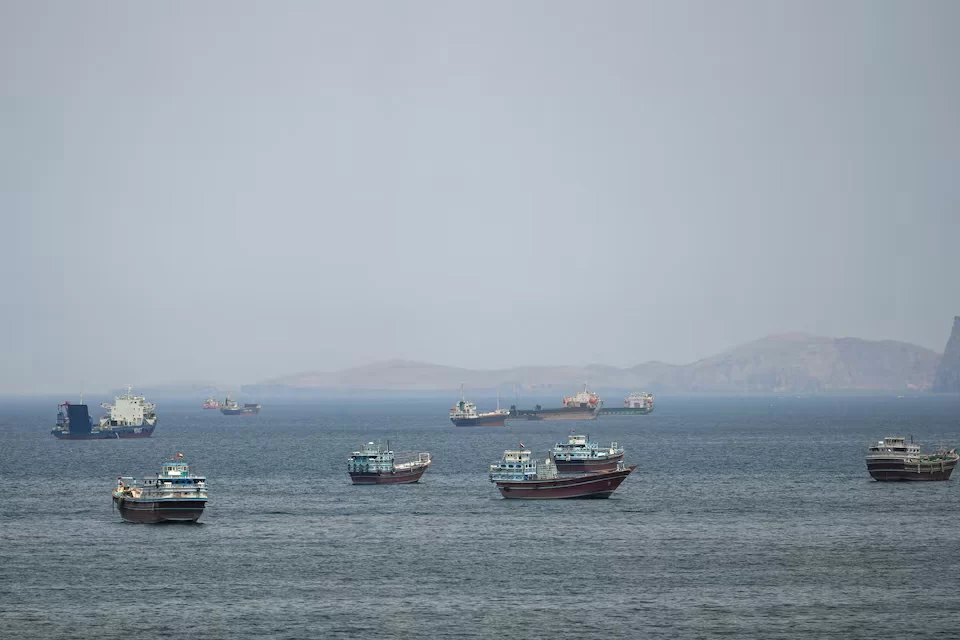
On Wednesday, just days after US President Donald Trump announced an indefinite suspension of planned military strikes against Iran, Iranian forces seized two commercial ships in the strategically vital Strait of Hormuz. This incident marks the first time Iran has seized foreign-flagged vessels in the key waterway since the outbreak of open hostilities in late February, escalating already heightened tensions between Tehran and Washington at a moment when regional peace efforts have already stalled.\n\nAccording to Iran’s semi-official Tasnim News Agency, the Islamic Revolutionary Guard Corps intercepted the two vessels over alleged maritime violations and escorted them to Iranian coastal ports. Earlier reports from British maritime security officials had already confirmed that three separate commercial ships came under fire in the straat earlier this week, adding new urgency to global concerns over freedom of navigation in the world’s most critical energy chokepoint.\n\nDespite Trump’s announcement of a paused military campaign and a temporary two-week ceasefire, the US leader confirmed via social media that Washington will maintain its full maritime blockade of Iran. Just days before the seizure, the US Navy intercepted and seized an Iranian cargo vessel in the region, and on Tuesday, American forces boarded and inspected a large Iranian oil tanker transiting the Indian Ocean. Tehran has decried the US blockade as an outright act of war, and has pledged to keep restricting transit through the strait for as long as the American blockade remains in place. Around 20% of global oil and liquefied natural gas supplies pass through the 21-mile-wide waterway, and Iran’s restrictions have already triggered a global energy crisis that has driven up fuel prices worldwide.\n\nPeace brokering efforts led by Pakistan, which stepped in as a neutral mediator between the two nations, have hit a major impasse. Planned peace talks scheduled this week in Islamabad, set to take place just before the temporary two-week ceasefire was set to expire, collapsed entirely when neither side sent delegations to the negotiating table. A luxury Islamabad hotel had been fully secured and prepared for the negotiations, but Iran never formally accepted the invitation to attend, while the US delegation led by Vice President JD Vance opted to remain in Washington. Security measures at the prepared venue have since been scaled back, though the site remains closed to the public.\n\nSpeaking to Reuters on condition of anonymity, a senior Pakistani official acknowledged the collapse of talks came as an unexpected setback. “Iran never issued an official refusal, and has repeatedly stated it remains open to coming to the table,” the official said, adding that Pakistani mediators are continuing to work aggressively to bridge gaps between the two sides while accommodating core security and political sensitivities of both Tehran and Washington.\n\nIran’s response to Trump’s ceasefire announcement has been marked by deep caution and open skepticism. Tasnim News has emphasized that Iran never requested a ceasefire extension, and has repeated threats to use military force to break the US blockade. A senior advisor to Iranian parliamentary speaker and chief nuclear negotiator Mohammad Baqer Qalibaf warned that Trump’s announcement could be a deliberate trick to buy time for a surprise military strike on Iranian infrastructure.\n\nSince the start of the conflict, Iran has effectively closed the Strait of Hormuz to unauthorized commercial traffic, targeting vessels that attempt to transit the waterway without Tehran’s permission. On Wednesday, the UK Maritime Trade Operations (UKMTO) confirmed that at least three container ships had been fired on by Iranian forces in recent days. One vessel was approached by an Iranian gunboat and hit with machine gun fire and grenade launchers, causing significant damage to the ship’s bridge. No crew casualties or environmental damage were reported in the incident, while the two other attacked ships also reported no injuries among their crews. Tehran has condemned recent US actions at sea, including the boarding of an Iran-bound oil tanker heading to Singapore, as “state-sponsored piracy and terrorism.”\n\nTrump’s latest ceasefire announcement marks the second time in as many weeks that the US president has backed away from last-minute threats to bomb Iranian civilian energy infrastructure and key bridges. Those threats drew widespread international condemnation, with many global leaders warning that targeting civilian infrastructure could constitute a war crime under international law. Iran had responded to the threats by pledging to launch retaliatory strikes against US allies in the Arab Gulf if any civilian infrastructure in the country was targeted.\n\nIn the immediate aftermath of the ceasefire announcement, global oil prices fell below $100 a barrel for the first time in weeks, though global stock markets and US dollar exchange rates continued to see high volatility amid ongoing uncertainty over the future of the conflict. Even with calls for an extension of the temporary ceasefire, the collapse of planned Islamabad talks has left the broader peace process on extremely shaky ground.\n\nA senior Iranian official told Reuters that Tehran remains open to a new round of peace negotiations, but only if Washington abandons its current policy of maximum pressure and coercive threats. The first round of talks, held 11 days earlier, failed to produce any breakthrough agreement. Washington’s core demand is that Iran surrender its stockpiles of highly enriched uranium to prevent Tehran from developing a nuclear weapon. Iran has repeatedly insisted that its nuclear program is entirely peaceful, and that developing a civilian nuclear program is a sovereign right guaranteed to Iran under the Treaty on the Non-Proliferation of Nuclear Weapons. Tehran’s core demands include a full end to hostilities, the lifting of all international and US sanctions, war reparations for damages caused by the conflict, and formal international recognition of Iran’s full sovereignty over the Strait of Hormuz.