标签: Suriname

苏里南

  • Nederland kampt met grootste veiligheidsdreiging sinds WOII

    Nederland kampt met grootste veiligheidsdreiging sinds WOII

    In a stark annual assessment released Thursday, the Netherlands’ leading intelligence and security service, the Algemene Inlichtingen- en Veiligheidsdienst (AIVD), has sounded the alarm that the country is facing the most severe combination of national security threats it has encountered since the end of World War II. Officials identify major foreign and domestic actors driving this unprecedented risk landscape, as shifting global power dynamics erode decades of relative stability that underpinned Dutch peace and prosperity.

    “In the 80 years since our agency was founded, we have never observed a threat environment like the one we face today: our national security is under sustained pressure from multiple directions simultaneously,” AIVD Director Simone Rmit stated during the official launch of the 2025 annual threat report. She emphasized that after generations of predictable, stable global order that allowed the Netherlands to grow and thrive, the international system has now become fundamentally volatile and unpredictable.

    As a founding member of both NATO and the European Union, the Netherlands faces particularly acute external threats from two major powers: Russia and China, the report confirmed. According to AIVD analysis, Russia has grown increasingly aggressive toward Western nations, conducting regular disruptive cyberattacks and building capacity for a long-term confrontation with the NATO alliance. The assessment concludes that a direct military clash between Russia and Western powers can no longer be ruled out as an impossible outcome.

    Russia has repeatedly rejected claims of planned aggression against NATO member states, countering that the “collective West” itself threatens Russian national security through its extensive financial and military backing of Ukraine amid the ongoing war.

    On the Chinese front, the AIVD accuses Beijing of continuing “illicit” efforts to acquire cutting-edge Western technologies to reshape the global order in line with its own strategic and economic interests. The service notes that China has long been categorized as the top threat to Dutch economic security, and that risk has grown even more pronounced over the course of 2025. China has consistently denied engaging in any illegal technology acquisition activities and maintains it poses no threat to Western nations.

    Beyond external risks, the report also highlights growing domestic security concerns. Both jihadist extremist groups and far-right extremist movements are listed as the primary internal threats to the country, with the AIVD noting that both ideologies are gaining alarming levels of traction among young Dutch people, a trend that officials describe as deeply troubling.

    The AIVD’s high-profile warning underscores just how complex and multifaceted modern security challenges have become for the Netherlands, at a time when the global order is far less stable and predictable than it has been at any point in the past eight decades.

  • Kandidaten VN-chef beloven hervormingen en herstel vertrouwen

    Kandidaten VN-chef beloven hervormingen en herstel vertrouwen

    As the United Nations prepares to select a new leader to succeed incumbent Secretary-General António Guterres in 2027, four early candidates took center stage this week at public hearings with UN member states and civil society groups, all pledging to embrace sweeping institutional reforms to reverse the global body’s declining credibility and restore its central role in international cooperation.

    Founded in the aftermath of World War II to prevent catastrophic global conflict and advance shared development, the UN has faced growing criticism in recent years over eroding authority and public trust. Deepening geopolitical rifts between major powers have strained the organization’s ability to respond to global crises, while its sprawling institutional structure has led to calls for cost-cutting and greater efficiency, putting pressure on the 193-member body to prove its ongoing relevance in a shifting world order.

    Among the candidates is Rebeca Grynspan, 70, a former vice-president of Costa Rica and current head of the UN Conference on Trade and Development (UNCTAD), who identified UN peacekeeping operations as her top priority if selected. She sounded the alarm over falling global confidence in the organization, urging bold, decisive action to update its structures. “Defending the United Nations today means having the courage to change it,” Grynspan stated during her hearing.

    She is joined on the candidate list by another former regional leader, 74-year-old Michelle Bachelet, ex-president of Chile and former UN High Commissioner for Human Rights. If either candidate wins, they will make history as the first woman to lead the UN. Bachelet used her hearing to emphasize her longstanding commitment to advancing gender equality and women’s rights globally, though her candidacy has drawn backlash from conservative U.S. politicians over her public support for abortion access.

    Former Senegalese President Macky Sall, 64, is also in the race, campaigning on a platform of rigorous institutional management. Sall has pledged to streamline coordination across the UN’s dozens of independent agencies and eliminate redundant work practices. “This is the moment to deliver better performance with fewer resources,” he argued, outlining a vision of a revitalized UN whose most impactful work still lies ahead.

    The fourth early candidate is Rafael Grossi, 65, an Argentine diplomat who has served as head of the International Atomic Energy Agency (IAEA), the UN’s nuclear watchdog, for six years. Grossi framed ongoing institutional reform efforts as a necessary starting point for the organization, but stressed that significant work remains to address the UN’s structural challenges.

    The winning candidate will secure a five-year term, with an option to renew for a second five-year term. Compared to the 2016 selection cycle that ultimately elevated Guterres from a field of 13 contenders, the current candidate pool is far smaller at this early stage, though the door remains open for new contenders to join the race in the coming months.

    By longstanding convention, the secretary-general role is not filled by a national of the UN Security Council’s five permanent members — China, France, Russia, the United Kingdom, and the United States — a rule designed to prevent an unhealthy concentration of power among the world’s major nuclear-armed states. Even so, the backing of these permanent powers remains a critical factor in the complex, closed-door selection process, which requires Security Council endorsement before a candidate is confirmed by the General Assembly.

    Against a backdrop of overlapping global crises, from intensifying armed conflicts to accelerating climate change and widening global inequality, the next UN secretary-general will face one of the most daunting leadership jobs in the world: rebuilding public and multilateral trust in the UN, and reasserting the organization’s place as the central platform for collective global problem-solving.

  • Reparatiebedrijf Sardha doet aangifte tegen ‘Newara’ om vermeende facturen Canawaima

    Reparatiebedrijf Sardha doet aangifte tegen ‘Newara’ om vermeende facturen Canawaima

    A Surinamese repair company has launched formal legal action against a local politician, accusing him of defamation, slander, and document forgery, in a case that has amplified existing tensions over mismanagement allegations at a state-owned enterprise. On Wednesday, M.J. Sardha, a family-owned repair business based in Nickerie, filed the police report against Newalsing Nankoesing, a prominent local politician widely known by his nickname Newara.

    The conflict stems from a live social media broadcast hosted by Nankoesing, where he presented what he claimed were three official invoices from M.J. Sardha totaling more than 500,000 Surinamese dollars for work completed for Canawaima Management Company, the state-run port and ferry management firm. During the stream, Nankoesing also made public claims that Richenel Vrieze, president commissioner of Canawaima, holds hidden financial interests in M.J. Sardha, and that the business is officially registered under Vrieze’s wife’s name.

    Shaijad Sharda, legal representative for M.J. Sardha and son of the company’s owner, has forcefully refuted all of these accusations. In an interview with local outlet Starnieuws, Sharda made clear that the company never created or submitted the invoices Nankoesing displayed to Canawaima’s leadership. The business had no prior knowledge of the documents until they were spread publicly on social media, he added.

    Sharda did confirm that M.J. Sardha has carried out legitimate, contracted work for Canawaima, including major repair work on a ferry engine that remained ongoing until the controversy broke. All of the firm’s work for the state company was completed following standard transparent procurement and contracting procedures, he emphasized, pushing back on the insinuations of nepotism and conflicts of interest.

    “There is no family connection whatsoever to Mr. Vrieze. His wife does not work for our company, nor is she any relation to our family,” Sharda stated in the interview. He added that Nankoesing’s unsubstantiated claims have caused severe, lasting damage to the company’s reputation and disrupted its day-to-day operations, leaving the business with no choice but to pursue legal action.

    The legal filing comes amid a growing crisis over governance at Canawaima, with multiple officials raising alarms about ongoing irregularities at the state-owned firm. Previously, Dayanand Dwarka, chair of the union representing Canawaima workers, publicly confirmed the existence of the disputed invoices and backed claims of widespread mismanagement at the company. Separately, Lesley Daniël, Canawaima’s terminal manager, submitted a formal written report to Raymond Landveld, Suriname’s Minister of Transport, Communication and Tourism, detailing a range of alleged irregularities – including instances where the Board of Commissioners carried out operational activities that fall outside its official mandate.

    In response to the growing allegations, Minister Landveld has already announced a full overhaul of Canawaima’s leadership, confirming that the entire existing Board of Commissioners will be replaced. The new board is scheduled to be officially appointed the day after the defamation report was filed, and the minister has also ordered a full independent investigation into potential corrupt activities within the state-owned enterprise.

  • Nieuwe Raad van Commissarissen Canawaima wordt vandaag benoemd na ophef

    Nieuwe Raad van Commissarissen Canawaima wordt vandaag benoemd na ophef

    On April 23, the Ministry of Transport, Communication and Tourism of Suriname announced that a new Supervisory Board (Raad van Commissarissen, RvC) will be officially installed at the Canawaima Management Company (CMC) on the same day, according to Minister Raymond Landveld.

    CMC operates the critical ferry connection between Suriname’s South Drain and neighboring Guyana, a key transit link for cross-border travel and trade between the two South American nations. The major leadership reshuffle comes on the heels of public, serious allegations of conflict of interest that rocked the outgoing supervisory body.

    Per local media outlet Starnieuws’ verified sources, the new board will be led by Naraindeth Seopershad as president-commissioner, with Prakash Raghoebiren and Fandi Bogor joining as sitting members. The three members of the previous board – chair Richenel Vrieze, Abdul Madhar, and Edgar van Genderen – have been notified of the change, though their formal resignation process has not yet been fully completed.

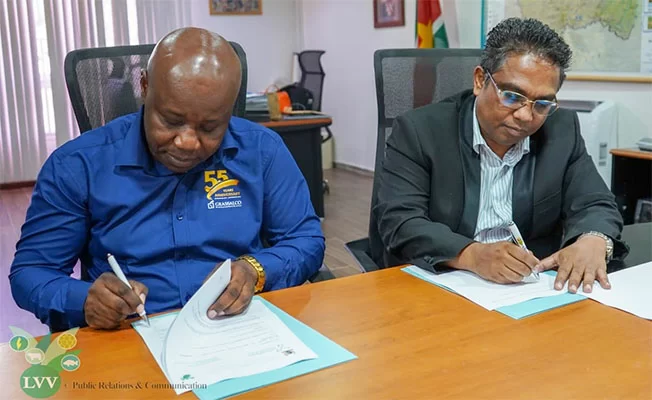
    The decision to replace the entire supervisory board was reached following closed consultations between Minister Landveld and Suriname’s President Jennifer Simons. The process accelerated dramatically after the CMC workers’ union, headed by Dayanand Dwarka, formally withdrew its confidence in the old board’s leadership.

    The union had initially planned to launch industrial action to push for leadership changes, but ultimately called off the protests after reaching an agreement with Minister Landveld. The union made the concession to avoid disrupting ferry services, which would have harmed passengers relying on the cross-border connection. In return, Landveld committed to rapid intervention to address the union’s concerns – a promise that has now resulted in the full replacement of the supervisory board.

    As of the announcement, outgoing board members have not yet received a formal hearing from the Ministry of Transport, Communication and Tourism (TCT) or the President’s Cabinet, nor have they been placed on administrative leave pending the finalization of the transition.

  • Column: Voeg de daad bij het woord: Kraka Green Guardians baka!

    Column: Voeg de daad bij het woord: Kraka Green Guardians baka!

    A recent 1-0 defeat for NAC Breda at the hands of Go Ahead Eagles has sparked widespread upheaval across Dutch football, with what began as an isolated relegation-battle eligibility dispute quickly escalating into a systemic crisis touching dozens of players, two national football associations and club immigration policies.

    The controversy centers on the eligibility of players representing Suriname’s senior men’s national team, the Green Guardians. What started as a challenge over one reportedly ineligible player in NAC Breda’s squad expanded dramatically, with multiple Suriname international players plying their trade in the Dutch club system facing severe disciplinary action from their employers. For some players, the situation has escalated beyond internal club discipline, requiring them to apply for new work permits just to retain access to club facilities and their playing contracts, creating profound uncertainty over their professional and immigration status in the Netherlands.

    For the players caught in the crossfire, the past weeks have been fraught with confusion and frustration. Many in the Dutch football ecosystem have rushed to judgment without examining the core facts of the case, including one glaring question that has yet to be answered: why is this eligibility issue being raised more than six years after the players first represented Suriname?

    The response from key stakeholders has only deepened the chaos. The Royal Dutch Football Association (KNVB) has adopted a hands-off approach, declining to issue formal sanctions or guidance on the dispute. In contrast, Dutch clubs holding contracts with Suriname internationals have implemented harsh, immediate measures. Several players returning from international duty with Suriname were barred from club training and facilities upon their arrival back in the Netherlands. In the most extreme cases, players were referred to the Immigratie en Naturalisatie Dienst (IND), the Dutch immigration service, with their right to reside and work in the Netherlands called into question – even for players who previously held Dutch nationality.

    Most notably, the Surinaamse Voetbal Bond (SVB), the national governing body of Suriname football that has been hardest hit by this controversy, has remained completely silent on the issue more than two weeks after the dispute first erupted. The SVB’s failure to issue a clear public stance has only amplified uncertainty for all involved. Recent observations that Suriname fielded only locally based players for a recent women’s international match has fueled widespread speculation that the SVB may abandon its longstanding policy of calling up Suriname-born professional players based in European leagues, including the Netherlands, moving forward.

    For Dutch clubs, the outcome so far has delivered an unintended win: the dispute has effectively halted the SVB’s practice of calling up players based in the Netherlands, a policy that had frustrated clubs for years due to the long-haul travel required for international fixtures, which left players fatigued and unavailable for club commitments.

    If the SVB continues to refrain from addressing the crisis publicly, the future of its “New Style National Team” project – built around integrating Europe-based Suriname-origin players – will be left hanging by a thread. While thorough investigation of the dispute takes time, a two-week silence rooted in the hope that the controversy will simply fade away is not a viable strategy. No stakeholder benefits from prolonged uncertainty, and even after this crisis resolves, professional players of Suriname origin will almost certainly think twice before agreeing to represent the Green Guardians going forward.

    The SVB does not just owe a public stance to the football community: it has a responsibility to support the players caught in this difficult situation and deliver clear, accurate information to fans and stakeholders. The association needs to match its slogan “w’e kraka Green Guardians baka” with action, rather than hiding from scrutiny. Instead of delivering unchallenged monologues to select media outlets, the SVB must organize a public press conference to provide much-needed clarity on an issue that has divided football communities across the Netherlands and Suriname for weeks.

  • Minister Soeropawiro belooft doorbraak in slepende grondkwestie Mariënburg

    Minister Soeropawiro belooft doorbraak in slepende grondkwestie Mariënburg

    On April 23, a landmark public gathering between senior Surinamese government officials and residents of Mariënburg brought long-simmering land rights issues in the region to the forefront of national policy action, with top leaders announcing an end to delayed talks and the launch of a targeted, case-by-case resolution process.

    Thousands of local residents packed the venue of the meeting, held by the Ministry of Land and Forest Management, after years of waiting for formal clarification on their legal land ownership claims. For decades, Mariënburg residents have navigated systemic uncertainty around land tenure, with repeated unfulfilled promises from previous administrations leaving deep public distrust.

    Opening the meeting, Minister of Land and Forest Management Stanley Soeropawiro delivered a clear, uncompromising message to attendees: the phase of rhetorical commitment is over, and tangible, on-the-ground action is set to begin immediately. “Let me be perfectly clear,” Soeropawiro stated. “If our government can successfully resolve complex challenges like illegal land occupation, there is no credible reason why the decades-long issues in Mariënburg cannot be fixed.”

    Bronto Somohardjo, chair of the Standing Committee on Land Affairs in the National Assembly, echoed the minister’s commitment, drawing a clear distinction between the current administration’s approach and pre-election political performativity criticized by local residents. “We are not here today to play politics,” Somohardjo emphasized. “If that were our goal, we would have followed the same playbook as the VHP: call you in right before an election, hand you a meaningless piece of paper with no legal standing, and disappear. That is not what the people of Mariënburg deserve.”

    Instead of empty promises, the ministry has rolled out a new, community-centered resolution strategy: direct documentation collection and individual case assessment. Local residents have been formally called on to submit all relevant paperwork supporting their claims, including land allocation letters, payment receipts, and formal plot boundary information. Officials will review each dossier individually to develop targeted, long-term structural solutions that resolve tenure uncertainty permanently.

    Soeropawiro framed the public gathering as an official turning point for the region, saying, “The era of waiting and uncertainty must come to an end. We will now work step by step to deliver clarity, justice, and solutions that last.” The ministry’s core priority throughout this process is to rebuild fractured public trust: rather than relying solely on communication, officials have committed to delivering visible, measurable results that address the community’s decades-old grievances.

  • Overheid geïnformeerd over impact Nieuw Burgerlijk Wetboek

    Overheid geïnformeerd over impact Nieuw Burgerlijk Wetboek

    On April 22, the Cabinet of the President of Suriname launched an inaugural information session hosted at the country’s Congress Hall, aimed at clarifying sweeping changes introduced by the long-awaited New Civil Code (NBW) for representatives from government ministries and civil society organizations. The session was led by experienced notary Aniel Autar, who walked attendees through the code’s most impactful amendments and their far-reaching implications for everyday life and legal practice across the nation.

    The NBW officially entered into force on May 1, 2025, bringing with it transformative changes that touch nearly every corner of Suriname’s society. Given the full legal text is extensive and time-consuming to study in full for most stakeholders, the Cabinet organized this introductory session to distill the code’s core changes into accessible, actionable information for key decision-makers.

    Sergio Akiemboto, the Cabinet’s Chief of Staff, emphasized in his remarks that deep familiarity with the new legislative framework is non-negotiable for policy leaders across government. As the Suriname Communication Service reported, he underlined that national law is a continuously evolving framework, and this briefing is just the starting point for identifying areas that may require additional clarification or fine-tuning moving forward.

    This initial session marks only the first step in a broader nationwide outreach initiative. Future briefings are already scheduled for a wide range of targeted groups, including neighborhood community organizations, practicing notaries, and legal professionals. Media organizations will also play a central role in the strategy, tasked with translating the technical legal content into clear, accessible language for the general public.

    Autar explained that the push for a completely updated civil code stemmed from the reality that Suriname’s decades-old previous legal framework had fallen out of step with modern social and commercial practice. To address this gap, the NBW includes a host of sweeping reforms: it establishes the first formal legal basis for trusts in Suriname, updates the country’s marital property regulations, eliminates the fixed legal portion of an estate previously required for direct heirs, and expands legal protections for surviving spouses.

    Beyond personal and family law reforms, Akiemboto drew particular attention to new regulations establishing personal liability for members of supervisory boards, stressing that leaders and oversight officials at state-owned enterprises must fully understand these new obligations to remain compliant.

    Autar noted that the NBW has faced remarkably little substantive criticism from legal and political stakeholders since its enactment, but public discussion has centered on the relatively rapid timeline of its rollout. For Autar and other organizers, the single largest ongoing challenge remains ensuring that legal practitioners, public officials, and other affected parties not only fully comprehend the new code’s provisions but can also apply them consistently and effectively in daily practice.

  • Felle brand verwoest pand in binnenstad

    Felle brand verwoest pand in binnenstad

    A large-scale, intense fire erupted at a building located on Heerenstraat in central Paramaribo, near the Happy Supermarket, at approximately 7:15 p.m. local time on April 22, local emergency services confirmed in initial reports. When first responder firefighters arrived at the incident scene, they encountered a fully out-of-control blaze that was already spreading rapidly across the structure. The intensity of the flames and the thick, heavy smoke generated by the fire prompted emergency officials to immediately escalate the response, calling in additional resources to tackle the emergency. As of the latest update, firefighting teams remain on site working continuously and aggressively to extinguish the fire, with a top priority of stopping the blaze from spreading to nearby neighboring buildings that sit adjacent to the affected structure. At this stage of the investigation, no official information has been released regarding the root cause of the fire. Local law enforcement has already cordoned off the entire affected area to preserve public safety, prevent unauthorized access, and keep civilian bystanders at a safe distance from the active hazard. No updates on civilian or first responder casualties have been released in the initial hours following the outbreak of the fire.

  • Peruaanse ministers stappen op na conflict met president over F-16-deal

    Peruaanse ministers stappen op na conflict met president over F-16-deal

    A deepening political rift over a multibillion-dollar plan to purchase F-16 fighter jets from the United States has rocked Peru’s interim government, leading to the abrupt resignation of the country’s defense and foreign affairs ministers on Wednesday. Defense Minister Carlos Diaz and Foreign Minister Hugo de Zela stepped down amid growing uncertainty and escalating political tensions surrounding the proposed $3.42 billion acquisition, triggering a crisis that carries major implications for both Peru’s military modernization and regional geopolitics.

    Interim President José Balcazar, who is set to leave office following presidential elections in July, has sought to downplay the severity of the split, clarifying that he did not oppose the jet deal itself. Instead, Balcazar explained that he favored delaying all payments related to the purchase until the next elected administration takes office, a position that put him at direct odds with his two senior cabinet members.

    In his official resignation letter, Diaz made clear the split was not a minor policy disagreement: “A strategic decision has been made that I fundamentally cannot agree with.” Speaking publicly in a televised address after the resignations, Balcazar claimed his earlier comments about delaying the purchase had been misinterpreted. He reaffirmed that the F-16 deal would proceed as planned, but that all financial obligations for the acquisition would be passed to the incoming government. “We remain committed to all agreements reached at the level of the armed forces, in this case the air force ministry, to continue the corresponding negotiations,” Balcazar stated.

    The planned purchase is a core part of Peru’s years-long effort to modernize its aging fighter fleet, which currently relies on 1980s and 1990s-vintage Mirage 2000 and MiG-29 aircraft. The country ultimately intends to acquire 24 new fighter jets, with an initial order of 12 aircraft planned for the first phase of modernization.

    U.S. defense giant Lockheed Martin is the leading candidate to supply the jets, with competing bids also on the table from defense contractors based in Sweden and France. Back in September, the U.S. State Department formally approved the potential sale of 12 F-16s alongside related support packages, valuing the total deal at roughly $3.42 billion. Lockheed Martin has partnered with General Electric Aerospace and RTX Corp. for the proposed contract.

    Tensions first boiled over last week, when Balcazar canceled a planned signing ceremony for the Lockheed Martin deal at the eleventh hour. The last-minute cancellation drew sharp criticism from Washington, with U.S. Ambassador to Peru Bernie Navarro warning on social media that the U.S. would deploy “all available tools” against any parties that negotiate in “bad faith.”

    The dispute over the jet deal unfolds against a backdrop of intensifying geopolitical competition in Latin America, as the United States has ramped up efforts in recent years to expand its influence in Peru. The South American nation is one of the world’s top copper producers, and has emerged as a key strategic economic partner for China, a development that has drawn growing attention from U.S. policymakers.

    Earlier this year in January, the White House designated Peru as a major non-NATO ally, a status designed to deepen defense cooperation between the two countries and expand Peru’s access to U.S. trade and security programs. The U.S. State Department has also approved a funding package to upgrade Peru’s Callao naval base near Lima, a further sign of Washington’s push to strengthen its military presence in the country.

    Analysts note that the outcome of the current political standoff over the F-16 deal will not only shape the future of Peru’s military capabilities, but also shift the balance of geopolitical influence in the Latin American region, as both the United States and China continue to compete for greater strategic and economic access across South America.

  • Illegale vuilstort bij Ston Oso aangepakt, maar probleem blijft bestaan

    Illegale vuilstort bij Ston Oso aangepakt, maar probleem blijft bestaan

    For over a week, Suriname’s Directorate of Public Green Space and Waste Management (OGA) has been working to clear tons of illegally dumped waste from the grounds surrounding the iconic historic Ston Oso building in central Paramaribo. The landmark site has emerged as a persistent hotspot for unregulated waste dumping, with offenders repeatedly leaving discarded materials and trash on the property despite repeated cleanup efforts.

    OGA director Anwar Moenne told reporters via Suriname’s Communication Service that investigators have not yet identified the specific individuals responsible for the ongoing dumping, though authorities hold preliminary suspicions that unhoused people staying in the area are connected to the waste accumulation. “This is one of the locations that sees an extraordinary volume of illegal dumping on a repeated basis,” Moenne stated in his remarks, adding that the directorate will enforce strict penalties against anyone caught dumping waste at the site moving forward.

    The current large-scale cleanup operation is being carried out in partnership with several local stakeholders, including a cohort of incarcerated individuals participating in community work programming. Alongside the cleanup efforts, OGA has issued a public call for broader community engagement, urging all Surinamese residents to take responsibility for maintaining clean, healthy shared living environments across the country.

    Local business owner Patrick Liesdek, who operates a shop adjacent to the Ston Oso property, told reporters that the illegal dumping problem has plagued the neighborhood for years. Even after multiple previous cleanup initiatives organized by authorities, the area quickly becomes cluttered with waste again once crews finish their work. Liesdek added that the accumulated waste and presence of unhoused people in the area have also brought secondary nuisance issues, including frequent infestations of rodents and other pests that have spilled over to neighboring properties including his store.

    Liesdek is calling on local authorities to adopt a long-term, structural solution to the crisis rather than relying solely on periodic cleanup projects that only address the symptom of the problem, not its root causes. At the same time, he expressed hope that the historic Ston Oso building, a landmark of Paramaribo’s cultural heritage, will be preserved and eventually receive full restoration work to protect it for future generations.