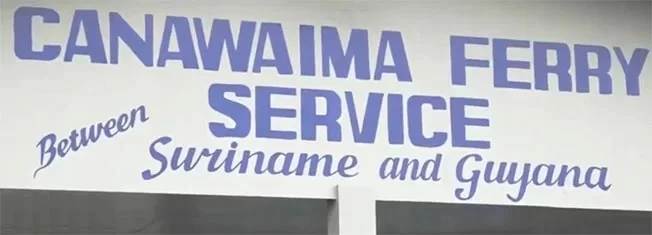
In a swift decision following allegations of misconduct at state-owned ferry operator Canawaima, all three members of the company’s Supervisory Board (Raad van Commissarissen, RvC) have been removed from their posts. The action was finalized on 22 April following closed consultations between Raymond Landveld, Suriname’s Minister of Transport, Communication and Tourism, and national President Jennifer Simons.
Union leadership confirmed the government’s intervention to local outlet Starnieuws, noting that the ruling came in direct response to concerns raised by organized labor just days prior. Dayanand Dwarka, chair of the Canawaima workers’ union, confirmed that Minister Landveld had officially notified him of the dismissal order. Just this Monday, the union had formally withdrawn all confidence in the incumbent RvC over reports of widespread wrongdoing at the state-run enterprise, which operates the critical ferry link between South Drain in Suriname and neighboring Guyana. After meeting with Landveld to discuss the allegations, union representatives agreed to pause planned industrial action that would have disrupted ferry services to avoid harming the thousands of passengers who rely on the cross-border connection. In the meeting, the minister had given a formal commitment that the government would step in to address the union’s concerns.
To the surprise of many observers, the government delivered on that promise in less than a week. The union has praised the rapid response from the country’s executive branch. Dwarka emphasized that both Minister Landveld and President Simons acted decisively to resolve the crisis. Even as the union celebrates this outcome, however, Dwarka warned that the problems at Canawaima are not an isolated incident. Across multiple state-owned enterprises in Suriname, he argued, national interests are often not prioritized, opening the door to mismanagement and graft.
Dwarka, who also serves as deputy chair of Suriname’s largest trade union center C-47, said the incident has made it clear that systemic reform is needed across the country’s state-owned sector. C-47 is calling for permanent structural changes, including a requirement that trade unions get a permanent seat on the supervisory boards of all state enterprises. For frontline workers, good governance is not an abstract policy goal: it directly determines their job security and long-term livelihoods, Dwarka explained.
The speed of the RvC’s dismissal has drawn particular attention: the entire board took office less than two months before corruption allegations emerged. Dwarka called that timeline deeply worrying, noting that improper activity began almost immediately after the board assumed oversight responsibilities. The union has pushed for tangible, long-term changes to strengthen the company’s oversight function rather than just replacing the dismissed board members.
Minister Landveld has signaled openness to the union’s core demand: he has confirmed that he will discuss the proposal to add a union representative to Canawaima’s newly formed supervisory board with President Simons as the process to appoint a new RvC moves forward.