The Willebrod Axwijk Sports and Youth Center, commonly known as SOSIS, located at the intersection of Coesewijne and Marowijne streets, has officially reopened to the public. The Ministry of Youth Development and Sports (JOS) has reclaimed management of the complex after its gates were previously blocked by third parties. Through a bailiff’s writ, the Florentina Vyent Foundation was ordered to immediately cease all management activities, open the gates, and remove all illegally constructed structures on the SOSIS premises within five days. The foundation cited a contract signed under the previous administration, but the current ministry leadership claims that several terms of the agreement were not upheld. In the public interest and in alignment with government objectives for sports development, JOS decided to terminate the earlier contract, stating that it did not serve the broader sports community and hindered free public access to the complex. The ministry has begun assessing the sports facilities within the SOSIS complex to ensure safety and usability. For now, the center remains closed to the public during evening hours pending further safety and management measures. This move underscores the ministry’s commitment to keeping state-owned sports infrastructure accessible to all citizens, particularly the youth, for whom sports and physical activity are vital for development and community cohesion. The ministry has urged all sports clubs and organizations using SOSIS facilities to register with the director’s office via phone at 472872 or email at dirsportsenj@gmail.com.
标签: Suriname
苏里南
-

Column: De digitale vuilnisbelt van de politiek
Social media platforms are increasingly flooded with so-called news sites that peddle opinions and political propaganda under the guise of journalism. These platforms, often masquerading as legitimate online news outlets, lack any journalistic foundation. They are the digital weeds in the political garbage dump: noisy, toxic, and deadly to the quality of public discourse. These sites proliferate across Facebook, TikTok, and WhatsApp, spreading not news but misinformation—deception packaged as information. They operate without editorial oversight, physical addresses, or identifiable authors, ensuring no one is held accountable for their content. To appear credible, they occasionally mix in ‘normal’ news stories, but their primary output is an endless stream of politically biased, strategically driven opinions. Their goal is not to inform but to infect. Behind the scenes, shadowy groups pull the strings—political actors sowing chaos, promoting division (often along ethnic lines), and eroding public trust in legitimate media. Their fake news consists of fabricated quotes, doctored photos, outdated images presented as current, and so-called ‘revelatory’ stories without a single verifiable source. Their message is like poison in honey: enticing but deadly to public trust. The societal damage is immense. Misinformation undermines the foundation of democracy, replacing dialogue with polarization and threatening to drown honest journalism in a sea of lies. Facts are manipulated, emotions are exaggerated, and citizens can no longer discern truth from falsehood. What appears to be freedom of expression is, in reality, organized deception. Combating this digital pollution requires decisive action—not censorship, but accountability. It falls to genuine media and professional journalism to expose these ghost platforms and arm the public against their influence. This is not about limiting freedom but protecting it. Freedom of speech and press freedom are enshrined in constitutions and international treaties like the BUPO Convention and the Inter-American Convention on Human Rights. However, freedom is never absolute; it exists within the boundaries of truth, responsibility, and ethics. Dutch scholar H.A. Visser, in his research on the future of journalism, argues that true press freedom can only be guaranteed by independent editorial teams operating within professional and moral frameworks. This is the line between freedom and abuse. What is urgently needed now is transparency: a public list or index of accredited news media that adhere to verifiable sources, editorial responsibility, and journalistic codes. Those who operate outside these standards do not belong in journalism. Real journalism demands time, effort, and professionalism—dedication, integrity, and accountability. Fake news costs nothing but the trust of society. Society itself also has a role to play. Citizens must relearn what news is, who produces it, and what standards it should meet. They should scrutinize publishers, check sources, and avoid sites that scream, accuse, or incite without ever correcting themselves. Freedom of expression is not a license for chaos. For those who poison the news, poison democracy.
-

Bij 80 jaar VN: DNA benadrukt noodzaak multilaterale samenwerking
The United Nations (UN) marked its 80th anniversary on Thursday, coinciding with Suriname’s 50th year as a member state. The National Assembly of Suriname held a special session to commemorate these dual milestones, emphasizing the nation’s commitment to dialogue, multilateralism, and international responsibility in a world increasingly marred by conflict. Parliament Speaker Michael Adhin highlighted Suriname’s admission as the 146th UN member on December 4, 1975, and its role in translating UN principles into national legislation. UN Resident Coordinator Joanna Kazana praised Suriname as a ‘small nation with significant moral conviction,’ referencing President Jennifer Simons’ recent UN speech advocating for hope, shared responsibility, and climate justice. Foreign Minister Melvin Bouva underscored the UN’s strategic importance for Suriname’s development, noting efforts toward a potential Security Council candidacy by 2043. Parliamentary factions unanimously stressed the UN’s enduring relevance, with calls for fairness in multilateralism and the preservation of peace, justice, and human dignity. Leaders from various parties echoed the sentiment that Suriname’s diversity exemplifies the UN’s ideals, proving that peace is not just an abstract concept but a lived reality.
-

Recensie: Hariandi Todirijo – Liliek en de onzichtbare spuiter
Hariandi Todirijo, a multifaceted artist known for his work as a poet, writer, and photographer, has emerged as the winner of the 2023 Donner/Self Reliance Writing Contest with his novella, ‘Liliek en de onzichtbare spuiter.’ Originally trained in technological sciences, Todirijo later found his calling in journalism, contributing to publications like ‘de Ware Tijd.’ His literary prowess was further recognized in 2022 when he was nominated for the Ibis Prize in both prose and poetry categories.
The novella, spanning 104 pages, is distinguished by its use of Surinamese-Dutch, a variant of the Dutch language, interspersed with words from Sranan and Surinamese-Javanese. This linguistic choice not only enriches the narrative but also highlights the cultural diversity of Suriname. The story is set in Lelydorp, a town in Suriname, and is believed to take place in the latter half of the 20th century. References to Suralco’s mining activities and beverages like Spur Cola from Canada Dry provide a vivid historical backdrop.
‘Liliek en de onzichtbare spuiter’ is the first literary work to offer an insider’s perspective on Lelydorp. The protagonist, Liliek, a curious boy, becomes fascinated by tales of an ‘invisible sprayer’ haunting the public cemetery on Schotelweg. Despite his father’s knowledge of the area, Liliek embarks on a personal investigation, uncovering the deep-seated fears and reverence for spiritual forces within the community.
Todirijo masterfully builds suspense, keeping readers engaged until the very end. The dialogues are authentic, reflecting the community’s speech patterns. The novella explores themes of tradition, faith, and curiosity, presenting a universal story rooted in Surinamese reality. Liliek’s character, driven by a thirst for knowledge and a sense of community, resonates with young readers.
The book is set to be presented on Wednesday, October 29, 2025, at B.S. Het Park at 7:00 PM. ‘Liliek en de onzichtbare spuiter’ is not just a literary achievement but also a cultural tribute to the spiritual and cultural richness of Lelydorp.
-

Esav vraagt president om directe ingreep in strafzaak Pikin Saron
The Indigenous Platform Unity Solidarity Alliance and Progress (Esav) has submitted a petition to President Jennifer Simons, demanding the immediate release or pardon of five Indigenous men involved in the Pikin Saron legal case. Esav also called for a fully independent and transparent investigation into the deaths of Martinus Wolfjager and Ivanildo Dijksteel, urging accountability for those responsible. Additionally, the platform advocated for the establishment of a Ministry of Indigenous Affairs. The petition highlights the escalating tensions over land rights in Pikin Saron, which reached a boiling point on May 2, 2023, when residents took drastic measures after repeated protests, negotiations, and petitions failed to yield results. This led to the hostage-taking of officials and the burning of vehicles and buildings. During the police intervention, two Indigenous men lost their lives. The five suspects initially received an eight-year prison sentence, with their appeal still pending. A separate case against seven police officers suspected of involvement in the deaths of Wolfjager and Dijksteel is also ongoing. Esav further demanded a thorough police investigation into the disappearance of a third Indigenous man during the incident, a review of the proposed 5-kilometer zone around Indigenous villages, formal recognition of demarcation maps for each Indigenous village through VIDS, full acknowledgment of self-determination rights and cultural heritage, and an immediate investigation into environmental pollution in Maripaston and tensions surrounding Grassalco in Pikin Saron and Bigi Poika. The petition was received at the President’s Cabinet by Chief of Staff Sergio Akiemboto, who emphasized that no land rights issue worldwide has been fully resolved within a single term. However, he suggested the necessity of a temporary law to immediately halt or strictly regulate land distribution in Indigenous and Maroon residential areas to prevent a recurrence of Pikin Saron. Esav also presented the same petition to National Assembly Chairman Ashwin Adhin.
-

Abos eist ontslag procureur-generaal García Paragsingh
The General Interest Organization of Suriname (Abos) has formally submitted a petition to the National Assembly, demanding the immediate dismissal of Prosecutor General Garcia Paragsingh. The petition, personally received by Assembly Chairman Ashwin Adhin, accuses Paragsingh of ‘attributable negligence and dereliction of duty’ in the constitutional execution of her office. Martin Atencio, representing Abos, emphasized the need for a criminal investigation into the matter, citing Article 142, Section 2 of the Constitution as the legal basis for her removal. This marks the second time in two months that Abos has filed such a petition, this time with a renewed urgency. The organization has highlighted over fourteen alleged ‘misdeeds’ by Paragsingh, including political persecution, mishandling of high-profile cases, and the controversial liquidation of two unarmed, handcuffed men in Pikin Saron. Abos is also calling for a mandatory response from the Public Prosecutor’s Office regarding a previously submitted legal notice, the establishment of a People’s Tribunal, and a substantive dialogue on land rights and domain issues. Political leaders have been urged to ‘no longer look away’ and to fulfill their constitutional responsibilities. Chairman Adhin acknowledged the societal uproar caused by these issues and assured that they are being addressed within both governmental and parliamentary frameworks. The petition has also been forwarded to the President’s Cabinet.
-

Balletschool Marlene viert 50 jaar met jubileumvoorstelling ‘The Journey Within’
This year marks the golden jubilee of the renowned Balletschool Marlene, celebrated with the production ‘The Journey Within.’ The performance encapsulates the inner journey of both students and teachers under the guidance of founder Marlene Lie A Ling, who has been teaching ballet for an impressive 54 years. The production is described as a tribute to the transfer of wisdom, discipline, and a love for art and country. Since its inception, Balletschool Marlene has seamlessly blended modern dance with Surinamese folklore, intentionally incorporating traditions from various cultures to foster national consciousness. Iconic pieces such as ‘Mi gron bakadyari’ and ‘Van Passie tot Pasen’ have left a lasting impact on audiences. During the jubilee days, a special exhibition in the Thalia theater foyer will showcase photos, stories, and memories from current and former students and teachers, encouraging visitors to take extra time to explore. Whitney Lie A Ling, a teacher at the school, emphasizes that the core of the institution has always been about transfer—not just of technique but of values like discipline and perseverance. This sentiment is shared by students across generations. Shira Singh, a 13-year-old dancer who has been with the school since she was four, expresses her passion for ballet and her participation in six dance pieces, including those set to music from ‘The Lion King’ and ‘Moana.’ Kay Mendonca-Tjin A Tam, now part of the Marlene’s Ballet Compagnie, describes the jubilee as ‘sacred,’ crediting the school with shaping her identity. Young teacher Ariella Abas-Eriks, inspired by a performance at Thalia at the age of seven, has turned her passion into her profession, returning after a dance education in the Netherlands to create choreographies for the jubilee. Rehearsals are currently underway in simple black practice costumes, with the colorful, carefully preserved outfits kept secret until the premiere. Performances will take place on October 31 and November 1 and 2 at the Thalia theater.
-

Amerikaanse troepenmacht groeit in Caribische regio en bij Venezuela
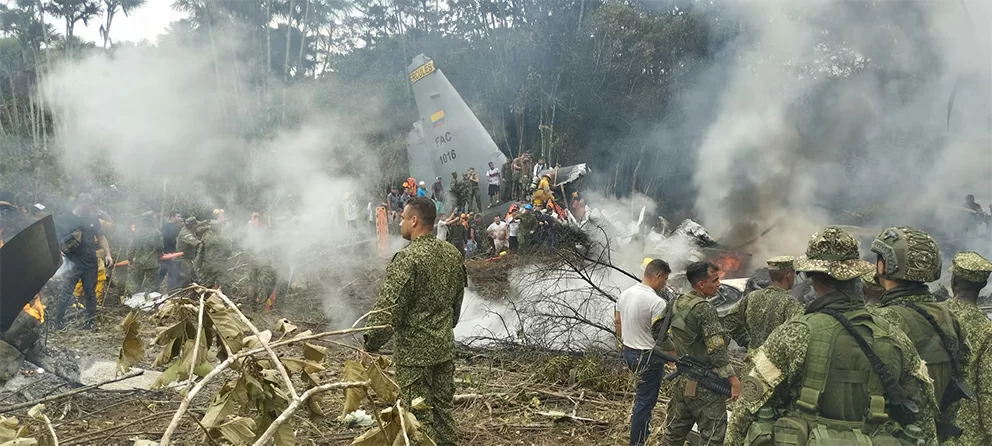
The United States military has significantly increased its presence in the Caribbean Sea and the waters off the coast of Venezuela since this summer, as part of the Trump administration’s intensified campaign against narcoterrorism. This strategic buildup includes a substantial deployment of naval vessels, advanced aircraft, and ground troops, marking one of the largest military mobilizations in the region in recent years.
-

VS breidt drugsaanvallen uit naar Stille Oceaan
The United States military has escalated its anti-drug operations by conducting its eighth strike on a suspected drug transport vessel, this time in the eastern Pacific Ocean. The attack, which occurred on Tuesday evening, resulted in the deaths of two individuals, according to Defense Secretary Pete Hegseth on Wednesday. This marks a significant expansion of the Trump administration’s campaign against drug trafficking in South America.
Previously, the seven earlier strikes were concentrated in the Caribbean. However, the latest operation signifies a strategic shift toward the waters off South America, a critical route for cocaine smuggling from major producers like Colombia and Peru. Ecuador, with its extensive ports and trade flows, serves as a key transit hub.
Hegseth drew parallels between the fight against drug cartels and the U.S. war on terrorism post-9/11, stating, ‘Just as Al Qaeda waged war on our homeland, these cartels are waging war on our borders and our people.’ He emphasized that no mercy would be shown, declaring, ‘There will be no refuge or forgiveness—only justice.’
President Donald Trump has justified these military actions by framing the U.S. as being in an ‘armed conflict’ with drug cartels, labeling these criminal groups as unlawful combatants. He relies on the same legal framework used in the war on terror under President George W. Bush. Trump hinted at future land-based strikes, vowing, ‘We will hit them very hard when they come over land,’ and indicated he might inform Congress of further steps.
The military campaign has sparked political and legal debates. Lawmakers from both Republican and Democratic parties have raised concerns over the lack of congressional authorization and the limited transparency surrounding the execution of these strikes. Democrats have pointed to potential violations of both U.S. and international law.
Senator Rand Paul (Republican) criticized the executive branch, warning that Congress must not allow the president to become ‘judge, jury, and executioner’ in this matter. Meanwhile, the Republican-dominated Senate recently rejected a Democratic proposal that would have required the president to seek congressional approval for further military actions.
In the House of Representatives, Adam Smith, the top Democrat on the Armed Services Committee, called for a hearing on the strikes, criticizing the White House and the Department of Defense for their lack of transparency regarding the use of lethal military force.
Additionally, the U.S. military has significantly increased its presence in the Caribbean Sea and off the coast of Venezuela since the summer, fueling speculation that the Trump administration may be pressuring Venezuelan President Nicolás Maduro, who is accused of involvement in narco-terrorism.
The recent strike was captured in a video showing a small boat, allegedly loaded with cocaine packages, exploding and burning on the water. Since the campaign began last month, at least 34 deaths have been reported. The administration has so far avoided prosecuting the occupants of the targeted vessels, with two survivors repatriated to Ecuador and Colombia. Ecuadorian authorities later released one due to insufficient evidence of criminal activity.
While fentanyl, a potent synthetic drug responsible for many overdose deaths in the U.S., is primarily smuggled via land routes from Mexico, the current campaign focuses on cocaine transported by sea.
-

Regering kiest Marciano Djanam als nieuwe voorzitter SZF-bestuur
The Surinamese government has appointed Marciano Djanam as the Chairman of the Board of Trustees for the State Health Fund (SZF), following a rigorous selection process involving over eighty candidates. This strategic decision underscores the government’s commitment to fostering professionalism, transparency, and results-driven leadership within the nation’s healthcare system. Djanam brings extensive expertise in health, safety, security, environment, and quality (HSSEQ), having led teams in both the public and private sectors. His career is marked by the implementation of international quality standards and the development of strategic policies aimed at process improvement, risk management, and sustainable governance. Known for his people-centric, analytical, and forward-thinking leadership style, Djanam holds a Master of Science in International Health and Safety Management and an MBA, complemented by advanced training in leadership, auditing, risk management, and sustainable business practices. His appointment aims to bolster the SZF—Suriname’s largest health insurer—in its mission to provide affordable and accessible healthcare. Key priorities include enhancing service quality, improving the efficiency of healthcare policy implementation, and fostering closer collaboration with healthcare providers, all while upholding human dignity as a core principle.