标签: Suriname

苏里南

  • Van Pakistan tot Egypte: oorlog met Iran drijft prijzen op in het mondiale Zuiden

    Van Pakistan tot Egypte: oorlog met Iran drijft prijzen op in het mondiale Zuiden

    The escalating military conflict between the United States, Israel, and Iran has triggered a global energy crisis that disproportionately impacts the world’s most vulnerable economies across Asia, Africa, and the Middle East. As supply disruptions from the Strait of Hormuz closure and attacks on Gulf energy facilities drive oil prices upward, developing nations with high import dependency and limited fiscal capacity face unprecedented economic challenges.

    Pakistan exemplifies the crisis, importing approximately 80% of its energy from the Gulf region while battling persistent economic instability. With fuel reserves projected to deplete within weeks, authorities have implemented emergency measures including school closures, a four-day government workweek, and drastic reductions in official travel allowances. Prime Minister Shehbaz Sharif has temporarily absorbed price increases ahead of Eid al-Fitr celebrations, though economists warn this reprieve may be short-lived.

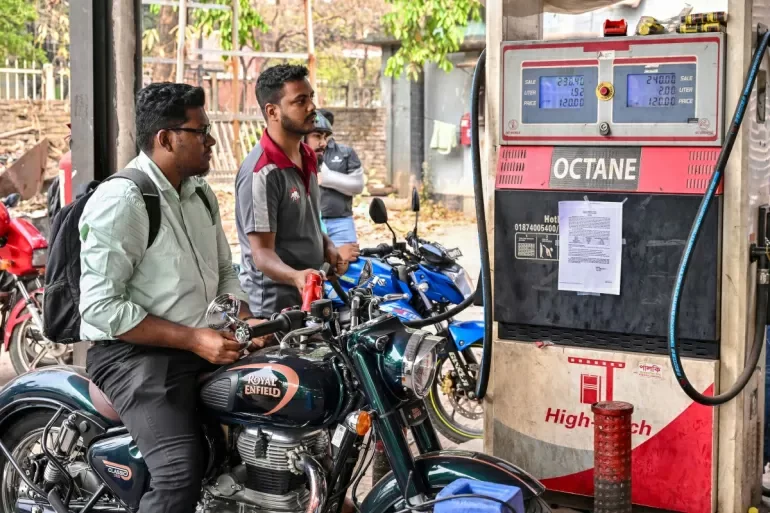
    Neighboring Bangladesh, which imports 95% of its oil, has already exhausted fuel supplies in several districts despite implementing rationing systems. Similarly, Sri Lanka—still recovering from its 2019 economic collapse—has declared weekly holidays and introduced mandatory fuel passes for vehicle owners as reserves dwindle dangerously low.

    In Egypt, among the Middle East’s most indebted economies, the government has ordered commercial establishments to close early and reduced public lighting. Officials announced 15-22% price hikes for gasoline, diesel, and cooking gas in March, with President Abdel Fattah el-Sisi acknowledging public hardship while insisting these measures prevent “more serious and dangerous consequences.”

    The crisis compounds existing vulnerabilities through currency depreciation against the US dollar, with currencies like Indonesia’s rupiah and the Philippine peso hitting near-record lows even before the conflict. This depreciation makes oil imports substantially more expensive, creating what economist Yeah Kim Leng describes as “a powerful combination of inflation, currency pressure, and budgetary pressure” for nations already struggling with debt and high import dependency.

    According to the Washington-based Centre for Global Development, Pakistan, Bangladesh, Sri Lanka, Jordan, Senegal, Egypt, Angola, Ethiopia, and Zambia face the highest risk due to their fuel import reliance, debt levels, and foreign exchange reserve ratios.

    The human impact remains severe across less developed economies, where households spend significantly larger portions of income on fuel and food. Governments possess limited capacity to provide safety nets, creating conditions ripe for social unrest when subsidy programs become unsustainable amid depleted budgetary reserves.

    As analyst Khalid Waleed notes from Islamabad, rising diesel costs—the backbone of freight and agricultural economies—will soon translate to higher food prices. With Pakistan’s wheat harvest commencing in April, equipment running on diesel will operate at peak costs, potentially driving food inflation to levels that households cannot absorb.


  • Column: Aftellen

    Column: Aftellen

    Football enthusiasts worldwide are marking their calendars for the planet’s most anticipated sporting spectacle—the 2026 FIFA World Cup. With precisely 76 days remaining until the tournament’s June 11th kickoff, anticipation builds for what promises to be the most inclusive and commercially significant edition in football history.

    This edition breaks records with 16 additional teams compared to previous tournaments, dramatically expanding regional representation and creating unprecedented opportunities for smaller footballing nations. While most participants are confirmed, several countries continue battling through intercontinental playoffs for the final coveted spots. Host nations from the Caribbean region received automatic qualification, further diversifying the participant pool.

    Suriname narrowly missed direct qualification and now faces a decisive playoff against Bolivia, with Iraq awaiting the winner for a chance at historic participation. The expanded format has intensified global engagement, particularly among nations celebrating their inaugural World Cup appearance, such as Curaçao.

    The commercial landscape anticipates unprecedented returns, with FIFA securing lucrative sponsorship deals from global corporations eager to capitalize on worldwide viewership. Local entrepreneurs likewise prepare for economic benefits through artisanal souvenir production and hospitality sector growth.

    Beyond commercial implications, the tournament serves as a global showcase for emerging talents seeking professional advancement through international exposure. Players recognize the World Cup’s unique platform for demonstrating their value to elite clubs worldwide.

    The convergence of sporting excellence, commercial opportunity, and cultural celebration establishes the 2026 World Cup as a multifaceted global phenomenon with far-reaching impacts across sports, business, and international relations.

  • Natio op scherp voor play-off om WK-kwalificatie tegen Bolivia

    Natio op scherp voor play-off om WK-kwalificatie tegen Bolivia

    Suriname’s national football team, under the guidance of head coach Henk ten Cate, is preparing for their crucial World Cup qualifying match against Bolivia with unwavering determination. Since his appointment in December, Ten Cate has instilled a singular focus throughout the entire squad and technical staff: securing Natio’s place in June’s final tournament.

    The coach has made World Cup qualification his personal mantra, emphasizing to players: “The boys need to go to bed with it and wake up with it. It won’t be easy, but we’re going to make it happen. We have the players for it.”

    Players arrived in Monterrey, Mexico, on Sunday and Monday in staggered groups following an exhausting journey from the Netherlands. Lengthy layovers in Houston and Atlanta, combined with the challenging seven-hour time difference, tested the team’s resilience, though the internationals have grown accustomed to such demanding travel conditions.

    Despite Ten Cate’s preference for keeping media at a distance to minimize distractions, journalists including an NOS camera team—set to broadcast the Bolivia match live—were granted a brief press opportunity on Tuesday afternoon.

    Newcomer Joel Piroe, Leeds United striker joining alongside goalkeeper Janilho Wiegel and midfielder Melayro Bogarde for their first national team selection, expressed eagerness about his impending debut: “It’s true I hesitated for a while. The possibility of being called up for the Netherlands played a role, but I’m already thrilled to be here. This is a unique opportunity we intend to capitalize on.”

    Winger Gyrano Kerk, returning to the squad after battling a persistent muscle injury late last year, praised the extensive Zoom preparation sessions with Ten Cate and assistant coaches Winston Bogarde and Jimmy Hasselbaink: “These are legends I look up to. Those conversations have been crucial for group cohesion and atmosphere.”

    Central defender Myenty Abena reflected on the team’s journey: “We’ve worked years for this. Look how far we’ve come—we’ve grown tremendously as a team, and the organization keeps becoming more professional. We’ve long moved past the loss to Guatemala. We’re grateful for this second chance and determined to achieve our goal this time.”

    Abena described the emotional pre-match rituals: “When we’re in the locker room praying together, I always get goosebumps. Recently, I’ve been the one giving the powertalk. That’s when I remember we’re doing this for our country and everyone supporting us—the country where I was born and raised. How incredible to have this opportunity to represent Suriname.”

    The team is accommodated in a comfortable hotel in San Pedro, Monterrey’s most upscale district, with training facilities just fifteen minutes away. At manager Brian Tevreden’s explicit request, a brand-new artificial turf pitch was installed after his inspection last month revealed unsatisfactory conditions: “It was a sandy field full of holes, but FIFA left nothing to chance—they fixed it rapidly for us.”

    Natio faces Bolivia at 7:00 PM Surinamese time tonight. A victory would set up a Tuesday confrontation with Iraq, while Jamaica and New Caledonia meet in the other semifinal. The winners will ultimately compete against Congo for a place in the final tournament.

  • Iran beoordeelt VS-voorstel voor beëindiging oorlog; sluit onderhandelingen uit

    Iran beoordeelt VS-voorstel voor beëindiging oorlog; sluit onderhandelingen uit

    Iran has begun evaluating a comprehensive 14-point peace proposal from the United States aimed at de-escalating the Gulf conflict, though Tehran continues to reject direct negotiations with Washington. Iranian Foreign Minister Abbas Araqchi confirmed the development during a state television broadcast on Wednesday, emphasizing that message exchanges through intermediaries do not constitute formal diplomacy with the U.S.

    The proposal, transmitted through Pakistani channels, demands significant concessions from Iran including the elimination of its highly enriched uranium stockpiles, cessation of uranium enrichment activities, constraints on its ballistic missile program, and termination of financial support to regional allies. While the White House has withheld specific details from public disclosure, officials have warned that rejection would trigger intensified military pressure.

    Despite this diplomatic overture, regional violence continues unabated. Israel maintains skepticism regarding Iran’s willingness to comply with the terms and insists on preserving its option for preemptive military strikes. Meanwhile, Iran has threatened to open a new conflict front at the strategic Bab al-Mandab Strait connecting the Red Sea to the Gulf of Aden, according to anonymous military sources cited by the semi-official Tasnim news agency.

    The Pentagon is simultaneously reinforcing its military footprint in the Gulf region by deploying thousands of additional air force personnel, with the first Marine contingents expected by month’s end. This enhancement provides President Trump with expanded options for potential ground operations.

    Financial markets responded optimistically to the diplomatic developments, with global equities rising and oil prices declining as investors anticipated potential resolution to the conflict that has disrupted worldwide energy supplies and fueled inflationary pressures.

    UN Secretary-General António Guterres issued a grave warning on Wednesday, stating that the world is “staring down the barrel of a broader regional war” and calling for immediate de-escalation and commencement of diplomatic dialogue. The statement came as Iranian media reported fresh airstrikes on residential areas in Tehran, while the Revolutionary Guard announced new attacks targeting Israeli and American bases across Kuwait, Jordan, and Bahrain.

  • Uitbetaling SRD 1000 tijdelijk vertraagd, overheid garandeert uitkering

    Uitbetaling SRD 1000 tijdelijk vertraagd, overheid garandeert uitkering

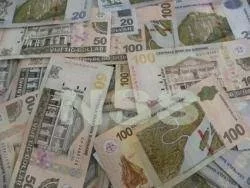
    The Surinamese government has officially notified citizens of a temporary postponement in distributing the promised SRD 1000 financial assistance to vulnerable populations, including disabled individuals, economically disadvantaged households, and Old Age Pension (AOV) recipients. Originally scheduled for March disbursement, the payment process has encountered administrative hurdles that have slowed implementation.

    According to Vincent Fernandes, Director of the Ministry of Finance and Planning, the delay stems from final-stage documentation processing that has temporarily halted further advancement of the payment procedures. Fernandes emphasized through the Suriname Communication Service that despite the current setback, the government remains fully committed to honoring its financial commitment to these vulnerable groups.

    Government agencies are now collaborating intensively to complete the necessary formalities and expedite the payment process. Officials have appealed for understanding and patience from affected beneficiaries and the broader public, assuring that additional updates will be provided as soon as clearer timelines for distribution are established.

    The SRD 1000 benefit program represents part of the government’s social welfare initiatives designed to support those most affected by economic challenges. While the temporary delay may cause inconvenience, authorities maintain that the complete distribution will proceed once administrative processes are finalized.

  • Minister Huur steunt samenwerking met SEMIF voor duurzame ontwikkeling regio’s

    Minister Huur steunt samenwerking met SEMIF voor duurzame ontwikkeling regio’s

    Suriname’s Minister of Regional Development, Miquella Huur, has formally endorsed the strategic initiatives proposed by the Suriname Environmental and Mining Foundation (SEMIF) aimed at promoting sustainable natural resource management across the country’s key regions. The foundation presented its comprehensive development framework during a high-level meeting at the ministry headquarters, outlining ongoing projects in entrepreneurship, education, community development, and environmental conservation.

    The collaborative session identified critical challenges hindering regional progress, including inadequate networking capabilities and insufficient strategic coordination among local organizations. SEMIF officials emphasized the urgent need for strengthened institutional partnerships with the ministry, particularly to advance agricultural sector development, enhance capacity building programs, and improve support mechanisms for local producers.

    A significant educational component of the proposed collaboration involves creating access to bachelor’s degree programs for approximately 90 students, representing a major step toward human resource development in the regions. Minister Huur characterized these initiatives as vital opportunities to revitalize previously stalled development projects, noting that the partnership could serve as a catalyst for sustainable regional transformation.

    The targeted regions—Brokopondo, Marowijne, and Sipaliwini—are known for their rich natural resources but have faced developmental challenges. This new government-civil society partnership aims to create a more coordinated approach to resource management while ensuring environmental sustainability remains at the forefront of economic development plans.

  • Azië kijkt terug op Covid-maatregelen om brandstofcrisis aan te pakken

    Azië kijkt terug op Covid-maatregelen om brandstofcrisis aan te pakken

    Asian nations are reactivating pandemic-era strategies including remote work mandates and energy conservation measures as the global fuel crisis intensifies following Iran’s blockade of the Strait of Hormuz. The strategic waterway, responsible for transporting over 80% of the region’s crude oil, has been virtually sealed since conflict erupted on February 28th.

    While no country has yet implemented compulsory work-from-home requirements, the concept is gaining serious consideration. South Korea’s Energy Minister Kim Sung-whan endorsed remote working as a “good idea” following recommendations from the International Energy Agency (IEA). The agency has simultaneously released a record 400 million barrel oil reserve to combat supply shortages.

    IEA Executive Director Fatih Birol emphasized during a Sydney conference that previous experience, particularly European measures following Russia’s invasion of Ukraine, demonstrates such actions effectively secure energy supplies during crises.

    South Korea has launched a comprehensive energy reduction campaign urging shorter showers, daytime phone charging, and weekend-only vacuum cleaner use. The Philippines has shortened workweeks in government offices and declared a national energy emergency, while Pakistan has temporarily closed schools and promoted remote work. Sri Lanka has implemented weekly fuel-saving holidays.

    Singapore and Thailand are pursuing energy efficiency through upgraded appliances, reduced air conditioning usage, and relaxed office dress codes to lower cooling demands.

    Beyond behavioral changes, several governments are implementing financial measures to cushion households from soaring fuel prices. Japan has allocated 800 billion yen (approximately $5 billion) for gasoline subsidies, while New Zealand will introduce weekly payments exceeding $29 for low-income families starting April.

    Australia and other nations are confronting panic buying and shortages, particularly in remote regions. The Australian government has proposed legislation imposing stricter penalties for fuel price gouging.

    Policy makers face a complex balancing act as central banks consider interest rate hikes rather than cuts. Unlike the pandemic period when economic activity stalled and stimulus measures proved effective, current rising energy prices create inflationary pressure that may justify rate increases despite economic growth concerns.

    According to Capital Economics analyst Jennifer McKeown, appropriate policy responses depend heavily on the cause, duration, and impact of oil price increases on inflation expectations.

  • President Simons: certificaat is begin, niet het eind voor jonge ondernemers

    President Simons: certificaat is begin, niet het eind voor jonge ondernemers

    Surinamese President Jennifer Simons has delivered a powerful address to emerging young entrepreneurs, urging them to persevere and maintain mutual support as they embark on their business ventures. The head of state emphasized that “the real work begins now” during Tuesday’s certificate ceremony held at the Congreshal, marking the completion of the “Van Droom Naar Doel” (From Dream to Goal) initiative.

    The groundbreaking project, administered by Stichting RUMAS, specifically targets youth requiring additional support to achieve economic independence. From the initial cohort of 18 participants, an impressive 15 successfully reached the program’s completion. President Simons commended the graduates for their remarkable determination while stressing the collective nature of achievement. “We must help each other because alone we cannot succeed,” she stated, adding that setbacks naturally form part of the learning process and should not deter progress.

    In significant policy developments, the President revealed governmental efforts to establish financial support mechanisms for startup entrepreneurs through specialized funds and banking partnerships. According to the Suriname Communication Service, these initiatives will provide young business owners with essential mentorship and access to low-interest loans.

    Project coordinator Lydia Griffith confirmed the program had achieved its primary objective of preparing youth for independent entrepreneurship. Graduates spanning various trades—including landscapers, hairstylists, dressmakers, and bakers—are now fully equipped to commence operations immediately while receiving ongoing support from RUMAS and program trainers.

    RUMAS Director Emmy Hart disclosed that the presidential office originally conceived the project to expand opportunities for young citizens. The training program initially launched in October of last year.

    Diroy Juriaans, one of the successful graduates, described the accomplishment as a critical milestone. “I’ve learned to persist through challenges. This certificate opens doors to establishing my own business,” he affirmed, capturing the transformative impact of the initiative.

  • Paus Leo roept op tot onmiddellijke wapenstilstand in Midden-Oosten conflict

    Paus Leo roept op tot onmiddellijke wapenstilstand in Midden-Oosten conflict

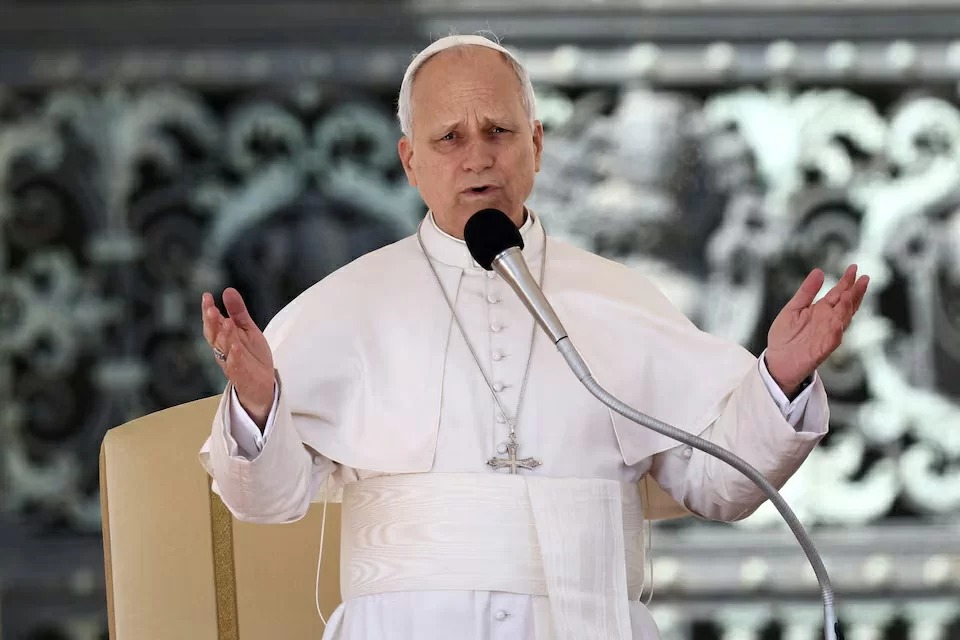
    In a compelling address from his residence in Castel Gandolfo, Italy, Pope Leo XIV—the first American pontiff in Vatican history—issued his most urgent plea to date regarding the rapidly deteriorating situation in the Middle East. Speaking during his weekly general audience, the Pope expressed profound alarm over expanding hostilities centered around Iran’s escalating conflict with Israel.

    “We are witnessing an alarming surge in hatred and increasingly severe violence,” stated the spiritual leader, emphasizing that true peace cannot be achieved through military means. “The path to resolution must be forged through sincere dialogue and mutually acceptable solutions—not through weapons.”

    The Pontiff revealed staggering humanitarian concerns, noting over one million displaced persons and numerous casualties already resulting from recent hostilities. His appeal comes amid substantial U.S. military deployments to the region, with thousands of additional troops being dispatched—a move that has heightened international fears of potential broader conflict escalation.

    Tensions have dramatically intensified following multiple rocket attacks and direct military engagements throughout the region. While the global community advocates for calm and diplomatic solutions, humanitarian organizations warn of a worsening crisis affecting millions of civilians.

    This marks the second time in three days that Pope Leo has addressed the situation, having previously condemned the conflict as “a scandal for all humanity” during his Sunday remarks. The Vatican has significantly intensified its peace-building initiatives, calling upon all authorities to engage in genuine dialogue to resolve underlying issues.

  • GOw2 trekt pompprijzen op tot price cap; druk op regeling neemt toe

    GOw2 trekt pompprijzen op tot price cap; druk op regeling neemt toe

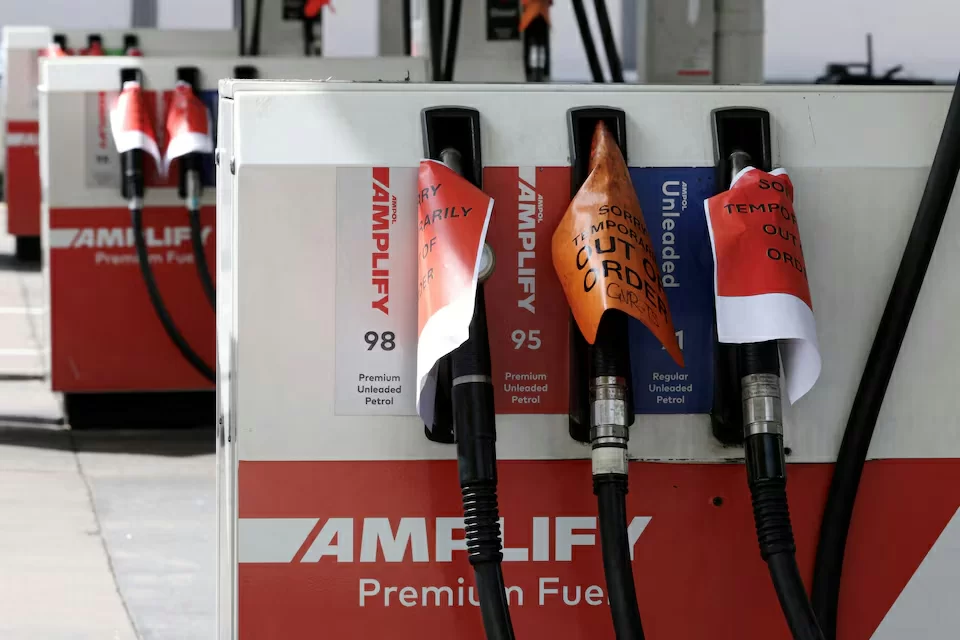
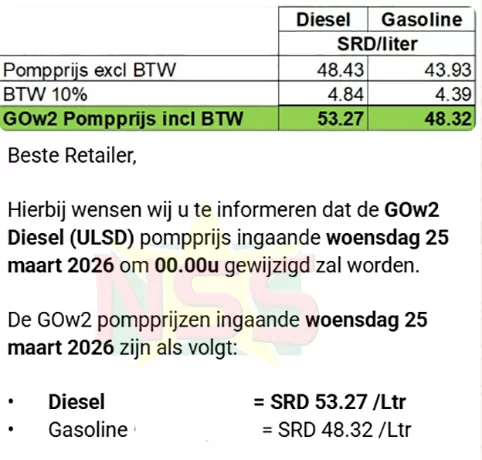
    Suriname’s state-mandated fuel price ceiling is facing mounting pressure as persistently rising global oil markets test the sustainability of the government’s consumer protection mechanism. Effective March 25th, GOw2 – historically Suriname’s most affordable fuel retailer – aligned its pricing with the official cap, setting diesel at SRD 53.27 and unleaded gasoline at SRD 48.32 per liter.

    The price control mechanism, instituted by President Jennifer Simons on March 17th, was designed to shield consumers from international market volatility by capping retail fuel prices. This intervention requires the government to absorb approximately SRD 10 per liter in foregone revenue through reduced taxation, effectively subsidizing the difference between global market rates and local pump prices.

    However, sustained upward pressure on international oil markets, exacerbated by ongoing geopolitical tensions in the Middle East, has created significant fiscal challenges. Analysts warn that the current price cap may become economically unsustainable if global trends continue, potentially forcing the government to choose between increasing its financial compensation or permitting controlled price adjustments at the pump.

    The situation highlights the delicate balance between consumer protection and fiscal responsibility in resource-dependent economies. While the measure provides short-term stability for Surinamese citizens, its long-term viability remains contingent upon unpredictable international market conditions and the government’s capacity to maintain substantial revenue sacrifices.