标签: Suriname

苏里南

  • Luchthavenbeheer mikt op groei: 1 miljoen reizigers en nieuwe terminal

    Luchthavenbeheer mikt op groei: 1 miljoen reizigers en nieuwe terminal

    Suriname’s Johan Adolf Pengel International Airport (JAP) has unveiled ambitious expansion plans targeting one million annual passengers and construction of a new terminal, positioning the facility as a key driver for national economic growth. The announcement came during the airport’s 30th anniversary celebrations where officials emphasized its strategic role as Suriname’s gateway to the world.

    Transport, Communication and Tourism Minister Raymond Landveld highlighted the critical importance of enhanced connectivity and improved service efficiency, describing the airport as “the portal to the global community.” The government is prioritizing strengthening the airport’s operational foundation with focused investments in safety protocols, facility upgrades, and expansion of international routes.

    Airport Management Director Vijay Chotkan identified the new terminal construction as a top priority within the Airport Expansion Project. The Commissiedienst Suriname reports that stakeholders have already initiated discussions to accelerate the project, potentially through international tender processes.

    The expansion strategy includes increased involvement of local communities surrounding Wit Santi and Hollandse Kamp, ensuring residents benefit from the airport’s economic development. Chotkan emphasized the urgency of rapid development, particularly given anticipated growth in Suriname’s oil and gas sector, citing Guyana’s similar sector-driven expansion and increased international air connections as a successful model.

    Both the board of commissioners and trade unions have endorsed the modernization and growth initiatives, characterizing the airport as a strategic pillar for Suriname’s development and international connectivity.

  • Trump stelt aanvallen op Iran uit na ‘erg goede gesprekken’; Teheran ontkent

    Trump stelt aanvallen op Iran uit na ‘erg goede gesprekken’; Teheran ontkent

    In a significant diplomatic development, U.S. President Donald Trump has ordered a five-day suspension of planned military strikes against Iranian energy facilities and critical infrastructure. The decision followed what Trump characterized as “very good and productive discussions” between Washington and Tehran over the past two days.

    Announcing the temporary de-escalation via his Truth Social platform on Monday, Trump declared in all caps: “I am pleased to report that the United States and Iran have held very good and productive discussions regarding a complete and total cessation of hostilities in the Middle East.” The president explicitly instructed the Defense Department to postpone all military operations for five days, contingent upon the progress of ongoing negotiations.

    While the announcement brought global relief, particularly to a region severely impacted by Iranian attacks, Iranian officials immediately contradicted Trump’s claims. The semi-official Mehr News Agency suggested the delay primarily serves to curb rising energy prices and buy time for military preparations. Iran’s Foreign Ministry placed full responsibility for the conflict on Washington, labeling the U.S. as “the party that started this war.” Tehran further denied engaging in direct negotiations with American officials, directly contradicting Trump’s assertions of productive dialogue.

    The Islamic Revolutionary Guard Corps issued stern warnings that any American attack would trigger Iranian countermeasures targeting electricity supplies powering U.S. bases, alongside economic, industrial, and energy infrastructure with American interests. Iran’s Defense Council additionally threatened maritime mining operations that would effectively blockade Persian Gulf shipping routes if attacks targeted Iran’s southern coast or islands.

    The escalating Middle East tensions had already triggered a global energy crisis, driving oil prices upward. Trump had previously given Iran a 48-hour ultimatum on Saturday to reopen the Strait of Hormuz to all vessels, threatening to “destroy” Iranian energy installations otherwise. This critical waterway facilitates approximately one-fifth of global oil and liquefied natural gas shipments.

    Al Jazeera analyst Osama Bin Javaid described Trump’s decision as a potential “exit route” from the conflict, noting: “This is the news everyone has been waiting for… Trump can unilaterally end this war, which he started without legal basis, without conditions.” However, Washington correspondent Alan Fisher cautioned that Trump’s deadlines often prove flexible, suggesting that five days might not yield resolution.

    Doha Institute analyst Mohamad Elmasry speculated that Trump might be seeking a “dignified excuse” for withdrawal, with the critical question being whether Iran and Israel would continue the conflict without U.S. support. Trump told Fox Business Network that Iran showed strong interest in a deal that could materialize within five days, with emissaries Steve Witkoff and Jared Kushner recently engaging Iranian representatives.

    Despite tensions, multiple Middle Eastern and international nations continued pursuing diplomatic de-escalation efforts during Eid celebrations. Diplomats warned Trump that further escalation would prove detrimental to both Iran and Israel. The International Energy Agency characterized the current Middle East situation as “extremely serious,” with impacts potentially exceeding both the 1970s energy crises and the aftermath of the Ukraine war combined.

  • Pokigron vraagt aandacht minister Noersalim voor cassaveziekte

    Pokigron vraagt aandacht minister Noersalim voor cassaveziekte

    Residents of Pokigron village have urgently appealed to Agriculture Minister Mike Noersalim for governmental intervention against the spreading Cassava Witches’ Broom Disease, a devastating plant pathogen threatening food security in Suriname’s interior regions.

    During the minister’s official visit to the village, Captain Albert Jeroe presented the gravity of the situation, revealing that numerous female farmers have been forced to uproot and discard their entire cassava plantations. The disease, while not yet affecting every community, has established a concerning presence throughout the Upper Suriname region.

    “We require immediate assistance to eliminate this disease before it destroys our primary crop,” Captain Jeroe stated. “We anticipate requesting in-vitro cassava plants from your ministry that demonstrate stronger resistance characteristics.” The community leader pledged full cooperation from traditional authorities and villagers in implementing any containment measures.

    Regional Development Minister Miquella Huur joined the appeal, confirming that her ministry has partnered with Agriculture officials to conduct extensive awareness sessions for farmers. Extension workers are currently visiting affected areas to educate agriculturalists on pest management techniques. Minister Huur characterized the pathogen as a significant challenge for interior farmers and expressed hope for near-term solutions.

    The government is collaborating with multiple organizations including the Center for Agricultural Research in Suriname (CELOS), Amazon Conservation Team foundation, and international agencies to develop countermeasures. However, Minister Noersalim acknowledged the global scientific community has yet to produce effective treatment options.

    Survey data indicates the disease has infiltrated eight of Suriname’s ten districts, with only Nickerie and Coronie remaining unaffected. Current efforts focus on identifying resistant cassava varieties and preventing human-assisted transmission through educational programs.

    “We’re emphasizing strict protocols against moving infected plant materials between districts,” Minister Noersalim explained. “Contaminated specimens must be destroyed through incineration immediately upon detection. Simultaneously, we’re screening alternative varieties for natural resistance with the ultimate goal of providing farmers with durable planting materials.”

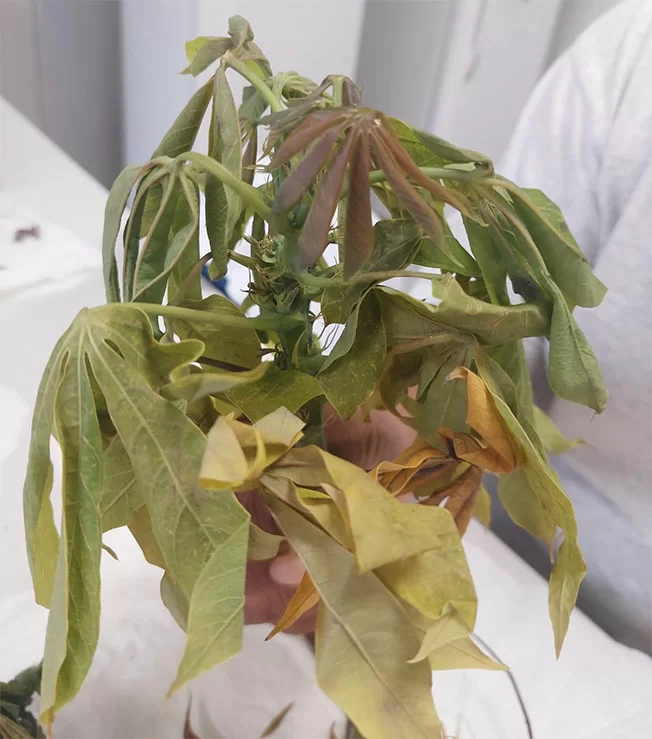
    The disease manifests through stunted growth, abnormal development, shortened stem segments, and clustered yellow leaves resembling a witch’s broom—hence its name. Internal browning appears in stems and roots, with severe cases showing blackened, dying shoot tips. While tubers may form, they remain undersized and discolored, rendering them unusable despite some yield production.

    The Ministry of Agriculture recommends immediate removal and controlled burning of infected plants to prevent further epidemiological spread.

  • New York: Passagiersvliegtuig botst op brandweerwagen, beide piloten dood

    New York: Passagiersvliegtuig botst op brandweerwagen, beide piloten dood

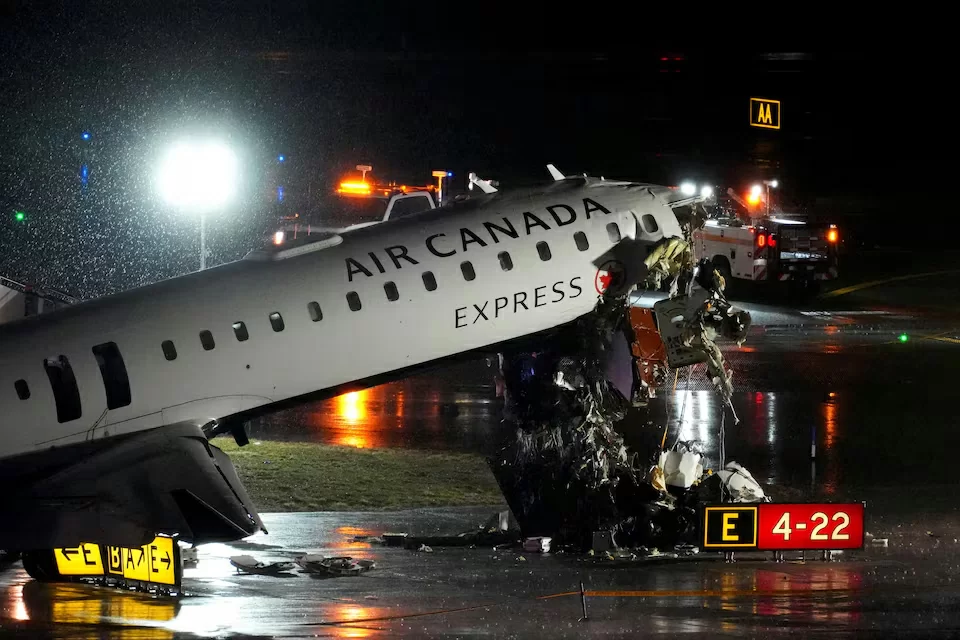
    A catastrophic runway collision between an Air Canada Express passenger jet and an emergency response vehicle has resulted in two fatalities and multiple injuries at New York’s LaGuardia Airport, further intensifying scrutiny over aviation safety protocols nationwide.

    On Sunday evening, March 23, 2026, Flight AC-7127, operated by Jazz Aviation under the Air Canada Express banner, struck a fire truck during its landing approach at approximately 39 kilometers per hour. The impact proved fatal for both pilots aboard the CRJ-900 aircraft and left 41 individuals injured, including passengers, crew members, and two fire officials stationed in the emergency vehicle.

    Kathryn Garcia, Executive Director of the Port Authority of New York and New Jersey, confirmed that 32 of the injured have been discharged from medical facilities while nine remain hospitalized with serious but non-life-threatening conditions. The aircraft was carrying 72 passengers and four crew members at the time of the incident.

    Preliminary investigations reveal the fire truck had received authorization to cross Runway 4 near taxiway ‘Delta’ moments before the collision occurred. The vehicle was responding to a separate United Airlines flight that had reported unusual odors onboard. Air traffic control transmissions captured urgent stop commands issued just minutes before impact, suggesting possible communication failures.

    Visual documentation from Reuters depicts substantial damage to the aircraft’s nose section, with the plane resting at an awkward angle following the collision. Both Air Canada and Jazz Aviation have acknowledged the incident and pledged full cooperation with investigative authorities.

    The National Transportation Safety Board (NTSB) has deployed a specialized technical team to determine the exact sequence of events, while the Federal Aviation Administration (FAA) anticipates airport closures extending through Monday afternoon. This grounding has already triggered 537 flight cancellations, creating significant travel disruptions.

    This incident marks the latest in a series of aviation safety concerns plaguing U.S. air travel. January 2025 witnessed a fatal collision between a regional aircraft and military helicopter claiming 67 lives, followed by a cargo plane accident in Louisville that resulted in seven fatalities. FAA data indicates 97 runway incursion incidents have occurred this year alone, amplifying pressure on regulators to implement enhanced safety measures. Congressional lawmakers recently proposed legislation incorporating 50 aviation safety improvements in response to these recurring incidents.

  • Israël onderschat mogelijk Iraanse militaire capaciteiten

    Israël onderschat mogelijk Iraanse militaire capaciteiten

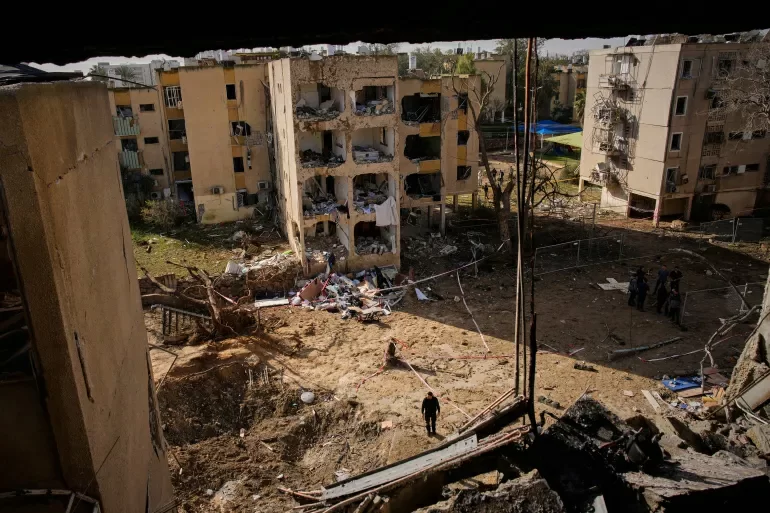
    Recent Iranian missile strikes targeting Israeli cities adjacent to nuclear facilities have exposed critical vulnerabilities in Israel’s defense architecture. The attacks, which injured approximately 180 people and forced mass evacuations, represent a significant escalation in the ongoing conflict that began on February 28th.

    The offensive came in direct response to Israeli-American airstrikes on Iran’s Natanz nuclear complex days earlier. Iranian forces employed sophisticated cluster munitions and ballistic missiles capable of bypassing Israel’s renowned Iron Dome system. Uzi Rubin, founder of Israel’s missile defense program, confirmed Iran possesses “the Middle East’s most extensive and diversified missile arsenal,” with capabilities that complicate interception efforts.

    Prime Minister Benjamin Netanyahu characterized the events as “an exceptionally challenging evening in our battle for survival” as civilians experienced unprecedented direct impacts of warfare. Health Ministry reports indicate over 4,500 casualties since the conflict’s inception.

    The strategic dimension has expanded dramatically, with Iran effectively blockading the Strait of Hormuz – a critical global oil transit route – prompting U.S. President Donald Trump to threaten retaliatory strikes against Iranian energy infrastructure. Military analysts note the conflict has entered a dangerous new phase targeting nuclear installations on both sides.

    Defense specialist Miriam Cohen warned: “These demonstrations of precision and range suggest Israel may have underestimated Iranian capabilities. We’re potentially facing a more prolonged and devastating confrontation than previous engagements.” The situation remains volatile as both nations continue targeting strategic assets while international organizations condemn the use of banned cluster weapons.

  • Column: De vogel en de lente die niet wijkt

    Column: De vogel en de lente die niet wijkt

    In the midst of global uncertainty, an unexpected friendship bridges cultural divides through the power of poetry. Indra Toelsie reveals how meaningful exchanges with Mahdi, an Afghan friend, have created a profound dialogue beyond words through shared verses of Persian literature.

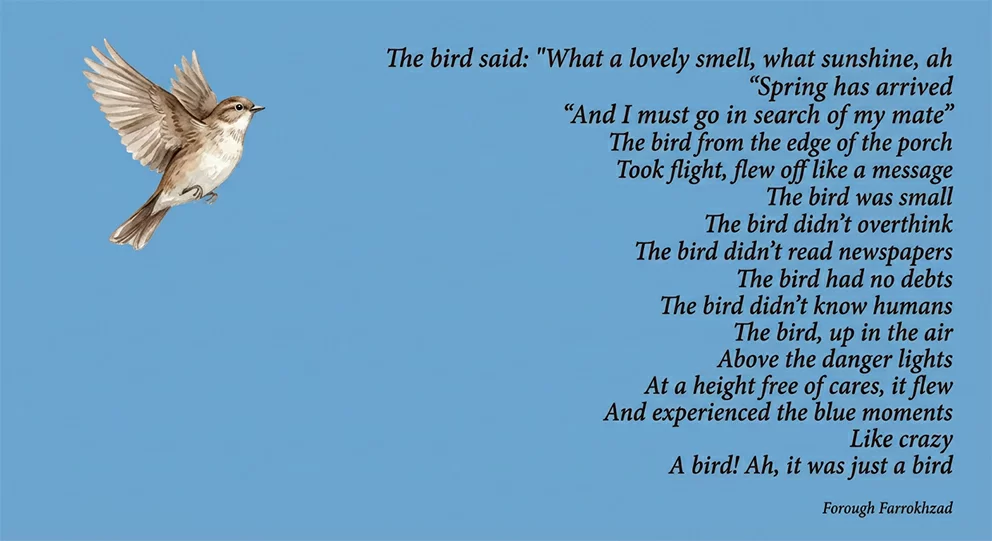
    Their connection transcends geographical boundaries, with Mahdi recently sharing a poignant poem by renowned Iranian poet Forough Farrokhzad in response to Toelsie’s contemplation about ‘the spring that never fades.’ The selection serves as a powerful metaphor for resilience, depicting a small bird that instinctively takes flight to find its partner upon sensing spring’s arrival—unburdened by human concerns, debts, or news cycles, soaring above danger into pure, carefree freedom.

    This avian imagery becomes a mirror for human experience, prompting reflection on how modern life entraps us in endless streams of information, worries, and obligations. Remarkably, it is Mahdi—living in a country where conflict and instability define daily existence—who reminds Toelsie of life’s simplest yet most powerful truth: the freedom of the human spirit and the confidence that spring inevitably finds its way, even through the harshest circumstances.

    Their cultural exchange deepened when Mahdi introduced Toelsie to Persian poetry’s emotional resonance during a bus ride in Beijing. Sharing headphones, they listened together to a Persian poem set to music. Though Toelsie understood no words, the emotional transmission was complete—tears welling as the melody communicated universal human experiences beyond linguistic barriers, exemplifying how music and poetry form an international language that needs no translation.

    The essay acknowledges those periods when spring feels perpetually distant, when adversity and unrest create webs of fear and doubt. Yet the image of the fearless bird continues to provide courage—a reminder to release anxieties, trust innate strengths, and rise above daily tumult.

    Mahdi’s poetic selection builds bridges between their disparate worlds, connecting his struggle with Toelsie’s search, his hope with her longing. The message remains clear: however challenging the circumstances, however distant spring may appear, the human soul can maintain its freedom. Spring never truly retreats as long as we maintain the courage to fly.

    Ultimately, Farrokhzad’s poem extends an invitation to everyone: become your own bird. Live with confidence and simplicity, refuse paralysis over the unchangeable, and seek the spring residing within every heart—allowing it to bloom despite external challenges. Mahdi’s hopeful message resonates universally: as long as we continue to fly and maintain hope, spring will never fade.

  • LVV-minister Noersalim wil lokale producten voor schoolvoeding

    LVV-minister Noersalim wil lokale producten voor schoolvoeding

    In a significant move toward agricultural self-sufficiency, Suriname’s Minister of Agriculture, Livestock, and Fisheries Mike Noersalim has announced a comprehensive national strategy to source all school meal products locally. The initiative, unveiled during the launch ceremony of the highland rice project in Pokigron, represents a major shift in the government’s approach to food security and rural development.

    The ambitious program will require that all components of school meals—including rice, protein sources, and vegetables—be supplied by domestic producers rather than imported goods. Currently, students in participating interior schools receive meals consisting of rice with fish or meat and vegetables, but vegetables have been primarily sourced from Paramaribo or Saramacca regions.

    Minister Noersalim emphasized the program’s strategic importance during his address to traditional leaders, farmers, and residents of Pokigron. ‘The government is implementing the school feeding program with the specific intention of utilizing all locally grown products,’ he stated, highlighting the interconnected nature of agricultural development and food security.

    The ministry has already initiated a nationwide livestock program training entrepreneurs in poultry farming, with plans to extend these training programs to interior villages. ‘We have rice, complemented by chicken, and then we need vegetables to complete the meal,’ Noersalim explained, outlining the comprehensive approach to meal planning.

    The highland rice project, a three-year initiative implemented in collaboration with the Ministry of Regional Development, marks the beginning of this agricultural transformation. The ceremony was attended by Regional Development Minister Miquella Huur, Assembly member Silvana Afonsoewa, and District Commissioner Humphrey Jeroe, demonstrating cross-ministerial support for the initiative.

    Minister Noersalim connected the local sourcing mandate to broader global challenges, noting that President Jennifer Simons has called for proactive measures in response to international tensions that have driven increased transportation costs and more expensive import products. He encouraged villagers to plant fruit trees as part of local juice production efforts.

    Addressing market access concerns, the minister pointed to the Directorate of Agricultural Research, Marketing, and Processing as a key resource for ensuring market guarantees. He emphasized the importance of establishing community hubs or processing units where agricultural products could be collected and distributed efficiently.

    The success of these projects depends on collective effort and cooperation, Noersalim stressed, warning that results would be elusive without proper collaboration. The ministry has already begun supporting land preparation for farmers seeking to expand their cultivation areas.

    Finally, the minister highlighted the critical role of agricultural cooperatives in organizing production and enabling targeted ministry support. By establishing clear production structures through cooperatives, the government aims to create a sustainable framework for Suriname’s agricultural development and food security goals.

  • Cuba start herstel na tweede nationale stroomstoring in een week

    Cuba start herstel na tweede nationale stroomstoring in een week

    Cuba’s fragile electrical grid has collapsed for the second time within a single week, plunging approximately 10 million residents into darkness and exposing the island’s critical infrastructure vulnerabilities. The latest nationwide blackout occurred Saturday evening when a major power plant in Nuevitas, Camaguey province, experienced catastrophic failure, triggering a chain reaction that shut down the entire national grid.

    The Ministry of Energy and Mines has initiated emergency recovery operations, establishing isolated microsystems across all provinces to maintain essential services including hospitals, water supply networks, and food distribution centers. By Sunday, the gas-fired power plants operated by Energas in Varadero and Boca de Jaruco had resumed operations, along with the oil-fired facility in Santa Cruz.

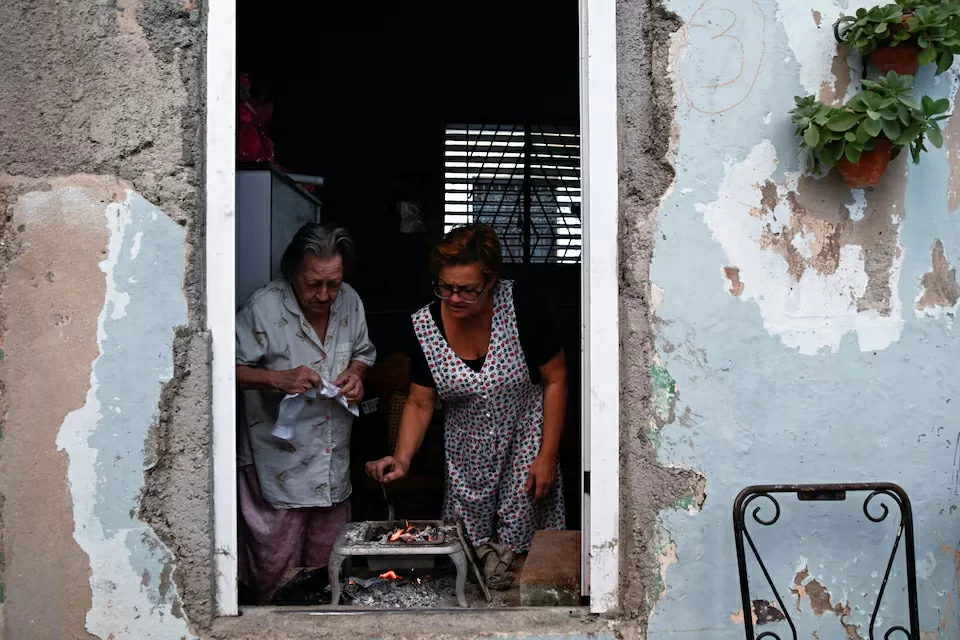
    In Havana, residents gathered on sidewalks early Sunday, expressing frustration over the recurring power failures that have fundamentally disrupted daily life. ‘We’re trapped in the same vicious cycle,’ stated resident Leoni Alberto, who now cooks over wood fires at least twice weekly due to the unreliable power supply. ‘It’s absolute madness with no way out.’

    The blackouts have severely compromised mobile communications and internet connectivity across large regions, effectively isolating communities and hindering emergency coordination efforts. Prime Minister Manuel Marrero acknowledged the ‘extremely complex situation’ facing restoration teams.

    This week’s dual grid failures represent an unprecedented escalation of Cuba’s ongoing energy crisis, marking the third major collapse this month alone. While Cuba has experienced periodic nationwide blackouts in recent years, back-to-back system failures within seven days demonstrate a alarming deterioration of the country’s aging energy infrastructure.

    The crisis coincides with tightened U.S. oil sanctions that since January have blocked Venezuela’s preferential oil shipments to its Caribbean ally. The U.S. administration has further threatened third countries with secondary sanctions should they continue supplying Cuba with petroleum products.

    Cuban authorities attribute the economic hardships, including the decrepit power grid, directly to the six-decade U.S. trade embargo. American officials counter that Cuba’s centrally planned economic model and systemic inefficiencies remain the primary causes of the nation’s energy deficiencies.

  • Training stimuleert docenten om AI bewust in te zetten in onderwijs

    Training stimuleert docenten om AI bewust in te zetten in onderwijs

    Suriname’s educational sector is undergoing a transformative shift in its approach to artificial intelligence, with educators being encouraged to creatively and responsibly integrate AI tools into teaching methodologies rather than imposing bans. This paradigm shift forms the core of an innovative training initiative launched by Better Prepared Suriname (BPS), which commenced with a comprehensive online information session on March 2nd and will continue with hands-on workshops scheduled for March 23rd targeting 30 selected participants.

    According to Project Leader Mildred Demon, there exists an overwhelming demand for AI knowledge within the educational community, evidenced by the initial session attracting over 180 registrations. The training, conducted by Professor Lieve de Wachter from Belgium’s prestigious KU Leuven University, emphasized the irreversible integration of AI into modern education systems.

    The program challenges conventional fears about AI’s educational impact, advocating for a student-guided approach focused on responsible implementation rather than restrictive measures. “The objective isn’t to prohibit AI but to equip students with the competence to utilize it effectively and ethically,” Demon explained.

    While educators initially expressed concerns regarding AI’s potential effects on students’ cognitive abilities and plagiarism risks, the training demonstrated how properly implemented AI can actually enhance depth of learning and critical thinking skills. The follow-up workshop will concentrate on practical classroom applications, with participants expected to disseminate their acquired knowledge to colleagues, thereby creating a multiplier effect throughout the education system.

    BPS has dedicated several years to supporting both students and teachers in developing essential skills required for advanced education and an evolving job market, with this AI initiative representing their latest strategic intervention.

  • NPS traint leden in Albina in gemeenschapsmobilisatie en projectvaardigheden

    NPS traint leden in Albina in gemeenschapsmobilisatie en projectvaardigheden

    The National Party of Suriname (NPS) has taken significant steps to strengthen community organizing capabilities through a specialized skills training program conducted on Saturday. The party’s Educational Institute organized the “Community Mobilization Skills” workshop specifically for members of the Albina subdivision in the Marowijne district.

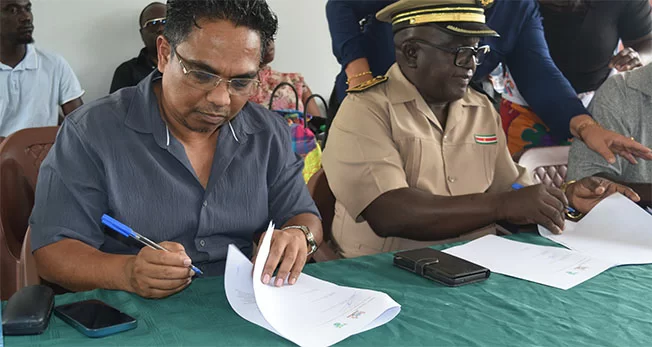
    The training initiative was formally inaugurated by Lygia Pinas, Coordinator of the Albina subdivision, marking the party’s continued commitment to grassroots development. Party Leader Gregory Rusland emphasized the NPS’s dedication to supporting local chapters and subdivisions through comprehensive capacity-building programs. He expressed confidence that participants would leverage their newly acquired knowledge to enhance community activity organization within their respective regions.

    Throughout the practical training sessions, attendees gained essential skills in three critical areas: project planning, project management, and time management techniques. The curriculum focused on teaching effective and efficient project implementation strategies, including budget development for securing project financing. The structured program consisted of three comprehensive sessions designed to provide hands-on learning experiences.

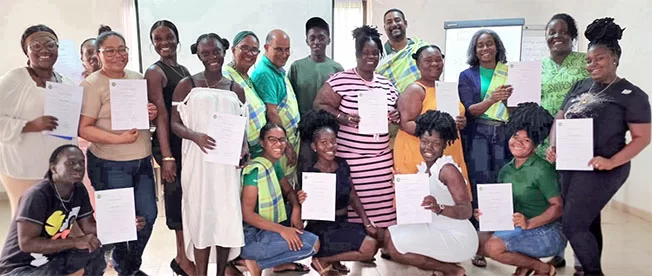
    Expert instruction was provided by Virginia Asin-Oostburg, Chair of the NPS Educational Institute, alongside co-trainer Leon Brunings. The ceremonial certificate distribution was conducted by Dorothy Hoever and Shanelle Welzijn, both affiliated with the Educational Institute’s management board. The event concluded with participants receiving formal recognition for their completed training, symbolizing the party’s ongoing commitment to its “A Nyun Pasi” (A New Path) development strategy leading toward 2030.