标签: Suriname

苏里南

  • Kustwachtraad krijgt actieve rol in beleid: geen formeel orgaan

    Kustwachtraad krijgt actieve rol in beleid: geen formeel orgaan

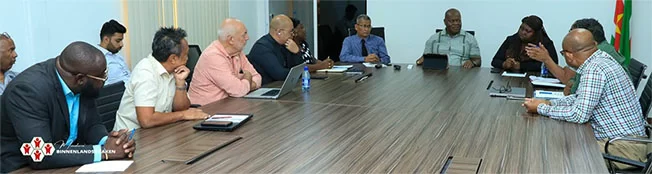
    In a significant shift from ceremonial duties to substantive governance, Suriname’s Minister of Home Affairs Marinus Bee has redefined the role of the Coast Guard Council during its inaugural meeting with newly appointed members. The minister declared that the council would evolve into an active participant in policy formulation and operational guidance rather than maintaining a purely symbolic function.

    Bee emphasized that regular consultations would be established between the ministry and the council, mirroring the existing coordination framework with the Coast Guard directorate. This repositioning explicitly establishes the council as a substantive partner within the decision-making architecture of Suriname’s maritime security apparatus.

    ‘The council exists not merely to facilitate but to contribute intellectually, provide directional guidance, and share responsibility,’ Minister Bee stated during the proceedings.

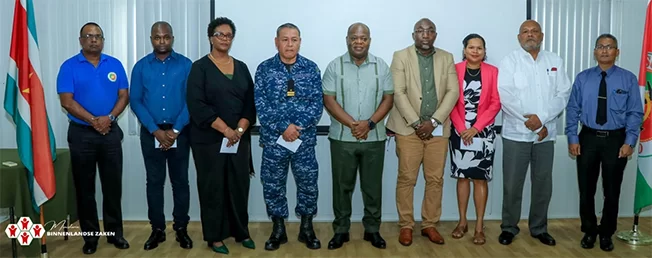
    The reconstituted council features broad interdepartmental representation including Rudie Roeplal as chairman, with members Samantha Liu, Ludwig Mendelzoon, Luciano Coutinho, Biswadath Somai, Clyde Griffith, Reginald Karwofodi, Marita Lautan-Wijnerman, and Rildo Aserie. This diverse composition draws expertise from multiple government ministries and the President’s Cabinet, designed to foster integrated approaches to coastal policy development and oversight.

    Minister Bee expressed confidence in the council’s capabilities, particularly highlighting the chairman’s extensive experience. The minister characterized the collective expertise as forming a robust foundation for effective collaboration and decision-making processes.

    Through this emphasis on structured dialogue and substantive involvement, the ministry is implementing a governance model where the council actively contributes to strategic direction rather than merely providing advisory input. The clear message emerging from this restructuring is that effective leadership requires not just positional authority but deliberate guidance, with expectations for the council to play an instrumental role in strengthening policy development and oversight mechanisms within Suriname’s coastal security framework.
  • Column:Column: Bezuinigen of bezwijken: tijd voor harde keuzes

    Column:Column: Bezuinigen of bezwijken: tijd voor harde keuzes

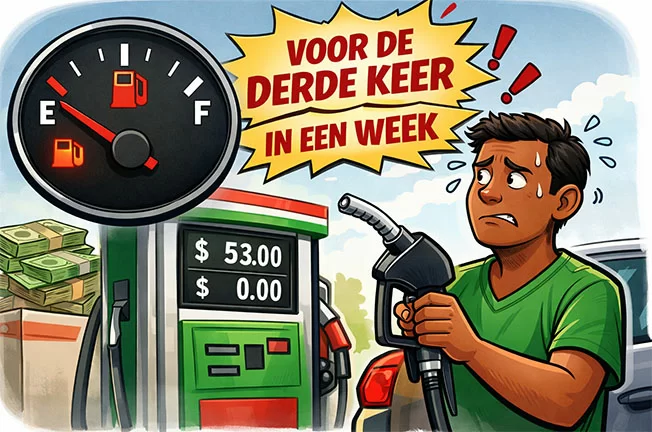
    Suriname faces an escalating economic emergency as soaring fuel prices catalyze a chain reaction across all sectors, transforming from theoretical concern to tangible daily burden. The government’s temporary price cap—approximately SRD 53 for diesel and SRD 48 for gasoline—provides minimal respite while international pressures, particularly Middle East conflicts, continue driving prices upward.

    Transport companies and suppliers have already implemented rate increases, affecting land transportation, imported goods, and even emergency services like ambulance costs in Coronie. The crisis disproportionately impacts small businesses and vulnerable populations while driving food prices and construction costs to unprecedented levels.

    This economic shock echoes previous crises like COVID-19, yet the current response lacks equivalent urgency and decisive action. The government faces a credibility challenge: meaningful austerity must begin with visible reductions in public spending and operational efficiency. Structural changes like reinstating verifiable remote work policies could immediately reduce fuel consumption and foreign currency pressure.

    Effective resolution requires genuine multilateral consultation—not just top-down mandates. Engaging businesses, trade unions, and civil society organizations through platforms like the recently established Social Economic Council could yield implementable solutions with broader acceptance. Simultaneously, citizens must reconsider consumption patterns and reduce dependence on non-essential imports while investing in local production and self-sufficiency.

    The reality demands courageous political will from both coalition and opposition parties. Without leadership, consensus-building, and equitable burden-sharing, delayed action will inevitably worsen outcomes in this critical economic crossroads.

  • WK-droom Suriname eindigt na 1-2 nederlaag tegen Bolivia

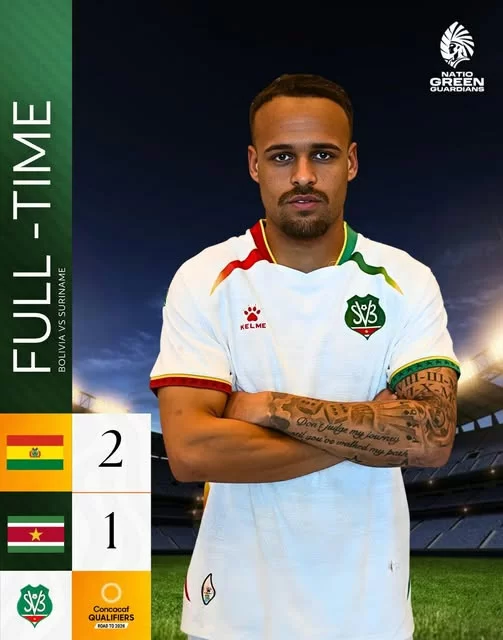
    WK-droom Suriname eindigt na 1-2 nederlaag tegen Bolivia

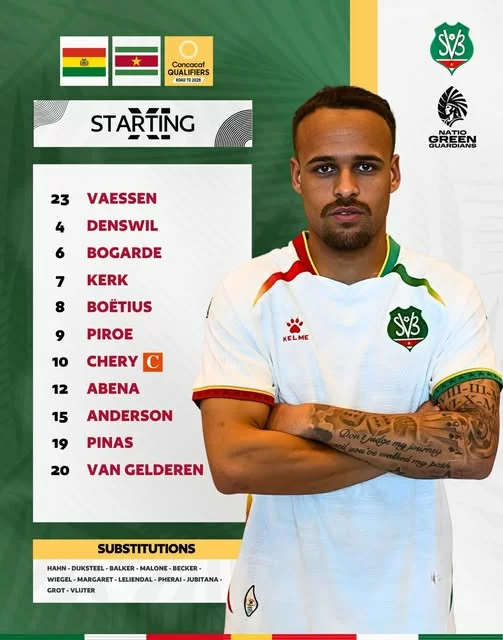
    In a devastating turn of events at Monterrey’s Estadio BBVA, Suriname’s aspirations for World Cup qualification evaporated following a 2-1 defeat against Bolivia. The match, characterized by dramatic momentum shifts, saw Suriname initially dominate before collapsing under Bolivia’s relentless pressure.

    The encounter commenced with Bolivia establishing immediate control, demonstrating superior technical prowess and maintaining approximately 66% possession throughout the first half. Despite being consistently outplayed, Suriname’s defensive resilience prevented any scoring during the initial 45 minutes, with the teams entering halftime deadlocked at 0-0.

    Suriname emerged transformed after the interval, executing precisely coordinated attacks that culminated in a breakthrough goal during the 55th minute. Forward Liam van Gelderen capitalized on a goalmouth scramble, clinically finishing past Bolivia’s goalkeeper to secure a 1-0 advantage.

    The lead sparked a period of Surinamese dominance, with the team creating multiple scoring opportunities over the subsequent 15 minutes. However, their failure to convert these chances proved costly as Bolivia gradually regained composure. The equalizer arrived in the 71st minute through 18-year-old sensation Paniagua, who marked his international debut with a historic goal.

    Bolivia’s momentum intensified dramatically following the leveler, with increased penetration into Suriname’s defensive third. The decisive moment occurred in the 79th minute when a Bolivian attacker was fouled inside the penalty area. Terceros converted the resulting spot-kick with unwavering precision, establishing a 2-1 lead.

    Despite late substitutions including Cheryaldo Becker and Dion Malone, Suriname’s desperate offensive efforts during regular and stoppage time yielded no equalizer. The final whistle triggered visible despair among players and supporters alike, extinguishing hopes for Suriname’s inaugural World Cup appearance.

  • Suriname op rand van geschiedenis: cruciaal duel tegen Bolivia om WK-droom

    Suriname op rand van geschiedenis: cruciaal duel tegen Bolivia om WK-droom

    In what represents the most significant match in Surinamese football history, the national team prepares for an intercontinental playoff semi-final showdown against Bolivia tonight. The high-stakes encounter, scheduled for 7:00 PM Suriname time at Estadio BBVA in Monterrey, Mexico, will determine which nation advances to the final qualifying match for a coveted World Cup berth.

    Suriname stands merely two victories away from achieving what has previously been unattainable—the country’s inaugural qualification for the FIFA World Cup. The mathematical reality presents a binary outcome: victory secures advancement to the March 31st final against Iraq, while defeat terminates World Cup aspirations indefinitely. Should regular time conclude evenly, the match will proceed to extra time followed by penalty kicks if necessary.

    National team coach Henk ten Cate maintains unwavering confidence in Suriname’s breakthrough potential, emphasizing the collective support from the entire nation under the unifying motto “Bribi na krakti!” (Unity is strength).

    Suriname approaches the contest with mixed but promising preparatory results, including a decisive 4-0 victory against El Salvador, a 1-1 draw with Panama, and a 1-3 defeat against Guatemala. Their opponents, Bolivia, despite recent friendly match setbacks, present physically robust and experienced opposition with prior World Cup participation, most recently in 1994.

    The intercontinental playoffs feature six nations competing for two remaining World Cup slots: Suriname, Bolivia, Iraq, DR Congo, Jamaica, and New Caledonia. All matches are conducted on neutral territory in Mexico to ensure competitive fairness.

  • Beroependag op Kangoeroe High: leerlingen maken kennis met diverse beroepen

    Beroependag op Kangoeroe High: leerlingen maken kennis met diverse beroepen

    Kangoeroe High School successfully hosted its seventh annual Career Day on Wednesday, creating dynamic interfaces between students and active professionals across diverse sectors. The event featured direct engagement opportunities with lawyers, software engineers, journalists, cryptocurrency traders, customs officials, fashion designers, drone pilots, and agricultural producers.

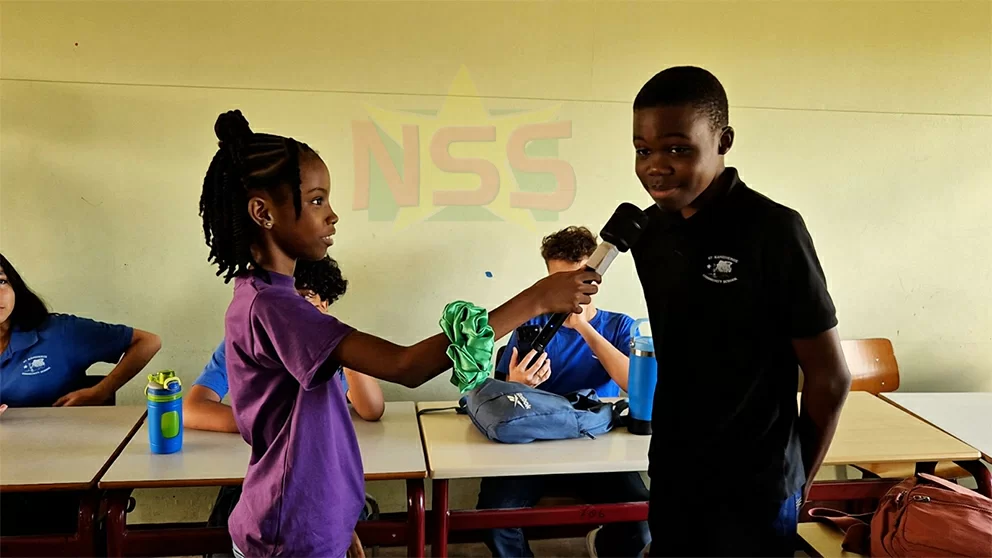
    A particularly popular segment involved immersive role-playing activities where students temporarily transformed into ‘journalists’ conducting press conferences with a student-acting ‘president.’ These simulated exchanges featured probing questions addressing real-world concerns including inflation rates, infrastructure development, and environmental issues surrounding mercury usage.

    School Principal Giovanni Robinson emphasized the event’s core objective: “This initiative fundamentally introduces children to the vast spectrum of existing professions. Through dialogue with practicing professionals, students gain clearer perspectives on requirements for reaching their career aspirations. The diversity and range of represented occupations expands annually, with participants consistently expressing desire for continued involvement.”

    Robinson noted growing student interest in technical fields including ICT, oil & gas, and geology. Beyond introductory conversations, the program offered practical exposure through ‘sniff internships’ – day-long shadowing experiences in self-selected professions. These immersive opportunities allow students to evaluate career compatibility through firsthand observation of daily professional realities.

    The comprehensive career fair attracted over twenty companies and professionals, with notable presence from Telesur Plus and Subisco alongside a complementary braderie (open-air market). Kangoeroe High, serving approximately 250 students aged 12-17 across lower and upper secondary education, continues expanding industry partnerships to broaden student orientation and maximize future career choices.

  • BiZa pakt  ‘spookambtenaren’ aan: focus op personeel in buitenland

    BiZa pakt ‘spookambtenaren’ aan: focus op personeel in buitenland

    The Ministry of Home Affairs in Suriname has launched an intensive crackdown on ghost workers within its civil service system, with particular focus on officials who continue receiving government salaries while residing abroad indefinitely. During a high-level coordination meeting attended by Military Police, E-Government, the Directorate of Civil Affairs, and senior ministry officials, authorities evaluated progress and aligned further actions in this ongoing purification drive.

    The operation specifically targets two categories of irregular employment: those unlawfully collecting government pay while living overseas, and civil servants holding full-time positions in private institutions, making their government role functionally impossible to perform. Home Affairs Minister Marinus Bee emphasized the government’s determination to instill greater order and transparency within the public sector apparatus.

    Preliminary findings reveal that a significant portion of registered civil servants may be residing abroad while continuing to receive state compensation. So far, the ministry has removed 2,130 names from government payrolls, projecting approximately SRD 300 million in savings. The current civil service structure comprises about 51,300 individuals, with only 15,000 to 20,000 having completed online registration.

    With nearly two-thirds of state expenditures allocated to wages and salaries, Minister Bee stressed the critical need for a more efficient civil service apparatus. He asserted that government resources must be directed exclusively toward those actively contributing to public service delivery. The recovered funds are expected to create fiscal space for better compensation of active civil servants while simultaneously strengthening public service delivery mechanisms for Surinamese society.

  • Schoten gelost op woning na familieruzie

    Schoten gelost op woning na familieruzie

    Gunshots rang out at a residential property on Hirasinghstraat this morning, in what authorities believe was a family dispute that turned violent. According to police reports, the incident occurred when an argument between an uncle and nephew escalated dramatically, resulting in multiple shots being fired at the dwelling.

    Fortunately, preliminary investigations confirm that no injuries resulted from the shooting, though the psychological impact on residents and the broader community remains significant. The alleged perpetrator, identified as one of the family members involved in the altercation, fled the scene immediately following the incident.

    Law enforcement officials have launched a comprehensive investigation into the matter, though details remain scarce at this early stage. Forensic teams are examining the property for evidence while detectives conduct neighborhood inquiries to piece together the sequence of events.

    The incident has raised concerns about domestic conflicts escalating into public safety threats, particularly in residential areas where such violence endangers not only those directly involved but also innocent bystanders. Community leaders have called for increased conflict resolution resources and greater awareness of domestic violence prevention measures.

    Police have assured residents that they are pursuing all leads to apprehend the suspect and prevent any further escalation of the situation.

  • WTO-chef: wereldorde is onherroepelijk veranderd

    WTO-chef: wereldorde is onherroepelijk veranderd

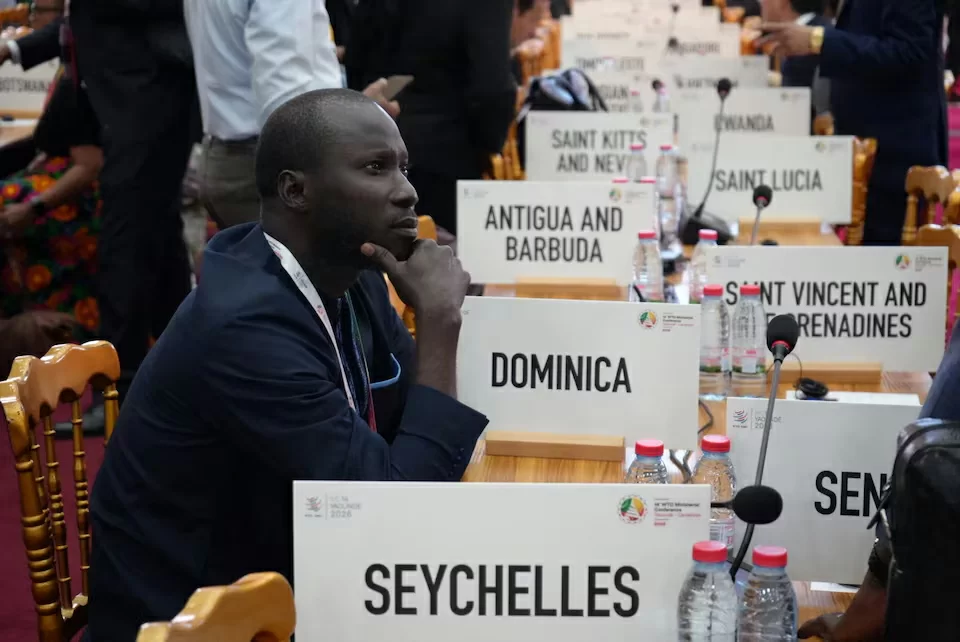
    WTO Director-General Ngozi Okonjo-Iweala delivered a stark assessment of the global trading landscape during Thursday’s opening of the 14th Ministerial Conference in Yaoundé, Cameroon, declaring that the multilateral system has been fundamentally and irreversibly transformed.

    Addressing delegates at the Palais des Congrès, Okonjo-Iweala stated: ‘The world order and multilateral system as we knew it has irrevocably changed. We will not get it back… We must look to the future.’ Her remarks came as trade representatives from 166 member nations gathered amid mounting challenges to global commerce.

    While acknowledging that 72% of world trade still operates under WTO rules and highlighting positive developments in AI-related trade growth, the director-general outlined significant uncertainties plaguing the trading system. She specifically cited Middle East conflicts and the widespread impact of U.S. tariff policies as major disruptive factors.

    The organization faces multiple structural challenges, including the continued paralysis of its dispute settlement body and critical transparency failures in subsidy reporting. Only 64 members had submitted timely subsidy notifications for 2025, leaving 102 nations non-compliant with reporting requirements.

    ‘Lack of transparency leads to lack of trust, and that fuels suspicions of unfairness and anti-competitive behavior,’ Okonjo-Iweala warned delegates. This dynamic creates a ‘vicious circle’ of distrust that prevents members from agreeing on new rules and essential reforms, she added.

    Geopolitical tensions are exacerbating trade pressures, with Middle Eastern conflicts disrupting vital shipping routes and energy supplies. Meanwhile, ongoing trade conflicts—including high import tariffs implemented by the United States and other nations—continue generating uncertainty and disrupting global supply chains that haven’t fully recovered from recent crises.

  • Suriname benadrukt sterkere samenwerking regio en Afrika

    Suriname benadrukt sterkere samenwerking regio en Afrika

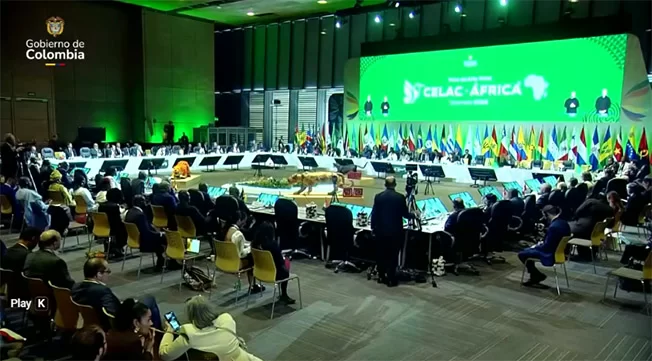
    At a landmark summit in Colombia, Suriname has emerged as a vocal advocate for strengthening multilateral cooperation between Latin America, the Caribbean, and African nations. The special assembly of heads of state and government from the Community of Latin American and Caribbean States (CELAC) and Africa served as a platform for developing nations to articulate a unified vision for South-South collaboration.

    Foreign Minister Melvin Bouva emphasized that the gathering reflected a shared commitment to multilateralism and solidarity amid global uncertainties. “During an era marked by geopolitical tensions, climate challenges, and economic instability, our partnership possesses the transformative potential to foster cooperation, development, and worldwide stability,” Bouva stated, highlighting the historical ties and collective potential between the regions.

    Suriname positioned the enhancement of CELAC-Africa relations as not merely desirable but fundamentally essential. The meeting produced calls for deepened political dialogue and institutional cooperation through regular consultations at all governance levels. Key focus areas included strengthening trade agreements, stimulating investments, and boosting collaborative efforts in tourism, agriculture, and technological advancement.

    Additionally, Suriname advocated for joint initiatives to reform the international legal order, including restructuring the UN Security Council to better reflect contemporary realities and the interests of developing nations. This diplomatic push confirms Suriname’s dedication to fostering closer integration between CELAC and Africa, with clear objectives toward sustainable development and a more equitable global architecture, according to official reports.

  • Recensie: Democratische leeservaring

    Recensie: Democratische leeservaring

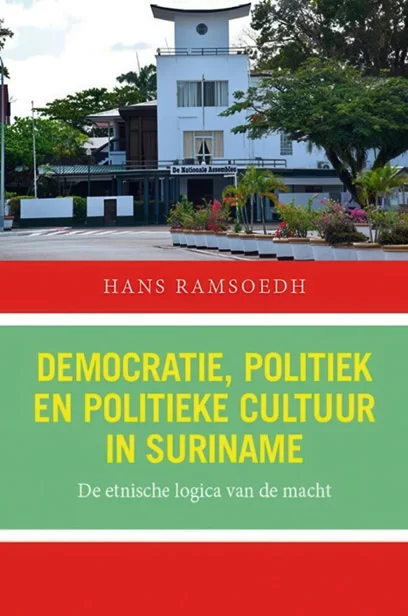
    A groundbreaking historical analysis has revealed disturbing details of institutional racism within Dutch colonial policy during World War II, drawing powerful connections to contemporary democratic challenges worldwide. The revelations come from Dr. Hans Ramsoedh’s newly published work “Democracy, Politics and Political Culture in Suriname – The Ethnic Logic of Power,” which examines Suriname’s complex democratic journey from 1866 to the present.

    The research documents how Dutch authorities in London systematically rejected military reinforcement requests from Surinamese Governor Kielstra, despite growing security concerns. Shockingly, the Dutch cabinet dismissed the necessity of military conscription for Surinamese men based on explicit racial prejudice. Government officials expressed that ‘little negroes’ would fail to impress Americans with their racial segregation policies, consequently maintaining Suriname’s troop composition as ‘white as possible.’

    In 1941, when approximately 500 Surinamese volunteers enlisted for the Princess Irene Brigade in Canada, all but a few dozen were rejected by the Dutch government-in-exile. Prime Minister Gerbrandy allegedly feared their presence would cause racial tensions among Dutch conscripts from South Africa—prioritizing white sensibilities over liberating the Netherlands with colored troops.

    Dr. Ramsoedh’s comprehensive 317-page study, complete with extensive notes and references, provides a chronological examination of Suriname’s democratic development through distinct historical periods: colonial guardianship (1866-1945), post-colonial awakening (1945-1975), failing democracy after independence (1975-1987), and democratic transition with ongoing fragility (1987-present).

    The work gains particular relevance through its exploration of endemic problems including ethnic fragmentation, clientelism, corruption, and organized crime that continue to undermine democratic institutions. The author emphasizes democracy as a ‘way of life’ in the spirit of philosopher John Dewey, highlighting citizenship education’s crucial role in cultivating democratic attitudes and societal engagement.

    Notably, the study examines how poverty, social inequality, and criminal capital influence political parties, while addressing the psychological impact of chronic stress on ethical behavior. The author argues that without discretionary time for recovery and reflection—impossible when working multiple jobs merely to survive—self-control diminishes and indifference becomes the human condition.

    The work concludes that emotional self-regulation and humanization of society are essential for integrity under pressure, ultimately reminding readers that it is people who shape democracy, politics, and political culture.