标签: Suriname

苏里南

  • Afstudeeronderzoek levert HACCP-plan op voor veilige verwerking van bevroren sopropo

    Afstudeeronderzoek levert HACCP-plan op voor veilige verwerking van bevroren sopropo

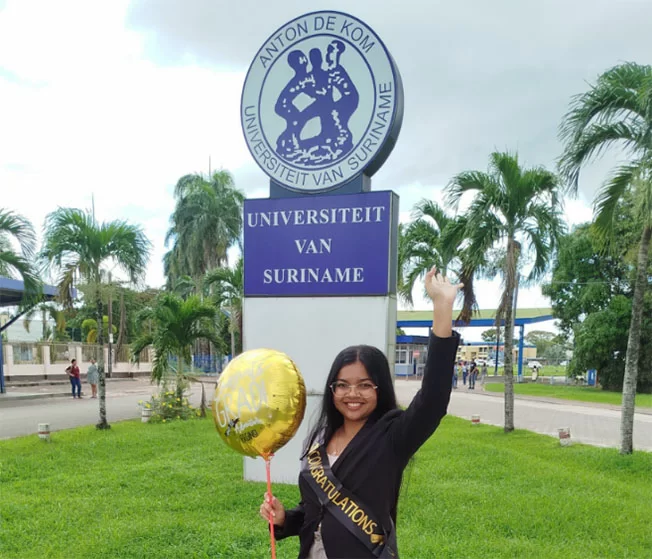
    On June 5, a graduate of Anton de Kom University of Suriname marked a key milestone for the country’s agricultural processing sector, completing her bachelor’s degree with a research project that delivers tangible, science-backed improvements to local food safety. Sieromenie Parta, a student in the Agricultural Production bachelor program focused on agroprocessing at the university’s Faculty of Technological Sciences, successfully defended her final thesis this Thursday, which centered on building a custom Hazard Analysis and Critical Control Points (HACCP) framework for Surinamese food processor Chimady N.V.’s frozen cut sopropo, also known as bitter melon (Momordica charantia L.) production line.

    The project was developed in direct response to a clear industry gap: while food safety depends entirely on proactive risk management across every stage of production, Chimady N.V. lacked a systematic, research-based approach to identifying and mitigating hazards specific to its frozen bitter melon operations. Without this structured framework, the company faced ongoing risks of inconsistent product quality, compromised safety, and limited ability to meet regional and international market standards.

    To address this need, Parta mapped and analyzed the entirety of Chimady N.V.’s frozen cut sopropo production process, taking a holistic approach that assessed every factor capable of impacting final product safety. After completing a full hazard analysis across all production stages, she identified all Critical Control Points (CCPs) – points in the process where hazards can be prevented, eliminated, or reduced to safe levels. For each identified CCP, Parta developed detailed, actionable protocols including critical safety limits, routine monitoring procedures, corrective actions for out-of-specification production, verification processes, and required documentation standards. All these components were integrated into a full HACCP plan tailored specifically to Chimady N.V.’s unique operating conditions and product line.

    In her analysis of the plan’s impact, Parta noted that the new framework provides a structured system for managing food safety risks across every step of production. By catching and addressing potential hazards early in the process, the HACCP plan makes it far easier for Chimady N.V. to consistently deliver a safe, high-quality final product. Beyond core safety improvements, the plan also supports more consistent application of control measures, more accurate production record-keeping, and greater overall reliability of the company’s entire production workflow.

    The research delivers both academic and practical value for Chimady N.V., laying a foundational framework to further strengthen food safety practices, quality assurance, and sustainable growth of the company’s production activities. Importantly, the relevance of Parta’s work extends far beyond a single Surinamese processor. As global demand for safe, high-quality processed food continues to rise, robust food safety systems have become a critical factor in determining the global competitiveness of Suriname’s agricultural processing sector. Widespread adoption of HACCP principles like the one developed in this study can boost overall national food safety, increase consumer confidence in Surinamese food products, and open greater access to regional and international export markets.

    Parta’s research also aligns closely with the core goals of Climate Smart Agriculture, an approach focused on building sustainable food production systems that are more resilient to the impacts of climate change, including extreme rainfall, drought, and rising average temperatures. By systematically identifying and controlling food safety hazards, the HACCP system helps reduce food waste, while ensuring the quality and safety of end products are maintained even as changing climate conditions introduce new production challenges.

    A strong, sustainable agricultural processing sector delivers broad economic benefits for Suriname, driving overall economic growth, increasing export volumes, creating new local jobs, and adding greater value to domestically grown agricultural commodities. Against this backdrop, Parta’s project also makes an important contribution to the ongoing professionalization of the entire Surinamese agricultural processing sector.

    The research was conducted and evaluated under the supervision of an expert panel of academic and industry professionals, including MSc Rewish Somai (faculty and practical assessor), MSc Mayuri Jaggan (sub-assessor), Dr. Lydia Ori (professor and chair of the assessment committee), and MSc Nareen Gajadin (external assessor).
  • Handel, investeringen en verbindingen rode draad bezoeken Brazilië en Dominicaanse Republiek

    Handel, investeringen en verbindingen rode draad bezoeken Brazilië en Dominicaanse Republiek

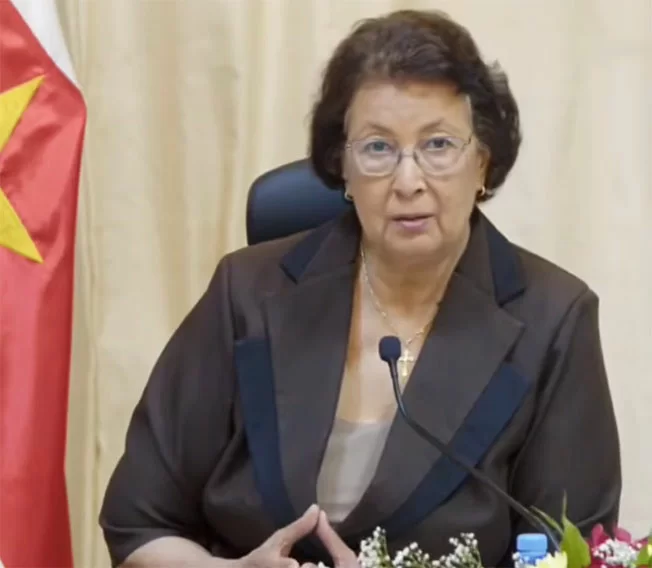
    In a press briefing held on June 5, Suriname’s President Jennifer Simons and Minister of Foreign Affairs, International Trade and Cooperation Melvin Bouva outlined concrete outcomes from recent official visits to Brazil and the Dominican Republic, announcing the government’s plan to speed up the expansion of economic cooperation with both Latin American and Caribbean nations. The cooperation strategy centers on eight core priority areas: trade, cross-border investment, agriculture, tourism, energy, improved transport connectivity, and national food security.

    President Simons emphasized that the diplomatic missions were intentionally structured to deliver tangible, actionable results rather than symbolic diplomatic engagements, with formal monitoring mechanisms established to track the implementation of all signed agreements. With Brazil, Suriname has locked in new arrangements covering a wide range of sectors, from trade, investment and agriculture to public security, energy, infrastructure, air and maritime connectivity, healthcare, and digital technology.

    One of the most high-priority initiatives discussed is the establishment of a direct maritime shipping route between Suriname and Brazil, a project Suriname’s government says will cut transit times and transportation costs for cross-border goods movement. Simons noted that this new link will not only bring down consumer prices for Surinamese households but also unlock new export opportunities for key domestic products, most notably Surinamese rice. Minister Bouva added that two private companies have already expressed formal interest in operating the new route, with one already holding technical consultations with Suriname’s Ministry of Transport, Communication and Tourism to work out operational details.

    For its partnership with the Dominican Republic, Suriname has agreed to a multi-year cooperation framework and signed six bilateral agreements covering tourism, agriculture, energy, trade, and broader economic collaboration. The Surinamese government is actively targeting new foreign direct investment from the Dominican Republic, with a particular focus on growing the country’s agriculture and tourism sectors.

    President Simons highlighted that deepened regional economic cooperation has grown increasingly critical amid shifting global geopolitical dynamics and persistent disruptions to global supply chains. Against this backdrop, she argued, Suriname must prioritize strengthening its food security, energy security, and regional connectivity to build economic resilience. All agreements reached during the visits are scheduled for implementation over the coming months, with the government projecting that the expanded partnerships will ultimately generate increased trade flows, higher investment volumes, and broader economic opportunity for the people of Suriname.

  • Sterke groei in China-Latijns-Amerika handel en samenwerking

    Sterke groei in China-Latijns-Amerika handel en samenwerking

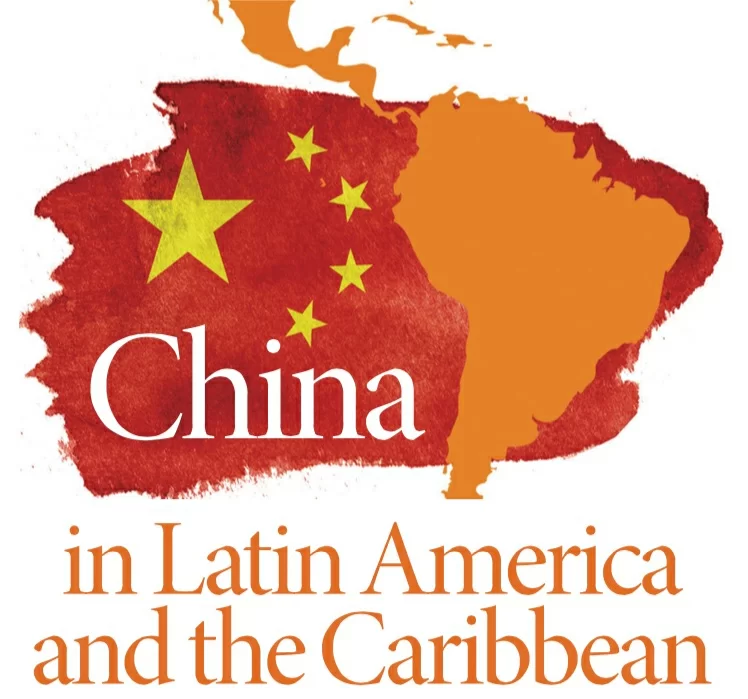
    This month marks the first anniversary of the landmark Five Initiatives for Building a China-Latin America and Caribbean (LAC) Community with a Shared Future, a strategic cooperation framework first proposed by Chinese President Xi Jinping in May 2025. Over the past 12 months, despite a turbulent and fragmented global geopolitical and economic landscape, China and LAC member states have maintained close coordination and advanced the partnership to deliver impressive, tangible outcomes across multiple sectors.

    Trade ties, the backbone of the bilateral relationship, have hit new milestones. Total bilateral trade volume hit a record high of $549 billion in 2025, a figure that underscores the deep economic complementarity between the two regions. This upward momentum has continued into 2026, with preliminary data for the first four months of the year showing an 18.5% year-on-year expansion in trade volume, outpacing many other global trade corridors.

    People-to-people exchanges have also seen unprecedented growth, driven by widespread visa liberalization measures on both sides. China has implemented visa-free entry policies for citizens of major LAC economies including Brazil, Argentina, Chile, Peru and Uruguay, while multiple LAC nations have reciprocated by easing travel restrictions for Chinese visitors. These policy shifts have unlocked rapid growth in cross-border tourism, student exchanges and cultural cooperation, bringing populations on both sides closer together.

    Infrastructure development, a core focus of bilateral cooperation, has delivered widespread, tangible benefits to local communities across the LAC region. Backed by Chinese investment and advanced engineering technology, major projects have upgraded critical connectivity and public services: the Belo Monte transmission project in Brazil now delivers reliable power access to more than 22 million people; renovation work on the Mexico City Metro line has improved commuter safety and efficiency; and the new Bogotá Metro line continues to make steady progress toward completion. Beyond improving quality of life, these large-scale infrastructure projects have created thousands of local jobs and laid stronger foundations for long-term economic growth.

    Cooperation has also expanded into manufacturing and service sectors, generating new employment opportunities and strengthening local supply chains. When Western automakers divested from their production facilities in Brazil, Chinese automotive firms acquired the sites, restarted operations, restored thousands of jobs and revitalized local automotive supply networks. In the service sector, major Chinese consumer brands such as Meituan have expanded their regional footprint, creating new local jobs and spurring innovation in the digital service space.
    Beyond economic and infrastructure ties, the partnership has deepened in education and cultural exchange. China now offers hundreds of annual scholarships to LAC students pursuing higher education in China, and has launched new Confucius Institutes across the region to expand Chinese language learning. High-profile cultural initiatives, including the 2025-2026 China-Brazil Cultural Year, have brought art, performance and cultural exchanges to audiences across both regions, strengthening mutual understanding and people-to-people connections.

    While analysts note that shifting political landscapes and domestic policy changes across some LAC nations create long-term considerations for the partnership, Chinese authorities have repeatedly reaffirmed that their policy toward the region remains consistent and stable, regardless of changes in national governments across LAC. The bilateral relationship is rooted in principles of mutual respect for territorial sovereignty and a focus on shared long-term development interests, creating a resilient foundation for cooperation.

    International policy experts emphasize that the deepening China-LAC partnership is driven by aligned development goals, shared experiences of developing economies, and a common vision for a more balanced global order. In an era marked by rising geopolitical tension, economic fragmentation and global uncertainty, the partnership offers both sides much-needed stability, mutual solidarity and new inclusive growth opportunities.

    Looking ahead, the future of China-LAC relations remains highly promising. Both sides have committed to deepening cooperation across trade, infrastructure, people-to-people ties, innovation and technology, with a shared goal of advancing sustainable, inclusive growth that delivers benefits to all communities across both regions. Over the coming years, continued deepening of the China-LAC partnership is not only expected to boost shared economic prosperity, but also contribute to the development of a more multipolar, fair and equitable global international order.

  • Wereldmilieudag 2026: Caricom pleit voor rechtvaardige transitie

    Wereldmilieudag 2026: Caricom pleit voor rechtvaardige transitie

    On June 5, 2026, World Environment Day, global conversations around climate action center on the 2026 theme “Now For Climate – Accelerating the Transition to a Sustainable Future”, with a sharp focus on the disproportionate climate vulnerability facing small island nations, particularly the Caribbean region. In a compelling official statement marking the annual global observance, Carla Barnett, Secretary-General of the Caribbean Community (CARICOM), emphasized that the region’s climate transition must be rooted in principles of justice, inclusivity, and long-term resilience.

    Barnett outlined a clear vision for the region’s future: “The future we envision is not just greener, but also more just and more resilient. It is a future where economic development does not come at the expense of our ecosystems, where our communities are protected, and where future generations inherit a vibrant and safe region.”

    Unlike major global carbon emitters, the Caribbean, along with other small island developing states and low-lying coastal nations, contributes a negligible share of total global greenhouse gas emissions. Yet the region faces some of the most severe and immediate climate impacts, including increasingly powerful hurricanes, extended drought cycles, accelerating coastal erosion, widespread coral bleaching, frequent coastal flooding, and growing food insecurity. These cascading threats undermine critical local infrastructure, cripple core economic sectors such as tourism and agriculture, erode unique regional biodiversity, and put the well-being and physical safety of local populations at constant risk.

    To address these systemic challenges, Barnett stressed that resilience-building and innovative local solutions must lead regional climate strategy. Investments in renewable energy sources including wind, solar, hydropower, and geothermal energy do not only strengthen the Caribbean’s energy security, she noted, they also open new, inclusive economic pathways for regional communities. Additional priority actions include scaling climate-adaptive agricultural practices, advancing sustainable fishing frameworks, expanding water conservation initiatives, and deepening regional collaboration on food production systems – all core measures to cut the region’s overall climate vulnerability.

    Barnett also called for broad multi-stakeholder collaboration that goes beyond national government action. She argued that meaningful progress requires active engagement from the private sector, global financial institutions, civil society organizations, and academic research communities. These cross-sector partnerships are critical to unlocking green investment, accelerating climate innovation, and advancing locally tailored solutions that address the specific climate challenges the Caribbean faces.

    Regional integration remains an indispensable foundation for advancing collective climate progress, from scaling renewable energy access and improving disaster risk management to developing sustainable transportation systems, growing the blue economy, and expanding regional climate data and early warning systems. Barnett also highlighted that young people are the core driving force behind climate action and will be the key builders of the region’s sustainable future.

    Globally, CARICOM has been a leading advocate for upholding the Paris Agreement target of limiting global warming to 1.5 degrees Celsius above pre-industrial levels. For the Caribbean, this is not merely an international policy target – it is a matter of collective survival.

    Barnett’s call for action comes as the global climate crisis grows more urgent by the year, making the need for coordinated international cooperation and local action clearer than ever. She closed her statement by urging all stakeholders to join in a collective, urgent, and targeted push to accelerate the transition to a sustainable future that leaves the Caribbean just, resilient, and secure for generations to come.

  • Column: Het rechtmatige onding dat WIPA heet

    Column: Het rechtmatige onding dat WIPA heet

    After hours of heated debate, repeated suspensions, closed-door negotiations, faction caucuses and high-stakes political calculations, Suriname’s National Assembly has formally approved a motion to indict three former ministers — Riad Nurmohamed, Gillmore Hoefdraad and Bronto Somohardjo — clearing the path for full criminal prosecution to move forward.

    While supporters of the decision frame it as a victory for the rule of law, critics have already raised allegations that political motivations drove the outcome. The entire drawn-out process has also thrown a sharp spotlight on the quirky and contradictory structure of Suriname’s Law on the Indictment of Political Office Holders (known locally by its Dutch acronym WIPA), a piece of legislation long debated for its unusual place in the country’s legal order.

    Far from being unconstitutional, the WIPA is explicitly rooted in Article 140 of Suriname’s constitution. Under the terms of the law, the National Assembly (abbreviated DNA in Dutch) is not permitted to rule on the guilt or innocence of the accused officials. Nor is it allowed to weigh in on whether sufficient evidence exists to prove a criminal offense was committed — that responsibility is reserved exclusively for the Public Prosecution Service and ultimately the national courts.

    The DNA’s role under the law is intentionally narrow: parliament is only tasked with determining whether moving forward with prosecution of a sitting or former political officeholder serves the broader public interest. NDP parliamentarian Ebu Jones emphasized during debate that the DNA must also examine whether the proceeding amounts to political retaliation, reminding colleagues that the national legislature is not a court. It cannot determine guilt or judge the strength of evidence, Jones argued — those duties fall squarely to prosecutors and the High Court of Justice.

    Yet that very clarification lays bare the core structural weakness of the WIPA framework. If parliament is barred from assessing guilt or evidence, why is it granted the power to greenlight a criminal case in the first place?

    The explanatory memorandum accompanying the legislation amplifies this inherent tension. It notes that the special carve-out for ministers and senior political officials has nothing to do with the actions the accused are alleged to have committed, and everything to do with the “dignity of the office” they hold. Their unique position in the state structure, the memorandum argues, justifies an extra layer of political consideration before prosecution can proceed.

    At the same time, the same document stresses that the DNA cannot rule on evidence, guilt or whether an act meets the definition of a crime. Parliament’s only job is to assess whether moving forward with prosecution would cause administrative collapse or widespread social unrest.

    This structure effectively builds a political screening process into the pre-trial phase of criminal cases against political officials, even as it explicitly bars political actors from interfering with the substantive legal merits of a case. What was meant to be a purely legal proceeding, in the end, became a high-stakes test of political strength.

    The final vote laid bare deep divisions within Suriname’s six-party ruling coalition, which failed to unite around a single collective position on the indictment. Ultimately, the decision was left to individual assembly members to vote their conscience. While allowing representatives to think and vote independently is not inherently problematic, it underscores just how difficult it is to separate legal decision-making from partisan political interests once politicians are given formal authority over the process.

    Most notably, the vote exposed critical fractures within the NDP, the coalition’s largest party holding 18 parliamentary seats. The party’s numerical advantage did not translate to political unity, with deep internal disagreements leading to a split vote. Even with all of its aligned members voting against the indictments, the NDP lacked the numbers to block the combined 17 votes from the VHP and other coalition members who backed the prosecutor-general’s request for prosecution. As a result, the NDP emerged as the clearest political loser of the vote. Its defeat was not just about the outcome of the indictments: the vote made visible that the party’s 18 seats do not add up to a reliable governing majority, offering unflattering new clarity into the actual balance of power within the ruling coalition that goes far beyond the fates of the three former ministers.

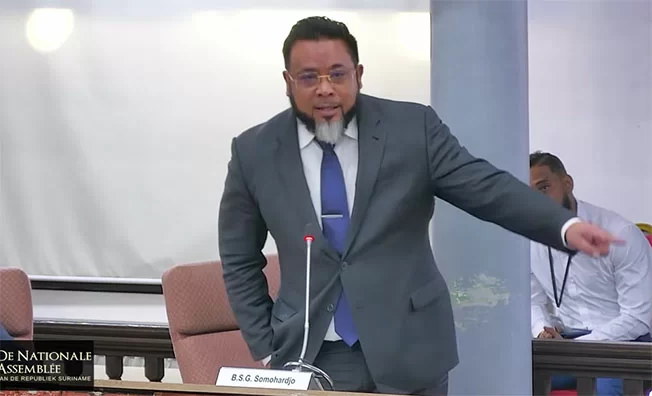
    The PL faction voted against moving forward with indictment for Riad Nurmohamed. For Bronto Somohardjo, one thing remains undeniable: unwavering consistency. From the moment the prosecutor-general first filed the request for indictment, Somohardjo has publicly stated he is fully prepared to answer the allegations against him in court. He did not request political protection, instead calling for a full legal assessment of the claims against him. He stuck to that position through the final vote: he voted in favor of his own indictment, while voting against the motion to indict Nurmohamed.

    This brings the debate back to its core question: why should a national legislature get to decide whether a court can carry out its constitutional duty to hear a case? There are defensible arguments for granting political officeholders a special formal status under the constitution, as Suriname’s founding document does. But the reality remains that ordinary citizens do not need approval from a parliamentary majority before a court can hear their criminal case.

    It is for this reason that the WIPA remains such a peculiar legal construction. It is a legally valid and constitutionally sound law. But it forces politics and law to converge in a space where they ought, by principle, to remain separate. That does not make the WIPA illegal. But it has cemented its decades-long reputation: a legally authorized anomaly in Suriname’s legal order.

  • Somohardjo na goedkeuring vordering: Ik ben op alles voorbereid

    Somohardjo na goedkeuring vordering: Ik ben op alles voorbereid

    On June 5, a key political and legal development unfolded in Suriname, where the country’s national legislature, De Nationale Assemblee (DNA), voted to greenlight prosecution requests from the nation’s prosecutor-general against three former cabinet ministers — a move that clears the way for formal criminal proceedings to move forward under the nation’s law for prosecuting political officeholders.

    Among those facing prosecution is Bronto Somohardjo, a former government minister who currently leads the Pertjajah Luhur (PL) political party. In an extraordinary turn of proceedings, Somohardjo cast his own vote in support of the prosecution request filed against him, a choice he says aligns with his long-held stance rejecting political immunity from legal process.

    In comments to local outlet Starnieuws following the vote, Somohardjo made clear he is fully prepared for the next phase of legal process. “I am ready for any outcome,” he stated. The party leader explained that his vote was a natural extension of his public commitment that he would never seek political protection from investigation or prosecution. “Let no one ever claim that Bronto Somohardjo sought protection or ran from this process. I have shown up, and I am ready to accept whatever consequences come,” he added.

    Somohardjo emphasized that parliamentary approval of the prosecution request does not mark the end of the matter for him. He argued that in a functioning democratic constitutional state, accountability must be required not only of individual politicians, but also of state institutions. He reaffirmed his commitment to continuing advocacy for equal legal protection, government transparency, equal treatment under the law, and universal accountability for all public actors.

    Alongside Somohardjo, DNA approved prosecution requests against two other former ministers: Riad Nurmohamed and Gillmore Hoefdraad. The parliamentary approval meets all requirements laid out in Suriname’s Wet In Staat van Beschuldigingstelling Politieke Ambtsdragers (WIPA), the law governing prosecution of sitting and former political officeholders, and now allows the Public Prosecution Service to move forward with formal criminal procedures.

    DNA Speaker Ashwin Adhin confirmed to Starnieuws that legislative staff are already preparing formal notification of the parliamentary approval to the Public Prosecution Service. Once that notification is received, the prosecution service can advance the process according to statutory guidelines.

    An unusual procedural detail marked Thursday’s vote: the presiding role was not filled by Speaker Adhin, but by assembly member Ivanildo Plein, the first alternate deputy speaker. Adhin had previously announced he would abstain from the vote and leave the chamber ahead of voting. Since DNA rules require all participating members to cast either a yes or no vote with no option to abstain while retaining the chair, Adhin transferred presiding duties to Plein.

    Plein, who also served on the special parliamentary committee that reviewed the prosecution requests, chose to forgo his scheduled speaking slot before the vote. He explained this decision was necessary to keep the proceeding on schedule. If he had taken the floor to speak after Adhin left the chamber, he would have been unable to continue presiding, forcing a delay to the entire vote. Second alternate deputy speaker Rossellie Cotino was absent from the session, while ABOP party faction leader and current Deputy Speaker Ronnie Brunswijk delivered the faction’s address on behalf of his group instead.

    In a formal statement released after the vote, the Public Prosecution Service stressed that parliamentary approval of the prosecution request does not equate to a finding of guilt. Final judgment on the facts of each case and any determination of criminal liability remains the exclusive responsibility of the judiciary. Once ongoing investigations are completed, the cases will be submitted to the Court of Justice in accordance with all applicable legal procedures.

  • Derde helft WK 2026: De beste jonge spelers om te volgen op dit FIFA-toernooi

    Derde helft WK 2026: De beste jonge spelers om te volgen op dit FIFA-toernooi

    As the 2026 FIFA World Cup, hosted across North America, inches closer, the global football community is already buzzing with anticipation. This historic tournament will mark a poignant passing of the torch: icons Cristiano Ronaldo and Lionel Messi are set to make their sixth and final appearance at the game’s biggest stage. Both made their World Cup debuts in 2006 in Germany, and have electrified every tournament since, but at 41, this will be Ronaldo’s last international hurrah, while Messi, who turns 39 in late June, is also widely expected to bring his legendary international career to a close.

    While fans are already celebrating the legacy of football’s greatest generation, all eyes are turning to the next wave of prodigious young talent ready to seize the global spotlight and take the sport into its future. Below, we profile the top 10 breakout prospects to watch closely this tournament, each poised to cement their status as global superstars over the coming weeks:

    ### Kenan Yildiz (Turkey)
    Turkey’s last appearance at the World Cup came before Yildiz was even born. After a 24-year absence from the tournament, this 21-year-old Juventus midfielder carries the hopes of millions of Turkish fans into the 2026 competition. Born in Germany, Yildiz already claimed a Coppa Italia title with Juventus this past season and earned a spot in the Serie A Team of the Season. A versatile attacker capable of playing as an advanced midfielder or winger, he is hungry to prove his quality on football’s biggest global stage.

    ### Nico Paz (Argentina)
    Widely tipped as one of the most natural successors to Lionel Messi, who is competing in what is likely his final World Cup, 21-year-old attacking midfielder Paz has already lived up to the hype this past club season. He notched 12 goals and seven assists for Serie A side Como, playing an integral role in the club’s incredible rise: just two seasons after competing in Italy’s second division, Como qualified for the Champions League for the first time in its history. His coach, former Spain international Cesc Fàbregas, has praised Paz’s tactical flexibility, noting he can operate both as a deep-lying playmaker and a dynamic advanced playmaker, fitting the mold of a modern number 10.

    ### Rayan (Brazil)
    Rayan is the latest dazzling young talent to emerge from Brazil’s legendary production line of football stars. The 19-year-old winger earned his first senior call-up under head coach Carlo Ancelotti in March, and secured his spot in Brazil’s World Cup squad after projected starter Estevao was sidelined with an injury. He opened his senior international goal account during Brazil’s pre-tournament friendly thrashing of Panama, a 6-2 win that highlighted his clinical finishing. Rayan broke into senior football last season under then-Vasco da Gama coach Fernando Diniz, where he notched 20 goals across all competitions to help the club reach the Copa do Brasil final. Those standout performances earned him a transfer to English Premier League side Bournemouth earlier this year, where he adapted instantly to the fast-paced English game, scoring five goals and adding two assists in 15 league appearances to help Bournemouth qualify for European competition for the first time in the club’s history.

    ### Gilberto Mora (Mexico)
    As a co-host of the 2026 World Cup, Mexico will be counting on Mora to deliver a historic performance in front of home fans, and the 17-year-old has already exceeded all expectations throughout his rapid rise. He made history as the youngest goalscorer in Mexico’s top flight at just 15 years old, and earned his first senior national team call-up just five months after making his club debut with Tijuana, becoming the youngest senior debutant in Mexican international history at 16. His rapid ascent hit a new high in July 2025, when he became the youngest player to ever win the CONCACAF Gold Cup. A cool, clinical finisher who has already competed at the U-20 World Cup, Mora is set to become the youngest Mexican player to ever feature at a senior World Cup if he takes the pitch this summer.

    ### Yan Diomande (Ivory Coast)
    Less than a year after moving from Spanish side Leganés to RB Leipzig, Diomande has already taken European football by storm, with the Bundesliga club now valuing him at more than €100 million. The 19-year-old winger is renowned for his blistering pace, elite dribbling ability, physical athleticism and sharp finishing, and he put those skills on full display this past club season, scoring 12 goals and notching eight assists to help Leipzig finish third in the Bundesliga and qualify for the Champions League. Diomande was named Bundesliga Rookie of the Season, and already played a key role in Ivory Coast’s World Cup qualification run following the team’s quarter-final finish at the Africa Cup of Nations. This World Cup will be his second major international tournament, and he is widely expected to emerge as one of the competition’s breakout stars.

    ### Nico O’Reilly (England)
    A product of Manchester City’s legendary youth academy, O’Reilly made his first-team debut in the 2024-25 season, and just one year later, he cemented his status as one of the most promising talents in English football. The 21-year-old excelled under Manchester City manager Pep Guardiola this past campaign, playing equally effectively as a left-back and attacking midfielder, and finished the season with nine goals and six assists across more than 50 appearances in all competitions. His positional versatility has made him a key asset for England manager Thomas Tuchel, who is targeting a deep tournament run at the 2026 World Cup.

    ### Lennart Karl (Germany)
    A product of Bayern Munich’s youth system who has represented Germany at every youth level from U-15 onward, Karl earned his first senior national team call-up in March after a breakout debut season with Bayern’s first team. The 18-year-old attacking midfielder, who can also play on the wing, notched nine goals and eight assists in his first senior campaign, quickly becoming one of the Bundesliga’s most talked-about young sensations. While he stands at a diminutive frame, his quick footwork, creative flair and clinical finishing make him a dangerous wild card for Germany manager Julian Nagelsmann’s squad.

    ### Luka Vuskovic (Croatia)
    Vuskovic earned four Bundesliga Rookie of the Month honors in his first season in Germany’s top flight, quickly establishing himself as one of the most promising young centre-backs on the continent. The 19-year-old Croatian was signed by Tottenham Hotspur last year and immediately loaned out to Hamburger SV, where he turned in an impressive campaign, making 27 appearances and scoring six goals. A 1.93m physical presence who is a constant threat on set pieces, Vuskovic is already regarded as one of Europe’s most promising young central defenders, with top clubs including Bayern Munich reportedly tracking his progress ahead of this tournament.

    ### Keisuke Goto (Japan)
    Goto is the youngest player in Japan’s talented 2026 World Cup squad, and the 20-year-old striker has emerged as a dark horse threat for the Asian side. The 1.91m frontman, who is on loan from Anderlecht at Belgian Pro League side Sint-Truidense, notched 13 goals and eight assists this past club season. He made his senior international debut in November, and despite early questions over whether he would make Moriyasu’s final squad, his consistent club form has earned him a spot as Japan’s secret attacking weapon.

    ### Ali Jasim (Iraq)
    Jasim is part of a exciting new generation of Iraqi talent, and he is set to make his first appearance at a major senior international tournament this summer, as Iraq returns to the World Cup for the first time in 40 years. The 22-year-old winger finished as top scorer at the 2024 U-23 Asian Cup, and turned in a strong season in the Saudi Pro League this past campaign, playing on loan from Como at Al Najma, where he scored four goals in 24 appearances primarily as a left winger. With prior experience at the 2023 U-20 World Cup and the 2024 Paris Olympics, Jasim is ready for his biggest test yet on the global stage.

    As the world prepares for the 2026 FIFA World Cup, these 10 young talents are primed to deliver stunning performances that could reshape the future of international football and etch their names into tournament legend.

  • DNA wijst vorderingen pg tegen Nurmohamed, Hoefdraad en Somohardjo toe

    DNA wijst vorderingen pg tegen Nurmohamed, Hoefdraad en Somohardjo toe

    In a landmark procedural vote completed June 4, Suriname’s Nationale Assemblee (DNA), the country’s national parliament, has granted approval to three prosecution motions brought by the nation’s Prosecutor General against three former cabinet ministers, officially greenlighting the public prosecutor’s office to move forward with full criminal proceedings against the ex-officials.

    The final public vote followed a tense, contentious closed-door preparatory session that stretched across multiple hours. Disputes erupted over the absence of a final investigative report from the special parliamentary committee tasked with reviewing the prosecution motions, forcing a lengthy adjournment before lawmakers agreed to issue an interim report and proceed with the public review process as scheduled.

    All deliberations and votes were conducted under the country’s 2021 Law on the Indictment of Political Office Holders (WIPA), which requires parliament to assess whether pursuing criminal charges against sitting or former political officials aligns with the broader public interest from a political and governance perspective. Crucially, lawmakers emphasized repeatedly throughout the session that the vote did not represent a finding of guilt or innocence, a determination reserved exclusively for the independent judiciary.

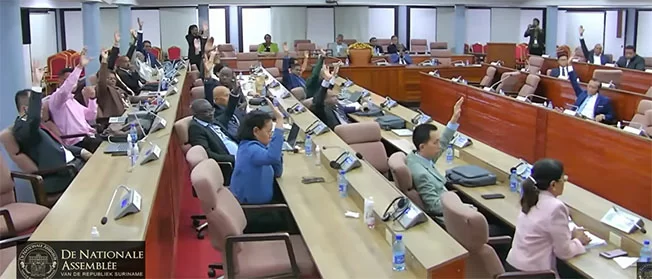
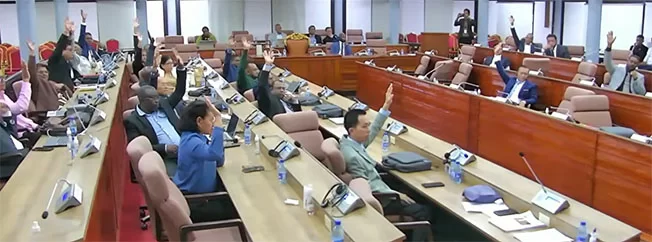
    Lawmakers took up the motion against Riad Nurmohamed, former Minister of Public Works, first. After debate covering procedural compliance and allegations of potential political bias behind the prosecution, the motion passed with 33 votes in favor, just 2 votes against, and a small number of abstentions from undecided lawmakers.

    Next, the body considered the prosecution motion against Gillmore Hoefdraad, the former Minister of Finance. Discussion centered on lingering questions from prior prosecution attempts against Hoefdraad and coordination between this domestic case and ongoing international legal proceedings connected to the former minister. In the final vote, 29 lawmakers supported advancing the prosecution, while 5 voted against.

    The final motion to be debated was that against Bronto Somohardjo, former Minister of Home Affairs. In an unexpected appearance before the plenary session, Somohardjo told lawmakers he did not seek parliamentary immunity or protection from prosecution, and openly called on assembled members to vote in favor of allowing the case to move forward. The motion ultimately passed with 32 votes in favor, zero votes against, and a small number of abstentions.

    Stark divides in opinion emerged during deliberations, split largely along government coalition and opposition lines. Ruling coalition factions including VHP, NPS, ABOP, BEP and A20 argued that the judicial process must be allowed to run its course, noting that the accused former ministers retain the right to prove their innocence before an independent court. Meanwhile, opposition lawmakers raised sustained questions about the justifications for the prosecution motions, adherence to proper legal procedure, and the risk that the proceedings amount to politically motivated targeting of former officials.

    With the approval of all three motions, DNA has met its statutory deadline to rule on the Prosecutor General’s requests, which was set to expire on June 9. The cases will now advance through the formal court process, with next steps falling to the Office of the Public Prosecutor to schedule hearings and move forward with litigation.

  • Beleidsplan moet arbeidskansen voor personen met beperking vergroten

    Beleidsplan moet arbeidskansen voor personen met beperking vergroten

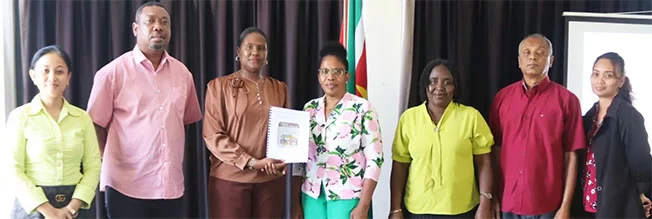
    On June 4, a leading advocacy coalition focused on equitable employment opportunities for people living with disabilities marked a key milestone in its push for systemic change, formally presenting a comprehensive policy plan to the Welfare and Work Directorate of the Dutch Ministry of Health, Welfare and Sport. The formal handover was led by Alliance Decent Work for Persons with a Disability chair Renate Wartes, who delivered the document to Naomi Esajas-Friperson, deputy director of the ministry’s Labor Market Division.

    In an official response to the submission, Esajas-Friperson reaffirmed the Dutch ministry’s long-standing commitment to expanding labor market participation for people with disabilities, and to creating pathways to work that upholds human dignity and fair working conditions. She highlighted that the ministry welcomes the Alliance’s targeted proposals, which are designed to narrow the accessibility gap that keeps many disabled people out of the workforce and remove persistent structural barriers that prevent long-term, sustainable employment participation.

    The submission of the policy plan represents another critical step forward in the ongoing collaborative partnership between the Alliance and the Welfare and Work Directorate. Both stakeholders share a core goal of building a fully inclusive Dutch labor market, one that guarantees people with disabilities equal access to paid work, professional development opportunities, and full meaningful participation in wider society.

  • Behandeling in DNA over vordering pg tegen 3 voormalige ministers

    Behandeling in DNA over vordering pg tegen 3 voormalige ministers

    On June 4, Suriname’s National Assembly (DNA) convened a public plenary session to process three formal requests from the country’s Prosecutor General (PG) seeking approval to launch criminal proceedings against three former senior cabinet ministers. The high-stakes gathering comes as the body faces a tight legal deadline to rule on the requests, with a 90-day window for a decision set to expire on June 9.

    After a lengthy round of debate and an extended recess, assembly members reached a key procedural agreement: the three requests will each be considered individually in open session. This marked a resolution of an earlier deadlock over whether the committee review of the requests, which has now been completed, would be held behind closed doors. Following the resumption of the suspended procedural meeting, lawmakers confirmed that all three motions would be debated and voted on publicly.

    The first request up for consideration targets Riad Nurmohamed, former Minister of Public Works in the outgoing Santokhi administration. Next, the assembly will take up the request against Gillmore Hoefdraad, who served as Minister of Finance during the Bouterse administration. The final motion on the agenda concerns Bronto Somohardjo, another former Santokhi-era minister who held the portfolio of Internal Affairs; Somohardjo is already the subject of an investigation into suspected unlawful activities committed during his time in office.

    All three requests follow the formal legal process laid out in Suriname’s Act on the Prosecution of Political Office Holders. Under the country’s law, the National Assembly must grant explicit approval to the Prosecutor General’s request before any criminal prosecution can proceed against sitting or former cabinet members. The PG submitted the requests to the legislature months earlier, and the 90-day statutory deadline for the assembly’s decision mandates that a vote be held before the end of this week.

    The proceeding has drawn intense public and political attention, as it involves high-profile former officials from two consecutive opposing administrations in Suriname. The outcome of the assembly’s votes will directly shape the future legal path for the three ex-ministers: any approval will clear the way for formal criminal investigation and prosecution, while rejection would bring the process to a halt. Updates on the progression of the public session are being tracked in real time via an associated live blog.