标签: Saint Vincent and the Grenadines

圣文森特和格林纳丁斯

  • SVG, not private entity, benefits from sand harvesting in N. Leeward — BRAGSA

    SVG, not private entity, benefits from sand harvesting in N. Leeward — BRAGSA

    At a recent town hall gathering hosted as part of North Leeward MP Kishore Shallow’s community-focused “North Leeward Matters” series at the Golden Grove Playing Field, Kem Bartholomew, Chief Executive Officer of St. Vincent’s state-owned Buildings, Roads and General Services Authority (BRAGSA), laid out the strategic and legal rationale for a new sand and aggregate harvesting initiative along the Roseau River in North Leeward. For Bartholomew, the project is far more than a commercial venture: it is both a statutory obligation for the agency and a transformative economic opportunity that would waste valuable natural resources if left untapped.

    Shallow opened the discussion by explaining why the forum was convened, even after initial public consultations were held in April. He emphasized that the June 2026 meeting was organized to create space for open dialogue, answer outstanding community questions, clarify shared benefits, and clear pathways to speed up the project’s progress.
    Bartholomew framed the new Roseau River operation as a natural extension of decades of successful state-run aggregate extraction at St. Vincent’s Rabacca site, located on the island’s windward coast. He noted that volcanic deposits, continuously replenished by natural geologic activity and major events like the 2021 La Soufriere volcanic eruption, have created an enormous surplus of construction-grade material across the island. “There is so much material that we cannot extract it fast enough,” he told assembled residents, adding that post-eruption sediment flows have left massive stockpiles along Rabacca’s riverbanks that the authority has yet to fully utilize.

    Despite high demand from both domestic and international buyers, Bartholomew explained that steep transport costs from Rabacca to southern St. Vincent have put local aggregate at a price disadvantage compared to imported material from Guyana. That logistics challenge drove BRAGSA’s 2025 strategic review, which identified the development of new, lower-cost extraction sites closer to high-demand markets and export routes as a key priority for growing public sector revenue. The review confirmed that high-quality volcanic aggregate matching Rabacca’s deposits exists in large quantities on the Leeward coast, where extraction and transport via barge would cut costs dramatically.

    The move to develop Roseau River also gained early momentum from private sector interest: Glossy Bay, a private development on the Grenadines island of Canouan that had long sourced aggregate from Guyana, reached out to BRAGSA to secure a local supply of construction material. The authority moved quickly to advance the project, with a clear priority of benefiting Grenadines communities first. For years, truckers and construction operators in the Grenadines — including Union Island, Canouan, and Bequia — have faced exorbitant costs to access aggregate from Rabacca, which sits 19 miles northeast of Kingstown. “The same way the people on mainland have access to this material, we should get it to the Grenadines before anywhere else,” Bartholomew said, outlining the project’s core equitable access mandate.

    Walking attendees through the project’s transparent, step-by-step approval process, the BRAGSA CEO stressed that the state authority retains full leadership of the initiative, rather than ceding control to a private operator. Back in January, BRAGSA’s Physical Planning and Surveying Department, alongside the Office of the Chief Engineer, held initial stakeholder meetings with mainland industry partners to confirm material specifications before conducting a formal reconnaissance survey of potential Leeward extraction sites by boat.

    Bartholomew personally pushed to select the Roseau River site over the originally preferred Richmond/Wallibou River location, to protect the long-standing, low-cost public access to aggregate that North Leeward residents have relied on for decades at Richmond. “I do not want to be a part of disturbing the historic operations at Richmond,” he explained, noting that local residents currently harvest material from Richmond for no cost, a practice the new Roseau project will not disrupt.

    Following the site selection, BRAGSA technical staff traveled to Canouan to inspect the planned offloading and usage site, before submitting a formal development application to St. Vincent’s Physical Planning authorities in February. The agency granted approval in principle, contingent on three key requirements: completion of survey drawings and design for a temporary beach access ramp, design for limited on-site equipment storage and worker amenities, and a full independent environmental and social impact assessment (ESIA).

    To meet these conditions while minimizing disruption to the local area, BRAGSA authorized only limited site clearing at Roseau, with explicit instructions to local contractors that no fruit trees were to be cut to keep the project’s environmental footprint as small as possible. Once preliminary survey work was completed, the authority contracted independent environmental specialist Dr. Reynold Murray to conduct the ESIA, and after submitting all required documentation to planning authorities, received full final approval to launch operations.

    Bartholomew publicly disclosed the project’s first commercial contract: a deal with Glossy Bay for 110,000 tonnes of sifted aggregate, valued at approximately 3.8 million Eastern Caribbean dollars. The developer has already paid an upfront deposit of roughly EC$500,000, combining cash and equipment to kickstart operations, and will arrange and pay for barge transport of the material itself, with no transport liability falling to BRAGSA. Bartholomew noted that the barge set to be used is a vessel BRAGSA has previously hired to import crushed aggregate and plastering sand to Kingstown, underscoring that St. Vincent has long relied on imported construction material due to a historic shortage of affordable domestic supply.

    Again, he emphasized that allowing the Roseau River’s volcanic aggregate to wash unused out to sea would be both economically wasteful and a violation of BRAGSA’s legal mandate. Under the 2008 Act that established the agency, BRAGSA is statutorily required to maintain rivers, including removing excess sediment accumulation that can alter river flow and increase flood risk. Citing his core governing principle that “do nothing is never an option,” Bartholomew pointed to Rabacca as an example of what happens when excess sediment is left unmanaged: porous sediment deposits build up above the river channel, obscuring the waterway and altering its natural function. For North Leeward, for the Grenadines, and for St. Vincent’s broader economy, the Roseau River project turns an abundant, unused natural resource into shared public benefit, he concluded.

  • NIS chair rejects ‘actuary or nothing’ critics

    NIS chair rejects ‘actuary or nothing’ critics

    Amid swirling online criticism over the leadership transition at Saint Vincent and the Grenadines’ state-run National Insurance Services (NIS), chairman Stephen Joachim has publicly defended the board’s recommendation of Ronette Lewis, the current General Manager of the Centre for Enterprise Development, as the agency’s incoming executive director, pushing back against claims the top role must be held by a trained actuary.

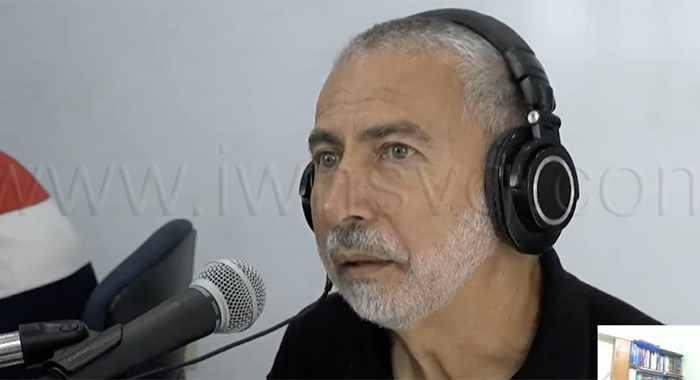
    In an interview with Boom FM on Monday, Joachim confirmed that Lewis’ appointment will go into effect on July 1, 2026, following the departure of nine-year incumbent Stuart Haynes, an actuary who accepted a new role in St. Kitts. Appointed NIS chairman by the current New Democratic Party (NDP) administration, Joachim expressed full confidence in Lewis’ ability to lead, saying, “I think she will do a terrific job.”

    Much of the public pushback has circulated on social media, where commentators have questioned both the board’s selection of Lewis and its broader succession planning process. Joachim pushed back sharply against what he framed as uninformed, unqualified online attacks, echoing a previous description of loud social media critics as “internet crazies” from a political colleague. “You can’t run a country by social media, despite what these [people] think,” he said, challenging online critics to produce their own professional track records before judging the board’s decision. “What have you accomplished in your life? What makes you think that you’re in a better place to judge the actions and decisions taken by certain people when you have never been in those positions or have any idea what you’re talking about?”

    At the core of the criticism is the argument that NIS must be led by an actuary, given the agency’s social security mandate. Joachim rejected this assumption outright, arguing that the role requires a skilled business and people manager, not a specialist actuary. He explained that core actuarial work for the agency is already outsourced to external experts on a regular basis, and that the NIS already retains in-house specialists with actuarial, investment, accounting, and legal expertise on staff and its board. “Every three years, the NIS conducts an actuarial report and we hire external actuaries. They do the evaluations and the assumptions… The manager, the director, has to implement those decisions. There is no actuarial skills being used in running the NIS. None. Zero. Nada,” Joachim said.

    He added that even the previous incumbent Haynes would confirm that day-to-day leadership of the agency does not rely on actuarial training. “If anybody doubts me, speak to Stuart Haynes. He will tell you: ‘Steve, I do not use my actuarial skills to manage the NIS. This is about managing.’” “Why do you need an actuary? People just say it because Stuart was an actuary,” he argued, noting that the agency needs a leader who can navigate its people-focused operations, a need Lewis as an experienced business leader is well-equipped to meet.

    To counter claims that the board hand-picked Lewis outside of a formal process, Joachim laid out a full, transparent breakdown of the recruitment procedure, which launched after Haynes announced his departure even before Joachim’s formal appointment as chairman. The board asked Haynes to draft a formal job description, then contracted independent human resources consultant Janelle Allen, described by Joachim as the top HR specialist in the region, to manage the full search process. In total, the search attracted 54 qualified applicants, all of which were scored independently by Allen. A three-person board selection committee reviewed the top 10 candidates, plus scanned the remaining 44 to ensure no qualified applicants were overlooked, before shortlisting four final candidates: two Vincentians, one Trinidadian, and one Jamaican. After the Trinidadian candidate withdrew for family reasons, the remaining three candidates completed two rounds of assessment: a standard formal interview, and a second round requiring a public presentation on NIS policy and operational topics. “You can’t say we didn’t do a thorough process,” Joachim insisted.

    Joachim also dismissed circulating rumors that the NIS board had unilaterally imposed Lewis as its pick and even threatened to resign over the appointment, labeling those claims as outright false. He clarified that under NIS governing law, the board only issues a recommendation for the role, with the final appointment made by the national Cabinet. “The board does not hire anybody. The board makes a recommendation to Cabinet as to who we think is the best person to be in that position. Cabinet appoints a director and deputy director,” he explained. Prior to Cabinet’s vote, the NIS leadership held a full briefing with Prime Minister Godwin Friday, who holds ministerial responsibility for the agency, walking through the full recruitment process, selection outcome, and rationale for the pick. “We met with the Prime Minister. We told him the process we had gone through… and the ultimate selection and the rationale and the reason why,” Joachim said. “Cabinet then appoints. They agreed with the decision.”

    Joachim further noted that overriding the board’s recommendation without compelling reason would undermine fundamental corporate governance principles for the state agency. “For the Cabinet to overrule the board means that they would have to have very good reasons. Furthermore, why would you appoint a director when you didn’t consider the views of the board? What the heck’s the point of a board then?” he said. He added that such an override would represent a return to the governance practices of the Unity Labour Party, which was voted out of office in the November 2025 general election after nearly 25 years in power.

  • The agri-tourism-hospitality nexus: shaping the modern guest experience

    The agri-tourism-hospitality nexus: shaping the modern guest experience

    The global tourism industry is in the middle of a dramatic shift, driven by evolving consumer priorities that are redefining what travellers value most when exploring new destinations. Where once visitors prioritized conventional sightseeing and predictable, standardized experiences, modern travellers now increasingly crave authentic, meaningful engagements that tie them directly to the local culture, land, and communities of the places they visit. This fundamental change in consumer expectations is forcing destinations and hospitality businesses to rethink their strategies — and a growing body of industry and academic research points to cross-sector integration between agriculture, tourism, and hospitality as the key to meeting this new demand.

    For decades, agriculture, tourism, and hospitality have operated as largely siloed, separate industries. Today, emerging consumer trends are breaking down those barriers, creating new opportunities for collaborative growth that benefits all three sectors, as well as travellers and local communities.

    The crisis of placelessness and the rise of the authenticity-seeking traveller

    One of the most pressing challenges facing modern mass tourism is the spread of what industry analysts term “placelessness” — the gradual erosion of a destination’s unique cultural and geographic identity, driven by the expansion of globalized industrial food systems. Today, nearly every popular tourist destination offers nearly identical dining options, chain hotel experiences, and standardized attractions that feel interchangeable no matter where you travel in the world. What was once seen as a marker of reliability has become a weakness, as more and more travellers grow tired of one-size-fits-all experiences that erase the unique character of a location.

    In response to this growing standardization, travellers are actively seeking out authentic, rooted experiences that connect them to local identity. This shift has given rise to a new type of traveller: the existential tourist. Unlike casual sightseers, existential tourists use local food, culinary traditions, and on-the-ground community engagement as a pathway to deep cultural connection, rather than sticking to curated, tourist-only bubble environments. For this growing segment of travellers, authenticity is no longer just a nice-to-have add-on — it has become the primary deciding factor when choosing destinations and booking travel, making it a critical market differentiator for tourism businesses.

    Traditional hospitality models that operate in isolation from local industries are no longer equipped to meet these new expectations, prompting industry leaders to explore new collaborative frameworks.

    Segmenting today’s culinary tourists to map shifting demand

    To help industry stakeholders understand these changing preferences, leading tourism researcher Anne-Mette Hjalager developed a widely used classification system for the four primary types of modern culinary travellers:

    First, recreational tourists prioritize familiarity and comfort, seeking out predictable dining experiences and well-known foods that match their existing preferences.

    Second, diversionary tourists frame food as a core part of leisure and social connection, prioritizing atmosphere and experience over deep culinary or cultural engagement.

    Third, experimental tourists seek innovative, prestige-driven, lifestyle-focused dining that blends local ingredients with upscale, sophisticated presentation.

    Finally, existential tourists — the fastest growing segment shaping modern industry trends — prioritize authenticity above all other factors. These travellers want to learn how local food is grown, participate in traditional cooking classes, visit working farmers’ markets, and eat traditional meals in community-focused local settings. Their goal is not just to eat local food, but to build a deeper understanding of the culture and identity that shapes that food.

    Mapping these distinct consumer profiles is critical for tourism and hospitality businesses looking to align their offerings with the fastest growing market demand.

    Explosive growth in agritourism and experiential travel

    The booming global agritourism market offers clear, data-backed proof of these shifting consumer preferences. Industry estimates value the global agritourism market at $70.17 billion in 2025, with projections that it will grow to $99.51 billion by 2030, representing a compound annual growth rate of 7.2%.

    The core driver of this growth is travellers’ growing desire to escape the stress and pace of urban life, in favor of slow, authentic, nature-connected experiences. Demand for farm stays and on-farm tourism activities reflects a broader consumer shift toward experiences that create personal connection to food production and rural environments. Eurostat data shows that farm-based and rural tourism stays hit 826 million nights in 2025, underscoring the mass appeal of these offerings.

    This growth in agritourism is part of a larger global shift toward experiential travel more broadly. Modern travel no longer centers solely on checking iconic landmarks off a bucket list; instead, travellers increasingly prioritize immersive, meaningful experiences that let them build personal connections to destinations and local communities. Social media has amplified demand for authentic, shareable experiences, while the post-pandemic landscape has only reinforced travellers’ desire for meaningful, in-person connection.

    Millennials are the demographic leading this shift: research shows this generation makes up nearly 50% of the global travel market, spends more than $200 billion annually on travel, and overwhelmingly prioritizes experiential travel over material purchases. Demand for authentic, wellness-focused, and adventure-driven tourism experiences is particularly strong among this demographic.

    Culinary tourism as a core driver of global travel growth

    Food has grown from a secondary consideration for travellers to one of the most powerful factors shaping travel decisions. The global food tourism market was valued at roughly $967.6 billion in 2025, with projections that it will surge to $5.06 trillion by 2035, marking an 18% annual growth rate.

    Demand for authentic culinary experiences is the biggest driver of this explosive growth. Research shows 55% of global food tourism market growth is tied to rising interest in authentic food experiences and cultural food exploration. Sixty-two percent of all travellers now factor food experiences into their destination choice, 75% of millennials actively seek out authentic local cuisine when they travel, and 40% of Generation Z travellers have booked a trip specifically based on food-related content they saw online.

    These numbers make clear that culinary tourism is no longer a niche add-on to travel. It is now a core factor that shapes destination selection, travel itineraries, and visitor engagement around the world.

    The Agri-Tourism-Hospitality Nexus: a new framework for integrated growth

    To help industry stakeholders adapt to these new market conditions, the original guest lecture introduced a new integrated model: the Agri-Tourism-Hospitality Nexus. This framework frames agriculture, tourism, and hospitality not as separate siloed sectors, but as a single connected economic and operational ecosystem, where each sector contributes unique strengths that support the whole.

    Within this model, agriculture contributes raw, irreplaceable value: production capacity, cultural heritage, and the inherent authenticity of local land and products. Hospitality contributes service expertise, experience curation, and the storytelling that turns raw agricultural assets into meaningful guest experiences. Tourism brings the market scale and consumer demand that connects travellers seeking authentic experiences to these integrated offerings.

    Unlike traditional linear supply chains, where products move one-way from producer to consumer, the Nexus operates as a circular value feedback loop. The output of one sector becomes the input for another, creating sustained mutual value for all stakeholders.

    How the Nexus reshapes the modern guest experience

    The Agri-Tourism-Hospitality Nexus transforms the entire consumer travel experience through three core mechanisms: de-commoditization of food and space, narrative-driven consumption, and multi-sensory place-making.

    First, de-commoditization turns generic food and space into unique cultural experiences. By tying every meal and stay to specific local farms, communities, traditions, and cultural histories, food stops being a simple transactional product. Consumers become active participants in local culture, rather than just purchasers of goods, creating one-of-a-kind experiences that can command premium pricing and cannot be easily replicated by competitors.

    Second, narrative-driven consumption taps into modern travellers’ desire to connect with the meaning behind the products they consume. Through storytelling, guided farm tours, culinary interpretation, and direct engagement with local producers, hospitality businesses can turn an ordinary meal into a memorable, intellectually and culturally enriching experience that resonates far longer with visitors.

    Third, multi-sensory place-making builds deep emotional connection to a destination. Agricultural landscapes bring unique visual, sensory, and environmental assets that, when combined with thoughtful hospitality services, create a strong, tangible sense of place. This deep emotional attachment drives visitor loyalty, builds long-term destination value, and generates powerful organic word-of-mouth promotion.

    Conclusion: building a sustainable future for tourism through integration

    The Agri-Tourism-Hospitality Nexus provides a actionable framework for understanding how shifting traveller expectations are reshaping the future of global tourism and hospitality. As demand for authentic experiences, experiential travel, culinary tourism, and agritourism continues to grow, deeper integration between agriculture, hospitality, and tourism unlocks new opportunities to create the meaningful experiences modern travellers crave.

    When these three sectors operate as a connected ecosystem, every stakeholder gains tangible benefits: local farmers gain direct access to premium markets and new revenue streams, hospitality businesses develop one-of-a-kind, terroir-driven identities that set them apart from competitors, and travellers get the authentic, meaningful experiences they actively seek.

    In an era where authenticity has become the most defining feature of modern tourism demand, the integrated relationship between agriculture, hospitality, and tourism will only grow in importance as the foundation of the future of the global guest experience.

    This article is adapted from a guest lecture delivered at Monroe College, St. Lucia, written by Azubah Adams, a hospitality and tourism development professional focused on sustainability. The opinions expressed are the author’s own and do not reflect the editorial stance of iWitness News.

  • Chief Magistrate recuses himself from all cases involving Jomo Thomas

    Chief Magistrate recuses himself from all cases involving Jomo Thomas

    A dramatic shift in judicial procedure has unfolded at the Kingstown Magistrate’s Court in St. Vincent and the Grenadines, after Chief Magistrate Colin John made the unusual decision to step away from every legal matter that features defense attorney Jomo Thomas as part of the legal team. The unprecedented recusal was triggered by a controversial social media post that John claims was published by Thomas on Facebook.

    The announcement was made publicly in open court on Monday, during a scheduled hearing for 35-year-old Okeeno Fergus, a resident of Lowmans Windward who is currently facing two firearms-related charges. Fergus stands accused of illegally possessing a Smith and Wesson M&P Shield 9mm pistol and eight live rounds of 9mm ammunition on May 17 at his Lowmans Windward residence, in violation of the country’s Firearms Act.

    When Fergus was first arraigned before Chief Magistrate John on May 18, he entered a not guilty plea to both charges, appearing in court with a white medical dressing covering a wound on his forehead. John granted Fergus bail set at 15,000 Eastern Caribbean dollars, conditional on one surety, required the defendant to comply with regular police reporting conditions, and adjourned the initial proceeding for June 1. When Fergus returned for Monday’s hearing, the forehead wound had healed enough that he no longer required the dressing.

    Beyond the Fergus firearms case, John also confirmed his recusal from a separate high-profile drug trafficking matter in which Thomas serves as defense counsel. That case involves 36-year-old Sebastian Audain (also known as Bush) of Lowmans Bay and 36-year-old Alvin Cyrus of Largo Height, who are charged with possession of 22.9 pounds of cocaine.

    Following John’s announcement, the Chief Magistrate adjourned Fergus’ firearms case to the next business day, to be heard by a different judicial officer at the same Kingstown courthouse. When the case moved to Senior Magistrate Tammika McKenzie’s courtroom on Tuesday, McKenzie initially requested clarification from Thomas on why the matter had been reassigned to her docket. Thomas confirmed that Chief Magistrate John had issued a blanket recusal from all cases where he represented a client.

    In a surprising procedural outcome, Senior Magistrate McKenzie adjourned Fergus’ case all the way to February 2027, a multi-year delay that marks an unusual timeline for a routine firearms hearing. This case is not the first time Thomas has represented Fergus in legal proceedings: court records show that in 2022, a High Court judge ordered the state and police Corporal Mohammed Lavia to pay financial compensation to Fergus after Lavia shot Fergus in the leg during an incident in Owia, with Thomas serving as Fergus’ legal representative in that civil claim.

  • Gonsalves says ULP will make swift political comeback

    Gonsalves says ULP will make swift political comeback

    KINGSTOWN, St. Vincent – Just months after suffering a landslide electoral defeat that ended a quarter-century of incumbency, the leader of St. Vincent and the Grenadines’ main opposition Unity Labour Party (ULP) Ralph Gonsalves is already positioning his party for a rapid return to national office, citing a burgeoning governance crisis that has eroded public trust in the ruling New Democratic Party (NDP) administration.

    In a wide-ranging interview broadcast on local radio, the former prime minister outlined what he frames as an undeniable “Labour resurgence” across the country, fueled by growing public discontent with the NDP’s first term in office. Gonsalves argued that the current government has overseen a rapid deterioration of national conditions that touches every sector of Vincentian life, from economic stability and public safety to core government administration.

    He accused the sitting administration of operating on unresponsive “autopilot”, claiming its leaders fail to grasp the full scope of the crises they have allowed to unfold, and lack the strategic vision to address the complex challenges facing the small island nation. “The present administration has no knowledge of how to proceed” on key issues impacting ordinary Vincentians, Gonsalves told radio listeners.

    The ULP leader highlighted a recent well-attended national council meeting that drew large participation from public sector workers, including teachers and police personnel, as proof of the growing momentum behind the opposition. He described the turnout as a demonstration of “the might and influence of the labour family”, noting that the display of grassroots support has left the current NDP government “dazed and frightened”.

    Gonsalves went further, claiming that even long-time staunch supporters of the NDP now privately predict the current administration will be limited to a single term, with some suggesting it could collapse and leave office ahead of the end of its scheduled mandate. He called on the ruling party to take accountability for its missteps, saying, “Grown men and women need to stand up when they’ve made mistakes and say ‘I made a mistake.’”

    For Vincentians disillusioned with the current government, Gonsalves asserted, “The only option available is the Unity Labour Party.” He added that growing numbers of citizens are reaching out directly to party headquarters and contacting him personally for guidance, a trend he says reflects eroding confidence in the NDP. Reaffirming the ULP’s deep roots in Vincentian politics, he said the party is ready to provide the decisive, competent leadership that is currently missing from national governance.

    Addressing the everyday concerns of working people, Gonsalves gave a direct assurance: “Labour has your back.” He urged ULP supporters to remain united, arguing that the ruling government’s attempts at “fear-mongering” and intimidation of civil servants who align with the opposition will ultimately fail. As public frustration grows, he noted, “people are getting less afraid” to openly associate with the Unity Labour Party, blunting the administration’s efforts to slow the opposition’s growing momentum.

    While Gonsalves remains actively engaged in regional and international affairs through his longstanding work with regional organizations, he made clear that his top priority right now is advancing the local resurgence of the ULP. Though he stopped short of predicting an exact timeline for a return to power, admitting he cannot know who will hold the prime minister’s office 12 months from now, he said mounting disarray within the NDP administration makes a swift ULP comeback far more likely than not.

    The ULP was ousted from power in a historic November 2025 election, losing by a lopsided 14-1 margin after 25 consecutive years leading the country. That defeat marked one of the most dramatic electoral upsets in Vincentian politics since 1989, when the NDP won all 15 parliamentary seats in another historic landslide.

  • Man to be tried for murder over chopping death in Glen

    Man to be tried for murder over chopping death in Glen

    A fatal dispute rooted in a conflict over a plumrose has led to a Glen resident being ordered to face a murder trial at the country’s highest criminal court, court documents confirmed this week.

    Deondre McDonald, who was 27 at the time of the alleged incident, stands accused of murdering 21-year-old Ronaldo Andrews Adams, also a resident of Glen, in the East St. George community on May 14, 2025.

    Chief Magistrate Colin John made the ruling to commit the case to the High Court during a paper committal proceeding held at the Serious Offences Court on Monday. A paper committal is a procedural step in criminal justice that allows a magistrate to review whether sufficient evidence exists to advance a case to a higher court for trial, rather than holding a full preliminary hearing with live witness testimony. During this process, the magistrate reviews written witness statements alongside representatives from both the prosecution and the defense to assess the strength of the case against the accused.

    With the committal now complete, McDonald’s murder trial will proceed to be scheduled and heard by the High Court in due course.

  • ‘Shrek’ caught in clothing he wore to steal

    ‘Shrek’ caught in clothing he wore to steal

    A resident of Kingstown has been handed a concurrent five-month prison sentence after pleading guilty to two counts of trespassing with intent to commit theft, caught by law enforcement wearing the exact clothing captured on the victim’s security cameras.

    The defendant, Jamel Miller, also known by the alias Shrek, entered his guilty plea before Senior Magistrate Tammika McKenzie at the Kingstown Magistrate’s Court during a hearing held on May 27. Court documents outline two separate offenses that Miller committed on the private property of Shenice Williams, a 33-year-old therapist residing in McKies Hill. The first incident took place on April 29, and the second occurred nearly a month later on May 22, with Miller entering Williams’ fenced yard on both occasions with the intention of carrying out a theft.

    Court records detail the long sequence of troubling events that led to Miller’s eventual capture. Starting in January of this year, Williams began noticing consistent damage to her vehicle, which she parked on her private driveway. The unexplained scratches quickly left her on edge, and the situation escalated when she heard unexpected knocking on her bedroom window one night. Following the incident, Williams reported feeling too unsafe to sleep in her own home.

    Williams’ property is secured by a five-foot wire perimeter fence, two metal entry gates, and a network of closed-circuit security cameras that are linked to her mobile phone, allowing remote access to live and recorded footage. On the morning of April 29 at approximately 7 a.m., Williams received an alert from her camera system on her cell phone. Pulling up the recorded footage, she identified a slim, dark-skinned male wearing a red shirt, long trousers, and slippers who had entered her property at 2:45 a.m. that same day.

    A second unauthorized entry was captured on May 22. That night, around 11 p.m., Williams was at a local bar in Richmond Hill when she received another security alert. Checking the remote footage, she spotted the same individual, again wearing a red shirt paired with white pants and carrying a red-and-black backpack, exiting her yard. She immediately contacted the Saint Vincent and the Grenadines Police Force to file a report. Patrol officer PC1090 Williams led a team of officers to the property shortly after the call, but the intruder had already left the area by the time they arrived.

    The following morning at 8:30 a.m., Williams provided the recorded CCTV footage to investigating officers. The footage was distributed across local patrol units, and Miller was quickly identified as the person captured on camera. Law enforcement apprehended Miller on White Chapel Road in central Kingstown, transporting him to the headquarters of the Criminal Investigation Department for formal processing. After being informed of the charges against him and read his official police caution, Miller was interviewed in the presence of PC871 Lewis.

    When officers showed Miller the CCTV footage, they immediately noticed he was wearing the exact same red shirt and white pants that he had on during the May 22 intrusion captured on camera. Miller did not deny his involvement, confessing that he was the person seen in the recordings and providing a voluntary written statement to investigators admitting his guilt.

    In her final sentencing ruling, Senior Magistrate McKenzie ordered a five-month prison term for the first trespassing charge and a three-month term for the second offense. The sentences are set to run concurrently, meaning Miller will serve a total of five months behind bars beginning from the date of his conviction.

  • SVG Embassy in Havana celebrates 34 years of ties with Cuba

    SVG Embassy in Havana celebrates 34 years of ties with Cuba

    HAVANA, Cuba — In a gathering that blended diplomatic ceremony with heartfelt fraternity, St. Vincent and the Grenadines (SVG) and Cuba marked the 34th anniversary of their formal diplomatic relations on Saturday, with a celebratory event hosted by SVG’s Havana embassy. More than three and a half decades after the two Caribbean nations first established official ties, the occasion brought together over 36 ambassadors and chargés d’affaires accredited to Cuba, senior Cuban government representatives, Vincentian students studying on the island, and special guests who have shaped the bilateral partnership over decades.

    Speaking at the reception, SVG’s Ambassador to Cuba Angella Jackson — herself a graduate of a Cuban university — framed the three-decade partnership as a model of South-South cooperation built on shared respect and mutual solidarity. “This is 34 years of friendship rooted in respect, solidarity, and cooperation between two brotherly peoples,” Jackson told attendees. She outlined Cuba’s long-standing contributions to SVG’s development, noting that the island has trained hundreds of Vincentian professionals, deployed medical teams during SVG’s most critical moments, and shared technical expertise through transformational national projects.

    Key landmark infrastructure projects, including Argyle International Airport and the Georgetown Diagnostic Centre, alongside the daily work of Cuban medical professionals in Kingstown, stand as tangible proof that the bilateral bond extends far beyond formal diplomatic exchanges, Jackson said. “This friendship is not only diplomatic — it is deeply human,” she emphasized.

    In turn, Jackson reaffirmed SVG’s unwavering support for Cuba on the international stage, where the small Caribbean nation has long defended Cuba’s sovereignty and spoken out against the decades-long U.S. economic blockade. Acknowledging the severe energy challenges and widespread blackouts currently impacting Cuban households, Jackson extended explicit solidarity from SVG, a country that has itself weathered repeated natural disasters and adversity. “We know what it means to face hardship, and we know the Cuban people, like our own, are deeply resilient. Cuba is not alone,” she said, pledging that SVG will continue to stand with the island.

    Drawing from her own experience as a young student who came to Cuba to study and grew into a diplomatic leader, Jackson noted that 34 years of partnership has demonstrated that South-South cooperation is not just a concept — it is a living, impactful reality. “I came here as a young Rasta, and I transformed into a professional woman; a person who understands that we should not give only from what is left over, but from what we have,” she said.

    The event paid special tribute to Cuban engineers, construction workers and medical professionals who have delivered projects and care across SVG, including those who worked on Argyle International Airport and served with the long-standing Cuban Medical Brigade. Jackson called these professionals living, breathing examples of the bilateral friendship, adding: “Here, there is not only diplomacy. Here, there is family.” Closing her remarks, she called for continued deepening and diversification of ties, noting that small and large nations alike, when united by mutual respect, can work together to build a more equitable global order. “Thank you, Cuba, for 34 years of unconditional brotherhood. Long live the relations between our peoples!” she said.

    Cuba’s Vice Minister of International Relations Josefina Vidal Ferrero joined the event alongside other senior Cuban foreign affairs officials, including Rafael Dausa Cespedes, Director for America, Mexico and the Caribbean, and representatives from Cuban civil society organizations such as the Cuban Institute for Friendship with the People. Vidal Ferrero recalled that diplomatic ties were first established in 1992 under then-SVG Prime Minister Sir James Mitchell of the New Democratic Party — the same party that currently holds office in Kingstown. “The history of these 34 years reflects what two peoples who are geographically, historically and culturally close can achieve. We have helped and supported one another over these more than three decades,” she said.

    Vidal Ferrero highlighted that to date, nearly 400 Vincentian students have accessed free university education in Cuba — including Ambassador Jackson herself, who graduated with a degree in Accounting and Finance from the University of Ciego de Ávila in 2007. Noting that two of Jackson’s three children, who have Cuban heritage, were in attendance at the event, Vidal Ferrero called the ambassador a living reflection of the fraternal bond between the two nations.

    She went on to outline a long roster of shared achievements, from a national program to bring electric lighting to thousands of Vincentian homes, to hundreds of life-changing eye surgeries performed by Cuban specialists that restored sight to Vincentian residents. Alongside regional partners Venezuela and Trinidad and Tobago, Cuba also contributed core engineering and construction support to build Argyle International Airport, a transformative infrastructure project for SVG’s economy and connectivity. When La Soufriere volcano erupted in SVG in 2021, Cuba was among the first nations to deploy emergency support, and today maintains a permanent presence of medical staff, construction experts, and energy and civil aviation specialists across the country.

    Vidal Ferrero also emphasized that SVG has reciprocated this solidarity, standing with Cuba through its own challenges — including devastating hurricanes and the widespread shortages caused by the long-standing U.S. blockade, which Vidal Ferrero described as a “genocidal” policy that targets the Cuban people through hunger and deprivation. She noted that SVG has consistently joined its Caribbean neighbors in denouncing the blockade, and that Cuba will never forget this unwavering support. “Our gratitude is eternal,” she said.

    Beyond diplomatic remarks, the event featured a vibrant cultural program showcasing the heritage of both nations, centered on Vincentian cultural traditions. Three Vincentian students studying in Cuba performed Alston “Becket” Cyrus’ iconic patriotic ballad “St. Vincent, My Homeland”, while veteran 35-year-old steelpan arranger and band captain Tillal Webb wowed the crowd with steelpan arrangements of global hits including Kevin Lyttle’s “Turn Me On” and Enrique Iglesias’ “Bailando”. Webb was later joined by the Band Gala Mayor for a set that included additional Vincentian classics and the iconic Cuban folk song “Guantanamera”, alongside original compositions from band leader Alejandro Mayor. The celebratory gathering concluded with a joint toast to the future of the bilateral partnership.

  • Renson Haynes to manage Sports Council

    Renson Haynes to manage Sports Council

    A new chapter for sports development in St. Vincent and the Grenadines is underway, following an official announcement from the country’s Ministry of Sports that names ex-national team footballer Renson Haynes as the new head of the National Sports Council (NSC).

    Haynes’ tenure in the top administrative role officially commenced on May 4, marking a transition that sports officials hope will inject fresh energy into the nation’s growing sporting ecosystem. In its official statement announcing the appointment, the Ministry highlighted the extensive cross-cutting expertise that Haynes brings to the table, spanning key areas including sports governance, executive leadership, and large-scale organizational operations.

    The appointment underscores the persistent dedication of the St. Vincent and the Grenadines government to upgrading the systems that support sports administration and grassroots to elite sports growth across the country, the release emphasized.

    In his new post as NSC manager, Haynes will take on a broad portfolio of core responsibilities. These include steering the day-to-day operational activities of the entire council, overseeing upkeep and access to all national sporting infrastructure, leading the rollout of new and existing national sports programs and community-focused initiatives, and driving progress for both competitive athletes and local sporting organizations across all 32 islands of the nation.

    The Ministry closed its statement by expressing full confidence in Haynes’ capabilities, noting that his longstanding commitment to sports growth, professional track record, and personal passion for advancing local athletics will deliver meaningful, positive change to St. Vincent and the Grenadines’ entire sporting sector.

  • Friday urges CDB to move ‘swiftly’ from plans to delivery

    Friday urges CDB to move ‘swiftly’ from plans to delivery

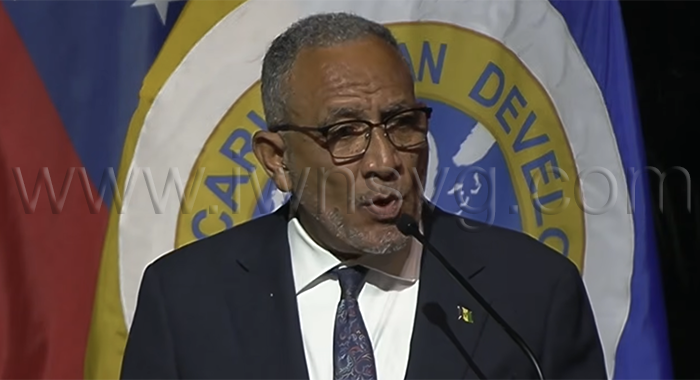
    At the 56th Annual Meeting of the Caribbean Development Bank (CDB) Board of Governors held in Nassau, Bahamas, Godwin Friday, Prime Minister of St. Vincent and the Grenadines, delivered an urgent address on behalf of the bank’s borrowing member countries (BMCs), calling for faster, more decisive institutional reform and expanded investment in climate-resilient development amid cascading economic and environmental threats across the Caribbean region.

    Friday warned that small open Caribbean economies are facing mounting systemic pressures that threaten long-term development prospects. The region carries legacy structural vulnerabilities it did not create, he noted, and these gaps have been widened by ongoing global economic turbulence. Most critically, central government debt across the region remains chronically high: nine of the CDB’s borrowing member countries hold debt-to-GDP ratios above the 60% prudential threshold, with St. Vincent and the Grenadines itself carrying a ratio exceeding 113%. This massive debt overhang, Friday emphasized, severely constrains governments’ ability to fund growth-driving infrastructure and social programs while protecting vulnerable populations, forcing regional states to achieve more development outcomes with limited fiscal resources.

    Beyond high debt levels, the region is grappling with shrinking access to affordable financing. Tightening global supply chains, spiking shipping and fuel costs, and soaring cost of living have stretched public budgets, with underlying fragility predating recent conflicts in the Middle East that have amplified these pressures. At the same time, official development assistance from traditional global partners has seen a sharp decline, creating a critical financing gap for climate action. Friday noted that the Caribbean requires an estimated US$14 billion annually to implement comprehensive climate adaptation and mitigation measures, but currently mobilizes less than 10% of that target. “It is therefore imperative that our development partners become more adaptive, more responsive, and willing to provide highly concessional financing and dedicated resources for loss and damage that will not worsen a bad debt situation,” Friday said.

    Framing the CDB as an indispensable institution for Caribbean development and regional integration, Friday argued that the bank holds a unique responsibility to lead targeted solutions for the region’s vulnerable small economies. As the only multilateral development bank owned and governed primarily by Caribbean stakeholders, the CDB carries unmatched legitimacy built on decades of on-the-ground experience, deep local knowledge, and specialized talent across the region. “Regional economic integration is sustainable only if partners all derive benefit from it, and economic disparities among member countries do not grow too wide. The bank is uniquely positioned to promote that end,” Friday noted.

    To illustrate the impact of strategic CDB investment, Friday highlighted projects in his own country that have boosted national resilience after years of repeated climate shocks. Major bank-supported initiatives including the modernization of Kingstown’s port, school infrastructure upgrades, rural development programs, and road network improvements have shifted St. Vincent and the Grenadines’ long-term resilience trajectory, he said, adding that this model of targeted, comprehensive partnership should guide the CDB’s work across all borrowing member countries.

    With the 2025 Atlantic hurricane season already underway and fresh memories of the devastating damage caused by 2024’s Hurricane Beryl and 2025’s Hurricane Melissa, Friday stressed that delays in climate action carry enormous economic and human costs. He called for a new regional climate strategy centered on adaptation and resilience, with priority investment in climate-resilient economic assets, upgraded coastal protection infrastructure, and expanded early warning systems for extreme weather. In particular, he highlighted the CDB’s Climate Change Project Preparation Fund as a critical tool for removing bottlenecks that block timely investment in climate action.

    Turning to broader economic resilience, Friday called for support to help Caribbean states diversify their narrow, historically vulnerable economic bases while maintaining inclusive growth. He identified key priority areas for investment: digitalization of public services, transition to renewable energy—particularly large-scale solar development—to reduce fossil fuel import dependence, sustainable management of marine resources to grow the blue economy, and expanded value-added agro-processing to strengthen domestic food security, cut costly food import bills, and boost export earnings. Friday also emphasized that growth models that leave low-income and vulnerable populations behind are inherently “misguided and unsustainable.”

    Resilience must ultimately be people-centered, Friday added, calling for strengthened investment in social resilience through expanded social protection, improved access to basic services, and targeted community development. He specifically highlighted the CDB’s flagship Basic Needs Trust Fund as a critical program that must be preserved and expanded to advance equitable development across the region.

    Friday offered full endorsement of the CDB’s ongoing institutional reform agenda, known as CDB Forward, framing it as a necessary response to a long-standing implementation deficit in regional development. He stressed that borrowing member countries have issued a clear mandate for the bank to move beyond designing reforms and deliver tangible, accelerated implementation. “The bank must make its development impact felt with greater speed and with far more reach. The borrowing member countries have delivered a clear mandate. We must move swiftly to implement the transformative reforms to eliminate friction and drive our institution forward. The need is urgent, and therefore the time to act is now,” Friday said. He outlined key immediate priorities: faster project delivery, targeted efforts to reduce large undisbursed loan balances, and modernization of the bank’s procurement framework. He also encouraged the CDB to pursue expanded strategic partnerships with other multilateral development banks and bilateral donors to mobilize additional private capital and scale up co-financing opportunities.

    In a direct appeal to CDB shareholders and non-regional partner states, Friday called for robust financial backing for the bank’s upcoming 10-year strategic plan covering 2026–2035, as well as the 11th iteration of the Special Development Fund (SDF 11), which provides concessional financing to the region’s most vulnerable member states. This support, he said, is essential to ensure Caribbean development is shaped by intentional policy and regional solidarity, rather than ongoing systemic vulnerability.

    Closing his address, Friday drew on the legacy of Sir Arthur Lewis, the CDB’s founding president and a pioneer of Caribbean development thought, to frame the region’s path forward. He noted that while resistance, adaptation, and an unconquerable spirit have long defined the Caribbean people’s experience, the region must move beyond framing itself through vulnerability and claim agency over its own development. “Resistance, adaptation, and an unconquerable spirit define the historical experience of the Caribbean people. Despite our limitations, we continue to deliver better lives for our people,” Friday said. “However, the region’s development path must not be defined or be limited by our vulnerability. It must be shaped by our deliberate choices, our capable institutions, and by regional solidarity.” Echoing Lewis’ iconic words, he reminded delegates that “The Caribbean people can solve their own problems, but first they must find the secret that will put hope, initiative, direction, and an unconquerable will into the management of their affairs.” Friday closed by urging all governors to enter the meeting’s closed sessions with a clear commitment to advancing governance reforms, sustainable development pathways, and building a stable, inclusive, and thriving Caribbean for future generations.