标签: Saint Vincent and the Grenadines

圣文森特和格林纳丁斯

  • Vincymas must be culture over ‘a festival of fetes’ – CDC chair

    Vincymas must be culture over ‘a festival of fetes’ – CDC chair

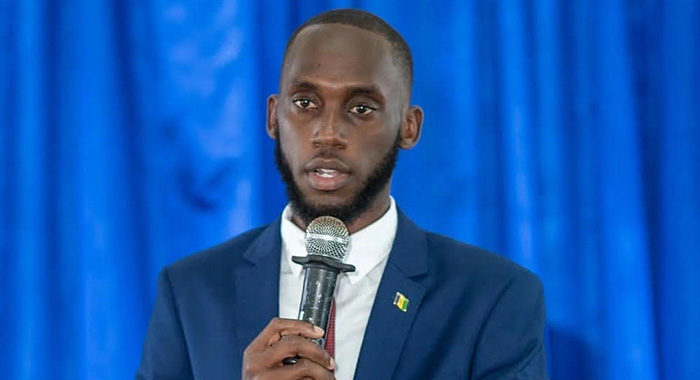
    Ahead of the 10-day launch of St. Vincent and the Grenadines’ flagship annual celebration Vincymas 2026, the top leader of the festival’s organizing body has issued a urgent call to safeguard the event’s deep cultural roots amid growing pressure to prioritize profit-driven, high-cost commercial events.

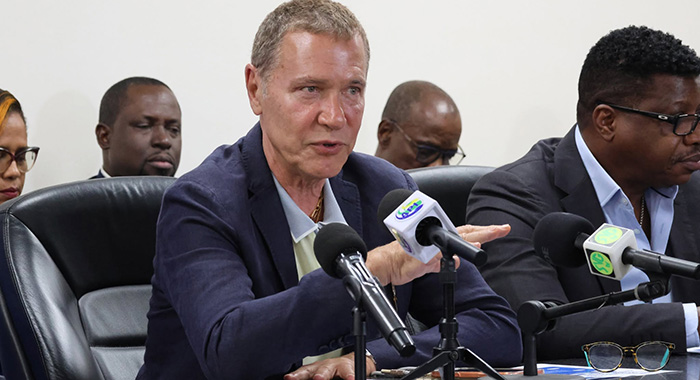
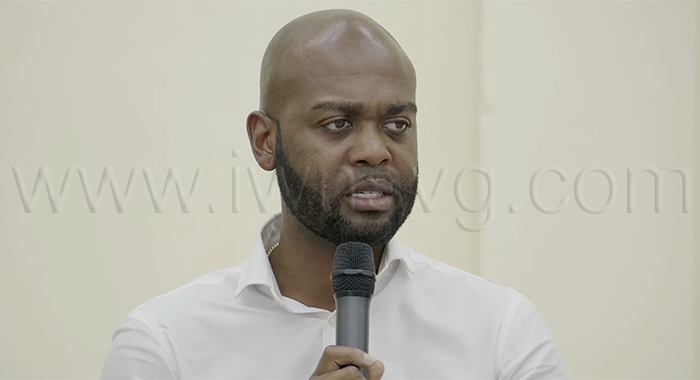
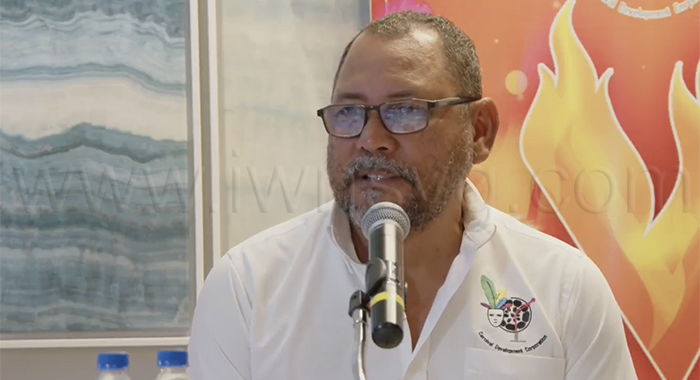
    Ricardo “Ricky” Adams, chairman of the Carnival Development Corporation (CDC), made the remarks Wednesday during the final pre-festival press briefing, laying out his concerns that overcommercialization risks stripping Vincymas of the cultural identity forged by generations of southern Caribbean creators.

    Adams argued that while premium, paid events have a valid role in modern carnival programming, centering the festival exclusively on high-priced all-inclusive fetes — some costing as much as $300 to $400 per night — creates unnecessary barriers for ordinary Vincentians, locking out low- and middle-income residents from participating in a celebration that belongs to the entire community. Beyond exclusion, he warned, this shift weakens the cultural core that makes Vincymas and similar Caribbean carnivals unique globally.

    “Sadly, some stakeholders now believe the future of carnival lies in reducing it to nothing more than a sequence of commercial parties, where only those who can afford the biggest, most expensive events get to enjoy the celebration,” Adams told reporters. “We cannot forget that not everyone can manage those price points. If we abandon our cultural foundation, we will no longer stand out as a distinct cultural celebration — we will just be another generic festival of music and parties.”

    The CDC chairman emphasized that the southern Caribbean is the original birthplace of many of carnival’s most iconic art forms, a legacy that must be actively protected rather than sidelined for short-term commercial gain. He pointed to data that the vast majority of skilled steelpan players, tuners, and arrangers worldwide hail from the southern Caribbean or are descendants of regional creators. The same holds true for mas (costume) band designers across global carnival markets, and soca music itself, the genre that defines modern carnival, originated entirely in the southern Caribbean, Adams noted.

    Without intentional investment and protection of this local creative legacy, he warned, the region risks ceding control of its own cultural tradition to outside forces, reducing Vincentians from creators and stewards to mere consumers of carnival content produced elsewhere. “If we fail to protect this core part of our identity, we will end up just paying to consume music, creativity, and pan that was made in other places,” he said.

    Adams also addressed the emerging influence of artificial intelligence on carnival music, noting that the festival’s planning has centered on prioritizing local Vincentian creativity even as the technology becomes more widespread in the industry.

    Branded “The Great Escape,” Vincymas 2026 is entering its final stretch of preparations, with a full schedule of events balancing new cultural and commercial initiatives, a strong focus on youth participation, and a commitment to broad public access. The festival’s rural segments are already underway, and the official 10-day run of core events will kick off June 26.

    Adams walked reporters through the full remaining calendar, kicking off with a cultural welcome activation at Argyle International Airport this Sunday, a tradition CDC launched last year to greet arriving visitors with local performances, merchandise, and authentic cultural experiences. New this year is a post-festival departure activation called “Promise to Come Back,” which will collect attendee feedback to help organizers refine future programming to match what local and visiting attendees actually want to see.

    The first major core event is Fantastic Friday, the Calypso Semifinals, scheduled for June 26. The last weekend of June will host Junior Festival Weekend, featuring Junior Carnival on June 27, Junior Panorama on June 28, and Junior Calypso and Soca on June 30. During this period, Victoria Park will be transformed into a family-friendly “mini Coney Island” for attendees of all ages.

    Running from July 1 to July 8 at the E.T. Joshua Tarmac, the Flavours of Vincy Mas Food Village will showcase local culinary traditions. July 2 will bring Steel & Glitter, the senior Panorama competition, followed by the return of the popular all-white signature event Evo – A Night in the Clouds on July 3.

    One of the festival’s most anticipated events, the Soca Monarch competition, will take place on July 4, and Adams reported overwhelming interest from artists this year, with 179 preliminary entries. After semifinal judging, 25 finalists were selected, and organizers added a new “Wild Card” slot to tap into public enthusiasm, allowing fans to vote for any additional artist they want to see in the finals. The initiative drew 3,700 votes in just the first 24 hours after opening, a sign of strong public buy-in that Adams said gives young fans more agency over the festival lineup.

    July 5 will see Dimanche Gras, featuring the band king and queen competition alongside the Calypso finals. On July 6, J’ouvert and Monday Jam will take over the streets of Kingstown, with organizers reporting a resurgence of interest in traditional carnival forms. Adams highlighted ongoing work by cultural advocates to revive iconic traditional traditions including the Monkey Band and the Boosy Back. The festival will conclude with the grand Mardi Gras parade on Carnival Tuesday, which will bring the full spectacle of mas back to the streets for the traditional closing celebration.

    Adams closed by reaffirming the festival’s goal: to deliver a safe, culturally rooted event that delivers meaningful economic benefits to St. Vincent and the Grenadines and connects with the wider global Vincentian diaspora.
  • OECS free movement — the wind beneath our wings?

    OECS free movement — the wind beneath our wings?

    Fifteen years after its founding, the Organization of Eastern Caribbean States (OECS) Economic Union has fundamentally redefined conceptions of regional borders and shared citizenship for member states across the Eastern Caribbean archipelago.

    Established under the Revised Treaty of Basseterre, the union’s free movement protocol grants citizens of seven participating member states — including St. Vincent and the Grenadines — unprecedented freedoms: the ability to travel across member borders using only a national identification card, the right to reside indefinitely in any participating nation, and permission to work without the burdensome administrative requirements of a traditional work permit. This framework represents an ambitious, forward-looking vision of a borderless sub-region. But against the backdrop of today’s shifting national and regional economic realities, a critical question demands attention: has this integration project delivered on its promise of shared growth, or is the region navigating unaddressed turbulence that threatens its long-term success?

    There is no question that the right to free movement has become an invaluable lifeline for the region’s small island states. These nations face inherent structural vulnerabilities and constant exposure to external shocks, from extreme climate events to global economic volatility. When catastrophic disasters strike — as seen during Hurricane Maria’s devastation of Dominica, the eruption of the La Soufriere volcano, and more recently Hurricane Beryl — the ability of displaced citizens to relocate immediately to neighboring islands without bureaucratic red tape has allowed them to access safety, emergency shelter, and new livelihoods when their home nations’ infrastructure is destroyed. This represents a landmark step beyond traditional disaster response, reflecting a proactive commitment to regional solidarity from OECS heads of government.

    Beyond crisis response, streamlined labor mobility addresses a long-standing, crippling economic mismatch across the bloc. Many member islands currently face crippling labor shortages in key economic sectors including agriculture, tourism, and construction, while neighboring nations grapple with high rates of underemployment and limited job opportunities. The free movement framework allows surplus workers from labor-glutted states to seamlessly fill gaps in understaffed sectors across the region. More than just a short-term fix, this integration creates a single unified economic space that expands the bloc’s fragmented small local markets, turning a scattered archipelago of small economies into a single, stronger competitive force.

    Still, on-the-ground perspectives reveal that the benefits of integration have not been evenly distributed across all member states and populations. Smaller host nations have voiced quiet but persistent anxiety about the strain that gradual population inflows place on localized public infrastructure. Concerns range from overcrowded primary school classrooms to increased pressure on under-resourced public health systems, and long-term solvency risks for national social safety net programs including national insurance schemes. It is important to note that official data does not support fears of a sudden, unmanageable influx, showing instead a slow, steady pattern of movement across the bloc.

    At the same time, lower-income member states face growing brain drain, an issue that has become a major barrier to national development. Experienced, qualified professionals including teachers, nurses, and skilled technical workers often leave their home nations for higher wages and better benefits in more affluent OECS member states, leaving critical gaps in core public services and private sector development in their countries of origin.

    Compounding these structural challenges, persistent inconsistencies in port of entry processing across the bloc reveal that administrative cultural change lags far behind formal treaty commitments. Even when travelers present valid national identification cards in line with protocol rules, many still face lengthy interrogations and unnecessary delays from immigration officials, meaning the promise of truly hassle-free cross-border movement remains unfulfilled, existing only on paper rather than in practice.

    Fortunately, regional governing bodies have begun taking intentional action to address these systemic gaps. On June 10, the OECS Commission hosted a public webinar focused on “Free Movement of People, Contingent Rights and Border Services,” where leaders pushed for widespread adoption of the proposed Contingent Rights Model Bill. While this landmark piece of legislation does not resolve every challenge facing the union, it establishes critical protections: when an OECS citizen relocates to another member state, their spouse and dependent children will automatically gain equal access to primary healthcare, primary education, and social protection programs across the bloc. True freedom of movement cannot only grant the right to cross a border; it must also grant the right to build a stable, secure life in a new host nation.

    The free movement regime at the heart of the OECS Economic Union carries enormous potential to lift the entire region to unprecedented shared economic prosperity. But to unlock this potential, member state governments must move beyond empty political rhetoric around integration. They need to fully harmonize conflicting domestic legislation, make targeted, substantial investments in public infrastructure to accommodate gradual population movement, and enact the Contingent Rights Model Bill into national law across all participating states.

    Only when the social rights of mobile workers and their families are fully protected will this regional integration framework stop feeling like a volatile crosswind that threatens stability, and become the steady, lifting wind that carries the entire bloc toward shared prosperity. Ultimately, the lessons and progress from OECS integration can serve as a model for the broader Caribbean Community (CARICOM) as it works toward achieving truly seamless, equitable economic integration across the entire Caribbean region.

    *The views expressed in this commentary are those of the author and do not necessarily represent the official editorial position of iWitness News.*

  • Shallow says cruise port deal a ‘no-brainer’

    Shallow says cruise port deal a ‘no-brainer’

    St. Vincent and the Grenadines’ new government has entered into a landmark 30-year concession partnership with Global Ports Holdings (GPH), the world’s largest cruise port operator, to revitalize the aging Kingstown Cruise Terminal and boost the country’s underperforming cruise tourism sector. The partnership, formalized via a signed memorandum of understanding (MoU) by the newly elected New Democratic Party (NDP) administration, will bring a phased total investment of up to EC$255 million into the terminal and national tourism infrastructure over the course of the agreement.

    The Kingstown Cruise Terminal, which was originally constructed by the NDP in the late 1990s, has not received any major expansion or comprehensive upgrade in more than 25 years. After the Unity Labour Party took office in 2001 and held power until its election defeat in November 2024, the facility remained the country’s only purpose-built cruise ship pier, falling badly behind competing regional destinations in infrastructure and service quality.

    Tourism Minister Kishore Shallow has defended the partnership as an obvious strategic decision given the terminal’s consistent financial drain on public coffers and the country’s strained national budget. Speaking on local radio station Hot 97 FM, Shallow disclosed that the terminal has operated at a net loss for four of the past five years, forcing the government to inject more than EC$15 million in public funds just to keep the facility operational over that period. Only 2023 delivered a small profit, totaling just EC$266,000 — a figure that highlights how little the current publicly run model benefits the public purse, Shallow argued.

    Shallow framed the deal as a clear choice between taking on costly new public debt to fund much-needed upgrades, or partnering with a global industry leader that brings both the required capital and specialized expertise to the project. “Do we have the capital now to invest in our port? The answer to that is no. Can we access it as a loan? Yes. Do we want more loan? No. Not for the port, certainly,” he told radio listeners.

    Unlike many similar regional public-private partnerships, the St. Vincent and the Grenadines agreement includes two unprecedented provisions that prioritize local stakeholder participation, Shallow noted. Up to 30% of equity in the concession operating company will be reserved for ordinary Vincentian investors, and the arrangement guarantees at least one local representative on the company’s board of directors to permanently protect national interests. A public prospectus detailing revenue streams, fee structures and other key terms of the investment will be released to allow potential local investors to make informed decisions before they commit to buying equity. Any dividends generated by the concession will be distributed to shareholders, with 30% of all profits returning to local investors, Shallow added.

    The minister emphasized that the 30-year concession does not equate to selling off the national asset. After the agreement expires, full ownership of the upgraded terminal and all related infrastructure will revert to the government and people of St. Vincent and the Grenadines. “So just imagine you invest 250-something million dollars, and then after that we own the entire thing… They’re not walking with the port when they leave,” he explained.

    Beyond upgrading the terminal itself, the partnership is designed to address deep structural gaps that have held back St. Vincent and the Grenadines’ cruise tourism competitiveness. Official data shows that average annual cruise passenger arrivals over the past five years (excluding the COVID-19 pandemic travel shutdown) have hovered around just 230,000, far lower than peer regional destinations. Average per-passenger spending in St. Vincent is only around US$59, the lowest rate across the Caribbean. The current out-of-date infrastructure also means the country cannot accommodate larger, more modern cruise vessels that carry higher-spending tourists, and the country lacks the diversified onshore tourism attractions that draw longer visits and greater spending.

    The first phase of the project, which will require an initial investment of more than EC$55 million, focuses on urgent upgrades to the existing terminal, including a full renovation and transformation of the terminal building, improved pedestrian connections between the port and downtown Kingstown, and targeted investment in tourism attractions across all of the country’s islands. Shallow explained that this investment in broader national tourism sites was a key negotiated priority to ensure the partnership delivers widespread benefits across the country, not just at the port itself.

    Shallow noted that redirecting the EC$15 million in annual public subsidies that currently prop up the loss-making terminal to core public services would bring immediate benefits to all Vincentians. “Just imagine if we didn’t have to spend that 15 million there, and we could invest that in healthcare, education, [and] improve our roads. That is what is in front of us here,” he said.

  • ‘Missing plane’ found; investigation ‘very delicate’ — Leacock

    ‘Missing plane’ found; investigation ‘very delicate’ — Leacock

    A missing Dominican-registered light aircraft that disappeared en route from St. Vincent and the Grenadines to Tobago earlier this month has been located, with no fatalities or crash having occurred, according to the country’s top security official. But St. Clair Leacock, Deputy Prime Minister and Minister of National Security, has urged the public to remain patient as investigators navigate what he calls a highly sensitive ongoing security operation, limiting what details can be released publicly.

    The incident unfolded on June 12, when a twin-engine Beechcraft Baron B58T, registered HI1145, departed Argyle International Airport at 11:52 a.m. local time, bound for Tobago’s A.N.R. Robinson International Airport. Two people were on board, and the flight was scheduled to take just one hour and five minutes. Civil aviation authorities confirmed that the aircraft maintained normal radio communication with Argyle air traffic control until it reached a point 40 nautical miles south of the airport, the southern boundary of St. Vincent and the Grenadines’ controlled airspace. After communication was handed off to the next air traffic control jurisdiction, contact with the plane was lost, and it never arrived at its destination.

    The loss of contact triggered an immediate alert and the activation of a formal distress phase, with search and rescue operations launched shortly after. In a public statement, the Ministry of Tourism, Civil Aviation and Sustainable Development confirmed it remained committed to upholding safe and secure flight operations within the country’s airspace, and pledged to share new updates as they become available.

    Speaking on the ruling New Democratic Party’s weekly radio programme “New Times” on NICE Radio this Monday, Leacock shared the first official confirmation that the missing aircraft has been located. Drawing on information provided by regional and international security partners, the minister confirmed the plane had not crashed, and no lives have been lost. He emphasized that the situation remains an extremely delicate security matter, and that strict operational confidentiality constraints limit what he can disclose to the public.

    Leacock told listeners he has been in constant contact with St. Vincent and the Grenadines’ Police Commissioner as well as regional security agencies since contact with the plane was lost on Sunday. “I have been very guarded in what I say,” he noted, adding that the investigation remains at a stage where specific details of the outcome cannot be released publicly. “To the best of my knowledge, the aircraft has not crashed and there had not been a loss of life, and international, regional, and national agencies are following developments very closely. Aircraft don’t fly themselves — there are people operating that aircraft, so agencies are working to determine the appropriate course of action,” Leacock said.

    Leacock acknowledged that the public’s desire for more details is understandable, but said his office must balance the public’s right to transparency with critical operational security requirements. “I, out of professional duties and responsibilities, cannot at this time provide the public with more details as to what is happening in this very delicate security matter,” he said.

    This is not the first such unexplained aircraft incident in St. Vincent and the Grenadines in recent years, Leacock confirmed. In December 2023, a 21-seat Gulfstream aircraft departed the island of Canouan for a scheduled sightseeing trip, with three passengers and one pilot on board. The plane was expected to return to Canouan two hours after departure, but all contact was lost just six minutes after takeoff. The aircraft was eventually located thousands of miles away in Africa months later. Then-prime minister Ralph Gonsalves reported at the time that intelligence from regional and international partners suggested the plane’s transponder had been intentionally turned off, and Vincentian authorities were in contact with relevant Latin American governments over the case.

    Responding to a caller on the radio programme who pressed for more details and public reassurance, Leacock reiterated that he is barred from sharing additional specifics, but confirmed that relevant security agencies already have full knowledge of the aircraft’s current location, flight history, and the identities of the people on board. “I can tell you that no lives are lost. The international agencies know where the plane is. The regional agencies — the CARICOM IMPACS, regional security system — our own police force know where the plane is, they have names, they know the flight history… but they are still in the middle of an active operation, and speaking prematurely would compromise the quality of the work that’s taking place,” Leacock said. “Those who would like me to speak in more specific terms have to understand that sometimes for the Minister of National Security, less said is better,” he added.

    Leacock also addressed growing criticism of his handling of the case on social media, where he said users have resorted to personal attacks and name-calling. “I see people on social media call me by all kind of bad word names, and so forth, but sometimes I still got to keep a wise head,” he said. He warned that disclosing sensitive details prematurely could put both the ongoing operation and personal safety at risk, noting “I have to look at my own safety and welfare and well-being, and others as well.”

    One caller raised broader institutional questions, arguing that two unexplained aircraft disappearance incidents in just a few years demonstrate that civil aviation oversight should be moved from the Ministry of Tourism, where it currently sits, to the Ministry of National Security, given the clear national security implications of these events. Leacock responded that the assignment of ministerial portfolios is ultimately a decision for the prime minister, and the arrangement is not as clear-cut as critics suggest. “Civil aviation can have a relationship too with tourism, because it’s dealing with airports, dealing with aeroplanes, dealing with pilots… It can logically be placed there. But in the same breath, airports fall under infrastructure alongside seaports, and wherever you have aviation and airport travel, there’s a huge element of security… So it could also fall under national security,” Leacock explained. He stressed that even though civil aviation does not formally fall under his portfolio, national security agencies have played a central role in the response to this incident from the start. “It is not fixed and cast in stone… It is now not under national security, but that doesn’t mean that national security doesn’t have an interest,” he said.

    Leacock also connected the current response to broader regional security cooperation efforts he has participated in recently, noting that during recent meetings in Trinidad and Tobago and Barbados, he received briefings on joint regional systems designed to track both air and maritime movements across the Caribbean. He noted that as the U.S. government has reduced its maritime patrol presence in the region, the number of unvetted vessels and aircraft transiting Caribbean airspace and waters has increased, making shared regional surveillance capabilities more critical than ever. The same network of agencies and tracking technology used for broader regional security is now being deployed in this aircraft investigation, Leacock confirmed.

  • The revolution eats its own

    The revolution eats its own

    In the aftermath of St. Vincent and the Grenadines’ 2025 general election, one of the most striking shifts in the nation’s political landscape has gone largely underexamined: the growing disconnect between a group of self-styled reform advocates who campaigned for regime change, and their inability to adjust to the reality of democratic governance after their preferred party took power.

  • Hope lays out ‘tale of two cities’ as SVG seeks to grow out of debt crisis

    Hope lays out ‘tale of two cities’ as SVG seeks to grow out of debt crisis

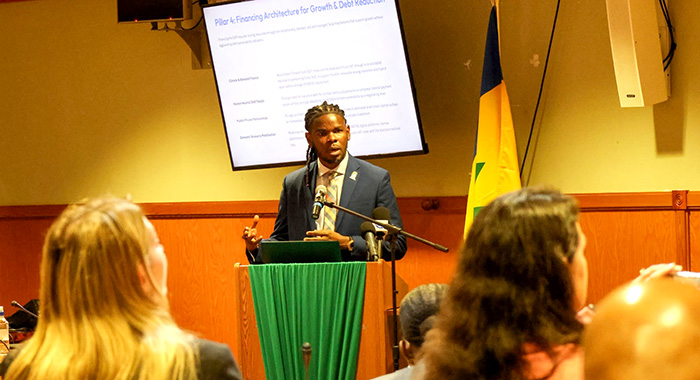
    At the SVG Development Partners Roundtable held in Kingstown on Tuesday, Ambassador of Finance and Investments Kevin Hope laid out an urgent, bold strategy to pull St. Vincent and the Grenadines (SVG) out of deep fiscal distress and persistent systemic poverty. In a presentation framing SVG’s current reality as a “tale of two cities,” Hope outlined the stark macroeconomic challenges facing the island nation and introduced a coordinated five-year Growth and Stabilisation Plan for 2026–2030, paired with a newly launched 15-year long-term national development framework.

    According to official data, SVG will end 2025 with a fiscal deficit equal to 12.3% of gross domestic product. A decade of consecutive shortfalls, compounded by a string of devastating external shocks, has pushed the country’s fiscal and debt trajectory into unsustainable territory, Hope warned. Prime Minister Godwin Friday previously raised alarm that public debt has already climbed above 113% of GDP, and on current policy trajectories, it will surge to 144.5% of GDP by 2031 without immediate intervention. Hope echoed this warning, noting that inaction would only force far harsher austerity measures on the country in the future.

    Hope traced the origins of the current crisis to a combination of sequential global and local shocks: the 2020 COVID-19 pandemic, the 2021 eruption of the La Soufriere volcano, economic spillovers from the Russia-Ukraine war, 2024’s Hurricane Beryl, and accumulated long-term fiscal slippages. Beyond these one-off events, deep structural weaknesses have exacerbated the problem, including unsustainable expansion of the public wage bill, widespread tax concessions and expenditures, and inconsistent effectiveness and efficiency of public capital spending, he added.

    The fiscal crisis has unfolded alongside fragile social conditions that any policy correction must account for, Hope emphasized. Data from the 2018–2019 Country Poverty Assessment puts national poverty at 25.8%, with 33.7% of households classified as vulnerable to falling into poverty, and 5.9% of the population experiencing food indigence. These figures mean one in four SVG households lives in poverty, and one in three faces immediate risk of poverty.

    Hope also highlighted a puzzling “labour market paradox” plaguing the country: between 2016 and 2024–25, the formal labour market grew by 22.5%, yet 2022 data puts overall unemployment at 20.8%, with youth unemployment reaching nearly 35%. Large-scale infrastructure projects, including the modern port development and the new Arnos Vale Hospital, face high demand for certified technical trades, but most skilled workers on these projects are imported from other regional countries. This gap exposes a critical national skills mismatch, Hope said. Compounding the issue, anecdotal evidence suggests nearly half of all unemployed people have stopped actively searching for work, driven by geographic barriers or misalignment between expected and offered wages.

    To reverse these trends, Hope placed micro, small, and medium-sized enterprises (MSMEs) at the core of the government’s new growth strategy. MSMEs currently generate roughly 60% of total national output and 45% of all jobs in SVG, a country where the services sector makes up 81% of GDP. The path out of indebtedness relies on intentional public-private partnership, Hope argued, with the government’s role shifting to creating incentives, providing critical tools and resources, and enabling the private sector to drive sustainable expansion.

    Several foundational institutional reforms are already underway to support this shift: a new Department of Private Sector Development has been established within the Prime Minister’s Office under the Ministry of Finance, and a Private Sector Advisory Committee has been convened to identify regulatory barriers, cut red tape, and reduce the time and cost of doing business. Other ongoing initiatives include strengthening the investment promotion agency Invest SVG and the Centre for Enterprise Development, and drafting new MSME and Investment legislation through the Attorney General’s Chambers.

    A key distinction of the government’s new plan is its prioritization: it is framed as “Growth and Stabilisation,” not “Stabilisation and Growth.” While restoring fiscal and debt sustainability is a non-negotiable goal, Hope explained, the government’s top priority remains creating quality, well-paid jobs for Vincentians, and growth must precede harsh austerity to protect livelihoods. Alongside the five-year immediate plan, the government is launching a 15-year national development strategy running from 2027 to 2042 to anchor long-term progress.

    Core macro-fiscal targets for the plan include doubling SVG’s baseline trend growth from 2.5–2.7% to 5% in the medium term, then sustaining 4–5% annual growth; achieving and maintaining a 3% of GDP primary surplus by 2030; and meeting the Eastern Caribbean Currency Union (ECCU) mandatory debt target of 60% of GDP by 2035. “Fiscal sustainability is non-negotiable, growth must be structural, not subsidised, and ultimately… people are the ultimate dividends,” Hope said.

    On public sector reform, Hope framed proposed rationalization of ministries and state-owned enterprises (SOEs) as a productivity improvement exercise, not an austerity cuts program. “Rationalisation ought not to be a bad word,” he said. “It really speaks to how do we make the public sector more productive and more efficient, and as such, how do we do more with less?” Rapid assessments of SOE performance are already underway, with public expenditure reviews, strengthened tax administration, and better utilization of administrative data central to the government’s efficiency goals. Recognizing that sharp fiscal adjustment can carry social costs, Hope said the government is pursuing a home-grown, phased reform approach that explicitly protects poor and vulnerable households from adverse impacts.

    To finance the plan, Hope called on international development partners to support SVG’s priorities, outlining four core financing pillars: better leveraging of global climate finance to address climate vulnerability; developing innovative debt instruments to lower government borrowing costs; expanding public-private partnerships across key sectors; and boosting domestic resource mobilization by cracking down on tax leakages and strengthening compliance. The government is also actively engaging the SVG diaspora, with recent outreach events across multiple international cities, and is exploring initiatives to allow diaspora members to take equity stakes in national development projects.

    In closing, Hope reiterated that all macroeconomic targets and policy reforms must be measured by their impact on the daily lives of ordinary Vincentians, with a core commitment to cutting poverty and unemployment to single digits. “This is ambitious, but this is again why we’re here — to really work towards trying to solve around the socio-economic challenges for St. Vincent and the Grenadines,” he said.

    Representatives from a wide range of international and regional partners, including the United Nations, Caribbean Development Bank, World Bank, CAF development bank, European Union, Canada, Germany, China, the United Kingdom, CARICOM Development Fund, UNICEF, UNFPA, WFP, PAHO, and GIZ, broadly endorsed the government’s strategic direction. Partners called for stronger cross-stakeholder coordination, integration of a regional perspective into planning, and explicit ongoing focus on supporting the poorest and most vulnerable Vincentians throughout reform implementation.

  • Investor says SVG’s cruise traffic could ‘triple within 5 to 7 years’

    Investor says SVG’s cruise traffic could ‘triple within 5 to 7 years’

    St. Vincent and the Grenadines (SVG) has taken a major step toward transforming its cruise tourism sector after the government signed a memorandum of understanding (MOU) with Global Ports Holding (GPH), the world’s largest independent cruise port operator, to launch a 30-year concession for the redevelopment of the Kingstown Cruise Terminal. The deal paves the way for up to EC$250 million in infrastructure investment, unlocking what GPH leadership calls massive untapped potential in the Caribbean island nation.

    The agreement was formalized in Kingstown on Wednesday by SVG Prime Minister Godwin Friday and GPH Chairman Mehmet Kutman. With a global footprint that includes leading cruise ports in high-traffic destinations such as Puerto Rico and Nassau, Bahamas, GPH brings decades of experience expanding cruise sector growth for emerging Caribbean economies.

    Kutman argued that SVG remains significantly under-marketed as a cruise destination, a gap he attributes to underdeveloped existing infrastructure and limited industry brand recognition that has suppressed potential demand. He noted that while SVG’s natural appeal as a tourist location is already established, the current lack of supporting infrastructure and targeted marketing has prevented the destination from reaching its full potential in the global cruise market.

    To address this gap, GPH plans to leverage its long-standing industry relationships with major cruise lines, global marketing reach, and infrastructure investment capital to position SVG as a top Caribbean stop. Kutman projected that once infrastructure upgrades are completed, annual cruise passenger traffic to SVG could triple within five to seven years.

    GPH’s track record in the region backs up this optimistic projection. In The Bahamas, for example, when GPH took over port operations in 2019, annual passenger volume hovered between 2 million and 3 million. This year, the country is on track to welcome 6.7 million cruise passengers, with numbers set to climb to 8 million next year, cementing The Bahamas’ position as the world’s largest transit cruise port. Per-passenger spending has also surged: when GPH acquired the Nassau concession, average visitor spending stood at $56 per person. Today, that figure has reached $128 per passenger, the highest in the Caribbean, with a long-term target of $150 to $200 per person.

    Currently, SVG faces similar challenges to those The Bahamas overcame. SVG Tourism Minister Camillo Gomes (quoted alongside GPH leadership in the announcement) noted that SVG currently records one of the lowest per-passenger spending rates among Eastern Caribbean cruise destinations, averaging under 300,000 passengers annually and just $59 in per-person spending. He attributed low spending to an underdeveloped on-land product, adding that the partnership with GPH will prioritize improving shore excursions and local visitor activities to encourage longer stays and higher spending that directly benefits SVG communities.

    A core principle of GPH’s plan for SVG is its “community-first” operating philosophy, which emphasizes hiring local staff and partnering with local small businesses rather than bringing in outside workers or external operators. Kutman stressed that GPH does not intend to take over local commercial operations; instead, the company will provide training, access to financing, and operational support to help local businesses grow alongside the expanding port. He added that GPH never imports workers to manage or run port operations, emphasizing that all roles at every level will be filled by local SVG residents, and that community satisfaction is the company’s top priority.

    Prime Minister Friday echoed this commitment, noting that a recent visit to GPH’s Nassau operations during a Caribbean Development Bank meeting confirmed that the community-first model works in practice. “Everybody we dealt with, from the very top to all the middle-level people, they were Bahamians, and they were very proud to tell us that they are born and bred Bahamians,” Friday said. He added that many of the commercial spaces at the Nassau port were designed as small, affordable units for local small business owners to sell local products, proving GPH prioritizes creating opportunities for local operators rather than large corporate tenants.

    In discussions about improving SVG’s investment climate, Friday said the government is focused on streamlining unnecessary bureaucratic red tape while upholding the rule of law and full transparency. He noted that cruise tourism is a competitive industry, with destinations around the Caribbean vying for cruise line partnerships, making an investor-friendly climate a key competitive advantage. “When we talk about making the destination investor-friendly, it’s to make it so that we eliminate unnecessary red tape… and that we are a country of the rule of law… everything is transparent and above board,” Friday said. He added that his core mandate throughout negotiations was protecting SVG’s national interest and securing the maximum possible benefit for the country and its people, a goal the government pursued openly throughout the process.

    Kutman acknowledged that while SVG is overall an investor-friendly destination, the negotiations for the Kingstown concession were among the most rigorous GPH has ever conducted, a testament to the SVG government’s commitment to protecting national interests.

  • ‘Golden opportunity, after years of neglect’ – Shallow

    ‘Golden opportunity, after years of neglect’ – Shallow

    At a recently held “North Leeward Matters” town hall gathering in Golden Grove, Kishore Shallow, the sitting Member of Parliament for the North Leeward constituency of St. Vincent and the Grenadines, has positioned the proposed Roseau River sand and aggregate harvesting operation as a once-in-a-generation chance to reverse what he calls decades of systemic underdevelopment and disinvestment across the area.

    Opening the meeting, which was also attended by Kem Bartholomew, Chief Executive Officer of the Barbados Regional Agricultural Grain and Services Authority (BRAGSA), Shallow pulled no punches in laying out the constituency’s long-standing grievances. For years, he argued, residents of North Leeward have been shortchanged across every key sector, from agricultural opportunities to entrepreneurial support and local employment. The most visible signs of this neglect, he stressed, are the constituency’s crumbling feeder roads and long-neglected bridges, which have remained in a state of disrepair for years, including the structurally deficient crossing in Fitz Hughes that has only just reached the final stages of completion.

    Shallow pointed to one persistent bottleneck that has held back local infrastructure development for decades: the exorbitant cost and logistical challenge of hauling aggregate construction materials all the way from the Rabacca region in northeastern St. Vincent and other distant supply sources. With the Roseau harvesting project set to bring high-quality aggregate production directly to North Leeward, that long-standing barrier will finally be eliminated, he said, drastically cutting the overall cost of all public and private infrastructure projects across the Leeward coast.

    Calling the untapped sand and gravel deposits a “blessing, a gold mine” for the constituency, Shallow revealed that BRAGSA has made a formal commitment that North Leeward will not merely serve as a host for the operation, but will be positioned at the center of the resulting economic and infrastructure gains. Refusing to accept vague, long-term promises of future benefit, Shallow said he pressed Bartholomew for concrete, time-bound deliverables for local residents, demanding clear commitments for gains by the end of the current year and in the immediate 12-month period after. Specific priority projects Shallow has pushed to advance include the construction of new bus stops in Petit Bordel, Rose Bank and Rose Hall, the long-overdue completion of feeder roads that have remained unfinished for more than five years, and the prompt construction of a replacement for the aging Fitz Hughes bridge.

    Beyond infrastructure upgrades, Shallow confirmed that he has secured a formal commitment that priority for all new jobs created by the project will go to North Leeward residents. BRAGSA has no plans to import an outside workforce for the operation, he said, and will instead run specialized training programs to prepare local workers to operate heavy machinery and fill open roles, creating much-needed immediate employment for local people.

    Against a backdrop of widespread local anger over the controversial existing Rayneau quarry operation in Richmond, Shallow took great pains to draw a clear line between that unpopular venture and the new Roseau project. The Richmond quarry, approved by the previous Unity Labour Party (ULP) administration in 2022, sparked widespread outcry after developers moved heavy equipment through active farmland to begin work on a 30-year lease of 59 acres of state-owned agricultural land leased to a St. Lucian businessman. Shallow, who took office last November as part of the New Democratic Party’s landslide 14-1 election victory over the ULP, noted that the Richmond quarry’s environmental impacts have already derailed a planned World Bank-funded recreational development project for the area, demonstrating how poor planning can hold back, rather than advance, local development. In contrast, Shallow explained, the Roseau project has already undergone full expert environmental assessment to avoid the same missteps, and will not alter the natural landscape of the Roseau River coast.

    Going beyond just distinguishing the two projects, Shallow announced that the new administration will launch a full review of the existing Richmond quarry contract. The Attorney General will examine the agreement to identify any legal pathways for action, and the government will also commission an independent environmental assessment of the current quarry operation to address widespread local concerns.

    Shallow also urged local residents to view the Roseau project as both a solution to local grievances and a catalyst for national economic growth. Revenue generated from the operation will flow through BRAGSA to support national development, he explained, and even before full operations have launched, the authority has already secured pre-contracts for aggregate supply to development projects in Canouan, Bequia and other parts of the Grenadines. The project will also allow the country to harvest a valuable natural resource that would otherwise be washed out to sea and lost.

    Wrapping up his remarks, Shallow framed the public town hall, which included full disclosure of contract details for the Canouan supply agreement and public projections of the total value of the Roseau deposits, as part of the new government’s commitment to radical transparency for all state-led infrastructure and resource development projects, emphasizing that the initiative has nothing to hide from local voters.

  • Layou carpenter accused of burning down wooden house

    Layou carpenter accused of burning down wooden house

    A 44-year-old carpenter from Layou is set to make his next court appearance on July 16 to face three distinct arson charges connected to a deliberate fire that destroyed a residential structure and personal property worth nearly EC$23,000 in total.

    The defendant, Ray Patterson, made his initial arraignment on June 8 at the Serious Offences Court, where Chief Magistrate Colin John presided over the hearing. Court documents outline three separate charges stemming from the June 5 incident in Layou.

    The first charge alleges that Patterson intentionally destroyed a 16-by-16-foot wooden dwelling by fire without legal justification. The home, valued at EC$12,000, is owned by Cardin Patterson, another Layou resident. The second charge adds the allegation that Patterson committed the arson with the explicit intent to endanger another person’s life. Finally, the third charge accuses him of burning multiple personal items belonging to Resha Crooke, also of Layou, with a combined assessed value of EC$10,970. These items include a 100-dollar gas cylinder, two full-size mattresses priced at EC$400 apiece, a wardrobe of clothing worth EC$6,000, academic textbooks valued at EC$500, and a tablet computer worth EC$300.

    Because the case has been sent forward on indictment, no plea was accepted from Patterson during this initial procedural hearing. Chief Magistrate John granted bail in the amount of EC$10,000, which requires one surety to be approved by the court.

    As part of the bail conditions, Patterson has been mandated to check in regularly at the Layou Police Station every Tuesday until the legal proceedings are fully resolved. He has also received a formal order barring any contact, direct or indirect, with complainant Resha Crooke while the case is pending.

  • Rotary Club holds 25th Annual George Phillips Excellence Awards

    Rotary Club holds 25th Annual George Phillips Excellence Awards

    A quarter-century of championing youth achievement came to life on June 4 in St. Vincent and the Grenadines, as the Rotary Club of St. Vincent hosted its landmark 25th Annual George Phillips Excellence Awards Ceremony. The annual event, built to uplift outstanding young people across the island nation, brought together a cross-section of community stakeholders, from educators and family members to corporate sponsors and Rotary members, all gathered to recognize the hard work and potential of the country’s next generation.

    This year’s ceremony carried the theme “Excellence in Every Step: Celebrating Progress, Growth and Continuous Development,” shining a spotlight on exceptional Fourth Form students representing 27 secondary schools from across St. Vincent and the Grenadines. Selection of award recipients is far from a focus on grades alone: candidates are evaluated across a holistic set of criteria, including consistent academic performance, personal discipline, active engagement in extracurricular activities, demonstrated leadership ability, and their skill in balancing the competing demands of school life.

    The awards themselves carry deep institutional meaning, named to honor George Phillips, the founding charter president of the Rotary Club of St. Vincent. Phillips’ lifelong dedication to community service and intentional investment in youth growth left a enduring legacy that the awards program has carried forward for 25 years, creating a consistent platform to celebrate and encourage young people as they work to unlock their full potential.

    Organized under the leadership of current Rotary Club of St. Vincent President Felicia Cumberbatch, with Vocational Service Director Troy Valcin and his steering committee overseeing execution, the 2024 ceremony featured remarks and addresses from a range of community leaders aligned with the event’s mission. Cumberbatch opened by reinforcing the core value of youth investment, noting that today’s secondary school students will go on to serve as the future leaders, innovators, and foundational contributors to the long-term development of St. Vincent and the Grenadines.

    The event’s guest speaker, Xavier Stapleton, an acclaimed local chef and owner of the Cultured hospitality brand, delivered a motivational address urging students to pursue their personal and professional goals with unwavering determination, lean into their unique talents, and remain committed to lifelong growth beyond the classroom. Mavis Findlay-Joseph, Senior Education Officer at the country’s Ministry of Education, Vocational Training & Innovation, Digital Transformation & Information, also took the stage to stress the critical role of accessible education and intentional skills development in preparing young people to seize future economic and social opportunities.

    Two longstanding corporate partners of the awards program, the Bank of St. Vincent and the Grenadines and telecommunications provider FLOW, also sent representatives to deliver remarks, reaffirming their ongoing commitment to supporting national education initiatives and youth empowerment efforts. In an official press release marking the 25th anniversary milestone, the Rotary Club of St. Vincent reaffirmed its core mission: to advance education, expand community service, and empower the next generation of leaders that will shape the future of St. Vincent and the Grenadines.