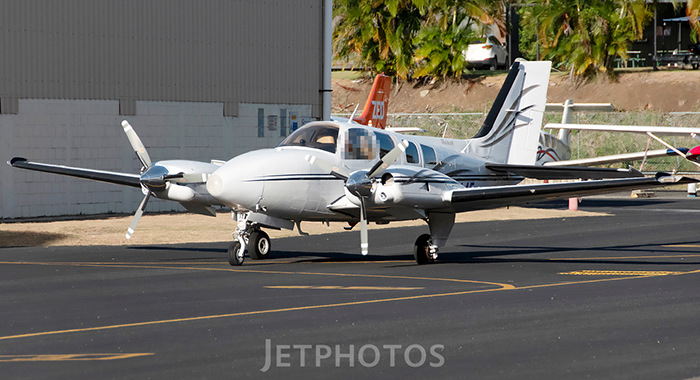
A missing Dominican-registered light aircraft that disappeared en route from St. Vincent and the Grenadines to Tobago earlier this month has been located, with no fatalities or crash having occurred, according to the country’s top security official. But St. Clair Leacock, Deputy Prime Minister and Minister of National Security, has urged the public to remain patient as investigators navigate what he calls a highly sensitive ongoing security operation, limiting what details can be released publicly.
The incident unfolded on June 12, when a twin-engine Beechcraft Baron B58T, registered HI1145, departed Argyle International Airport at 11:52 a.m. local time, bound for Tobago’s A.N.R. Robinson International Airport. Two people were on board, and the flight was scheduled to take just one hour and five minutes. Civil aviation authorities confirmed that the aircraft maintained normal radio communication with Argyle air traffic control until it reached a point 40 nautical miles south of the airport, the southern boundary of St. Vincent and the Grenadines’ controlled airspace. After communication was handed off to the next air traffic control jurisdiction, contact with the plane was lost, and it never arrived at its destination.
The loss of contact triggered an immediate alert and the activation of a formal distress phase, with search and rescue operations launched shortly after. In a public statement, the Ministry of Tourism, Civil Aviation and Sustainable Development confirmed it remained committed to upholding safe and secure flight operations within the country’s airspace, and pledged to share new updates as they become available.
Speaking on the ruling New Democratic Party’s weekly radio programme “New Times” on NICE Radio this Monday, Leacock shared the first official confirmation that the missing aircraft has been located. Drawing on information provided by regional and international security partners, the minister confirmed the plane had not crashed, and no lives have been lost. He emphasized that the situation remains an extremely delicate security matter, and that strict operational confidentiality constraints limit what he can disclose to the public.
Leacock told listeners he has been in constant contact with St. Vincent and the Grenadines’ Police Commissioner as well as regional security agencies since contact with the plane was lost on Sunday. “I have been very guarded in what I say,” he noted, adding that the investigation remains at a stage where specific details of the outcome cannot be released publicly. “To the best of my knowledge, the aircraft has not crashed and there had not been a loss of life, and international, regional, and national agencies are following developments very closely. Aircraft don’t fly themselves — there are people operating that aircraft, so agencies are working to determine the appropriate course of action,” Leacock said.
Leacock acknowledged that the public’s desire for more details is understandable, but said his office must balance the public’s right to transparency with critical operational security requirements. “I, out of professional duties and responsibilities, cannot at this time provide the public with more details as to what is happening in this very delicate security matter,” he said.
This is not the first such unexplained aircraft incident in St. Vincent and the Grenadines in recent years, Leacock confirmed. In December 2023, a 21-seat Gulfstream aircraft departed the island of Canouan for a scheduled sightseeing trip, with three passengers and one pilot on board. The plane was expected to return to Canouan two hours after departure, but all contact was lost just six minutes after takeoff. The aircraft was eventually located thousands of miles away in Africa months later. Then-prime minister Ralph Gonsalves reported at the time that intelligence from regional and international partners suggested the plane’s transponder had been intentionally turned off, and Vincentian authorities were in contact with relevant Latin American governments over the case.
Responding to a caller on the radio programme who pressed for more details and public reassurance, Leacock reiterated that he is barred from sharing additional specifics, but confirmed that relevant security agencies already have full knowledge of the aircraft’s current location, flight history, and the identities of the people on board. “I can tell you that no lives are lost. The international agencies know where the plane is. The regional agencies — the CARICOM IMPACS, regional security system — our own police force know where the plane is, they have names, they know the flight history… but they are still in the middle of an active operation, and speaking prematurely would compromise the quality of the work that’s taking place,” Leacock said. “Those who would like me to speak in more specific terms have to understand that sometimes for the Minister of National Security, less said is better,” he added.
Leacock also addressed growing criticism of his handling of the case on social media, where he said users have resorted to personal attacks and name-calling. “I see people on social media call me by all kind of bad word names, and so forth, but sometimes I still got to keep a wise head,” he said. He warned that disclosing sensitive details prematurely could put both the ongoing operation and personal safety at risk, noting “I have to look at my own safety and welfare and well-being, and others as well.”
One caller raised broader institutional questions, arguing that two unexplained aircraft disappearance incidents in just a few years demonstrate that civil aviation oversight should be moved from the Ministry of Tourism, where it currently sits, to the Ministry of National Security, given the clear national security implications of these events. Leacock responded that the assignment of ministerial portfolios is ultimately a decision for the prime minister, and the arrangement is not as clear-cut as critics suggest. “Civil aviation can have a relationship too with tourism, because it’s dealing with airports, dealing with aeroplanes, dealing with pilots… It can logically be placed there. But in the same breath, airports fall under infrastructure alongside seaports, and wherever you have aviation and airport travel, there’s a huge element of security… So it could also fall under national security,” Leacock explained. He stressed that even though civil aviation does not formally fall under his portfolio, national security agencies have played a central role in the response to this incident from the start. “It is not fixed and cast in stone… It is now not under national security, but that doesn’t mean that national security doesn’t have an interest,” he said.
Leacock also connected the current response to broader regional security cooperation efforts he has participated in recently, noting that during recent meetings in Trinidad and Tobago and Barbados, he received briefings on joint regional systems designed to track both air and maritime movements across the Caribbean. He noted that as the U.S. government has reduced its maritime patrol presence in the region, the number of unvetted vessels and aircraft transiting Caribbean airspace and waters has increased, making shared regional surveillance capabilities more critical than ever. The same network of agencies and tracking technology used for broader regional security is now being deployed in this aircraft investigation, Leacock confirmed.