标签: Saint Vincent and the Grenadines

圣文森特和格林纳丁斯

  • Mark ‘hand-picked’ in 2024 although London was best candidate – Shallow

    Mark ‘hand-picked’ in 2024 although London was best candidate – Shallow

    In a striking disclosure that lifts the curtain on opaque political appointment practices in St. Vincent and the Grenadines’ tourism sector, new Tourism Minister Kishore Shallow has confirmed that the previous chief executive of the St. Vincent and the Grenadines Tourism Authority (SVGTA), Annette Mark, was handpicked for the role two years ago, overriding the outcome of a formal recruitment process that named Shafia London as the top candidate.

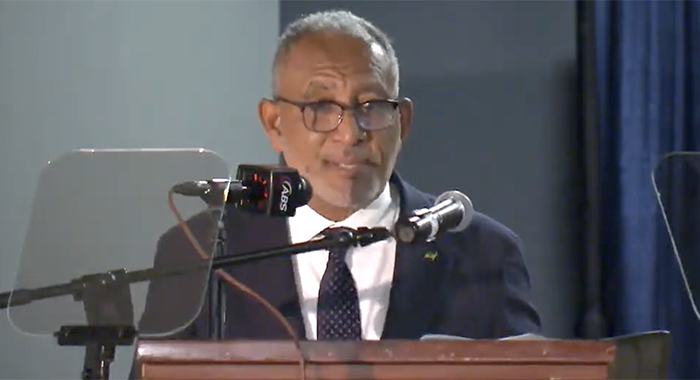
    Shallow made the revelation during a press briefing in Villa on Monday, where he formally announced London’s appointment as the new SVGTA CEO, effective July 1. London will serve an initial three-year term in the role, and Shallow framed her appointment as a deliberate step to rebuild public trust and reinstate transparency and merit-based hiring for senior public sector positions.

    Recounting the irregularities of the 2023 recruitment process, Shallow explained that the previous Unity Labour Party (ULP) government launched what was billed as a robust, comprehensive search for the SVGTA CEO role, led by an independent external recruitment panel that included experts from Trinidad. After evaluating all applicants, the panel unanimously ranked London as the leading candidate for the position. However, just days before a formal employment agreement was set to be finalized, the entire process was circumvented, and Mark was personally appointed to the role instead.

    Shallow told reporters, “Just before an agreement was reached, the process was, should I say, circumvented — was circumvented — and someone else was hand-picked. That’s the reality. I say it as is. I understand that the agency then, who I had a very lengthy discussion with, … did not favour the then selectee.” The minister did not name the specific officials who intervened to derail the process, nor did he elaborate on the reasoning behind the last-minute change. Political observers have pointed out that London was passed over at a time when her husband, Grenville Williams, served as Attorney General in the ULP administration, and later ran as a ULP candidate in the November 2025 general election.

    Mark, who previously served as Executive Director of Invest SVG — St. Vincent and the Grenadines’ foreign direct investment attraction agency — was appointed SVGTA CEO on August 12, 2024, when the ULP was still in power and Carlos James held the tourism minister portfolio. Her appointment was part of a high-profile leadership swap between two major state agencies: she replaced Glen Beache, a 10-year veteran SVGTA CEO and former ULP tourism minister, who took over Mark’s role at Invest SVG amid reported tensions between Beache and James.

    Following the November 2025 general election, which saw Shallow’s New Democratic Party (NDP) take power and Shallow personally defeat James in the North Leeward parliamentary constituency, Mark submitted her resignation from the SVGTA CEO post. Sources familiar with the situation confirm that Mark later attempted to withdraw her resignation, stating she was willing to work with the new minister, but the administration allowed her resignation to take effect without responding to her request to reverse it.

    When the SVGTA CEO position became vacant in December, Shallow said he moved quickly to revisit the results of the 2023 recruitment, reaching out to London to confirm if she was still interested in the role. “I engaged Ms London, ascertaining her availability and willingness, interest still in becoming the CEO. I will just say she responded favourably,” Shallow said, adding that London’s original ranking as the top candidate in the aborted process was a major factor in her selection. Even so, Shallow emphasized that London’s appointment went through an additional full round of vetting, consultations, and approvals to eliminate any hint of political favoritism, including reviews by the Attorney General Louise Mitchell, the SVGTA board chair Shelly Ann Fraser, and final approval from Prime Minister Dr. Godwin Friday, who gave the appointment his full backing.

    London brings an exceptional range of academic and professional credentials to the role. A 2003 national scholar, she is currently completing a doctorate in business administration, and holds a first-class honours bachelor’s degree from the University of the West Indies St. Augustine, a Master of Science in biochemical engineering from University College London, and a Master of Business Administration with distinction from UWI Cave Hill.

    Her career spans decades of leadership across private and public sector organizations in the Caribbean. She began her career as Executive Director of the SVG Chamber of Industry and Commerce, building expertise in local economic development, before moving into the private sector as marketing manager at St. Vincent Brewery Ltd. She rose through the ranks of regional beverage giant Banks Holdings Limited Group in Barbados, holding successive roles as group marketing manager, group commercial manager, and country head. As country head for AB InBev, the world’s largest brewer, she oversaw multi-market operations across Barbados, St. Vincent and the Grenadines, and Dominica, delivering consistent revenue growth and market expansion, a performance that earned her the title of Top ABI Business Leader in the Caribbean and Latin America in 2022. Most recently, she served as general manager with the SLU Group of Companies, and held leadership roles as first vice president of the Barbados Manufacturing Association and SVG’s technical representative to the Caribbean Private Sector Organization.

    Shallow praised London as a highly capable, sharp-minded Vincentian business and civic leader, noting that her deep expertise in administration, marketing, and regional business strategy will be an invaluable asset as SVG works to grow its tourism sector in an increasingly competitive global market. “I know some are going to want to know how we were able to land such a high-value professional, right? And that’s why I keep saying we are fortunate,” Shallow said, adding that London’s appointment corrects a longstanding injustice and delivers the outcome that a fair, merit-based process produced nearly two years ago.


  • New SVG Tourism Authority CEO lays out results-driven vision

    New SVG Tourism Authority CEO lays out results-driven vision

    On Monday, at a press conference held in Villa, St. Vincent and the Grenadines, incoming Chief Executive Officer of the St. Vincent and the Grenadines Tourism Authority (SVGTA) Shafia London outlined her bold, inclusive vision for the nation’s tourism sector ahead of her official 1 July start date. London, who will serve a three-year contract after returning home following a decade of work across the Caribbean region, has pledged to build a results-focused, collaborative tourism framework that delivers widespread benefits to all Vincentian communities.

    London opened her remarks by expressing gratitude for the appointment, emphasizing that her core mission is to serve the people of St. Vincent and the Grenadines. She framed tourism as far more than a single industry, positioning it as the central economic engine that touches every corner of the nation – from the northern community of Fancy to the southern tip of Mayreau. The sector empowers a broad cross-section of workers, she noted, including taxi drivers, small-scale tour operators, local farmers, artisans, hotel staff, and fisherfolk, weaving economic opportunity into every village, family, and generation.

    Acknowledging the solid foundation laid by previous tourism leaders, staff, and policymakers, London highlighted the significant momentum the sector has already built. She noted that stay-over visitor arrivals have recorded double-digit growth in recent years, driven by major investments in hotel infrastructure, new international air routes, and the tireless work of industry predecessors. Building on this progress, London outlined a clear two-part immediate mandate: continuing to grow visitor arrivals, and elevating the overall visitor experience to exceed traveler expectations from arrival to departure.

    London stressed that the nation’s greatest competitive advantage lies in its unique authenticity, rather than imitation of other Caribbean destinations. “We are a small nation, but we are a remarkable one,” she said. “Our strength is our authenticity, our culture, our diverse, unspoiled beauty, and our people. That is our competitive advantage, and we are going to protect it, package it properly, and present it to the world with confidence.”

    After months of preliminary research, London identified three core strategic positioning platforms for SVG’s tourism brand, pending consultation with cabinet, the SVGTA board, and key industry stakeholders: adventure and nature tourism, a global sailing paradise, and authentic culture and celebration.

    For the adventure and nature platform, London laid out a 2027 vision for a structured, internationally certified immersive eco-tourism network across SVG’s existing trails and natural sites. The plan calls for trained local guides, formalized safety protocols, and adherence to globally recognized sustainable tourism standards, demonstrating the nation’s commitment to protecting its natural assets.

    In the sailing segment, London proposed an aggressive push to establish SVG as the premier sailing capital of the Caribbean. Key initiatives include expanding mooring infrastructure, implementing dedicated ranger systems, improving wastewater management for yachting visitors, partnering with international yacht charter companies, and curating exclusive official yachting experiences that position SVG as a top global sailing itinerary.

    For culture and celebration, London argued that SVG’s existing events calendar should be developed into a intentional strategic economic and branding asset. The plan calls for professional packaging of iconic local events including Vincymas, the Bequia Regatta, and Garifuna heritage celebrations, alongside targeted investment in artisans, storytellers, and heritage sites to transform raw cultural assets into compelling, marketable visitor experiences.

    Drawing on her background in engineering, London emphasized that sector success will be measured by tangible, hard data rather than empty rhetoric or ceremonial announcements. For London, success is defined as growing the number of high-value visitors who respect SVG’s culture, environment, and communities, increasing average length of stay and visitor spending, improving sector infrastructure, creating new quality jobs, and ensuring widespread local community benefit. Her overarching vision is to position SVG as the Caribbean’s most uniquely diverse destination, where travelers across all three core tourism segments can engage with the nation’s authentic natural and cultural heritage, while every community, business, and family shares in the sector’s growth. The ultimate goal, she noted, is to deliver such exceptional experiences that visitors return home as passionate brand ambassadors for SVG.

    London acknowledged that delivering this ambitious vision will require unprecedented coordination across the public sector, private industry, local communities, and the Vincentian diaspora. Improving accommodation capacity, maintaining bookable visitor products, and preserving the nation’s pristine natural sites demands collaborative action across all levels of society, she said, issuing an open invitation for all stakeholders to join the effort as active builders, not passive observers. “SVG can only be built by all of us moving in the same direction with the same intent,” she noted.

    In the coming weeks ahead of her official start, London plans to conduct a nationwide outreach tour, meeting with tourism stakeholders at every level – from frontline workers and small business owners to airline partners and community leaders. She emphasized that she will spend dedicated time in rural and outer-island communities, to ensure tourism benefits people where they live, not just in popular tourist hubs. Her goal is to build a sense of ownership and opportunity for ordinary Vincentians across the entire sector.

    Closing her remarks, London reaffirmed her commitment to delivering results and transforming the SVGTA into a more proactive, outcome-focused organization. “I return home committed to listening, to working, and to delivering,” she said. “In the months ahead, you will see this Tourism Authority show up differently — with focus, with urgency, and with results. The future is bright. Let’s build it together.”

  • Shafia London is new CEO of SVG Tourism Authority

    Shafia London is new CEO of SVG Tourism Authority

    On Monday, the St. Vincent and the Grenadines Tourism Authority (SVGTA) made a key leadership announcement: seasoned business and civic leader Shafia T.T. London will take office as its new Chief Executive Officer on July 1, tasking her with steering the Caribbean nation’s tourism sector through a period of targeted strengthening, modernization, and sustainable expansion.

    London brings nearly 20 years of impactful, forward-thinking leadership experience spanning local and regional markets to her new role. She built her early career foundation in local economic development as Executive Director of the SVG Chamber of Industry and Commerce, before launching a distinguished corporate trajectory that began with a marketing manager position at St. Vincent Brewery Ltd and ultimately led to senior regional executive appointments.

    Her career ascent included multiple executive roles at Barbados-based Banks Holdings Limited Group, the parent company of Banks Breweries and PINEHILL Dairy, where she progressed through roles as group marketing manager, group commercial manager, and finally country head. Later, as country head for AB InBev — the world’s largest brewing conglomerate — she oversaw cross-market operations across Barbados, St. Vincent and the Grenadines, and Dominica, consistently delivering strong revenue growth and expanded market reach. Her strategic vision and operational performance earned her the 2022 title of Top ABI Business Leader for the Caribbean and Latin America, a testament to her industry standing.

    After a corporate merger and acquisition, London stepped into the role of general manager at the SLU Group of Companies, a member of the KOSCAB group, where she led operational optimization and large-scale business transformation projects. Most recently, she served as First Vice President of the Barbados Manufacturing Association and as SVG’s technical representative to the Caribbean Private Sector Organization.

    In an official press release announcing the appointment, SVGTA highlighted that London’s decades of broad corporate leadership experience will be a critical asset as the authority works to build stronger cross-sector partnerships, attract targeted tourism investment, and embed greater commercial discipline into its operations. Beyond her corporate career, London is also an active entrepreneur, a background the authority says will give her a unique perspective on strengthening connections between the tourism sector and local businesses — especially small and medium-sized enterprises that form the backbone of many local communities.

    Outlining her core priorities upon taking office, London emphasized a commitment to actionable execution and measurable, equitable outcomes. “Together with the minister, board and team at SVGTA, my immediate focus as CEO is to transform our destination as a brand, elevate our marketing strategies, and forge stronger alliances with local, regional and international stakeholders,” London stated. She added: “Attracting and bringing visitors and investors is part of the mission. Just as crucially, we must enhance the on-island experience for every visitor while expanding opportunities for local communities — ensuring the economic benefits of tourism are felt widely and equitably.”

    The SVGTA Board of Directors noted that London’s rare combination of deep marketing and commercial expertise, hands-on entrepreneurial experience, and broad regional industry connections makes her uniquely positioned to lead the authority at a time of significant growth opportunity and sector transformation.

    Academically, London boasts an impressive resume: she holds a Master of Business Administration with distinction from the University of the West Indies (UWI) Cave Hill campus, a Master of Science in biochemical engineering from University College London, and a First-Class Honours Bachelor of Science from UWI St. Augustine. She is currently completing a doctor of business administration. A product of St. Vincent’s local education system, she is an alumna of Langley Park Government School and St. Vincent Girls’ High School, was awarded a national scholarship in 2003, and has earned multiple honors for academic excellence.

    Beyond her professional and academic accomplishments, London maintains a deep commitment to civic and community service. She made history as the first female president of the Rotary Club of St. Vincent, and actively supports a wide range of youth and social development initiatives across the region. Her community contributions earned her the GTM Regional Unsung Hero Recognition.

    A native of Dickson Village, St. Vincent, London is the daughter of the late popular local talk show host EG Lynch and Millicent Johnson. She is married to former attorney general Grenville Williams and has two sons.

    The press release concluded that under London’s leadership, which pairs sharp business acumen with a demonstrated commitment to community uplift, SVGTA is poised to enter a dynamic new era of growth. The organization expects to elevate St. Vincent and the Grenadines’ global profile as a top travel destination while cementing tourism’s role as a powerful, inclusive engine for local economic development. As a reminder, SVGTA is the official body tasked with promoting and developing tourism across the island nation, working to position the country as a competitive contender in both regional and international travel markets.

  • Solidarity strengthens sovereignty, Friday tells OECS heads

    Solidarity strengthens sovereignty, Friday tells OECS heads

    Against the backdrop of escalating global geopolitical instability, outgoing chair of the Organisation of Eastern Caribbean States (OECS) Authority and Prime Minister of St. Vincent and the Grenadines Godwin Friday has issued a urgent call to regional leaders: treat deepened integration as a non-negotiable survival tool in an increasingly hostile international landscape. Speaking at the opening ceremony of the 78th OECS Authority Meeting held in St. John’s, Antigua on Sunday, Friday framed his seven-month tenure leading the regional bloc around a core principle that advancing regional collective goals is fundamentally linked to delivering for domestic constituents.

    “As a small island developing nation, the demands my people raise at home cannot be achieved by St. Vincent and the Grenadines acting alone. Only through coordinated collaboration with our neighboring states can these goals be realized,” Friday told attendees. “By serving the OECS effectively, I am directly advancing the interests of the people I represent at home.” During the meeting, Friday formally handed over the bloc’s rotating chairmanship to Prime Minister Gaston Browne of Antigua and Barbuda, passing along a robust policy agenda that includes ongoing negotiations over air transport restructuring, energy security frameworks, development finance expansion, and a coordinated regional response to security and migration demands from major global powers.

    Friday assumed the OECS chairmanship on the exact same day he took office as St. Vincent and the Grenadines’ Prime Minister seven months prior, a coincidence he described as “two inheritances on a single day” in alignment with remarks from OECS Director General Didicus Jules. Contrary to expectations that dual leadership roles would create competing priorities, Friday explained that the two positions have proven mutually reinforcing: core domestic priorities including accessible energy, reliable air connectivity, and climate change resilience can only be effectively addressed through collective regional action.

    Reflecting on the unique challenges small island states face amid today’s global shifts, Friday emphasized that his tenure coincided with a period of “profound geopolitical uncertainty” that is reshaping the region’s security dynamics, energy pricing, migration patterns, and diplomatic positioning. “What register as minor tremors for large, economically powerful nations hit small island developing states as catastrophic earthquakes,” he warned. “We bear the worst of these consequences, and we feel them for far longer than larger powers.”

    One of the most sensitive policy issues addressed during Friday’s chairmanship was a formal request from the United States asking OECS member states to accept third-country nationals deported from US territory. Friday characterized the request as a “delicate and serious matter” that carries far-reaching implications for regional national security, already strained public budgets, and sovereign autonomy. Instead of pursuing individual negotiations that would put small member states at a disadvantage, OECS leaders intentionally opted for a unified collective approach, agreeing to launch joint negotiations and establish a shared technical working group to manage the issue. Friday framed this coordinated response as clear proof that national sovereignty and regional solidarity do not have to conflict – instead, they can strengthen one another.

    To match the rapid pace of unfolding global events, the OECS Authority adjusted its traditional working rhythm during Friday’s tenure, moving beyond the two annual meetings required by the bloc’s founding treaty. Since the start of 2024, the authority has convened a regular session in Saint Lucia in January, a special emergency session in March, and held a continuous series of virtual coordination meetings. “We operate with the understanding that a small region cannot afford to move slowly when the rest of the world is accelerating,” Friday said. “We have committed to acting quickly, coordinating closely, and keeping our populations informed, assuring them that every decision we make centers their best interests.”

    A central strategic priority during Friday’s term was leveraging the bloc’s collective sovereignty and negotiating power to unlock larger development gains than any single OECS member could secure independently. A key example of this work is ongoing engagement with a European Union proposal for a regional energy and digital connectivity initiative, which would create a unified Eastern Caribbean energy grid and lay submarine telecommunication cables to connect the region’s abundant geothermal, solar, and wind energy resources. Friday noted that the initiative could dramatically cut the region’s cripplingly high fuel import bills and, over the long term, open opportunities for the bloc to export excess clean energy to neighboring markets – while also stressing the need for careful fiscal management to avoid unsustainable debt. The bloc also made progress developing “integrated finance-ready portfolios” and innovative financing instruments that classify natural capital and climate resilience investments as viable economic assets, expanding access to concessionary development funding from global institutions.

    On the long-running crisis of regional air connectivity that followed the collapse of regional carrier LIAT, Friday reported that the OECS Authority has moved past discussion to formal planning for a new jointly owned regional airline, though he acknowledged that critical final decisions remain to be finalized. Friday tied reliable, affordable air travel directly to the success of political and economic integration, reinforcing his argument for redoubled collective regional effort.

    Friday’s tenure also included work to modernize and deepen the OECS’s long-standing partnership with Canada, with a focus on climate resilience financing, sustainable energy development, food security, and cross-border cooperation to counter transnational organized crime. He added that steady progress has been made on expanding regional labour mobility arrangements and strengthening regulation of the bloc’s popular citizenship by investment (CBI) programs, stressing that an independent regional regulatory body for CBI is critical to upholding program standards, echoing concerns shared across the Caribbean and in partner government capitals. “While we still face significant challenges, progress is undeniable – but there is still much more work to do,” he noted.

    Friday openly acknowledged that the OECS Economic Union has substantial unfinished business, pointing out that while the region has guaranteed free movement of people for more than 15 years, regulatory frameworks for the free movement of goods and the full implementation of contingent citizens’ rights remain incomplete. High transportation costs and inconsistent service, he added, have created measurable damage to both political and economic integration efforts across the bloc.

    Even with these acknowledged gaps, Friday reaffirmed the enduring relevance and value of the OECS regional integration project. “While the enthusiasm of the early years may have faded a little, we must never question the enduring relevance and appeal of this organization. External actors recognize its value, and many neighboring jurisdictions are seeking membership or deeper ties with the bloc,” he said. “It is not only necessary, but deeply desirable that we redouble our efforts to make this project succeed. We do this because of the tangible benefits it delivers to our people today, and the even greater benefits it will bring in the years ahead.”

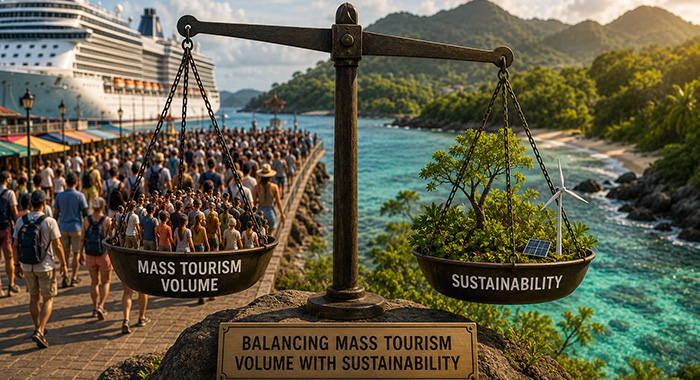
  • Balancing mass tourism volume with sustainability in SVG

    Balancing mass tourism volume with sustainability in SVG

    Every year, hundreds of millions of travelers cross international borders, powering one of the world’s largest global economic sectors. The latest data from UN Tourism underscores just how completely the industry has rebounded from the COVID-19 pandemic: international arrivals have hit 1.52 billion, fully erasing the losses of the lockdown era. But as the sector pulls in record-breaking revenue, a urgent, defining question has emerged for small developing island states: how can nations reconcile the urgent economic need for growing visitor numbers with the finite environmental, infrastructure and social carrying capacity of local communities?

    For decades, St. Vincent and the Grenadines (SVG) stood out among Caribbean destinations as a quiet, unspoiled gem, often called the region’s best-kept secret. While many neighboring Caribbean nations built their tourism economies around sprawling concrete mega-resorts designed for mass visitor volumes, SVG maintained its identity rooted in the exclusive, secluded beauty of the Grenadines islands and the untamed rugged landscapes of its mainland.

    Today, however, the Caribbean nation finds itself at a pivotal developmental turning point. Driven by expanded international flight access through Argyle International Airport and new investments from major global resort chains, SVG recently hit a historic milestone: 120,000 stay-over tourist arrivals, a new all-time record for the country.

    The government’s landmark 30-year concession agreement with Global Ports Holding, which will invest up to EC$250 million to upgrade and expand the Kingstown Cruise Terminal, makes clear SVG’s strategic goal to scale its tourism capacity. The core challenge now is how the nation can adopt growth-focused changes without falling prey to the well-documented infrastructure and social pitfalls of mass tourism — a business model centered on moving huge numbers of visitors via mega-cruise ships, bulk charter flights and large multinational-owned resort chains. Getting this balance right is not just an environmental goal; it is critical to protecting SVG’s unique national identity.

    To assess SVG’s current growth trajectory, sustainable development planners use the framework of carrying capacity: a metric that defines the maximum number of visitors a destination can host at one time without triggering severe environmental damage, eroding local residents’ quality of life, or diminishing the quality of the visitor experience itself. This framework acts as a necessary counterbalance to the unrelenting push for growth that defines mass tourism’s economic logic.

    By design, mass tourism depends on rapid scaling and economies of scale: enormous cruise vessels, hundreds of hotel rooms, and bulk commercial air travel, all designed to generate large collective revenue through thin per-visitor margins and fixed head taxes. For a developing small island nation, the case for pursuing volume-driven growth is compelling on the surface. It delivers immediate, large-scale job creation in construction, hospitality and transport, while generating the foreign exchange needed to fund critical public services for local populations.

    Yet without a enforced carrying capacity framework in place, chasing pure visitor volume will always push a destination past a dangerous tipping point. When raw arrival numbers become the only metric of success, the infrastructure built to support those visitors begins to crack. This reality has shifted the entire regional conversation across the Caribbean: instead of asking how many tourists a country can attract, leaders and planners now focus on a far more precise question: how well can an island’s limited infrastructure absorb the physical and social strain of high-volume arrivals? When this question is ignored, destinations quickly face the same severe economic and social pressures that many Caribbean nations already grapple with today.

    The harmful outcomes of overshooting carrying capacity are not a distant example from other continents; the Caribbean itself offers a full spectrum of working models and their consequences.

    In high-volume destinations like The Bahamas and St. Maarten, economies built on dense tourist arrivals face constant structural strain. When multiple mega-cruise ships dock on a single day, thousands of tourists flood small local hubs in hours. While municipalities collect head tax revenue, the increased costs of road repairs, waste management and public safety create a permanent, heavy drain on local public budgets.

    In Jamaica, decades of prioritizing massive all-inclusive resorts with thousands of rooms has created deep social tensions around public access to coastlines. Data collected by the Jamaica Beach Birthright Environmental Movement (JaBBEM) shows that less than 1% of Jamaica’s shoreline remains fully free and open to the public, due to widespread private coastal development by resort operators.

    SVG has already faced early signs of these tensions within its own archipelago, most notably during past public discussions about community access corridors on the island of Canouan. As the SVG mainland expands its hotel room stock, policymakers face the delicate task of upholding Vincentians’ constitutional right to access their own coastlines, ensuring local residents never become second-class citizens in their own country.

    Beyond environmental and social strains, a second core issue in this debate is “economic leakage” — the share of tourist spending that leaves the destination country to line foreign corporate profits, pay for imported food from international supply chains, and cover salaries for foreign-owned management teams.

    Charles “Max” Fernandez, Antigua and Barbuda’s Minister of Tourism and Investment, estimates that tourism leakage across the Caribbean reaches a staggering 80% of all visitor expenditure. Because small island states typically lack the robust domestic manufacturing base or commercial agricultural capacity to feed thousands of daily transient visitors, a large share of every dollar spent by tourists flows back out to foreign economic hubs.

    This creates a structural policy challenge for SVG. If the nation transitions to a mass tourism model, it must simultaneously expand domestic linkages in agriculture, cultural production and fisheries. Without this parallel investment, SVG will bear 100% of the environmental damage from increased tourism while only retaining a small fraction of the generated wealth.

    When a new generation mega-cruise ship docks in Kingstown, the immediate economic boost for local taxi drivers, street vendors and tour operators is undeniably valuable. But managing the physical footprint of thousands of arrivals in a single afternoon requires careful, data-driven planning to protect SVG’s irreplaceable natural assets.

    As SVG works to rebuild its economy after the devastating impacts of the La Soufriere volcano eruption and Hurricane Beryl, the nation’s top priority must be building long-term structural resilience. As a climate-vulnerable archipelago, chasing high-volume mass tourism cannot only be about boosting short-term GDP growth; it is a high-risk development model that requires immediate domestic protections to absorb future shocks. If SVG invests in expanding tourism capacity, that growth must directly strengthen the nation’s ability to withstand the next inevitable ecological crisis.

    This reality leads to a clear conclusion: the core goal of managing SVG’s tourism sector must shift from tracking raw passenger numbers to a deliberate “value over volume” strategy. Neighboring Caribbean nations have already proven this model works: Dominica has built a lucrative niche around its “Nature Island” branding, while Bonaire draws high-spending visitors with its strictly protected marine parks. Both have intentionally restricted large-scale mass development, and have shown that modern travelers are willing to pay a premium to visit unspoiled, uncrowded, ecologically protected destinations.

    SVG holds a rare, golden opportunity to chart a unique middle path between the two extremes that define Caribbean tourism today. It does not need to choose between the crippling structural strain of high-density cruise hubs or the economic isolation of fully protected untouched eco-islands. Instead, by directing revenue from expanded flight access and modern transport hubs directly into supporting local agricultural cooperatives, protecting traditional cultural crafts, and enforcing strict marine conservation rules, SVG can build a uniquely resilient tourism model. The tourism sector SVG builds should lift all local residents, diversify the domestic economy, and never erode the island’s natural defenses that make it a desirable destination in the first place.

  • Health Ministry launches innovative blood donation platform

    Health Ministry launches innovative blood donation platform

    On World Blood Donor Day, the Ministry of Health of St. Vincent and the Grenadines (SVG) launched a groundbreaking, homegrown initiative to transform regional blood donation systems, positioning the nation as a trailblazer for voluntary blood supply strengthening across the Caribbean. As the first country in the region to adopt this targeted approach to addressing longstanding gaps in blood donation, SVG’s project marks a major step forward in solving a chronic public health challenge that has impacted most small island nations across the area.

    At the core of the new initiative is Blood Text, a pioneering digital donor engagement platform built specifically to address low repeat donation rates. The platform automates the delivery of timely, personalized communication to donors after they complete a donation, creating sustained connections that encourage donors to return for future giving. Blood Text is paired with an unprecedented 2-in-1 official national blood bank website, tailored to deliver age-appropriate information to two distinct demographic groups: donors under the age of 35, and donors aged 35 and older.

    This segmented design directly responds to a well-documented public health trend: a steady decline in blood donation among young adults. Ministry officials emphasized that failure to engage younger generations of donors early will create an impending regional blood supply crisis, as current older cohorts of regular voluntary donors retire from giving over time with no replacement group to step in.

    Across the English-speaking Caribbean, the status quo of blood donation has long been unstable. The vast majority of donations currently come in the form of “replacement donations” — one-off contributions from family members or friends given to support a specific patient in need, with almost no donors choosing to return for regular giving. This means consistent, voluntary donation, the foundational requirement for a sustainable, resilient national blood supply, remains severely limited across the region.

    Overreliance on replacement donations has left regional blood banks unable to maintain consistent stock levels of blood products for routine primary health care, leading to chronic, widespread shortages across the Caribbean. Chief Medical Officer Dr. Simone Keizer-Beache noted that a stable, dependable blood supply cannot be built on emergency reactive donations; it requires a consistent base of regular, voluntary givers. “By staying connected to the donors who have already given, we believe we can help build the dependable supply our hospitals need,” she explained.

    To celebrate the launch of the initiative and engage local young people, the Ministry of Health has opened a national logo design competition for young Vincentian creatives, with full details published on the new blood bank website, BloodBankVC.org. The public is invited to visit the site to learn more about the initiative and how to participate in blood donation.

    Developed as a locally-led solution, the program is designed to be scalable and cost-effective, with plans to roll the model out across all member states of the Organisation of Eastern Caribbean States (OECS) as an initial expansion step. The platform’s lightweight architecture makes it easy to integrate into the existing blood bank and health system infrastructure of small island states, aligning with broader regional goals to strengthen primary health care delivery and build overall health system resilience across the Eastern Caribbean.

  • Former MP hails blind student’s historic CPEA success, urges corporate support

    Former MP hails blind student’s historic CPEA success, urges corporate support

    An 11-year-old blind student from St. Vincent and the Grenadines (SVG) has captured national attention for her extraordinary performance in the 2024 Caribbean Primary Exit Assessment (CPEA), earning a spot at one of the country’s most prestigious secondary institutions. Former East St. George Member of Parliament and ex-finance minister Camillo Gonsalves, who left office after November 2023’s general election, shared the inspiring news in a public Facebook video posted Saturday, highlighting what he calls a defining milestone for inclusive education in the nation.

    Faith Grant, who was born without sight, completed her primary education at Fair Hall Government School, an institution that has pioneered a mainstream inclusive education programme for students with physical and learning disabilities. Out of 1,760 CPEA test-takers across SVG, Grant ranked 43rd overall and 19th among all female students — a result that secured her admission to the elite Girls’ High School (GHS).

    Gonsalves emphasized that Grant took the exact same standardized examination as every other student, with only targeted accommodations made to help her access test content. A trained invigilator read all questions aloud to her, and for visual components such as geometric diagrams, test staff described shapes by tracing their outlines on her hand or back to help her conceptualize the information. Despite these additional barriers, Grant not only passed the high-stakes exam but outperformed the vast majority of her sighted peers.

    The former MP, who has followed Grant’s academic journey closely for years, shared that the young student has long dreamed of attending GHS, a goal that has now become a reality. He described Grant as a multilingual, high-energy learner with an insatiable love of literature and a natural aptitude for mathematics and science. At Fair Hall Government School’s graduation ceremony held June 12, Grant already received multiple academic awards, and she now stands as the school’s highest-ranking CPEA graduate in this year’s cohort.

    Gonsalves credited much of Grant’s success to the intentional inclusive education model implemented at Fair Hall Government School, led by principal Angella Kydd Roberts. Several years ago, school leadership made a deliberate decision to integrate students with physical and learning challenges into the general student body, providing them with the same core curriculum as their peers while offering specialized support. The school counts a number of faculty with formal special education training, and even uncertified staff have embraced the institution’s mission, adapting their teaching methods to meet diverse student needs with creativity and care. Grant is not the first student with special needs from Fair Hall to advance to secondary education, but Gonsalves confirmed she is the highest-achieving in the school’s history based on CPEA outcomes.

    Placing Grant’s achievement in historical context, Gonsalves noted that when he was a child, blind students in SVG were excluded from mainstream primary education entirely, let alone offered access to elite secondary schools. Grant’s admission to GHS marks a historic first for the nation, and Gonsalves framed her success as both a personal victory and a national milestone for SVG’s evolving education system. While he acknowledged that additional accommodations will be needed to support Grant during her secondary studies, he expressed full confidence in her ability to overcome any future obstacles.

    To support Grant’s transition to GHS, Gonsalves has issued a public appeal to corporate entities and good corporate citizens across SVG to provide financial support for specialized assistive technology. Grant is currently learning braille, but many advanced secondary school textbooks and learning materials — particularly those with complex diagrams and illustrations — are not available in braille format. Modern adaptive tools can convert these materials into accessible formats for Grant, but the equipment carries a high price tag that is out of reach for most families. Gonsalves urged local businesses to connect with Grant’s mother to offer support that will remove barriers to her continued academic success.

    Closing his message, Gonsalves emphasized that Grant’s achievement was a collective effort, thanking her family, the school’s principal, and all of her teachers for the support that brought her to this point. “It really has been a village that has taken Faith to this point,” he said. He ended with a hopeful pun on Grant’s first name, echoing the SVG national anthem: “I know she’ll go further, and I know that our faith will see us through. Big up.”

  • ‘Not another quarry’ – officials, residents contrast Roseau, Richmond operations

    ‘Not another quarry’ – officials, residents contrast Roseau, Richmond operations

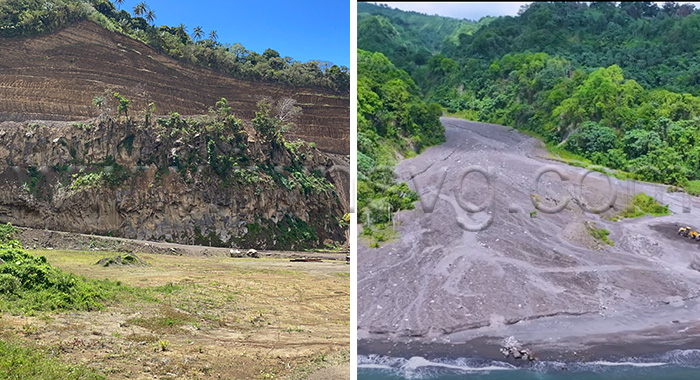
    A proposed sand and aggregate harvesting project along St. Vincent and the Grenadines’ Roseau River has emerged as a flashpoint of conflict, pitting government officials against North Leeward residents still grappling with the fallout of the divisive 2022 Richmond quarry project. During a recent public forum hosted in Golden Grove as part of North Leeward MP Kishore Shallow’s “North Leeward Matters” community outreach series, senior government and technical leaders went to great lengths to emphasize that the Roseau initiative differs sharply from the foreign-owned Richmond operation that divided local communities years ago.

    Shallow, a representative of the New Democratic Party government that took office in November 2025, framed the Roseau project as a deliberate corrective to the mistakes of the previous Unity Labour Party administration’s Richmond quarry deal. That 2022 agreement leased 59 acres of prime state-owned agricultural land to St. Lucian private businessman Rayneau Gajadhar for a 30-year full-scale stone quarry operation, a move local residents decried as an unlawful “land grab” and catastrophic environmental harm. Shallow told attendees the Richmond project has already blocked critical national development, revealing that the World Bank rejected funding for a planned recreational site in the area specifically due to unregulated pollution from the quarry. He added that the new government plans to review the existing Richmond quarry contract and order a full independent environmental assessment to address longstanding community grievances.

    By contrast, Shallow and other officials characterize Roseau as a low-impact, state-controlled sand harvesting operation that leverages naturally deposited volcanic river aggregate rather than large-scale excavation. Health, Wellness, Environmental Health, and Energy Minister Daniel Cummings, a trained water engineer, outlined core technical differences between the two projects: the Roseau operation will not require blasting, will not remove topsoil or overburden, and will produce far less dust and water pollution than Richmond. Unlike the Windward Coast’s Rabacca site, where rough seas make aggregate export dangerous and inefficient, Cummings noted that Roseau’s calm Leeward coast waters allow for safe barge loading, creating a steady state revenue stream that can be reinvested in domestic public infrastructure.

    Transport, Infrastructure, and Physical Planning Minister Nigel “Nature” Stephenson acknowledged that the Richmond project has left deep “pain” and “environmental scars” that have eroded community trust in new resource development projects in North Leeward. He stressed that unlike Richmond, which cleared large swathes of forest and agricultural land for full-scale quarrying, Roseau will only collect loose aggregate already deposited by natural river and volcanic activity, causing minimal disruption to local ecosystems. Critically, Stephenson added that all revenue from the Roseau project will go to the Government of St. Vincent and the Grenadines for public benefit, in contrast to Richmond, where most profits left the country for foreign investors. “North Leeward will benefit like you have not seen over the past five or even 20 years,” he told attendees.

    Kem Bartholomew, CEO of the state-owned Barbados Regional Aggregates and Stone Authority (BRAGSA) which will lead the Roseau operation, reinforced that state control is the key distinction from Richmond’s private foreign ownership. He noted that BRAGSA has already completed a required environmental and social impact assessment (ESIA) for Roseau, a step activists say the Richmond project skipped when it moved ahead ahead of regulatory approval. Bartholomew added that the 3-kilometer Roseau project site holds an estimated 4.2 million cubic meters of aggregate with a gross value in the tens of millions of dollars, arguing that allowing the material to simply wash out to sea would be a wasted national opportunity.

    Reynald Murray, the environmental consultant who prepared Roseau’s ESIA, backed up officials’ technical claims, confirming that the project will not involve topsoil removal, blasting, or sediment-causing washing that would pollute rivers and nearshore waters. Even so, Murray cautioned that the project carries a concrete, underdiscussed risk to local fisheries that must be managed proactively. He proposed that Roseau be run as a multi-use bay with shared governance between BRAGSA, local fishers, and tourism operators, rather than the closed single-use industrial site that Richmond became.

    Despite officials’ repeated assurances, local community leaders, indigenous rights advocates, and residents say the Roseau project already mirrors the Richmond project’s most problematic patterns. Adonis Charles, chair of the North Leeward Preservation Front, said the project mirrors Richmond’s history of rushed, limited consultation with affected communities before operations begin. Charles noted that the Richmond lease cost the developer just EC$12,000 in annual rent and saw nearly every local environmental and land use law broken, warning the new government against repeating that pattern. “Don’t get us wrong, we are all for development, but development must be balanced,” Charles said, adding that he hopes the Golden Grove meeting is not the final opportunity for community input.

    Activist Adrian “Tari” Codougan argued that rebranding large-scale extraction as “sand harvesting” does not fix the core problem of exclusion: the project was already underway before officials began engaging local communities whose livelihoods would be affected. Codougan proposed a national legal requirement that 25% of net profits from all community-based resource extraction be returned directly to the host community, noting that Richmond residents have never seen fair, proportional benefits from the quarry. Local fisherfolk added that the Roseau River mouth extraction poses direct risks to fishing livelihoods, already strained by the 2021 volcanic eruption and ongoing pollution from Richmond.

    In closing, Shallow pushed back on community concerns, framing the Roseau project as a once-in-a-generation “golden opportunity” for both North Leeward and the entire country. He acknowledged that ongoing consultation and tangible community benefits are required to move the project forward, maintaining that the new government has learned critical lessons from the Richmond quarry controversy.

  • SVG agri-projects go to ‘deal room’ after minister’s pitch in Barbados

    SVG agri-projects go to ‘deal room’ after minister’s pitch in Barbados

    Against a regional backdrop of rising food import dependency, climate-driven agricultural shocks and supply chain disruptions, St. Vincent and the Grenadines (SVG) has positioned eight targeted agriculture and food system projects in the Caribbean’s regional investment marketplace, Agriculture Minister Israel Bruce has announced. Two of these proposals have already advanced to the advanced negotiation stage known as the “deal room” following the high-level Food Systems Investment Forum held in Barbados, which centered on mobilizing equity capital to strengthen Caribbean food security.

    Bruce, who accompanied the SVG delegation to the forum that brought together governments, development partners and private financial stakeholders under the theme “Mobilising Equity Capital for Resilient Food Systems in the Caribbean”, detailed the projects and early investor feedback during a post-forum press conference in Kingstown.

    Across a range of agricultural subsectors, SVG brought eight distinct investment proposals to the table, covering agro-processing expansion, youth agricultural entrepreneurship, irrigation infrastructure upgrades, national livestock processing and local poultry production scaling. The full slate of projects includes: a $5.5 million national abattoir development; a $4 million recapitalization plan for local agricultural marketing brand VincyFresh; a $12.8 million arrowroot crop revitalization program; a $6 million initiative to support youth entering agribusiness; a $5.3 million expansion of upgraded market depots in Lauders, La Croix and Langley Park; a $5 million national poultry production facility; the $8.28 million Rabacca irrigation infrastructure project; and the $2.58 million Richmond Valley irrigation project.

    Bruce highlighted that the youth-focused project directly responds to a pressing demographic challenge facing SVG’s agricultural sector: a rapidly ageing farming base that requires intentional policy intervention to drive generational renewal. The market depot expansion, meanwhile, is designed to elevate the three windward-side upgraded facilities beyond basic storage and processing functions, turning them into robust regional hubs that can connect local producers to new domestic and export buyer networks.

    After the forum’s pitching process, which allowed participating nations to showcase their priority projects to potential financers, two SVG proposals – the VincyFresh recapitalization and the arrowroot revitalization program – earned shortlisting for deeper due diligence and negotiation in the forum’s dedicated deal room. Bruce confirmed that active negotiations with interested financiers are already underway, noting that premature public disclosure of specific investor identities would be inappropriate while talks remain ongoing. “We hope that there’ll be fruit borne out of these two deal rooms. We are keeping our fingers crossed,” he told reporters. Even without finalized agreements, Bruce framed the shortlisting as an encouraging early signal that international financiers see strong potential for value addition and export growth in SVG’s agro-processing sector.

    Beyond the two shortlisted projects, all eight of SVG’s proposals have been added to a regional investment “deal book” – a centralized catalogue that will be used to market Caribbean agricultural projects to potential funders across the region and globally. Bruce explained that this centralized, regional packaging represents a shift from the outdated model of ad-hoc bilateral investment pitches, allowing Caribbean nations to present a coordinated, professional portfolio of opportunities to the global investment community.

    One of the most strategically significant projects on the slate, the $5 million national poultry facility, ties directly to SVG’s domestic policy goals of cutting food import costs and boosting national food sovereignty. Bruce noted that SVG currently spends hundreds of millions of dollars annually on imported poultry, and the government is laser-focused on expanding local production to reduce this import burden while strengthening domestic food security. The Barbados forum, he said, offers a critical pathway to secure equity partners or concessionary financing to move the poultry facility from planning to implementation.

    Outlining his administration’s approach to agricultural financing, Bruce established a clear priority hierarchy designed to protect public finances and avoid unnecessary debt burdens for taxpayers: grant funding is the preferred first option, followed by public-private partnerships, then concessionary loans, with standard commercial loans ranked as the last resort. He framed this strategy as a core commitment to fiscal prudence, focused on creating economic breathing room rather than adding unsustainable fiscal pressures.

    Placing SVG’s participation in the broader context, Bruce noted the forum addressed shared regional challenges: climate-fueled agricultural shocks, global supply chain disruptions, and skyrocketing food import bills across the Caribbean. The overarching goal of the gathering is to support a regional transition away from the current model of heavy reliance on food imports and concessional lending, toward climate-resilient food systems supported by targeted equity and blended finance.

    Bruce also connected the high-level regional investment push to longstanding concerns raised by local SVG farmers, noting that when his New Democratic Party was in opposition, farmers consistently identified three top priorities: access to expanded market opportunities, solutions to praedial larceny, and improved farm access roads. “You can see that this mission was focused on market opportunities and access roads,” he explained, adding that all eight projects pitched in Barbados – from the abattoir and poultry facility to the irrigation schemes and youth investment plan – build on campaign commitments and ongoing domestic agricultural upgrades.

    While Bruce stressed that no firm financing commitments have been secured for any of the projects to date, he emphasized that securing spots in the deal room and regional deal book are critical foundational steps to attract investment. He committed to sharing further public updates as negotiations progress, framing the Barbados trip as part of a broader, long-term strategy to secure grants, equity and blended finance to transform SVG’s agriculture sector. Ultimately, he said, these investments will help shift SVG from an ageing, under-capitalized farming sector to a dynamic, youth-driven, export-focused industry that is more resilient to global and climate shocks.

  • Boy, 9, undergoes 2 brain surgeries in 8 months since beating by schoolmate

    Boy, 9, undergoes 2 brain surgeries in 8 months since beating by schoolmate

    Six months after a brutal assault at Kingstown Preparatory School (KPS) left a 9-year-old boy requiring life-saving brain surgery, his single mother is opening up about the relentless physical, emotional, and financial toll of the attack, speaking exclusively to iWitness News on condition of anonymity – a request the family first made in 2025 and has reaffirmed for this reporting.

    The unprovoked attack unfolded on October 22, 2025, when an older student at KPS grabbed the young boy by the head, slammed it into a classroom door, then forced his skull onto unforgiving concrete flooring. At the time, the boy’s mother had been working overseas, and she was forced to cut short her employment and rush back to St. Vincent and the Grenadines (SVG) to authorize urgent medical intervention. What followed was far worse than anyone initially expected: after surgeons at Milton Cato Memorial Hospital (MCMH) performed an emergency craniotomy to access the boy’s brain, they discovered a severe case of meningitis that had left 100 milliliters of pus trapped inside his skull, a complication the family had no idea was developing until the procedure began.

    After five months of intensive recovery, the young boy made his first tentative return to classroom learning on March 2, 2026. That small win was cut short, however, when he was required to leave school just three months later on June 8 to undergo a second major procedure: a cranioplasty to replace a bone segment in his right forehead. The four-hour operation was deemed a clinical success, but full recovery is projected to take a full year. Now discharged from the hospital, the boy requires daily at-home wound dressing from his mother, who has been unable to resume her overseas job to prioritize his care.

    The mother described her emotional state as a constant, exhausting whirlwind of anger, frustration, crippling anxiety, and deep-seated fear, with overwhelming fatigue hanging over every day. “This is the second surgery, and it feels like we’re right back to square one,” she shared. “Some days I feel anxious, while some days are normal; but some days, I feel really tired. I don’t even know how to feel most days – I’m just overwhelmed.”

    The long-term health impacts of the assault have already reshaped the boy’s life permanently. Before the attack, he had no history of seizures or vision issues, but now he experiences regular headaches, blurred vision in his right eye, sudden seizure episodes, and recurring fevers that require lifelong antiseizure medication. While he adapted well to his brief return to school and has kept close friendships with his classmates, his mother notes he has grown far quieter than he was before the attack, rarely opening up about the pain he endures.

    What has compounded the family’s hardship, the mother says, is the complete lack of outreach from key parties that should have stepped forward to support them. Only KPS school leadership and the institution’s guidance counselor have checked in consistently with the family and offered ongoing concern. To date, she has received no communication whatsoever from the Ministry of Education, nor from the family of the older student who carried out the attack. “I don’t understand how something like this can happen and I have never heard from the ministry. This is really hard for me at times,” she said.

    As a single mother currently living with her mother and siblings in SVG, she says she has been left without sustained formal support, and the situation often feels deeply depressing. Still, she expressed sincere gratitude to the community members and organizations that have stepped up to fill the gap: businesswoman Karen Veira of Singer and Oxygen Mas, the leadership of Stubbs Primary School, the Calliaqua Methodist Church, KPS administration, and her immediate family, all of whom have provided critical assistance in the months since the attack.

    Looking ahead, the mother says she cannot predict when her son will be able to resume full-time schooling, as his return to the classroom requires formal medical clearance from his treating neurologist. He has already missed scheduled end-of-term exams due to his second surgery, adding another layer of uncertainty to his education. The mother also confirmed that she plans to consult with a legal advisor to pursue next steps in addressing the assault and its catastrophic aftermath.