标签: Saint Lucia

圣卢西亚

  • Government to pay school cooks, janitors in August

    Government to pay school cooks, janitors in August

    CASTRIES, Saint Lucia – The government of Saint Lucia is moving forward with two landmark policy changes aimed at advancing equity in education and supporting low-wage education workers, announced by Education Minister Kenson Casimir this Wednesday. Speaking during the debate over the national Appropriation Bill in the country’s House of Assembly, Casimir outlined details of the two progressive initiatives set to roll out in the coming term.

    The first reform centers on expanding the island nation’s period poverty relief program, which has already delivered free menstrual sanitary products to all secondary school students since its launch in the 2024/25 fiscal year. Moving forward, the initiative will extend coverage to primary school learners, with plans to eventually include students enrolled at Sir Arthur Lewis Community College, bringing free access to students across every academic level in the country.

    Officials designed the program from its inception to address two critical interconnected challenges: reducing the financial strain placed on low and middle-income households, and eliminating barriers to consistent school attendance for students who struggle to access affordable menstrual products. By expanding the program to cover all grade levels, policymakers aim to ensure no student is forced to miss class or manage menstrual hygiene in unsafe conditions due to cost barriers.

    In a second, separate announcement, Minister Casimir confirmed that for the first time in the country’s history, school cooks and janitorial staff will receive full pay during the annual August vacation period. To fund this commitment, the government has allocated $407,000 for cook salaries and an additional $558,000 for sanitation worker pay, bringing the total allocated funding to just under $1 million. This policy follows a similar step the current administration took in 2025, when it moved to guarantee full vacation salaries for temporary teachers, closing another gap in income support for education workers.

    Hundreds of school support staff across Saint Lucia previously went without any income during the six-week August break, as their contracts only covered active school terms. The new guarantee is expected to provide much-needed financial stability to these workers, many of whom rely on the monthly income to cover basic household needs.

  • Climate experts say hotter, drier days ahead

    Climate experts say hotter, drier days ahead

    Leading regional climate research institutions have issued an urgent warning that the Caribbean region is likely to face two consecutive years of unusually high temperatures and prolonged dry conditions, driven by a strengthening El Niño event that raises the likelihood of widespread drought, public health risks, and far-reaching economic fallout. The joint alert comes from two leading regional bodies: the Caribbean Institute of Meteorology and Hydrology (CIMH) and the Climate Studies Group Mona at the University of the West Indies. Both organizations are calling on every sector of society, from national governments and private businesses to small-scale farmers and individual households, to launch immediate preparedness measures to mitigate potential damage.

    Climatologist Cedric Van Meerbeeck explained that current long-range forecasts point to extended periods of below-average rainfall paired with sustained spikes in temperature and humidity across much of the region. This combination of conditions does not only put severe pressure on already strained freshwater supplies; it also threatens to undermine agricultural output and create measurable risks to public human health.

    Looking at historical climate patterns, major El Niño events have repeatedly triggered extreme, long-lasting drought across the Caribbean. Notable examples include the severe dry spells recorded in 2009–2010 and again in 2014–2016. Experts emphasize that Eastern Caribbean nations, which are already struggling with ongoing dry conditions, face a particularly challenging outlook: water reserves may recover far more slowly than usual even once the annual wet season gets underway.

    Beyond the immediate threat of drought, the region is bracing for a cascade of overlapping climate hazards. Extreme heat events will increase the risk of uncontrolled wildfires across dry landscapes, while marine heatwaves threaten to trigger widespread coral bleaching that can permanently damage fragile Caribbean marine ecosystems that underpin tourism and fishing industries.

    University of the West Indies professor Michael Taylor, a leading climate researcher in the region, warned that current forecasts point to the emergence of what he termed a “multi-hazard regime”. In this scenario, heat, drought, and marine climate impacts do not occur in isolation; they overlap and amplify each other, creating more severe risks than any single hazard would pose alone. Taylor stressed that these compound extreme events pose an existential threat to the livelihoods of millions of Caribbean residents, and require coordinated, cross-border collective action to address effectively.

    While El Niño is historically linked to a less active Atlantic hurricane season, climate specialists are quick to note that hurricane risk has not been eliminated entirely. Even a single intense storm or a short period of extreme rainfall can cause catastrophic damage to Caribbean communities, as demonstrated by past destructive events including Hurricane Andrew and Tropical Storm Erika.

    The potential impacts of this El Niño event extend far beyond immediate weather-related disruption. Reduced rainfall and higher average temperatures will place additional strain on already vulnerable water and energy infrastructure, cut into expected agricultural yields, and exacerbate public health risks — ranging from a rise in heat-related illnesses to growing challenges maintaining safe drinking water quality across the region.

    Wider economic ripple effects are also already on the horizon. Climate-driven disruptions are already altering key global trade routes that the Caribbean depends on, most notably the Panama Canal, where ongoing drought conditions have forced restrictions on shipping traffic. These disruptions are expected to trickle down to Caribbean supply chains, driving up the cost of imported goods for local consumers.

    Climate specialists say that ongoing monitoring of evolving conditions remains critical, noting that the accuracy of El Niño projections typically improves significantly starting in May. Updated, detailed guidance will be presented at the upcoming Caribbean Climate Outlook Forum, where regional climate specialists will share refined projections ahead of the annual wet and hurricane seasons.

    Regional officials reiterated that early public awareness and proactive preparedness will be the most critical factors in reducing the potential damage that this developing climate pattern could inflict on communities across the Caribbean.

  • Saint Lucia earns more medals in regional table tennis

    Saint Lucia earns more medals in regional table tennis

    The small Caribbean nation of Saint Lucia’s table tennis community is basking in an unprecedented wave of success, after its young athletes claimed four medals across disciplines at the 2025 ITTF-Americas Caribbean Youth Championships, hosted in Santo Domingo, Dominican Republic. The historic achievement carries extra meaning for local fans, as the medal haul landed right alongside the global celebration of World Table Tennis Day on April 23.

    The Saint Lucian delegation got off to a strong start early in the tournament, locking in a bronze medal with a third-place finish in the men’s team event. Over the following two days of competition at Parque del Este, the young competitors added three more medals to their tally, including one regional title: the women’s doubles gold, plus bronze medals in both the Under-15 boys’ singles and Under-19 girls’ singles events.

    The standout performer of the delegation was 19-year-old Shatal Charles, who walked away from the tournament with two medals. Partnering with Stuti Kashyap – the top-ranked female youth player in the Caribbean region, representing Antigua & Barbuda – Charles claimed the women’s doubles gold in a dramatic five-set final against Trinidad and Tobago’s Chloe Fraser and Jordan Thong. The pair dropped the second and third sets after taking the opening match, but rallied to win the final two sets comfortably, closing out the 3-2 victory with set scores of 13-11, 10-12, 10-12, 11-3, 11-4.

    Their path to the final was equally impressive. In the quarterfinals, they delivered a dominant 3-0 sweep over Curacao’s Mikha Boekhoudt and Trinidad and Tobago’s Jannah Mohammed, winning all three sets by comfortable margins. They followed that up with a 3-1 semi-final win over the home crowd’s favorites Eduanni Mercedes De La Cruz Figueroa and Yesmeily Guerrero of the Dominican Republic to secure their spot in the title match.

    In addition to her doubles gold, Charles earned a bronze medal in the Under-19 girls’ singles event, turning in a series of gritty comeback wins against higher-ranked opponents to advance deep into the competition. After an opening-round loss to Fraser on the tournament’s first day, Charles rebounded quickly, pulling out a tense 3-2 win against the Dominican Republic’s Yandra Arianna Mejia. She followed that with a nail-biting 4-3 win over Guerrero in the Round of 16, then notched another 4-3 victory against Naymaris Hernandez Martinez – a former Caribbean Under-15 champion from Puerto Rico – to advance to the singles semi-finals.

    Saint Lucia’s head coach Chris Wells praised Charles’ mental resilience following the run, noting that she had defeated two opponents who had beaten her handily in past tournaments. “Shatal had two very tough matches,” Wells explained. “The first match versus the Dominican Republic player was a girl that destroyed her in straight sets two years ago. The second girl from Puerto Rico was a former Caribbean Under-15 Champion. Last year, Shatal lost in quarterfinals.”

    Though Charles dropped the semi-final match 4-0 to her doubles partner Kashyap, her semi-final finish secured her a bronze medal, marking a massive personal and national milestone for the young athlete. She has already signaled her intent to return to the regional championships in 2027, targeting even stronger results.

    Fifteen-year-old Leshon Francis was another standout for Saint Lucia, adding an individual bronze medal in the Under-15 boys’ singles to the team bronze he earned earlier in the tournament. Francis dominated his qualifying group, sweeping three straight matches 3-0 against Nyal Bushell of Barbados, Ajani Spencer of Jamaica, and Ysminsky Sosa of the Dominican Republic to top the group standings and advance to knockout play.

    His strong form carried into the knockout rounds: he delivered another 3-0 sweep of the Dominican Republic’s Rommel Pepen in the Round of 16, then notched a 3-1 win over the Dominican Republic’s Edwin Ventura to reach the semi-finals. Francis’ run ended there with a 3-0 loss to Puerto Rico’s Matthew Cao, but his semi-final finish earned him a well-deserved bronze medal.

    Two other Saint Lucian competitors turned in strong performances despite not winning medals: Manie Eleuthere topped his preliminary group to advance to the quarterfinals of the Under-19 boys’ singles event, where he fell 4-0 to defending champion Rafael Cabrera of the Dominican Republic. Khamari Harris failed to advance out of group play in singles, but paired with Mekhi Simmons of Antigua & Barbuda to reach the quarterfinals of the boys’ doubles event.

    For a small island nation with a relatively small table tennis program, the four-medal haul marks one of the strongest showings in Saint Lucia’s youth table tennis history, and has given the local community a major boost as it celebrates World Table Tennis Day this year.

  • Fevrier makes Six Star marathon history for Saint Lucia

    Fevrier makes Six Star marathon history for Saint Lucia

    On April 22, 42-year-old runner Ava Fevrier etched her name into Caribbean athletics history by crossing the finish line of the Boston Marathon, securing her place among an exclusive global group of endurance athletes and claiming the prestigious Six Star Medal for completing all six Abbott World Marathon Majors.

    Since the accolade was first introduced in 2016, fewer than 25,000 runners across the globe have earned this distinguished honor. Fevrier, a native of the Saint Lucian coastal town of Dennery, is not just the first woman from her island nation to claim this achievement—she also ranks among fewer than 50 Six Star medalists from the entire English-speaking Caribbean.

    Fevrier’s journey to this historic milestone began unexpectedly in the wake of the COVID-19 pandemic. After watching urban marathon events on YouTube during global lockdowns, she developed a passion for road running, and over just two years, she checked off all six major races: Tokyo, Boston, London, Berlin, Chicago, and New York City. She completed the 2026 Boston Marathon in a time of 4:17:10, capping off her incredible run of achievements. While she already holds the Saint Lucian national women’s marathon record of 3:48:41 set at the London Marathon, Fevrier said her only goal for Boston was simply to cross the finish line intact.

    Reflecting on her experience at the 2026 Boston Marathon, Fevrier shared that race weekend was overwhelmingly positive. “The whole weekend in Boston has been pretty amazing, just very relaxed and a lot of people so that just has made the environment exciting. The weather was perfect for racing, and the bottom line was to have a good race, to feel strong the entire race, which I did until like maybe the last three miles,” she explained in an interview with local outlet St Lucia Times.

    She added that she approached the hilly Boston course with a deliberate strategy: “I really started this race not thinking about time. I just wanted to celebrate everything I’ve done, but I also just wanted to have a strong race, especially knowing that there were all these hills coming up the last half. So, it really was a tactical race to make sure that I could survive the last half, knowing there are all these hills, and I ran every single hill. I never walked up a hill. I never stopped on the hill.”

    Fevrier gave public credit to her training and racing teammates for their unwavering support throughout her Six Star journey, noting that they ran alongside her for parts of the Boston course, stopping only to greet cheering spectators and pick up a Saint Lucian national flag from a local cheer station. For Fevrier, this achievement carries a unique weight that her national record does not.

    “Yeah, this one is different,” she stated. “The records are pretty impressive, but all records can be broken, right? The goal is for us to find those fast people and shatter those records that I’ve put in place. But that Six Star, being the first female Six Star, no one can take that away from me. It will always be there. It will always be something that others would hopefully follow. So it’s nice that that’s just stamped in its place and no one can actually remove it.”

    While Fevrier frames her national record as a milestone meant to be surpassed, she says she is “over the moon” to have earned her place in the Six Star Hall of Fame. She follows compatriot Nitin Sharma, who became the first Saint Lucian man to earn the Six Star Medal in 2025 before going on to complete the extra Seven Stars distinction by adding the Sydney Marathon to his resume. Fevrier says she now plans to pursue that same seven-race achievement next.

    In the broader eastern Caribbean region, Fevrier is only the second woman to hold the Six Star honor, joining Philomena Robertson of Grenada, who completed her set at the Tokyo Marathon earlier this year. By 2027, two more Saint Lucian runners—current Five Star holders Pamella Edward and Che Odlum-De Vivenot—could join the exclusive group.

    Fevrier now hopes her historic achievement will inspire more people across her home island to take up endurance running. In a message to local runners, she said, “I just want people to give it a try. Start with that 5K, start with that 10K, and build up to a half and then build up to a marathon. It’s something I’m hoping people become more interested in, and I’m starting to see some of that. There’s one runner we found through the running community in the States, and he’s started running 10-milers.”

    She emphasized that elite endurance marathon running is an attainable goal for Saint Lucian athletes, even if it requires significant commitment: “And that’s kind of the idea, to kind of help people see that this is attainable… Endurance running is attainable, and it does take training just like the middle distances or the sprints. It does take as much work as track and field. We are working our butts off, all through the seasons. And even getting to the majors itself is a feat. It takes a lot of work, scheduling, finance, training, travelling, so it’s a lot, but I just want people to try. See if you like it, and hopefully we can find people who will really build up this part of the sport.”

    For Fevrier, the sport has already transformed her life for the better, after she first discovered it by chance during pandemic lockdowns. She shows no signs of slowing down now, with new goals that extend beyond her own racing: she is focused on growing the local running community in Saint Lucia and encouraging more local athletes to follow in her footsteps and claim their own Six Star Medals.

  • Prime suspect in 2024 Nke St Ville homicide captured

    Prime suspect in 2024 Nke St Ville homicide captured

    In a coordinated pre-dawn law enforcement operation in Vieux Fort, Saint Lucia, authorities have taken into custody the primary suspect wanted for a 2024 murder that has lingered on the island’s unsolved crime docket for more than a year.

    The Royal Saint Lucia Police Force confirmed that joint teams from the southern divisions of the Gangs, Narcotics and Firearms Unit and the Tactical Response Unit launched the targeted operation at a property on St Paul’s Lane at approximately 4:00 a.m. local time on April 22, 2026. The operation was centered on a court-authorized search warrant executed at the residential address of Carlton Charles, where investigators had received intelligence that the long-sought fugitive was hiding.

    During the systematic search of the property, officers located and arrested Dan Decuoine Phillip, the identified main suspect in the fatal shooting of Nke St Ville. St Ville was killed in an incident in Gros Islet on September 8, 2024. Law enforcement officials noted that an active arrest warrant had been issued for Phillip shortly after the 2024 killing, but the suspect had successfully evaded capture for nearly 19 months prior to Wednesday’s operation.

    Alongside Phillip’s apprehension, two additional individuals were also detained at the scene. The pair are currently facing expected charges of harbouring a wanted fugitive, per official police statements. The arrest marks a major breakthrough in the high-profile homicide case, bringing the primary accused into custody after months of investigative work and targeted intelligence gathering.

  • Blackheart shifts to U20 format, with $60,000 up for grabs

    Blackheart shifts to U20 format, with $60,000 up for grabs

    For nearly three decades, the Blackheart Football Tournament has stood as a cornerstone of senior-level competitive football across Saint Lucia. But in a landmark break from its 29-year history, the 2026 edition of the tournament will welcome only under-20 players, marking a transformative pivot designed to grow the next generation of football stars on the Caribbean island.

    Organized by tournament sponsor Blackheart, the format change responds to a critical unmet need in Saint Lucia’s local football ecosystem. Since the tournament launched as a senior competition back in 1997, grassroots youth football has long lacked the structured support and high-profile showcase opportunities available to established senior players. For Blackheart Chief Executive Officer David “Shakes” Christopher, the decision to restructure the tournament was not just a change of rules—it was a necessary investment in the future of the island’s sport.

    “Youth athletes have far more foundational needs than senior players who have already built their careers,” Christopher explained in comments ahead of the tournament kickoff. “Young players need dedicated support systems to grow, and that’s exactly what this new format is designed to deliver.”

    This year’s restructured tournament has also raised the bar for incentive, offering a total prize pool of $60,000 to competing teams. The breakdown of rewards allocates $30,000 to the first-place squad, $15,000 to runners-up, $10,000 to the third-place team, and $5,000 to the fourth-place finisher. All prize winnings are earmarked to further ongoing youth football development initiatives across the island, extending the event’s impact far beyond the final whistle.

    Yet for Christopher, the value of the new under-20 format extends well beyond the financial rewards on offer. Organizers have already held preliminary discussions to create clear development pathways for standout participating teams and players, including opportunities to compete in higher-profile regional tournaments—most notably competitive events hosted in Guyana.

    “This isn’t just about taking home a cash prize,” Christopher noted. “Young players get the chance to go up against top regional talent in Guyana, test their skills against some of the best young players in the area. That opportunity to take a small first step and turn it into a big leap in their career is the real reward here. It gives them a foothold to grow that they wouldn’t get anywhere else.”

    For local football fans eager to see the new format in action, the event will officially get underway with a pre-tournament warm-up festival on May 1 at the popular Marchand Grounds venue. Following the opening celebration, round-robin and knockout fixtures are scheduled to run from May 16 through to the final championship match on June 20, giving weeks of high-stakes youth football action for supporters across the country.

  • More Support for vulnerable families, elderly and disabled

    More Support for vulnerable families, elderly and disabled

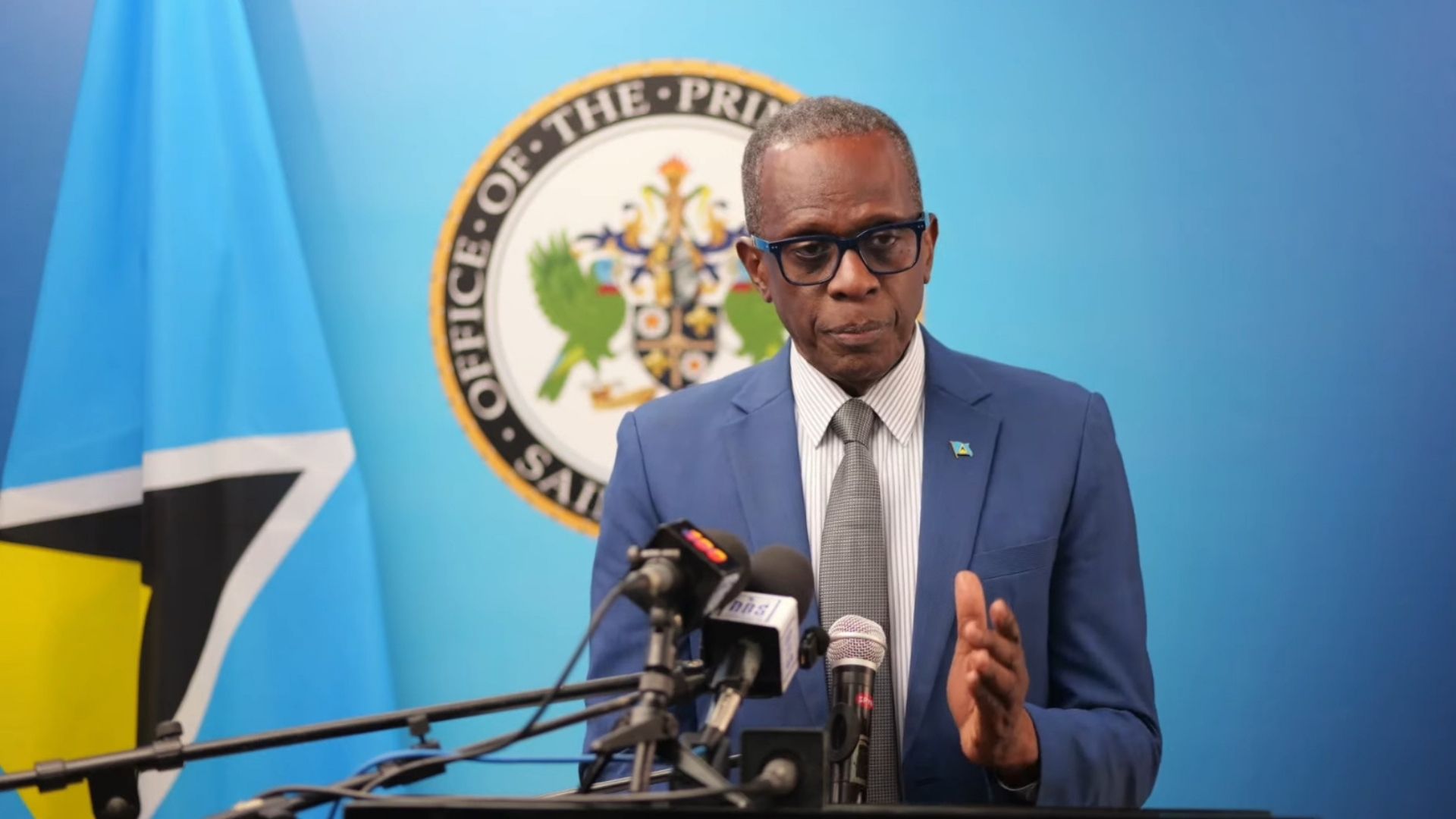
    During the recent presentation of the 2026/2027 national budget to the House of Assembly, Prime Minister Philip J. Pierre of Saint Lucia has outlined a bold, equity-centered package of social protection and inclusion measures designed to uplift vulnerable populations, curb violent crime, and drive inclusive national development through targeted public investment.

    Reaffirming the administration’s core commitment to closing social gaps and ensuring full participation for all members of Saint Lucian society, Pierre’s budget combines expansions to existing support programs with a slate of new, community-focused initiatives addressing longstanding social challenges.

    A centerpiece of the new plan is the Public Assistance Programme (PAP), a targeted cash transfer scheme that currently delivers critical financial support to roughly 3,500 low-income households across the island. To maintain the program’s effectiveness and ensure support reaches those who need it most, the Ministry of Equity has launched a comprehensive eligibility review, updating beneficiary rolls to reflect changing community needs.

    Public safety, particularly the prevention of crime and violence among at-risk young people, is another top priority outlined in the budget. Working in cross-sector partnership with the Saint Lucia Social Development Fund, local non-governmental organizations, and faith-based community groups, the Ministry of Equity is developing grassroots interventions that go beyond traditional law enforcement to address the root causes of criminal involvement, especially among young men. As part of this strategy, the government will revive neighborhood youth and sports clubs to give young people structured, positive after-school outlets that reduce the likelihood of antisocial behavior.

    Addressing the ongoing crisis of gun violence that has disrupted communities across the island, Pierre acknowledged the severe harm the issue has inflicted on Saint Lucian society. To counter the trend, the government will ramp up targeted, community-embedded public safety efforts, coordinating closely with community policing units and partner organizations to prevent violence and support at-risk neighborhoods.

    The budget also places new focus on supporting aging populations through the development of a so-called “silver economy” and expanded elder care infrastructure. The Ministry of Equity and Ministry of Health are nearing completion of a new residential elder care facility in Soufrière, and will expand training for healthcare workers to better manage age-related conditions such as dementia. Additional funding will also be directed to organizations supporting people living with Alzheimer’s and other neurodegenerative conditions.

    A series of legislative reforms are also on the agenda to align national laws with modern equity standards. The government will conduct a review of existing legislation governing the age of sexual consent and the legal definition of childhood to create more consistent, protective frameworks. Planned updates to the Adoption Act will also streamline the adoption process and make it more inclusive, particularly for prospective parents living with disabilities.

    A landmark development highlighted by Pierre is the upcoming national rollout of the National Disability Registry, a new centralized database that will generate reliable, disaggregated data to inform more equitable policy design, improve social service delivery, and guide inclusive national budgeting. Work is also ongoing to update national disability legislation to bring it in line with international human rights standards, advancing goals of equality, dignity, and accessibility for disabled Saint Lucians. Other upcoming priorities for the financial year include establishing a dedicated accessible government department for people with disabilities and expanding core social protection services across the island.

    To fund this expanded social agenda, the government has increased total social investment allocations from $7.5 million in the 2025/2026 fiscal cycle to $9 million for 2026/2027, representing a 19.3 percent budget increase. Pierre emphasized that this uplift reflects the administration’s growing commitment to centering social investment and community support in national planning. Thirty-eight percent of the total social budget will be directed to the Department of Equity, with a large portion earmarked for operational support at elder care facilities including the Marian Home and the St Lucia Home.

    Additional funding will also flow to key cultural and national heritage institutions, including the Saint Lucia National Trust and the National Archives, to preserve national identity and expand public access to the country’s cultural heritage. In the justice sector, sustained support for the Legal Aid Authority will guarantee that low-income residents retain fair, equal access to legal recourse.

    Youth and sports organizations, including local youth and sports councils, the Saint Lucia Cadet Corps, and the national Scout movement, will also receive expanded resourcing as part of the government’s strategy. Pierre framed this investment as a deliberate effort to strengthen the core social fabric that binds Saint Lucian communities together, laying the groundwork for long-term, inclusive national growth.

  • First autism awareness walk deemed a success

    First autism awareness walk deemed a success

    The small Caribbean nation of Saint Lucia has entered a new chapter in neurodiversity advocacy, hosting its inaugural community autism awareness walk in the town of Micoud on April 19. Event organizers have hailed the groundbreaking gathering as an unqualified “massive success”, marking a long-awaited step forward for autism acceptance and inclusion across the island.

    The walk brought together hundreds of attendees from all walks of life, uniting local residents, neurodiverse advocates, family members of autistic people, and public service representatives behind a shared mission of raising public understanding of autism. In a show of official government commitment to disability inclusion, Saint Lucia’s Minister for Persons with Disabilities Jeremy Norbert joined the procession to voice his support for the cause.

    The historic event was spearheaded by Police Constable WPC 772 Elien of the Micoud Police Station, developed through a collaborative partnership between the local police department and Island Voices for Autism, Saint Lucia’s leading community support group for autistic individuals and their families. Cross-sector public service collaboration was a core part of the walk’s success, with multiple local agencies stepping in to reinforce the event’s focus on holistic community well-being. Members of the Micoud Fire Service marched alongside other participants, while clinical staff from the Micoud Health Centre set up on-site testing stations offering free health screenings for attendees, including checks for blood sugar, blood pressure, and cholesterol levels.

    Adding an emotional, unifying soundtrack to the day was the event’s official anthem “Different Beats Same Heart”, which played repeatedly throughout the walk. The track was specially written by Geraldine Michel and Dania Joseph, two members of the Island Voices for Autism team, and its central message of shared community despite neurodiverse differences made it a perfect symbol for the day’s advocacy goals.

    To keep the event accessible to all community members, organizers offered completely free registration for all participants. Attendees left the gathering with complimentary healthy snacks and small commemorative tokens of appreciation, reinforcing the warm, welcoming, and inclusive atmosphere that defined the milestone event. For local autism advocates, the successful turnout and cross-community backing of the first walk has laid a strong foundation for future annual advocacy events, helping to build a more accepting and supportive environment for autistic Saint Lucians across the country.

  • Unified voices panel highlights need for human rights reform

    Unified voices panel highlights need for human rights reform

    Against a backdrop of persistent inequality for underrepresented groups across the Caribbean island nation, the Do-Nation Foundation Inc. has brought together cross-sector experts and community advocates for the Unified Voices Panel Discussion, a cornerstone event of the organization’s flagship initiative “Unified Voices: Engendering Change Through Peace”. Designed to fill critical gaps in public discourse around equity, the forum established a structured, accessible space for frank, solution-focused dialogue on four pressing issues: human rights, social inclusion, youth empowerment, and systemic social equity in Saint Lucia.

    The event drew a diverse panel of voices spanning government, law enforcement, and grassroots community organizing, ensuring a breadth of perspectives rooted in both professional experience and on-the-ground community work. Participants included Janey Joseph, Director of Gender Relations, Inspector Sisley Baptiste from the national Vulnerable Persons Team, and Maria Fontenelle, a representative of the Saint Lucian community organization Colours of Iyanola. Each speaker drew from their unique backgrounds to outline ongoing barriers to equity, and collectively reinforced the urgent need for expanded inclusive policy and deep-rooted systemic change across Saint Lucia’s public and private institutions.

    Core topics of the discussion spanned the most pressing unaddressed challenges facing marginalized groups across the country: from systemic disadvantages faced by rural women and people living with disabilities, to the continued social and legal marginalization of LGBTQIA+ community members. The central goal of the conversation, organizers noted, was twofold: to amplify the voices of groups that are routinely excluded from mainstream policy discourse, and to inspire cross-community collective action to build a more inclusive, peaceful Saint Lucian society.

    Zachary Hippolytte, a human rights consultant with the Do-Nation Foundation who served as the panel’s moderator, framed the discussion as both a timely and long-overdue intervention in national equity work. He emphasized that the event’s unique value stemmed directly from its commitment to centering diverse lived experience, noting that “Our panellists… brought diverse backgrounds and …experiences when it comes to the human rights of the individuals.”

    While acknowledging that public conversations around equity have advanced in recent years, Hippolytte stressed that major gaps between rhetoric and tangible action remain. Citing ongoing systemic barriers that limit access to services and justice for vulnerable Saint Lucians, he remarked, “Folks, we have a lot of work to do, especially when it comes to services and justice.” He highlighted the specific unaddressed challenges facing the Deaf community in Saint Lucia, pointing to widespread gaps in accessible public information: “For example, for Deaf men and women… it is very important that we still deal with situations where those citizens don’t have access to… watching our news because there is no sign language interpreter being broadcast over our news stations.” Hippolytte framed this accessibility gap as a critical, underdiscussed issue that demands immediate policy attention.

    Beyond highlighting ongoing challenges, the panel outlined a clear path forward centered on coordinated policy reform and sustained grassroots advocacy. Per Hippolytte, projects like Unified Voices are intentionally designed to shift public awareness and pressure national decision-makers to prioritize equity. He called for tangible, actionable policy changes that would expand accessibility and political representation for marginalized groups across the country, noting that the project’s core mission is to “create this awareness so that our leaders could ensure that they implement policies that could ensure that these individuals… can feel that they were part of our solution.”

  • ‘No new taxes’, PM declares in Budget statement

    ‘No new taxes’, PM declares in Budget statement

    In a three-hour budget address to Saint Lucia’s parliament, Prime Minister and Finance Minister Philip J. Pierre laid out his administration’s EC$2.189 billion 2026 fiscal plan, closing the presentation by reaffirming the government’s core pledge to advance public welfare through targeted, people-centered policy.

    Delivered under the theme “Consolidating Our Gains, Prospering In Uncertain Times”, the budget frames the island’s ongoing demographic shift—specifically its declining birth rate—as one of the most pressing long-term challenges facing the nation. Pierre labeled the trend a “quiet but consequential shift”, noting that rising living costs, persistent economic uncertainty, and evolving modern work patterns have led more young people to delay or entirely forgo plans to start a family.

    “The cost of housing, child care, health care and other daily necessities has fundamentally altered the calculations young adults make when planning family life,” Pierre told lawmakers. “We must confront this reality with intentional, forward-looking policy, because a shrinking birth rate carries direct implications for our future labor force, national productivity, and the long-term sustainability of our social and economic systems.”

    To address the issue, the government will first launch a nationwide, inclusive consultation to build public understanding and lay the groundwork for a comprehensive national strategy. As an immediate first step, Pierre announced that starting August 1, 2026, all mothers of registered newborns in Saint Lucia will receive a one-time $1,000 grant to offset early child-rearing costs.

    Pierre acknowledged that developing the 2026 budget has been the most challenging policy planning exercise the country has faced since gaining independence, but stressed this difficulty has not weakened the government’s commitment to delivering on the aspirations of the Saint Lucian public.

    The total EC$2.189 billion budget will be funded through a combination of international loans, domestic revenue, grants, and short-term treasury financing. A total of $303 million in international financing has been secured from a range of global and regional partners, including $160 million from Taiwan, $75 million from the International Development Agency, $32 million from the Caribbean Development Bank, $16 million from Saudi Arabia, $4 million from the Kuwait Fund, $6 million from the European Investment Bank, $2 million from the CARICOM Development Fund, $2 million from the World Bank, $2 million from the African Export-Import Bank, and $0.4 million from the Canadian Clean Energy & Forest Climate Facility Fund. Pierre confirmed that parliament has already approved the $160 million Taiwan loan and the EC$75 million International Development Agency loan. Additional funding comes from $81 million in grants, $49 million in Treasury Bills, $4 million in capital revenue, and $1.7 million in recurrent revenue.

    Budget allocations are directed toward eight key priority areas: environmental sustainability and climate resilience, labor and social security, public infrastructure, national development, digital transformation, public sector reform, education and human capital development, and social protection and family support. A dedicated $11 million allocation has been earmarked to modernize and transform the country’s justice system, with the rollout of a new national e-litigation platform scheduled for the 2026 financial year.

    In a widely welcomed move for taxpayers, Pierre confirmed the 2026 budget will not introduce any new taxes. He also announced a multi-year extension of the country’s existing tax amnesty program through December 1, 2027, alongside a five-month extension for the corporate tax filing deadline to ease compliance burdens for businesses.

    On the tourism front, despite a slight drop in traditional hotel room inventory projected for 2025, Pierre highlighted robust growth in the island’s fast-expanding shared accommodation sector, led by platforms such as Airbnb. The sector generated a reported $116 million in revenue for Saint Lucia in 2025, outperforming earlier projections.

    Major capital projects scheduled to advance or launch in 2026 include the refurbishment of the national Parliament building, the large-scale Hewanorra International Airport Redevelopment Project, upgrades to the Canaries Jetty, replacement of the Choc Bridge, construction of a new four-lane highway connecting Castries to Gros Islet starting at the Monchy junction, development of the new Vieux Fort Administration Complex and public amphitheater, and completion of the Castries East and North Human Resource Development Centre.

    Following the conclusion of Pierre’s three-hour presentation, Leader of Government Business Dr. Ernest Hilaire moved to adjourn the House until 9 a.m. on Thursday, when elected representatives will begin formal debate on the 2026 budget statement.