标签: Saint Lucia

圣卢西亚

  • US hits Cuba with more sanctions, hints at military action again

    US hits Cuba with more sanctions, hints at military action again

    On Thursday, the United States government unveiled a fresh round of economic restrictions targeting Cuba, with the island nation’s state-owned oil and gas conglomerate, Cuba Petróleo (Cupet), bearing the brunt of the new measures. U.S. Secretary of State Marco Rubio made the announcement, claiming the company controls assets that were illegally seized from U.S. property owners decades ago.

    Beyond the sanctions designation, Rubio placed full responsibility for Cuba’s ongoing national energy crisis squarely on the country’s ruling leadership. He argued that while ordinary Cuban citizens have endured crippling fuel shortages and widespread power outages driven by years of underinvestment in critical energy infrastructure, the island’s communist leadership has siphoned off energy resources for personal gain.

    “Cuban officials resell thousands of barrels of this already scarce fuel on unregulated secondary markets, hoard the majority of available energy supplies for the country’s military, intelligence services and repressive state apparatus, and deliberately ration access to power as a tool to enforce social control over the population,” Rubio alleged during the announcement.

    This latest action comes as Cuba continues to grapple with the cumulative economic pressure of a more than 60-year U.S. trade embargo that has gutted the country’s ability to import essential goods, including fuel. Washington has long maintained pressure on Havana to overhaul its existing economic and political systems, and the new sanctions mark a further escalation of that long-running campaign.

    The penalties also arrive alongside a sharp uptick in aggressive military rhetoric from U.S. officials. Just one day before the sanctions announcement, U.S. Secretary of Defence Pete Hegseth conducted an official visit to the U.S. Naval Base at Guantanamo Bay, a facility that has remained a point of contention between the two nations for decades. During his tour of the base, Hegseth did not rule out the possibility of direct U.S. military action against Cuba, issuing a stark warning to Havana against making what he called a “wrong decision” that would create a threat the U.S. would be forced to respond to militarily.

  • Ministry pushes for donations on World Blood Donor Day

    Ministry pushes for donations on World Blood Donor Day

    In a coordinated global observance of World Blood Donor Day, the Caribbean island nation of Saint Lucia will join communities across the planet on Sunday, June 14, to celebrate the life-saving power of voluntary blood donation, under this year’s unifying slogan “One Drop of Humanity: Give Blood, Save Lives.”

    Local health authorities have launched a month-long public outreach initiative to boost blood supply and encourage widespread participation. Lead organizing partners include the country’s Ministry of Health, Wellness and Nutrition, alongside two of the nation’s leading care providers: the Millennium Heights Medical Complex and St. Jude Hospital. The collaborative campaign is calling on all Saint Lucians who meet donor eligibility criteria to contribute to this critical public health effort throughout the month of June.

    Beyond direct blood donation drives, the campaign has rolled out a simple but impactful public engagement action: every Friday during June, health officials are urging government staff, partner organizations, and all members of the public to wear red clothing as a visible tribute to World Blood Donor Day. This small, accessible gesture serves dual purposes: it publicly demonstrates support for the cause, and keeps the issue top of mind for communities, highlighting the countless donors, patients, and lives that depend on consistent, voluntary blood donations.

    To amplify the campaign’s reach beyond in-person gatherings, the Ministry of Health is encouraging participants to capture photos of their teams or groups wearing red, then share those images across personal and public social media platforms. This social sharing strategy is designed to spread the campaign’s core message organically, reaching wider audiences and inspiring more people to get involved.

    For those ready to make a direct contribution, the Ministry has outlined clear next steps: eligible residents can donate blood at two fixed donation sites, the Owen King EU Hospital and St. Jude Hospital. Organizers also urge participants to extend the invitation to their family members, friends, and workplace colleagues, encouraging them to register as blood donors and help build a sustainable, reliable blood supply for the island nation.

  • OPINION: Is the Caribbean paying for a climate crisis it didn’t create?

    OPINION: Is the Caribbean paying for a climate crisis it didn’t create?

    The moment a special emergency bulletin cuts into regular radio programming, a quiet, practiced urgency unfolds across a Caribbean household. Before the meteorologist finishes reporting the incoming threat, a mother is already counting canned goods in the pantry—stacking tuna, milk, and crackers against the coming storm. A sibling drags every pot, bucket, and empty container in the home to fill with fresh water. A grandmother tests the wick of the kerosene lamp and checks the charge on every solar light, while the father stands on the verandah studying the sky, the skill passed down to him from generations before. No one needs to say the words out loud: the whole family knows a hurricane is on its way.

    A generation ago, a catastrophic hurricane was a singular, generational event—one whose stories would be told for decades. Hurricane Gilbert, which tore through the Caribbean in 1988, fit that mold: a terrifying force that left widespread destruction, irreversible loss, and deep emotional scars, yet remained an extraordinary, one-of-a-kind disaster.

    Since 2016, however, devastating hurricanes have become a grim, routine reality for the region. The string of disasters paints a clear picture of the growing crisis:
    – In 2016, Hurricane Matthew reached Category 5 intensity at its peak before hitting Haiti as a Category 4 storm with 150 mph sustained winds. It was the strongest storm to hit the country in more than 50 years, killing more than 500 people, destroying 90 percent of Haiti’s crops, and leaving more than 120,000 families homeless.
    – In 2017, Category 5 Hurricane Maria wiped out infrastructure and assets worth 226 percent of Dominica’s total annual GDP, rolling back decades of hard-won development in just a few hours.
    – In 2019, another Category 5 storm, Hurricane Dorian, stalled over the Bahamas for two days, leaving the community of Marsh Harbour completely destroyed and families searching for missing loved ones for weeks after the storm passed.
    – In July 2024, Hurricane Beryl made history as the earliest-forming Category 5 storm ever recorded in the Atlantic, forming before the official hurricane season even fully began. The storm hit Carriacou as a Category 5, stripping the island of nearly all vegetation and infrastructure, leveling agricultural fields across Jamaica, and leaving the entire region reeling and questioning what would come next.
    – In 2025, only 15 months after Beryl, yet another Category 5 storm, Hurricane Melissa, became the strongest Atlantic hurricane ever recorded, with maximum sustained winds of 185 mph. The storm claimed 95 lives, and its name was later retired by the World Meteorological Organization—an acknowledgment that some disasters are too devastating to reuse the name for future storms.

    So what has driven this sharp increase in catastrophic storms? The change was not caused by the Caribbean itself: the entire region contributes less than 0.1 percent of global greenhouse gas emissions. For two centuries, the global economy has benefited from fossil fuel-powered development, but the world’s ongoing, unchecked overreliance on carbon-emitting energy and widespread reluctance to transition to renewables is what has created the current climate crisis. The Caribbean had no part in making this choice, yet it is Caribbean communities that are forced to fill water buckets, rebuild shattered roofs, and bury victims after every disaster driven by a warming climate.

    The science behind the trend is clear and unambiguous: hurricanes draw their energy from warm ocean water. Decades of carbon pollution have trapped excess heat in the atmosphere, and 90 percent of that extra heat has been absorbed by the world’s oceans. The Caribbean Sea is now far warmer than historical averages, and every new storm that crosses it gains more destructive energy than storms that hit the region just a generation ago. A rapid attribution analysis from Climate Central confirms that human-caused climate change directly strengthened Hurricane Melissa’s winds, and the record warm ocean temperatures that powered the storm were made hundreds of times more likely by human carbon emissions.

    The human toll of this crisis stretches across every corner of the region. When Hurricane Maria hit Dominica in 2017, then-Prime Minister Roosevelt Skerrit shared live updates from inside the storm, his own roof torn away and floodwaters rising around him, as the island known as the “Nature Island of the Caribbean” fell apart around him. When Dorian stalled over the Bahamas for 48 hours, entire communities on Abaco and Grand Bahama islands were completely erased from the map. When Beryl tore through Carriacou, 90 percent of the island’s structures were damaged or destroyed—including family homes, schools, and the fishing boats that provide food and livelihoods for most local households. When Melissa made landfall, outer rainbands triggered deadly landslides in Haiti, Cuban authorities evacuated more than 735,000 people in a single night, and western Jamaica was left flattened, with crops submerged for the second time in less than two years. Across the region, critical infrastructure—hospitals, food supply chains, roads built and rebuilt repeatedly over decades—took yet another catastrophic blow.

    Caribbean communities, on the front lines of the climate crisis despite contributing almost nothing to it, have shown extraordinary resilience and composure in the face of repeated devastation that most of the world will never experience. But resilience is not a substitute for climate justice. Resilience alone cannot rebuild a destroyed hospital, and it is unfair to ask a region to “bounce back” over and over again while the root conditions that cause the destruction remain completely unaddressed. At a certain point, constant praise for the region’s strength becomes a convenient distraction from the urgent conversation about which nations and actors are responsible for the burden Caribbean people are forced to bear.

    That urgent conversation is rooted in the principle of climate justice: it demands that the world’s wealthiest, highest-emitting nations honor their long-standing climate finance commitments as an owed debt, not a charitable handout. In recent years, momentum for this cause has shifted dramatically in the region’s favor. In May 2026, the United Nations General Assembly voted to endorse an advisory opinion from the International Court of Justice (ICJ) on climate change—a opinion co-sponsored by Caribbean nations including Barbados and Jamaica. The ruling clarifies that all countries have binding legal obligations under international law to protect the global climate system, and that nations that fail to meet these obligations can be held legally liable for the harm they cause, and required to pay reparations to affected states.

    Translating this victory into tangible change for the Caribbean requires concrete action. It means loss and damage funding reaching small island developing states as outright grants, not new loans that trap nations in cycles of debt. It means the Caribbean gets a permanent, meaningful seat at every global negotiating table where climate policy decisions are made. It means all major emitting nations actually follow through on the national climate action plans they committed to under the Paris Agreement, cutting emissions rapidly and meaningfully. For Caribbean citizens, it also means remaining steadfast in advocacy, using our voices to demand justice for our region. Beyond educating ourselves on how climate change amplifies hurricane risk, we must hold our own leaders accountable to push the international community to act, and support the local and global organizations fighting for climate justice every day.

    It is true: the Caribbean is paying the price for a climate crisis we did nothing to create. But our experience is not just a warning to the rest of the world—it is evidence of the injustice at the heart of the global climate crisis. And the most powerful thing we can do right now is refuse to stay silent about the harm we have endured.

    This commentary is by Kayla Wright, a Jamaican youth advocate working at the intersection of public health, youth rights, and policy development across Jamaica and the wider Caribbean.

  • Saint Lucia showcases labour reforms at ILO meeting

    Saint Lucia showcases labour reforms at ILO meeting

    Against the backdrop of this month’s International Labour Conference (ILC) hosted in Geneva, the Caribbean island nation of Saint Lucia has taken the global stage to outline its sweeping advancements across three core labour-focused priorities: workers’ rights protections, expanded social safety nets, and meaningful gender parity in the workforce, according to an official statement released by the country’s government.

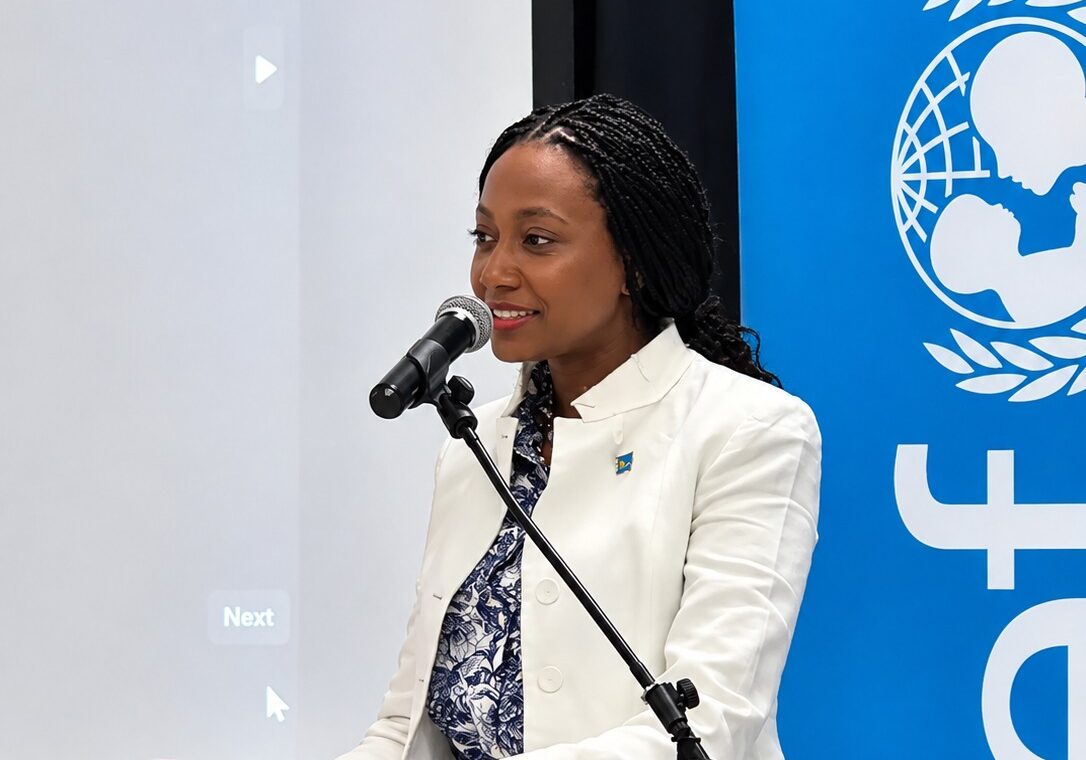
    Leading the presentation for Saint Lucia, Minister for Labour and Social Justice Emma Hippolyte addressed a cross-sectional gathering of delegates from 187 member states of the International Labour Organization (ILO), bringing together representatives from national governments, employer associations, and labour unions. In her address, she detailed the sustained policy push Saint Lucia has pursued in recent years to cultivate a more equitable and inclusive national labour market that leaves no demographic group behind.

    A central pillar of Hippolyte’s address centered on the urgent need to embed gender equality into every layer of working life, with a particular focus on elevating the undervalued care economy. She emphasized that unpaid and underpaid care work forms an invisible backbone of national economic and social development, yet this critical sector has been systematically sidelined for decades, with women bearing the overwhelming majority of this unrecognized burden.

    “Addressing this longstanding oversight is a fundamental act of social justice,” Hippolyte told delegates, as she issued a call for more robust, coordinated international policy frameworks that can back national efforts to advance gender equality and inclusive participation across all sectors of the global workforce.

    Beyond its commitments to gender parity, the minister also outlined a series of tangible policy wins that Saint Lucia has delivered to improve working conditions and social welfare for all residents. Key achievements include the implementation of a binding national minimum wage, the conversion of nearly 1,900 precarious public sector contract positions into permanent, fully benefited roles, the expansion of public assistance programs to reach more low-income households, and ongoing progress toward rolling out universal healthcare coverage. She added that Saint Lucia has now completed ratification of all core ILO conventions, cementing its alignment with global labour standards.

    Most recently, Hippolyte noted, the country ratified ILO Convention 144, which governs tripartite consultation among governments, employers, and workers, and established its first-ever National Tripartite Advisory Committee to formalize this collaborative governance structure. She framed inclusive social dialogue as a foundational tool for building economic stability, boosting national resilience to external shocks, and driving long-term sustainable development that benefits all segments of society.

    Hippolyte also highlighted targeted policy reforms designed to break down systemic barriers that have historically excluded women and other vulnerable groups from full participation in public life and the economy. Among these measures is the elimination of Value Added Tax on sanitary napkins, paired with government support for schools to distribute free menstrual hygiene products to female students, a policy that ensures no young woman has to miss class due to lack of access to essential supplies, protecting their right to uninterrupted education.

  • Alfred delivers birthday victory in Oslo

    Alfred delivers birthday victory in Oslo

    Paris Olympic sprint champion Julien Alfred delivered a memorable birthday gift to herself on June 10, crossing the finish line first to claim top honors at the Oslo Bislett Games Diamond League meet in Norway. The 25-year-old sprinter’s dominant performance extended her undefeated streak this outdoor season, marking her fourth consecutive win overall and her second Diamond League title in just a fortnight, while also notching the sixth-fastest 100m time of her career across all racing conditions.

    Running with a 3.2 meters-per-second tailwind, Alfred clocked a wind-assisted 10.76 seconds to secure the top spot on the podium. Amy Hunt, the silver medalist of the 2020 Tokyo Olympic Games 200m event, finished a clear second with a time of 10.99 seconds, becoming the only other competitor in the field to clock a time under 11 seconds. New Zealand’s Zoe Hobbs rounded out the top three with a personal competitive run of 11.03 seconds.

    Alfred’s winning streak stretches back to early April, where she claimed two back-to-back victories at the Texas Invitational. Just one week before her Oslo triumph, the Olympic champion defeated reigning world champion Melissa Jefferson-Wooden to take the 200m title at the Rome Diamond League stop, proving her versatility and dominance across both short sprint distances.

    In post-race interviews, Alfred expressed gratitude for her current form and the opportunity to compete at the highest level of the sport. “I am healthy, and I am happy to get the win here,” she said. “I would say I am trusting myself a lot more. And I am having so much more fun. Before I came here, my mental coach said to me: ‘When you be yourself, it is the most powerful thing that you can do.’ And I think I learn more and more from my experiences.”

    The sprinter emphasized that her priority remains staying healthy as she builds toward future major competitions, highlighting the years of hard work that have brought her to this stage of her career. “As long as I come in the finish healthy, I am happy about it. I worked very hard to get to this point in my life. Just being here, racing amongst the best athletes in the world, like I said, I am appreciating every chance I get to run.”

    Alfred also spoke positively about the rising depth of competition in the women’s 100m, saying the tight competitive field pushes her to continually raise her own standards. “I love the competitiveness in the 100m right now. It keeps me on my toes to go out there and compete and be at my best every single time I line up. So I have no complaints right now.”

  • Listwa Kannaval returns to dig further into our culture

    Listwa Kannaval returns to dig further into our culture

    As one of the cornerstone events of Saint Lucia’s annual Carnival celebration, Listwa Kannaval is gearing up for its second iteration, creating a dedicated community space for cultural reflection, open dialogue and collaborative exploration of the island’s rich heritage.

    Scheduled to kick off at 7:00 p.m. on Wednesday, June 10, 2026, at the scenic Harbor Club venue, this year’s gathering centers on the provocative theme: “Rhythm, Language, and Identity: Does Our Music Define Us?”

    The core discussion will unpack the profound role that Saint Lucian music plays in shaping and reinforcing the island nation’s collective national identity. Attendees will trace the evolutionary arc of local sounds, starting from the roots of traditional folk music and calypso, through the rise of upbeat soca, to the distinct, homegrown Dennery segment genre that is unique to Saint Lucia.

    According to the official Carnival Planning and Management Committee, the conversation will place special emphasis on the central position of Kwéyòl in local musical expression. Organizers note that music acts as a powerful vessel for intergenerational storytelling, a function that in turn drives critical work in cultural preservation that would not be possible through other mediums.

    Headlining the event is Dr. Ronald T. Francis, a respected Saint Lucian scholar based at The University of the West Indies, Cave Hill Campus, where he teaches linguistics. Holding a PhD in linguistics, Francis’ research focuses on Atlantic Creoles, applied linguistics, corpus linguistics and world Englishes, with a specific focus on social justice, systemic discrimination, and cultural attitudes as they relate to Saint Lucian popular music. His decades of specialized work position him to bring nuanced, evidence-based insight to the event’s core theme.

    Following Francis’ keynote address, a diverse panel featuring working artists, music producers, cultural organizers and senior industry leaders will extend the conversation, bringing on-the-ground experience to the theoretical framework laid out in the presentation. The event will also reserve dedicated time for audience participation, inviting attendees from all backgrounds to share their own perspectives and experiences with Saint Lucian music and culture.

    As Carnival as a global cultural practice continues to evolve to meet the needs of modern communities, Listwa Kannaval fills a critical gap in the celebration’s programming by offering a structured space to ask probing, meaningful questions about what cultural identity means for Saint Lucians today. Event organizers emphasized that the event reaffirms a core truth: Carnival is far more than just a time for celebration and public festivity, it is also a cultural institution worthy of academic study, careful documentation, and deep, holistic understanding.

  • Family appeals for help in search for missing Gros Islet man

    Family appeals for help in search for missing Gros Islet man

    A 73-year-old resident of Gros Islet, Saint Lucia, has been missing for more than a week, sparking a coordinated search effort by local community members and law enforcement. Lawrence Hyacinth, a resident of the Morne Giraud neighborhood, was last seen by his family at around 2 p.m. on Tuesday, June 2. When he left his home that afternoon, he was dressed in casual attire: shorts, slippers, and a commemorative family reunion t-shirt emblazoned with the name “Hyacinth” on the back.

    Relatives later confirmed that independent sightings by Hyacinth’s friends placed him in the area on the following Wednesday morning. This partial confirmation has left the family clinging to cautious hope, suggesting he may have traveled outside the boundaries of his immediate neighborhood rather than remaining close to home.

    Since Hyacinth was reported missing, volunteers from northern communities across the island have mobilized to comb through local areas in search of any trace of him. Dozens of family members, friends, neighbors and ordinary residents have volunteered their time to check wooded areas, local businesses, public gathering spots and abandoned properties, but as of yet, no credible clues to his whereabouts have emerged.

    Marylin Hyacinth, Lawrence’s sister, spoke publicly about the family’s urgent distress, noting that their anxiety is amplified by the 73-year-old’s pre-existing health conditions. “We are begging members of the public, especially bus drivers who travel across the island every day, to keep an eye out for him and reach out if they see anything that matches his description,” she said in an interview.

    She explained that Lawrence faces heightened risk due to his combination of medical issues: he lives with both dementia, which can impair his ability to navigate or communicate where he is, and diabetes, which requires consistent medication and blood sugar management. With each passing day that brings no update on his location, the family’s worry grows exponentially.

    Marylin Hyacinth confirmed that the family notified law enforcement immediately after realizing Lawrence was missing. “We filed a missing person report with police right from the start, and we have been checking in regularly for updates while continuing our own independent search efforts across the island,” she said.

    Beyond on-foot searches led by local volunteers, the family has launched a public awareness campaign to spread information about Hyacinth’s disappearance. They have distributed hundreds of flyers featuring a clear photograph of Lawrence and multiple family contact information to community centers, shops, and post offices in towns across Saint Lucia, in the hope that a member of the public may have seen him and can share critical information.

    Local police have confirmed they are supporting the search effort. Investigators have been reviewing public and private surveillance camera footage from areas near Hyacinth’s home and along common travel routes, though the investigation is still ongoing with no conclusions to date.

    The Hyacinth family is urgently appealing to anyone who has spotted Lawrence, or who has any information about where he may be staying, to contact them immediately. Anyone with relevant details can reach the family at three dedicated phone lines: 4894565, 5208020, or 4885646.

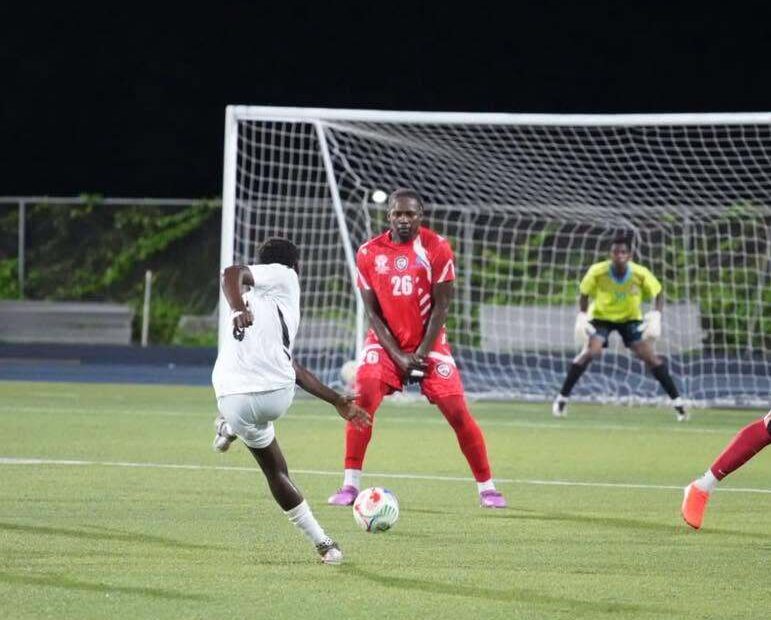
  • How steep World Cup ticket prices affect Caribbean football

    How steep World Cup ticket prices affect Caribbean football

    The 2026 FIFA World Cup, co-hosted by North American nations, is set to kick off on June 11, 2026 in Mexico City when the host nation takes on South Africa, bringing with it both promise of transformative investment for small footballing nations like those across the Caribbean and growing fury over unprecedented ticket price increases that are pricing out ordinary supporters. Over the 39-day tournament, billions of fans around the globe will tune in to watch the world’s best players compete, but long before the opening whistle, the conversation around the event has centered on the ballooning cost of attendance, and the trade-off at the heart of FIFA’s pricing strategy.

    Analysis of FIFA’s 2026 ticketing structure reveals staggering jumps across every tier compared to the 2022 Qatar World Cup. A basic Category 3 general admission ticket for a group-stage match that does not feature a host nation now starts at $120, a 74% increase from the equivalent seat four years ago. The steepest rise comes for the sport’s biggest stage: tickets to the 2026 World Cup Final have jumped 236.1% from 2022, marking the largest ever price increase for a World Cup final in FIFA’s history. Even the $60 discounted locked tier, introduced by FIFA to deflect widespread public criticism of high pricing, is only accessible to verified loyal fans who purchase through their national football associations, and this entry-level price point is still 445.5% higher than the cheapest entry tickets offered at previous tournaments.

    As a registered non-profit organization, FIFA has pushed back against criticism, arguing that elevated ticket and commercial revenues are not for institutional profit, but rather to fund global football development, a mission that stands to deliver major financial gains to small, developing member associations within the Confederation of North, Central America and Caribbean Association Football (CONCACAF). Speaking at the CNBC Invest in America Forum, FIFA President Gianni Infantino tied projected total World Cup revenues, which are now on track to hit $11 billion and could even reach $14 to $15 billion fueled by record commercial and ticket sales, to investment in grassroots and youth football around the world.

    “That [revenue] goes into 211 countries all over the world, to allow football projects, academies, stadiums, pitches, competitions for girls, for boys, in 211 countries – more than the UN – to be played and organised. Three-quarters of them would probably not be able to have organised sport without the advance that they receive from a competition like the World Cup,” Infantino said.

    FIFA’s longstanding model pools all World Cup revenue streams — including ticket sales, broadcast deals and sponsorships — and redistributes the funds to member associations through its development programs. At the 76th FIFA Congress held in Vancouver, the governing body announced that the 2026 revenue surge would allow it to boost funding for the upcoming Forward 4.0 development cycle by an additional 20%, meaning small member territories including CARICOM nations will see increased development funding in the coming years.

    Tennyson Glasgow, a veteran Saint Lucian football commentator, told local outlet St Lucia Times that small Caribbean nations stand to see tangible benefits from the higher revenues generated by increased ticket prices. “FIFA may have done their homework as well to realise that when it comes to sports in that part of the world, people really go out, especially for the fan experience, and that comes at a cost. We’re talking about the best footballers globally. It’s not going to be cheap. Of course, FIFA would want to maximise that,” Glasgow said.

    “We have seen records of FIFA always living up to the expectation in terms of taking care of their member countries. So, I’m certainly saying that yes, Saint Lucia, as a small nation, yet a member of FIFA, will benefit, especially when it comes to grassroots programmes, female football, and of course, we might just see some facilities being improved or some new ones may be placed,” he added.

    Despite the potential development gains for small footballing nations, critics argue that the burden of funding this growth is falling unfairly on ordinary fans in the 2026 host countries. High-profile figures have joined the backlash, with California Attorney General Rob Bonta accusing FIFA of “misleading ticketing practices”, and even former U.S. President Donald Trump saying he “wouldn’t pay it either” when asked about the exorbitant ticket prices.

    At its core, the 2026 World Cup pricing model is a double-edged sword. The unprecedented revenue from ticket sales, broadcast deals and sponsorships will deliver much-needed investment to grow football at the grassroots level across the globe, bringing tangible improvements for small developing associations. Yet for the ordinary fans who are the backbone of the sport, the sharp price hikes that make this investment possible have created a significant barrier to access that remains a source of widespread frustration.

  • Why your grocery bill could keep rising

    Why your grocery bill could keep rising

    For consumers across the Caribbean island nation of Saint Lucia, the economic ripples of the unresolved Middle East conflict have become impossible to ignore, with noticeable upward price shifts already hitting household budgets in recent weeks.

    The most immediate impact has landed at fuel stations across the country, where retail prices for both gasoline and diesel have now climbed to $16.75 per gallon. Government officials confirm this uptick directly tracks a surge in global crude oil prices, a shift fueled primarily by escalating geopolitical tensions in the Middle East.

    As a small island developing state heavily dependent on foreign imports for nearly all essential goods, Saint Lucia is inherently exposed to external economic shocks. Higher fuel costs immediately raise the cost of transporting goods across the island’s domestic supply chain, while broad-based price increases on global commodity markets flow directly into higher costs for imported products – a dynamic economists classify as imported inflation. This cascade of price increases creates a compounding effect that pushes up the overall cost of living for local residents.

    At Monday’s pre-Cabinet press briefing, Consumer Affairs Minister Emma Hippolyte addressed mounting public anxiety over rising living costs, acknowledging the growing concerns among Saint Lucian households. Hippolyte noted that the government has maintained active subsidies for key essential goods, including cooking gas, to partially insulate consumers from the full weight of global price increases. Even with these mitigating measures in place, however, the minister issued a stark warning that the conflict’s fallout could extend far beyond current price hikes if the situation remains unresolved.

    “If this is not resolved soon, what is happening overseas is going to impact the availability of food and the availability of services. This can have significant implications for us,” Hippolyte cautioned.

    In response to questions from *St Lucia Times* about whether the Consumer Affairs Department would ramp up its oversight of local pricing to guard against unfair markup practices and opportunistic exploitation of consumers amid the global crisis, Hippolyte confirmed that ongoing monitoring is already in place. The department has assigned dedicated officers to track day-to-day price movements across key sectors and investigate consumer complaints related to unfair pricing.

    The minister concluded by reassuring the public that the ministry will maintain rigorous, close oversight of unfolding market developments, particularly as ongoing global uncertainty continues to put sustained pressure on international prices and supply chain operations.

  • Alfred to compete in 100m on her birthday in Oslo

    Alfred to compete in 100m on her birthday in Oslo

    One of track and field’s most in-form sprinters, Julien Alfred, is gearing up for a highly anticipated title defense at the 2026 Bislett Games in Oslo, Norway, where she will line up for the women’s 100m on Wednesday, June 10 – a date that also marks her 25th birthday.

    Entering the Oslo meet, the Saint Lucian sprint star has remained undefeated across three outdoor races in the 2026 season, and this appearance will mark her second stop on the 2026 Wanda Diamond League circuit. Just one week before stepping onto Bislett Stadium’s track, Alfred claimed gold in the 200m at the Diamond League stop in Rome, carrying that momentum into her title defense run.

    Alfred kicked off her 2026 outdoor campaign one month prior to the Oslo meet, clocking an impressive 10.93 seconds in the 100m despite wet, rainy conditions at a meet in Texas. That performance currently ranks as the 10th-fastest 100m time recorded by any sprinter globally this season. As the defending women’s 100m champion at the Bislett Games, Alfred already has history on her side at the Oslo venue: last year, she crossed the finish line first with a 10.89-second run to take the top spot on the podium.

    That 2025 Oslo visit also brought Alfred a memorable personal milestone: she met Usain Bolt, the legendary Jamaican sprinter who holds the 100m and 200m world records and is an eight-time Olympic gold medalist, for the first time. Alfred has long named Bolt as one of her biggest athletic inspirations, and the encounter remains a core memory for her.

    “That was probably one of the best birthday gifts I could have gotten,” Alfred said of the 2025 meeting. “I’m still thinking about that day! And just being here again… I can just remember my first time meeting him, but it was amazing last year. I’m looking forward to what this year brings… I think that it was just amazing, and you know, I’ll cherish that moment forever.”

    Over the course of her young career, Alfred has already built an impressive medal collection spanning the world’s top track and field competitions. Her accolades include 100m gold and 200m silver at the 2024 Paris Olympics, 100m silver at the 2025 Tokyo World Athletics Championships, and a combined one gold and one silver medal in the 60m at the World Athletics Indoor Championships. Though she is widely recognized as a premier 100m specialist, Alfred has shifted her perspective in recent years, growing to embrace competing in the 200m after previously dreading the distance.

    “In college, definitely, I preferred the 100,” Alfred explained. “However, I think after doing the 400 last year, the 300s as well, and multiple 200s, I would say it definitely helped my 100, especially the last part. But I’m not solely focused on just the 100; I’m actually enjoying the 200 now. As compared to college, I honestly hated running the 200! But I would do it for my team, for points as well, and because my coach felt I was really good at it. I think it’s just a matter of trusting myself and going out there and, you know, just having fun in the 200. But I love the 100.”

    One major gap remains in Alfred’s decorated resume: she has not yet claimed a gold medal at the Commonwealth Games. The 2026 Commonwealth Games are scheduled to run from late July to early August in Glasgow, Scotland, and while Alfred has previously signaled her intent to compete, her participation remains uncertain with just six weeks remaining before the competition kicks off.

    “It’s on the schedule, but it’s really up in the air right now,” she admitted. “I think it really depends on just how my body feels and just what my team decides at the time.”

    For fans eager to watch Alfred’s birthday title run, the women’s 100m at the Oslo Bislett Games is scheduled to get underway shortly after 3 p.m. local Eastern Caribbean time on Wednesday.