标签: Saint Lucia

圣卢西亚

  • Monier, Babonneau communities say lengthy water disruptions are unbearable

    Monier, Babonneau communities say lengthy water disruptions are unbearable

    For hundreds of residents across two northern Saint Lucian communities, the most urgent daily question is not about work, family, or plans — it is whether they will have access to enough clean water for the week. Months of inconsistent, sparse water access have pushed frustrated households in Monier and Babonneau to speak out about a long-running crisis that they say has only grown worse in 2026, even as the national water utility promises infrastructure upgrades.

    Canice John, a property owner who splits his time between Canada and his Ma Kanna Heights estate in Monier, told reporters that his community has gone without a consistent piped water supply since May. John, who hosts five tenants on his property, explained that households have struggled with water access for years, but recent outages have reached unacceptable levels. His tenants repeatedly reach out to the Water and Sewerage Company (WASCO), the national utility responsible for public water access, to beg for service — all they ask for is scheduled delivery at least once weekly to refill their residential storage tanks.

    The crisis is not limited to Ma Kanna Heights. Neighboring neighborhoods including Monier Terraces face identical daily struggles. While WASCO dispatches water trucks to affected areas, residents say emergency responses are rare, under-resourced, and require constant, demeaning advocacy to even trigger. “Now, every week you have to call and beg, and when they bring the truck, most of the time it’s only a few tanks they can fill,” John explained. “Many of the residents go and complain to the office; nothing seems to be working.”

    Interviews with multiple tenants and local residents confirmed that the last continuous water supply the community received coincided with the annual Saint Lucia Jazz & Arts Festival earlier this year. Many also note a puzzling inconsistency: some households in the same neighborhood receive water far more frequently than others, and WASCO has never offered an explanation for the disparity.

    Thirty kilometers north in Babonneau, residents have taken to social media to amplify their own frustrations with prolonged water shortages. In the Hill 20 neighborhood, photos show households hiking to a shared community standpipe to carry water back to their homes for daily use. One Babonneau Central resident told St. Lucia Times that his water access is entirely unpredictable, with deliveries coming anywhere from once weekly to once every two weeks. When service does turn on, it only lasts a few hours at most, rarely a full day — too little time to refill storage tanks for the coming weeks.

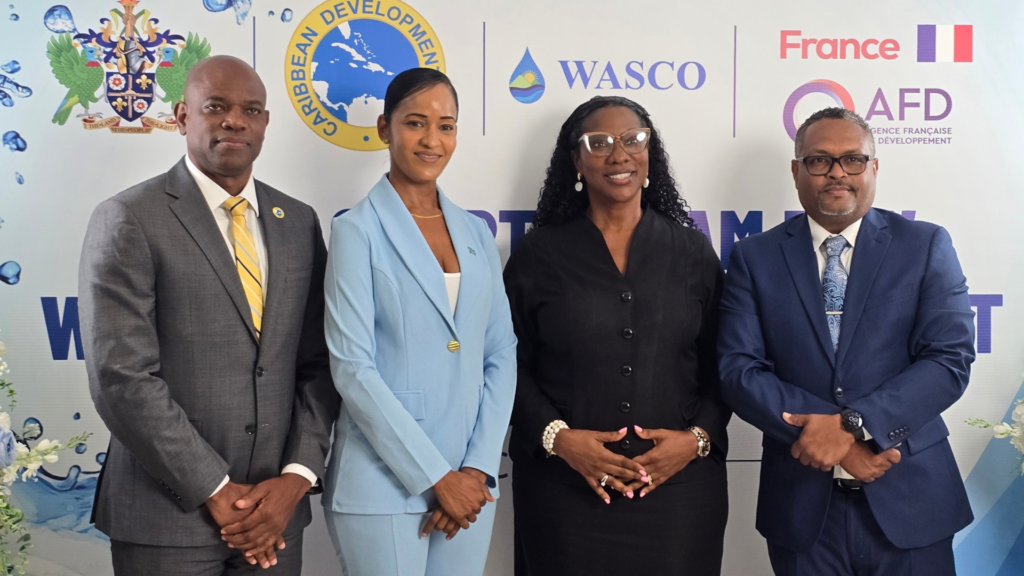
    Chronic water shortages have plagued communities across Saint Lucia for years, with well-documented root causes: aging, worn pipeline infrastructure that has not been fully replaced, and declining annual rainfall tied to shifting regional climate patterns. WASCO has publicly announced several major infrastructure upgrade projects in recent months to address the crisis, including the Theobalds Water Supply Rehabilitation Project, the John Compton Dam Raw Water Pipeline Project, the Patience Water Supply Redevelopment Project, and the Northern Pipeline Project. The utility provided formal progress updates on all four initiatives during a public press conference on July 29.

    But for residents of Monier and Babonneau, these large-scale, long-term projects have not translated to tangible relief for their immediate crisis. Community members are calling for greater direct engagement between WASCO leadership and local households, rather than only broad announcements about future upgrades. John, who first raised alarms about Monier’s water crisis with St. Lucia Times earlier this year, put the community’s demand simply: “If we have a problem with the water line in Monier, we want it investigated and for solutions to the problem to be presented.”

    St. Lucia Times reached out to WASCO last week to request comment on the specific outages in Monier and Babonneau, and to ask for clarification on what is causing the ongoing service disruptions. As of press time, the company has not issued a response to the outlet’s inquiry.

  • CPL to launch free health screenings for fans at 8 host venues

    CPL to launch free health screenings for fans at 8 host venues

    The Republic Bank Caribbean Premier League (CPL), one of the region’s most popular annual sporting events, has launched a unique public health initiative ahead of its upcoming season, partnering with local and regional health agencies to bring free non-communicable disease (NCD) screenings to fans at every tournament venue. All eight host stadiums for this season’s matches, including the well-known Daren Sammy Cricket Ground, will host on-site testing clinics staffed by qualified health professionals throughout the competition, giving cricket fans access to preventive care while they enjoy the sport. NCDs are recognized as one of the most pressing public health challenges across the Caribbean, where rates of chronic conditions such as heart disease and diabetes remain disproportionately high compared to global averages. This screening program is a core part of the league’s long-term commitment to supporting regional public health efforts to address this crisis. The free screenings available to interested fans cover a wide range of key health metrics, including blood pressure measurement, blood glucose testing to flag diabetes risk, Body Mass Index (BMI) assessment, urinalysis, and prostate-specific antigen (PSA) testing for prostate cancer risk. In a statement explaining the importance of the new initiative, CPL Chief Executive Officer Pete Russell emphasized that the burden of NCDs extends across the entire Caribbean community. “Non-communicable diseases have touched almost every one of us in some way, whether as patients ourselves or through a loved one,” Russell said. “Being a good corporate citizen means using the platform we’ve built for something bigger than the game itself. Early detection is key to combating non-communicable diseases – this programme puts that principle into practice.” Russell added that the league’s broad regional reach comes with a corresponding social responsibility to contribute to community well-being. “CPL reaches fans in eight territories every season, and we believe that reach comes with a responsibility to give back. Bringing health screening into our stadiums is a simple and practical way to act on that responsibility,” he explained. Public health experts across the region have previously highlighted that improving access to routine preventive screenings is one of the most effective ways to reduce NCD-related illness and death, as early intervention can drastically improve patient outcomes for most chronic conditions.

  • Loved ones remember victims of Anse Cochon boat tragedy

    Loved ones remember victims of Anse Cochon boat tragedy

    It has been more than 14 days since a devastating late-night boat collision near the coastal community of Anse Cochon claimed four lives, and for grieving family members, surviving passengers, and close friends, the pain of their sudden loss remains raw as they share loving tributes to the victims who never returned home.

    The four lives cut short in the tragedy span different ages and hometowns across the island: 21-year-old Mhakeida Nestor from La Fargue, Choiseul; 25-year-old Debbie Dolor from Market Road, Soufrière; and Marley William and Tyrone Paul, both residents of Barons Drive. Among the victims, Paul’s family has opened up about the disbelieving grief that has followed his death.

    Dalpha Paul, Tyrone Paul’s sister, recalled the chaotic, heart-wrenching morning she learned her brother had not survived the crash. The collision took place shortly before midnight on Saturday, July 18, while Paul was asleep at home. It was not until the next morning, when she woke to a flood of alarming messages on the WhatsApp messaging platform, that she sensed something was terribly wrong.

    “I woke up and saw everybody posting on WhatsApp, so I said let me go down the road because something happened,” Dalpha recounted. By the time she reached the crash site, family members had already confirmed the devastating news. What made the loss even harder to process was the fact that Tyrone was an experienced, skilled swimmer — a detail that left his family holding out hope for hours that he would make it out alive.

    “Tyrone can swim. So if they go on shore and you don’t get him, what does that mean? That means Tyrone was gone already,” she said, her voice thick with tears. Remembering her brother’s gentle character, Dalpha described him as a universally loved member of their community whose kindness could not be summed up in words. “The word to describe Tyrone, I don’t think they’ll be able to get it in the dictionary; when it comes to loving, caring – everything in one. Tyrone was the lover boy of the community,” she added, holding back tears.

    For survivors who lived through the crash, the terrifying moments immediately after the impact remain vivid and traumatic. Lester Jean, one of the passengers who escaped the collision, recalled that the two vessels, returning from a community party, collided with little warning, throwing the crowded boats into chaos.

    “We heard a big noise. People were shouting for help. We didn’t even know if our boat hit them or they hit us. We were all struggling at the same time,” Jean said. In the chaotic aftermath, Jean and other uninjured survivors scrambled to search for passengers thrown into the dark coastal waters, calling out the names of the missing victims—Tyrone, Mhakeida (known to loved ones as Molly), and Debbie—while waiting for first responders to arrive. Jean suffered serious injuries in the crash, requiring multiple stitches for lacerations and losing his prosthetic eye from the force of the impact. Even weeks later, he said, the psychological trauma of that night remains difficult to work through.

    Alan Jules, Tyrone Paul’s closest friend, said the ache of losing his constant companion has not faded in the weeks since the crash. “He was my real friend. He was my best friend,” Jules said. “It was a mistake… a terrible mistake.”

    The deadly incident unfolded when two passenger vessels, the Ocean Angel and a Mango Tours boat, collided in coastal waters near Anse Cochon just minutes before midnight on July 18. Fourteen other passengers were treated for injuries ranging from minor to severe. Search and rescue teams spent four days scouring the surrounding waters for the missing victims, and the recovery of the bodies of Marley William and Tyrone Paul off the coast of Anse La Raye Bay brought the final death toll to four.

    In the wake of the tragedy, local law enforcement has launched a formal investigation into the cause of the collision. To complement the police probe and address broader safety gaps, the national government has established a formal Commission of Inquiry tasked with examining every detail of the incident and proposing actionable reforms to strengthen maritime safety regulations and prevent similar fatal accidents in the future.

  • Sally starts new chapter with her latest single

    Sally starts new chapter with her latest single

    One of Saint Lucia’s most celebrated female recording artists, formerly known by her full name Sally Elwin, has kicked off a new artistic chapter with the launch of her highly anticipated self-penned single, ‘Aligned’. For years, Sally has built a loyal local following through beloved tracks including ‘You are the One’ and ‘I’ll be Okay’, and earned wider acclaim in 2018 for her haunting, heartfelt reinterpretation of Leonard Cohen’s iconic ‘Hallelujah’.

    With the arrival of ‘Aligned’, Sally is not only debuting a polished new sound but also reintroducing herself professionally under the shortened stage name Sally – a rebrand she calls the opening of a fresh era rooted in artistic authenticity, personal resilience, and emotional honesty. The track itself carries deeply introspective themes, exploring the journey of reconnecting with one’s core values, pursuing goals with intentional purpose, and aligning one’s life path with the passions that drive them.

    When asked about the multi-year gap between her previous releases and this new single, Sally explained that life’s daily responsibilities took priority. ‘Life took over; just working, raising children, and just finding the time. I believe now is the right time, so you can say in a nutshell it was all about the right time,’ she shared.

    The inspiration for ‘Aligned’ grew out of a life-altering personal experience: a major surgical procedure that forced Sally to confront the fragility of life. ‘At that time I literally saw my life flash before my eyes and had me thinking about what really mattered and how fragile life itself really was,’ she recalled. That moment of reckoning sparked the reflections on inner peace and the transformative power of purpose that form the emotional core of the new track.

    Today, ‘Aligned’ is available for streaming across major platforms including YouTube, as well as regular rotation on Saint Lucian local radio stations. Sally says she has no plans to slow down following the release, and aims to maintain this creative momentum through 2024. ‘I will continue to write songs, work with various producers and writers and keep putting out new music throughout the year,’ she noted. A companion music video, created to visually document Sally’s personal and artistic journey leading up to the release, is also set to premiere in the near future.

  • ECFH, BOSL and NIC salute legacy of Evaristus Jn. Marie

    ECFH, BOSL and NIC salute legacy of Evaristus Jn. Marie

    The Caribbean island nation of Saint Lucia is mourning the passing of one of its most respected financial and public sector leaders, Evaristus Jn. Marie, who died Friday at age 67 after a prolonged fight with illness. Across his decades-long career, Jn. Marie held a series of the most senior leadership roles at three of the country’s most critical institutional bodies: the Eastern Caribbean Financial Holding Company (ECFH), Bank of Saint Lucia (BOSL), and the National Insurance Corporation (NIC).

    In a joint public statement released following his death, ECFH and BOSL remembered Jn. Marie as a transformative and exceptional leader whose professional legacy was anchored in unshakable personal integrity, forward-thinking strategy, lifelong commitment to public service, and an unwavering dedication to advancing both economic growth and social progress across Saint Lucia.

    When Jn. Marie assumed the role of chairman for both ECFH and BOSL in 2021, he took the helm at a critical turning point for both institutions. The organizations credit his steady, deliberate leadership with guiding them through a period of dramatic global and local economic shifts, all while championing rigorous corporate governance, increased organizational accountability, and a long-term vision for sustainable growth.

    His impact extended far beyond strategic direction, leaving an enduring imprint on the culture and work of both entities’ boards of directors and executive management teams. The joint statement noted, “Mr Jn. Marie provided steadfast leadership and invaluable guidance to our Board and Management team. His dedication to good governance, his deep understanding of business and finance and his genuine concern for the advancement of our institution and our country have left an indelible mark on ECFH and Bank of Saint Lucia Limited. We have lost not only an outstanding Chairman, but also a respected mentor, colleague and friend.”

    For the National Insurance Corporation, which provides critical social safety net services to thousands of Saint Lucians, Jn. Marie also brought steady and thoughtful leadership from February 2021 through his final days, serving across multiple NIC boards and committees. The organization emphasized that Jn. Marie’s dedication to the corporation grew from his personal understanding of the vital role NIC plays in supporting the daily lives of Saint Lucia’s residents. He approached every duty with consistent fairness and sharp professionalism, and was known industry-wide for his calm, optimistic demeanor and commitment to equitable decision-making.

    All three institutions have formally extended their deepest condolences to Jn. Marie’s family, friends, and loved ones. They note that his enduring legacy of principled leadership, uncompromising integrity, and committed public service will continue to inspire all those who had the privilege of working alongside him for years to come.

  • OPINION | Who speaks the truth: FAO statistics, farmers…or the bees?

    OPINION | Who speaks the truth: FAO statistics, farmers…or the bees?

    A recent ranking from the Food and Agriculture Organization (FAO) has thrust the Caribbean island nation of Saint Lucia into an urgent public and policy debate: is it now one of the world’s most pesticide-intensive agricultural countries? While the FAO’s conclusion has split farmers, policymakers and members of the public into opposing camps, both sides of the argument share a critical flaw: neither rests on direct, on-the-ground scientific evidence of actual pesticide presence in Saint Lucia’s ecosystems. To break this deadlock, agricultural and environmental experts are proposing an innovative, nature-powered solution: turning to honey bees as living environmental sensors to generate the empirical data the debate desperately needs.

    The FAO’s methodology acknowledges that for nations that do not maintain consistent, formal pesticide use reporting, national pesticide use estimates are extrapolated from secondary sources, including import records, sales data, and statistical modeling. While these approaches work well for building broad global comparative datasets, they carry high levels of uncertainty for small island developing states (SIDS) like Saint Lucia, which have limited agricultural acreage and irregular national reporting systems. Without accurate, ground-truthed data, policymakers cannot craft evidence-based regulations and support systems for the agricultural sector, making the generation of reliable local data a top priority.

    At its core, the gap in accurate pesticide use data stems from a gap in farm-level data collection. Farmers are the primary source of on-the-ground pesticide use information, but most lack the training, infrastructure, and extension support needed to consistently track details like application frequency, total quantities used, application practices, and post-use pesticide container disposal. Low levels of trust between farming communities and regulatory bodies have compounded this challenge, resulting in sparse, low-quality data sets that cannot resolve the current debate. Experts note that this barrier is not insurmountable: stronger cross-sector partnerships between farmers, researchers and policymakers can build the trust and capacity needed to improve farm-level data collection, and farmers have a direct stake in supporting these efforts, as they deserve policies rooted in facts rather than unfounded assumptions.

    Even when farm use data is available, it only tells part of the story. Import statistics and farmer reports can only show how much pesticide was purchased or applied – they cannot reveal how much of those chemicals actually persist and accumulate in the surrounding environment. To measure real-world environmental exposure, the scientific community increasingly turns to biological indicator species, and few indicators are as effective as the common honey bee.

    Honey bees are uniquely suited to act as dynamic environmental samplers. Foraging workers travel several kilometers from their hives each day, visiting thousands of flowers across entire landscapes to collect nectar, pollen, water, and plant resins. In this process, they pick up airborne and surface-borne particulates from nearly every corner of the agricultural ecosystem. Unlike individual soil or crop samples that only capture pesticide exposure at a single point in space and time, an entire honey bee colony aggregates data from across a wide, diverse landscape. Over time, pesticide residues and other contaminants become incorporated into the colony’s hive products: nectar and pollen reflect recent exposure, while beeswax preserves a multi-month or multi-year historical record of chemical accumulation in the area. Every hive holds a comprehensive, continuously updated snapshot of the local environment’s pesticide burden that no artificial sampling program can replicate at the same scale.

    Given honey bees’ unique capacity as environmental monitors, experts are calling on Saint Lucia to launch a dedicated National Pollinator Residue Monitoring Programme to answer the open questions around national pesticide use. This program would collect consistent samples from hive products at a representative network of apiaries across the country, then test these samples for a full range of contaminants, including pesticide residues, biological pathogens and pests.

    While establishing a national monitoring program represents a significant financial investment, existing regional partnerships offer a cost-effective path to implementation. Currently, the Caribbean Agricultural Health and Food Safety Agency (CAHFSA) is working alongside the International Atomic Energy Agency (IAEA) and The University of the West Indies St. Augustine (UWI STA) on a regional food authenticity project across the Caribbean. In Saint Lucia, the project partners with the Iyanola Apiculture Collective (IAC), the Association of Caribbean Beekeepers Organisations (ACBO), and the Saint Lucia Bureau of Standards, with the core goal of building a harmonized, sustainable framework for food testing that protects consumers, supports fair trade, and strengthens regional food control systems through evidence-based practices – including pesticide residue testing across all food products.

    This existing infrastructure can be expanded to launch the pollinator monitoring program at a fraction of the cost of building a new program from scratch. By testing beeswax samples from across Saint Lucia, the program would generate the empirical, defensible data needed to confirm actual pesticide residue levels in the country’s ecosystems, track long-term accumulation trends, and guide targeted environmental rehabilitation strategies tailored to local contamination levels.

    Unlike import estimates or public debate, this science-driven approach would answer critical questions that statistics alone cannot resolve. The data would identify pesticide hotspots across different land types (comparing agricultural districts to undisturbed forest areas), map specific pesticide types and their residue concentrations, measure pollinator exposure levels, and track how pesticide exposure interacts with common bee threats such as varroa mite infestations and viral diseases to impact colony survival rates. None of these insights can be gained from imported data or opinion – they require on-the-ground, empirical scientific investigation.

    Expanding this monitoring initiative across the region would also position the Caribbean as a regional leader in evidence-based pollinator and environmental health. Existing regional collaborations between CAHFSA, UWI, IAEA, national standards bodies, and regional beekeeper organizations have already built advanced regional laboratory capacity. Expanding these partnerships to create a coordinated Caribbean Pollinator Health Observatory would allow the region to generate its own context-specific data tailored to the unique ecosystems and agricultural systems of Caribbean small island states, replacing generic international rankings with locally relevant, actionable information. The analytical infrastructure already exists through the ongoing Caribbean honey authentication project, making expansion of the network a logical, cost-effective next step for regional environmental governance.

    In conclusion, the FAO’s ranking of Saint Lucia’s pesticide intensity should be treated as a starting point for investigation, not a final verdict. Defending or criticizing Saint Lucia’s farming community without objective evidence advances neither agricultural productivity nor environmental protection. Honey bees offer a uniquely accessible, cost-effective, and scientifically sound opportunity to generate the evidence the debate needs, continuously sampling the landscapes that support the region’s food systems and livelihoods. It is time for stakeholders to set aside unproven arguments and start listening to what the bees can tell us.

  • Sandals Early Childhood Centre celebrates Class of 2026

    Sandals Early Childhood Centre celebrates Class of 2026

    A landmark moment for early childhood education in Saint Lucia unfolded recently, as the Sandals Early Childhood Learning and Development Centre hosted its second annual graduation ceremony at the iconic Sandals Regency La Toc Golf Resort & Spa. The joy-filled event honored 15 young learners who have successfully completed the center’s foundational preparatory program, stepping forward ready to embrace formal primary education.

    Families, teaching staff, senior leadership from Sandals Resorts International, and community guests gathered to mark the occasion, creating a warm atmosphere of shared pride and celebration. Attendees enjoyed heartfelt speeches honoring the center’s work, tender moments between proud caregivers and their graduates, and reflective talks on the importance of high-quality early childhood development. In just two years of operation, the center has already cemented a strong reputation for excellence in early learning across the region.

    Speaking at the ceremony, Sunil Ramdeen, Regional Public Relations Manager for Sandals Resorts International covering the Eastern Caribbean, highlighted the long-term value of the resort group’s educational initiative. “The Sandals Early Childhood Learning and Development Centre continues to be another gem in Sandals’ crown,” Ramdeen shared. “Seeing these children grow in confidence, curiosity and character is a reminder that investing in our people and their families creates lasting value for generations to come.”

    Monica Weeks, the center’s school administrator, expanded on the institution’s core mission and proudest achievements. While the program prioritizes building a range of foundational academic skills that prepare children for formal schooling, Weeks emphasized that social-emotional development stands as the center’s defining focus. “Watching them learn to care, share, communicate, build friendships and develop confidence has been one of our greatest rewards,” Weeks explained. “These are qualities that will serve them well throughout their lives.”

    The center’s track record already speaks to its success: graduates from the inaugural 2023 cohort have adapted exceptionally well to their new primary schools, demonstrating the program’s effectiveness in smoothing the transition from early learning to formal education.

    For parent Tamara Joseph, the impact of the center’s work has been deeply personal. She shared that enrolling her child at Sandals Early Childhood Learning and Development Centre was one of the best choices her family has made. “The love, patience and guidance shown by the teachers have made a remarkable difference in our child’s growth and confidence,” Joseph said. “We are truly grateful for everything the school has done for our family, and we know our child is leaving well prepared for the next stage.”

    As the 15 graduates crossed the stage one by one to collect their completion certificates, thundering applause filled the venue from the packed crowd of supporters. The ceremony closed as a bittersweet milestone: it marked the end of the children’s first chapter of formal learning, and the opening of a new future brimming with opportunity for the young Saint Lucian learners.

  • Police probe Rodney Bay Strip incident that left woman seriously injured

    Police probe Rodney Bay Strip incident that left woman seriously injured

    A violent late-night incident on the Rodney Bay Strip in Saint Lucia has left a 28-year-old woman in serious but stable hospital condition, after she was struck by an oncoming minivan amid a public altercation Sunday evening. Early findings from the Royal Saint Lucia Police Force outline that the victim became involved in a physical confrontation with two other individuals — one man and one woman — before the conflict spilled onto the adjacent roadway, where she was hit by the approaching minivan before first responders arrived.

    Local emergency response teams were dispatched immediately after reports of the incident came in. Crews from the Saint Lucia Fire Service arrived at the Rodney Bay Strip scene within minutes to extract the injured woman and coordinate urgent transport to the Owen King EU Hospital, the island’s primary public acute care facility. Initial assessments from emergency responders on site documented only lower body injuries, but updated information from a family member speaking to local publication St. Lucia Times confirms the victim’s harm is far more severe than first reported. The woman has sustained multi-system trauma, including extensive damage to her jaw, mouth, and teeth, that requires ongoing inpatient medical care.

    Local law enforcement has now launched a full formal investigation into the circumstances surrounding the incident. The Criminal Investigations Department assigned to the Gros Islet Police Divisional Headquarters, which has jurisdiction over the Rodney Bay area, is leading the inquiry, working to piece together the sequence of events that led to the altercation and subsequent collision. As of the latest update, police have not released additional details regarding potential charges, the identities of the other parties involved in the altercation, or the status of the minivan driver, and have asked any witnesses who were present on the Rodney Bay Strip Sunday night to come forward with information to support the ongoing investigation.

  • Wage increase for Windward Island Gases employees

    Wage increase for Windward Island Gases employees

    After weeks of closed-door negotiations between senior management of Windward Island Gases Limited and representatives from the National Workers Union (NWU), a landmark multi-year collective agreement has been reached, delivering tangible financial benefits to hundreds of the firm’s technical and clerical employees. The cornerstone of the new deal is a broad-based general wage increase, with a cumulative 9% raise set to be rolled out in equal annual increments over three years. Beyond base salary adjustments, the revised employment package expands a range of supplementary benefits for staff, bringing in an updated structured compensation framework for workers taking on temporary acting positions, as well as higher monetary allowances for both early-morning breakfast coverage and on-call standby shifts. In a key provision that addresses prior wage gaps, the agreement stipulates that all eligible employees will receive retroactive pay for roughly 12 months of service, with the provision set to take effect starting July 1, 2025. As part of the negotiated understanding, company leadership has also committed to the NWU to refine and upgrade core internal operational processes. This planned operational overhaul is projected to drive higher overall productivity at the firm, creating mutually positive outcomes that will boost satisfaction for workers, the company itself, and its broader client base. The Jamaican Department of Labour is now on track to formally review and finalize the industrial agreement in the near term, bringing the negotiation cycle to a formal close.

  • Bio-fertiliser producer seeks to reassure public on safety of locally grown food

    Bio-fertiliser producer seeks to reassure public on safety of locally grown food

    Recent public anxiety over food safety has swept through Saint Lucia after local media outlet St. Lucia Times published Food and Agriculture Organization (FAO) data ranking the Caribbean island among the world’s top 10 nations for pesticide application intensity. The statistics show Saint Lucia uses an average of 27.6 kilograms of pesticides per hectare of cropland, joining several other Caribbean territories in the high-intensity group. Now, the head of a leading local agricultural biotechnology firm is stepping forward to ease public fears and clarify what the data actually means.

    Johanan Dujon, founder and chief executive officer of Algas Organics — a company that produces sustainable bio-fertilizer from invasive sargassum seaweed — has 12 years of direct on-the-ground experience working with smallholder and commercial farmers across Saint Lucia. In his public statement addressing the recent concern, Dujon emphasized that higher pesticide use intensity does not automatically translate to unsafe produce for consumers.

    He explained that the higher pesticide volumes recorded in tropical climates like Saint Lucia’s are a predictable response to greater year-round pest pressure, a challenge that colder regions do not face. “In tropical climates you’re always going to have more pest pressure than in colder climates, as you can imagine, and of course you’re going to have higher usage of pesticides in some of these regions,” Dujon noted. Crucially, he added, high usage does not equal improper usage, and the public should not conflate these two separate factors.

    Dujon also pointed out a key misinterpretation of the FAO data: the metric measures total pesticide applied to cropland, not residual pesticide remaining on harvested food ready for consumption. All regulated pesticides include a scientifically established “re-entry period” — a waiting period ranging from three to seven days depending on the product type — during which the chemical breaks down to safe levels before harvest. When used in line with manufacturer and regulatory guidelines, no harmful residues remain on crops once this waiting period elapses. “If you spray a pesticide on a crop to kill off a particular pest, that chemical stays in the plant system for 3, 7, however many days that’s on the label, and once that time passes the produce is fully safe to consume,” he explained.

    While Dujon confirmed that Saint Lucia’s Ministry of Agriculture already offers pesticide handling and safety training to local producers, he argued that the country could strengthen its food safety framework with a more structured, systematic approach. He noted that the vast majority of local farmers already follow established safety protocols, including mandatory waiting periods, but added that more transparent testing and traceability would go a long way to reinforcing public confidence.

    One of Dujon’s key proposals is the urgent opening of the long-planned Pesticide Residue testing unit at Union, which would allow authorities to conduct regular random spot tests of produce sold at retail outlets across the country. Publishing transparent, public test results would directly demonstrate that local produce meets safety standards, he argued. “If we could do some spot testing of the produce at different places that sell and just be able to come out with a report and say, ‘Hey guys, look, we tested produce around these supermarkets, and we’re okay,’ that would help to allay public perception,” Dujon said.

    A second core recommendation is the widespread adoption of branded, traceable produce labeling. Currently, most local fresh produce sold in Saint Lucia does not include clear information about its grower, making it impossible for consumers to verify safety practices or hold producers accountable. Dujon explained that branded packaging with unique batch numbers would enable full traceability from farm to shelf, giving consumers the ability to confirm they are purchasing food from producers that follow safety standards. “When you pick up a batch of lettuce, sometimes you have no idea which farmer grew it… which is where the brand comes into play because that brand will then have a batch number and you can sort of trace it back. I think that’s where we’re going as a society, and I think it’s going to redound to the benefit of everybody, frankly,” he said.

    Throughout his statement, Dujon stressed that these proposed improvements are not meant to cast doubt on local farmers. On the contrary, he argued, local producers have every incentive to prioritize safe growing practices: “Farmers eat their own produce and don’t want to poison themselves or others,” he said. His core message remains clear: Saint Lucia’s local food can be safe even with higher regional pesticide use, and targeted systemic improvements will only strengthen that safety and public trust.