标签: Saint Lucia

圣卢西亚

  • Girard faces press, insists Youth Economy still delivering

    Girard faces press, insists Youth Economy still delivering

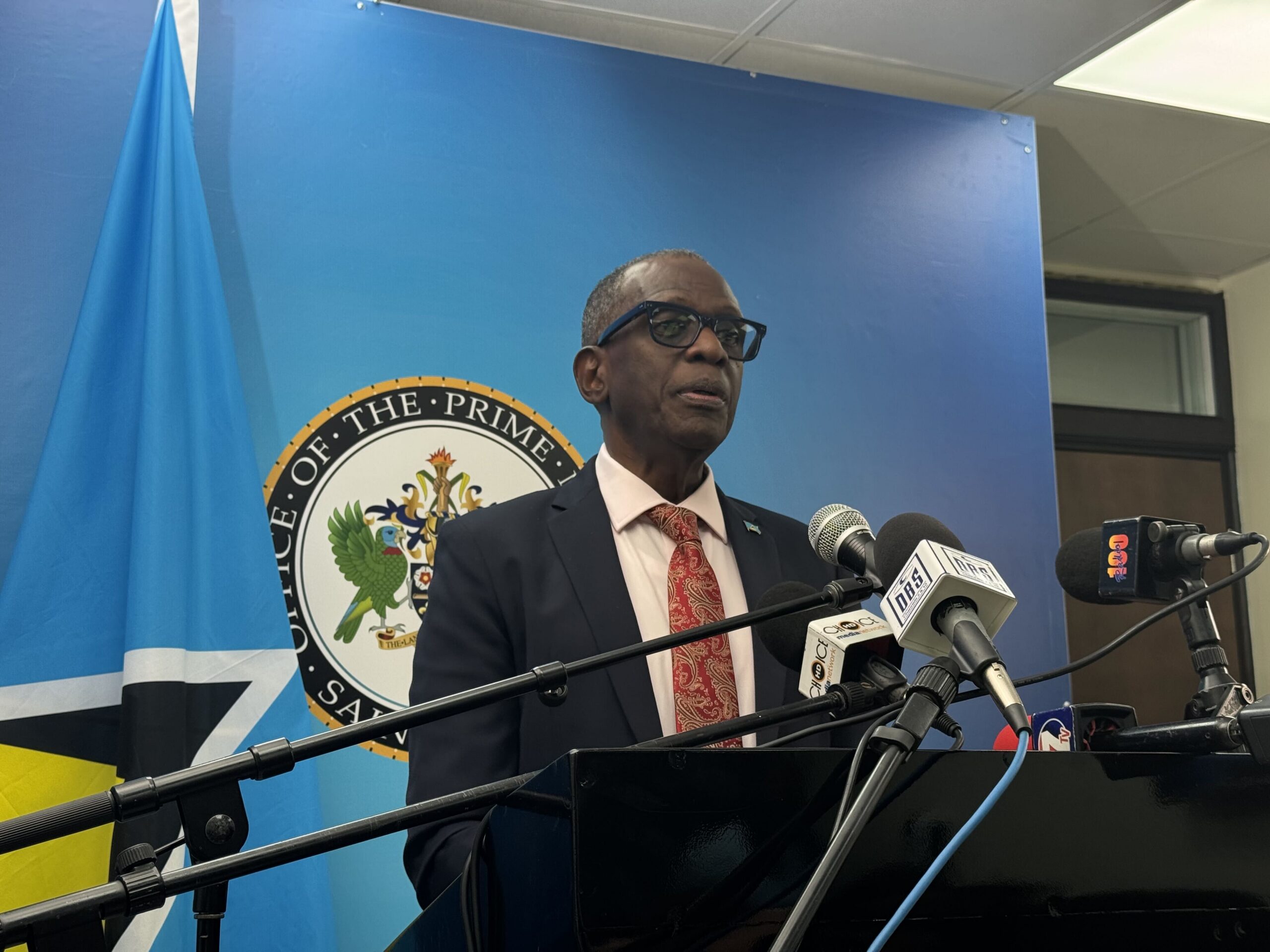
    In a rare public appearance with reporters ahead of this week’s Cabinet meeting, Saint Lucia’s Economic Development and Youth Economy Minister Wayne Girard pushed back against speculation that he has been avoiding media scrutiny, while offering clarity on recent internal shakeups at the country’s Youth Economy Agency (YEA) and reaffirming the organization’s core mission to empower young Saint Lucians.

    Girard, who had previously pledged to increase his public engagements with the press, addressed lingering questions about his limited visibility to date. He emphasized that his reduced public profile stemmed from a deliberate focus on advancing the priorities of his dual ministries, not a reluctance to engage with media. “It is not that I do not want to speak to reporters — I have plenty to share with the public,” he told journalists at Monday’s briefing. “I have no issues at all with being accessible to the press.”

    Much of the briefing centered on the YEA, a government body designed to support youth entrepreneurship across the island. Girard confirmed that the agency remains fully operational despite a wave of high-profile staff departures over the past 12 months, including former chief executive officer Bryan Vidal and multiple other original members of the leadership team. When asked if the exits signaled a fundamental shift in the agency’s direction or core philosophy, Girard framed the changes as unplanned, circumstantial transitions rather than a deliberate restructuring. He clarified that no staff were forced out of their roles, noting that Vidal made a personal choice to leave the organization. A new permanent CEO was already appointed to take over the role earlier this month, and the agency is currently moving forward with hiring for two additional open positions: a communications specialist and a procurement officer, according to the minister.

    Beyond addressing leadership changes, Girard made a forceful case for the YEA’s long-term importance to Saint Lucia’s economic and demographic future. Since its launch, the agency has disbursed more than 3,000 grants to young aspiring entrepreneurs across the country, with a new batch of applications currently under review, he said. Girard argued that the initiative is far more than a political gesture to court young voters: it is a critical policy intervention to address two of the island’s most pressing long-term challenges: an aging population and persistently low birth rates. If Saint Lucia fails to actively engage its young population in productive economic activity now, the country will face severe headwinds in the coming years, he warned. “If we do not get the situation of our young people right, we are going to be in significant trouble down the line,” he said. “This is not just politics carving out space for young people to turn their hobbies into business skills — it is a line of defense for the future of our country.”

    Girard also sought to dispel rumors that grant access is tied to political affiliation, stressing that all young Saint Lucians with viable business ideas are eligible for support regardless of their political leanings. He encouraged any young person with a entrepreneurial concept to reach out to the agency directly to access available resources. “If you come to the Youth Economy Agency with a solid idea and a clear initiative, you will get the assistance you need,” he said. “This has nothing to do with politics. It is simply about recognizing how important it is to ensure every young person in our country can contribute productively to our economy.”

  • Caribbean leadership’s crisis of thought on school discipline

    Caribbean leadership’s crisis of thought on school discipline

    Across global political spaces, a growing, underrecognized leadership crisis has emerged: policymakers repeatedly voice concern over systemic challenges impacting marginalized groups like youth, yet almost never prioritize evidence-based, long-term solutions that address root causes. Too often, leaders default to blame-shifting, inflammatory rhetoric, and quick, punitive fixes instead of confronting deep structural, behavioral, and environmental issues that drive social problems. This pattern, critics argue, wastes public resources and undermines long-term national progress, creating cycles of harm that are far harder to reverse.

    This crisis of leadership is on stark display in recent discussions of school violence among Caribbean Community (CARICOM) prime ministers. Rather than investigating the underlying drivers of youth misbehavior and designing targeted, sustainable policy interventions, several regional leaders have pushed a simplistic, lazy solution: suspend disruptive students and send them home to be managed exclusively by their parents. One sitting prime minister went so far as to argue that educators should not waste effort supporting uncooperative students, telling schools to directly remove problematic youth and leave families to resolve the issue on their own.

    When members of the public pushed back against this approach, framing it as intellectually vacant and harmful to vulnerable youth, the prime minister doubled down on her stance. She challenged critics to take disruptive students into their own homes, framing troubled children as unwanted burdens to be shifted between institutions rather than young people in need of targeted support. While this rhetoric has resonated with overworked, frustrated teachers struggling to manage persistent misbehavior in underresourced schools, education and youth development experts emphasize it does nothing to resolve the core problem of school violence.

    Critics point out that pushing students out of school through suspension only passes the buck to families that often lack the resources, time, or support to address behavioral challenges on their own. Many Caribbean communities have weakened social support structures, and large numbers of working parents cannot take unpaid time off work to supervise suspended children. This leaves young people unsupervised in environments rife with risk: idle, out of school, and vulnerable to recruitment by gangs and other criminal networks. Far from correcting bad behavior, suspension pushes youth further away from educational opportunities and toward the cycles of violence and crime that leaders claim to be addressing.

    This failure of policy raises critical questions: what do regional leaders actually hope to achieve by expanding mass student suspension? Do they expect unsupervised children to spontaneously reflect on their actions and reform? Do they expect low-income working parents to sacrifice much-needed income to manage children at home? Or is this push simply a dog whistle for a return to outdated, discredited corporal punishment, rooted in the false belief that physical discipline solves behavioral issues? The lack of clarity around these goals underscores the fact that the policy is a knee-jerk reaction, not a well-researched solution.

    The predictable outcome of mass suspension is that large numbers of unsupervised youth will fall prey to bad actors, commit more serious offenses, and ultimately end up in the criminal justice system. What few leaders acknowledge is that this path is far more expensive to taxpayers than investing in early intervention: the CARICOM Report on Youth Development confirms that retributive, punitive policies cost regional governments far more than proactive investment in youth potential. As Dr. Ralph Gonsalves, former Prime Minister of St. Vincent and the Grenadines, has long argued, genuine leadership is not just about inspiring public support—it is about helping communities unlock their own strengths to drive inclusive national growth.

    A thoughtful, effective approach to school violence would recognize three core truths that current policy ignores. First, while the family is the primary agent of socialization for children, many parents lack access to the tools they need to navigate the complex challenges of raising adolescents in the 21st century. Rather than shaming parents for failing to manage youth behavior on their own, governments should invest in free, accessible parenting support: evidence-based parenting programs, community outreach, mental health counseling, and practical guidance on adolescent development, conflict resolution, digital literacy, and family communication. These resources should be framed as an investment in family and community well-being, not an indictment of parental failure.

    Second, youth behavior is shaped by far more than just family: digital media, peer groups, school culture, and community context all play major roles in driving misbehavior. Addressing school violence requires assessing all of these overlapping influences and developing coordinated cross-institutional solutions, not just placing all responsibility on parents. This means governments must step into its role as a facilitator of public good, creating policy that shapes the environments young people grow up in and provides support across every part of a child’s ecosystem.

    To deliver on this, schools need access to multidisciplinary teams of trained specialists: counselors, child psychologists, social workers, special education experts, and youth development professionals. These teams can identify the root causes of a child’s misbehavior—whether it stems from trauma, neglect, poverty, learning disabilities, peer pressure, gang recruitment, or substance use—and deliver targeted support rather than just removing the child from class. For the small share of students whose repeated behavior puts peers at risk, governments should develop well-resourced alternative education centers that continue academic instruction alongside counseling, anger management, restorative justice, and vocational training. The goal should be rehabilitation and eventual reintegration into mainstream education, not permanently discarding young people from the educational system.

    Leaders who frame school discipline as a binary battle between parents and schools are avoiding their own responsibility to solve the problem. A government committed to reducing youth violence must build a holistic intervention system that recognizes children exist within a web of overlapping influences, and that the state has both the authority and the duty to shape that ecosystem for the better. This means moving past suspension as the default response and implementing a graduated system of intervention: counseling, restorative justice practices, targeted parental engagement, and behavioral assessments come before any serious disciplinary action. Even when a child must be removed from the classroom for safety reasons, they should never be removed from education, supervision, and support. No suspension should be approved without a concrete intervention plan in place to address the root of the behavior.

    Governments must also recognize that schools cannot solve this problem alone. If children spend their after-school hours in communities where gangs and other harmful influences compete for their attention, policymakers must provide positive alternatives through structured, free after-school programs focused on sports, arts, music, homework support, vocational training, mentorship, and community engagement. Young people should have access to safe, enriching institutions that compete for their time, build a positive sense of identity, and nurture their aspirations, rather than leaving them vulnerable to criminal recruitment.

    Regional universities, including the University of the West Indies, should also receive sustained public funding to conduct long-term, rigorous research into the drivers of youth deviance, school violence, absenteeism, gang involvement, and other related challenges. Too often, academic research on these critical issues sits unread on library shelves, ignored by the very governments that fund the universities. Incorporating this independent, evidence-based expertise into the policy process ensures solutions are built on data, not anecdote and political posturing.

    Another often overlooked solution is supporting schools to redesign teaching and learning practices to better support at-risk students. Many young people act out in response to disengagement from outdated, unengaging curricula that do not meet their needs. Simply sending students home does not change behavior; creating inclusive, supportive school environments that keep youth engaged and connected to learning is the only sustainable path to reducing misbehavior.

    Decades of experience have shown that relying on retribution as a default response to public policy challenges does not deliver the promised results, even as politicians continue to mask its failures with misleading statistics. Instead of mandating one-size-fits-all suspension, policymakers should give school communities the flexibility and resources to develop their own context-specific solutions to misbehavior, since the most effective approaches often grow from local knowledge.

    Finally, governments must commit to ongoing accountability by measuring whether their interventions actually produce positive outcomes. Success should not be measured by how many students are suspended or expelled; it should be measured by whether school violence declines, student behavior improves, suspended youth successfully return to education, absenteeism drops, and fewer young people enter the criminal justice system.

    Ultimately, addressing school violence requires a fundamental shift from reactive punishment to proactive prevention, rehabilitation, and accountability. Early intervention when a child first starts struggling prevents far more harm than waiting until the only remaining option is imprisonment. The choice for regional governments is clear: invest now in supporting vulnerable, struggling youth, or pay far more later to lock up adults whose potential was abandoned by failed leadership.

  • City vendors told to use $5K payout wisely, keep up with rent

    City vendors told to use $5K payout wisely, keep up with rent

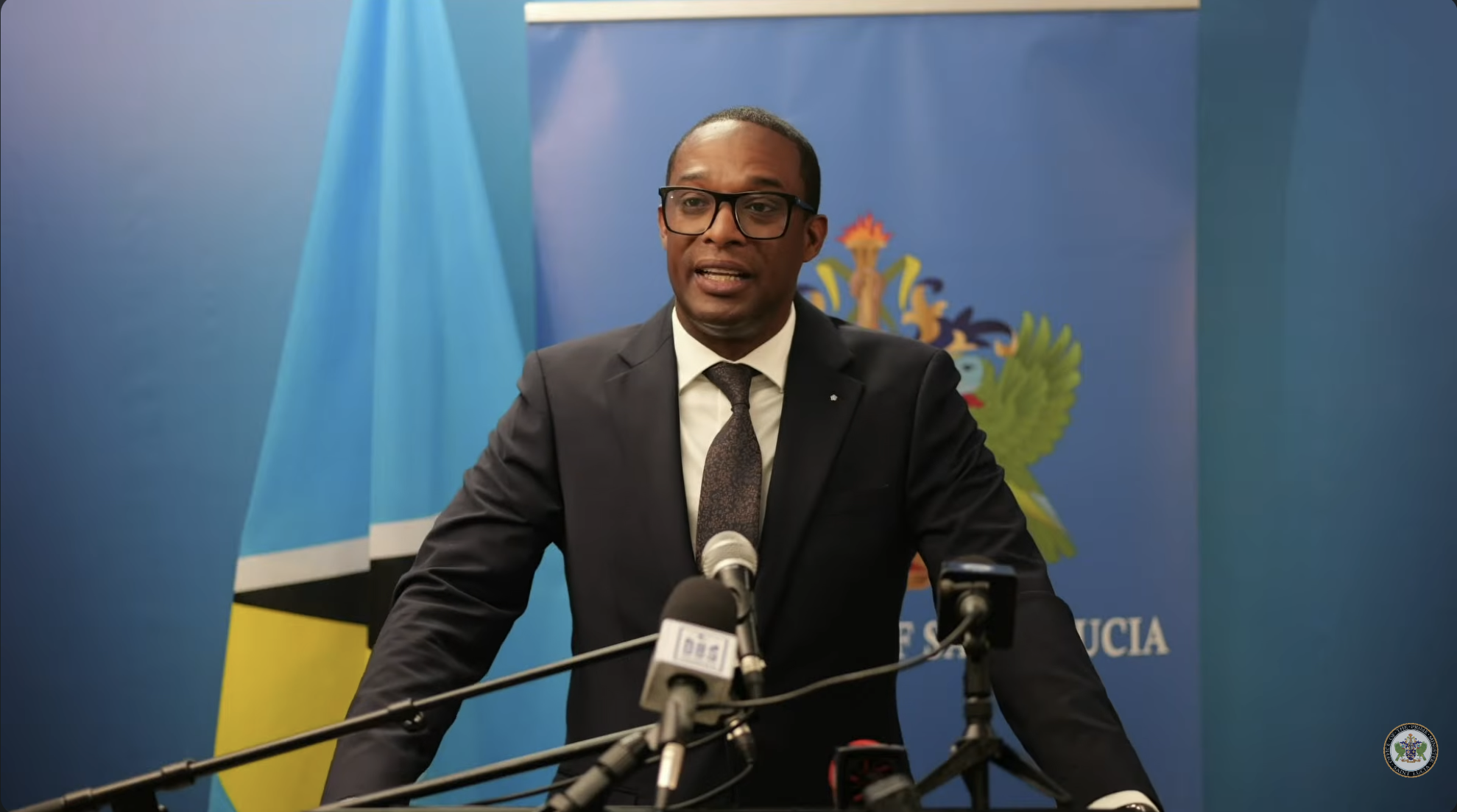
    A long period of business disruption for local vendors in Castries, Saint Lucia, took a step toward resolution on Tuesday, when 95 impacted sellers received compensation cheques for months of forced displacement from their regular workspaces. The disruption stemmed from the ongoing Castries Vendors Arcade redevelopment, a core component of the larger Saint Lucia Cruise Port Redevelopment Project along the city’s waterfront, which required vendors to vacate their permanent stalls for multiple months.

    Earlier this year, Prime Minister Philip J. Pierre first announced the government’s commitment to delivering financial relief to the displaced vendors, a promise fulfilled during Tuesday’s official cheque distribution ceremony hosted at Castries City Hall. In total, officials disbursed EC$433,143.30 in ex-gratia payments to eligible sellers, though payouts were not uniform across recipients.

    Payments were structured around each vendor’s outstanding rent balance owed to the Castries City Council, with sellers split into three tiers: Low Balance, Medium Balance, and High Balance. Vendors in the Low Balance category, who owed little to no back rent, received the full standard payment of EC$5,263.16. For vendors in the Medium and High Balance groups, a portion of the compensation was automatically deducted to settle outstanding rent obligations. In a small number of cases, the total unpaid rent even exceeded the full value of the ex-gratia payment, leaving vendors with no net payout from the distribution.

    Beyond delivering financial relief, senior government and port officials used the ceremony to share guidance and announce upcoming support programs for vendors as they prepare to move into the redeveloped arcade. Prime Minister Pierre encouraged vendors to adopt formal business management practices, emphasizing that daily sales revenue should not be confused with net profit.

    “Sales are not profit… When you have a good day, and you see things looking nice, don’t push your hand in it. You have to pay rent, you have to pay for the goods that you sell… You must treat it [vending] as a business,” Pierre told attendees. He also stressed the value of continued skills development, noting, “You are never too old to learn.”

    In line with that message, Saint Lucia Cruise Port has scheduled a specialized training program to help vendors maximize the benefits of their new, upgraded facilities once construction is complete. Lancelot Arnold, Director of Saint Lucia Cruise Port, also revealed that plans are in motion to form a new partnership with Export Saint Lucia after vendors relocate to the renovated space. This partnership will connect local vendors with domestic producers, expanding their access to a wider range of locally made goods tailored to the interests of the island’s cruise ship tourists.

    Officials also used the event to issue a reminder about ongoing rent obligations, referencing a 2021 rent reprieve program designed to help vendors catch up on outstanding balances. With the current compensation already being used to clear back rent, authorities urged vendors to avoid falling behind on payments again. The government made clear that financial assistance should not become an enabler for persistent non-payment, particularly for vendors who have a history of falling behind on their financial commitments to the city council.

  • Castries man charged with murder of Merissa Auguste

    Castries man charged with murder of Merissa Auguste

    A major homicide investigation in Saint Lucia has resulted in formal murder charges against a 40-year-old man from Castries, connected to the death of 21-year-old Merissa Auguste whose remains were found earlier this month along a major public roadway. The Royal Saint Lucia Police Force confirmed that Vianney Lubrin, a resident of La Croix Maingot in Castries, was charged following a systematic probe conducted by the department’s Major Crimes Unit.

    Following his charging, Lubrin made his first court appearance at the First District Court, where a judge ordered him to remain in police custody until his next scheduled hearing on October 6, 2026.

    The case traces back to reports of Auguste’s disappearance before search teams located her partially decomposed remains in a roadside area along the Millennium Highway on September 11. Law enforcement officials confirmed that a post-mortem examination conducted after the discovery concluded the young woman’s death was caused by strangulation.

    Even with the filing of formal charges against Lubrin, police emphasized that the investigative process remains active. Detectives are continuing to piece together the full sequence of events leading up to Auguste’s death and are working to uncover all contextual circumstances surrounding the incident.

  • Man sought over social media video now charged

    Man sought over social media video now charged

    A 36-year-old man, who was the subject of a widespread police manhunt linked to a string of alleged threats shared in a viral video across social media platforms, has been taken into custody and formally charged with the criminal offense of malicious communication.

    The Royal Saint Lucia Police Force (RSLPF) confirmed that the suspect, Clent Richardson, a national of Saint Lucia who was deported back to his home country from the United States in March 2023, was apprehended on Saturday, September 19. The arrest came after a weeks-long investigation into the context and origins of the threatening video that spread widely online.

    Following his arrest, Richardson was officially charged on Monday, September 21, under Saint Lucia’s Computer Misuse Act for the malicious communication violation. He made his first court appearance before the First District Court the very next day, where the judge granted him release on $500 cash bail.

    As part of the strict conditions attached to his bail, Richardson is banned from sharing any content on social media that expresses public frustration. He is also required to check in in person at the island’s Central Police Station every Tuesday before 6 p.m. for the duration of his pre-trial release. The legal case has been adjourned for further proceedings, with the next court date scheduled for November 5, 2026.

    In the wake of the arrest, the RSLPF has issued a public reminder that all content shared to social media platforms can carry serious legal ramifications for users. Law enforcement officials noted that while all residents hold a constitutional right to freedom of expression, that right comes with the responsibility to use digital devices and online platforms in a lawful, respectful manner.

    Police are also calling on all members of the public to think carefully before creating, uploading, forwarding or sharing any online content, especially material that could be deemed threatening, menacing, misleading, or designed to cause unnecessary emotional distress or widespread public alarm.

  • Semi‑Pro League halfway point sees 7 teams in contention

    Semi‑Pro League halfway point sees 7 teams in contention

    The Saint Lucia Semi-Professional Football League has entered its most thrilling phase yet, as the third season hits the halfway mark with a razor-thin title race that leaves no room for error. After a full slate of weekend matches, just two points separate the top four title contenders, turning every upcoming fixture into a high-stakes battle for the league crown. What was shaping up to be a predictable run for early leaders has quickly blown open, with shock upsets and last-minute dramatic results shifting the entire league table in just three days of play.

    The weekend’s biggest upset came at Soufriere Stadium, where mid-table side Gros Islet toppled previously dominant league leaders Vieux Fort South by a 3-2 scoreline. Gros Islet got off to a flying start, capitalizing on a costly mistake from the Vieux Fort South goalkeeper in the 12th minute, as Ridel Stanislaus slotted home the opening goal. By the closing minutes of the first half, Jahlil Evans doubled the lead, putting Gros Islet in a comfortable position heading into the break. The lead stretched to three goals just nine minutes into the second half, when Rickelme Lionel beat the offside trap to slot past the keeper, seemingly putting the result beyond doubt.

    Vieux Fort South, however, mounted a stunning late fightback in stoppage time, pulling two goals back deep into added time. Zephaniah Edwin got the comeback started in the 94th minute, and substitute Jerneil Alexander cut the deficit to just one goal three minutes later. Despite the late rally, Gros Islet held on to secure their fourth win of the campaign, handing Vieux Fort South only their second loss of the season. The slip up left Vieux Fort South still clinging to the top spot, but opened the door for chasing sides to close the gap.

    The most impressive performance of the weekend came from Canaries, who pulled off a gritty 1-0 win over two-time champions La Clery – despite playing with a man disadvantage for nearly the entire second half. Canaries saw defender Nick Longville sent off in the 42nd minute for denying a clear goalscoring opportunity, leaving the side down to 10 men before the halftime whistle. Just minutes after the restart, Canaries turned a lucky break into the match-winning goal: Steven Octave took advantage of an awkward deflection in the La Clery penalty box to slot home the only goal of the game. The three points lifted Canaries into second place in the league, just one point behind Vieux Fort South.

    In the weekend’s other drawn fixture, Dennery and Soufriere shared the points after a 1-1 stalemate. Shaquelle William broke the deadlock for Dennery in the 68th minute, but Soufriere was awarded a penalty 17 minutes from full time, which Jardel Philip coolly converted to level the score. The match was a physical affair, with Eitan Stanio picking up a yellow card for Dennery, while Soufriere saw three players – Shermar Simeon, Curt Calixte, and Terry George – all cautioned before the final whistle.

    Sunday’s action delivered two more late dramatic results, with both matches decided deep in stoppage time. Bottom-of-the-table Mabouya Valley pulled off a surprise 1-0 win over Central Castries, with halftime substitute Maius Stanislaus scoring the winning goal just two minutes into added time. The result was only Mabouya Valley’s second win from nine matches this season.

    The final match of the weekend saw another late winner, as Anse La Raye climbed off the bottom of the league table with a narrow 3-2 victory over Vieux Fort North. Erick Gabriel put Anse La Raye ahead in the 48th minute, only for Riquelme Elva to equalize for Vieux Fort North seven minutes later. Substitute Marlon St Aimee put Vieux Fort North ahead in the 74th minute, but Anse La Raye substitute Nangee Phillip drew the sides level again just four minutes later. With the match poised for a draw, Nevin William scored the winner two minutes into stoppage time, lifting Anse La Raye out of the relegation zone.

    After nine matches played for most sides, the league table remains extraordinarily tight. Vieux Fort South holds onto the top spot, but Canaries sit just one point behind in second. Dennery and two-time champions La Clery are another point back, tied for third. Soufriere, Vieux Fort North, and Gros Islet all remain in striking distance of the top four, separated only by goal difference with more than half the season still to play.

  • Piton Boyz aiming to win, says new coach

    Piton Boyz aiming to win, says new coach

    Fresh off his official introduction as the senior men’s national football team head coach of Saint Lucia, Rajesh Latchoo has announced a carefully curated 25-player roster that balances veteran know-how and emerging young talent for his debut fixture at the helm: a pivotal Concacaf Nations League League B Group B clash against regional rival Barbados. Dubbed the Piton Boyz, Saint Lucia will kick off their 2024/25 Nations League campaign this Friday at the Daren Sammy Cricket Ground, facing off against Barbados’ Bajan Tridents in what marks the first test of Latchoo’s leadership.

    Latchoo was formally appointed to the top job during an official press conference held Tuesday morning at the Saint Lucia Football Association (SLFA) headquarters, where he laid out his dual track vision for the national program: a long-term strategic roadmap built to grow the sport across the island, paired with clear, ambitious short-term targets. For the upcoming Nations League group stage, the new head coach made his priorities unambiguous: secure all 18 available points to claim the top spot in Group B. “18 points is the only way to guarantee we finish first — we don’t want to leave our fate to other results, that is our non-negotiable mission,” Latchoo stated.

    Acknowledging the compressed five-day preparation window ahead of Friday’s opening match, Latchoo noted that elite international football often operates on tight timelines, and he expressed full confidence in his squad’s capabilities. “The staff and SLFA are pulling out all stops to get players match ready. Even with the short turnaround, these players have the skill and competitiveness to deliver,” he said. The coach also emphasized that national team success requires collective buy-in across the entire country, calling for widespread public backing ahead of the campaign. “Qualification isn’t just a job for the players, the coaching staff or the FA — it needs the whole nation behind us. If 100% of the country supports this mission, our players can give 100% effort out on the pitch,” he added.

    To support his four-year plan leading up to the 2030 FIFA World Cup, Latchoo has assembled a new backroom team, including iconic former Saint Lucia international Earl “Ball Hog” Jean. His long-term strategy centers on assigning clear, specialized roles to players across all age groups, with accountability at every level of the program. “Every milestone between now and 2030 matters, and this Nations League campaign is our very first milestone,” Latchoo explained. “Our squad draws together players from different leagues, backgrounds and skill sets, each of them brings unique strengths to the table. We will hold players accountable daily, just as the SLFA, the fans, and the nation will hold our coaching staff and the entire program accountable.”

    The 25-man roster reflects Latchoo’s focus on balancing homegrown talent with players plying their trade overseas. Nearly half the squad — 12 players in total — compete in Saint Lucia’s own Semi-Professional Football League (SPFL), including league top scorers Garvin Reggie of Dennery and Yanic Noel of La Clery, plus 2023/24 Footballer of the Year and La Clery goalkeeper Devone St Prix. Six of the domestic-based players hail from the two-time defending SPFL champions.

    Four players currently play in Jamaica’s top flight: goalkeepers Vino Barclett (Montego Bay Utd) and Darren Donaie (Cavalier SC), defender Melvin Doxilly (Montego Bay Utd) and young attacker Shevon Byron (Mount Pleasant FA). Two defenders, Terell Thomas and Arkell Jude Boyd, join the squad from clubs in the United Kingdom, with Boyd plying his trade at Shrewsbury Town FC and Thomas currently unattached. Promising attacker Donavan Phillip earns his call-up from MLS side Colorado Rapids in the United States.

    Veteran fullback Kurt Frederick links up from Antigua & Barbuda’s Grenades FC, while midfielder Jason Similien returns to the national fold from Germany’s AC Italia Hilden. Caniggia Elva, a forward, joins from Canadian Premier League side Cavalry FC, and attacker Djal Augustin comes in from Poland’s Warta Srem. Age-wise, the squad leans into Latchoo’s youth-focused long-term vision: only six players are aged 30 or older, just two are teenagers, and the majority of the roster falls in their early 20s, creating a mix of experience and upside that the coaching staff hopes will deliver a strong opening result on Friday.

  • “We feel empty” Xuvo family mourns loss of Jahn Sifflet

    “We feel empty” Xuvo family mourns loss of Jahn Sifflet

    The tight-knit Sifflet family is grappling with an overwhelming loss following the unexpected passing of 51-year-old Jahn Sifflet, a core member of the award-winning Xuvo Carnival band, who died suddenly on Sunday. Remembered by loved ones as a kind, steady, and humble leader who dedicated himself to lifting up those around him, Jahn leaves behind a legacy of service, collaboration, and quiet strength that touched both his family and the wider Carnival community.

    As the eldest of four Sifflet siblings who built and run Xuvo together, Jahn served as the backbone of both the family and the band. Beyond his role leading the group’s road management team, he was the go-to problem solver for every challenge, whether the issue arose in their personal lives or their shared creative business. His sister Maier Sifflet — Xuvo’s creative director — shared that Jahn’s calm, measured approach kept the family grounded through years of growth, even as the four siblings brought distinct personalities and perspectives to their work.

    The Xuvo Carnival band itself grew directly out of the Sifflet family’s long-standing shared love for cultural celebration and collaborative work. Founded by the four siblings in 2019, the band reached a major career milestone earlier this year when it took home the coveted title of Band of the Year at the annual Carnival celebrations. Beyond his work with the band, Jahn built a respected career as a lawyer, and he carried the same dedication and pride into his legal work that he brought to the family’s creative projects.

    Maier reflected that the profound public outpouring of support following Jahn’s passing is a testament to the warm, lasting impression he left on everyone he met. For the Sifflet family, who built their bond around daily check-ins, shared jokes, and constant connection through their family group chat, the gap left by Jahn’s absence feels enormous. “We feel empty,” Maier shared, acknowledging the depth of the family’s grief.

    Even as they mourn, the family has committed to staying united, honoring the steady leadership Jahn provided throughout his life. Maier noted that Jahn would want the family to stay strong and carry on the work they built together. The family is currently planning a special public tribute to celebrate Jahn’s life and legacy, one that reflects his personality and the things he loved most. A portrait of Jahn has already been placed on public display at La Place Carenage, near the local courthouse, for community members to pay their respects.

    Maier said the family has found small comfort in the widespread love and support they have received from relatives, friends, and Jahn’s girlfriend, a reminder of how many lives he touched. “He was loved … by everyone,” she said. “He has been an amazing son, brother, grandchild, friend and just truly an amazing human being.” Though the hole left by his passing will not easily be filled, the Sifflet family and the entire Xuvo community hold fast to the memories of a man who gave his all to every person and project he cared about. In closing, Maier reaffirmed what the whole family knows to be true: “Truly, We have lost a good one.”

  • Latchoo set to lead Piton Boyz

    Latchoo set to lead Piton Boyz

    Ahead of the highly anticipated 2026-27 Concacaf Nations League, the Saint Lucia Football Association (SLFA) Inc. has formally named seasoned football tactician Rajesh Latchoo as the new head coach of the country’s senior men’s national team. The appointment caps a transition period for the side known colloquially as the Piton Boyz, as Latchoo steps into the role vacated by fellow Trinidad and Tobago native Stern John, who guided the squad through 25 competitive matches between 2022 and early 2026.

    Hailing from Princes Town, Trinidad and Tobago, Latchoo brings a well-rounded resume shaped by decades of work across club management, youth development, and regional coaching education. His first senior leadership opportunity arrived at just 27 years old, when he took the reins of Trinidadian club side Joe Public FC. In his early tenure with the team, he delivered immediate success, leading the club to claim the 2011 Digicel Pro Bowl championship.

    Over the course of his career, Latchoo has held a diverse array of roles across Caribbean football. Beyond his time at Joe Public, he has managed top-tier Trinidadian club Morvant Caledonia United, served as an assistant coach for Trinidad and Tobago’s senior women’s national team, and overseen multiple youth national squads. Off the match pitch, he has built a reputation as a leading voice for coaching development in the region: he has worked as a certified coaching instructor for Concacaf, and previously held dual leadership roles with the Trinidad and Tobago Football Association as Head of Coach Education and Youth Football Director.

    Latchoo’s most high-profile prior international appointment was a five-year tenure as head coach of the Commonwealth of Dominica’s men’s national team, a post he held from 2017 to 2022. Across 19 official competitive matches during that spell, including Concacaf Nations League fixtures and FIFA World Cup qualification games, he recorded five wins, four draws, and 10 losses. At the club level, he also compiled a 21-match record in charge of Morvant Caledonia United in the TT Pro League alongside his title-winning run at Joe Public FC.

    Notably, Latchoo’s appointment continues a long-running trend for the SLFA, which has now hired three consecutive Trinidad and Tobago-born head coaches for the senior men’s side. He follows Jamaal Shabazz, who held the post from 2019 to 2021, and outgoing coach John, who has since moved on to take the top job with Grenada’s national side.

    For Latchoo, the challenge starts immediately: the Piton Boyz are scheduled to kick off their 2026-27 Nations League campaign in League B, Group B this coming weekend, with two home matches set to take place at the Daren Sammy Cricket Ground. The side will face Barbados this Friday, before taking on Bermuda three days later at the same venue, and will travel to Barbados for a return fixture the following weekend.

    With Latchoo’s deep background in coaching education and youth development, paired with the SLFA’s recent hire of a new technical director, football observers across the Caribbean are keen to see how the new coach will shape the long-term trajectory of Saint Lucian football. Beyond the immediate task of competing in the Nations League, his work will likely impact the growth of the country’s domestic league, the development of junior national teams, and the ongoing evolution of the senior men’s program.

  • Govt to move ahead with Joy St Omer inquiry

    Govt to move ahead with Joy St Omer inquiry

    After weeks of procedural delay caused by unresolved legal questions, the long-awaited independent commission of inquiry into the death of Joy St Omer is finally poised to move forward, following clearance from the country’s top legal advisor. Prime Minister Philip J. Pierre confirmed the development during a pre-Cabinet press briefing on Monday, revealing that the Attorney General has formally advised the government that the inquiry can proceed once specific pre-defined conditions are put in place.

    The push for a public inquiry originated from a formal petition submitted to the Prime Minister and the full Cabinet by St Omer’s family, who have pressed for full transparency into the circumstances surrounding her death. Initially, Cabinet declined to immediately greenlight the request, citing overlapping active criminal proceedings connected to St Omer’s death. Government officials opted to hold the process to seek formal legal guidance, to eliminate any risk that the commission’s work would prejudice or disrupt ongoing criminal litigation.

    With the critical legal opinion now in hand, the government has laid out its clear roadmap for advancing the inquiry. The Attorney General is currently drafting the formal terms of reference for the commission, a document that will outline the exact scope of the investigation and embed the required conditions to ensure compliance with legal requirements. Once the draft is finalized, Cabinet will present the plan to the Governor General to issue the official order formally establishing the commission of inquiry.

    Prime Minister Pierre pushed back against any suggestions that the delay in approving the inquiry was unnecessary, defending the government’s deliberate, caution-first approach. “The decisions I take have far-reaching effects; before I take any decision, I always seek opinions,” Pierre told reporters.

    Monday’s announcement marks a key milestone for St Omer’s family, who have campaigned for an independent investigation into her death. The full scope of the commission’s investigation will ultimately depend on the details laid out in the upcoming terms of reference, which are expected to be finalized and presented to Cabinet in the coming weeks.