标签: Saint Lucia

圣卢西亚

  • US visa crackdown derails Labor Day gigs for some Caribbean artistes

    US visa crackdown derails Labor Day gigs for some Caribbean artistes

    A sudden shift in United States visa regulations has thrown the upcoming New York Labor Day holiday entertainment schedule into disarray, leaving dozens of Caribbean musical and cultural performers scrambling after long-standing travel loopholes for artists were abruptly closed.

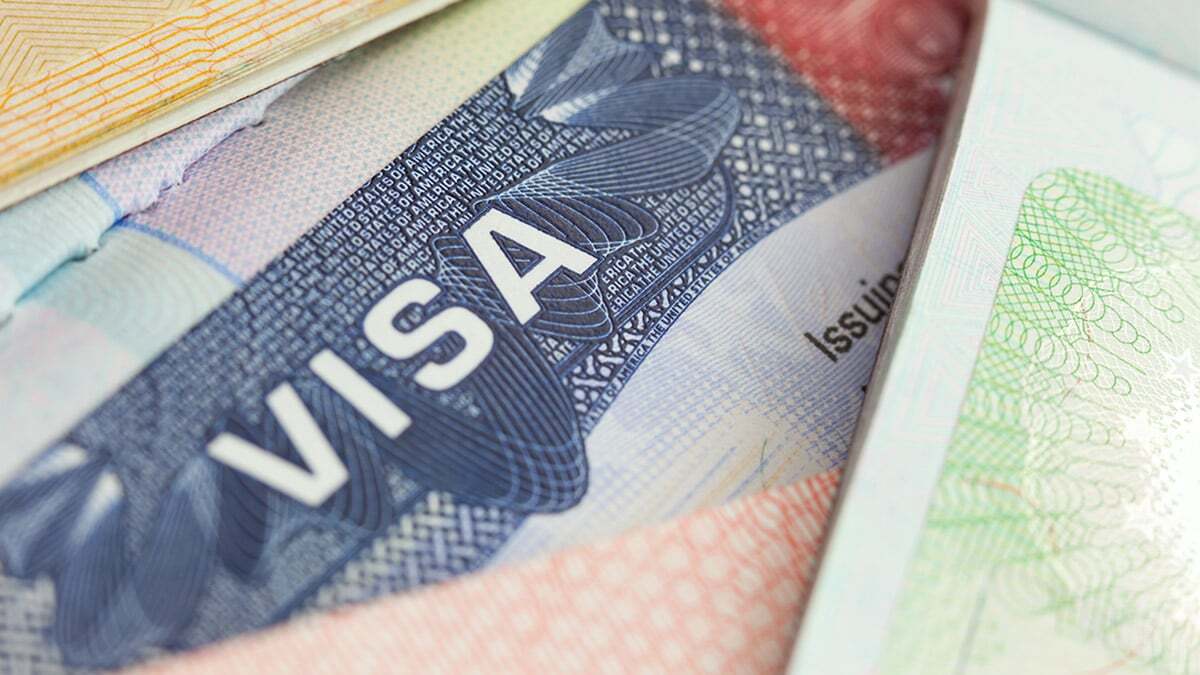
    For decades, Caribbean entertainers have relied on standard B1/B2 visitor visas—officially designated for business meetings and recreational tourism—to enter the U.S. for short-term performance engagements at regional cultural events. That unwritten practice has now come to an end, as U.S. authorities have implemented a new policy clarifying that professional performances require formal work authorization, not visitor visas.

    According to local Saint Lucian outlet St. Lucia Times, at least three performers from the small Caribbean island nation have already had their existing B1/B2 visas revoked in recent weeks, directly canceling their confirmed spots on Labor Day event lineups this weekend.

    The disruption is not isolated to Saint Lucia, however. Prime Minister Philip J. Pierre confirmed this week in a press briefing that artists from across the entire Caribbean region are facing similar barriers. “Artistes who performed in the US before on B-1 [and] B-2 visas are being sanctioned, artistes from all over,” Pierre told reporters.

    The prime minister outlined the new requirements for any entertainer hoping to accept U.S. performance gigs going forward: artists must secure a U.S.-based talent agent and complete the full formal work permit application process before committing to any engagements, a more costly and time-consuming procedure than the previous streamlined approach using visitor visas.

    Regional entertainment industry representatives report that performers from multiple other Caribbean nations, including members of established touring bands that have regularly appeared at U.S. Labor Day celebrations for years, have also run into the new restrictions. For many, the last-minute policy change has made it impossible to resolve their visa status in time for this weekend’s events, forcing event organizers to scramble to fill empty performance slots and leaving artists out of expected income and critical international exposure opportunities.

  • Pageant Committee bids farewell to former Carnival Queen

    Pageant Committee bids farewell to former Carnival Queen

    The tight-knit Carnival community of Saint Lucia is enveloped in grief this week, after news broke that Patrika Evence, the island nation’s 1999 National Carnival Queen, has passed away. Evence died last Friday, and the announcement immediately triggered a wave of heartfelt tributes that flooded social media platforms across the country.

    What made the outpouring of mourning so widespread is that Evence’s impact stretched far beyond the single year she wore the coveted carnival crown more than 24 years ago. For members of the Carnival Planning and Management Committee (CPMC), the governing body that oversees the country’s annual Carnival celebrations and the national pageant, Evence remained a beloved and influential figure decades after her reign.

    In an official public statement released following Evence’s death, the CPMC honored both her legacy as a pageant titleholder and her character as an individual. The committee emphasized that Evence’s crown was never just a symbolic award — it was a reflection of the poise, natural beauty, and quiet confidence that defined her public persona, and that left an indelible mark on the history of Saint Lucia’s Carnival. Throughout her time as queen and in the years that followed, she carried her title with unwavering pride, gentle elegance, and a warm, generous spirit that resonated with everyone she met.

    Close friends, fellow pageant participants, and community members who worked with Evence over the years have shared their own personal memories, remembering her as a trusted confidante to many young pageant aspirants and a steady guiding mentor who continued to lift up other members of the Carnival community long after she stepped off the stage. Many shared stories of how she supported emerging titleholders, helped new participants navigate the pageant process, and nurtured a culture of mutual support within the Saint Lucia Carnival Queen Pageant community.

    The CPMC extended its deepest condolences to Evence’s family, friends, and all those who counted her as a loved one in their personal lives. While the community mourns the loss of one of its most cherished members, the statement concluded, the light Evence brought to the celebration of Carnival, the countless memories she created with those around her, and the enduring legacy she leaves behind will never be forgotten. Her memory will continue to hold a special place in the hearts of all who knew her, and in the history of Saint Lucia’s beloved Carnival tradition.

  • Two injured after minibus crashes into wall at Pierrot

    Two injured after minibus crashes into wall at Pierrot

    A sudden road accident left two adults injured Friday afternoon when a commuter minibus lost control, departed its planned route and slammed into a fixed wall in the Pierrot district of Vieux-Fort, local emergency authorities have confirmed.

    The Saint Lucia Fire Service, which is responsible for traffic collision response in the area, announced that its rescue teams were dispatched to the crash site immediately after receiving the emergency report, arriving on scene at roughly 3:54 p.m.

    When first responders reached the location, they discovered the two injured passengers — one adult man and one adult woman — lying unprotected on the ground adjacent to the crashed vehicle. The severity of their injuries required urgent on-site medical attention before transport.

    According to official statements from the Fire Service, the male victim sustained traumatic injuries to his head alongside additional cuts and bruises across his body. The female victim, by contrast, suffered soft tissue damage to her lower left leg as well as other minor bodily harm from the impact.

    Emergency medical technicians completed initial stabilization treatment for both casualties right at the accident site. Once their conditions were deemed stable for transport, the pair were moved to a local medical facility to receive more comprehensive, ongoing care for their injuries. No further updates on their current conditions have been released as of this reporting.

  • Semi turns old song into fresh release with “In the Mood”

    Semi turns old song into fresh release with “In the Mood”

    After a decade of consistent output and steady artistic growth in the reggae scene, veteran Saint Lucian singer-songwriter Semi Francis has unveiled his latest release: *In the Mood*, a warm romantic track pulled from his archives of uncompleted work, written years earlier for a past project.

    In an exclusive interview with the St Lucia Times this week, Francis opened up about the unexpected origin of his new single. He explained that the song was initially crafted for his previous album *Love Strong*, but got pushed aside as the project wrapped up, never getting the final touches it needed to release. It remained stored away in his personal files until a recent deep dive into his backlog of work led him to revisit the forgotten track.

    “This is a song that I wrote a few years ago. It was supposed to be on my *Love Strong* album but when we got to the crunch, we never got a chance to finish it,” Francis said. “So I was going through my files recently and I said, ‘hey, let me revive this song’. So it was just the right time.”

    When asked about the core inspiration that drove the writing of *In the Mood*, Francis shared that the track mirrors his long-held personal outlook on life, centered around intentionally cherishing quiet, meaningful moments with loved ones. For Francis, the song captures the magic of building a soft, romantic atmosphere, rather than chasing grand gestures.

    “I always look for the best things in life, so even if you don’t have it, you can imagine it and this is what *In the Mood* is all about,” he said. “It is about creating that special moment. You don’t want to do too much talking, you just want to have that nice romantic evening with the person that you love. So, yeah, that’s how the song actually came about.”

    For Francis, who has built a reputation as a prolific songwriter over 10 years of continuous music releases, the process of turning a raw idea into a finished song remains one of the most fulfilling parts of his career. He compared the experience of completing a new track to two major life milestones: welcoming a child and earning an academic degree, emphasizing the deep sense of pride that comes from seeing an idea come to fruition alongside collaborators.

    “Every song feels like birthing a child,” he said. “Every song feels like a degree, even. It gives you a really good feeling to know that something was a thought and to see the finished product – the process, the people that you actually worked with – when you hear the finished product, you feel really, really good.”

    Francis’ musical journey began with a childhood steeped in reggae classics, and he cut his teeth in the industry with the release of his debut reggae single, a cover of Ken Lazarus’ *Put Yourself in My Place*. Today, *In the Mood* stands as the latest milestone in that ongoing evolution, showcasing his consistent growth as an artist.

    As the new single begins to gain streaming traction across digital platforms, Francis is already hard at work on his next release, which he teased will lean into the conscious reggae subgenre. True to his annual tradition, he also confirmed that a new Christmas track is in the works for this year, a staple release he puts out for fans every holiday season.

    *In the Mood* is available globally now on YouTube, all major music streaming platforms, and Francis’ official website semimusic.com.

  • Alfred wins third straight Diamond League title

    Alfred wins third straight Diamond League title

    The 50th edition of the Allianz Memorial Van Damme kicked off in Brussels on Friday night, with Belgian royalty King Philippe, Queen Mathilde and Prince Gabriel in attendance at the iconic King Baudouin Stadium. When the dust settled on the women’s 200m final, it was Saint Lucia’s sprinting star Julien Alfred who once again stood atop the podium, securing her third straight Wanda Diamond League title in breathtaking fashion.

    Alfred, the 25-year-old rising star hailing from Ciceron, delivered a masterclass in competitive running to cross the finish line in 21.79 seconds, with a mild tailwind of just 0.1 meters per second aiding her run. The performance thrilled the packed stadium crowd, capping off another remarkable display from one of the world’s most dominant sprinters.

    Going into the race, Alfred already held the two fastest 200m times recorded globally in the 2026 season, and Friday’s result still ranks as the seventh-fastest mark of the year for the discipline. This race will also mark Alfred’s final 200m outing of the season, as the sprinter has confirmed she will shift her full focus to the 100m event at next weekend’s World Athletics Ultimate Championship, scheduled to take place in Budapest.

    Starting from the less favorable Lane 6, Alfred faced immediate pressure from American sprinter Kayla White through the first bend. Alfred clocked a solid 0.166-second reaction time out of the starting blocks, and covered the opening 100m in 11.25 seconds, putting her just behind White, who stopped the clock at 11.18 seconds, and Britain’s Amy Hunt, who ran 11.24 seconds over the first half-lap.

    But Alfred’s biggest strength has long been her elite speed endurance, and that quality shone through as the field entered the homestretch. By the 160-meter mark, Alfred had pulled even with the leading pack, hitting 160m in 17.37 seconds to White’s 17.41 seconds. She then put on a devastating surge over the final 40 meters, pulling clear of the entire field to win by a comfortable margin of more than two-tenths of a second.

    White held on to claim second place with a time of 22.00 seconds, while Hunt rounded out the podium in third, clocking a new season’s best of 22.16 seconds.

    Friday’s Diamond Trophy win caps what has been an absolutely dominant season for Alfred, who already claimed the Olympic 100m gold medal at the 2024 Paris Games. She has only suffered one defeat in outdoor races this season, arriving in Brussels fresh off a blistering 10.70-second 100m performance at Zürich’s Letzigrund just days earlier, following on from a 21.52-second 200m run in Monaco last month. With just one major race remaining on her 2026 calendar, Alfred heads into the World Athletics Ultimate Championship as one of the clear favorites to take home the 100m crown.

  • Nine injured in Millennium Highway collision

    Nine injured in Millennium Highway collision

    A collision between two passenger vehicles on Saint Lucia’s Millennium Highway on Friday afternoon left nine people with injuries, prompting a rapid emergency response that saw all casualties transported to local medical facilities for ongoing care.

    According to a statement from Sherise John, a representative of the Saint Lucia Fire Service, first responder teams were dispatched to the accident site shortly after 1:50 p.m. once the incident was reported to local authorities.

    Rescue teams faced an unexpected complication when they arrived: the single occupant of the first vehicle was trapped inside the wreckage following the impact. First responders had to carry out a controlled extrication operation to remove the driver from the damaged vehicle before medical assessment could begin. Once freed, medics confirmed the driver had suffered only superficial cuts and scrapes across his lower legs and feet, with no life-threatening damage detected.

    The second vehicle involved in the crash was carrying a total of eight people, all of whom were able to exit the vehicle on their own following the collision. All eight members of this group walked away with mild, minor injuries to different parts of their bodies, with no critical harm reported among the group.

    Emergency medical personnel administered initial first aid and triage to all nine injured people directly at the crash site before arranging coordinated transport to a nearby medical center. The decision to move all casualties to a formal facility was made to allow for more comprehensive evaluations and rule out any undetected internal injuries that may have resulted from the collision. As of the initial statement, no updates have been released regarding the cause of the crash or the current condition of the injured individuals following their admission to the medical facility.

  • 50-Plus Pageant hits the stage this weekend

    50-Plus Pageant hits the stage this weekend

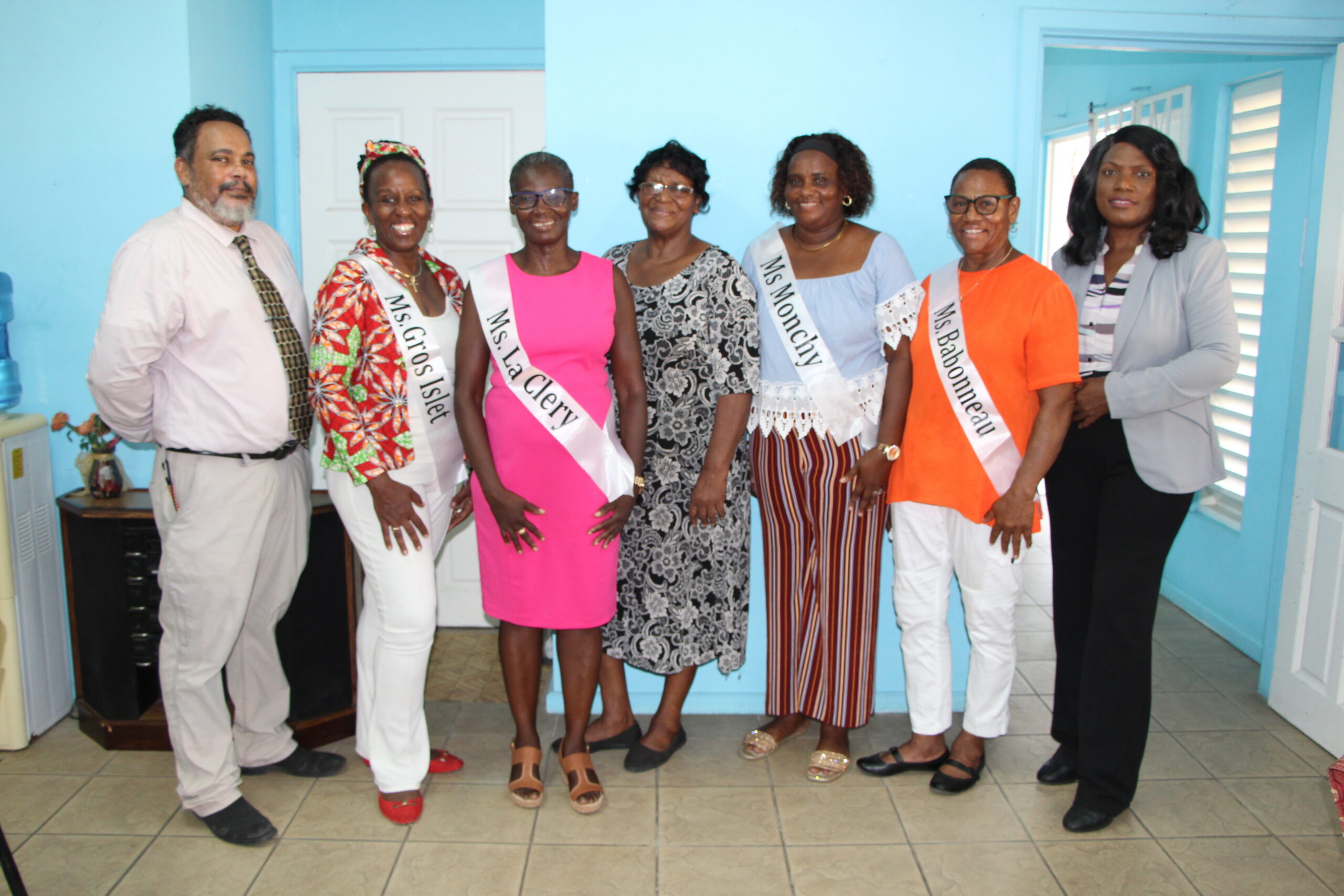
    This Sunday, September 6, a groundbreaking event centered on celebrating the talents and value of adults over 50 will take place at the National Cultural Centre in Saint Lucia: the first-ever Helpage 50 Plus Pageant. With five contestants set to take the stage, the pageant was created to shine a spotlight on three core themes: untapped older adult talent, collective empowerment, and the growing movement for healthy, active ageing.

    Backed by the country’s Department of Equity, Social Justice, Gender and Older Persons, the event aligns directly with the government department’s core mission: to expand opportunities for older Saint Lucians to remain active, visible, and engaged members of society as they age. In the lead-up to the pageant, Permanent Secretary Esther Rigobert held a meeting with all five contestants at HelpAge Saint Lucia’s headquarters in La Clery, where final preparations for the event are underway.

    Rigobert emphasized that cross-sector collaboration with established community organizations already serving older populations is the most effective strategy to expand empowerment opportunities for this demographic. “We are delighted to be part of this effort and to collaborate with private stakeholders who are already doing tremendous work,” she noted during the meeting. “They are engaging older persons, addressing their needs, providing opportunities to develop new skills and helping them feel more empowered, while reinforcing the message that they can continue to make valuable contributions to society.”

    Speaking directly to the contestants, Rigobert encouraged each participant to step into the spotlight with confidence, urging them to make the most of the unique platform. “I want to encourage all participants to dress up, show up and give their best, whether through their talent presentations or oratory skills. Put your best foot forward and show Saint Lucia what you are capable of achieving,” she said.

    Beyond being a one-day performance event, the pageant is designed to redefine public perceptions of ageing. It gives participants a space to showcase their creativity, confidence, diverse skills, and ongoing contributions to Saint Lucia’s families, local communities, and national life. Robert Huggins, Director of the Division of Older Persons, explained that events like this pageant directly challenge harmful stereotypes about what older adults can achieve, by centering their abilities rather than their age.

    “The whole idea is to create as many opportunities as possible for older persons to showcase their talents, skills and abilities,” Huggins said.

    Host organization HelpAge Saint Lucia has a long-standing track record of centering the welfare and empowerment of older adults across the country. Its core programming covers policy advocacy, targeted social inclusion initiatives, skills training workshops, and expanded opportunities for older adults to participate meaningfully in community life. This weekend’s pageant marks one of the organization’s most visible public efforts to shift cultural narratives around ageing in Saint Lucia.

  • Fear of the ‘Other’: Reflections on third-country nationals in Saint Lucia

    Fear of the ‘Other’: Reflections on third-country nationals in Saint Lucia

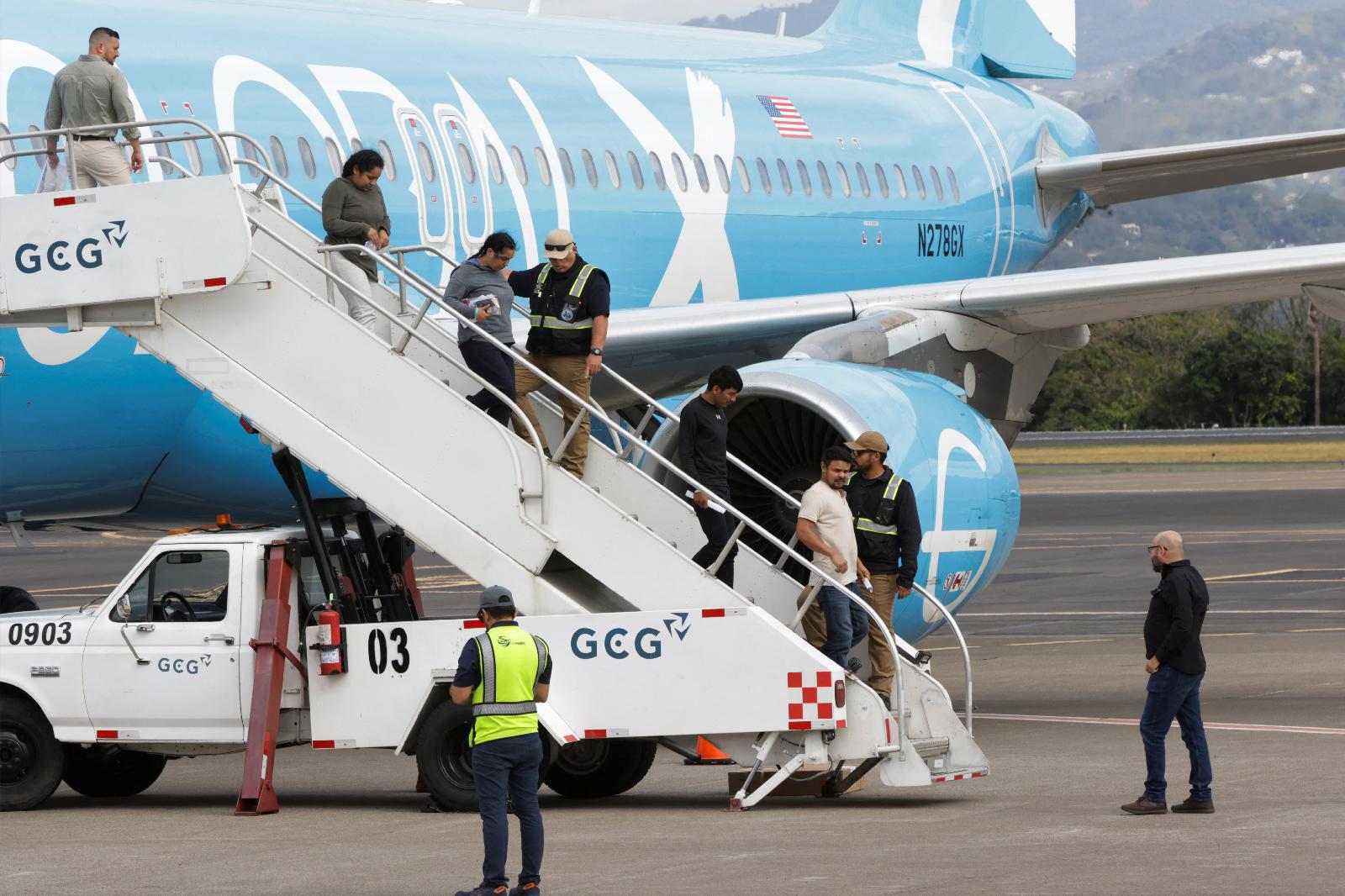
    In recent days, Saint Lucia has been roiled by widespread public debate following Foreign Minister Alva Baptiste’s formal announcement that the island nation will accept third-country nationals deported from the United States. Much of the public discourse has centered on fierce opposition to the government’s decision, with critics arguing that Saint Lucia has caved to pressure from Washington, failed to release sufficient justifying information for the policy, and submitted to coercive demands from the U.S. government. What this heated public conversation lacks, however, is a nuanced, thoughtful examination of the complex web of issues surrounding the deportation agreement – the policy is far from a black-and-white issue that can be reduced to simple for-or-against stances.

    One of the most pressing and legitimate public concerns centers on resource allocation: will Saint Lucia be forced to cover all costs related to supporting deportees with its own public funds, or will the U.S. provide adequate financial backing during their stay in the country? Polling of public opinion suggests broad support for the program would likely be possible if full U.S. funding is guaranteed, while the proposal garners almost no backing when the public is asked to shoulder the cost. To address these valid concerns about how taxpayer money will be used – if at all – the Saint Lucian government must proactively release detailed information to the public. Key transparency measures include, but are not limited to: full intergovernmental disclosure of each deportee’s background; acceptance only of individuals with no criminal history beyond minor immigration violations or unresolved asylum claims; ongoing parliamentary oversight with regular public reporting; and a binding commitment that the U.S. will provide a full financial package to cover deportees’ transition into Saint Lucian society.

    Anti-immigration, isolationist and nationalist sentiment is not limited to far-right political parties; it also resonates with many ordinary Saint Lucians who worry that supporting deportees will come at the expense of domestic social support for citizens. A common refrain echoes across public discourse: “How can outsiders receive government support when I, a citizen, struggle to get the help I need?” Even when this fear does not align with factual reality, perception shapes political outcomes, and government officials must acknowledge this widespread anxiety and work to clarify what the agreement actually entails – and what it does not.

    More troubling, however, is the growing narrative framing all deportees from third countries as violent, dangerous criminals who will drive up Saint Lucia’s already high crime rate, positioning them as an existential threat to public safety. While the government’s lack of transparent information about incoming deportees has undeniably fueled this anxiety, it raises a deeper, more critical question: Why is the default assumption that any non-Saint Lucian arriving from abroad must be a violent criminal, when no evidence supports this broad generalization?

    This line of thinking leads to uncomfortable truths about implicit bias: Are we linking criminality to specific nationalities or groups of people? Where do these harmful stereotypes originate? Do they stem from Western media narratives that reinforce global hierarchies of people and nations, which frame entire regions as inherently criminal and their residents as nothing more than dangerous outsiders? Why do we only welcome foreigners as short-term tourists spending money in our economy, while refusing to acknowledge that many deportees have valuable skills, ambitions, and can make meaningful, productive contributions to Saint Lucia’s national development just as previous generations of immigrants have? Is a deportation order from the U.S., with no context about the individual’s actual offense, an automatic mark of permanent undesirability? Where is the regional Caribbean identity that reminds us we are all vulnerable to being labeled undesirable by powerful foreign nations at any moment? Would we want other countries to reject all Saint Lucian deportees based on the same unproven stereotypes?

    Ironically, by embracing these harmful generalizations, we are replicating the same colonial, racist ideologies that once labeled all Caribbean people as useless, lazy criminals and primitives who needed to be “civilized” by European powers, solely because of our skin color and our fight for political independence. When we brand all deportees as “others” and “undesirables” without knowing their backgrounds, skills or personal stories, we are using the exact same dehumanizing language that has been used against Caribbean people for centuries. This is the same rhetoric that has labeled our people “from shithole countries”, spread false stereotypes about our cultural practices, and even argued that European slavery benefited Caribbean nations by bringing them democracy and the rule of law – claims that demand we reject calls for reparations for colonial harm.

    Critics often point to U.S. Secretary of State Marco Rubio’s claim that the deportees accepted by Saint Lucia are “the worst of the worst” to justify opposition. But a closer look at U.S. deportation operations run by Immigration and Customs Enforcement (ICE) reveals that not all detained and deported individuals are violent criminals who threaten U.S. national security. Like the UK’s Sunak administration’s blocked plan to offload asylum seekers to Rwanda, the U.S. has abdicated its own responsibility to address its domestic immigration crisis by shifting the burden onto smaller, poorer nations, rather than doing the hard work of crafting humane, dignified, responsible policy solutions.

    In fact, a large share of deportees being sent to Caribbean nations are only guilty of overstaying their visas, after fleeing violence or poverty in their home countries to pursue the “American Dream” that the U.S. has long promoted globally. We also need to interrogate the unspoken assumption that the U.S. has an inherent right to decide an individual’s moral worth, and that every other nation must automatically accept its labeling of people as criminals. This is the core logic behind the common argument: “If the U.S. doesn’t want these people, why should we?” This line of thinking grants the U.S. sole authority to judge who is valuable and who is not, erasing the right of other nations to make their own independent assessments. In embracing U.S. labels uncritically, we fail to recognize that under current U.S. policy, almost any non-American can be categorized as an undesirable, and we are blindly replicating harmful hierarchies that have no basis in fact. We do not need to demonize and dehumanize people simply because we lack full information; we can demand greater transparency without resorting to discrimination.

    This dehumanizing rhetoric is often a deliberate political tool to justify mass deportation. It stokes fear, anger and anxiety among right-wing voters and ordinary citizens by blaming “foreign criminals” for rising crime, rather than acknowledging that most crime in any country is committed by citizens, and requires long-term solutions like economic growth and social development. When domestic political elites have no new ideas to reduce crime or invest in human development to address the root causes of violence, scapegoating immigrants is an easy distraction that wins public support for harsh immigration policies. Similarly, elites often blame immigrants for domestic unemployment, claiming outsiders take all the good jobs from native-born citizens, rather than acknowledging that high unemployment stems from the failure of political and business leaders to create new jobs. As the age-old saying warns: When you’ve expelled all the immigrants and all your problems still remain, who will you blame then?

    This is not to claim that there are no criminals among deportees – every community in the world has people who break the law, and that fact does not make an entire group of people inherently criminal. Making broad, evidence-free generalizations about an entire heterogeneous group of people is not just intellectually lazy, it is anti-intellectual. It also does not mean that known, convicted violent criminals should be allowed entry into Saint Lucia. If an individual has a proven record of violent offending, they have every right to be excluded.

    As Saint Lucian academic Professor Justin Robinson argued in a recent op-ed, the dehumanizing language framing deportees as the worst of the worst was created for a U.S. domestic political audience that has been trained to see migrants as a threat. “We do not consume US political theatre; we assess facts,” Robinson wrote. “This is the vocabulary of a great power making human beings sound disposable before a receiving country has examined a single file. It may serve US domestic politics, but it must not become our vocabulary. The deportees are not abstractions; they are parents, siblings, neighbours, people who made mistakes, people who sought better lives. That does not erase the rule of law, but it should erase the language of disposal.”

    Instead of devolving into partisan point-scoring, the public conversation needs to shift to a more profound examination of the unequal, asymmetrical relationship between the Caribbean and the United States, in which the U.S. dictates terms and small nations are pressured to accept them. The core of this imbalance is clear: the U.S. asks Caribbean nations to help resolve its immigration crisis by accepting its deportees, while U.S. policy continues to discriminate against Caribbean migrants, impose strict visa restrictions and bans, and label Caribbean deportees from the U.S. as undesirables.

    Compounding this power imbalance is the reality that rejecting the U.S.’s request often carries severe economic and social consequences for small island nations like Saint Lucia. Because of Saint Lucia’s geographic proximity to the U.S. and deep economic dependence on American trade, tourism and investment, successive governments of all political stripes have been forced to accept agreements like this, as the country cannot bear the cost of retaliatory measures such as new visa and travel restrictions for Saint Lucian citizens.

    Robinson summarized this regional predicament perfectly: “Our geography only compounds our predicaments, such that some of our islands lie closer to Miami than Miami lies to Atlanta, American tourists fill our hotels, American dollars flow through our banks, American visas determine whether our citizens can visit family, American deportation flights return our nationals after decades of residence, and there is no aspect of Caribbean life untouched by American proximity, and our agony of the 15 [Caribbean nations] is poorly suited to bilateral coercion, and Washington can apply pressure sequentially, and extract concessions from the weakest, and use those to pressure the others, and we are being picked off one by one.”

    For this reason, a far more constructive national conversation – one that has been drowned out by partisan grandstanding – should focus on building long-term national self-sufficiency, strengthening regional solidarity across the Caribbean, and expanding partnerships with other global powers to reduce dependence on and vulnerability to asymmetrical U.S. influence. If the government ultimately moves forward with the agreement, political leaders also have a responsibility to be honest with the public about the coercive geopolitical context that shaped the decision, and the necessary trade-offs that come with it, rather than hiding details behind closed doors.

    Empty partisan posturing serves no public good. Opposition politicians often claim they would reject the agreement if they were in power, but this claim is misleading and purely political. The structural pressure from the U.S. affects all governing parties equally, especially when all major parties continue to frame the U.S. as a valued friend and partner. The Opposition Leader’s criticism of the ruling party’s alignment with U.S.-backed groups like the Lima Group also misses the mark: even governments openly friendly to the U.S., such as Prime Minister Andrew Holness’ administration in Jamaica, have also agreed to accept third-country deportees from the U.S. If the U.S. only offloaded deportees on politically unfriendly governments, it would not be asking ideologically aligned Caribbean nations to take them, which directly contradicts this narrative.

    Instead of political point-scoring, the national focus should shift to the concrete measures needed to implement the agreement responsibly – if it moves forward – and to asking hard questions about double standards, such as why Haitian migrants are routinely denied entry to Saint Lucia while the country considers accepting deportees from other third nations.

  • Shanaka’s record CPL blitz crushes Kings

    Shanaka’s record CPL blitz crushes Kings

    The Caribbean Premier League (CPL) clash at Warner Park delivered a one-sided spectacle on matchday, as the St Kitts and Nevis Patriots handed the Saint Lucia Kings a crushing 137-run defeat — marking the second time the Patriots have beaten the Kings this 2024 season. The match opened with a glimmer of hope for the Kings, who struck an early breakthrough when Patriots star opener Kyle Mayers was caught behind the wicket in the first over. But that small early win was the only high point for Saint Lucia, as the Patriots took full control of the innings from that moment onward.

    A powerful batting partnership reignited the Patriots’ innings, forged by two ex-Saint Lucia Kings players Andre Fletcher and Johnson Charles. The pair put together an 81-run stand, peppering the boundary with a string of massive sixes that shifted momentum firmly St Kitts’ way. When Charles fell after scoring 26 runs off 23 deliveries, Fletcher survived two dropped catches just as he approached his half-century, extending his innings before he was finally dismissed for a well-compiled 64.

    The standout performance of the entire match came from Sri Lankan all-rounder Dasun Shanaka, who delivered a historic batting masterclass that will go down in CPL history. Shanaka blasted an incredible century off just 39 deliveries, breaking the record for the fastest hundred ever recorded in the tournament. He finished his innings unbeaten on 121, smashing 12 sixes and eight fours along the way, lifting the Patriots to a formidable total of 235 runs by the end of their batting innings.

    Chasing a mammoth 236 runs for victory, the Saint Lucia Kings got off to a disastrous start, losing star wicketkeeper-batter Kamil Pooran for a golden duck in the first over. Wickets continued to fall in quick succession, with only New Zealand batter Tim Seifert showing any meaningful resistance. Seifert scored a gritty half-century off 36 balls, accounting for more than half of the Kings’ total runs. By the end of the innings, the Kings were all out for just 98 runs, sealing the 137-run defeat. Jeremiah Louis was the pick of the Patriots’ bowlers, turning in an extraordinary spell that earned him five wickets for a mere 10 runs.

    The lopsided loss has significantly damaged the Saint Lucia Kings’ net run rate, dropping them to fourth position in the CPL table standings. Speaking after the match, Kings captain Roston Chase pinpointed unforced errors and missed opportunities as the key reasons for his side’s defeat. “We didn’t start well in the power play. Then when we got our chances, we didn’t take them and St Kitts made us pay,” Chase said. He acknowledged Shanaka’s record-breaking knock, adding “It was a brilliant knock by Shanaka, nevertheless. I don’t want to take anything away from him, but I thought that we could have been better.”

    Chase also noted that when chasing a steep total of 235, a strong opening start is non-negotiable: “Then, chasing a score like 235, you have to be on the throttle from ball one and we didn’t really get the start I was looking for. We were always on the back foot, losing quick wickets and never got going.” With just two matches left in the group stage, Chase said the side is focused on bouncing back quickly to secure a playoff spot. “I just think now we have to put this game behind us as quickly as possible. We still have two games to go, must-win games, and we need to get that playoff berth,” he added.

  • Two Saint Lucians arrested in US$28.7M Trinidad cocaine bust

    Two Saint Lucians arrested in US$28.7M Trinidad cocaine bust

    In a high-stakes intelligence-led anti-narcotics operation carried out across Wednesday and Thursday in the central Trinidad community of Longdenville, Trinidad and Tobago law enforcement has seized one of the region’s recent largest cocaine hauls and taken three foreign-linked suspects into custody. Officials from the Trinidad and Tobago Police Service (TTPS) confirmed that two of the three detainees are Saint Lucian nationals, aged 37 and 38, while the third is a 42-year-old businessperson with ties to the British Virgin Islands. All three are being held at the St Joseph Police Station as investigators continue to unpack the alleged smuggling network behind the shipment.

    The operation was launched after investigators received intelligence pointing to illegal activity — specifically the secret storage of unlicensed firearms and controlled narcotics — at a local property grouping that included a private residence, a commercial warehouse, and the surrounding fenced compound. Acting under legal authority granted by Section 12 of the country’s 2026 Emergency Powers Regulations, officers were granted approval to conduct a full search of all premises on the site.

    During the search of the warehouse, investigators uncovered a sophisticated smuggling hiding spot: six large backhoe tyres fitted with metal rims. When officers inspected the units more closely, they found 420 rectangular drug packages concealed within the inner cavities of four of the six tyres. In total, the seized cocaine weighs approximately 416.5 kilograms, with an estimated street value of 193.5 million Trinidad and Tobago dollars, equal to roughly 28.7 million U.S. dollars. Official photos released by the TTPS document the seized packages and their hidden storage inside the heavy equipment tyres.

    The seizure marks a major win for regional anti-drug trafficking efforts, as Trinidad and Tobago remains a key transshipment point for narcotics moving between South American producer countries and North American and European consumer markets. The TTPS has stated that investigative work is ongoing, with officers working to trace the origin of the cocaine, identify any additional co-conspirators linked to the smuggling ring, and pursue full prosecution under the country’s drug laws.