标签: Saint Lucia

圣卢西亚

  • 20-year-old Haitian immigrant dies amid immigration uncertainty in US

    20-year-old Haitian immigrant dies amid immigration uncertainty in US

    A promising 20-year-old Haitian immigrant living in Springfield, Ohio, died Monday in a death his family attributes to suicide, bringing renewed attention to the mental health toll of shifting U.S. immigration policies on Haitian communities already facing prolonged uncertainty.

    Pierre Damas Bel, who had recently graduated with top academic honors and held ambitions to pursue a career in medicine, grew increasingly distressed after he lost his Temporary Protected Status (TPS) and was ordered to wear an ankle monitor by U.S. immigration enforcement officials. In a final phone conversation with his father shortly before his death, Bel told his parent he felt intense shame and humiliation over being forced to wear the electronic monitoring device, according to a statement from the younger Bel’s father.

    U.S. Immigration and Customs Enforcement confirmed Bel entered the United States through legal channels earlier this year, in 2024. His death comes at a moment of widespread precarity for Haitian immigrants across the country, as the U.S. Department of Homeland Security moves to terminate TPS protections for hundreds of thousands of Haitian residents. The policy shift has left many facing the imminent loss of their legal status, putting them at risk of detention and forced deportation to a country marked by persistent political and economic instability.

    In recent years, electronic ankle monitoring has become a routine practice for immigrants navigating the U.S. immigration system, and Haitian communities have been disproportionately impacted. Many people subjected to the devices have reported a range of physical complications, including persistent discomfort, swelling and painful blisters, as well as practical barriers to holding steady employment that have made daily life far more difficult. The psychological stigma of wearing the monitor has also been widely documented as a major source of mental distress for immigrant populations.

    Bel’s death also follows a controversial move by the Biden administration just last week, when multiple deportation flights carrying Haitian migrants were sent back to the Caribbean nation. Media reports confirm that the flights included minor children, among them a 3-year-old who was born in the United States.

    This report follows World Health Organization guidance for responsible suicide reporting, and excludes unnecessary details about the method and specific circumstances of Bel’s death to avoid contributing to further harm. Anyone experiencing suicidal thoughts or severe emotional distress is encouraged to reach out to a licensed mental health professional, a trusted loved one, or a local crisis support service for immediate help.

  • UWP sustains pressure on Frederick and SSDF, calls for Board to resign

    UWP sustains pressure on Frederick and SSDF, calls for Board to resign

    A political storm has been brewing in Saint Lucia this week, after Prime Minister Philip J. Pierre announced the immediate placement of Housing Minister Richard Frederick on administrative leave, tied to ongoing questions surrounding the Saint Lucia Social Development Fund (SSDF). The sudden decision has sparked pushback from the country’s main opposition party, the United Workers Party (UWP), which is questioning whether the government has disclosed the full truth behind the minister’s sudden departure from his post.

    In his official announcement Monday, Pierre explained that Frederick would step back from all Cabinet responsibilities and ministerial duties “until further notice.” The Prime Minister framed the move as a proactive step to safeguard transparency and eliminate any perception that Frederick could improperly sway the ongoing review of the SSDF. He was also careful to emphasize that the administrative leave does not equal a finding or admission of wrongdoing on the minister’s part.

    However, the opposition has rejected the government’s official narrative, arguing that the public has not been given the complete picture of what led to Frederick’s suspension. On Tuesday, senior UWP member Titus Preville doubled down on the party’s demands, calling on Prime Minister Pierre to authorize a full, independent public investigation into the affairs of the SSDF.

    Speaking at a UWP-hosted press conference, Preville laid out the opposition’s requirements for any credible probe. He stressed that the investigation must be led by a team of investigators with the appropriate professional expertise, full institutional independence, and the operational capacity to carry out a thorough review. Preville also pushed back against any behind-closed-doors proceedings, insisting that the investigation’s terms of reference—especially the full scope of what the probe will examine—must be released publicly for the sake of accountability.

    Preville further called for the SSDF’s sitting Executive Director and full board of directors to temporarily step aside from their roles to facilitate an unimpeded investigation. He framed this request as a standard, reasonable expectation in any high-stakes inquiry of this nature. Echoing the exact logic Prime Minister Pierre used to justify placing Frederick on leave, Preville argued that removing the SSDF’s current leadership would eliminate any risk of perceived or actual influence over the probe’s outcomes.

    To ensure the investigation enjoys cross-party legitimacy, the UWP has also proposed that both the ruling government and the Leader of the Opposition collaborate to agree on the final terms of reference for the independent inquiry, setting the stage for a process that all political stakeholders and the general public can trust.

  • New education initiatives aim to boost student, teacher support

    New education initiatives aim to boost student, teacher support

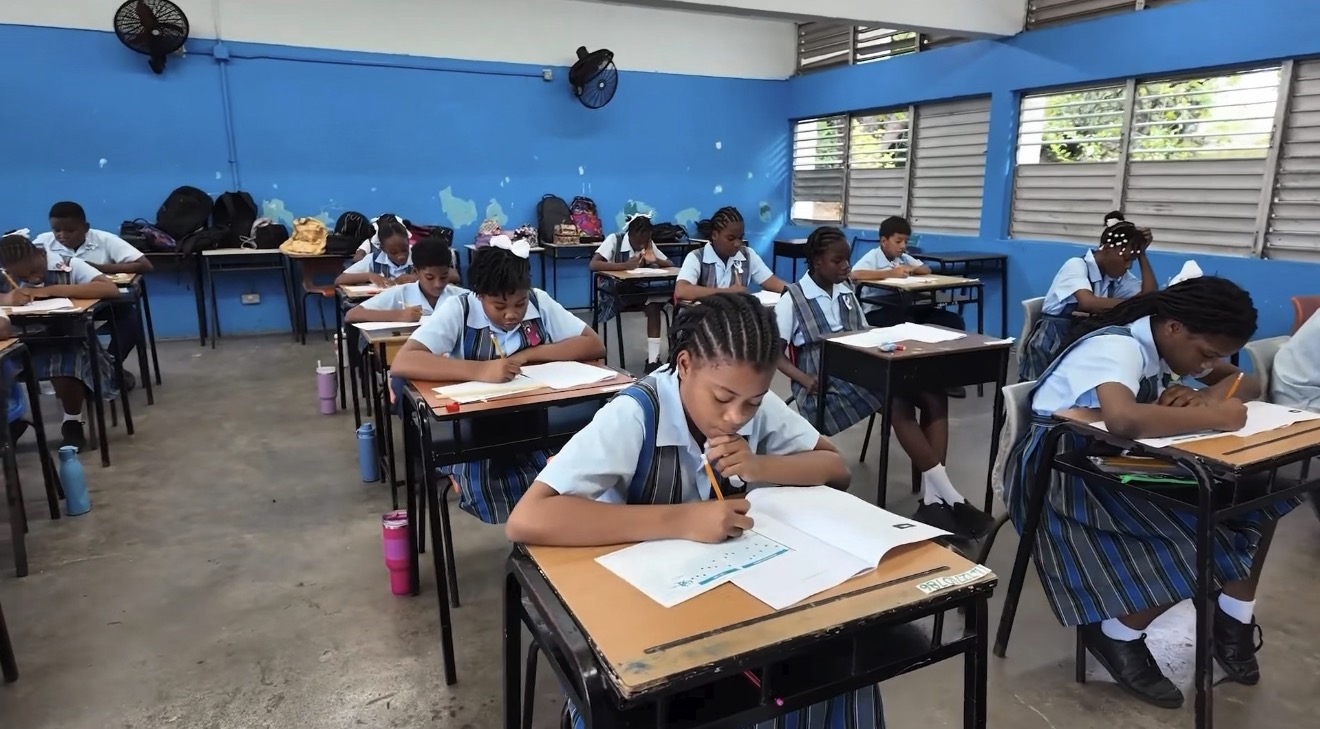
    As students and educators across the country prepare to return to classrooms for a new academic year, the Ministry of Education has announced a bold suite of targeted initiatives designed to uplift school communities, expand learning access, and create more inclusive pathways for young people to reach their potential.

    In an official back-to-school address delivered Monday evening, Education Minister Kenson Casimir framed the new policy package as a shift toward more intentional, student-centered and educator-focused governance for the national education system. At the top of the ministry’s priorities is addressing the often-overlooked crisis of teacher mental health and occupational burnout, a challenge that has strained school communities globally in recent years.

    To give both teaching staff and students extended time to recharge mid-semester, a new midterm break has been formally added to the national school calendar. Casimir emphasized that the well-being of educators is inextricably linked to the quality of learning outcomes for students, directly addressing the teaching workforce to affirm: “Your mental health matters, your well-being matters, and you matter.”

    Beyond calendar adjustments, the ministry is expanding on-site psychosocial support for school communities by adding eight new school counselors and two additional full-time social workers to staff across the country. These new hires will bring much-needed mental health resources to students and staff who have long faced shortages of support personnel in many education systems.

    To tackle the persistent issue of student absenteeism, which has grown into a major barrier to learning post-pandemic, the ministry has recruited two dedicated truancy intervention officers. Unlike traditional truancy staff that only track and record unexcused absences, these new officers will take a proactive, holistic approach: they will engage directly with disconnected students and their families to address root causes of disengagement and support learners in returning to regular classroom participation. “We cannot simply record these absences,” Casimir explained, adding that the core goal of the role is to rebuild connections between young people and their education.

    A flagship new program, titled Educational and Skills Pathways for At-Risk Youth, will also launch this academic year to serve both current students and young people who have already left the education system. The initiative is designed to provide targeted knowledge and hands-on vocational training that help participants re-engage with formal education, access job-specific training, or enter the workforce directly. Casimir stressed that the program is rooted in the principle that young people thrive on different timelines and through different routes, and divergent pathways do not equate to diminished potential. The program forms a core part of the ministry’s broader strategy to reduce the number of young people who become permanently disconnected from learning opportunities.

    To advance whole-child development beyond core academic instruction, the ministry is also pushing to expand extracurricular and co-curricular enrichment activities across all schools, with a target that every campus will host at least one student-led enrichment club by the end of the academic year. Casimir argued that effective education cannot be limited to traditional textbook and classroom learning, and that schools must create space for young people to explore and nurture their unique talents. “Education must develop the whole child,” he said, noting that school campuses across the country are home to emerging musicians, entrepreneurs, athletes, debaters and scientists who need intentional opportunities to grow their skills outside of core classes.

    Finally, the ministry plans to establish a new National Parent-Teacher Community Association to strengthen coordinated collaboration between homes, schools and local community groups. Casimir noted that when all three stakeholders align their efforts to support students, young people see meaningful improvements in attendance, engagement and academic outcomes, making the association a key complementary piece of the broader reform package.

  • PARADISE INTERRUPTED | Paradise is only half the story

    PARADISE INTERRUPTED | Paradise is only half the story

    The Caribbean is globally synonymous with postcard-perfect paradise: turquoise waters, powdery white sand, vibrant Carnival celebrations, and warm, welcoming hospitality. This carefully cultivated brand has been one of the region’s greatest marketing successes, drawing millions of visitors annually and supporting millions of livelihoods tied to the $30 billion-plus Caribbean tourism industry. But as Keithlin Caroo-Afrifa, founder and executive director of regional non-profit Helen’s Daughters, argues, this single dominant narrative has created a costly paradox that has held back progress on the region’s most pressing unmet needs.

    Caroo-Afrifa’s insight into this dynamic came from an offhand comment during a discussion on why the Caribbean consistently struggles to secure development funding for critical challenges: “When people see paradise, they assume everything is okay.” At first, the line struck her as absurd. How could a scenic image erase the need for targeted support for vulnerable communities? But upon reflection, she realized the comment cut to the heart of a decades-long problem she had witnessed firsthand.

    Again and again, initiatives designed to boost climate resilience, improve regional food security, strengthen local civil society, and support working communities miss out on critical investment and global attention. While official eligibility criteria and the “too developed” classification often get the blame, Caroo-Afrifa argues a hidden barrier is far more impactful: the region has become a victim of its own success at selling paradise.

    This conversation has gained new traction in recent weeks, as Carnival seasons wrapped up across the Caribbean and social media reignited a long-running debate: has the region prioritized partying over the hard work of nation-building? On one side, critics argue that excessive celebration distracts from persistent economic struggles; on the other, defenders note Carnival generates thousands of jobs, supports small businesses, and preserves core cultural identity. But Caroo-Afrifa says both sides miss the larger, more important point.

    The issue is not that the region has sold the idea of paradise to the world — the problem is that paradise has become the only story most people ever hear. This gap is not just a misperception from outside visitors; it has also shaped how the Caribbean frames itself to global audiences.

    The “paradise brand” is an undeniable achievement. It transformed small island economies, lifted countless households out of poverty, and shared the region’s rich culture with the world, something worth celebrating. But every oversimplified story omits critical realities. The more polished the global image of paradise becomes, the harder it is for international audiences, investors, and donors to imagine that paradise can also face systemic challenges.

    When people imagine the Caribbean, they rarely picture a small-scale farmer anxiously monitoring drought levels and wondering if they will have enough water to bring their crop to harvest. They do not see local nonprofits scrambling to stretch tiny budgets to support families that have fallen through gaps in public social safety nets. They do not picture a single mother navigating an underfunded public health system while caring for an aging parent. They do not see a young college graduate weighing whether the only path to economic opportunity is leaving their home island for abroad. These realities are no less a part of Caribbean life than beaches and festivals, but they do not fit the neat, marketable narrative that has been built over decades.

    Narratives do more than shape public perception, Caroo-Afrifa emphasizes: they shape tangible outcomes. They drive global investment decisions, influence international policy priorities, determine which stories get media and research attention, direct philanthropic funding, and even shape how much global empathy the region receives. People show up for the stories they understand, and the only story most people understand about the Caribbean is the one of the perfect vacation escape.

    Visitors see record-breaking tourism arrivals, luxury coastal developments, and packed festival parades. What they rarely see are the quiet, unsung institutions holding local communities together: grassroots organizations building climate resilience between devastating hurricane seasons, smallholder farmers working to strengthen regional food sovereignty, public educators dedicating their careers to nurturing the next generation, community groups resolving local challenges long before a disaster makes international headlines, and thousands of ordinary Caribbean residents doing extraordinary work with limited resources.

    This is the core of the paradox: the more successful the region is at marketing the paradise narrative, the harder it becomes to honestly communicate vulnerability and unmet need. Caroo-Afrifa is quick to clarify that this is not a call to abandon tourism promotion or abandon Carnival as a core cultural and economic pillar. Caribbean culture is one of the region’s greatest strengths, and tourism remains an indispensable driver of economic activity for nearly every island nation.

    Instead, the call is to expand the narrative beyond the single story of paradise. The Caribbean is also a region of extraordinary innovation: women leading sustainable agricultural transformation, young entrepreneurs building climate-focused local businesses, communities leading coastal ecosystem restoration, nonprofits strengthening democratic governance and social cohesion, and countless changemakers across sectors quietly building a more equitable future. These stories do not need to replace the narrative of paradise — they need to complete it.

    Caroo-Afrifa argues that a paradise that is honest about its challenges is ultimately far stronger than one that hides its problems. The world cannot invest in needs it cannot see, and if the Caribbean wants to build a future that is not just beautiful for visitors, but resilient, equitable, and prosperous for the people who call it home, the region must be just as intentional about telling the full story as it has been about telling the story of paradise.

  • Saint Lucians pleased with Americas youth table tennis series

    Saint Lucians pleased with Americas youth table tennis series

    The ITTF-Americas Youth Championships, one of the Western Hemisphere’s most competitive youth table tennis tournaments, brought together top rising talent from across the region at Guatemala City’s Domo Polideportivo. Among the competing delegations, four young players from the Caribbean nation of Saint Lucia turned in a memorable performance, overcoming a significant travel mishap to hold their own against elite youth opponents. Even though the entire team’s checked luggage went missing en route to the tournament venue and remained lost during their return trip home, the young athletes and their coaching staff have focused on their positive outcomes rather than the setback.

    Leading the charge for Saint Lucia was 17-year-old Shatal Charles, who delivered the team’s most notable individual result in the junior girls’ singles draw. Charles got off to a rocky start in Group 7 play, dropping an opening four-set match 3-1 (11-9, 11-8, 9-11, 11-9) to Peru’s Kiara Tafur. Rather than letting the early loss derail her campaign, the young Saint Lucian rebounded in dominant fashion, sweeping Chile’s Agustina Urrutia 3-0 (11-5, 11-4, 11-8) to claim second place in the group and secure a spot in the tournament’s round of 32. There, Charles faced group winner Lilian Ma, an American player of Asian descent who would go on to finish second in the overall singles draw, and bowed out with a 4-0 (11-5, 11-3, 11-4, 11-3) defeat. Charles also partnered with teammate Leshon Francis in the junior mixed doubles event, where the pair fell 3-0 (11-6, 11-8, 11-7) to the Dominican Republic duo of Ramon Vila and Arianna Estrella in the same round.

    Francis, competing in the under-15 cadet boys’ division, also punched his ticket to the knockout round of 32. Like Charles, Francis dropped his opening group match against Peru’s Josue Portalatino before bouncing back. After reversing an early set deficit to beat Portalatino 3-1 (11-6, 9-11, 11-8, 11-7), Francis secured his knockout spot with another 3-1 (11-5, 11-6, 11-13, 12-10) win over Ecuador’s Juan Montalvo, finishing second in Group 8. His run ended in the round of 32 with a 3-0 (11-8, 11-9, 11-4) elimination at the hands of Costa Rica’s top seed Lucca Lobo. Francis later joined Manie Eleuthere in the junior boys’ doubles draw, where the Saint Lucian pair pushed Trinidad & Tobago’s Malik Gopaul and Josiah Joseph to a five-set thriller before exiting with a narrow 3-2 (7-11, 11-5, 7-11, 11-9, 11-7) defeat.

    In the junior boys’ singles draw, Eleuthere became the third Saint Lucian to advance out of group play. After opening his Group 6 campaign with a 3-0 (11-8, 11-7, 11-4) loss to Peru’s Keiji Takeda, Eleuthere rallied to beat Costa Rica’s Ariel Bartels 3-1 (11-7, 10-12, 11-3, 12-10) and clinch a knockout round spot. He was eventually ousted 4-0 (11-4, 11-7, 11-3, 11-7) by top-ranked American junior Anav Gupta in the round of 32. The fourth member of the Saint Lucian delegation, Khamari Harris, competed in the same junior boys’ singles group as Charles, Group 7, but was unable to advance. Harris dropped a 3-1 (11-6, 11-6, 6-11, 11-1) decision to the Dominican Republic’s Ramon Vila and a 3-0 (11-5, 11-5, 11-5) loss to host nation Guatemala’s Diego Suchite, ending his tournament run in the preliminary stage.

    Looking back on the team’s performance, head coach Chris Wells expressed nothing but pride in his young players’ efforts. Wells highlighted two landmark team victories over Costa Rica and Mexico as standout achievements that signal growing strength for table tennis in the small island nation. “Our players did well overall. Gaining team wins over Costa Rica and Mexico was huge for us,” Wells said, noting that the experience of competing against the best youth players in the Americas will pay dividends for the athletes’ development moving forward. The team officially returned to Saint Lucia on Monday, still waiting to recover their missing luggage from the journey.

  • Eugene shines in Canadian cricket league

    Eugene shines in Canadian cricket league

    Against all odds, a former Caribbean youth cricket star has reignited talk of his professional prospects with a devastating century in Canada’s top regional club competition, putting his talent firmly back on the radar of West Indies and regional selection panels.

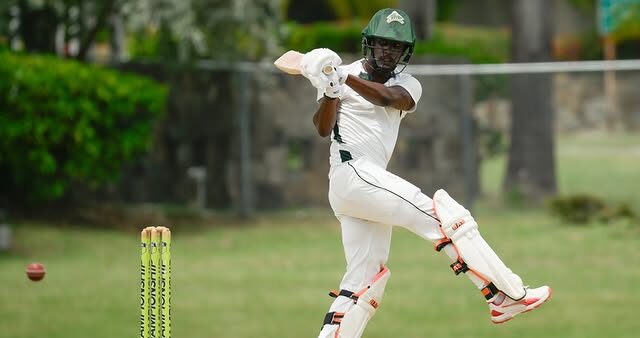
    27-year-old Johnnel Eugene, who previously represented the Windward Islands Volcanoes and came up through the West Indies youth development pathway, delivered a memorable innings this Sunday in the British Columbia Mainland Cricket League, pushing him to the top of the league’s batting leaderboard.

    Playing in the league’s elite Premier Division for Windies Cricket Club, Eugene has compiled an impressive 479 runs across 17 outings this season. His standout performance came against Langley Titans I, where he scored an unbeaten 107 runs off 120 deliveries, peppering the boundary with six fours and clearing the ropes nine times for sixes. The knock marked the clear highlight of his current North American campaign.

    Eugene’s potential has been recognized from the earliest stages of his career. In 2014, he earned a developmental tour of the United Kingdom as part of the West Indies Under-15 national squad, and later earned a spot in the regional West Indies Under-19 training program. His breakthrough youth performance came in 2016, when he was named Most Valuable Player of the West Indies Regional Under-17 Championship, cementing his status as one of the region’s most promising young talents.

    A former Saint Lucia Junior Sportsman of the Year, Eugene was previously drafted as an emerging player for the Saint Lucia Kings in the Caribbean Premier League, one of the world’s most high-profile T20 franchise competitions. Just last year, he rewrote the record books in the Saint Lucia Premier League, posting the highest individual score in the tournament’s history: a blistering 153 not out hit from only 67 deliveries, showcasing his explosive batting power.

    Beyond his contributions with the bat, Eugene has also impressed with his ball in Canada, claiming 10 wickets across 13 bowling innings while maintaining a strong economy rate of just 4.95 runs per over. Despite his consistent standout performances this season, which included a 92-run knock earlier in the campaign, Eugene’s Windies Cricket Club First XI has struggled for collective results, finishing at the bottom of the 10-team Premier Division table. Still, his individual form has served as a stark reminder of the talent he possesses, leaving many waiting to see if selectors will take note of his red-hot form.

  • Florenville circles Saint Lucia on foot, sets sights on Mt Everest

    Florenville circles Saint Lucia on foot, sets sights on Mt Everest

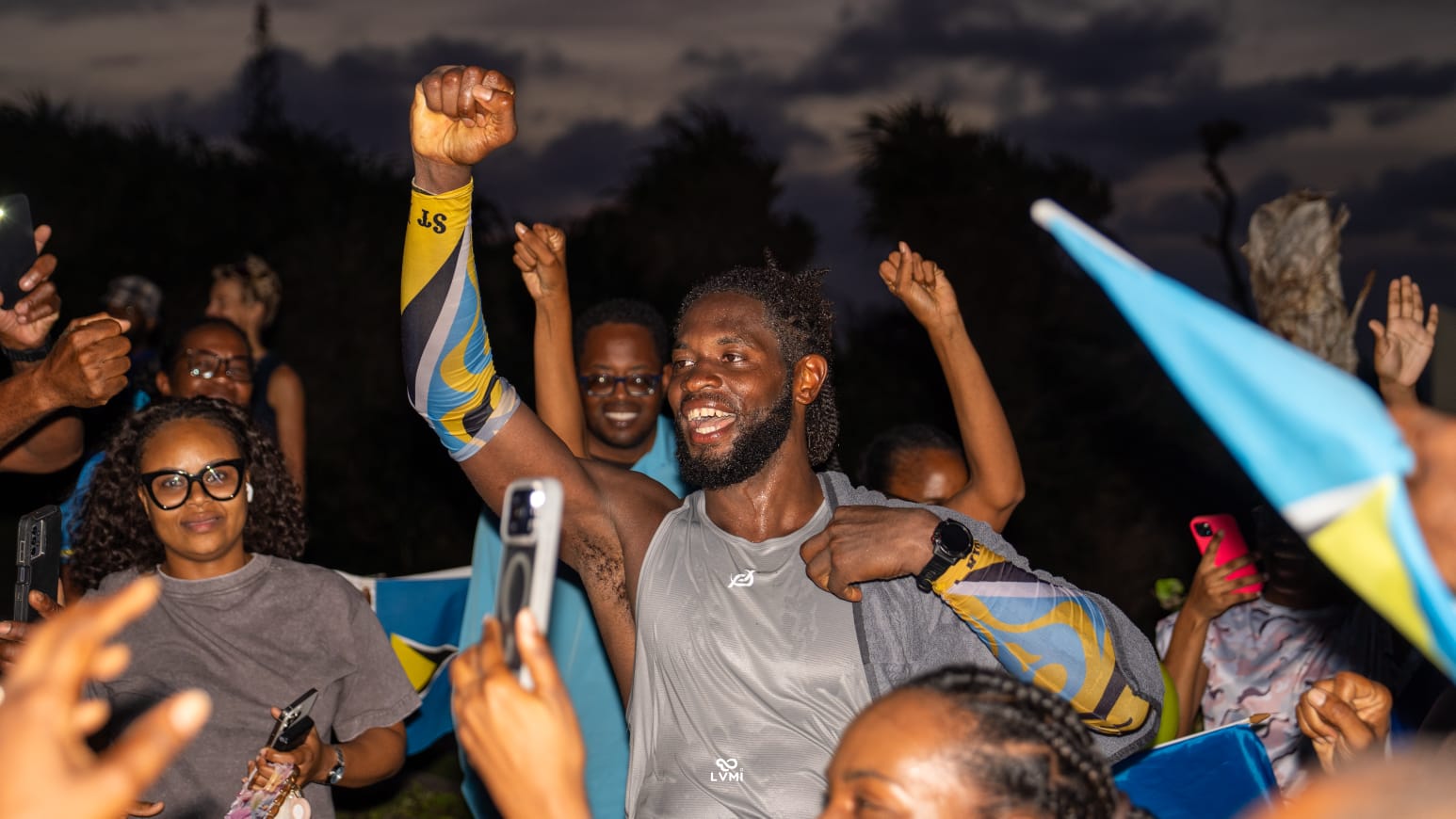
    On August 31, 2026, a long-distance runner from Saint Lucia etched his name into the island nation’s history books by completing a challenge no local had ever attempted before: running the full perimeter of Saint Lucia. Jordan Florenville, a native of the Babonneau district, crossed the finish line of his self-styled Iyanola 100 challenge after 35 consecutive hours of running, a feat that relied heavily on the widespread community support that accompanied him every step of the way.

    Data tracked by popular fitness platform Strava confirmed Florenville covered a total distance of 176.5 kilometers across the run. He launched his journey from the island’s east coast, making the strategic call to bypass the interior Barre D’Isle mountain range in favor of a coastal route that stretched from Point Du Cap, Saint Lucia’s northernmost headland, all the way south to Cape Moule-à-Chique, the country’s southernmost tip.

    From start to finish, Florenville never ran alone. Dozens of fellow runners joined him for segments of the trek, including Zepherinus Joseph, Saint Lucia’s own Olympic long-distance competitor. Two local runners, Clendon Donai and Philan James, emerged as his most consistent supporters, each completing a full 42-kilometer marathon alongside Florenville to keep him company through grueling stretches.

    Community backing extended far beyond fellow runners. Friends from Florenville’s hometown turned out to run segments with him, including Jn Louis Mathurin, a well-known local nature tour operator who goes by the nickname “Father Nature.” His immediate family, members of his local church, and hundreds of other Saint Lucians stepped in to offer encouragement, water, and rest breaks at different checkpoints across the route.

    For Florenville, the historic Iyanola 100 perimeter run is far more than a one-off personal challenge—it is a critical stepping stone toward a much bigger, bolder dream. The runner has set his sights on becoming the first person born in Saint Lucia to summit Mount Everest, the world’s highest peak. His coastal run also carried deeper national significance: it was timed to align with Saint Lucia’s annual emancipation celebrations and received official backing from the country’s National Reparations Committee.

    In an interview with local outlet *St. Lucia Times*, Florenville opened up about the extreme physical and mental toll the challenge took, calling it one of the most difficult feats he has ever attempted. “On a difficulty scale where 10 is extremely hard, this was a solid 9. It was harder than I prepared for,” he explained. “The total distance ended up being longer than my initial projections, and the uneven coastal terrain was far more challenging than I anticipated. But honestly, I have to thank God first, and then every single person who showed up for me. If it weren’t for this community, I’d probably still be stuck near Canaries right now. 120% of this success belongs to the people of Saint Lucia.” He added that he chose not to name individual supporters because so many people contributed that it would be impossible to list them all fairly.

    Despite the overwhelming community turnout, the Iyanola 100 challenge received only minimal financial backing from local Saint Lucian businesses and corporate sponsors. Now that Florenville has completed his historic run, he is still seeking additional support to fund his next goals: he is currently producing a documentary chronicling his Iyanola 100 achievement, which remains incomplete due to a funding gap, and he is actively searching for long-term sponsors to back his Mount Everest expedition.

    Florenville issued a public call for support, emphasizing that he wants to lift up the next generation of Saint Lucian athletes alongside his own goals. “We need funding, and we also need more people to step up and sponsor young local athletes. The people of Saint Lucia are ready for Everest—let’s make this happen,” he said. “Whatever government ministry, whatever individual or business that wants to support, come forward. I’m ready. A GoFundMe link will be launched very soon for anyone who wants to contribute.”

    Members of the public and potential sponsors can connect with Florenville through his official social media profiles, or reach him directly by phone at +1 (758) 584-4654 or +1 (758) 287-0365.

  • Team Saint Lucia cop hardware at CAC bodybuilding

    Team Saint Lucia cop hardware at CAC bodybuilding

    The 53rd Central American and Caribbean (CAC) Bodybuilding and Fitness Championships concluded on Sunday night in Guatemala City, Guatemala, and three athletes representing the Saint Lucia Amateur Bodybuilding and Fitness Association (SLABFFA) are returning home with impressive results, including two top-three podium finishes and one top-six placement.

    Led by SLABFFA President Eugene Gabriel, the national team claimed two bronze medals at the event hosted at Gimnasio Teodoro Palacios Flores. Notably, Saint Lucia has been selected as the host nation for the 2025 iteration of the regional championship, marking a key milestone for the island nation’s fitness community.

    Rookie competitor Denver Florent got Saint Lucia off to a strong start on Saturday, clinching third place in the senior men’s bodybuilding category. This podium finish marked a stunning debut for Florent, who secured the country’s first medal of the competition.

    Following Florent’s success, multi-sport athlete Shanii Mesmain earned Saint Lucia’s second bronze medal in the men’s fit model class, finishing behind competitors from The Bahamas and the host nation Guatemala. Mesmain also advanced to the finals of the men’s physique over 1.76m division, ultimately finishing sixth overall. A well-known domestic cricketer hailing from Soufrière, this is not Mesmain’s first CAC competition: he made his regional debut at the 2024 CAC Championships in Georgetown, Guyana, where he placed seventh in the men’s silver fitness challenge.

    The third member of Team Saint Lucia, Jerren St Clair, a professional firefighter and former national track athlete, competed in the men’s fitness division at his first CAC Championships. Official final placements for St Clair have not yet been released, with results pending publication from the regional confederation.

    This year’s result builds on Saint Lucia’s strong track record at the regional championships. Two bronze medals in 2026 follow the country’s six-medal haul at the 2024 event in Guyana, and it follows Saint Lucia’s successful hosting of the 52nd CAC Bodybuilding and Fitness Championships in Rodney Bay in 2025. Gabriel, who previously served as vice president and coach at the 2024 Guyana competition, marked his first CAC Championships as the head of SLABFFA at this year’s event.

  • First group of third-country nationals to arrive in Saint Lucia this week

    First group of third-country nationals to arrive in Saint Lucia this week

    The Caribbean island nation of Saint Lucia is preparing to welcome its inaugural cohort of third-country nationals transferred from the United States this week, launching a groundbreaking new bilateral arrangement that will cap incoming transfers at 10 individuals every quarter for an initial two-year trial period.

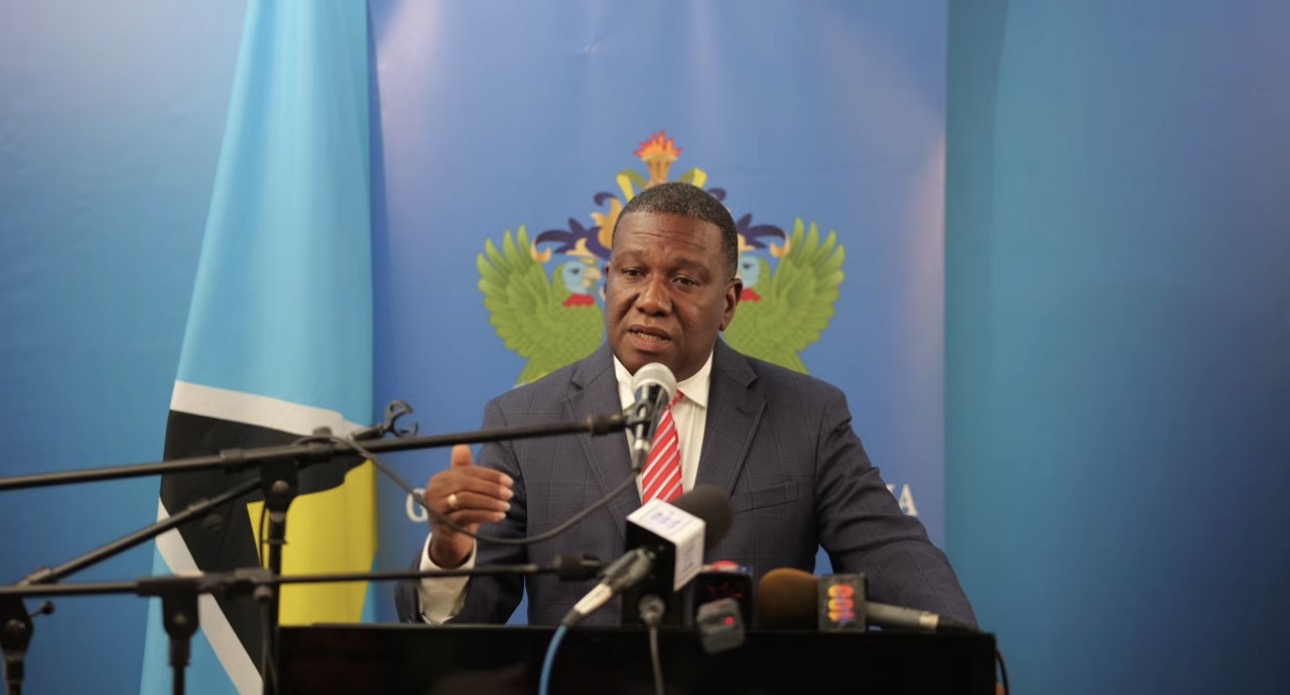
    The first group set to arrive includes six people: five men and one woman. During a press briefing addressing public questions about the program’s structure and the future of transferred individuals after their arrival, Foreign Affairs Minister Alva Baptiste confirmed that U.S. personnel will accompany the first group during the transfer process.

    Discussions around the arrangement first began between the two governments last year, with negotiations centered on aligning the scope of the program with Saint Lucia’s limited geographic size and available national resources. Baptiste noted that the talks stretched over an extended period as both parties worked to find a framework that worked for the small island nation. “There was a long gestation period where we were discussing with the United States of America what we can afford to do and what we cannot afford to do,” he said. “And in the spirit of partnership, we finally came to an agreement as to what the government in its soundness of judgement believed that it can manage.”

    The hard cap of 10 quarterly transfers will remain in place regardless of family grouping, meaning even a single family of 10 or two smaller families of five will not push past the established limit. “The quantum is 10. Whether it’s a family of 10 or, you know, two families of five, but 10 per quarter,” Baptiste confirmed.

    Framed as a pilot initiative, the two-year runtime will allow the Saint Lucian government to evaluate the program’s on-the-ground impact and practical functionality before making any long-term decisions about its future. However, the imminent arrival of the first group has sparked widespread public questions around unaddressed details, including housing arrangements, long-term immigration status, and the possibility of transferred individuals permanently settling on the island.

    Baptiste has firmly ruled out detaining individuals solely because they are transferred under the program, emphasizing that all people entering Saint Lucia through this initiative will be treated with dignity. “No, we cannot treat them as if they’re prisoners. We are going to receive them and treat them with respect. The same respect that we expect people from other countries to treat our people when our people go to them,” he said.

    Upon arrival, the first group of transfers will coordinate with the International Organisation for Migration (IOM) for support, while a multi-agency committee drawing representatives from the Ministry of External Affairs, the national immigration department and other relevant government bodies is managing all local logistics for the program.

    Key questions around long-term stays remain unresolved. Baptiste acknowledged that if any transferred individual chooses to remain in Saint Lucia beyond the program’s initial terms, the government will need to negotiate new solutions to address that scenario. “If at all anybody decides to stay, then this is a new conversation that we will have as to how we go about navigating that particular challenge,” he said.

    Legal status for new arrivals is another outstanding policy issue the government is still developing. Baptiste explained that special regulatory dispensation will be required for participants, and targeted policy adjustments are being drafted to ensure the program operates in full compliance with existing Saint Lucian law. “This is all new to us. And we are going to grapple with it,” he said. “And we are not going to be secretive about that situation at all.”

    Financial terms of the bilateral arrangement also remain under negotiation. The Saint Lucian government has already submitted its formal request for U.S. financial support to cover program implementation costs, but Baptiste declined to share the specific amount the nation has requested. “We have communicated the financial requirements to the United States of America in terms of us implementing that particular programme. So it’s premature to say to you that it’s not going to cost or it’s going to cost X or Y or Z,” he noted.

    Baptiste emphasized that the government has been fully transparent with U.S. officials about Saint Lucia’s existing fiscal constraints, and stressed that funding for the pilot program will not divert resources from existing public programs that serve native Saint Lucians. Describing the initiative once more, he said, “It’s almost a pilot project for us.” Going forward, the government plans to release regular public updates as it gathers more experience with the program’s implementation.

  • La Clery honours sporting icons at Legends Award ceremony

    La Clery honours sporting icons at Legends Award ceremony

    On a packed Saturday evening at the Vide Boutielle Cultural Club, residents and supporters from the La Clery community gathered for a milestone celebration: the third iteration of the La Clery Legends Award Ceremony, an event designed to lift up the quiet trailblazers and long-standing veterans that have shaped the area’s identity for decades.

    Unlike generic award galas, this ceremony was built around centering the community’s own, turning a spotlight on unsung contributors who have rarely received formal recognition for their decades of work. A majority of the evening’s honorees hailed from La Clery’s storied athletic history, particularly its deep, generations-long football tradition that has turned the area into a regional sporting powerhouse. The honorees also included behind-the-scenes sports administrators whose decades of organizational labor laid the foundation for La Clery’s athletic success. Spanning four decades from the 1960s through the 1990s, each newly minted legend received a formal ceremonial blazer to mark their honor and celebrate their enduring place in local history.

    The undisputed highlight of the evening was the presentation of the Lifetime Achievement Award, which went to Hilarion “Big Dean” Alfred, a former star basketball power forward. Along with receiving the top honor, Alfred was formally enshrined as an official La Clery Legend, capping a decades-long legacy of athletic and community contribution.

    Retired educator and long-serving public servant John Sealy, a deeply respected community mainstay who has left lasting marks across Saint Lucia’s education, communications, and football development sectors, delivered the event’s keynote address. In his remarks, Sealy emphasized that La Clery’s legacy of excellence extends far beyond the sports field, noting that the community has nurtured standout talent across academia, the arts, and a wide range of technical professions.

    Also in attendance was Stephenson King, Parliamentary Representative for Castries North, who extended congratulations to his constituents on their collective achievements while laying out a clear vision for the future of the Legends program. King praised the event organizers for carrying forward the tradition of honoring local contributors who have shaped the community, and challenged the Legends to expand their impact through sustained youth mentorship. He applauded the group’s recent one-off mentorship initiative, but called for a permanent, ongoing program that would connect young aspiring community leaders with the Legends as role models, encouraging a new generation to carry on the legacy of selfless community contribution.

    Full list of 2024 La Clery Legend honorees by decade:
    • 1960s: Joseph Napoleon, Julian Phillips, Collistus Charles
    • 1970s: Charles Sayers, Keith “Baby” Cadette, Franklin Maitland
    • 1980s: Clancy “Knees” Alexander, Clinton “Big Bull” Charles, Stanley Best
    • 1990s: Emile “Mel” Eugene, Winston “Kilo” Regis, Hilarion “Big Dean” Alfred