标签: Saint Kitts and Nevis

圣基茨和尼维斯

  • Saim Ayub’s century leads Jamaica Kingsmen to 11-run win over St Kitts and Nevis Patriots – WIC News

    Saim Ayub’s century leads Jamaica Kingsmen to 11-run win over St Kitts and Nevis Patriots – WIC News

    The 2026 edition of the Caribbean Premier League (CPL) delivered another gripping contest on August 27, as a career-defining performance from Saim Ayub carried the Jamaica Kingsmen to an 11-run victory over the St Kitts and Nevis Patriots at Warner Park Sporting Complex in Basseterre.

    Hosts St Kitts and Nevis Patriots won the pre-match coin toss and opted to send Jamaica Kingsmen in to bat first, a decision that would ultimately set up a tense, low-margin final encounter. The Kingsmen got off to a rocky start early, losing top-order batters Keacy Carty and Maaz Sadaqat for just two combined runs before Ayub stepped onto the pitch.

    The emerging star turned the innings on its head, smashing an explosive 102 runs off only 58 deliveries to anchor the Kingsmen’s total. Supported by consistent late-order contributions from Rovman Powell (21 off 17 balls) and Keemo Paul (an unbeaten 25 off 13 deliveries), the Kingsmen closed their 20 overs at 7 wickets for 182 runs, setting a challenging target of 183 for the Patriots to chase.

    St Kitts and Nevis Patriots responded with a hard-fought batting effort that kept the match neck-and-neck until the final over. Andre Fletcher led the home side’s charge with 55 runs off 38 balls, while late cameos from Jason Holder (34 off 23 balls) and Dasun Shanaka (an unbeaten 35 off 18 balls) brought the Patriots within striking distance of the winning target. When the 20 overs concluded, the Patriots finished at 6 wickets for 171 runs – 11 runs short of the mark needed to secure the win. Beyond his batting heroics, Ayub also claimed one wicket during the Patriots’ chase to cap off a dominant all-round display.

    Ayub was named Player of the Match for his performance, which marked the first T20 century of his professional career. Speaking to reporters after the game, he shared his calm approach to the standout innings. “I enjoy everything; the atmosphere and the people. It’s just love. Nothing much. I think I just played with the flow and had some planning about what to do in the middle, which bowler to hit and which one not to hit, and just going sensible,” he said.

    Following the 18th match of the 2026 CPL season, the result reshuffled the tournament’s points table. Jamaica Kingsmen now hold fourth position, having earned 6 points from three wins across seven matches. Meanwhile, the St Kitts and Nevis Patriots remain at the bottom of the rankings in seventh place, with just 2 points from a single win in five outings.

    The CPL 2026 action continues on August 28, with Trinbago Knight Riders set to face off against Barbados Tridents in the next scheduled fixture.

  • Understanding CTEC Modular Assessment: Standards, Grading and Certification

    Understanding CTEC Modular Assessment: Standards, Grading and Certification

    In recent weeks, public discourse across the Caribbean has centered on the Caribbean Targeted Education Certificate (CTEC), with widespread questions emerging about academic rigor, grading protocols, and the role of CTEC modular assessments in the award of the final Caribbean Secondary Education Certificate (CSEC) qualification. In a detailed explanatory piece, Wayne Wesley, PhD, Registrar and Chief Executive Officer of the Caribbean Examinations Council (CXC), addresses these concerns head-on to clarify how the new modular framework operates and reinforce the integrity of regional education qualifications.

    Wesley opens with a core assertion that has been a point of contention in public debate: CTEC does not lower established Caribbean academic standards. The modular assessment model only alters the structure of how learning is measured and credited, not the core knowledge, skills, and competencies that students are required to master to earn a CSEC qualification.

    One of the most persistent misconceptions about CTEC, Wesley notes, is that modular assessments are inherently easier than the traditional single-sitting CSEC examinations. This claim is unfounded, he explains. All CTEC modular assessments are drawn from the same official syllabuses, aligned to the identical learning outcomes, and developed following the exact same assessment specifications that underpin the long-standing traditional CSEC exams. Module questions are identical to those that appear in full traditional CSEC assessments, meaning students must demonstrate the exact same level of knowledge and skill as their peers testing through the traditional pathway. Furthermore, all modular assessments are graded using the same rigorous quality assurance infrastructure, including examiner moderation, standardized psychometric analysis, and consistent grading procedures that have preserved the credibility of CXC qualifications for decades. The level of rigor, objectivity, and fairness remains entirely unchanged. The only meaningful difference is that CTEC allows students to demonstrate their proficiency in incremental, manageable stages, rather than relying on a single high-stakes examination sitting that can create unnecessary stress and barriers for learners.

    When it comes to grading, the CTEC framework relies on a system already familiar to all regional education stakeholders, from students and parents to employers and tertiary institutions. Caribbean education systems have long used modular performance reporting for CAPE subjects, and CSEC has for decades reported results in two formats: overall subject grades (I to VI) and profile grades (A to F). CTEC adapts this widely recognized A-F scale to report performance on individual modules, making it simple for stakeholders to track student progress through the qualification pathway. Under CTEC rules, grades A, B, C, and D are considered acceptable passing marks for a module, while grades E and F indicate that a student needs additional learning support before meeting the expected module standard. Each grade has a clear public descriptor: A denotes excellent mastery of module content, B indicates good grasp, C is fairly good grasp, D is moderate mastery, E reflects limited understanding, and F marks very limited mastery of required concepts and skills. These detailed descriptors provide actionable feedback for both students and teachers, highlighting specific areas for growth and enabling targeted instructional interventions to improve outcomes.

    A key point of public confusion has been the relationship between individual module grades and the final CSEC certification. Wesley clarifies that individual module grades are not standalone full qualifications. Instead, they function as micro-credentials that document a student’s achievement in specific segments of a subject, and all required module grades are aggregated to calculate the final overall CSEC subject grade. A passing grade in a single module does not equate to completion of the full subject; students must successfully complete all required modules for a subject before a final CSEC grade can be awarded. The traditional, widely recognized overall CSEC grade remains the official final certification for the subject, with the modular CTEC pathway simply providing a structured, incremental route for students to accumulate demonstrated achievement toward that end goal.

    To preserve the integrity of the top CSEC grades, CXC has put in place clear rules that emphasize the importance of consistent performance across all modules. Because the final grade is built from all module results, a student who earns even a D in any required module cannot be awarded a top overall Grade I in the final CSEC qualification. This policy reinforces the core principle that overall excellence in a subject requires strong performance across all its components, and ensures that a Grade I continues to represent truly outstanding achievement — maintaining the confidence of employers, tertiary institutions, and other stakeholders in the value of CXC qualifications.

    Unlike the traditional single-sitting model, CTEC also brings important flexibility that supports student success. Students who are unsatisfied with their grade on a specific module can retake that module alone, following CXC standard registration procedures, before their final CSEC grade is calculated. This allows learners to target gaps in their knowledge, strengthen their skills in specific areas, and improve their overall final result without having to retake the entire subject. This flexibility expands opportunity for students without compromising the rigorous academic standards that CXC is known for.

    Wesley concludes that the introduction of CTEC modular assessment reflects CXC’s long-standing commitment to addressing a key regional education challenge: expanding access to certification for more Caribbean students while upholding the rigorous standards that have earned CXC regional and international respect. The modular model does not make qualifications easier, reduce required learning outcomes, or lower academic expectations. Instead, it offers a more flexible pathway that allows students to demonstrate mastery of the same syllabus objectives, meet the same performance standards, and earn the same globally recognized CSEC qualification. In short, the core standards that underpin CXC credentials remain fully intact; only the process through which students demonstrate their achievement has evolved. CTEC thus strikes a intentional balance between educational innovation and qualification integrity, preserving the rigor and credibility of Caribbean secondary education qualifications while opening new pathways to support greater student success and expanded educational attainment across the region.

  • Public Service Announcement: Department of Cultural Heritage

    Public Service Announcement: Department of Cultural Heritage

    The Department of Cultural Heritage has issued a public invitation to island residents and visitors to join a poignant commemorative gathering titled *Ancestral Echoes: Remembering the Blood, Honouring the Resilience*, scheduled to take place this Friday, August 28, starting at 6:00 PM at Challengers Football Field.

    This thoughtfully curated event is designed to create a space for solemn remembrance of two defining, often overlooked moments in St. Kitts’ shared history: the 1626 massacre and forced expulsion of the Indigenous Kalinago people from the island, and the 400th anniversary of the arrival of the first enslaved Africans to St. Kitts’ shores. Far from a purely somber occasion, the gathering centers on celebrating the enduring cultural resilience that has shaped the island’s modern community across centuries of struggle.

    Event organizers have outlined a clear request for attendees: all guests are asked to dress in what is described as “elegantly cultural” attire, encouraging participants to honor their heritage through their clothing choices. To remove barriers to attendance for groups that may face transportation challenges, the department is offering complimentary bus service for elderly citizens, as well as students and teachers in school uniform.

    Free shuttle services have pre-scheduled departures from Dieppe Bay, leaving promptly at 4:45 PM. Two routes will serve attendees: the westbound route traveling through Sandy Point will be operated by buses GT275 and H5725, while the eastbound route passing through Tabernacle will use buses HA11 and H311, operated by local provider Up 2 De Time.

    Organizers have extended an open call to all members of the community to join the collective remembrance and celebration, emphasizing that this event is a moment for all residents to connect to their shared roots and honor the collective strength of St. Kitts’ people, closing their invitation with the rallying call: “All roads lead to Challengers this Friday evening!”

  • Premier Brantley Urges Men to Prioritise Prostate Health

    Premier Brantley Urges Men to Prioritise Prostate Health

    As Nevis prepares to mark September as Prostate Cancer Awareness Month, the island’s top leader is amplifying a urgent call to action for local men to prioritize routine prostate health screenings, emphasizing that early detection is the most critical tool for reducing mortality from the disease.

    In an official statement released from Charlestown, Nevis on August 27, 2026, Premier Honourable Mark Brantley directly addressed male residents, warning against the dangerous habit of delaying medical check-ups until noticeable symptoms develop. Brantley stressed that by the time symptoms appear, prostate cancer may have already progressed to an untreatable stage, making routine screening non-negotiable for at-risk groups.

    “Prostate cancer is not a condition to ignore or take lightly,” Brantley said. “Global and regional data already confirms that Black men face disproportionately high rates of this disease, and risk only increases with age or a family history of the cancer. Waiting for symptoms to show up may already be too late to get effective care.”
    Brantley encouraged all men to schedule routine consultations with their healthcare providers to discuss screening options, know their personal health status, and take proactive control of their long-term wellbeing. He also appealed to women across the island to take an active supportive role, urging them to encourage the men in their lives — partners, brothers, sons, and friends — to prioritize their health and book screenings.

    “Let’s fight this disease together,” Brantley added. “Every conversation, every screening, makes a difference for our community.”

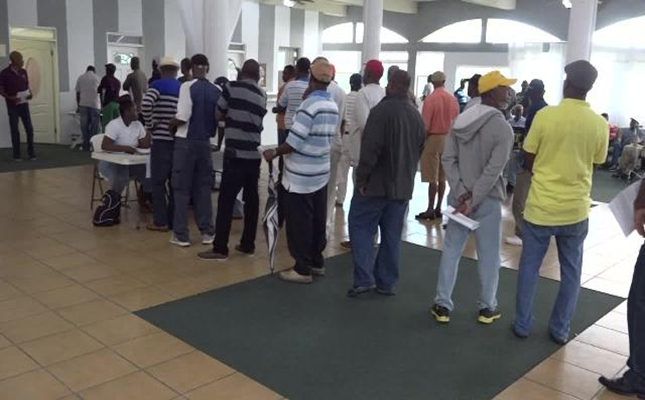
    Nevis’ Department of Gender Affairs is partnering with local health providers to expand outreach during the awareness month, focused on educating men about prevention, early detection, and making informed choices about their prostate health. Local men are already taking advantage of free prostate screenings offered by Urology and Associates as part of the campaign.

    The push for greater screening awareness comes as the Caribbean grapples with one of the highest prostate cancer burdens in the world. Regional data ranks prostate cancer as the most commonly diagnosed cancer among men across Caribbean nations. In 2022 alone, the region recorded 22,271 new cases and 9,695 deaths from the disease.

    Global health data aligns with this regional trend, confirming that Black men face drastically elevated risk: they are twice as likely to die from prostate cancer as other groups, and roughly one in six Black men will receive a prostate cancer diagnosis during their lifetime. Health officials recommend that men with elevated risk factors speak with their providers about the appropriate timing and frequency of screenings, including prostate-specific antigen (PSA) testing, to fit their personal health needs.
    Brantley concluded that collective public awareness and coordinated action across communities can drastically reduce the devastating impact of prostate cancer on men, their families, and Nevis’ broader society.

  • National Colours Day Observance Begins

    National Colours Day Observance Begins

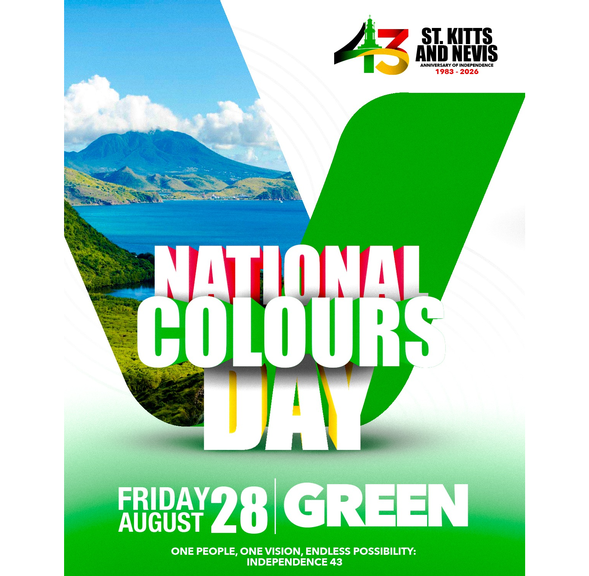
    Ahead of the 43rd anniversary of Saint Kitts and Nevis’ independence, official authorities have issued a public reminder for residents to participate in the annual National Colours Day observance by wearing green on Friday, August 27, 2026. The notice, officially published at 5:00 PM local time on Thursday, August 26, 2026, invites the general public to join in the nationwide celebration of the country’s sovereign milestone. National Colours Day stands as a key pre-anniversary tradition, designed to foster national pride and collective community spirit across the twin-island federation by encouraging unified public display of national symbolic attire. For this year’s observance, green — a core hue of Saint Kitts and Nevis’ national flag that carries deep cultural and historical meaning for the nation — is the designated colour that all residents are encouraged to wear to mark the occasion.

  • CWI, African Union extend condolences as Nepal flood death toll rises

    CWI, African Union extend condolences as Nepal flood death toll rises

    Devastating flash floods and triggered mudslides have left a catastrophic trail of destruction across Nepal, driving the confirmed death toll to nearly 400 and leaving more than 1,300 people unaccounted for – including hundreds of international tourists visiting the Himalayan nation – as two major global bodies, Cricket West Indies (CWI) and the African Union Commission, have joined the international community in extending solidarity and condolences to the affected population. As of Thursday 27 August, 2026, rescue teams are continuing a fraught, large-scale search-and-recovery operation across the mountainous country, where challenging terrain, persistent adverse weather, and destroyed infrastructure have severely complicated efforts to reach cut-off remote communities.

    Viral imagery circulating on social media and digital platforms captures the full force of the disaster: churning brown floodwaters barrel through populated valley communities, sweeping away paved roads, bridges, and residential buildings, while unstable hillsides collapse into debris flows that bury entire neighborhoods in hard-hit regions. Widespread disruption to transportation, communication, and emergency services has slowed rescue progress, with first responders working around the clock to locate people trapped in collapsed structures or swept away by the fast-moving surges.

    Official counts from Kathmandu put the current confirmed death toll at just under 400, with more than 1,300 people listed as missing. Emergency management officials have cautioned that these numbers are likely to shift as teams gain access to isolated, hard-to-reach areas that have been cut off since the disaster began. Hundreds of foreign tourists, who travel to Nepal annually for trekking and mountain expeditions, are among those whose whereabouts remain unknown, adding an international layer of urgency to the search effort.

    In an official statement marking the tragedy, CWI President Dr. Kishore Shallow expressed unwavering solidarity with Nepal, a longstanding valued member of the global cricket community that shares deep people-to-people ties with the Caribbean region. “On behalf of Cricket West Indies and the entire West Indies cricket family, I extend our heartfelt prayers, condolences, and solidarity to the people of Nepal following the devastating flash floods,” Shallow said. He emphasized that the connection between Nepal and the Caribbean extends far beyond sport, rooting the bond in the shared global cricket family. “In this moment of profound tragedy, we stand shoulder to shoulder with our friends in Nepal. Our thoughts are with every family affected, those who have lost loved ones, those awaiting news, and the brave responders working to save lives. We pray for strength, comfort, and healing for the people of Nepal, and for the country’s swift recovery.”

    The African Union Commission has also issued a formal statement of condolence, with H.E. Mahmoud Ali Youssouf, Chairperson of the AU Commission, saying he was deeply shaken by the scale of loss of life and destruction brought by the disaster. “On behalf of the AU Commission, the Chairperson extends his heartfelt condolences to the Government and people of Nepal, and to the families and loved ones of the victims,” the organization said, adding that the entire African Union stands in solidarity with Nepal during this extraordinarily difficult period.

    Rescue efforts continue to face significant obstacles even one week into the operation. Raw footage from the ground shows rescue crews scrambling to reach higher ground as new flood surges push through hilly communities, forcing even experienced first responders to retreat to safety temporarily. The disaster has also sparked new conversations about disaster preparedness and visitor safety in Nepal’s most popular tourist destinations, which draw millions of visitors annually to its iconic mountain landscapes.

    As teams continue to comb through debris and reach cut-off areas, Nepali authorities have pledged to release regular updated figures on casualties, missing persons, and the total extent of damage to residential, transportation, and public infrastructure. For hundreds of families across the country and around the world, the wait for news of missing loved ones remains a deeply urgent, emotional ordeal.

  • Colombia earthquake recovery efforts continue as fresh tremor hits country

    Colombia earthquake recovery efforts continue as fresh tremor hits country

    Just as Colombian emergency teams and international humanitarian partners ramp up post-disaster reconstruction after a devastating major earthquake, the South American nation has been hit by a new seismic shock, complicating already strained recovery operations.

    The 5.1-magnitude tremor struck early on the morning of August 26, with shaking felt across multiple regions of the country – including Bogotá, the capital. This new seismic event comes as recovery work is still ongoing in the areas that bore the brunt of the earlier devastating quake.

    As of the latest update from United Nations humanitarian officials, nearly 50,000 people across 25 of the hardest-hit Colombian municipalities have already received life-saving support. The relief distributed so far includes critical supplies: clean drinking water, water storage units, temporary public sanitation infrastructure, and personal hygiene kits tailored for both adult and child survivors.

    Official data from Colombian national authorities puts the scale of the initial disaster at overwhelming levels: approximately 325,000 people across the country have been impacted by the first earthquake, with more than 31,000 residential structures completely destroyed. Thousands of additional critical public assets, including schools, healthcare clinics, and other key infrastructure, have also sustained heavy damage or been reduced to rubble.

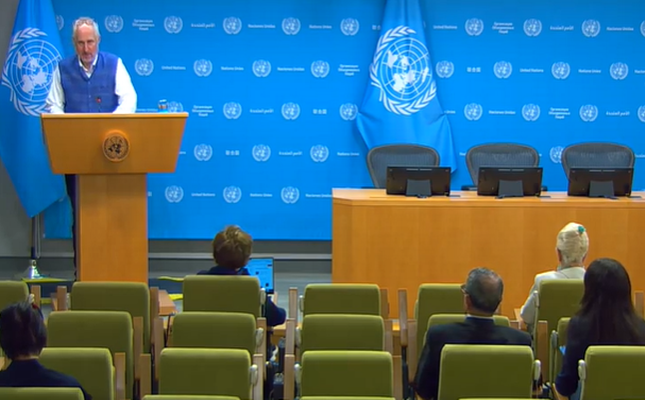
    During a recent press briefing at UN Headquarters in New York, Stéphane Dujarric, spokesperson for the UN Secretary-General, outlined that the global body’s $620 million humanitarian appeal for Colombian earthquake relief remains only 47 percent funded. Dujarric emphasized that as assessment teams finish mapping the full scope of destruction caused by the initial quake, urgent additional financial contributions are needed to scale up relief and recovery operations.

    He confirmed that UN humanitarian teams will remain embedded with Colombian national authorities to continue delivering essential aid to disaster-affected communities. The UN’s response operation will undergo ongoing close monitoring, with regular public updates provided by the organization’s on-the-ground team based in Bogotá.

  • Nevis Geothermal Project Reaches Final Pre-Mobilisation Milestone as Drill Rig Inspected in Iceland

    Nevis Geothermal Project Reaches Final Pre-Mobilisation Milestone as Drill Rig Inspected in Iceland

    One of the Caribbean’s most anticipated clean energy development projects has reached a pivotal turning point, as the Nevis Geothermal Project wraps up the final major pre-mobilization milestone: a full independent inspection of its custom drilling rig taking place at an Icelandic facility.

    The update was shared by Nevis Premier and Nevis Island Administration (NIA) Energy Minister Mark Brantley during his monthly press briefing on August 25, one day ahead of the official project announcement. Brantley confirmed that the rig inspection, being held from August 24 to 28 at the Iceland Drilling Company’s operations site, is the last required step before the heavy equipment can be shipped to the Caribbean island.

    “The final pre-condition for mobilization of the drill rig to Nevis is an inspection of that drill rig, and that inspection is currently underway in Iceland,” Brantley told reporters.

    The third-party assessment is being carried out by Scotia Drilling Consultants, a United Kingdom-based firm with specialized expertise in drilling rig safety and performance verification. Inspectors are conducting thorough reviews of the Drillmec HH-300 “Týr” rig’s structural integrity, mechanical systems, operational functionality, and core safety protocols. To oversee the inspection process and coordinate with international geothermal and engineering specialists, Nevis Electricity Company Limited (NEVLEC) General Manager Nelson Ald Stapleton and Project Coordinator Naftalie Errar have traveled to Iceland to be on-site for the assessment.

    Once the inspection is completed and passed, Brantley noted, all preliminary requirements will be fulfilled to advance the project to its next critical phase: transporting the 272-metric-tonne drilling rig to Nevis. The massive rig is slated to drill five exploratory and production geothermal wells at the project’s Hamilton site, located on Nevis’ northern coast.

    While international teams wrap up the rig inspection in Iceland, on-the-ground preparations have already begun at the Hamilton site in Nevis to welcome the equipment and prepare for drilling to start. Brantley confirmed that soil testing and pre-construction technical assessments launched the same week as the inspection, laying the groundwork for the well pad — the reinforced concrete foundation that will support the heavy drill rig during operations. Civil construction work for the well pad will be completed by Icelandic engineering firm COWI, with project supervision provided by Iceland Drilling, Brantley added.

    The development of the geothermal wells is the core component of the broader Nevis Geothermal Project, a long-planned initiative designed to unlock Nevis’ abundant underground geothermal reserves for utility-scale electricity generation. The end goal is the construction of a 30-megawatt geothermal power plant that will produce zero-emission, renewable baseload electricity for the entire Federation of St. Kitts and Nevis. Once operational, the plant is expected to drastically cut the country’s reliance on costly, carbon-intensive imported fossil fuels, while significantly strengthening the nation’s long-term energy security.

    The project is led by the NIA, with NEVLEC acting as the main executing agency, and receives full backing from the Federal Government of St. Kitts and Nevis. Brantley disclosed that the NIA has already disbursed approximately US$6 million to Iceland Drilling to keep project preparations moving forward on schedule.

    Beyond benefiting St. Kitts and Nevis, Brantley highlighted that the project has drawn growing interest from neighboring Caribbean nations, signaling its potential to reshape regional clean energy access. He confirmed that the leader of Sint Maarten will visit Nevis in the coming weeks to hold discussions about the island’s geothermal development, including the possibility of Sint Maarten importing carbon-free electricity generated from Nevis’ geothermal resources in the future.

    Brantley closed his briefing by expressing gratitude to all stakeholders involved in advancing the project, specifically recognizing NEVLEC, Stapleton, and Scotia Drilling Consultants for their work and technical expertise during the inspection phase. He also reaffirmed the critical role of the partnership between the NIA and the federal government in moving the project toward full commercial operation, extending public thanks to Prime Minister Terrance Drew for his continued collaboration.

    “I never speak about this project without referencing the participation of the Federal Government and to say again my gratitude to Prime Minister Hon. Dr. Terrance Drew for his partnership on seeking to bring this particular project to commercialization for the benefit of all the people of St. Kitts and Nevis,” Brantley said.

  • Seifert hundred puts Kings on top

    Seifert hundred puts Kings on top

    The 2026 Republic Bank Caribbean Premier League (CPL) delivered another dramatic contest on August 26 at Port of Spain’s Queen’s Park Oval, where Tim Seifert’s record-breaking century and a devastating late bowling spell from Roston Chase guided the Saint Lucia Kings to a 36-run victory over the Trinbago Knight Riders. The win marks the Kings’ second consecutive victory, pushing them to the top of the tournament standings.

    Trinbago Knight Riders won the pre-match toss and opted to put the Kings in to bat, a decision that would quickly backfire. Openers Tim Seifert and Kamil Pooran got the innings off to a blistering start in the mandatory six-over PowerPlay, cruising to 64 for the loss of just one wicket. The knock featured 11 boundaries through the infield and outfield, with no sixes in the opening frame, marking an unorthodox but highly effective path to a strong start. Seifert, who spent three seasons playing for the Knight Riders before joining the Kings, was in clinical form from the first ball, picking apart the hosts’ bowling attack with precision placement across every corner of the ground.

    He built substantial match-winning partnerships with each of his subsequent batting partners, including Pooran, John Campbell, and Charith Asalanka. Trinbago’s bowlers struggled to disrupt Seifert’s rhythm or break the Kings’ steady partnerships: pacemen Abdul-Raheem Toppin and Dominic Drakes both conceded more than 16 runs per over, allowing the Saint Lucian side to maintain their aggressive run rate throughout the 20-over innings. The Kings hit at least one boundary in 18 of their 20 overs, keeping the scoreboard ticking constantly. Seifert raced to his half-century in quick time, and Asalanka provided a late power surge, smashing three consecutive sixes off Drakes in the 17th over to push the Kings past the 200-run mark—only the third 200-plus total in the tournament to that point.

    Shortly after the team crossed 200, Seifert reached his milestone, notching an unbeaten 105 to secure the first century of the 2026 CPL season. This was also Seifert’s second century in Kings colors, capping off a masterclass innings that carried the side to a formidable final total of 211 for 4 wickets.

    Chasing a steep target of 212 to win, the Trinbago Knight Riders got off to the flying start they needed. Opening pair Colin Munro and Sunil Narine attacked the Kings’ bowling from the first ball, with Munro’s brutal power hitting bringing the home crowd to its feet and reigniting hopes of a successful chase. The PowerPlay ended with TKR 56 runs for no wickets lost, putting them well on track to hit the required run rate.

    The entire momentum of the match shifted dramatically in the 8th over, when all-rounder Roston Chase delivered one of the most devastating bowling spells of the 2026 CPL. Chase picked up three wickets in just four deliveries, removing Narine, Matthew Breetzke, and Nicholas Pooran in quick succession to leave the Knight Riders reeling. Moments later, Joshua Bishop claimed the crucial wicket of Munro for 42, with a catch taken by Chase, who remained at the center of the action. From that point, the hosts’ run rate slowed sharply, and the required run rate climbed at an unsustainable pace.

    Veteran all-rounder Kieron Pollard, one of T20 cricket’s most iconic finishers, gave the home side one last glimmer of hope. Pollard unleashed his signature power hitting, blasting boundaries across the Queen’s Park Oval and keeping alive faint hopes of a comeback victory. But with the target still out of reach, tournament-leading wicket-taker Matthew Forde forced a miscued top edge from Pollard, holding onto the catch himself to end the threat. The Kings went on to bowl out the Knight Riders for 175, securing a 36-run victory that moves them to first place in the CPL 2026 standings, extending their winning streak to two matches.

  • Allure of the Seas brings 6,392 passengers to St. Kitts on final summer call – WIC News

    Allure of the Seas brings 6,392 passengers to St. Kitts on final summer call – WIC News

    One of Royal Caribbean International’s largest cruise vessels, the Allure of the Seas, has wrapped up its 2026 summer deployment to the Eastern Caribbean, closing out its seasonal stops in St. Kitts with its fourth and final port call at Basseterre’s Port Zante on August 25.

    The 18-deck cruise ship departed its home port of Fort Lauderdale, Florida, two days earlier on August 23, with Port Zante marked as the first destination on its week-long island itinerary. After docking at the deep-water port, the vessel disembarked 6,392 passengers eager to explore St. Kitts’ natural landscapes, historic landmarks, and local hospitality before setting sail for neighboring St. Maarten later the same afternoon. The cruise will continue on to San Juan, Puerto Rico, and Royal Caribbean’s private Bahamian island destination CocoCay before returning to Fort Lauderdale to begin its next scheduled voyage.

    Over the course of the 2026 summer cruise season, the Allure of the Seas brought a cumulative total of 11,837 visitors to St. Kitts, in addition to its thousands-strong crew complement. The steady stream of cruise tourists has delivered a significant economic boost to the island’s tourism-dependent local economy, keeping thousands of workers across the sector fully occupied through the peak summer travel window.

    Many passengers opted to browse Port Zante’s waterfront retail district, where they purchased handcrafted local goods, artisanal perfumes, handcrafted jewelry, and branded souvenirs. Other groups booked independent and organized excursions to experience the island’s offerings, from a leisurely ride along the coastline on the iconic St. Kitts Scenic Railway to self-guided tours via private taxi.

    Unsurprisingly, St. Kitts’ top cultural and natural attractions drew large crowds of day-trippers. The UNESCO World Heritage Site Brimstone Hill Fortress National Park, the historic Romney Manor estate with its Caribelle Batik textile workshop, the volcanic rock formations of Black Rocks, and the island’s postcard-perfect tropical beaches all ranked among the most visited spots. Tourists also flocked to Basseterre, St. Kitts’ capital, to explore its iconic landmarks, including the Berkeley Memorial at The Circus, St. George’s Anglican Church, the Immaculate Conception Co-Cathedral, Independence Square, the national War Memorial, and Palms Court Gardens.

    For more adventurous visitors, popular activities included challenging hikes up the dormant Mount Liamuiga volcano, guided walks along island nature trails, snorkeling in crystal-clear Caribbean coves, day trips by sea to neighboring Nevis, rounds of golf on world-class courses, casino gaming, and casual meals and drinks at local restaurants and bars spread across the island.

    Cruise tourism remains a core pillar of St. Kitts and Nevis’ national economy, with seasonal large-ship calls driving consistent revenue for small businesses and employment for local workers throughout the peak travel season.