标签: Jamaica

牙买加

  • 1-y-o shot and killed by police in Mississippi shoplifting call

    1-y-o shot and killed by police in Mississippi shoplifting call

    JACKSON, Miss. – Communities across Mississippi are grappling with outrage and grief this week after a fatal police shooting left a 12-month-old child dead and sparked widespread public demonstrations over police use of force. On Tuesday, hundreds of local residents gathered to protest the June 14 death of Kohen Wiley, who was killed in the parking lot of a Walmart in northern Mississippi.

    According to details released by U.S. law enforcement and regional media, the shooting unfolded when a police officer from the nearby town of Senatobia responded to a 911 call reporting a suspected shoplifting incident at the retail location. The target of the response was a vehicle occupied by Wiley and his aunt, who was behind the wheel. Investigations confirm the officer opened fire on the moving vehicle, striking both the child and the driver. Wiley was pronounced dead at the scene, while his aunt was hospitalized with non-life-threatening injuries.

    Initial radio dispatches from the responding officer claim the vehicle was intentionally moving toward him when he pulled the trigger, a narrative that has been directly challenged by multiple civilian witnesses who were present at the time of the incident. Adding another layer of public frustration, authorities have confirmed the officer has been placed on paid administrative leave pending the investigation, but have so far declined to release the officer’s name to the public, a decision that has drawn criticism from protesters and the victim’s family.

    The child’s family has publicly rejected the initial claim that anyone in the vehicle was attempting to steal merchandise, specifically the alleged box of diapers that was cited in the original 911 call. Sean Tindell, Commissioner of the Mississippi Department of Public Safety, has stated that an independent internal investigation is underway to untangle conflicting accounts of the incident, and that the question of whether any shoplifting actually occurred will be resolved as part of the probe. The shooting is the latest high-profile incident of police violence involving a child victim to reignite national conversations over police accountability and use of deadly force in the United States.

  • World Cup fever grips Corporate Area

    World Cup fever grips Corporate Area

    Across Jamaica’s Corporate Area, the 2026 FIFA World Cup has ignited a nationwide wave of football passion, transforming ordinary public spaces into packed hubs of excitement where the roar of cheering fans, the clink of beer mugs, and a sea of national team jerseys from across the globe have become the new norm. As the tournament enters its most anticipated phases, local hospitality and entertainment venues have opened their doors to hundreds of avid supporters, who gather to share the thrill of every match alongside like-minded fans. With dozens of successful watch parties already held in the opening weeks of the competition, event organizers across the country confirm that crowd sizes and energy levels are only set to rise as the tournament progresses toward its final stages.

    One of the most popular gathering spots for fans is Usain Bolt’s Tracks and Records (UBT&R), where thousands of football enthusiasts have already turned out to catch the tournament’s biggest headline match-ups. Jizelle Cowan, Marketing Manager at UBT&R, noted that the venue has lived up to its reputation for delivering premium sporting viewing experiences, with nonstop energy from kickoff to the final whistle. “Our patrons have come to expect top-tier event experiences for every major sport we host, and this World Cup has been no exception,” Cowan explained. She highlighted that Brazil’s opening group stage match drew an especially large, passionate crowd, with an electric atmosphere that captured the unrivaled excitement that only a World Cup can bring. “We saw a fantastic turnout for the Brazil fixture on Saturday, and we’re only expecting crowds to grow as knockout rounds approach,” Cowan added. “We’re committed to airing every high-demand match, so we encourage patrons to follow our social media channels for the latest schedule updates.”

    To elevate the match-day experience for visitors, UBT&R has launched a full slate of World Cup-exclusive promotions and offerings. Fans can purchase custom branded beer mugs, take advantage of discounted drink bucket specials, and enter prize giveaways through a partnership with leading local brewery Red Stripe. The venue has also rolled out a new limited-edition food menu, headlined by a signature sharing platter inspired by the World Cup’s three host nations: the United States, Mexico, and Canada.

    For fans seeking a one-of-a-kind open-air viewing experience, Caymanas Park—home to Jamaica’s largest outdoor screen—has been converted into a sprawling World Cup tailgate destination by Supreme Ventures Limited. Chloleen Daley-Muschett, Assistant Vice-President of Public Relations and Corporate Affairs at Supreme Ventures Limited, explained what sets the venue’s watch party series apart from other offerings across the island. “Our tailgate format gives fans full control over their experience,” Daley-Muschett shared. “You can drive right into the infield with your group, set up your own chairs, and bring your preferred food and drinks to enjoy while you watch the match on our massive screen.” For visitors who prefer not to bring their own refreshments, the venue has partnered with local vendors including Wisynco, Rum-Bar, and Kingston Jerk to keep a wide range of food and drink options available throughout every event.

    To keep energy high beyond 90 minutes of football, organizers have added extra entertainment elements that run before kickoff, during match breaks, and after the final whistle. “We have live music running throughout the entire event, from pre-game build-up to post-match wrap-up,” Daley-Muschett told the Jamaica Observer. “After our opening Brazil match, the vibe was so good that crowds lingered for hours after the final whistle, playing dominoes and keeping the celebration going.”

    The World Cup buzz extends far beyond these major venues, with popular spots across Jamaica—including 100, Island Vibes, Summit, Lucky Play Lottery Store, and Timber Lounge in Portmore—drawing consistent crowds of fans eager to cheer on their favorite teams in lively, communal settings. Even small community bars and local chill spots have reported steady, decent turnout throughout the tournament so far. Adding a new twist to the viewing experience, Palace Amusement has also joined the 2026 World Cup frenzy, screening selected high-profile matches at its Carib 5 and Sunshine Palace cinema locations.

    With the group stage already delivering a string of unexpected, memorable moments and the high-stakes knockout rounds still on the horizon, organizers across Jamaica are gearing up for even larger crowds, bigger celebrations, and more unforgettable nights of world-class football as the tournament unfolds.

  • Michael Lee-Chin presented with key to Falmouth

    Michael Lee-Chin presented with key to Falmouth

    TRELAWNY, Jamaica — In a ceremonial gathering held Wednesday at the iconic Falmouth Cruise Port, C Junior Gager, Mayor of the coastal town of Falmouth, bestowed an honorary key to the municipality upon Michael Lee-Chin, chairman of the National Commercial Bank Financial Group Limited (NCBFG).

    This symbolic award is far more than a ceremonial gesture: it formally recognizes Lee-Chin’s decades-long collaborative ties with the Trelawny Municipal Corporation (TMC), his leadership in growing NCB into one of the Caribbean’s leading financial institutions, and his outsized contributions to driving inclusive economic growth across the parish of Trelawny and the entire island nation of Jamaica.

    In opening remarks at the event, Mayor Gager emphasized the durable, mutually beneficial partnership that has evolved between the municipal government and NCB over generations. He highlighted the bank’s unwavering support for local community initiatives and consistent delivery of customer-centric financial services that have empowered businesses and households alike. Gager also pointed to the wave of ongoing commercial development transforming Falmouth, most notably the ongoing upgrades to Champion Plaza, as clear evidence of the town’s rising profile as a key economic hub in northern Jamaica.

    Notably, the honorary key presented to Lee-Chin was handcrafted by a local Trelawny artisan, a deliberate choice that underscores the event’s focus on celebrating community and local partnership. Gager added that the award also recognizes Lee-Chin’s transformative business leadership, his trailblazing achievements in the Caribbean financial sector, and his far-reaching positive impact on national development across Jamaica.

    Wednesday’s visit to Falmouth forms a core part of Lee-Chin’s ongoing cross-country stakeholder engagement initiative, which aligns with his long-stated commitment to advancing equitable national development across Jamaica. During his visit, Lee-Chin led an official tour of Falmouth designed to strengthen working relationships between NCB leadership, local commercial clients, public sector officials, and community-based institutions. The tour also showcased the thriving investment climate and growing economic activity across Trelawny, with a particular focus on operations at the busy Falmouth Pier and the expanding small and medium-sized enterprise (SME) ecosystem that drives much of the parish’s local employment.

    The day’s schedule will conclude with the soft opening of NCB’s newly constructed Falmouth branch, located at Champion Plaza on Market Street. The new facility will replace the bank’s existing Falmouth location, bringing expanded services and modern infrastructure to local customers.

    Joining Lee-Chin and Gager for the day’s activities and tour were members of the board of directors for both NCB Jamaica and NCB Financial Group, Hugh Gentles, Custos of Trelawny, TMC council members, and a cohort of key NCB commercial clients from across the region.

  • Barbados hosts high-level food systems investment forum

    Barbados hosts high-level food systems investment forum

    BRIDGETOWN, Barbados — High-level agriculture ministers from across the Caribbean have gathered to advance a groundbreaking capital-first strategy for overhauling the region’s food systems, repositioning the agricultural sector as a strategic, high-potential asset class for global and local investors.

    Hosted by the United Nations Barbados and the Eastern Caribbean office, the one-day Food Systems Investment Forum held Tuesday brought together senior regional government representatives, leaders from international financial institutions, private sector investors, and global development partners under the central theme “Mobilising Equity Capital for Resilient Food Systems in the Caribbean.”

    Following the conclusion of the forum, officials announced the official launch of a new UN-curated Deal Book, which showcases 320 million U.S. dollars worth of fully vetted, investment-ready opportunities spanning every segment of the Caribbean’s food systems. The curated resource is designed to sustain the deal-making momentum built during the event and create structured connections between institutional investors and regional food and agriculture enterprises.

    In his opening address titled “From Policy to Capital Deployment,” Simon Springett, UN Resident Coordinator for Barbados and the Eastern Caribbean, emphasized the critical urgency of closing the persistent financing gap holding back Caribbean food systems and unlocking new streams of private equity. Springett outlined long-standing structural challenges facing the sector: overall capital flows remain misaligned with development needs, most financing is limited to concessional loans or donor grants, and long-term patient equity capital is largely absent from the market. Compounding this issue, he noted that most private regional capital is currently diverted to non-productive sectors such as real estate, rather than flowing into the food economy that supports local livelihoods and food security.

    Springett called on Caribbean national governments to strengthen regulatory and policy environments to attract investment, while urging private investors to recognize the growing pipeline of viable opportunities across agriculture, fisheries, food processing, and cold chain logistics. “The opportunity is here. Capital exists. But they are not connected in a structured and meaningful way,” he explained. “This forum is designed to change that…through a different kind of conversation — one that starts with capital: how investors assess risk, what makes a project bankable and what actually unlocks deals.”

    John Morris, Chairman of International Asset Management and Managing Partner of the regional CaribGROW Fund, echoed the call for expanded equity participation, noting that well-managed Caribbean food businesses with proven revenue streams and defensible market positions are fully capable of delivering competitive financial returns. Drawing an analogy to the U.S. New York Knicks basketball team, Morris framed the challenge as a structural one, not a lack of viable opportunity: “The challenge is not the opportunity, the challenge is capital.”

    Morris compared regional capital markets to a team sport, where sustained success depends on diverse stakeholders collaborating to build a robust ecosystem. He acknowledged that multilateral institutions, development finance bodies, regional banks, and national governments have already laid critical groundwork for investment, but emphasized that equity remains the missing core component. “Equity is where ownership, wealth creation and wealth retention live,” he said, warning that without access to equity capital, local businesses cannot scale and remain permanently vulnerable to foreign acquisition. By contrast, he explained, his fund’s model of taking minority stakes allows local families and stakeholders to retain control of their businesses, keeping generated wealth within the Caribbean region.

    Barbados’ Minister of Agriculture, Food and Nutritional Security Dr. Shantal Munro-Knight highlighted the widespread shared commitment to action among all participants, noting that the conversation around Caribbean food systems has evolved far beyond a narrow focus on production alone. “This is an acknowledgement that we have come here to do something big and that is important. I also see in the room, people of like minds who I do not have to convince of the importance of the conversation,” she said.

    Framing food systems as one of the most consequential economic and development opportunities for the entire Caribbean, Munro-Knight urged both public sector leaders and private investors to recognize the sector’s transformative potential. “If you want an equation that answers one of the most fundamental challenges facing this region, our food security, while also enabling social and structural economic transformation, then you’re in the right place at the right time,” she stated.

    Drawing a parallel to the groundbreaking Bridgetown Initiative for climate finance, she stressed that “meeting the moment” requires innovative, equitable partnerships that center Caribbean voices as equal stakeholders and reimagine how investment capital is structured and delivered. She pointed to large-scale, investable projects across the sector including logistics infrastructure, agro-processing facilities, cold chain networks, digital agricultural transformation, and agritech innovation. “These are investable opportunities, big investable opportunities,” she said, issuing an open invitation to private sector partners to collaborate with regional governments. “We’ve come to the table, meet us with your capital.”

    Unlike traditional industry conferences that focus only on policy dialogue, the 2024 Food Systems Investment Forum was designed to drive tangible action, facilitating direct one-on-one engagement between investors and government leaders, showcasing pre-vetted investment opportunities, and advancing active transaction negotiations and cross-sector partnerships. Attendees took part in investor-focused roundtables, thematic breakout sessions, and bilateral deal meetings all aimed at accelerating capital deployment and scaling initiatives to build more climate and food-resilient regional food systems. By centering equity capital, blended finance structures, and market-driven solutions, the forum seeks to unlock the full economic and resilience potential of Caribbean food systems while advancing the United Nations’ Sustainable Development Goals across the region.

  • Caribbean Airlines adds daily Toronto–Guyana flights from July 1

    Caribbean Airlines adds daily Toronto–Guyana flights from July 1

    KINGSTON, Jamaica — Caribbean Airlines has announced a major expansion of its trans-American route network, with the launch of daily non-stop service connecting Toronto, Canada, and Georgetown, Guyana, set to begin on July 1. The new route is being rolled out in response to surging travel demand across multiple segments, from business trips and leisure tourism to education-related travel and family visits, and it will bring greater capacity to a corridor that has seen consistent growth in passenger volumes in recent years.

    In an official statement from the airline, the upgraded daily schedule will not only offer greater flexibility for travelers during the busy peak summer travel season but also deepen the social and economic ties between Guyana and Canada. According to Varma Khillawan, Caribbean Airlines’ acting chief executive officer, Guyana stands out as one of the carrier’s most strategically important and rapidly expanding markets across the Caribbean region.

    “The launch of daily non-stop flights between Toronto and Georgetown is a clear demonstration of our dedication to meeting evolving customer demand and improving air connectivity between Guyana and the broader North American region,” Khillawan noted in his comment on the new service. He emphasized that the expanded schedule is designed to accommodate the diverse needs of all passenger groups, including corporate travelers, holidaymakers, students, and people reuniting with family members across borders.

    Beyond improving the passenger experience, the new daily route is expected to bring widespread economic benefits. It will make travel far easier for the large Guyanese diaspora community based in Canada, while also removing barriers to growing tourism, bilateral trade, and other cross-border economic activity between the two nations.

    Caribbean Airlines has also released the full operational schedule for the new route. Flight BW616 will depart Georgetown’s Cheddi Jagan International Airport daily at 9:20 a.m. local time, bound for Toronto Pearson International Airport. The return service, flight BW617, will depart Toronto daily at 4:50 p.m. local time, arriving in Georgetown the following morning.

    For travelers looking to book tickets, reservations are already open across multiple sales channels. Customers can purchase seats directly through the Caribbean Airlines official website, the carrier’s mobile app, the company’s 24/7 reservations centre, physical Caribbean Airlines ticket offices, or through licensed third-party travel agents.

  • UN food aid agency welcomes US$800m donation from US

    UN food aid agency welcomes US$800m donation from US

    ROME, Italy – The United Nations’ World Food Programme (WFP), the world’s largest humanitarian agency tackling global food insecurity, has received a much-needed $800 million injection from the United States, the organization announced Wednesday. The new funding comes after the agency faced crippling funding reductions from major Western donors including both Europe and the U.S. that left it struggling to meet surging global demand for food assistance.

    In an official statement, the WFP confirmed the fresh contribution will enable the organization to maintain life-saving food and nutrition support operations that will reach over 38 million vulnerable people spread across at least 37 countries.

    Earlier this month, the Rome-based global aid body warned it was confronting a catastrophic funding gap just as global need for emergency food assistance hits record highs. Data from the agency shows total contributions dropped sharply from $10 billion in 2023 to just $6 billion in 2024, a 40% decline that stretched its operational capacity to breaking point.

    The funding crunch has unfolded against a backdrop of cascading global crises that have drastically increased both the scale of need and the cost of delivering aid. In particular, the ongoing conflict in the Middle East has created new logistical disruptions that have pushed up delivery costs for aid missions across multiple regions, straining already stretched budgets.

    Carl Skau, WFP Acting Executive Director, emphasized the timeliness of the U.S. contribution, noting that “at a time when needs are outpacing resources, this generous support from the United States is coming at a critical moment.”

    Looking ahead, the WFP has set a target to reach 110 million people facing acute food insecurity around the world in 2025. To meet that ambitious, life-saving goal, the agency estimates it will require a total of $13 billion in total contributions – a target that remains far out of reach despite the new $800 million commitment.

  • SPARK phase one completion date pushed back to March 2027, says Morgan

    SPARK phase one completion date pushed back to March 2027, says Morgan

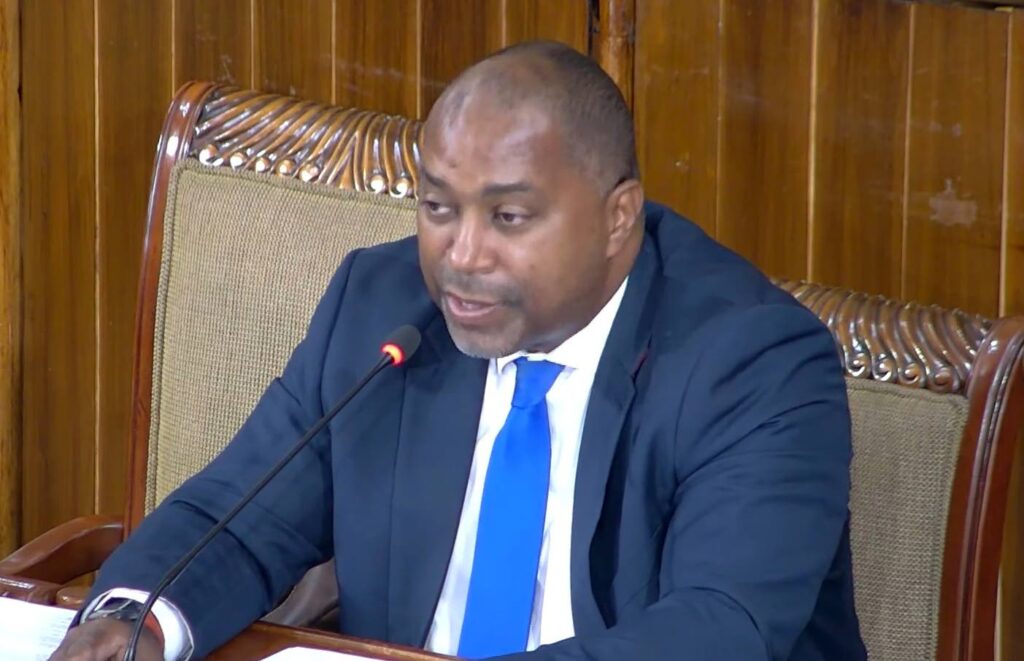
    KINGSTON, Jamaica — Jamaica’s flagship national road infrastructure initiative has announced a three-month extension to the completion timeline for its first construction phase, pushing the target finish date from late 2026 to the end of March 2027. The updated timeline was delivered to lawmakers this Wednesday by Robert Morgan, Jamaica’s Minister with oversight for public works, during his scheduled address to the Sectoral Debate in the country’s House of Representatives.

    Launched on December 31, 2024, the Shared Prosperity through Accelerated Improvement to our Road Network Programme, widely shortened to SPARK, originally set a completion deadline of December 30, 2026 for its opening phase. Morgan told parliament that the adjustment to the timeline stems from current on-the-ground implementation progress and scheduling constraints. “Based on current scheduling and implementation realities, the anticipated completion date has been revised to March 31, 2027,” Morgan stated during the address.

    The minister pushed back against pressure to rush construction, emphasizing that prioritizing speed over long-term structural quality would undermine the project’s public value. “I know that people want the work done quickly. So do I. But speed without quality is not success. A road rushed today and failed tomorrow is not value for money. The commitment of this Government is not simply to move fast. It is to move properly, transparently, and at a standard that protects the public investment,” he explained.

    Morgan also issued a public appeal for patience from Jamaican communities already impacted by ongoing construction work. He acknowledged that road building brings significant daily disruptions to local residents, including increased dust, forced detours, uneven driving surfaces, and extended commute times, and said he does not dismiss these challenges. “To those in communities where SPARK work has already begun, I ask for your patience. I know that construction is disruptive. Dust, detours, uneven surfaces, and delays are real inconveniences, and I do not minimise them,” he said.

    Despite the delay, Morgan reassured residents that the finished project will deliver long-term benefits that justify the temporary disruptions and extended timeline. When all work for the first phase is wrapped up, local communities will receive durable, high-quality roads engineered to last for years, rather than temporary patches that only hold up through a single rainy season, he noted. “But the work is coming to completion, and when it is done, you will have a road built to last; not patched to survive another rainy season, but built to endure,” he added.

    For residents across Jamaica who have been waiting for road upgrades in their own local areas that have not yet broken ground, Morgan offered a clear promise of progress: “we are coming to you.”

  • Adidas runs out of letter ‘V’ as German fans snap up World Cup shirts

    Adidas runs out of letter ‘V’ as German fans snap up World Cup shirts

    FRANKFURT, Germany – A surprising supply chain hiccup hit sportswear brand Adidas this week, when massive fan demand for personalized World Cup jerseys of top German players left the company temporarily short of the single letter ‘V’, leaving popular custom shirts out of stock for a short window. The global sportswear giant, which currently serves as the official kit manufacturer for the German men’s national football team, confirmed Wednesday that the rush for printed shirts featuring star players Kai Havertz, Deniz Undav and Aleksandar Pavlovic entirely drained its inventory of the 22nd letter of the alphabet. “There were short-term shortages in the availability of the letter V,” a company spokesperson confirmed to AFP Wednesday. The good news for eager German football fans, however, is that the issue was addressed far faster than many expected. The spokesperson added that the temporary stock gaps “were quickly resolved” and that personalized tops featuring the letter ‘V’ would soon be back available for online orders. Earlier the same day, independent checks showed that attempts to purchase a personalized Havertz shirt through Adidas’ official e-commerce store returned an error message reading, “Sorry, we’re currently out of stock of the following characters: V.” By the end of the day, the customized jerseys were back up for purchase, priced at 170 euros, equal to approximately $198 USD. The unexpected letter shortage comes amid a major global tournament, where Adidas sees massive revenue from official merchandise sales. The company currently provides match kits for 14 of the 48 national teams competing in this year’s World Cup, and the tournament’s related merchandise typically delivers a significant boost to the brand’s annual bottom line. But this current partnership with the German national team is set to come to an end in a few years. Starting in 2027, Germany will switch kit suppliers from Adidas to American sportswear giant Nike, bringing a close to a working relationship that has stretched more than 70 years and covered four of Germany’s World Cup championship wins.

  • Garvey Maceo win rural under-14 cricket title

    Garvey Maceo win rural under-14 cricket title

    In a lopsided final match played Saturday at St Catherine’s Chedwin Park, Garvey Maceo High School secured the Jamaican rural area Under-14 cricket championship with a commanding nine-wicket victory over Tacky High School.

    Tacky High won the toss and elected to bat first, but the team quickly collapsed under relentless bowling pressure from Garvey Maceo’s attack. The side was bowled out entirely in just 20.5 overs for a meager total of 24 runs, the lowest possible competitive score that left their top-order batters struggling to find any rhythm. The highest individual contribution from Tacky High came from number-eight batter Nickoli Mighty, who managed only five runs across 31 balls before being dismissed.

    The bowling duo of Garvey Maceo tore through Tacky’s batting line-up with unrivaled precision. Captain Andino Edwards delivered a career-defining spell, taking seven wickets while conceding only 10 runs, and his partner Najai Wright collected the remaining three wickets for just 10 runs of his own, completing a perfect 10-wicket split for the pair.

    Chasing the tiny target of 25 runs to claim the title, Garvey Maceo cruised to victory in just 11 overs, finishing at 26 runs for the loss of one wicket. Opening batter Jeremiah Johnson anchored the run chase unbeaten on 15 runs to seal the win. Dominic Gayle recorded Tacky High’s only wicket of the innings, finishing with figures of 1 wicket for 4 runs across his two overs.

    Despite Tacky High’s disappointing final performance, the team dominated the competition’s individual batting leaderboard throughout the tournament. Daniel Wolliston claimed the title of top run-scorer, notching 301 runs across seven innings for an average of 60.20. In fact, Tacky High claimed the top five spots on the tournament batting rankings: Draven Walker placed second with 240 runs, followed by Akeem Palmer with 205, Dominic Gayle with 172, and Leonardo Silvera with 163. The highest-ranked batter outside of Tacky High was Garvey Maceo captain Andino Edwards, who accumulated 121 runs across five innings.

    On the bowling side, Edwards topped the tournament’s wicket-taking charts with 18 total wickets, outperforming his own teammate Wright, who finished second with 16 wickets. For his combined leadership, match-winning performance in the final, and top tournament bowling figures, Edwards was named the competition’s Most Valuable Player.

    In a post-match interview, Edwards shared his surprise at how easily the final victory came together. “I think we would have got more challenge because all season we were hearing about Tacky, but we are grateful for the win and grateful for the performance,” he said.

    The championship win adds another accolade to Garvey Maceo High’s historic season, as the school already secured the rural Under-16 cricket title earlier in the campaign. Now, the school will prepare for two all-island finals against Kingston College, the urban area champions across both the Under-14 and Under-16 age groups. A official date for the upcoming cross-region title clashes has yet to be announced.

  • Newell says Samuda’s comments on mangrove destruction ‘inconsistent’ with gov’t data

    Newell says Samuda’s comments on mangrove destruction ‘inconsistent’ with gov’t data

    KINGSTON, Jamaica — A public dispute over the primary driver of mangrove degradation in Jamaica has erupted between the nation’s opposition and ruling government, with opposition climate spokesperson Omar Newell calling out Environment Minister Matthew Samuda for misleading claims that contradict the government’s own official national planning document.

    The controversy stems from comments Samuda made last Friday at a Rotaract District 7020 Conference held at the Ocean Coral Spring Resort in Trelawny. First reported by the Jamaica Observer on June 15, Samuda asserted that the single largest threat to Jamaica’s mangrove ecosystems is illegal tree harvesting for firewood and charcoal production. He went on to argue that poverty-driven cutting, rather than residential or commercial development projects, is responsible for the majority of the country’s mangrove forest degradation. “If you don’t reduce poverty, mangroves become charcoal, and that’s where we have significant degradation of our mangrove forest — not from housing developments or commercial developments,” Samuda stated.

    In an official statement released Wednesday, Newell, the Opposition Spokesman on Environment and Climate Resilience, pushed back against Samuda’s framing. While he explicitly affirmed that illegal mangrove cutting is illegal and requires targeted enforcement, Newell argued that the minister’s claims directly contradict findings laid out in the government’s own *National Mangrove and Swamp Forest Management Plan 2023–2033*.

    Newell emphasized that the timing of Samuda’s comments is particularly troubling in the wake of Hurricane Melissa, a recent storm that underscored the critical role mangroves play in shielding Jamaica’s coastal communities from storm surge, extreme wind, and coastal erosion. “Jamaicans understand better than ever that mangroves are not simply trees along the coastline. They are part of our national defence against climate disasters,” Newell noted.

    Citing data from the national management plan, Newell explained that approximately 19.56% of all recorded mangrove loss in Jamaica is linked to three key development sectors: tourism, commerce, and transportation. He stressed that the data identifying tourism development as the leading cause of mangrove depletion is not opposition-generated propaganda, but a formal finding from an official government document that Minister Samuda and his department have full access to.

    Newell also highlighted a striking context to Samuda’s remarks: the comments were delivered at a resort development that itself cleared healthy mangrove ecosystems during its construction phases. He argued that Samuda’s framing disproportionately shifts public blame onto low-income Jamaicans who rely on mangrove harvesting for basic livelihoods, while letting large-scale development projects — the officially documented top driver of loss — avoid adequate public scrutiny.

    “Environmental accountability cannot be reserved for the poor while the larger drivers of environmental degradation receive less scrutiny,” Newell said. He added that as the custodian of most of Jamaica’s forested wetland areas, the Jamaican government has a fundamental responsibility to ground public statements and policy in empirical evidence, not selective storytelling.

    Mangroves are widely recognized as one of Jamaica’s most valuable natural assets for climate resilience, buffering coastal populations from the worsening impacts of climate change that include more intense tropical storms and rising sea levels. Newell stressed that effective mangrove protection requires equal accountability for all sources of destruction, regardless of economic or political influence. “Whether the threat comes from illegal cutting or from large-scale development, the standard must be the same,” he said.

    To resolve the public confusion created by Samuda’s comments, Newell is calling on the minister to issue a formal clarification of his remarks and publicly confirm the official findings laid out in the *National Mangrove and Swamp Forest Management Plan 2023–2033*. This step, Newell argued, would ensure that national discussions about mangrove protection are guided by factual evidence rather than misleading, selective narratives that disproportionately burden the most vulnerable groups in Jamaican society.

    “Jamaicans deserve an environmental policy that follows the facts. We cannot ignore the findings of our own national management plan while placing disproportionate blame on those with the least economic power in our society,” Newell said. “If we are serious about protecting our mangroves, we must be equally serious about confronting the principal documented causes of their destruction.”