标签: Jamaica

牙买加

  • Big battle ahead!

    Big battle ahead!

    The global movement pushing for reparations for the transatlantic slave trade and centuries of colonial exploitation is entering a historic new phase, with Caribbean advocates launching their most coordinated, cross-international campaign to date, according to senior Caribbean political figure Dr. Ralph Gonsalves. The former prime minister of St. Vincent and the Grenadines, who now serves as opposition leader in his home country and senior advisor to the global Repair Campaign, laid out the movement’s year-long action plan during a speaking engagement at the Jamaica Observer Press Club this Wednesday, outlining a strategy that expands regional advocacy into major global diplomatic, legal, and academic institutions.

    For decades, Caribbean nations have led calls for reparatory justice from Britain and other Western European powers that built their economies through the forced enslavement of millions of Africans and the systemic exploitation of Caribbean colonies. What began as regional advocacy has gained rapid international traction in recent years, with new partnerships and institutional backing turning a scattered movement into a cohesive global push.

    Gonsalves emphasized that the moment has come for disparate advocacy groups and international institutions to align their efforts to build unstoppable momentum. In remarks that framed the movement as a convergence of multiple streams of work, he noted, “I want to see all these tributaries be conjoined into a mighty river towards reparatory justice. So that is CRC, the Caricom entities, they are the authoritative bodies. But other entities have to feed into them and work with them, and engineer the canals for the streams to come and build the bridges.”

    The movement is already building on a landmark diplomatic win achieved earlier this year: a UN General Assembly resolution adopted on March 25, co-sponsored by Ghana, Caricom, and a bloc of African nations, that formally designated the transatlantic slave trade and racialized chattel slavery “the gravest crime against humanity” and explicitly called for global action to deliver reparatory justice. That resolution opened the door for a series of high-profile engagements planned across the rest of the year.

    The next major milestone is scheduled for June, when Ghana will host an international conference bringing together the African Union, civil society groups, and other global stakeholders to map out the long-term strategic direction of the movement. Following that gathering, the Caribbean Community (Caricom) Reparation Commission (CRC) is set to advance an unprecedented academic and outreach partnership with the University of London, designed to engage British political, economic, religious, and social elites directly on the issue. Gonsalves confirmed that planning for the high-level London gathering is already underway, with the Repair Campaign working alongside the CRC to finalize logistics.

    In July, regional leaders will gather for the Caricom Heads of Government meeting in St. Lucia, where the Caricom Prime Ministerial Subcommittee on Reparations will present a full progress update and request new strategic guidance from regional heads. September will bring two key global opportunities: first, the 25th anniversary of the landmark Durban Conference Against Racism in South Africa, which produced the Durban Declaration and Programme of Action — the foundational international document that first formally recognized slavery and the transatlantic slave trade as crimes against humanity, and which remains a core legal pillar of modern reparation advocacy. Later that month, Caribbean leaders will bring the issue back to the UN General Assembly, where they will leverage months of diplomatic progress to push for deeper global institutional commitment to reparatory justice.

    The most politically contentious moment of the year is expected to come in November, when the Commonwealth Heads of Government Meeting (CHOGM) convenes in Antigua. Gonsalves framed the summit as a critical “staging post” where English-speaking Caricom nations will directly confront Britain over the issue of reparations. He warned that British officials and their key allies — including Canada, Australia, and New Zealand — are already pushing to block reparations from being added to the official CHOGM agenda, setting the stage for a high-stakes diplomatic battle in the months leading up to the summit.

    Notably, Gonsalves pointed out that King Charles III, head of the Commonwealth, has already publicly stated that the issue merits open discussion, making any attempt to sidelined the topic untenable. “The head of the Commonwealth, [King] Charles [III], already said that the time has come for this issue to be discussed and ventilated, so you can’t keep it off the agenda,” he added.

    The Repair Campaign, which launched in 2022 founded by Irish businessman Denis O’Brien, works in formal partnership with the Caricom Reparation Commission to support research, public outreach, and advocacy efforts across Caribbean nations affected by centuries of slavery and colonial exploitation. Today, key global institutions including the United Nations, the African Union, and UNESCO have all grown their involvement in the push for reparatory justice, marking a major shift from the movement’s early days as a regional cause.

  • Sweden charges teen for promoting violent acts online in sadistic online network

    Sweden charges teen for promoting violent acts online in sadistic online network

    In a long-awaited transparency move decades in the making, the U.S. Pentagon has opened the vault on more than 160 previously classified documents detailing public and official sightings of Unidentified Anomalous Phenomena (UAP, the Defense Department’s official term for what are commonly known as UFOs), spanning more than 75 years of reported encounters. The publication of the files, announced Friday by Defense Secretary Pete Hegseth, fulfills a transparency directive issued by President Donald Trump earlier this year.

    Hegseth emphasized in an official statement that decades of secrecy around these records had sparked widespread, well-founded public curiosity, and that the administration was committed to giving the American public direct access to the unredacted original files. The records, hosted on the Defense Department’s public website, include entries stretching all the way back to the late 1940s – the era when modern UFO lore first entered mainstream American culture. Among the earliest documents is a 1947 compilation of multiple “flying disc” sightings, followed a year later by a top-secret Air Force intelligence memo detailing reports of “unidentified aircraft” and “flying saucers.” More contemporary entries include a 2023 incident in which three separate teams of federal law enforcement special agents independently submitted reports of glowing orange orbs in the sky that launched smaller red objects.

    The declassification push traces back to February 2024, when President Trump ordered all federal agencies to begin the process of sorting through and releasing all government-held records related to UFOs and potential extraterrestrial activity, citing overwhelming public demand for greater government openness around the topic. Alongside issuing the order, the Republican president drew controversy by accusing his Democratic predecessor, former President Barack Obama, of improperly disclosing classified information during a viral podcast interview. In that conversation with host Brian Tyler Cohen, Obama addressed persistent speculation surrounding Area 51 – the highly classified Nevada military base that has been the center of UFO conspiracy theories for decades – noting, “They’re real, but I haven’t seen them, and they’re not being kept in… Area 51.” When pressed by reporters, Trump argued Obama had broken classification protocols with his comments, while adding that he personally remained undecided on the question of extraterrestrial life: “I don’t know if they are real or not.”

    To date, no formal evidence of intelligent extraterrestrial life has been presented by the U.S. government. Public and official interest in UAP has surged in recent years, however, driven by a steady stream of declassified military footage of unexplained aerial encounters and growing national security concerns that some unidentified objects could be advanced surveillance or weapons technology developed by U.S. geopolitical adversaries. In a major update published just months ago in March 2024, the Pentagon confirmed that it has yet to find any conclusive evidence linking reported UAP sightings to extraterrestrial technology. The vast majority of unexplained encounters, officials found, can be traced back to ordinary human activity, including weather balloons, commercial and military aircraft, reconnaissance drones, orbital satellites, and atmospheric anomalies.

  • US fire on Iran tankers sparks reprisals as deal hangs in balance

    US fire on Iran tankers sparks reprisals as deal hangs in balance

    On Friday, a U.S. fighter jet carried out precision strikes that disabled two Iran-flagged oil tankers in the Gulf of Oman, an action Washington framed as enforcement of an ongoing port blockade. The targeted attack immediately triggered Iranian retaliatory strikes and sent shockwaves through a tenuous regional ceasefire, arriving at a critical moment when Tehran was actively reviewing a new U.S. diplomatic proposal to end the 10-week-old Middle East conflict.

    The confrontation unfolded in a strategically vital waterway that acts as the primary gateway to the Strait of Hormuz, the chokepoint through which roughly a fifth of global oil supplies pass daily. U.S. Central Command confirmed that an F/A-18 Super Hornet used precision munitions to disable the two vessels, stating the action was intended to stop the ships from reaching Iranian territorial waters. In the immediate aftermath, an anonymous senior Iranian military official told local media outlets that the country’s naval forces had launched proportional retaliatory strikes against what it labeled “American terrorism and ceasefire violation,” adding that active clashes had ceased following the exchange.

    This latest flare-up came less than 24 hours after smaller-scale skirmishes in the strait, a waterway that a top adviser to Iran’s Supreme Leader has compared to holding “an atomic bomb” due to its outsized geopolitical importance. U.S. Secretary of State Marco Rubio, speaking to reporters during a diplomatic stop in Rome, repeated longstanding U.S. policy that Iranian control of the critical oil transit route is “unacceptable.” Rubio also confirmed that Washington was awaiting Tehran’s formal response to its latest peace proposal, shared via Pakistani intermediaries, and expressed cautious hope that the proposal would receive serious consideration from Iranian leadership.

    The proposal put forward by the U.S. would extend the current fragile Gulf ceasefire to create space for comprehensive negotiations aimed at reaching a permanent end to the conflict. The conflict began 10 weeks ago when U.S. and Israeli forces launched joint strikes against Iranian military and nuclear targets across Iran. Iranian Foreign Ministry spokesman Esmaeil Baqaei told Iran’s official ISNA news agency on Friday that the U.S. proposal remains “under review” by Iranian authorities, with no final decision yet issued.

    In the hours following the tanker strikes, Iranian officials ramped up diplomatic pushback against the U.S. action. Iran’s United Nations Ambassador Amir Saeed Irvani sent an official letter to U.N. Secretary-General and the Security Council accusing Washington of a deliberate violation of the existing ceasefire that undermines all ongoing diplomatic efforts to de-escalate. Iranian Foreign Minister Sayed Abbas Araghchi, in a phone call with his Turkish counterpart, voiced deep skepticism about the U.S.’s commitment to a diplomatic resolution of the conflict, according to Iran’s Tasnim news agency.

    Parallel diplomatic efforts were underway in Washington Friday, where Qatari Prime Minister Sheikh Mohammed bin Abdulrahman Al Thani held talks with U.S. Vice President JD Vance focused on supporting the Pakistani-brokered peace initiative. Qatar has found itself drawn into the conflict already: Iran has repeatedly targeted Qatari sites throughout the war, in retaliation for Qatar hosting a large forward-deployed U.S. air base on its territory.

    In a separate development that adds further uncertainty to global energy markets, satellite imagery analyzed by global monitoring firm Orbital EOS shows a growing oil slick spreading off the west coast of Iran’s Kharg Island, the country’s primary oil export terminal. The slick currently covers more than 20 square miles (52 square kilometers), though the exact cause of the spill remains unconfirmed as of Friday. Kharg Island is the linchpin of Iran’s oil export industry, which forms the backbone of the country’s already severely battered economy, and sits just north of the Strait of Hormuz in the Gulf.

    The current crisis traces back to the outbreak of war on February 28, when Iran responded to the U.S.-Israeli strikes by effectively closing the Strait of Hormuz to commercial shipping. That closure sent global oil markets into turmoil and pushed crude prices sharply higher, prompting the U.S. to impose a full blockade of Iranian ports in response. Earlier last week, former President Donald Trump, whose administration launched the current military campaign, announced a large-scale U.S. naval operation to reopen the strait, only to reverse course just two days later and pivot back to diplomatic negotiations. The reversal came after Saudi Arabia, a key regional U.S. ally, publicly refused to grant U.S. forces access to Saudi bases and airspace for the planned operation. Senior Saudi sources told AFP Friday that Riyadh made the call because it believed the military operation would only escalate regional tensions and would not succeed in achieving its stated goals.

    Beyond the Gulf, the separate parallel ceasefire between Israel and Iran-backed Hezbollah in Lebanon is also crumbling under mounting pressure. Friday saw Hezbollah launch two waves of attacks against Israeli military targets: first a salvo of missiles targeting an Israeli military base south of the coastal city of Nahariya, followed hours later by a swarm of attack drones targeting a second base in northern Israel. The group said the attacks were retaliation for a recent Israeli strike on Beirut’s southern suburbs and ongoing daily Israeli strikes across southern Lebanon.

    Israel has continued its airstrikes against Hezbollah positions despite the formal ceasefire, and on Wednesday carried out its first attack on Beirut’s southern suburbs in a month, stating the strike killed a senior Hezbollah commander. Lebanon’s Ministry of Public Health reported Friday that 11 people were killed in Israeli strikes across southern Lebanon that day: 10 civilians, including two children and three women, plus one civil defense volunteer.

    The new round of violence on the Lebanon front comes just days before Lebanon and Israel are scheduled to hold the first round of direct peace negotiations in Washington next week, a meeting that Hezbollah has issued repeated and vehement statements opposing. The two countries have remained officially in a state of war since 1948, making any diplomatic breakthrough a historic shift for the region.

  • SCHOOLYARD BRAWLS

    SCHOOLYARD BRAWLS

    A wave of growing student indiscipline that has shaken Jamaica’s education system in recent weeks has reached St Elizabeth Technical High School (STETHS), triggering an immediate campus closure for most students on Thursday and leaving families uncertain about when regular classes will resume.

    The shutdown came after a day of escalating violent incidents at the Santa Cruz-based institution on Wednesday, according to unofficial sources familiar with the situation. Multiple physical altercations broke out across the campus, one of which reportedly involved a bladed weapon, leaving one student injured. The escalating chaos forced school administrators to call on local law enforcement to intervene to restore order mid-morning.

    Following the initial confrontation, additional fights flared up across the school grounds—some even unfolding directly in front of senior school leaders, sources confirmed to the Jamaica Observer. In a formal advisory sent to parents and guardians Wednesday, STETHS Principal Keith Wellington announced the suspension of classes, noting the move was implemented to safeguard the well-being of every student and staff member on campus, and to give administrators time to restore order and implement new disciplinary measures. When reached for comment by the Observer Thursday evening, Wellington declined to share further details, stating he would not address the situation publicly until his internal handling of the crisis was complete.

    Only students scheduled to sit external examinations were permitted to access the campus after the shutdown. Deputy Superintendent Owen Brown, operations head of the Jamaica Constabulary Force’s St Elizabeth Division, confirmed that police worked alongside school leaders and responding parents to bring the unrest under control. No students were taken into custody following the incident, Brown confirmed, adding that the situation was resolved through on-site coordination between law enforcement, school officials, and family members.

    Brown emphasized that STETHS is one of many local institutions participating in the police’s School Resources Officer (SRO) Programme, which places dedicated law enforcement officers on campus to prevent violence and mediate student conflicts. “One core goal of the SRO initiative is to teach students to work through their disagreements through dialogue rather than physical confrontation,” Brown explained. “We help them understand how to resolve conflicts amicably, instead of turning to violence.”

    The senior police official reaffirmed the force’s commitment to tackling school violence across the parish, extending beyond Wednesday’s incident at STETHS. “We have promised to work with every school in St Elizabeth, not just STETHS, to help foster orderly, safe learning environments for all students,” he said.

    Brown also called on parents to take a leading role in teaching conflict resolution skills to young people, noting that family socialization lays the foundation for how children behave in public spaces. “The home is the first and most important place children learn how to interact with others. We are urging parents to be more intentional about teaching basic social skills, especially how to handle disagreement,” he said. “A difference of opinion doesn’t have to end in a fight. If adults model healthy conflict resolution for children, they will carry those skills into their school and community interactions.”

    Wednesday’s shutdown is just the latest in a string of deadly and disruptive violent incidents at Jamaican schools since the start of 2024. At least two students have been killed in conflicts with peers this year, with multiple other assaults, fights, and bullying cases reported across the island. In March, 16-year-old Devonie Shearer was fatally killed during a dispute at Ocho Rios High School in St Ann; a 17-year-old classmate has been arrested and charged in connection with his death. Just last month, 13-year-old Seaforth High School student Kland Doyle was fatally stabbed during a confrontation with a peer in Morant Bay, St Thomas, resulting in the arrest of three other schoolboys. Also last month, Jamaica College drew widespread public criticism after a video showing one student being beaten by two classmates went viral on social media—the second high-profile incident of violence at the institution in as many months.

  • WATCH: Promised housing for Petersfield High shelterees ‘not ready’, says Dwayne Vaz

    WATCH: Promised housing for Petersfield High shelterees ‘not ready’, says Dwayne Vaz

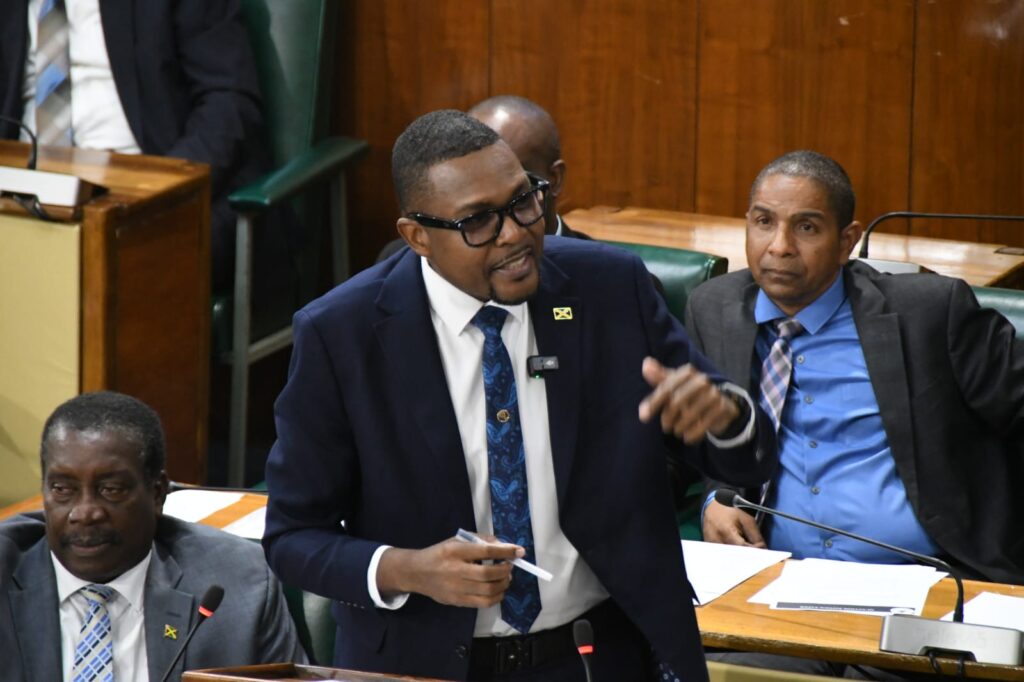
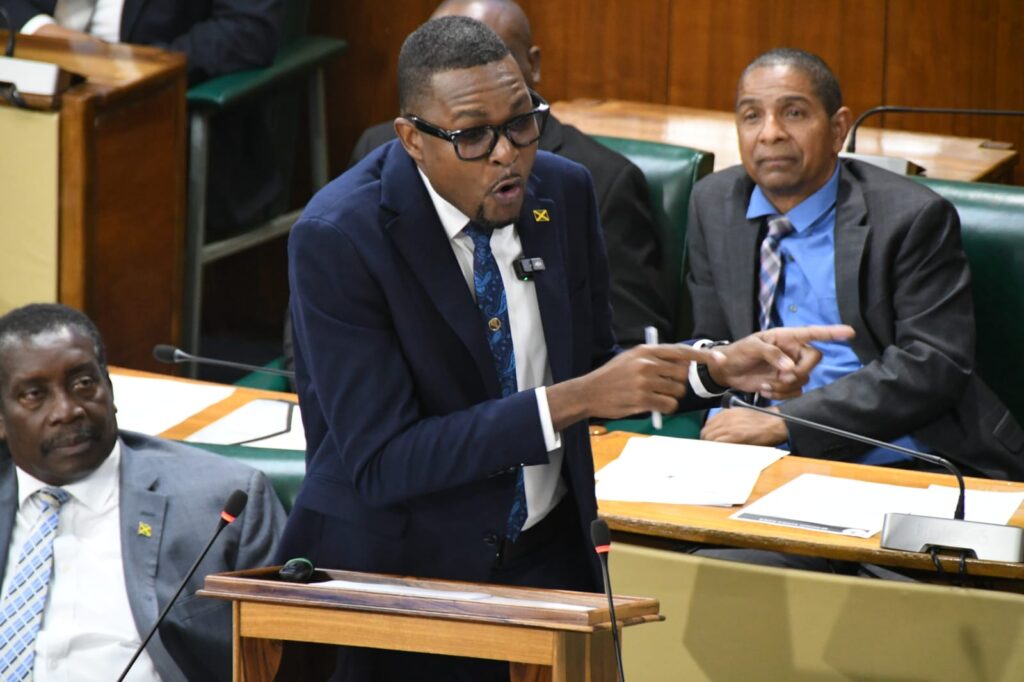
    A Jamaican opposition politician has publicly condemned the national government for failing to deliver on a critical pledge to relocate displaced hurricane survivors from a Westmoreland Parish school shelter by the agreed deadline, leaving dozens of residents stuck in unsanitary, dangerous conditions.

    Dwayne Vaz, the People’s National Party Member of Parliament for Westmoreland Central, says the administration’s missed May 8 deadline has forced people who were staying at the Petersfield High School hurricane shelter to move into adjacent, rodent-infested housing originally built for school teachers.

    The government’s original promise included the construction of 50 prefabricated container homes at a new site in Shrewsbury, located just a short distance from the current overcrowded school shelter. But according to Vaz, work on the development has barely progressed: only five concrete foundations have been poured, and no basic infrastructure including electricity, running water, or a working sewage system has been installed at the property.

    Vaz placed direct blame for the delay squarely on the head of the Minister of Local Government, arguing that the failure to keep this promise to vulnerable survivors exposes deep-seated incompetence within the minister’s portfolio. He has now called on Jamaica’s Prime Minister to step in and address what he frames as a clear case of mismanagement of the national hurricane recovery program.

    “We are calling out the prime minister. Please assist the residents in Shrewsbury and get them to where was promised to them,” Vaz told reporters.

    The Ministry of Local Government and Community Development first made the public commitment to relocation last month, as part of the country’s ongoing post-disaster recovery work. The pledge came in the wake of unconfirmed reports that shelter residents were engaging in inappropriate sexual conduct in the presence of students attending the school, sparking public outcry over the continued use of campus facilities as long-term emergency housing.

    The survivors currently housed at the site were displaced by Hurricane Melissa, which impacted Jamaica in recent years, leaving hundreds of residents across the country without permanent housing.

  • National Futsal Championship launched

    National Futsal Championship launched

    KINGSTON, Jamaica — Jamaica’s first nationwide structured National Futsal Championship formally entered its operational phase this week, with opening matches scheduled to kick off on May 16 at the Legacy 5 facility in Runaway Bay, St Ann. The tournament’s grand “Super Final” is slated for June 6 at the Horace Burrell Centre, bringing a months-long organizational vision to a competitive climax.

    Organized by the Jamaica Futsal and Scrimmage Association (JFSA), the official launch event was hosted Friday at the headquarters of the Jamaica Football Federation (JFF), marking a milestone in the organized growth of the five-a-side indoor sport across the island. A total of 28 teams from Jamaica’s 14 parishes — two qualifying squads per parish — will compete across four geographically divided regional pools to narrow down the field for the final stage.

    The four regional groups are drawn to reflect the island’s administrative and geographic layout: the North Eastern zone draws teams from St Ann, Portland, and St Mary; the North Western pool includes squads from St James, Hanover, Westmoreland, and Trelawny; the South Western zone encompasses Clarendon, Manchester, and St Elizabeth; and the South Eastern grouping brings together competitors from Kingston and St Andrew, St Catherine, and St Thomas. The regional stage will follow a round-robin format, with the top two point-earning teams from each pool advancing to the national finale in June.

    In his address at the launch, JFSA President Dr Curven Whyte framed the championship as far more than a single seasonal sporting event. Instead, he positioned it as a core step forward for a long-term grassroots movement centered on athletic development, community opportunity, and national progress. “Since 2024, the JFSA has been intensely laying the foundation for the structured growth of futsal in Jamaica, and so what we have is a vision and the strategic planning will quickly evolve into meaningful action across communities, institutions and the wider football landscape,” Whyte explained.

    He emphasized that the association’s strategic ambitions extend well beyond the current tournament to build a sustainable futsal ecosystem across Jamaica. The JFSA’s ongoing agenda includes rolling out targeted grassroots development programs, launching dedicated youth academy competitions, expanding programming for female futsal athletes, introducing masters competitions for veteran players, and creating inclusive competitive opportunities for athletes with special needs. The body is also working to strengthen cross-border collaboration with other Caribbean futsal governing bodies to raise the profile and competitive standard of the sport across the entire region.

    The National Futsal Championship has received formal endorsement from the island’s leading sporting bodies. JFF President Michael Ricketts voiced his support for the initiative, while Jamaica Olympic Association President Christopher Samuda also backed the tournament. Sports Minister Olivia Grange also extended her blessing for the event, though she was unable to attend the launch in person.

    Beyond the immediate competition, the 2025 National Futsal Championship serves a critical high-stakes purpose: it will act as a selection showcase for Jamaica’s national futsal squads, which are set to compete in upcoming regional tournaments with the long-term goal of qualifying for the prestigious FIFA Futsal World Cup.

  • Virus-hit cruise ship heads for Spain as evacuees land in Europe

    Virus-hit cruise ship heads for Spain as evacuees land in Europe

    MADRID, Spain — Spanish authorities announced Wednesday that the MV Hondius, a cruise ship affected by a fatal hantavirus outbreak that has claimed three lives, is on track to dock at the Canary Islands’ Tenerife within three days, with mass passenger evacuation operations set to begin on May 11. The outbreak has triggered international concern over potential spread, though top global health officials have moved quickly to reassure the public that the situation does not mirror the scale of the COVID-19 pandemic.

    Earlier on Wednesday, emergency response teams completed the evacuation of three individuals from the vessel: two symptomatic crew members and one close contact of a confirmed infection case. The ship had previously been anchored off the coast of Cape Verde, and after the evacuation operation was completed, it set sail for the Spanish archipelago. Medical personnel clad in full hazmat suits transferred the three evacuees from the cruise ship to a specialized ambulance boat, before the group was transported to Praia International Airport, Cape Verde’s main air hub in its capital, for onward travel.

    According to on-site AFP correspondents, a medical aircraft carrying two of the evacuated passengers touched down at Amsterdam Airport Schiphol in the Netherlands at 17:47 GMT. German emergency services confirmed they subsequently took custody of the third evacuee — the individual who had been exposed to an infected passenger on board — and transported the person to a specialized hospital in Dusseldorf for monitoring and treatment.

    Virology experts have confirmed that the strain of hantavirus detected on the MV Hondius is the Andes virus, an uncommon subtype that is the only known hantavirus capable of spreading from person to person. World Health Organization (WHO) expert Anais Legand explained to AFP that based on the virus’s 1- to 6-week incubation period, the initial index case on the cruise could not have contracted the virus during the voyage itself. The ship departed Ushuaia, Argentina on April 1, and the first fatality linked to the outbreak was recorded just 10 days later on April 11.

    Argentine health officials confirmed that the first couple killed by the virus had completed travel through Chile, Uruguay and Argentina before boarding the cruise in Ushuaia. In response to the outbreak, experts will travel to the southern Argentine port city to conduct testing on local rodent populations — the natural reservoir for hantavirus — to trace the origin of the infection.

    Global and national health authorities have actively sought to calm widespread public anxiety over a potential large-scale global outbreak, noting that hantavirus is significantly less transmissible than the SARS-CoV-2 virus that caused the COVID-19 pandemic. WHO Director-General Tedros Adhanom Ghebreyesus told AFP that the current situation is not comparable to the COVID-19 pandemic, emphasizing: “The risk to the rest of the world is low.”

  • ‘Bunny’ set to leave Man City with Chelsea the favourites to land star striker — reports

    ‘Bunny’ set to leave Man City with Chelsea the favourites to land star striker — reports

    One of women’s football’s most prolific strikers is preparing for a high-profile summer move, after Manchester City Women confirmed that Khadija “Bunny” Shaw will leave the club when her current contract expires in June. Contract extension negotiations between the all-time leading goalscorer and the reigning Women’s Super League champions collapsed after the two sides failed to reach a consensus on key terms, opening the door for a major transfer move.

    Shaw, who has captured the hearts of City fans throughout her tenure at the club, had publicly shared her desire to remain in Manchester following the team’s historic 2024 WSL title win — their first top-flight league crown in 10 years. But according to reporting from *The Guardian*, irreconcilable differences over critical contract details, most notably the length of the proposed new deal, ultimately derailed extension talks. Both the club and the Jamaican striker have expressed deep disappointment at the breakdown of negotiations, with City acknowledging they cannot compete with the lucrative financial terms being tabled by suitors elsewhere.

    The leading contender to sign Shaw is London-based Chelsea FC Women, who have tabled an offer worth £1 million per year to secure the striker’s signature, multiple sources close to the negotiations have confirmed. The forward is not short of options, however: elite clubs across global football have registered interest in her availability, including Spanish giant Barcelona and several top-flight clubs in the U.S. National Women’s Soccer League.

    The 28-year-old Jamaican international, nicknamed “Bunny,” is currently leading the 2023-24 WSL in goalscoring and is on track to win the league’s Golden Boot award for the third consecutive season. Before she leaves the club, Shaw will face her prospective new side Chelsea this Sunday in the FA Cup semi-final, with her final appearance for Manchester City currently scheduled for the following Saturday’s league clash against West Ham United.

  • Heidi Lalor appointed to FEI Solidarity Committee, strengthening Caribbean voice in equestrian

    Heidi Lalor appointed to FEI Solidarity Committee, strengthening Caribbean voice in equestrian

    A historic milestone for Caribbean equestrian sports has been reached, with Heidi Lalor, President of the Equestrian Federation of Jamaica (EFJ), earning a coveted seat on the prestigious FEI Solidarity Committee — the first appointment of a Jamaican representative to the high-level global body. The confirmation of Lalor’s appointment came during the FEI General Assembly held in Hong Kong, where she secured the seat representing Group IV, a regional bloc encompassing Canada, the United States, and all Caribbean nations. She takes her place on a diverse international panel that includes delegates from Qatar, Bolivia, Cambodia, Kenya, Uzbekistan, Finland, and Guatemala.

    Prior to this breakthrough, the Caribbean has seen limited representation on the committee from nations including Haiti, the Cayman Islands, and The Bahamas, making Lalor’s appointment a new chapter for regional representation in global equestrian governance. The appointment follows five years of transformative strategic leadership from Lalor at the helm of the EFJ, a period marked by effective stewardship of international development grants, expanded investment in athlete training and coach education, and growing participation in FEI World Challenge competitions across Jamaica.

    Reflecting on her selection, Lalor attributed the historic appointment to two key factors: aligned priorities with FEI’s global development initiatives, and a proven track record of growing equestrian sports across the Caribbean region. “My selection came from alignment with global programs that boost awareness and participation, like the Racehorse Retraining Programme and the Eventing World Challenge, paired with my track record of delivering results and promoting the sport across the Caribbean,” Lalor noted. She added that her five years of leading Jamaica’s national federation have delivered measurable progress: “We have seen rising motivation, growing volunteer engagement, new sponsorship opportunities, higher competitive standards, and the development of a new generation of certified officials under the Jamaican flag.”

    Lalor emphasized that her appointment is part of a broader trend of growing Caribbean influence in global equestrian circles, pointing to tangible progress across the region. Barbados now holds a seat on the FEI Board, while Trinidad and Tobago has built a consistent record of competitive success across Olympic disciplines using exclusively locally trained horses. Other regional nations, including the Cayman Islands, Bermuda, and The Bahamas, are also advancing their own FEI Solidarity-backed development projects.

    For Lalor, the appointment is also deeply personal, rooted in decades of support from FEI development programs. Since 2003, she has benefited from FEI-funded coaching initiatives across the Caribbean, training in Trinidad and Tobago, the Cayman Islands, and her home country of Jamaica. “I am a direct product of these development initiatives,” she explained. “They provided coaching education for local federations that lifted up athletes, and built the professional governance frameworks that allow national federations to effectively manage and grow the sport.”

    Now working directly alongside FEI President Ingmar De Vos — who also serves as Solidarity Chair and a newly appointed International Olympic Committee Board member — Lalor says her role will extend far beyond formal representation. She plans to actively drive inclusive global development of the sport. “This appointment proves that doors are opening for small island nations,” she said. “It gives me the opportunity to support multiple regional countries, assist with equitable funding allocation, and help shape the future of equestrian sport on a global scale.”

    Looking ahead, Lalor’s core priorities are clear: unify the Caribbean region to raise its global profile, and expand access to equestrian sports by creating more development opportunities on local islands. “My central goal is to continue lifting regional standards and creating more on-island access through professional courses delivered by FEI Solidarity,” she said, noting that expanded certification for local coaches and officials will be the foundation of long-term sustainable growth. She also highlighted the critical role of strong governance, noting that robust administrative frameworks build trust with international bodies and unlock sustained investment. “With solid governance in place, you gain greater confidence and more effective productive management, which paves the way for long-term development,” Lalor explained. “I am eager to elevate the Caribbean’s presence on the global stage with energy, inspiration, and a deep commitment to sustainable growth.”

    Despite the progress, Lalor acknowledges persistent challenges, most notably the gap between grassroots participation and elite international competition for small island nations. “Bridging that divide is always a unique challenge for island communities,” she admitted, “but with clear vision, a strong foundational framework, and intentional advocacy, programs like the FEI World Challenge Series can help close that gap.”

    Beyond infrastructure and funding, Lalor says her appointment carries an important message for young aspiring equestrians across the Caribbean and the globe. “It is critical for young people to see this level of international representation from our region,” she shared. “One of my first core goals when I became EFJ President in 2022 was to show young people that this pathway exists — that broader global opportunities come from active engagement with your national federation.”

    Her advice to emerging equestrian leaders is simple but impactful: “Whether you are an Olympian, a recreational rider, or a coach, show up for your National Federation. Stay committed, stay positive, put in the work, and the support will follow.”

    Founded in 2012, the FEI Solidarity program remains focused on core global missions: expanding access to equestrian sports, growing global participation rates, raising competitive and governance standards, and strengthening the interconnected global equestrian community.

  • WHO warns of more hantavirus cases in ‘limited’ outbreak

    WHO warns of more hantavirus cases in ‘limited’ outbreak

    GENEVA, Switzerland – The World Health Organization issued an update Thursday on a rare hantavirus outbreak linked to the expedition cruise vessel MV Hondius, which has already claimed three lives. Officials have cautioned that additional cases may surface in the coming weeks, but expressed confidence that targeted public health precautions will keep the outbreak contained.\n\nThe incident has sparked global concern after three passengers tested positive for the Andes strain of hantavirus — a rare, human-to-human transmissible variant — and subsequently died. Early Thursday morning, a fourth ailing passenger from the ship disembarked in Europe, and the vessel is now en route to Spain’s Canary Islands, where all remaining crew and passengers will be evacuated upon its scheduled arrival Sunday in Tenerife. As of Thursday, the ship’s operator, Netherlands-based Oceanwide Expeditions, confirmed no currently symptomatic people remain on board.\n\nDuring a press briefing in Geneva, WHO Director-General Tedros Adhanom Ghebreyesus confirmed that the outbreak has so far produced five confirmed cases and three suspected cases, counting the three fatalities. “Given the incubation period of the Andes virus, which can be up to six weeks, it’s possible that more cases may be reported,” he explained. Shortly after the briefing, the Leiden University Medical Centre in the Netherlands confirmed that the recently disembarked sick passenger had returned a positive hantavirus test.\n\nDespite the possibility of new cases, WHO Emergency Alert and Response Director Abdi Rahman Mahamud struck a measured tone, noting: “We believe this will be a limited outbreak if the public health measures are implemented and solidarity shown across all countries.” Currently, people linked to the outbreak are receiving treatment or in isolation across five countries: Britain, Germany, the Netherlands, Switzerland, and South Africa.\n\nUnlike COVID-19, hantavirus is primarily spread by infected rodents, though the Andes variant can spread between humans. The rare respiratory illness can trigger severe complications including respiratory failure, cardiac impairment, and hemorrhagic fever, and no vaccine or targeted cure exists for the disease. Epidemiologists trace the origin of the outbreak to an initial passenger who contracted the virus before boarding the MV Hondius in the Argentine coastal city of Ushuaia, where the ship departed on its voyage on April 1. The virus then spread to other passengers during the Atlantic crossing.\n\nThe timeline of the outbreak unfolded steadily over the past month. A Dutch man who boarded the ship in Ushuaia with his wife became the first fatality, dying aboard the vessel on April 11. His body was removed on April 24 at Saint Helena, a South Atlantic island where 29 other passengers also disembarked. His wife, who disembarked to accompany his body to South Africa, developed symptoms and died 15 days later; hantavirus was confirmed as her cause of death on May 4. A third fatality, a German passenger, died on May 2, and her body remains on the ship as it continues to Tenerife.\n\nInternational contact tracing efforts are now underway across more than a dozen countries. The WHO has notified 12 nations whose citizens disembarked at Saint Helena. The Dutch woman who died flew from Saint Helena to Johannesburg on a commercial Airlink flight while symptomatic, and health officials are currently working to identify and monitor all 82 passengers and six crew who were on that flight. Argentina’s health authorities are also planning to test wild rodent populations in Ushuaia to confirm the initial source of exposure, while Chilean health officials have ruled out local transmission for the two deceased Dutch passengers, noting their travel window did not align with the virus’s incubation period.\n\nThe UK Health Security Agency confirmed two passengers who returned to the United Kingdom from the cruise have been advised to self-isolate, adding that both remain asymptomatic and the overall risk to the general UK public remains “very low.” Oceanwide Expeditions added that there were 149 people total on board the vessel, including 88 passengers, and the company is working to trace every passenger and crew member who has boarded or disembarked the ship since March 20.