标签: Jamaica

牙买加

  • No sideshows

    No sideshows

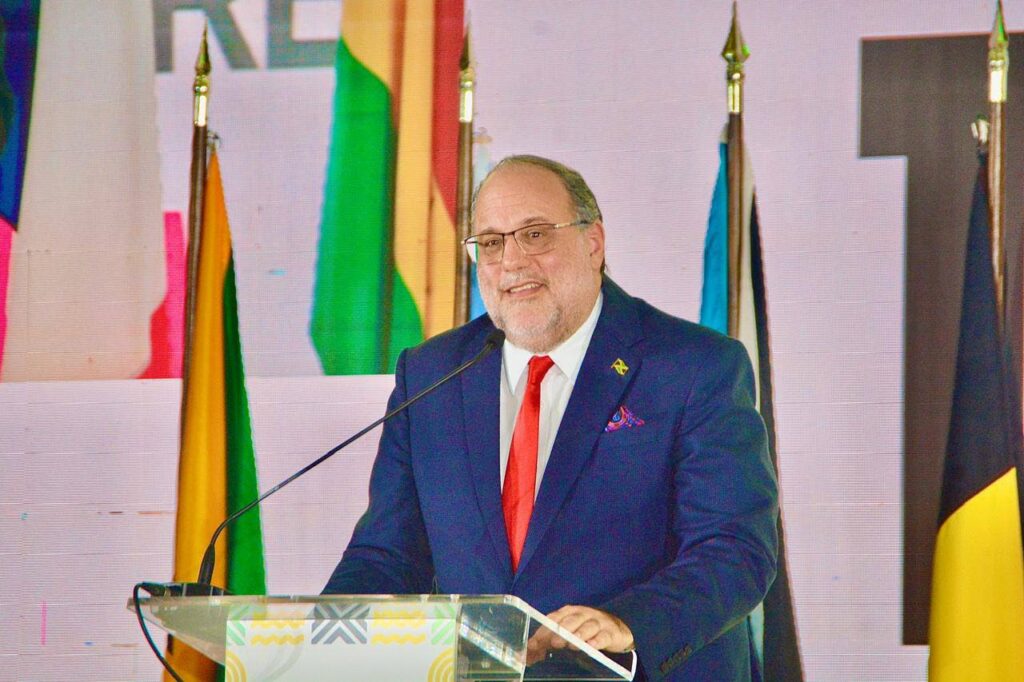
    In a candid address at the Jamaica Observer Press Club this Wednesday, Dr Ralph Gonsalves, former Prime Minister of St Vincent and the Grenadines and current senior advisor to the global Repair Campaign, issued a sharp rebuke of diversionary arguments meant to undermine the Caribbean’s decades-long push for reparatory justice for the atrocities of transatlantic slavery and colonial rule.

    Gonsalves centerd his remarks on pushing back against growing attempts by critics to shift the narrative of the reparation movement toward African involvement in the slave trade, framing these talking points as deliberate sideshows designed to draw focus away from the systematic role European governments played in building, expanding and profiting from centuries of human trafficking and exploitation. “One of the amazing things that persons who don’t want to confront reparation do is try to keep our minds from the central focus, and take us to sideshows, to distractions,” Gonsalves told attendees. “We have to be careful that we do not fall prey to distractions and sideshows. We have to keep our minds on the main event.”

    The veteran Caribbean politician outlined the core structural reality that underpins the reparation campaign, detailing how European state institutions actively orchestrated every stage of the transatlantic slave trade: from encouraging African groups to capture enslaved people, to building coastal forts to detain captives, to transporting them across the Atlantic on European ships, and finally selling them to work on exploitative colonial plantations across the Caribbean. This state-backed system of exploitation generated unprecedented wealth for European powers, while leaving lasting damage to Caribbean societies that persists to this day.

    Gonsalves also pushed back against a second common counterargument: that post-colonial development aid and trade concessions from former colonial powers like Britain amount to sufficient compensation for the harms of slavery. He rejected this claim outright, noting that any support the Caribbean has received is minuscule when measured against the trillions in wealth extracted from the region over centuries of colonial rule.

    To illustrate his point, Gonsalves cited the post-World War II preferential trade deal for Caribbean banana exports to Britain. Far from an act of altruism, he explained, the arrangement was rooted entirely in Britain’s own economic self-interest: after the war, Britain lacked enough US dollars to purchase bananas from Latin American producers, so it turned to its former Caribbean colonies to meet domestic demand. When Britain joined the European single market decades later, the preferential terms were revoked, leaving Caribbean producers to bear the economic costs. “It’s true we benefited, but they benefited too,” Gonsalves said, emphasizing that even these limited gains cannot offset the centuries of uncompensated exploitation.

    Beyond refuting counterarguments, Gonsalves redefined the framing of the reparation movement itself, rejecting attempts to dismiss it as a purely historical debate. Instead, he positioned the quest for reparation as a pressing modern human rights issue, aligned with a United Nations General Assembly resolution passed this past March that formally designated slavery as “the gravest of crimes against humanity.”

    “Secondly, the quest for reparation, in a practical sense, is meant to repair the many-sided legacies of underdevelopment, which can be sourced directly to native genocide and the enslavement of African bodies,” he added. Gonsalves drew a direct line between historical exploitation and modern Caribbean development gaps, noting that formerly enslaved people were granted freedom but no access to land, capital, education or generational wealth — a stark contrast to the generous compensation the British government paid to enslavers when it abolished slavery in the 1830s.

    The Repair Campaign, the initiative Gonsalves advises, was launched in 2022 by Irish businessman Denis O’Brien. It works in formal partnership with the Caricom Reparations Commission to coordinate advocacy, build public support, and develop actionable reparatory justice plans across all 15 Caribbean Community member states. The collective campaign continues to push European former colonial powers to acknowledge the scale of their historical role in slavery and provide tangible compensation to address the intergenerational harms that shape the Caribbean today.

  • IShowSpeed arrives in Jamaica for Caribbean tour

    IShowSpeed arrives in Jamaica for Caribbean tour

    One of the internet’s most high-profile content creators, IShowSpeed — legally known as Darren Jason Watkins Jr. — has landed in Kingston, Jamaica, marking the latest stop on his wildly popular Caribbean tour, according to on-the-ground reports from Norman Manley International Airport.

    Famous for his explosive, high-octane livestreams that have captivated a global audience, the 20-year-old creator has built a massive cross-platform following, boasting more than 50 million subscribers on YouTube alone, alongside a dedicated fanbase on Twitch. His unfiltered, energetic on-camera persona has turned him into one of the fastest-growing viral personalities of the last half-decade, with regular broadcasts drawing millions of concurrent viewers.

    Local Jamaican fans have been swirling with excitement for days across social media platforms, as anticipation built ahead of the streamer’s arrival. Many shared countdown posts and travel rumors, turning the announcement of his Jamaican stop into a trending topic across the island’s online spaces.

    This Caribbean leg of IShowSpeed’s ongoing global tour is far from his first international run. Before heading to the Caribbean, the creator already completed high-energy tour stops across Africa, Europe, and Latin America, where he brought his signature on-the-ground content directly to local communities. Ahead of arriving in Jamaica, he had already visited Trinidad and Tobago, the Dominican Republic, and Puerto Rico, filming live content on local streets and interacting with hundreds of local fans at each stop.

    Upon arrival at Norman Manley International Airport, IShowSpeed received a warm, culturally rooted welcome from a group of Junkanoo dancers. The content creator paused his exit from the airport to join the performers for an impromptu brief dance before being escorted to his next scheduled destination, leaving fans eagerly expecting more live content from the island in the coming days.

  • Dozens remanded in custody after post-PSG match unrest

    Dozens remanded in custody after post-PSG match unrest

    In the wake of chaotic violence that erupted after Paris Saint-Germain secured their spot in the UEFA Champions League final, French law enforcement and judicial authorities have taken firm action, with nearly 100 people placed in pre-trial detention across the country. The Paris Public Prosecutor’s Office confirmed Thursday that 95 individuals, nine of whom are underage, are being held in custody in the French capital, with an additional 14 minors detained outside Paris following the outburst of unrest.

    The violence broke out after PSG secured a 1-1 away draw against Bayern Munich in the second leg of the Champions League semi-final, locking in a 6-5 aggregate win that sent the defending champions through to the 2025 final. What was meant to be a celebratory moment for PSG supporters quickly spiraled into public disorder, with groups engaging in violent clashes, vandalism, and attacks on law enforcement.

    Authorities have outlined a range of charges against the detained individuals. Offenses include participating in an armed gathering after official orders to disperse, joining assemblies organized to coordinate violence and property damage, assaulting police officers, and setting off unauthorized fireworks. Multiple vehicles were damaged in the unrest, and a total of 11 civilians were injured – one critically, hurt by a firework explosion. Twenty-three police officers also sustained minor injuries during efforts to restore order. In total, 127 people were arrested across the Paris region, 107 of those within city limits, Interior Ministry spokesperson Laurent Nunez confirmed in an interview with CNews and Europe 1.

    For those facing the most serious charges, the legal consequences are steep: convicted offenders can face up to 10 years of prison time and fines as high as 150,000 euros. Nunez emphasized that law enforcement will not show any leniency ahead of the Champions League final, scheduled for May 30 in Budapest, where PSG will face Arsenal in a bid to defend their continental title. He warned that police will respond with equal force to any future unrest, stressing “We won’t tolerate unrest.”

    The post-violence fallout has also sparked political friction between national security officials and Paris’s new city leadership. Nunez criticized Paris Mayor Emmanuel Gregoire for unilaterally announcing plans for a public fan zone in the capital to host supporters watching the final on May 30, saying standard pre-planning consultations with the police prefecture were skipped entirely. “Normally we talk about that a bit with the police prefect beforehand, which didn’t happen,” he noted, raising concerns about uncoordinated public event planning amid ongoing risks of fan violence.

  • Delly Ranx Better Than Before

    Delly Ranx Better Than Before

    After decades of shaping the dancehall and reggae genres, iconic veteran artist Delly Ranx is launching a transformative new chapter of his musical journey with the release of his deeply introspective solo album *Better Than Before*, distributed through House A Stars/Pure Music Productions. For the seasoned performer, the album’s title is far more than a marketing hook—it is a raw, unfiltered reflection of his decades-long personal and artistic evolution.

    “The Delly Ranx of the past and the Delly Ranx of today are entirely different people,” the artist shared in discussing the project. “This version of me understands patience, trusts the process, and holds a deeper love for the Creator than ever before. Every day, we push ourselves to grow, and that same drive is what I poured into every track of this album.”

    Blending the rhythmic roots of reggae with the vibrant energy of dancehall, the 100% solo project draws directly from Ranx’s real-life journeys, personal hardships, and unshakable spiritual foundation. The artist revealed that the entire record was written and recorded during one of the most difficult periods of his life, turning personal struggle into creative fuel. “This was one of the hardest seasons I have ever walked through,” he explained. “I had to dig deep into my core and lean entirely on the Most High for strength and guidance. This isn’t just a collection of songs—it’s survival, faith, and raw, uncut emotion laid to rhythm.”

    Crafted with production support from Vigga and a small team of key collaborators, the album carries a distinctly mature sonic and thematic identity, mirroring Ranx’s growth as a songwriter and musical storyteller. In a departure from the common industry practice of packing projects with high-profile guest features to boost streams, *Better Than Before* includes no featured artists at all. From opening notes to the final closing track, every lyric, vocal, and creative choice is authentically his. “This is 100% Delly Ranx—my thoughts, my voice, my energy from start to finish,” Ranx emphasized.

    The record touches on a range of grounded, real-world themes, from love and relationships to betrayal and personal accountability. One standout track, *Love Scam*, produced by Upsetta Records with co-writing credits between Ranx and Dubee, is already projected to strike a powerful chord with Jamaican audiences, thanks to its honest narrative rooted in real experiences.

    Beyond sharing his own story, Ranx hopes the album will challenge limiting labels within the global music industry. “I don’t want to be boxed in as just a dancehall or reggae artiste,” he said. “I simply want to be known as an artist—full stop.” At 50 years old, Ranx also aims to inspire fellow creators of all ages to keep pursuing their craft, regardless of societal expectations around age. “I’m a 50-year-old youth still making music, still growing,” he noted. “That proves that if you have the will, there is always a way. Age is never a limit.”

    Looking forward, Ranx has outlined a robust global rollout for the album, including new music videos, international press interviews, and cross-regional tours. Beyond promoting his own work, he also plans to dedicate more time to mentoring emerging Jamaican artists, passing on the wisdom he has gained over his decades-long career. For Ranx, this project is more than a new release—it is the defining turning point of his professional legacy. “I want this album to be remembered as the turning point in my career,” he shared. “Something that inspires people and shows them they can always work to become better than they were before.”

  • WATCH: Foul odour forces temporary closure of tax office in downtown Kingston

    WATCH: Foul odour forces temporary closure of tax office in downtown Kingston

    DOWNTOWN KINGSTON, Jamaica — A key government tax office in the heart of Kingston was forced to halt operations for several hours on Thursday, after an unexpected and pungent unidentifiable smell prompted an emergency evacuation of all personnel. The affected location, Tax Administration Jamaica’s King Street branch, saw employees file out of the building shortly after arriving for their morning shifts, when the strange odor was first detected by on-site staff.

    By 10:30 a.m., when local media outlet Observer Online arrived at the scene, all workers could be seen gathered across the street from the shuttered building, waiting for updates on the investigation into the smell’s origin. The Urban Development Commission, which owns the property that houses the tax office, immediately dispatched a team to conduct a full inspection of the entire structure to trace the source of the odor.

    Speaking to the media, an anonymous employee confirmed that the unusual scent had left most staff uncomfortable, noting that building management had moved quickly to launch a full assessment to pinpoint where the smell was coming from. Multiple staff members reported that the stench was most concentrated on the ground floor of the building, the public-facing level that houses cashiers who process in-person transactions for Jamaican taxpayers.

    Merris Haughton, Director of Communications for Tax Administration Jamaica, later confirmed that the out-of-abundance-of-caution closure was implemented to allow officials to test for any potential public health risks that could have been linked to the odor. Initial speculation about the source shifted quickly after the inspection, with investigators concluding the smell originated from a dead animal inside the building. The office was cleared for normal operations and reopened to both staff and the public just before midday, bringing the temporary disruption to a close.

  • NaRRA accountability call

    NaRRA accountability call

    In the wake of Hurricane Melissa’s catastrophic October 2023 landfall, which caused $12.2 billion in damage and erased 56% of Jamaica’s gross domestic product, the Jamaican government established the National Reconstruction and Resilience Authority (NaRRA) to lead the country’s recovery and rebuilding effort. But a leading transparency and accountability advocate is sounding the alarm over gaps in the NaRRA legislation, warning that the same government overreach that was recently struck down by the country’s Constitutional Court could become legally enshrined if reforms are not made.

    Jeanette Calder, executive director of the Jamaica Accountability Meter Portal (JAMP), laid out these concerns during a virtual address to the Kiwanis Club of Kingston on Tuesday, in a presentation titled *Trust, Power & Public Funds: Understanding the NaRRA Bill*. Calder anchored her warning in a landmark Constitutional Court ruling handed down in late April, which invalidated a 2020 environmental permit granted to Bengal Development Limited for a large-scale mining project in the ecologically fragile Dry Harbour Mountains of St Ann. The court found the permit unconstitutional after the Jamaican government overrode formal objections from the National Environment and Planning Agency (NEPA) and local communities, both of which warned the project would cause irreversible harm to the sensitive ecosystem.

    Calder pushed back against common claims that the NaRRA Bill is crafted to let the government outright bypass independent regulatory agencies entirely. Instead, she clarified, the legislation lets NaRRA control those bodies through a controversial “stepping order” mechanism. Under the bill’s terms, when a regulatory body like NEPA is asked to approve a reconstruction or infrastructure project, NaRRA’s appointed chief executive officer can set a mandatory deadline for the agency to issue a decision. If the agency fails to meet that deadline, or if the CEO simply disagrees with the agency’s technical or planning assessment, the stepping order allows NaRRA to override the regulator’s ruling entirely and issue the approval itself. Critically, the legislation includes no requirement to publicly disclose when NaRRA has chosen to disregard independent technical advice from regulators.

    Beyond the lack of transparency around overridden regulatory decisions, Calder identified two additional major accountability gaps in the bill: there is no explicit legal right for affected local communities to weigh in on projects that impact them, and the legislation does not codify a clear right to judicial review for contested NaRRA decisions. For Calder, this framework directly echoes the overreach the Constitutional Court condemned in the Dry Harbour Mountain case, risking embedding that same undemocratic practice into national law.

    Calder also drew attention to Section 26 of the NaRRA Bill, which exempts the new authority from the 2019 Public Investment Management System (PIMS) — a regulatory framework designed to guarantee value for public money on large-scale infrastructure projects by requiring a full pre-funding appraisal before any public funds are committed. This exemption is particularly concerning, she argued, because NaRRA’s mandate extends beyond hurricane recovery projects to include a portfolio of broad “national strategic projects” unrelated to post-storm rebuilding. While Calder acknowledged that proponents argue PIMS can slow project delivery, she stressed that the exemption creates a critical accountability risk that could open the door to wasteful spending of public resources.

    Perhaps the most pressing concern raised by Calder centers on governance oversight for NaRRA, which will manage a public budget totaling $6.7 billion USD, equal to roughly 1 trillion Jamaican dollars, at a time when public trust in government institutions is already low. Jamaica’s own 2012 Corporate Governance Framework requires independent governing boards for public entities to strengthen transparency, probity and decision-making effectiveness. Yet the NaRRA Bill does not include a formal governing board. Instead, the authority will be led by a single CEO appointed directly by the prime minister, supported by an advisory committee appointed by the relevant government minister.

    Calder emphasized that the advisory committee holds no actual legal authority: it cannot block or reverse any decision made by the CEO, the legislation does not require the committee to hold formal meetings, and ignoring the committee’s advice carries no legal consequences. Calder acknowledged that rapid reconstruction is a critical national priority after Hurricane Melissa’s devastation, but she argued that speed should never come at the cost of accountability for public funds and democratic decision-making. She called on the government to integrate robust transparency and accountability mechanisms into the final NaRRA legislation to avoid repeating the mistakes that led to the Dry Harbour Mountain constitutional conflict.

  • Jamaica Flour Mills announces price increase on flour products

    Jamaica Flour Mills announces price increase on flour products

    KINGSTON, Jamaica — One of Jamaica’s leading food manufacturing players, Jamaica Flour Mills Limited (JFM), has confirmed that it will roll out a price increase for its core flour products and a selection of bakery mixes starting Monday, May 18, 2026. The planned adjustment was made public via an official statement released by the firm this past Thursday. Company representatives explained that the decision comes after an extended stretch where JFM prioritized absorbing ballooning costs across every stage of its production process, from raw material procurement and packaging manufacturing to international freight shipping and other day-to-day manufacturing overheads. Even with aggressive internal cost-cutting and stabilization measures, JFM notes that persistent upward pressure on input costs, fueled largely by volatile global commodity market conditions, has left the company with no viable alternative to adjusting consumer prices. Looking ahead, the manufacturer says it will maintain close, ongoing monitoring of global input cost trends. The company has committed that if the external cost drivers that forced the current hike see a significant and sustained easing, it will revisit its pricing structure and make corresponding adjustments to bring costs down for consumers. In the near term, JFM says it will remain laser-focused on maximizing operational efficiency across its entire supply chain and manufacturing network, to minimize further price impacts for its customers.

  • Firestorm over dead witness’s statement dominates Klans trial for second day

    Firestorm over dead witness’s statement dominates Klans trial for second day

    A high-stakes criminal trial involving 25 alleged members of the Tesha Miller-affiliated Klansman Gang saw intensifying legal battles on Wednesday, as defense teams doubled down on efforts to block prosecutors from entering a key witness statement from a deceased woman into official court evidence. The core of the defense’s challenge centers on serious unresolved questions surrounding the woman’s formal identity.

    Prosecutors (referred to as the Crown in this jurisdiction) have been calling a sequence of witnesses to meet the legal criteria laid out in Section 31(D) of the country’s Evidence Act. This provision allows out-of-court statements to be admitted as evidence when a witness is unable to testify in person, a rule that applies in cases of death, severe illness, the witness being outside the court’s jurisdiction, or failure to locate the witness after exhaustive reasonable searches. The statement in question relates specifically to the 15th and 16th charges laid out in the grand indictment.

    The would-be witness, identified as Shanice Roberts, passed away in February 2021. Before her death, she provided a formal statement to law enforcement investigators about the February 7, 2020 murder of Noah Smith, which occurred at Yarico Place in St. Andrew. Four of the accused — Michael Wildman, Jerome Spike, Nashuan Guest, and Geovaughni McDonald — are standing trial on charges that they knowingly facilitated the robbery and killing that resulted in Smith’s death.

    Wednesday’s proceedings focused heavily on cross-examination of the detective constable who recorded Roberts’ statement on the night of the 2020 murder. Denise Hinson, the defense attorney representing Nashuan Guest, subjected the officer’s testimony to searching scrutiny. Hinson argued that the photographic exhibit entered into the record, which the detective identified on Monday as depicting the woman he interviewed the night of the killing, is actually not a photo of Roberts. The detective had previously told the Crown during his direct examination that he could recognize Roberts from her distinctive facial features, specifically noting she had a very small nose. The defense has pushed back hard, contending that the submitted photograph is too blurry for the officer to even make out the shape of her nose, undermining his identification.

    Hinson’s attempt to prove that the spelling of the woman’s name recorded by the detective did not match the spelling on official court records was unsuccessful. In response, prosecutors argued that variations in spelling were ultimately irrelevant to the case, emphasizing that the Crown only needs to prove the deceased witness and the person in the photograph are the same individual, regardless of minor name spelling discrepancies.

    Presiding Justice Dale Palmer ruled on the dispute, noting that recalling the witness solely to address a minor spelling discrepancy does nothing to resolve the core question of whether the person in the photo is actually Shanice Roberts. “It might not take us anywhere,” Palmer observed, later adding: “How does the spelling assist us in one way or the other even if it was a clear image?”

    With the judge indicating he would not allow a witness to be recalled to address Hinson’s spelling challenge, prosecutors announced they will outline next steps for their Section 31(D) application when the court reconvenes next Monday. Hinson and fellow defense attorney Sasha-Kay Shaw, who have both formally objected to admitting the statement, are scheduled to submit written legal arguments on the matter in the coming days.

    In a separate procedural ruling on Wednesday, the Crown secured judicial approval to amend the third and fourth counts of the indictment, despite fierce pushback from the defense team. The amendment corrects an incorrect date listed for the offense in question. Defense attorneys argued that the amendment would prejudice their clients — Tesha Miller, Rolando Jermaine Hall and Michael Wildman — who are named in these counts.

    Justice Palmer, however, rejected the defense’s objections. He noted that there had been no disagreement over the actual date of the offense during cross-examination of the only witness called so far for these counts. Furthermore, Palmer ruled that the amendment request was filed sufficiently early in the trial proceedings, and that defense teams already have more than enough time to adjust their strategies in response. The judge concluded there was no material prejudice to the accused as a result of the change.

    Following the ruling, all defendants formally entered a plea of “not guilty” when asked to respond to the amended counts. The trial is scheduled to resume later on Thursday, with additional procedural and substantive arguments expected to move the high-profile case forward.

  • US sanctions target Cuba’s military, elites

    US sanctions target Cuba’s military, elites

    In a new step to escalate pressure on the Cuban government, the second Donald Trump administration has announced sweeping sanctions targeting three major Cuban entities and a senior executive, framing the move as decisive action to safeguard United States national security. U.S. Secretary of State Marco Rubio, who is the child of Cuban immigrants, outlined the penalties during a formal announcement Thursday, saying the measures are designed to cut off access to what Washington calls illicit assets held by Cuba’s ruling government and military establishment.

    The sanctions are issued under the authority of Executive Order 14404, signed by President Trump on May 1, 2026, which grants the administration power to penalize actors deemed responsible for political repression in Cuba and threats to U.S. national security and foreign policy interests. Under the order, Rubio formally designated three entities for sanctions: Grupo de Administración Empresarial S.A. (GAESA), a sprawling military-controlled holding conglomerate; Moa Nickel SA (MNSA), a major nickel mining joint venture; and Ania Guillermina Lastres Morera, GAESA’s top executive.

    GAESA was targeted for its operations within Cuba’s financial services sector, while MNSA was sanctioned for its activities in the country’s metals and mining industry. Lastres, who serves as executive president of GAESA, was designated for her role as a senior leader of the conglomerate. Rubio described the sanctions as a core component of the administration’s broader campaign to counter what it calls growing national security risks from Cuba’s communist government, and to hold the regime and its backers accountable for their actions.

    In his remarks, Rubio doubled down on the administration’s sharp criticism of the Cuban government, claiming that just 90 miles off the U.S. coast, Cuban leaders have reduced the island to economic ruin while opening it up to foreign intelligence, military, and terrorist activities that threaten U.S. interests. He added that additional sanctions designations will be rolled out in the coming days and weeks, warning that the campaign is only in its early stages.

    The secretary of state positioned GAESA as the central node of what he called Cuba’s kleptocratic communist system, noting that the conglomerate controls an estimated 40 percent or more of the island’s entire national economy. Rubio alleged that GAESA operates across multiple key economic sectors not to generate broad-based prosperity for the Cuban people, but solely to enrich a small circle of corrupt ruling elites. He claimed that as ordinary Cubans grapple with widespread food insecurity, inadequate healthcare, and crumbling critical infrastructure including the national power grid, most of GAESA’s profits are siphoned off into hidden offshore bank accounts held by elite figures. Citing recent independent public estimates, Rubio said GAESA’s annual revenues likely exceed three times the Cuban state’s official public budget, and that the conglomerate controls as much as $20 billion in undeclared illicit assets globally. Lastres, he added, directly oversees the management of these hidden international assets.

    Turning to MNSA, Rubio said the joint venture between Canadian firm Sherritt International Corporation and Cuban state-owned enterprise La Compania General de Niquel exploits the island’s natural resource wealth to line the pockets of regime leaders, at the direct expense of ordinary Cuban citizens. He also noted that the company operates assets that were originally seized by the Cuban government from U.S. citizens and corporations decades ago, a longstanding point of contention between the two nations.

    As part of the sanctions announcement, Rubio confirmed that all property and financial interests held by the designated actors that are located within the U.S. or controlled by any U.S. person are immediately frozen, and must be reported to the U.S. Treasury Department’s Office of Foreign Assets Control (OFAC), the agency responsible for enforcing U.S. sanctions programs. Any entity that is 50 percent or more owned, directly or indirectly, by one or more of the sanctioned individuals or groups is also subject to the same blocking measures.

    All transactions involving the sanctioned parties carried out by U.S. persons or conducted within or transiting through U.S. jurisdiction are prohibited, unless explicitly authorized via a general or specific license issued by OFAC. These prohibitions extend to any contributions of funds, goods, or services to or for the benefit of a blocked party, as well as the receipt of any such contributions from sanctioned actors.

    Rubio also issued a stark warning to third-country actors, saying that any foreign individual or entity that conducts transactions with the newly designated parties, or operates in any of the Cuban sectors identified as high-risk in Executive Order 14404 — including energy, defense, metals and mining, financial services, and security — faces significant risk of being added to U.S. sanctions lists themselves. “Non-U.S. persons, including foreign financial institutions, should proceed with caution in any dealings with a party sanctioned under this authority,” Rubio said. “Actions to return assets to a sanctioned party or transfer them to another jurisdiction for potential use by the target could expose non-U.S. persons to significant sanctions risk.”

    The sanctions align with longstanding U.S. trade restrictions on Cuba enforced under the Cuban Assets Control Regulations (CACR), the foundational regulatory framework for the decades-long U.S. embargo on Cuba managed by OFAC. The CACR prohibits any person subject to U.S. jurisdiction from engaging in transactions involving property in which Cuba or a Cuban national holds an interest, unless a specific exemption or authorization is granted. All existing blocked property under the CACR remains frozen following the new designations, Rubio confirmed.

    Rubio emphasized that the new sanctions advance multiple core policy objectives of the second Trump administration, not only fulfilling the authority granted by Executive Order 14404, but also advancing the goals of Executive Order 14380 — which addresses perceived threats to the U.S. from the Cuban government — and National Security Presidential Memorandum 5. That memorandum directs the executive branch to prioritize efforts to improve human rights, establish rule of law, build free market systems, and advance democratic governance in Cuba.

  • Virus-hit cruise ship heads for Spain as evacuees land in Europe

    Virus-hit cruise ship heads for Spain as evacuees land in Europe

    MADRID, Spain — Spanish authorities announced Wednesday that the MV Hondius, a cruise ship affected by a fatal hantavirus outbreak that has claimed three lives, is on track to dock at the Canary Islands’ Tenerife within three days, with mass passenger evacuation operations set to begin on May 11. The outbreak has triggered international concern over potential spread, though top global health officials have moved quickly to reassure the public that the situation does not mirror the scale of the COVID-19 pandemic.

    Earlier on Wednesday, emergency response teams completed the evacuation of three individuals from the vessel: two symptomatic crew members and one close contact of a confirmed infection case. The ship had previously been anchored off the coast of Cape Verde, and after the evacuation operation was completed, it set sail for the Spanish archipelago. Medical personnel clad in full hazmat suits transferred the three evacuees from the cruise ship to a specialized ambulance boat, before the group was transported to Praia International Airport, Cape Verde’s main air hub in its capital, for onward travel.

    According to on-site AFP correspondents, a medical aircraft carrying two of the evacuated passengers touched down at Amsterdam Airport Schiphol in the Netherlands at 17:47 GMT. German emergency services confirmed they subsequently took custody of the third evacuee — the individual who had been exposed to an infected passenger on board — and transported the person to a specialized hospital in Dusseldorf for monitoring and treatment.

    Virology experts have confirmed that the strain of hantavirus detected on the MV Hondius is the Andes virus, an uncommon subtype that is the only known hantavirus capable of spreading from person to person. World Health Organization (WHO) expert Anais Legand explained to AFP that based on the virus’s 1- to 6-week incubation period, the initial index case on the cruise could not have contracted the virus during the voyage itself. The ship departed Ushuaia, Argentina on April 1, and the first fatality linked to the outbreak was recorded just 10 days later on April 11.

    Argentine health officials confirmed that the first couple killed by the virus had completed travel through Chile, Uruguay and Argentina before boarding the cruise in Ushuaia. In response to the outbreak, experts will travel to the southern Argentine port city to conduct testing on local rodent populations — the natural reservoir for hantavirus — to trace the origin of the infection.

    Global and national health authorities have actively sought to calm widespread public anxiety over a potential large-scale global outbreak, noting that hantavirus is significantly less transmissible than the SARS-CoV-2 virus that caused the COVID-19 pandemic. WHO Director-General Tedros Adhanom Ghebreyesus told AFP that the current situation is not comparable to the COVID-19 pandemic, emphasizing: “The risk to the rest of the world is low.”