标签: Jamaica

牙买加

  • Neymar back in training with Brazil at World Cup

    Neymar back in training with Brazil at World Cup

    In a promising development for Brazil’s World Cup campaign, star forward Neymar has taken his first major step toward a comeback, holding his first on-field training session at the tournament Tuesday, months after he suffered a right calf injury that sidelined him for much of 2024.

    Diagnosed with the injury back in late May, the 34-year-old all-time leading goalscorer for Brazil has followed a strict rehabilitation routine ever since the Brazilian squad touched down in the United States for the tournament. Tuesday’s light running session at the team’s New Jersey training base marked a clear milestone in his gradual recovery from the prolonged layoff.

    Neymar has not yet cleared the hurdle to rejoin full team training, and was forced to sit out Brazil’s opening Group C match against Morocco this past Saturday, which ended in a 1-1 draw. His inclusion in the final tournament squad already raised eyebrows across global football circles: consistent fitness problems have kept the veteran winger from making a single appearance for the Brazilian national side since the start of 2023. This year alone, recurring injury issues have limited him to just 50 percent of his club’s matches across domestic league, cup, and Copa Sudamericana competitions.

    Brazil now turns its attention to its second group stage fixture, scheduled to take place this Friday in Philadelphia against Haiti. The team will close out its Group C campaign against Scotland on June 24 in Miami, with Neymar’s recovery timeline remaining a key talking point heading into the critical next phase of the tournament.

  • ‘Competitive animal’ Messi set for sixth World Cup

    ‘Competitive animal’ Messi set for sixth World Cup

    KANSAS CITY, U.S. – As defending World Cup champions get set to kick off their 2026 tournament campaign against Algeria on Tuesday, all global eyes are fixed on Argentine icon Lionel Messi, according to head coach Lionel Scaloni. The 38-year-old legend is on the cusp of making history, set to become the first player in modern history to compete at six men’s World Cup tournaments, a full four years after he lifted the iconic golden trophy in Qatar to deliver Argentina’s third world title.

    Last month, a wave of concern washed over the Argentine camp after Messi was forced to exit Inter Miami’s 6-4 victory over Philadelphia Union early with muscle fatigue, sparking fears over his fitness ahead of the expanded 48-team World Cup. Those worries have since been put largely to rest, however: Messi made his successful return to the pitch last week during Argentina’s final pre-tournament warm-up friendly against Iceland, coming off the bench to turn in a sharp 20-minute performance that included a converted penalty goal in a winning effort.

    Speaking at his pre-match press conference on the eve of the opening group stage clash, Scaloni emphasized that Messi’s appeal stretches far beyond Argentina’s borders. “Everyone wants to see him out on the pitch, not just Argentinians, because of the impact he has on people,” the coach said. “He has always been crucial for us and now he will be even more so. He looks good.”

    Veteran center-back Nicolas Otamendi, who will be playing in his fourth World Cup alongside Messi, echoed that sentiment, highlighting the captain’s relentless competitive drive that has lifted the national team for more than a decade. “He’s a competitive animal,” Otamendi said of Messi. “He makes you keep trying, he doesn’t let you relax. We enjoy every moment with him. He is a humble person who enjoys the team gatherings and training sessions.”

    While Messi’s fitness is no longer a major question, Scaloni did face other last-minute injury concerns surrounding starting goalkeeper Emi Martinez and star forward Julian Alvarez. According to the coach, both players have recovered sufficiently and are cleared to start Tuesday’s matchup in Kansas City.

    Argentina enters the opening match with hard-won perspective from their 2022 Qatar run, when they suffered a shocking opening group stage defeat to Saudi Arabia before rallying to claim the title. Scaloni stressed that the opening result is not the final word on a team’s tournament hopes, even as he acknowledged its importance. “The last World Cup taught us that the opening game isn’t decisive. It’s important, sure, but we have the peace of mind of knowing it doesn’t end there,” he said. “We’re about to face a very good team with great players, but we’re in good shape, we’re confident and we’re arriving in good form.”

    The first matches of the expanded 48-team World Cup have already served as a warning to top European and South American sides, as African nations have proven their ability to compete with the world’s elite. On Monday, tournament debutants Cape Verde held 2010 World Cup champions Spain to a goalless draw, while 2022 semi-finalists Morocco secured a 1-1 draw against five-time World Cup winners Brazil.

    Scaloni drew a direct parallel between Algeria and Morocco, noting that the African side poses a similar tough test for the defending champions, and warned his squad against complacency. “Algeria is an opponent similar to Morocco. They have great players and a great coach. The Brazil-Morocco match is a good example of why we can’t be overconfident. We’ve already seen with Spain that there are no easy opponents. Those teams have earned their place at the World Cup, and Algeria concerns us because they are a great team.”

  • Serena Williams defeated in Berlin ahead of Wimbledon return

    Serena Williams defeated in Berlin ahead of Wimbledon return

    BERLIN, Germany — Just hours after officially confirming she will team up with sister Venus for Wimbledon doubles, 44-year-old tennis icon Serena Williams faced a straight-set exit at the Berlin Open on Tuesday. Williams and her Czech partner Karolina Muchova fell 6-4, 6-4 to the pairing of Giuliana Olmos of Mexico and New Zealand’s Erin Routliffe, in only Williams’ second outing since her surprise comeback announcement earlier this month.

    The opening set slipped away from Williams and Muchova after Williams dropped serve in her second service game. In the second set, a mid-set break of Muchova’s serve proved decisive, leaving the pair unable to mount a comeback and close out the match in Olmos and Routliffe’s favor.

    Despite the loss, Williams offered a notably positive assessment of her physical performance post-match. “I felt pretty good out there. I felt actually more nimble and more sturdy and quicker than the first match in Queens,” she told reporters, adding that she felt solid overall in terms of physical conditioning and speed — two attributes she noted are critical for fast-paced grass court play.

    This Berlin run marks Williams’ second tournament appearance since she ended a two-year retirement and announced her return to competitive tennis in June. Her first comeback match at London’s Queen’s Club last week ended in a opening-round win, but her run was cut short when doubles partner Victoria Mboko suffered an injury that forced the pair to withdraw.

    When asked why she opted to pair with Muchova, a top Czech player, for the Berlin event, Williams delivered a characteristically witty response: “Czech players have given me nothing but trouble throughout my whole career. So if you can’t beat them, join them.”

    The 23-time Grand Slam singles champion originally stepped away from professional tennis in 2022, saying she wanted to prioritize time with her family. When she announced her comeback, she cited a desire to compete in front of her two young daughters as the core motivation for her return.

    Though flashes of the dominant power game that made Williams a generational force in women’s tennis for 20 years were visible on court, the nearly four-year break from full-time competition left Williams searching for rhythm, particularly in the early stages of the match. She steadily improved as the contest progressed, however, refining her footwork and unleashing the blistering serve and powerful forehand that were the hallmarks of her historic career.

    With the All England Club set to name one final singles wildcard for Wimbledon, which kicks off on June 29, speculation has mounted that Williams could pursue a singles run at the iconic Grand Slam. The tennis legend quickly shut down those rumors, however. “You think I’m ready for singles?” she asked reporters. “I need to get to work.”

    Williams last claimed a Grand Slam singles title at the 2017 Australian Open, and her most recent Wimbledon singles win came in 2016. When she takes the court at Wimbledon next month alongside Venus, the pair will be defending a legendary doubles legacy: together, the Williams sisters have claimed 14 Grand Slam doubles crowns, six of which have come at the London grass court major.

  • The New Wedding MVP? Dad!

    The New Wedding MVP? Dad!

    Not long ago, the role of a father at his child’s wedding boiled down to a short, clear list of ceremonial duties: escort the bride down the aisle, pose for formal portraits, deliver a heartfelt toast, and hold back tears during the traditional father-daughter dance. That decades-old template no longer reflects reality. Today’s wedding fathers have stepped into a far more dynamic, demanding, and vital role that blends half a dozen full-time job descriptions: part logistics coordinator, part personal financial advisor, part on-site security, part emotional therapist, and even an unpaid, on-call event planner when needed.

    Somewhere between the first venue walkthrough and the final invoice deadline, fathers have quietly claimed the title of the Most Valuable Player of the entire wedding celebration. Yet this critical shift has flown largely under the radar, with far too little attention paid to their expanding contributions.

    Modern weddings have grown into large-scale, complex productions that rival small corporate events in planning and coordination. Couples must navigate strict timelines, binding vendor contracts, intricate seating arrangements, unpredictable weather risks, guest transportation schedules, and delicate family dynamics that can be as tense as high-level diplomatic negotiations. While engaged pairs focus on fun, personal choices like picking signature wedding cocktails and debating the necessity of an elaborate champagne tower, fathers are most often working behind the scenes to keep the entire operation from falling apart.

    Even with the constant stress that comes with last-minute changes and unexpected hurdles, the vast majority of fathers fully embrace their expanded role, whether they are troubleshooting logistical snags or calming a nervous bride moments before the processional.

    Need someone to step in and renegotiate with a vendor that suddenly hiked their invoice just three weeks before the big day? Dad is already on the call. Need a person to hold the bridal party’s bags, track down a missing uncle who wandered off before the ceremony, straighten a crooked groomsman’s tie, soothe a panicking bride, and quietly cover an unexpected extra charge without drawing attention to the added cost? Once again, dad steps up to handle it.

    What makes this shift even more striking is that most fathers downplay their work, brushing off their contributions with a casual line that they are “just helping out.” One of the most fascinating transformations of wedding planning is watching fathers gradually become deeply invested in small details they once claimed meant nothing to them.

    The same man who initially shrugged and said “I don’t care what flowers you pick” will suddenly develop strong, well-reasoned opinions about where the reception tent should be placed, how guest parking should be organized, and whether guests will be uncomfortable during cocktail hour on a hot day. He may not be able to tell the difference between ivory and champagne table linens, but he will absolutely insist that the backup generator be tested hours before the first guest arrives.

    Nor can we overlook the financial flexibility and careful budgeting that modern wedding dads bring to the table. Many go into the planning process assuming they will just contribute to a small, intimate celebration. But a few months in, they find themselves poring over line-item invoices like a seasoned corporate accountant, trying to process how floral arrangements can cost as much as a used car. At some point during the planning process, almost every wedding dad asks the same quiet, disbelieving question: “People pay that much just for chairs?”

    Yet even with all the stress, sticker shock, and last-minute fires to put out, most fathers show up fully committed to making the day perfect for their child. They quickly develop professional-grade event management skills, memorize vendor arrival times better than many professional wedding planners, and check weather updates with the same obsessive focus as a veteran meteorologist tracking a hurricane. While mothers have long been celebrated for the emotional labor they put into wedding days, fathers are increasingly stepping into quiet, consistent roles as emotional support systems for the couple.

    Juggling overwhelming pride, bittersweet nostalgia, constant pressure, and deep love, fathers have emerged as the unsung unexpected heroes of modern weddings. It shows up in the quiet, reassuring conversation outside the ceremony venue before the processional. It shows up in the calm, steady presence when everything seems to be going wrong. It shows up in the soft, unspoken check-in that asks “Are you okay?” without needing to say the words out loud.

    Underneath all the spreadsheets, last-minute payments, logistical checks, and jokes about sky-high wedding costs, there is a father coming to terms with the fact that the little girl he once carried on his shoulders is about to start a whole new chapter of her life. That is the core reason why they have stepped into this role as unsung heroes: they balance all the pressure and work with equal parts love, responsibility, and nostalgia.

    As Father’s Day approaches, it is long past time that these modern wedding dads get the public recognition they have earned. They deserve more than credit for just walking their daughter down the aisle. They deserve recognition for being chauffeurs, tough negotiators, forensic accountants, emergency first responders, family peacemakers, and the steady hand that holds everything together during one of the biggest celebrations of a family’s life.

    This commentary comes from Shikima Hinds, Managing Director of Shikima Hinds Events Concierge.

  • Infantino celebrates ‘1 million fans’ so far at World Cup matches

    Infantino celebrates ‘1 million fans’ so far at World Cup matches

    LOS ANGELES – Just six days after the historic expanded 48-team FIFA World Cup kicked off across the United States, Canada and Mexico, FIFA President Gianni Infantino announced a striking early milestone: more than one million fans have already passed through stadium turnstiles to watch the tournament’s matches.

    Infantino shared the milestone with his social media followers on Instagram Tuesday, expressing enthusiastic gratitude for the ongoing turnout from fans around the world. “Wow! 1 million fans in stadiums!” he wrote in the post, adding that the packed crowds had turned this iteration of the men’s World Cup into the most inclusive edition in the tournament’s history. “A huge thank you to all our passionate supporters who continue to fill the stadiums — you have brought the most inclusive FIFA World Cup to life,” his post read.

    As of Infantino’s announcement, 16 of the tournament’s 104 total scheduled matches have been completed across the three host nations. The landmark 1 million fan mark comes despite widespread controversy that marred the lead-up to the first-of-its-kind expanded World Cup. Leading up to kickoff last Thursday, tournament organizers faced fierce backlash over exorbitant match ticket prices that put attendance out of reach for many casual fans. Additionally, strict U.S. visa entry policies created significant barriers for fans from several countries, preventing many supporters from traveling to the North American tournament to see their teams compete.

    The early attendance milestone offers a point of optimism for FIFA as the tournament enters its second week of group-stage play, even as organizers continue to address the pre-existing concerns that overshadowed the tournament’s opening.

  • Turning crisis into classrooms

    Turning crisis into classrooms

    Jamaica is currently facing a pressing crisis across its construction sector: a critical shortage of skilled tradesworkers that has slowed progress on key rebuilding projects and created widespread staffing challenges. In response to this gap, a visiting labor leader from the United States has put forward an innovative proposal that ties post-disaster recovery to long-term workforce development, turning an immediate obstacle into a generational opportunity for the island’s young people.

    Wayne Spence, who leads a delegation from the American Federation of Teachers (AFT) and also serves as president of the 60,000-member New York State Public Employees Federation, unveiled the plan during a press forum hosted by the Jamaica Teachers’ Association (JTA). The event centered on disaster risk management and educational recovery in the wake of Hurricane Melissa, where attendees gathered to unpack ongoing challenges for the country’s education sector and explore strategies to build more disaster-resilient school infrastructure.

    Spence’s intervention comes as warnings about Jamaica’s skilled labor deficit grow louder. Just recently, Government Senator Kavan Gayle sounded the alarm about acute shortfalls in a range of key construction trades, including carpentry, masonry, steel work, electrical work, plumbing, and finishing work. This shortage has already translated to costly project delays and persistent staffing strains across the entire construction industry, a problem that is particularly acute as the country works to rebuild infrastructure damaged by Hurricane Melissa.

    Instead of framing the labor shortage as a purely negative barrier to reconstruction, Spence argues that it opens a unique door to address two critical challenges at once: meeting the immediate demand for construction workers and equipping young Jamaicans with stable, in-demand careers for the future.

    “I’ve already spoken with New York-based unions that represent large numbers of Jamaican and Caribbean diaspora members, and they’ve stepped forward to offer their support,” Spence explained. “They’re willing to travel to Jamaica to run hands-on training programs. Right now, many kids can’t attend classes because their schools were destroyed in the storm. Why not use that gap to start training them to help rebuild their own communities? That training directly leads to sustainable jobs — that’s the core of what we’re hoping to accomplish.”

    Spence emphasized that the model would address both immediate and long-term needs. In the short term, it would expand the workforce to speed up recovery work, while over the coming years, it would build a steady pipeline of skilled workers for trades that are projected to remain in high demand for decades.

    Noting the shifts he has seen in Jamaica’s construction industry since he left the country as a child, Spence pointed out that many modern construction skills can be taught to young people far more quickly than many traditional career paths. “When I was growing up here, all construction was concrete — we didn’t use Sheetrock the way we do now. Today, there are accessible skills that 14- and 16-year-olds can learn quickly,” he said. “While school infrastructure is being repaired and students can’t attend regular classes, why not put them to work alongside experienced tradespeople to help rebuild schools themselves, learning on the job and setting themselves up for future careers?”

    Beyond addressing the current labor shortage and post-hurricane recovery, Spence noted that skilled trades also offer long-term security in a rapidly shifting global labor market, where artificial intelligence and automation are displacing millions of traditional roles.

    “AI and automation are going to eliminate a lot of existing jobs, but there are still hands-on roles that technology cannot easily replicate — even China, which has pushed hard into robotics, hasn’t fully solved this,” he explained. “Skilled trades are one of those fields that will remain beyond the reach of automation for the foreseeable future. These jobs will always offer a solid, living wage for workers, which aligns with our core mission as educators to set people up for successful, sustainable careers.”

    The proposal was part of a broader conversation about how Jamaica can speed up school reconstruction and prevent students from falling academically behind when extreme weather disrupts normal school operations. Spence also drew on decades of disaster recovery experience from the United States, where communities have long struggled to bridge the gap between immediate emergency response and the slow, often uneven process of long-term infrastructure recovery.

  • USADA rips WADA over plan for test changes at big events

    USADA rips WADA over plan for test changes at big events

    LOS ANGELES, U.S. – A fierce debate over the future of global anti-doping governance has erupted this week, as the head of the United States’ national anti-doping body has publicly condemned sweeping reforms proposed by the World Anti-Doping Agency (WADA), arguing the changes would undermine independent testing and put the integrity of major international competitions — including the 2028 Los Angeles Olympic Games — at risk.

    The controversial proposals come as part of a 19-point set of recommendations released by WADA’s own Working Group on National Anti-Doping Organizations Operational Independence (WGOI), convened to address longstanding concerns about perceived conflicts of interest in global anti-doping testing protocols. The working group’s report notes that many stakeholders, including competing athletes, have raised red flags over a system that leaves national anti-doping organizations (NADOs) solely responsible for testing their own country’s top international athletes. To resolve this perceived bias, the report proposes a new structural framework that reassigns core testing responsibilities away from host nation NADOs and grants expanded authority to international sport federations and independent third-party bodies during major events.

    Under the 19th and most contentious recommendation, host nation anti-doping bodies would be completely sidelined from testing their own country’s athletes at major events held on home soil. All key functions — from developing and monitoring testing plans, to selecting athletes for screenings, to administering tests and managing result analysis — would be transferred out of NADO hands, to be taken over by what the report frames as an “independent, non-partisan body.” The working group argues this restructuring will eliminate both actual and perceived conflicts of interest, strengthen the global anti-doping system as a whole, and rebuild trust among competing athletes.

    But the proposal has drawn sharp pushback from Travis T. Tygart, Chief Executive Officer of the United States Anti-Doping Agency (USADA). In a formal statement released Tuesday, Tygart denounced the plan as a dangerous retreat from independent anti-doping enforcement, arguing that WADA leadership is pushing aside truly independent national bodies to hand testing control back to sport governing bodies and private service providers.

    “This is a dangerous step backwards that risks compromising the fairness of major events and athletes’ fundamental right to fair competition,” Tygart said. He added that framing the restructuring as progressive reform is a deliberate attempt to mislead clean athletes, sports fans and the general public, who he says deserve a system built on real independence and accountability, not one that shields sports governing bodies from public scrutiny and lets the global anti-doping watchdog avoid accountability for its own decisions.

    Tygart’s criticism is echoed by top U.S. policy officials. He highlighted a public letter released Monday by Sara Carter, director of the White House Office of National Drug Control Policy, which raised urgent alarms that the reforms would weaken the authority of national anti-doping organizations and erode public confidence in doping testing in the lead-up to the 2028 Summer Olympics, set to be hosted in Los Angeles. Carter called on WADA to abandon plans to use the WGOI report as a foundation for rewriting core rules of the global anti-doping program.

    For Tygart, the proposed overhaul is more than just a bad policy shift — it is a deliberate insult to clean athletes and all countries that consistently and fairly enforce global anti-doping rules. The standoff sets the stage for a high-stakes debate over the future of anti-doping governance just two years before the Los Angeles Games, a competition that will be under intense global scrutiny for its handling of performance-enhancing drug violations.

  • PNP Culture and Heritage Commission backs call for national day of recognition for Leonard P Howell

    PNP Culture and Heritage Commission backs call for national day of recognition for Leonard P Howell

    KINGSTON, Jamaica — A leading cultural body within Jamaica’s main opposition party is throwing its full weight behind a rising grassroots movement to formally establish June 16 as a national day honoring Leonard Percival Howell, the foundational figure of the global Rastafari Movement.

    The milestone 128th anniversary of Howell’s birth will fall on June 16, 2026, a timeline that has reignited calls for official national acknowledgment of his transformative legacy. According to the People’s National Party (PNP) Culture and Heritage Commission, Howell stands alongside national hero Marcus Mosiah Garvey as one of the only Jamaican thinkers to birth an indigenous spiritual, philosophical, and cultural movement that has reshaped global discourse.

    From the Caribbean basin to continental Africa, across Europe and the Americas, Rastafari has fundamentally altered conversations around racial identity, collective liberation, spiritual practice, and equitable social change, the commission notes. Today, it stands as one of Jamaica’s most enduring and influential cultural gifts to the world.

    IB Konteh, chairman of the commission, framed the push for formal recognition as a long-overdue act of historical justice for a figure whose radical ideas reshaped the 20th century. “Leonard Howell was a visionary Jamaican whose ideas challenged colonial domination and inspired generations to embrace African identity, dignity and self-determination,” Konteh explained. “At a time when such views attracted persecution and repression, he stood firmly in defence of the humanity and worth of Black people. The global reach of the Rastafari Movement stands as a lasting testament to the power of his vision and convictions.”

    Konteh emphasized that Howell paid a steep personal price for advancing ideas that would go on to shape the lives of millions across the globe. “For his beliefs and advocacy, Leonard Howell endured harassment, imprisonment and sustained efforts to silence his message,” he said. “Yet despite those hardships, his influence endured and grew beyond Jamaica’s shores. It is fitting that the nation where the movement was born formally acknowledges the man whose courage and sacrifice helped lay its foundation.”

    The commission argues that an official national day of recognition on June 16 will create a structured opportunity to educate younger generations of Jamaicans about Howell’s far-reaching contributions to the nation’s history, anti-colonial intellectual tradition, Pan-African consciousness, and cultural evolution.

    While the proposal explicitly distinguishes a national day of recognition from a paid public holiday, the commission notes that the formal observance is critical to ensuring Howell’s work is retained in Jamaica’s collective memory and granted the prominence it merits.

    “As Jamaicans, we have a responsibility to honour those whose vision helped shape our national identity and whose influence continues to resonate across the world,” the commission stated. “Recognising Leonard Howell is not simply about acknowledging one man; it is about recognising a movement, a legacy and a chapter of Jamaican history that continues to inspire millions globally.”

    Closing its appeal, the commission is calling on the Jamaican government, national cultural institutions, and all Jamaican citizens at home and abroad to back the campaign to designate June 16 as an official national day of recognition for Howell, securing his rightful place in the country’s official national narrative.

  • Jamaica investment-ready — Seiveright

    Jamaica investment-ready — Seiveright

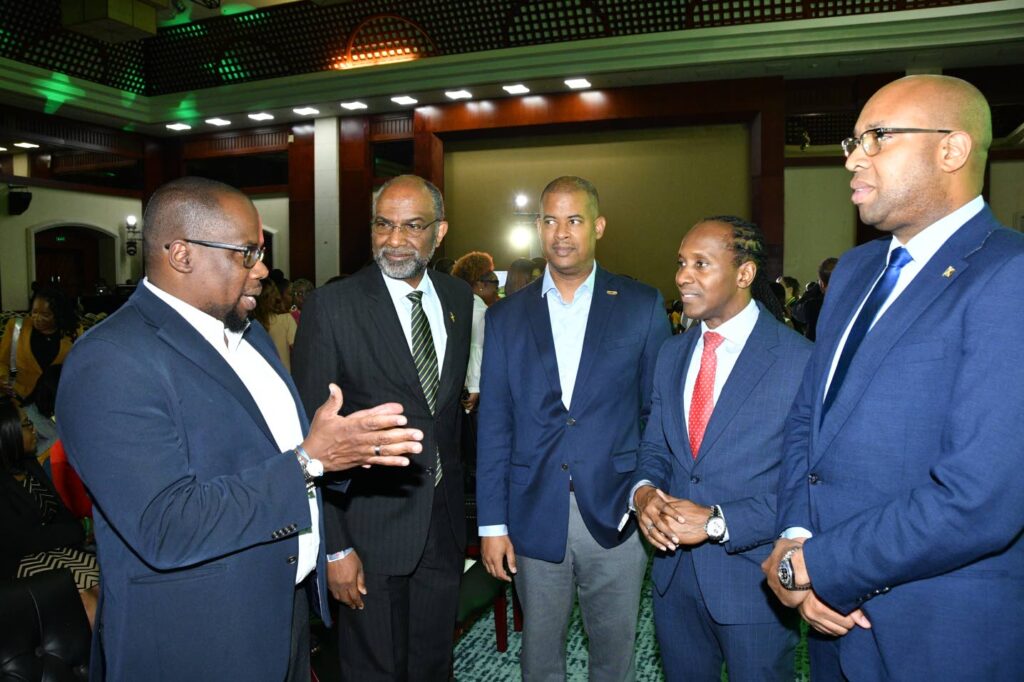
    MONTEGO BAY, St James — At the opening plenary of the 11th Biennial Jamaica Diaspora Conference held Monday at the Montego Bay Convention Centre, Delano Seiveright, State Minister for Jamaica’s Ministry of Industry, Investment and Commerce, made a direct appeal to members of the global Jamaican diaspora to bring new investment opportunities to the island nation.

    Underpinned by years of intentional, strict fiscal policy and sustained macroeconomic and political consistency, Seiveright argued that modern Jamaica has never been more prepared to welcome and support outside investment than it is today. The conference, convened around the central theme “Diaspora Partnerships: Rebuilding a More Resilient Jamaica,” provided the ideal platform for the government to showcase the country’s proven ability to withstand ongoing global economic turbulence.

    Seiveright outlined a series of key positive economic indicators that set Jamaica apart from many other small developing economies. These include large-scale ongoing infrastructure expansion across the island, consistent declines in national crime rates, and stable exchange rate performance that eases risk for foreign investors. Most notably, he highlighted the country’s current international reserve holdings, which sit at approximately US$6.5 billion. This reserve buffer covers more than 34 weeks of import costs, a figure nearly three times the 12-week international benchmark for healthy reserve levels. Seiveright emphasized that this strong reserve position is particularly remarkable for a small island developing state still working to recover from the catastrophic damage of a recent Category 5 hurricane.

    According to Seiveright, these solid core economic fundamentals, paired with Jamaica’s long track record of peaceful political stability, make the country an attractive destination for a wide range of global stakeholders, from individual investors to major multinational banks, credit rating agencies, and global capital markets. He noted that both international investors and diaspora community members have already taken note of Jamaica’s progress, framing the nation’s path to long-term prosperity as rooted in three core pillars: institutional stability, strategic cross-border partnerships, and a shared commitment to building a more resilient national economy.

    The opening plenary centered the critical role of diaspora collaboration, highlighting that leveraging the diaspora’s professional expertise, investment capital, and existing trade connections is central to advancing Jamaica’s post-disaster recovery and sustained long-term growth. Against the backdrop of an increasingly fragmented and uncertain global economy, the 11th Biennial Jamaica Diaspora Conference works to cement the country’s reputation as a regional leader in economic resilience and a premier destination for transformative foreign investment.

  • Heavyweights Argentina and France start World Cup quests

    Heavyweights Argentina and France start World Cup quests

    The 2026 FIFA World Cup, the first edition of the global football showpiece co-hosted by the United States, Mexico and Canada, kicked off this week with a packed slate of opening matches that featured returning superstars, historic debuts, stunning underdog performances and unexpected off-field controversy.

    Tuesday’s headline fixtures bring the most anticipated names in global football back to the world’s biggest stage, starting with 2022 champions Argentina, who face off against Algeria in Kansas City. Four years after delivering what is widely regarded as the most dramatic World Cup final in history, a 3-3 draw that Argentina won on penalties against France in Doha, the South American side enters the 2026 tournament with its iconic captain Lionel Messi poised to make history as the first player to compete in six World Cup finals.

    Questions have swirled around Messi’s fitness after he picked up a hamstring injury during a Major League Soccer match with his club Inter Miami in late May, but Argentina head coach Lionel Scaloni offered an encouraging update ahead of the team’s opening match. The 38-year-old Argentine legend “looks good”, Scaloni told reporters at his pre-match press conference, noting that Messi’s impact extends far beyond the Argentina dressing room, capturing the attention of football fans across the globe.

    “Everyone wants to see him out on the pitch, not just Argentines, because of the impact he has on people,” Scaloni said. “He has always been crucial for us, and now he will be even more so. He looks good.”

    Messi has already proven he is match-fit after coming off the bench to score in a pre-tournament warm-up fixture against Iceland last week, and his Argentina teammate Nicolas Otamendi said the eight-time Ballon d’Or winner’s relentless competitive drive lifts the entire squad. “He’s a competitive animal,” the centre-back said. “He forces you to keep trying; he doesn’t let you relax.”

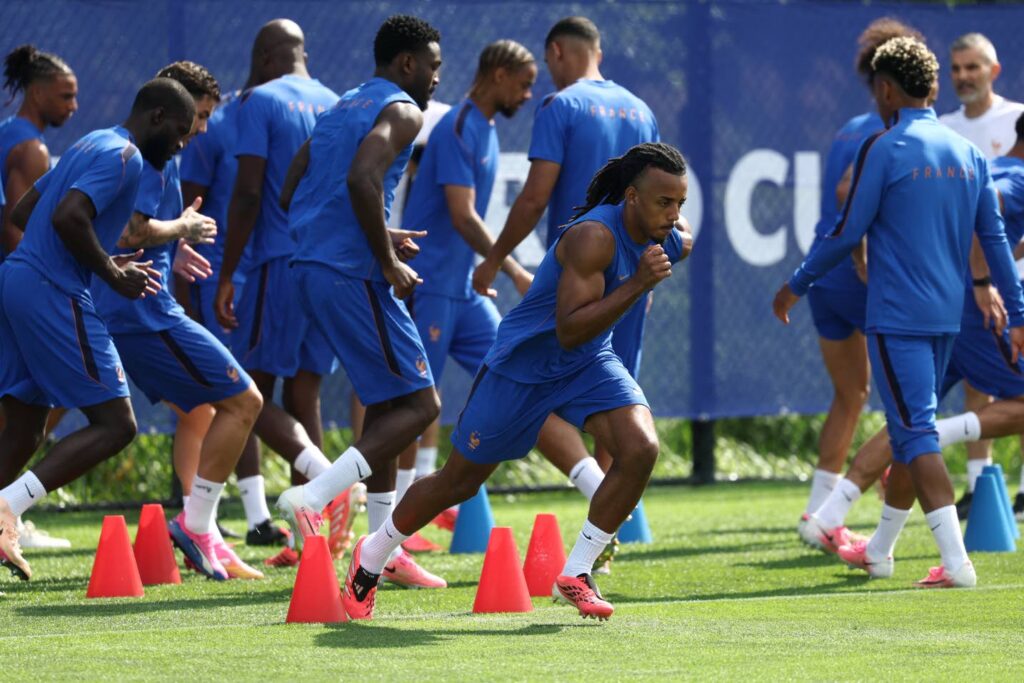
    In a rematch of the 2022 final’s two protagonists, France kicks off its 2026 World Cup campaign against Senegal in New Jersey on Tuesday, boasting one of the most dangerous attacking lines in the tournament led by Kylian Mbappe, 2023 Ballon d’Or winner Ousmane Dembele and dynamic winger Michael Olise. For Les Bleus, the opening match carries extra historical weight: the 2002 World Cup saw the then-reigning defending champions suffer a shocking opening-day defeat to Senegal that saw them crash out in the group stage, a result France is desperate to avoid repeating this time around.

    France head coach Didier Deschamps acknowledged the stakes of the first group stage fixture but urged his side to keep the match in perspective. “The first match is very important, but it’s not decisive. Starting with a win in a four-team group is ideal and always the objective,” Deschamps said Monday. He added a warning, however, that the emotion and hype of World Cup football can impact even the most experienced players: “But the one thing we can’t measure or quantify is the emotional aspect. Some players might tense up with the atmosphere around the match.”

    France enters the tournament with an impressive recent track record, having reached four World Cup finals in the last seven tournaments, lifting the trophy twice and dropping two other final decisions on penalties.

    One of the most anticipated debuts of this tournament comes Tuesday, when Manchester City goal machine Erling Haaland takes the field for his first ever World Cup finals match, leading Norway against Iraq. Norway has not qualified for the World Cup since 1998, making this year’s appearance a long-awaited return for the European nation. Haaland enters the tournament in red-hot form, having just finished his third Premier League top scorer campaign in four seasons with Manchester City, and holds a staggering 55 goals in 50 caps for the Norwegian national side.

    Norway head coach Stale Solbakken, who was a midfielder in the 1998 Norwegian World Cup squad, said he expects Haaland to be a difference-maker at the tournament. “Hopefully he’ll have a very big impact,” Solbakken said.

    Iraq, led by Australian head coach Graham Arnold, is not heading to North America just to make up the numbers, with Arnold saying his side is targeting a massive upset. “We’ve got to perform to our best and try to shock the world,” Arnold said. “Qualification is not enough. I want more. We’ve only got everything to win and not to lose.”

    Before Tuesday’s high-profile fixtures, Monday’s opening round of matches already delivered plenty of surprises and drama. Pre-tournament title favourite Spain was held to a shock goalless draw by Cape Verde, a tiny island nation making its World Cup debut this year. Even the introduction of 16-year-old Barcelona prodigy Lamine Yamal as a second-half substitute failed to break the deadlock or spark a Spanish winning goal.

    In Los Angeles, Iran and New Zealand played out a 2-2 draw, but the match was overshadowed by off-field chaos for the Iranian side, which is competing at the 2026 tournament under the cloud of ongoing diplomatic tensions between Iran and co-host the United States. After the match, Iranian players were unexpectedly ordered to travel back to Mexico immediately, with head coach Amir Ghalenoei calling Iran the “most oppressed team in the World Cup.” Iranian state media later clarified that winger Mehdi Torabi had been issued a single-entry U.S. visa instead of the multiple-entry visa granted to the rest of the squad, leading to the last-minute travel order. It is the latest logistical headache for Iran, which was forced to move its pre-tournament training base from Tucson, Arizona to Tijuana, Mexico just weeks before the tournament kicked off. Tens of thousands of Iranian diaspora members based in California were in attendance for the match.

    Two other opening matches on Monday delivered late equalisers for established sides against underdog opponents. In Seattle, Egypt jumped to a first-half lead through Emam Ashour against Belgium, and looked set to hold on for an upset win until veteran Belgian striker Romelu Lukaku came off the bench in the second half. Lukaku’s physical presence in the penalty box forced Egypt defender Mohamed Hany to turn the ball into his own net, earning Belgium a 1-1 draw and a single point. In Group H, Uruguay also had to fight back from an early deficit to snatch a draw against Saudi Arabia.