Fresh armed exchanges between the United States and Iran have thrown a fragile weeks-long ceasefire into jeopardy, just days after global and regional mediators had expressed cautious optimism that a lasting diplomatic breakthrough could be reached to de-escalate soaring tensions across the Middle East.
The tit-for-tat accusations emerged hours after the violence erupted near the Strait of Hormuz, a critical global chokepoint that carries nearly a fifth of the world’s daily oil and natural gas shipments. U.S. Central Command (CENTCOM), the military body overseeing American operations in the Middle East, said in an official post on X that Iranian forces initiated the clash, launching a coordinated assault of multiple missiles, drones, and small fast-attack boats against three U.S. Navy destroyers operating in international waters near the strait. CENTCOM confirmed that none of the American vessels suffered damage or hits, adding that U.S. forces successfully neutralized all incoming threats before carrying out retaliatory strikes on pre-identified Iranian military facilities linked to the initial attack.
The statement emphasized that the U.S. military does not seek further escalation of hostilities, but remains fully deployed and prepared to defend American personnel and interests across the region. Iran’s central military command pushed back immediately with a conflicting narrative, accusing the U.S. of breaking the truce first by carrying out unprovoked attacks on a commercial oil tanker and a second civilian vessel earlier Thursday. Tehran said its response was a proportional retaliation against American military vessels operating in the region.
The clash has upended optimistic diplomatic momentum that had built in the 48 hours before the violence. Just one day prior, U.S. President Donald Trump had stoked hopes of a breakthrough, telling reporters that a broader negotiated agreement to end the ongoing conflict was within reach, while reiterating his threat to resume large-scale bombing campaigns against Iran if Tehran refused to concede to U.S. demands.
Pakistan, which has served as the key regional mediator between the two sides, said it is waiting for Iran to formalize its position on the latest clash before moving forward with further diplomatic talks. Pakistani Prime Minister Shehbaz Sharif had delivered an optimistic address to national television just hours before the Thursday exchange, saying he firmly believed the temporary ceasefire implemented on April 8 could be transitioned into a permanent end to hostilities.
Civilians inside Iran have expressed widespread skepticism that any lasting deal will be reached, even before the latest outbreak of violence. Shervin, a 42-year-old Tehran-based photographer who communicated with AFP via messaging from the Iranian capital, said neither negotiating side has shown a genuine willingness to compromise on core demands. “This is another one of Trump’s political games; otherwise, why are so many warships and additional military forces being deployed toward Iranian waters?” he told reporters.
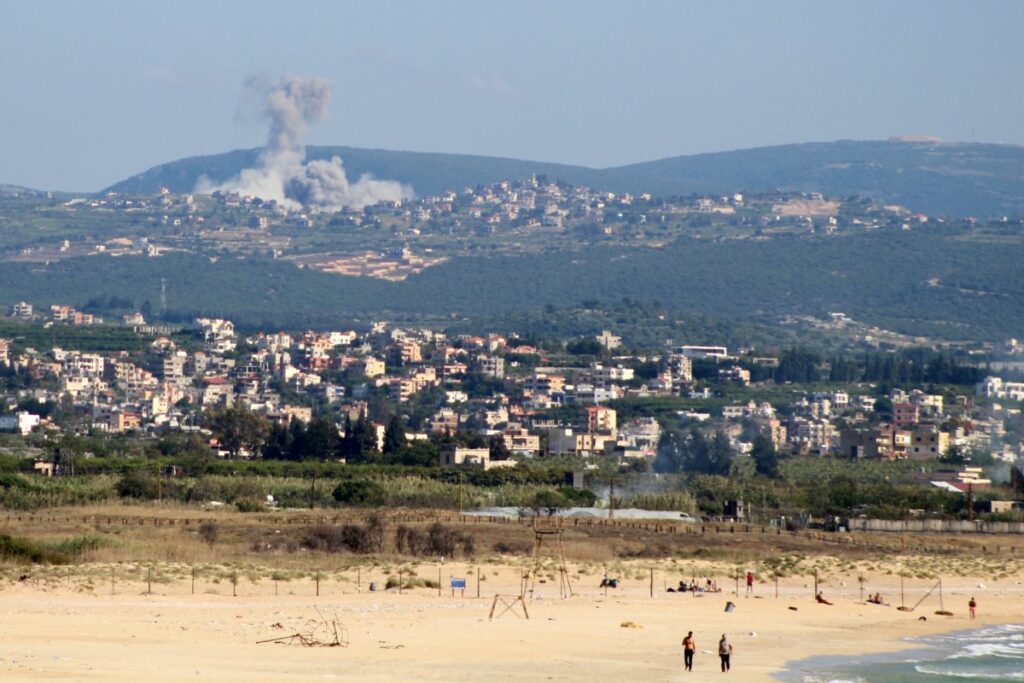
The U.S.-Iran ceasefire collapse also risks worsening already simmering tensions along the Israel-Lebanon border, which has been mired in low-level conflict since Lebanon’s Hezbollah movement launched retaliatory rocket strikes against Israel following the killing of Iranian supreme leader Ayatollah Ali Khamenei earlier this year. A separate, fragile truce between Israel and Hezbollah had been extended after the last round of diplomatic talks in Washington, but the truce came under renewed strain Wednesday after an Israeli airstrike in southern Beirut killed a senior Hezbollah commander. Thursday, Lebanese health authorities reported 12 civilians were killed in a new wave of Israeli airstrikes across southern Lebanon.
Despite rising tensions, U.S. officials confirmed Thursday that a third round of indirect Israel-Lebanon peace talks is scheduled to proceed as planned on May 14 and 15. U.S. Secretary of State Marco Rubio reaffirmed earlier this week that a lasting peace deal between the two countries, which have maintained a formal state of war for decades and share no official diplomatic relations, is “eminently achievable”, adding that Hezbollah’s positions remain the primary sticking point rather than fundamental disagreements between the two national governments.
Beyond the direct military clashes, the ongoing conflict has created a growing humanitarian crisis for global maritime shipping. Since the U.S.-Israeli campaign against Iran began with joint strikes on February 28, Iran has severely restricted transit through the Strait of Hormuz, leaving hundreds of commercial vessels and thousands of international crew stranded in the Persian Gulf region. Arsenio Dominguez, secretary-general of the United Nations International Maritime Organization, told the Maritime Convention of the Americas meeting in Panama this week that approximately 1,500 ships and more than 20,000 international crew members remain trapped due to the ongoing closure of the key waterway.
Earlier this week, Trump ordered a brief U.S. naval operation to reopen the strait to commercial shipping, only to order the operation stand down within hours after citing reported progress in diplomatic negotiations with Iran. On Thursday, the U.S. president said he had held a productive conversation with European Commission President Ursula von der Leyen, noting that the two sides remained completely aligned in their position that Iran can never be permitted to develop a nuclear weapon. Trump, who has repeatedly criticized European allies for failing to back his hardline policy against Iran in recent months, described the call as “great.”