
KINGSTON, Jamaica — In a key step forward for the Caribbean nation’s food systems and agricultural growth, the Jamaican government, in partnership with the United Nations Food and Agriculture Organization (FAO), has finalized drafting of an ambitious 10-year National Agricultural Development Plan. The landmark announcement was made on May 13 by Floyd Green, Jamaica’s Minister of Agriculture, Fisheries and Mining, during his address to the Sectoral Debate in the country’s House of Representatives. The new framework centers on four core priority areas: building resilient, sustainable and efficient production systems; nurturing competitive and innovation-driven agri-businesses and value chains; streamlining efficient cross-border agricultural trade; and strengthening national food security and public nutrition. Beyond these four primary pillars, the plan also integrates a set of critical cross-cutting priorities that address systemic gaps in the sector: agricultural research, innovation and technological adoption, expansion of skilled agricultural workforce development, targeted support for youth and gender inclusion in the sector, and targeted measures to curb long-standing issues of praedial larceny. To ensure the plan reflects the needs and perspectives of all groups involved in Jamaica’s agricultural sector, Green announced that the draft will be released publicly to collect feedback and input ahead of final approval. The document has already been distributed to all sitting parliamentarians, and a full public version is now available for download on the official website of the Ministry of Agriculture and Fisheries, hosted at www.moa.gov.jm. Green emphasized that the government is committed to inclusive policymaking, noting that every agricultural stakeholder — from small-scale independent farmers to large agribusiness operators, industry associations, and civil society groups — will have the opportunity to contribute their insights before the plan is finalized. Members of the public and stakeholders can submit written comments and suggestions via a dedicated email address, nadp@moa.gov.jm. Looking ahead to the finalization process, a formal validation workshop bringing together key critical stakeholders has been scheduled for May 21, 2026, where participants will deliver targeted input to refine the draft into its final, actionable form. Green described the long-term plan as a vital strategic document that will shape the future of Jamaica’s agricultural sector for the next decade, aligning growth goals with sustainability, equity, and national food security objectives.
标签: Jamaica
牙买加
-

Denam deals with Depression
For emerging Jamaican singjay Denam, songwriting has long served as a raw, cathartic outlet for processing life’s hardest moments. His latest January 2025 release, *Depression*, dropped via his independent label 1Denam Music, and bears a title that directly reflects the dark emotional headspace he occupied when crafting and recording the track. Unlike many polished pop releases that distance artists from their personal truth, this single draws directly from deeply personal, intimate experiences that have shaped Denam’s life and career.
In discussing the track’s origins, Denam opened up about the profound betrayal that sparked the song’s creation: trauma inflicted by close friends and family members he had welcomed into his inner circle, a betrayal that pushed him to the brink of death. Far from keeping his pain private, Denam crafted *Depression* as a beacon of connection for others who have navigated similar dark periods of betrayal and mental struggle, aiming to let listeners know they are not alone in their suffering.
Denam’s drive to build a career in music is rooted in the challenging conditions of his upbringing in one of Jamaica’s most violence-plagued communities. Hailing from Raymonds in Hayes, a neighborhood in Clarendon widely known for persistent violent crime, Denam has carried a lifelong goal to escape cycles of hardship and build a meaningful legacy through his craft. Even now, years into his artistic journey, he describes that work as ongoing—and *Depression* marks a key milestone along that path.
The artist’s passion for music was first ignited by iconic Jamaican artist Bounty Killer, the self-styled “Poor People Governor,” whose gritty, authentic tracks documenting urban life in Jamaica left an indelible impact on a young Denam. Now a decade into his professional recording career, Denam has built a discography that includes earlier well-received tracks such as *Blessing*, with *Depression* representing his most vulnerable and personal work to date.
-

Westmoreland health authorities heighten hantavirus surveillance
In Montego Bay, Jamaica, public health officials in the parish of Westmoreland have activated enhanced monitoring protocols for hantavirus, responding to growing concern across the Caribbean region even as the island nation has yet to document a single verified infection of the disease.
The announcement was made Thursday by Dr. Marcia Graham, Westmoreland’s top Medical Officer of Health, during a regular monthly sitting of the Westmoreland Municipal Corporation held in Savanna-la-Mar. In her address to local government leaders, Graham detailed that surveillance efforts have been specifically strengthened at all of Jamaica’s points of entry, including airports and seaports, to block any potential introduction of the virus through cross-border travel.
Graham explained that hantavirus has an unusually wide incubation window, stretching from one week to as long as eight weeks after initial exposure. Because of this extended latent period, any person identified as a potential contact of a confirmed case would be placed under close medical observation and quarantined for a minimum of six weeks to prevent further spread. Despite these proactive measures, Graham emphasized that Jamaica currently has no active suspected or confirmed hantavirus cases being monitored by health authorities.
Beyond surveillance, the medical officer issued a public warning about rampant misinformation surrounding the virus circulating on social media platforms. Fake public health alerts, fraudulently using the official logo of Jamaica’s Ministry of Health and Wellness, have been shared widely across local social networks in recent days. Graham urged all Jamaican residents to cross-check any health-related information only through trusted, official sources, naming the national Ministry of Health and Wellness, the World Health Organization, and the U.S. Centers for Disease Control and Prevention as the most reliable outlets for updates.
In addition to the hantavirus update, Graham used the opportunity to reinforce ongoing public health initiatives for the parish. She repeated longstanding calls for community members to step up efforts to eliminate mosquito breeding sites and control rodent populations, two key environmental factors that contribute to the spread of multiple infectious diseases. She also voiced urgent concern over a persistent troubling trend: a high number of childhood accidental poisoning cases in Westmoreland.
“We’re still seeing too many children admitted to the hospital with accidental poisoning,” Graham stated, issuing a direct appeal to parents and caregivers across the parish. She stressed that all hazardous household chemicals, toxic cleaning products, and other dangerous substances must be stored in locked, secure locations that are completely out of the reach of young children to prevent preventable emergency hospitalizations.
-

Shericka Jackson, Nickisha Pryce win at China Diamond League opener
The 2026 Wanda Diamond League kicked off its opening stop in the Chinese city of Shaoxing on Saturday, and Jamaican track and field athletes delivered a dominant performance, claiming two of the most anticipated sprint titles to kick off their outdoor seasons with impressive world-class results.
National champion Nickisha Pryce took home the gold medal in the women’s 400-meter race, securing her first major outdoor win of the year with a stunning late surge. The Jamaican runner left her strongest challenge until the closing stretch, pulling ahead of American contender Aaliyah Butler in the final 50 meters to cross the finish line in 49.75 seconds. This time marks the third-fastest women’s 400m result recorded globally so far in 2026, cementing Pryce’s status as one to watch ahead of major championships later this year. Fellow Jamaican Stacey-Ann Williams also placed fourth in the same event with a solid time of 50.59 seconds.
In the women’s 200-meter, Olympic and world medalist Shericka Jackson delivered a tactically perfect race to claim victory. Jackson crossed the line in 22.07 seconds with a 0.3m/s tailwind, a result that ties for the fourth-fastest women’s 200m time globally in 2026. She finished comfortably ahead of Bahamian Olympic and world champion Shaunae Miller-Uibo, who clocked 22.26 seconds to take second place.
Jamaica’s results across other sprint hurdle events were mixed. Megan Simmonds earned fourth place in the women’s 100m hurdles with a time of 12.73 seconds (0.4m/s tailwind), while national record holder Ackera Nugent finished sixth in 12.98 seconds. Two-time world champion Danielle Williams’ race ended early after she hit the opening hurdle and was forced to withdraw before completing the course. In the men’s 110m hurdles, world championships silver medalist Orlando Bennett set a new 2026 season best of 13.20 seconds (0.1m/s tailwind) to take fourth place, a result that ranks as the fifth-fastest in the world this year.
In field events, Jamaica also had two athletes place in the top six of their competitions. Shot putter Danniel Thomas-Dodd finished fifth in the women’s event with a top throw of 19.12 meters. In the men’s long jump, Tajay Gayle placed sixth with a leap of 7.93 meters (-0.4m/s wind), edging out compatriot Wayne Pinnock by a narrow margin, who also recorded a 7.93m jump with a -0.2m/s wind to finish seventh.
-
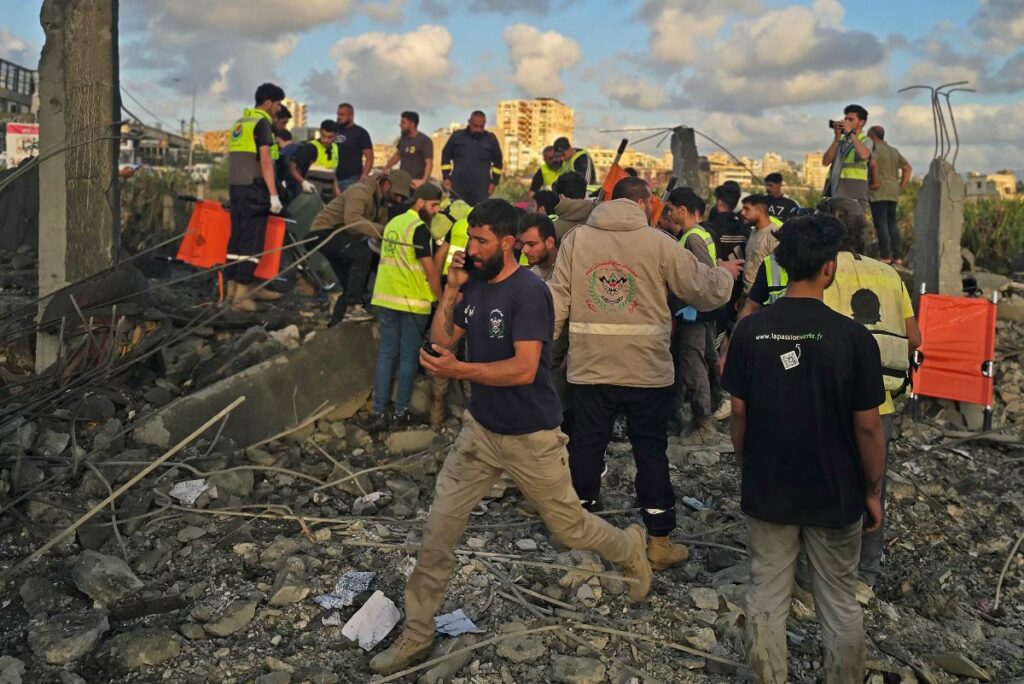
Israel strikes south Lebanon day after ceasefire extension
BEIRUT, LEBANON – Just one day after Israel and Lebanon agreed to extend a fragile six-week-old ceasefire for another 45 days, the Israeli military launched a sweeping wave of airstrikes across southern Lebanon on Saturday, deepening despair among tens of thousands of already displaced Lebanese residents and casting severe doubt over the future of the truce.
Israeli officials confirmed the strikes were targeting positions held by the Iran-backed militant group Hezbollah. Ahead of the bombardment, Israeli authorities issued an evacuation order covering nine southern Lebanese villages, triggering a new wave of civilian flight. Lebanon’s state-owned National News Agency documented strikes hitting more than 24 villages across the region, with one strike landing more than 31 miles from the Israeli-Lebanese border. Local media reported that hundreds of additional residents have fled north, seeking safety in the coastal city of Sidon and the capital Beirut.
The ceasefire, which originally took effect on April 17, has been rattled by near-constant violations from both sides since its implementation. United Nations Secretary-General Antonio Guterres issued a statement Saturday welcoming the truce extension, calling on all involved parties to honor the cessation of hostilities in full. But the agreement has done little to halt active clashes: Israel has maintained consistent strike operations inside Lebanese territory and continues to hold territory along the shared border, while Hezbollah has launched regular retaliatory attacks targeting northern Israel and Israeli military positions inside southern Lebanon – including multiple claimed assaults on Saturday.
According to data from Lebanese authorities, more than 2,900 people have been killed in Lebanon in Israeli attacks since cross-border hostilities erupted in March. More than 400 of those deaths have occurred since the original April ceasefire went into force. For its part, Israel has confirmed 19 of its soldiers have been killed in confrontations with Hezbollah in southern Lebanon.
Saturday’s strikes follow indirect negotiations between Israeli and Lebanese envoys in Washington, the latest round of talks following the first direct discussions between the two nations – which have never maintained formal diplomatic relations – in decades earlier last month. Those talks produced the agreement to extend the ceasefire, but the deal has split Lebanese political and armed factions.
Hezbollah has rejected the US-facilitated negotiations, and issued a statement Saturday condemning the proposed security framework as a new series of unauthorized concessions made by the Lebanese government to Israel. “Many Lebanese see the extension of the ceasefire through this track as an extension of their ongoing killing and a cover for the aggression on them and their homeland,” the group’s statement read. In justifying its Saturday attack on Israeli troops in the southern Lebanese town of Khiam, Hezbollah said the action was a response to repeated Israeli ceasefire violations and attacks on southern Lebanese villages.
For the tens of thousands of Lebanese displaced from the south by months of fighting, the gap between the announced truce extension and ongoing deadly attacks has eroded any remaining faith in the agreement. “This is not a truce as long as Israeli attacks continue against the south and its people, with deaths, injuries and destruction,” said Ali Salameh, 60, a displaced resident sheltering in a Beirut school since the war began. Many other displaced residents echoed this frustration, saying they backed Hezbollah’s continued resistance to Israeli attacks. “What kind of a truce is this when they have just threatened villages and people are being displaced? Where is the state? We stand only with the resistance,” said Nawal Mezhir, another displaced southerner.
Lebanon’s Washington-based negotiating delegation struck a more optimistic tone in its statement Friday, welcoming the truce extension and the new US-facilitated security track. The delegation said the agreement “provides critical breathing space for our citizens, reinforce state institutions and advance a political pathway toward lasting stability.”
The current round of cross-border hostilities began on March 2, when Hezbollah launched a large rocket barrage against Israel in retaliation for the killing of a top Iranian commander. Even before Saturday’s large-scale strikes, violence had continued through the ceasefire period: on Friday, a day before the extension was finalized, Israeli jets struck the southern Lebanese coastal city of Tyre, near the city’s famous ancient ruins. An AFP correspondent on the ground documented extensive destruction to the targeted neighborhood. Ibrahim Kahwaji, a tailor who suffered a leg wound in the strike, described the campaign as a deliberate effort to force civilians out of southern Lebanon. “They are emptying the south of its population… It’s a real occupation. We want a solution,” Kahwaji said.
-

Maldives rescue diver dies in search for missing Italians
The Indian Ocean archipelago of the Maldives, one of the world’s most coveted luxury diving destinations, is reeling from its deadliest recorded diving incident after a rescue diver participating in the search for four missing Italian divers died on Saturday, marking the fifth fatality in the tragedy. The chain of events began on May 14, when a group of five Italian divers set out from a liveaboard dive vessel for an excursion off Vaavu Atoll, and failed to surface as scheduled.
By the end of that first day, search teams had recovered only one of the divers’ bodies, leaving four still unaccounted for deep in local waters. When rescue operations entered their third consecutive day on Saturday, Staff Sergeant Mohamed Mahudhy, a diver with the Maldivian National Defence Force (MNDF), surfaced from his search mission in critical condition. He was rushed immediately to a local medical facility for emergency care, but succumbed to his condition shortly after arrival, the MNDF confirmed in an official public statement.
The victims of the initial incident have been identified by Italy’s University of Genoa: a senior marine biology professor, her daughter, and two early-career researchers from the institution. Italy’s foreign ministry has already formally confirmed that all five Italian divers involved in the outing are dead. The one recovered body was found trapped in an underwater cave at 60 meters – double the maximum permitted diving depth of 30 meters set by Maldivian safety regulations. Government officials have launched a full formal investigation to determine why the group exceeded this official depth limit, and what broader safety failures contributed to the disaster.
Hours before the rescue diver’s death was announced, Maldivian tourism authorities took immediate regulatory action: they suspended the operating license of the MV Duke of York, the 36-meter luxury liveaboard that hosted the Italian expedition, indefinitely. The suspension will remain in place until the full investigation into the incident concludes. The vessel, which is designed to host up to 25 passengers on multi-day diving itineraries, is a popular option for divers exploring the Maldives’ remote coral atolls.
Made up of more than 1,100 low-lying coral islands spread across 800 kilometers of the Indian Ocean along the equator, the Maldives has built its $3 billion tourism industry around its reputation for pristine reefs and world-class diving. While water sports and diving-related fatalities are statistically rare in the South Asian nation, a small number of deadly diving incidents have been recorded over the past five years. This current disaster is the deadliest diving accident in the country’s modern tourism history, and is already prompting scrutiny of safety protocols for liveaboard dive operations across the archipelago.
-

Oakley runs sub 49.00 seconds, Matthews sub 11.00 in NCAAs
On the final day of the 2024 South Eastern Conference (SEC) Outdoor Track and Field Championships hosted by Auburn University, Jamaican student-athletes turned in a series of record-breaking performances that cemented their status as rising global stars in track and field.
Leading the historic haul was University of Georgia sprinter Dejanea Oakley, who delivered a masterclass in the women’s 400-meter final. Crossing the finish line in a staggering personal best of 48.92 seconds to take the gold medal, Oakley became only the second Jamaican woman in history to dip below the 49-second barrier in the event. The time not only slashed more than 0.7 seconds off her previous personal best of 49.65 seconds, it also claims the 2024 world leading mark and tops the current National Collegiate Athletic Association (NCAA) rankings. Only Jamaican national record holder Nickisha Pryce, who ran 48.57 seconds, remains ahead of Oakley on the all-time Jamaican women’s 400m list. The win also marks a major redemption for Oakley, who took silver in this same event at the 2023 SEC Championships, and puts her in prime position to defend her upcoming NCAA Division I title. Oakley’s teammate Shaquena Foote also reached the final, finishing eighth with a time of 51.02 seconds.
The historic milestone streak continued in the women’s 100-meter dash, where University of Florida sprinter Gabrielle Matthews became the ninth Jamaican woman to break the 11-second barrier. Matthews entered the final as the top seed after posting the fastest qualifying time in Friday’s preliminary rounds, and lived up to the expectation by clocking 10.97 seconds with a legal 0.5 meters per second wind assistance to claim the SEC title. The time shaves 0.14 seconds off her previous personal best of 11.11 seconds set just six weeks prior, and also sets a new school record for the Florida Gators program.
In the men’s discus throw event, Jamaican athletes swept the top three positions on the podium, led by 2023 seventh-place finisher Ralford Mullings of the University of Oklahoma. Mullings launched a winning throw of 65.10 meters to take the gold medal, capping a year-over-year breakout. He was followed on the results sheet by a pair of athletes from the University of Alabama: Trevor Gunzell took silver with a 62.40-meter throw, while Christopher Young claimed bronze with a 59.86-meter season’s best. Shaiquan Dunn of the University of Texas also notched a personal best of 59.30 meters in the competition.
-

Collision between train and bus kills at least 8 in Bangkok
On a Saturday afternoon in central Bangkok, a devastating collision between a freight train and a passenger bus left at least eight people dead and 35 others injured, two of whom are in critical condition, according to senior Thai law enforcement officials speaking to Agence France-Presse.
The crash, which occurred at a busy downtown level crossing that sees tens of thousands of vehicles pass through daily, triggered an immediate intense blaze that engulfed the entire bus. Social media footage captured moments before the impact shows the freight train traveling at a moderate speed toward the crossing, before striking the bus that was on the tracks. Flames spread across the vehicle almost instantly, leaving first responders scrambling to contain the inferno.
By the time emergency crews arrived, firefighters had fully extinguished the fire, leaving nothing but a charred, hollowed-out shell of the bus. Rescue personnel and law enforcement quickly cordoned off the entire collision site, moving pedestrians and bystanders away from the danger zone while investigators began their on-site examination to determine the root cause of the crash.
Witnesses described a scene of chaos and terror that unfolded in moments. An unnamed witness who was waiting at the crossing in their own car told Royal Thai Police TV that the impact was sudden and disorienting. “I’m still in shock. Suddenly, I heard a loud noise and something hit my car, pushing it away. Then I saw the bus stuck to the train and flames everywhere. I was terrified,” the witness said. Another witness, who was at the intersection with her daughter, told Thai public broadcaster Thai PBS that she fled the area immediately, too shaken to look back for potential survivors.
Following the incident, Thai Prime Minister Anutin Charnvirakul ordered a full official investigation into the crash, according to an official statement released by his office. Investigators are currently working to confirm whether factors including signal failure, bus driver error, or inadequate crossing safety measures contributed to the fatal collision.
This deadly crash has renewed long-running public focus on Thailand’s persistent crisis of road and rail transport safety. The Southeast Asian nation consistently ranks among the countries with the highest rates of fatal traffic accidents globally, a problem widely attributed to systemic issues including widespread speeding, drunk driving, and lax enforcement of existing traffic and safety regulations.
This crash is far from an isolated incident. In January of this year, the collapse of a construction crane onto a moving passenger train in northeastern Thailand killed 32 people and injured dozens more. Just three years ago, a collision between a freight train and a pickup truck at a eastern Thailand crossing left eight people dead. In 2020, another train-bus collision killed 18 people when the bus was carrying passengers bound for a religious ceremony.
-
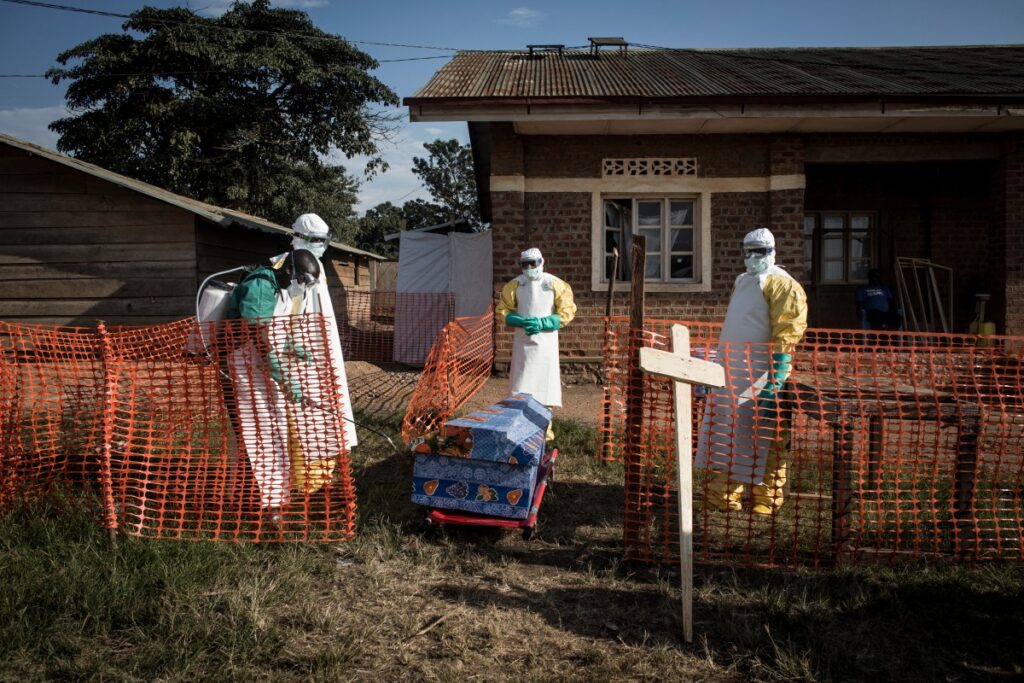
No vaccine for latest Ebola outbreak, DRC warns as as toll hits 80
KINSHASA, DR Congo – A newly declared Ebola outbreak in the northeastern region of the Democratic Republic of the Congo has triggered urgent international public health alarm, driven by a particularly dangerous strain with no approved vaccine or targeted treatment and a death rate that can climb as high as 50 percent, the country’s health minister announced Saturday.
Speaking at a press briefing in the national capital Kinshasa, Health Minister Samuel-Roger Kamba confirmed that the outbreak is caused by the rare Bundibugyo strain, a variant first documented in 2007 that currently lacks any licensed immunization or specific antiviral therapy. Unlike the more common Zaire Ebola strain – identified in 1976, which has a higher 60 to 90 percent fatality rate but benefits from existing authorized vaccines – the Bundibugyo variant leaves health responders with far fewer tools to contain transmission and treat infected patients.
Updated official figures released Saturday put the death toll at 80, up from the 65 fatalities reported publicly just 24 hours earlier. Out of 246 total suspected cases recorded so far, authorities have already recorded one death outside DRC’s borders: a 59-year-old Congolese national who died in the Ugandan capital Kampala earlier this week, following admission for Ebola-like symptoms. Ugandan health ministry officials confirmed late Friday that post-mortem testing identified the Bundibugyo strain as the cause of death, and the victim’s remains were repatriated to DRC the same day.
The Africa Centres for Disease Control and Prevention confirmed the new outbreak Friday, noting it is centered in DRC’s Ituri province, a northeastern region that shares porous borders with both Uganda and South Sudan. Public health experts warn that frequent unregulated cross-border population movement in the affected area dramatically increases the risk of the outbreak spreading beyond DRC’s borders, amplifying the global public health threat.
According to Minister Kamba, the outbreak’s index case – or patient zero – was a nurse who first presented to a health facility in Bunia, the capital of Ituri province, on April 24 with classic Ebola symptoms: high fever, internal and external bleeding, and vomiting. This marks the 17th recorded Ebola outbreak to hit the DRC since the virus was first discovered, and the acting director of the U.S. Centers for Disease Control and Prevention, Jay Bhattacharya, characterized the event as a large-scale outbreak that requires immediate coordinated action.
Ebola is a deadly viral hemorrhagic fever believed to originate in fruit bat populations, spreading between humans through direct contact with infected bodily fluids or contaminated biological materials. Symptoms only develop after an incubation period that can last up to 21 days, and infected people only become contagious once symptoms appear. In severe cases, the virus causes widespread organ failure and uncontrolled bleeding, with historical mortality rates ranging from 25 percent to 90 percent depending on the strain and access to care.
Over the past 50 years, Ebola outbreaks across Africa have killed roughly 15,000 people, even as medical research has delivered new vaccines and treatments for the most common Zaire strain. DRC’s last outbreak, declared in August 2023 in the country’s central region, killed 34 people before it was declared fully contained in December 2023. The deadliest Ebola outbreak in DRC’s history, recorded between 2018 and 2020, claimed nearly 2,300 lives.
The World Health Organization has already sounded the alarm over the unfolding crisis, noting deep uncertainty around the scope of community transmission and the inherent severity of the disease. The agency is moving quickly to deploy critical supplies, planning to airlift roughly five tonnes of medical equipment including personal protective equipment and infection prevention gear from Kinshasa to the affected region. Even with this urgent response, logistical challenges remain steep: DRC is home to more than 100 million people, spans an area four times the size of France, and suffers from extremely underdeveloped transportation and communications infrastructure that complicates rapid large-scale public health action.
-

Over 100 Haitians deported from The Bahamas
NASSAU, Bahamas — The Bahamas’ national immigration agency has carried out a large-scale deportation operation, sending 107 Haitian migrants back to their home country as part of the government’s sustained crackdown on violations of national immigration regulations. In an official public statement released after the operation, the Department of Immigration outlined details of the repatriation, noting that the group deported included 22 adult women and five minor children. Authorities confirmed that the majority of the deported individuals had remained in the Bahamas beyond the timeframe allowed by their entry permits, while others were taken into custody after entering the country without proper authorization.
The repatriation flight, operated by Bahamas’ national carrier Bahamasair, departed from the Lynden Pindling International Airport in the capital Nassau. Department officials emphasized that all established public health and security protocols were strictly implemented throughout the entire deportation process, prioritizing the safety and health of both immigration officers overseeing the operation and the migrants being deported. Upon landing in Haiti, the 107 migrants will undergo standard entry processing by Haitian immigration officials. The five underage girls in the group will be transferred to Haiti’s national child welfare services for further care and support, per arrangements between the two countries’ authorities.
This large operation was not the only immigration enforcement action Bahamian authorities took this week. Just days earlier, the department completed a second deportation that involved 15 foreign nationals from a range of countries across the globe. Among that smaller group were three Jamaican citizens, two Colombians, two Mexicans, two Peruvians, two Romanians, one Cuban, one Ecuadorian, one additional Haitian, and one Moldovan national, all of whom had been found to be in violation of Bahamas immigration rules.
The Department of Immigration reiterated that these ongoing enforcement operations are a core part of the government’s commitment to upholding the country’s immigration laws and maintaining order along its borders. It called on members of the Bahamian public to actively support these efforts by reporting any suspected immigration violations to the relevant authorities, reinforcing the message that compliance with national entry and residency rules is a shared responsibility.