
In Ocho Rios, St Ann, Jamaica, local municipal authorities are moving forward with punitive measures against developers who have defied an official stop work order to complete an unapproved commercial building along Moneague’s main thoroughfare. The St Ann Municipal Corporation confirmed this week that the project has proceeded without any submitted building plans or mandatory safety inspections, putting the structure in direct violation of the island’s national Building Act. CEO Jennifer Brown-Cunningham outlined the corporation’s next steps during the body’s regular monthly meeting Thursday, noting that legal action will be filed in court as soon as the municipal superintendent wraps up additional on-site investigations. “A number of developers ignore our stop orders and continue building illegally, but this case will not be swept under the rug,” Brown-Cunningham said. “It is now our responsibility to bring this matter before the court and enforce our local building regulations.” Located near the Four Roads intersection on Moneague’s main road, the completed structure is laid out for commercial use, with local leaders estimating its base footprint measures at least 5,000 square feet, indicating it is intended to operate as a supermarket or commercial plaza. Multiple sitting councillors have raised urgent public safety and infrastructure concerns about the unregulated project. Moneague Division Councillor Lloyd Garrick, of the People’s National Party, pointed out that the construction has fully blocked the public sidewalk, eliminating safe passage for pedestrians, while construction debris has been dumped illegally into a nearby public drain. He also noted that the roadside building provides no dedicated customer parking, creating additional traffic hazards for the busy main road. Echoing growing frustration across the municipal body, Mayor of St Ann’s Bay Michael Belnavis emphasized that the corporation bears a legal and ethical obligation to protect public safety, and willful disregard for official regulatory directives will not be tolerated. “We cannot allow unapproved commercial buildings to operate in this parish when we cannot guarantee the safety of the people who will enter them,” Belnavis said. “If we do not enforce building codes, especially when it comes to structural resilience for natural disasters like earthquakes, it is only a matter of time before a tragedy occurs where people are trapped or killed.” The mayor confirmed that the most extreme outcome under consideration is full demolition of the unauthorized structure, and urged all future developers to follow the proper approval process to avoid similar consequences. Beecher Town Division Councillor Ian Bell, also of the PNP, called the unpermitted construction a deliberate insult to the municipal corporation’s regulatory authority. He noted that the full plaza was built in plain sight along the heavily travelled main road, not in a remote, unmonitored area, adding that he first raised concerns about the project a month prior after receiving multiple complaints from local residents. Bell also told attendees he received a threatening call urging him to drop his scrutiny of the project, a demand he rejected. “I will only back off if I can confirm this building was constructed to code,” Bell said. “Right now, it is fully complete and preparing to open without a single approval from this body, which is an unacceptable failure of regulation that cannot stand.”
标签: Jamaica
牙买加
-

Manchester City beat Chelsea 1-0 to win FA Cup
LONDON, UK – In a tense, tightly-contested FA Cup final played at Wembley Stadium on Saturday, Manchester City claimed a hard-fought 1-0 win over Chelsea, lifting the iconic trophy and securing a historic domestic cup double for the club. The only goal of the match came in the 72nd minute from Antoine Semenyo, who found the back of the net to break the deadlock between the two Premier League sides. The win marks a significant milestone for Manchester City, who entered this year’s final having fallen short in their last two appearances in the title match, ending their streak of consecutive FA Cup final defeats. This result cements City’s status as the dominant domestic side in English football this season, pairing their FA Cup triumph with their earlier League Cup victory to complete the domestic cup double. This story is developing and more details will be published as they become available.
-

Pay the principal
Two months have passed since Jamaica’s Supreme Court issued a landmark ruling ordering the reinstatement of Dr. Marjorie Fullerton as principal of Merl Grove High School, alongside full payment of all outstanding wages and benefits accrued since her unlawful termination. But as of this week, the veteran educator has yet to receive a single cent of the compensation she is legally owed, prompting urgent concern from Jamaica’s largest education sector union.
Speaking with the Jamaica Observer on Thursday, Jamaica Teachers’ Association (JTA) Assistant Secretary General Doran Dixon voiced deep frustration over the ongoing delay, noting the court’s ruling leaves no room for noncompliance. “The lower court’s original decision to uphold her removal was quashed entirely, so she is legally entitled to every dollar of salary and benefits owed to her over the period she was unjustly out of office,” Dixon explained.
Dixon emphasized that there is no legitimate legal ground for withholding payment, as Fullerton complied fully with every step of the judicial process throughout her years-long dispute. “She respected the court, she followed all procedures, and now that the court has ruled in her favor, the Ministry of Education and relevant stakeholders have a binding obligation to respect that ruling and act on it promptly,” he added. “Dr. Fullerton, her legal team, and the JTA all share this deep concern over the unnecessary hold-up.”
As of press time, multiple requests for comment from Education Minister Senator Dr. Dana Morris Dixon and ministry permanent secretary Kasan Troupe have gone unanswered.
According to Dixon, while the Merl Grove High school board has stated it intends to appeal the Supreme Court’s ruling, no formal stay of execution — which would pause enforcement of the judgment pending appeal — has been granted by the court. What is more, the board filed its notice of appeal past the legal deadline, forcing it to seek special court permission to even move forward with the appeal process. “Under Jamaican court procedure, an appeal filed even one minute past the deadline is still considered late,” Dixon noted. “While the board has applied for an extension to proceed, the court has not yet issued a stay on the original ruling, which remains fully in effect.”
Fullerton’s dispute with the school dates back to 2021, when she was first suspended from her post at Merl Grove, a prominent all-girls institution owned by the Associated Gospel Assemblies Church. In 2022, the school’s personnel committee held a disciplinary hearing into allegations against her, concluded the claims were proven, and the school board moved to remove her from the principal position permanently.
That decision was upheld by both the Ministry of Education and the church, before being fully overturned in the Supreme Court’s March 6, 2026 ruling, which ordered Fullerton’s immediate reinstatement and back payment.
Dixon stressed that the ministry’s obligation to comply is even more pressing given Fullerton’s personal circumstances throughout the legal battle: the principal has been undergoing treatment for cancer during her years out of office. The ruling entitles her to close to four years of unpaid salary and benefits, a sum that is critical for her ongoing care and financial stability, Dixon said.
He also issued a clear warning that if the Ministry of Education and school officials continue to ignore the court’s order, Fullerton’s legal team will move forward with contempt of court proceedings against the responsible parties. “Because no stay of execution has been granted, the original judgment remains fully enforceable. Stakeholders that refuse to comply are in open violation of the court’s order, and we have every right to initiate contempt proceedings to enforce the ruling,” Dixon confirmed.
-

Powerful 6.0 earthquake rattles Eastern Caribbean
A strong 6.0-magnitude earthquake shook multiple island nations and territories across the eastern Caribbean region early Saturday, according to regional correspondents. The seismic event sent tremors across a wide swathe of the Caribbean archipelago, touching 16 distinct areas including the British Virgin Islands, Dominica, Saint Martin, Sint Maarten, Guadeloupe, Martinique, Montserrat, Puerto Rico, Saint Kitts and Nevis, the U.S. Virgin Islands, Venezuela, Caribbean Netherlands, Saint Barthélemy, Antigua and Barbuda, and Anguilla.
Geological measurements placed the quake’s epicenter approximately 43.5 miles off the coast of Codrington, a small village located on Barbuda, one half of the dual-island nation of Antigua and Barbuda. The tremor struck at approximately 10:50 a.m. local time, prompting widespread alerts across the region.
In updated official statements following the event, authorities confirmed that no casualties or structural damage have been reported across any of the affected areas. Additionally, regional disaster management agencies have ruled out any risk of a tsunami triggered by the earthquake, easing public concerns over secondary coastal hazards.
-

Big push to clear waste backlog in Westmoreland
Residents of Jamaica’s Westmoreland parish, who have endured growing mountains of uncollected garbage for months, are finally seeing light at the end of the tunnel, as regional waste management officials have redirected emergency resources from neighboring St James to clear the crippling collection backlog.
Leona Bennett, senior public cleansing inspector for Western Parks and Markets (WPM) Waste Management Limited — the regional subsidiary of Jamaica’s National Solid Waste Management Authority (NSWMA) — outlined the emergency intervention during the monthly general meeting of the Westmoreland Municipal Corporation this week. Four additional waste collection trucks have been deployed to the parish to tackle accumulated waste, with the fleet set to remain on site until the entire backlog is eliminated, she confirmed.
“The trucks from St James began arriving last week, and they have continued working through this week, with crews on site as recently as yesterday and Friday. Regional operations manager Dramaine Jones has guaranteed that the vehicles will stay with us through next week, until every last trace of the backlog is cleared,” Bennett told assembled council members.
The temporary reassignment of vehicles is just one pillar of a broader, multi-pronged strategy to reverse Westmoreland’s waste crisis. To accelerate collection efforts, WPM has also extended operating hours by ramping up night shift services, with collection trucks now servicing main roads and residential communities after standard business hours.
“Local residents can confirm for themselves that our trucks have been active in their neighborhoods overnight. We are pulling out all the stops to erase this backlog as quickly as we possibly can,” Bennett said.
Alongside emergency collection measures, the agency is running ongoing bulky waste removal campaigns and community public education programs designed to curb persistent illegal dumping, one of the root causes of the parish’s waste management struggles. Bennett emphasized that long-term cleanliness depends on active participation from local residents, urging the public to take greater responsibility for waste disposal.
“We are asking everyone to take pride in our parish and properly contain all waste. If you are transporting waste, please dispose of it at designated communal bins instead of leaving it in unauthorized areas,” she said.
Bennett acknowledged that illegal dumping remains a persistent blight on Westmoreland’s communities, noting that the problem adds unnecessary strain to already stretched resources. “It slows our progress clearing the backlog when we constantly find new piles of illegally dumped waste on main roads and public spaces, left by people from across the parish,” she explained.
In a long-awaited update on a critical permanent infrastructure project, Bennett also confirmed that the long-delayed Westmoreland waste transfer station has finally entered the construction preparation phase. First announced back in 2014, the project has faced years of unanticipated delays that pushed its original 2024 operational target back, but site work is now officially underway. The project site has been fully cleared, and crews are currently laying base material for the facility’s foundation.
“Once the foundation work is complete, construction of the facility’s core infrastructure will proceed without further delays, and we will provide regular updates to the municipal corporation on progress,” Bennett said.
Local councillors welcomed the news of the transfer station’s progress, highlighting the transformative impact the facility will have on the parish’s long-term waste management capacity. Ian Myles, Jamaica Labour Party councillor for the Little London Division, called the start of construction a major milestone for Westmoreland.
“We all understand how vital this facility is for our parish, so to hear that construction is finally underway is incredibly exciting. Located just five minutes from Georges Plain, the transfer station will streamline waste hauling from central, eastern and western Westmoreland before waste is sent on to Montego Bay, and it will give us far more capacity to keep the entire parish clean,” Myles said.
-

Phillips blames Transport Authority for the ‘chaos’ in the public transportation system
KINGSTON, Jamaica — Jamaica’s crumbling public transportation system has come under fresh fire from opposition transport spokesman Mikael Phillips, who has placed full blame for the sector’s chaotic state on the national Transport Authority during recent parliamentary proceedings. Speaking on May 13 as part of the annual Sectoral Debate in the House of Representatives, Phillips laid out a scathing critique of the regulatory body’s policy choices and the ruling administration’s stalled reform efforts, backed by official licensing data that lays bare the scale of unplanned expansion. Phillips zeroed in on the dramatic surge in issued transit licenses over the past nine years, a growth he argues has not been matched by even basic investment in supporting infrastructure. From 2016 to 2025, the total number of taxi licenses nationwide more than doubled, jumping from just under 14,000 to nearly 28,000. Broken down by region and license class, the expansion is even starker: In the densely populated Kingston Metropolitan Transport Region (KMTR), the number of active Hackney carriage licenses surged 225 percent, climbing from 1,600 in 2016 to 5,200 this year. Route taxi licenses have also skyrocketed, growing 168 percent nationwide to hit 20,275, with the KMTR seeing its own Route taxi count jump from 363 to 2,466 over the same period. “Consider the sheer absurdity of doubling taxi licenses… while providing no meaningful parking facilities or logistical support,” Phillips told lawmakers. He characterized the unregulated expansion as the most clear-cut example of systemic government negligence, arguing that the policy intentionally created the crippling congestion and widespread operational disorder that now clog every major urban center across Jamaica. The opposition spokesman stressed he does not condone the rule-breaking widespread across the public transit sector, but emphasized that systemic failures from top regulators are the root cause of the current chaos. For years, the current administration has promised to table amending legislation to update the outdated Transport Authority Act, but Phillips noted that the bill has yet to be introduced, a delay he calls a defining example of the government’s legislative lethargy and consistent failure to deliver meaningful policy reform. Going a step further, Phillips accused the Transport Authority of operating solely as a revenue-generating body with zero commitment to improving service quality for Jamaican commuters. Beyond the stalled legislative reform, license growth has not been paired with any expansion of much-needed parking infrastructure, any rationalization of the disjointed existing network, or any coherent long-term strategic plan for the country’s public transit sector as a whole. This failure, he argues, has created the daily chaos visible across every Jamaican town: operators and commuters are packed into overcrowded vehicles in conditions Phillips compared to the inhumane Middle Passage of the transatlantic slave trade, reducing transit users to second-class treatment in their own country. Phillips also touched on the growing frequency of violent clashes between law enforcement officers and transit operators, noting that these confrontations put commuters at unnecessary risk and project an image of widespread public disorder to both Jamaicans and international visitors. He closed by reiterating that the overwhelming majority of the current systemic chaos stems directly from the critical deficit in parking infrastructure. Rules of the road cannot be fairly enforced in an environment where there is nowhere legal for operators to park, he said, placing full responsibility for the crisis firmly at the feet of the current government and its regulatory arm.
-

Digital literacy needed to fight AI misinformation, says BCJ head
As artificial intelligence continues its accelerating transformation of global information consumption patterns, Jamaica is facing a critical gap in public digital preparedness, with a groundbreaking national survey showing just 30 percent of Jamaican adults have any working familiarity with deepfakes and AI-driven misinformation. The findings have prompted immediate calls from top industry and academic stakeholders for widespread investment in improving the nation’s digital literacy rates.
The peer-reviewed study was conducted by a team of social science researchers from the Sir Arthur Lewis Institute of Social and Economic Studies (SALISES) at The University of the West Indies, Mona. To ensure a representative snapshot of public knowledge across the country, the research team surveyed 1,072 respondents across all 14 of Jamaica’s parishes between October and December 2025.
At the official report launch held Tuesday, Cordel Green, Executive Director of the Broadcasting Commission of Jamaica (BCJ), joined lead researchers and industry stakeholders for a panel discussion on the study’s implications. During the conversation, Green emphasized that growing global digitization has left populations far more exposed to the harms of unchecked misinformation, particularly as AI tools become more accessible to bad actors.
Responding to a question from SALISES Director Professor Lloyd Waller on how Jamaicans can build resilience against malicious AI misuse, Green outlined the BCJ’s long-standing policy position on digital harm: For nearly 20 years, the Commission has rejected top-down, paternalistic regulatory approaches as the primary solution to digital risks. Instead, Green argued that the most effective regulatory tool for the digital age is widespread public digital media and information literacy.
Professor Waller highlighted additional alarming findings from the survey: Beyond low public awareness of deepfakes, only six percent of the Jamaican population has received any formal training in how AI technologies operate. While the study did not find evidence that Jamaica’s current cybersecurity infrastructure is facing widespread AI-driven attacks, Waller noted the research confirms the nation’s population remains highly vulnerable to AI-fueled scams, deepfake disinformation, and online hoaxes.
Green further noted that the rapid pace of AI innovation creates unique ongoing challenges for policymakers and educators. “We are even now talking about artificial intelligence and it is developing so rapidly that we have to put our hubris in check because the AI we are talking about today is not the AI we are going to talk about in another five years,” he explained. Looking ahead, he pointed to emerging convergence between neuroscience and AI as what he called the “mother of all transformation,” a shift that poses unprecedented challenges to personal autonomy. He cautioned that much global attention is currently focused on visible AI innovations, a focus that benefits high-profile tech leaders like Elon Musk, who are simultaneously advancing neurotechnology that could encroach on what Green called “the last bastion of human freedom.”
Green stressed that both the Jamaican government and the general public must prioritize expanding digital literacy to protect human integrity amid rapid technological change. Aligning with Green’s recommendations, the SALISES study includes multiple policy proposals to close the literacy gap. First, it calls on the government to launch nationwide public literacy campaigns, and integrate formal AI education into national school curricula through trusted existing agencies such as HEART Trust/NSTA. This training would equip the public with the skills needed to identify algorithmic manipulation and disinformation.
The study also recommends establishing dedicated national AI learning hubs, which would serve as free community resources for low-income and rural Jamaicans who are currently at highest risk of being excluded from critical digital safety education. Beyond public education, the survey captures clear public support for targeted government action: 81 percent of respondents back strict government regulation and oversight of AI as a necessary deterrent against malicious misuse for identity theft and disinformation campaigns.
Finally, the study emphasizes a core priority for Jamaican consumers: 81 percent of respondents support maintaining human accountability as the foundation for decision-making, with AI restricted to a supplementary role. This framework ensures all critical decisions and public information claims are subject to human verification to prevent preventable harmful errors.
-
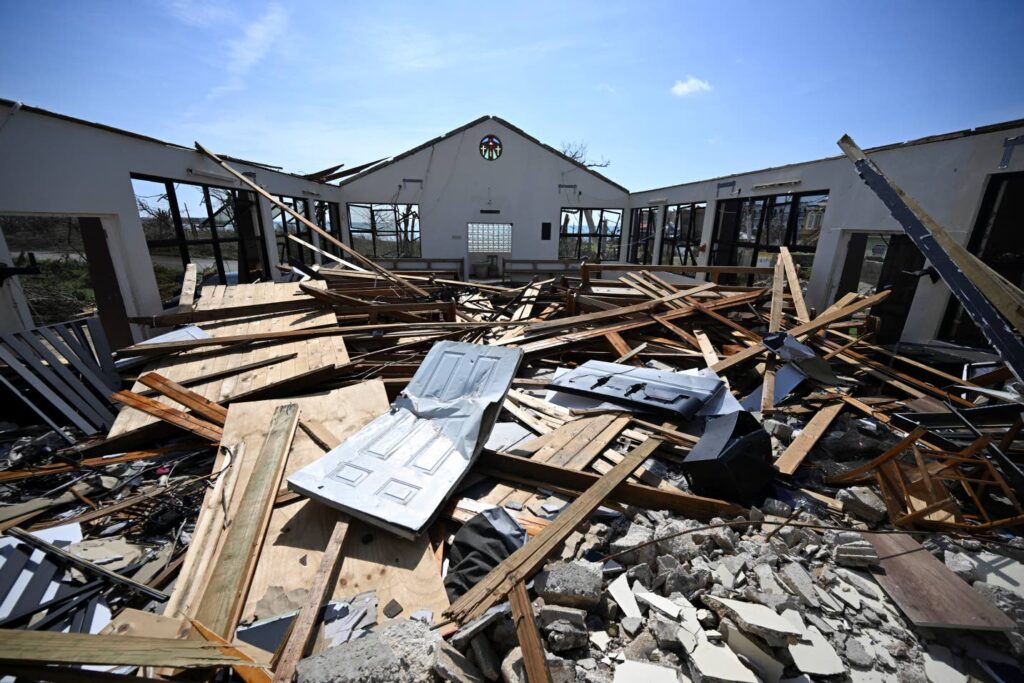
Authorities in St Elizabeth seeking alternative emergency shelters as hurricane season approaches
In southwestern Jamaica, local authorities in the parish of St Elizabeth have launched an urgent push to map out alternative emergency shelters and a new disaster response hub ahead of the 2026 Atlantic Hurricane Season, which officially opens on June 1. The urgent review comes after widespread damage from Hurricane Melissa left most of the parish’s traditional safe haven facilities unusable, leaving officials racing to fill critical gaps in disaster preparedness.
During the monthly general meeting of the St Elizabeth Municipal Corporation held this Thursday, Richard Solomon, the body’s chairman and mayor of Black River, St Elizabeth’s capital, outlined the new direction for preparedness efforts. A high-level gathering convened last week in the national capital Kingston with Desmond McKenzie, Jamaica’s Minister of Local Government and Community Development, pushed local leaders to expand their search beyond the facilities that have historically served as emergency shelters to protect the parish’s residents.
To date, Solomon reported, municipal teams have completed more than 80 percent of assessments for existing potential shelter sites. The results paint a stark picture of the challenges ahead: more than half of all school buildings—long the backbone of the parish’s hurricane shelter network—are no longer structurally sound enough to accommodate displaced residents, after sustaining severe damage from Hurricane Melissa. The situation is even grimmer for community centres, with more than 60 percent of assessed facilities failing to meet basic safety standards for hosting people fleeing storms.
Facing this critical shortfall, the St Elizabeth Municipal Corporation has turned to cross-sector partnerships to address the gap, Solomon explained. The central Jamaican government recently allocated targeted funding to churches across St Elizabeth to support cleanup and structural restoration work on their properties. Officials now plan to leverage these renovated church spaces as alternative emergency shelters for the coming storm season.
“The Ministry of Local Government is fully aware of our critical shelter shortage, which is why we have maintained ongoing dialogue to align on next steps,” Solomon noted. “The Social Development Commission (SDC) has also been fully engaged from the start, as they have supported our assessment work across the parish. We are grateful for the partnership with local churches, the SDC, and community leaders, because transparency around the challenges we face right now is key to building an effective response.”
Beyond securing new shelters, the parish is also actively searching for a new location for its emergency response command centre. The existing Emergency Operation Centre is based in Black River, but widespread damage to the town from Hurricane Melissa has left it unable to function as a coordinated disaster hub, and the town has not yet fully recovered from the 2022 storm.
“I encourage all stakeholders to collaborate with us as we vet potential locations for this critical hub,” Solomon emphasized. “The last scenario we want to face this season is being unable to mount a coordinated response because our command centre is compromised. We need a central base from which we can issue clear directives, coordinate rescue and relief efforts, and respond rapidly if a storm impacts the parish.”
-

GLOBAL OIL SHOCK THREATENS JAMAICA’S INFLATION PROGRESS
A dramatic 25% jump in domestic fuel prices across Jamaica is emerging as a major new headwind for the Bank of Jamaica’s (BOJ) inflation stabilization strategy, undoing progress that had allowed policymakers to begin cautious monetary easing earlier this year. The challenge comes to a head this Friday with the release of the Statistical Institute of Jamaica (Statin)’s April inflation reading, ahead of the BOJ Monetary Policy Committee’s late-May meeting, which will convene against a backdrop of spiking global oil prices and escalating geopolitical tensions roiling international energy markets.
Data from state refiner Petrojam tracks the steep upward trajectory of local fuel costs: regular 87-octane gasoline climbed from $151.32 per liter on February 26 to $189.88 per liter by May 14, a $38.56 per liter increase equal to roughly 25%. Over the same window, 90-octane premium gasoline rose by an average of $40 per liter, while automotive diesel gained $35.25 per liter to hit nearly $198 per liter. These local price gains trace directly to escalating supply disruptions at the Strait of Hormuz, the world’s most critical energy chokepoint that links the Persian Gulf to global consumer markets. Heightened conflict between Iran and the United States has disrupted commercial tanker transits through the narrow waterway, tightening global energy supplies substantially.
New data from the U.S. Energy Information Administration (EIA) quantifies the severity of the supply shock: total flows of crude oil, condensate, and refined petroleum products through the strait dropped to 14.6 million barrels per day in the first quarter of 2024, down nearly 30% from 20.7 million barrels per day in the final quarter of 2023. The EIA confirmed that conflict-linked supply disruptions have been far more severe than initial projections, forcing the agency to sharply upgrade its forecast for global oil inventory drawdowns over the rest of the year.
Global oil markets have reflected this tight supply: international benchmark Brent crude traded near $105 per barrel on Thursday, after topping $110 per barrel earlier this week, as persistent tensions around Iran and Hormuz keep market participants on edge. For import-dependent Jamaica, this confluence of rising crude prices, elevated shipping costs, and tighter refined fuel supplies has translated directly to much higher landed fuel costs that pass through to consumers and businesses.
The BOJ first flagged growing uncertainty around the inflation outlook back in March, warning that Middle East conflict and resulting commodity and energy price gains posed material risks to domestic price stability. The central bank noted that the energy shock creates a difficult policy tradeoff for global central banks, pushing up inflation while simultaneously dragging on economic growth. Despite these warnings, the BOJ held its benchmark policy rate steady at 5.50% in March, following a February rate cut that came when early 2024 data showed inflation pressures beginning to moderate. That cautiously optimistic outlook has quickly shifted, however, as fuel price gains accelerated through March and April.
Energy price increases typically ripple through national economies in a staggered pattern: they first raise direct costs for gasoline and diesel, then over time push up prices for transportation services, electricity generation, food distribution, and general business operating costs. Jamaica’s largest electricity provider, Jamaica Public Service, recorded a drop in its fuel rate adjustment to $26.852 per kilowatt-hour in April, down from $33.008 per kWh in March — a move that reflects lagged pricing based on earlier, lower fuel costs. But industry analysts note that sustained global oil price gains will likely reverse this trend and push electricity fuel rates higher in coming months if Hormuz disruptions continue.
For Jamaican consumers, the new fuel costs have already translated to tangible budget pressure: a motorist filling a standard 45-liter tank of regular gasoline now pays roughly $1,735 more than they did in late February. Commercial operators and diesel-reliant businesses, including logistics firms, agricultural producers, manufacturers, and tourism transportation providers, face similar margin pressure. As Jamaica imports nearly 100% of its refined fuel, the country remains uniquely exposed to international oil price volatility, shipping disruptions, and geopolitical shocks that originate thousands of miles from its borders.
The steepest local price gains occurred between March and early May, as global supply concerns intensified: 87-octane gasoline rose from $154.38 per liter on March 5 to over $190 per liter by May 7, before edging lower in the most recent weekly price adjustment. Automotive diesel followed the same trajectory, climbing from $166.75 per liter in early March to $197.75 per liter by May 7. While the latest Petrojam pricing update brought a marginal 25-cent decline for both regular gasoline and diesel, leading international energy forecasts indicate broad upward pressure on oil markets will persist if Hormuz transit disruptions continue.
-

Haiti targeting World Cup knockout rounds, says coach
Almost half a century after their only previous appearance at football’s biggest global stage, Haiti is gearing up to make a historic return to the FIFA World Cup, with head coach Sebastien Migne announcing an ambitious goal to reach the knockout rounds as he unveiled his final 26-player squad for the tournament on Friday.
The Caribbean nation, which last qualified for the World Cup finals back in 1974, has been drawn into one of the competition’s toughest groups: Group C, where it will face off against five-time world champion Brazil, 2022 World Cup semi-finalists Morocco, and European side Scotland. Migne acknowledged that securing the country’s first-ever World Cup point would be a key milestone, but argued that setting this as the team’s sole limit would fail to push his squad to reach their full potential.
“The primary objective will, of course, be to secure our first-ever point in the World Cup finals. However, setting that as the sole goal would provide too little motivation for my players,” Migne explained in Port-au-Prince. “Our new roadmap includes reaching the Round of 32; that is what we will strive to achieve, by focusing on our style of play rather than solely on the high stakes involved.”
Haiti’s journey to this World Cup has been nothing short of remarkable, played out against a backdrop of severe instability at home. The small, impoverished Caribbean nation has been grappling with widespread gang violence that has spiraled into an unprecedented humanitarian crisis, making the team’s qualification all the more meaningful for the country. Migne emphasized that the World Cup represents a rare, invaluable opportunity to put Haitian football on the global map.
“This is a tremendous showcase for Haiti — opportunities like this don’t come along very often,” Migne said.
In his final squad selection, Migne included two surprise uncapped call-ups: Slovakia-based midfielder Dominique Simon and forward Lenny Joseph, who plies his trade with Hungarian top-flight side Ferencvaros. The full roster draws talent from across 12 different countries, with a large contingent of players based in European and North American leagues, alongside one homegrown midfielder from Haitian side Violette.
To prepare for the tournament, Haiti will travel to Florida for a pre-World Cup training camp starting May 24. The team will play two warm-up friendlies ahead of the group stage: first against New Zealand on June 2, followed by a final test against Peru three days later on June 5.
Haiti’s group stage campaign gets underway with an opening match against Scotland on June 16, before taking on Brazil three days later, and wrapping up group play against Morocco on June 24.
The full 26-man squad is as follows:
Goalkeepers: Johnny Placide (Bastia, France), Alexandre Pierre (Sochaux, France), Josue Duverger (Koblenz, Germany)
Defenders: Carlens Arcus (Angers, France), Wilguens Pauguain (Waregem, Belgium), Duke Lacroix (Colorado, USA), Martin Experience (Nancy, France), Jean-Kevin Duverne (Ghent, Belgium), Ricardo Ade (Quito, Ecuador), Hannes Delcroix (Lugano, Switzerland), Keeto Thermoncy (Berne, Switzerland)
Midfielders: Leverton Pierre (Vizela, Portugal), Carl-Fred Sainthé (El Paso, USA), Jean-Jacques Danley (Philadelphia Union, USA), Jean-Ricner Bellegarde (Wolverhampton, England), Pierre Woodenski (Violette, Haiti), Dominique Simon (Presov, Slovakia)
Forwards: Louicius Deedson (Dallas, USA), Ruben Providence (Almere, Netherlands), Josue Casimir (Auxerre, France), Derrick Etienne (Toronto, Canada), Wilson Isidor (Sunderland, England), Duckens Nazon (Esteghlal, Iran), Frantzdy Pierrot (Rizespor, Turkey), Yassin Fortune (Vizela, Portugal), Lenny Joseph (Ferencvaros, Hungary)