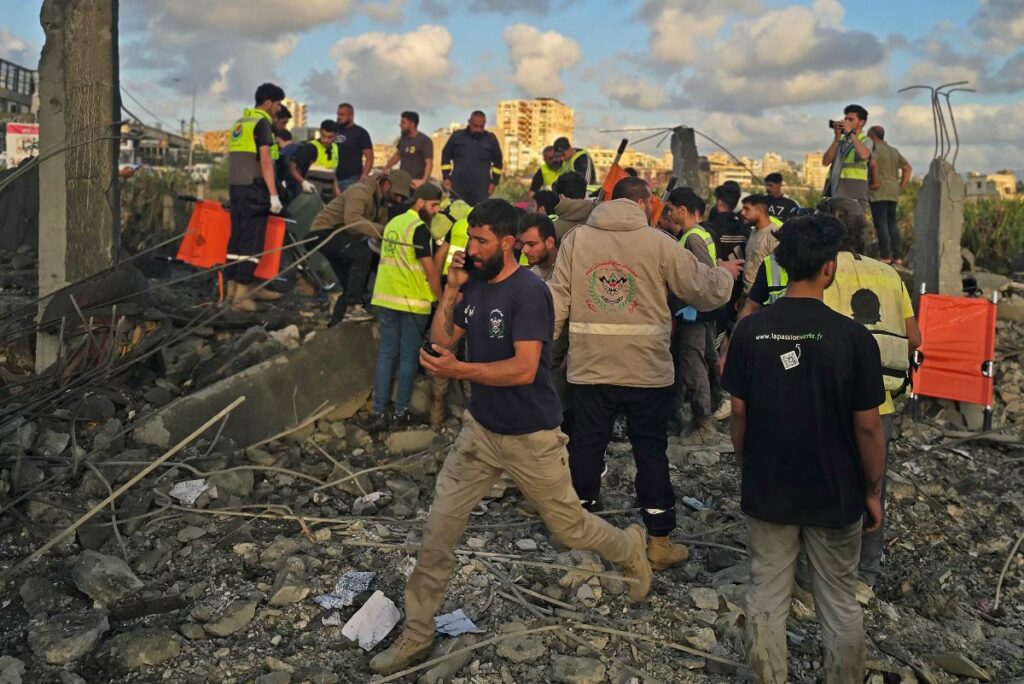
BEIRUT, LEBANON – Just one day after Israel and Lebanon agreed to extend a fragile six-week-old ceasefire for another 45 days, the Israeli military launched a sweeping wave of airstrikes across southern Lebanon on Saturday, deepening despair among tens of thousands of already displaced Lebanese residents and casting severe doubt over the future of the truce.
Israeli officials confirmed the strikes were targeting positions held by the Iran-backed militant group Hezbollah. Ahead of the bombardment, Israeli authorities issued an evacuation order covering nine southern Lebanese villages, triggering a new wave of civilian flight. Lebanon’s state-owned National News Agency documented strikes hitting more than 24 villages across the region, with one strike landing more than 31 miles from the Israeli-Lebanese border. Local media reported that hundreds of additional residents have fled north, seeking safety in the coastal city of Sidon and the capital Beirut.
The ceasefire, which originally took effect on April 17, has been rattled by near-constant violations from both sides since its implementation. United Nations Secretary-General Antonio Guterres issued a statement Saturday welcoming the truce extension, calling on all involved parties to honor the cessation of hostilities in full. But the agreement has done little to halt active clashes: Israel has maintained consistent strike operations inside Lebanese territory and continues to hold territory along the shared border, while Hezbollah has launched regular retaliatory attacks targeting northern Israel and Israeli military positions inside southern Lebanon – including multiple claimed assaults on Saturday.
According to data from Lebanese authorities, more than 2,900 people have been killed in Lebanon in Israeli attacks since cross-border hostilities erupted in March. More than 400 of those deaths have occurred since the original April ceasefire went into force. For its part, Israel has confirmed 19 of its soldiers have been killed in confrontations with Hezbollah in southern Lebanon.
Saturday’s strikes follow indirect negotiations between Israeli and Lebanese envoys in Washington, the latest round of talks following the first direct discussions between the two nations – which have never maintained formal diplomatic relations – in decades earlier last month. Those talks produced the agreement to extend the ceasefire, but the deal has split Lebanese political and armed factions.
Hezbollah has rejected the US-facilitated negotiations, and issued a statement Saturday condemning the proposed security framework as a new series of unauthorized concessions made by the Lebanese government to Israel. “Many Lebanese see the extension of the ceasefire through this track as an extension of their ongoing killing and a cover for the aggression on them and their homeland,” the group’s statement read. In justifying its Saturday attack on Israeli troops in the southern Lebanese town of Khiam, Hezbollah said the action was a response to repeated Israeli ceasefire violations and attacks on southern Lebanese villages.
For the tens of thousands of Lebanese displaced from the south by months of fighting, the gap between the announced truce extension and ongoing deadly attacks has eroded any remaining faith in the agreement. “This is not a truce as long as Israeli attacks continue against the south and its people, with deaths, injuries and destruction,” said Ali Salameh, 60, a displaced resident sheltering in a Beirut school since the war began. Many other displaced residents echoed this frustration, saying they backed Hezbollah’s continued resistance to Israeli attacks. “What kind of a truce is this when they have just threatened villages and people are being displaced? Where is the state? We stand only with the resistance,” said Nawal Mezhir, another displaced southerner.
Lebanon’s Washington-based negotiating delegation struck a more optimistic tone in its statement Friday, welcoming the truce extension and the new US-facilitated security track. The delegation said the agreement “provides critical breathing space for our citizens, reinforce state institutions and advance a political pathway toward lasting stability.”
The current round of cross-border hostilities began on March 2, when Hezbollah launched a large rocket barrage against Israel in retaliation for the killing of a top Iranian commander. Even before Saturday’s large-scale strikes, violence had continued through the ceasefire period: on Friday, a day before the extension was finalized, Israeli jets struck the southern Lebanese coastal city of Tyre, near the city’s famous ancient ruins. An AFP correspondent on the ground documented extensive destruction to the targeted neighborhood. Ibrahim Kahwaji, a tailor who suffered a leg wound in the strike, described the campaign as a deliberate effort to force civilians out of southern Lebanon. “They are emptying the south of its population… It’s a real occupation. We want a solution,” Kahwaji said.