标签: Jamaica

牙买加

  • Judge warns JPs

    Judge warns JPs

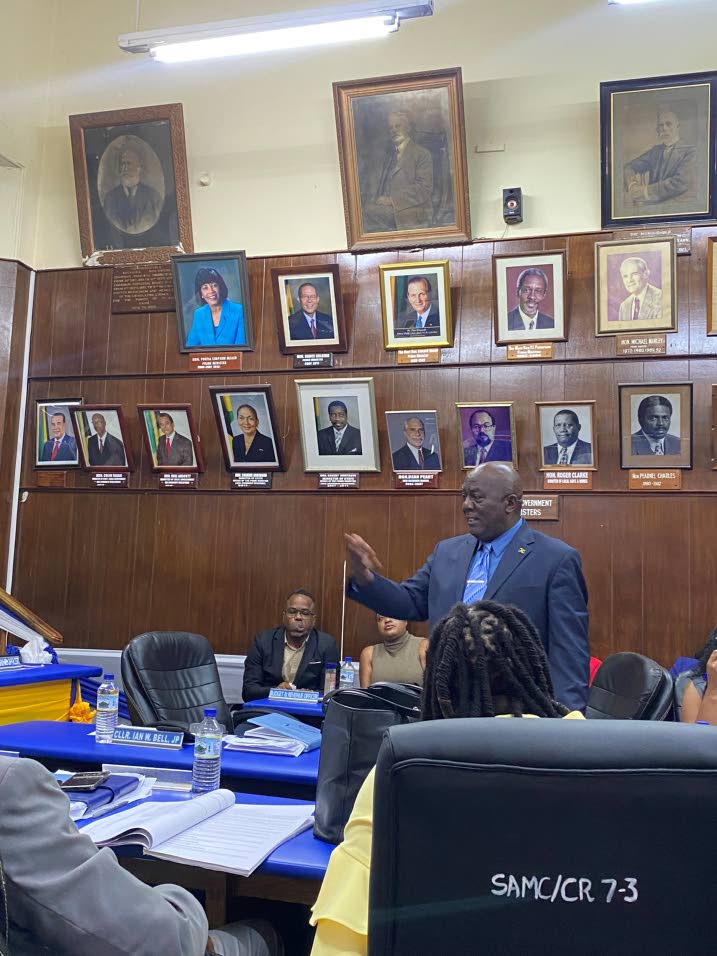
    MANDEVILLE, Jamaica — During a formal commissioning ceremony for 27 newly appointed justices of the peace (JPs) in Manchester Parish this Thursday, Senior Parish Judge John Tyme delivered an urgent, stark warning to the new public servants, grounding his caution in a high-profile 2018 sexual assault case that exposed critical gaps in reference vetting practices across the island. The incident, which unfolded at a Montego Bay resort, saw a wanted hotel employee attack two international tourists — a tragedy that directly stemmed from an unvetted character reference provided by a sitting JP, Tyme explained.

    The offender at the center of the case, Demar Scott, worked as an entertainment coordinator at the Montego Bay resort when he carried out the assault. Years before the attack, in 2015, Scott had been placed on the Manchester Parish Police’s most wanted list in connection with an earlier rape charge. Despite his outstanding warrant, Scott secured a character recommendation from a JP based in St Catherine Parish that was included in his job application for the resort position, clearing his path to employment that put him in contact with vulnerable visitors.

    Tyme walked the new JPs through the chilling details of the 2018 attack: Scott, who had stolen a firearm prior to entering the tourists’ hotel room, committed the sexual assaults before the gun slipped from his possession, and one of the victims shot him in self-defense. Scott survived the shooting and was apprehended by police in Clarendon Parish 24 hours after the incident. In March 2022, he pleaded guilty at St James Parish Court to two counts of rape, two counts of grievous sexual assault, and illegal possession of a firearm and ammunition.

    Tyme emphasized that the case is far from an abstract hypothetical for new JPs. Following amendments to the Justice of the Peace Act that expanded JPs’ jurisdiction to cover the entire island of Jamaica, rather than limiting authorization to their home parish, JPs now regularly receive reference requests from individuals residing outside their local communities. This expanded authority, Tyme stressed, comes with greater responsibility to conduct full background checks before affixing a signature to any character endorsement.

    “When persons speak to you about making sure that when you affix your signature that you are, in fact, attesting to what you know, based on what you have researched, it is not abstract, it is real,” Tyme told the gathering. The case sparked widespread public scrutiny of the JP system over the failure to flag Scott’s outstanding warrant, he noted, underscoring how a single unchecked endorsement can have devastating, far-reaching consequences for public safety.

    Head of the Manchester Parish Police Superintendent Carey Duncan echoed Tyme’s warning during the event, held at Mandeville’s Garden Hotel. Duncan urged the new JPs to reject casual requests for references, framing the JP’s official seal as a public trust rather than a favor to grant to friends or acquaintances.

    “The fastest way to lose public trust is to treat the JP seal like a favour. Say ‘no’ when you must. Verify identity, read the document; if something feels off, pause, because one careless signature can damage a life. One careful refusal can protect many,” Duncan said.

    Beyond the safety warning, the ceremony also addressed ongoing efforts to expand and revitalize Manchester’s JP cohort. Custos of Manchester Garfield Green announced that the 27 new appointments will bring the parish’s total number of active JPs to roughly 500. To meet the community’s needs aligned with population size, the parish requires a total of 2,000 JPs, leaving a gap of 1,500 additional appointees. Green explained that an aging JP population has created this gap, as many long-serving JPs pass away, leaving vacant positions.

    To address the shortfall, parish officials are actively recruiting younger eligible candidates to serve, Green said. The initiative has already seen steady progress: since Green took office, 40 percent of all newly commissioned JPs are under the age of 40, a marked shift toward a younger, more representative cohort. Green issued a public call for eligible residents to apply, outlining key requirements for appointment: candidates must be at least 23 years old, Jamaican citizens, proficient in written and spoken English, and hold a record of unwavering integrity and outstanding standing in their local communities.

  • Education Ministry targets mental health for Child Month 2026

    Education Ministry targets mental health for Child Month 2026

    KINGSTON, Jamaica – Jamaica’s Ministry of Education, Skills, Youth and Information (MOESYI) has officially launched the 2026 edition of Child Month, placing youth mental wellness and holistic development at the center of this year’s national campaign.

    Framed around the theme “Prioritise Our Children’s Mental Health: Strong Minds, Safer Future,” the month-long initiative is designed to foster emotional resilience, boost self-awareness among young people, and cultivate safe, supportive spaces for children across every region of the island nation.

    The official launch kicked off last Friday at MOESYI’s Kingston headquarters with a “Prayer and Praise: Child Month Blast-off” event, which drew education stakeholders, community leaders, and student representatives. Attendees gathered to affirm a shared, cross-sector commitment to advancing children’s overall well-being, according to an official statement from the ministry.

    Over the course of May, MOESYI and its partner agencies will roll out a full slate of programming tailored to engage children, caregivers, educators, and community partners. The schedule includes interactive skill-building workshops, public recognition programs celebrating young people’s achievements, and targeted community outreach efforts. Beyond raising awareness, the activities are structured to uplift children’s rights, reinforce support systems, and nurture healthy mental, emotional, and social growth.

    Senator Dr Dana Morris Dixon, Jamaica’s Minister of Education, Skills, Youth and Information, issued a public call for nationwide participation in the campaign. “Jamaica’s future depends on how we invest in our children today. This year, we are prioritising mental health because strong minds build safer communities. I urge all Jamaicans to help create environments where children feel supported and empowered,” Dixon said during the launch.

    To expand the reach of child protection and wellness efforts, the ministry is also advancing inclusive policies and deepening cross-sector partnerships with public health agencies, education institutions, and local community organizations. Dr Kasan Troupe, Permanent Secretary at MOESYI, reaffirmed the government’s long-term commitment to whole-child development in her remarks.

    “We are committed to holistic child development – supporting both achievement and well-being – so every child can grow, succeed and reach their full potential,” Troupe said.

    MOESYI is encouraging all schools, household caregivers, and community groups to take active part in Child Month activities, emphasizing that coordinated collective action is the foundation for nurturing a generation of resilient, confident, and capable young Jamaicans.

  • New system, new problems?

    New system, new problems?

    Jamaica’s premier public medical facility, the University Hospital of the West Indies (UHWI), has rolled out a revised parking fee collection system, replacing the old model that relied on untrained security personnel after facing sharp scrutiny from the national parliament’s Public Accounts Committee (PAC). However, the temporary fix has sparked fresh backlash from patients and visitors, who report extended wait times and added stress in an already high-pressure healthcare environment. The ongoing debate over the parking program emerged during Tuesday’s regular PAC sitting, where legislators continued reviewing damning operational gaps flagged in the Auditor General’s official audit of UHWI’s management practices.

    Acting Chief Executive Officer Eric Hosin confirmed to the committee that the prior security-led collection framework was scrapped immediately after PAC members first raised red flags during the panel’s April 14 deliberations. The controversy first ignited when committee members questioned whether UHWI maintained sufficient oversight controls to track cash parking revenue, warning that a lack of formal safeguards left the system vulnerable to unaccounted funds and potential mismanagement.

    While lawmakers welcomed the removal of security guards from frontline fee collection, PAC Chairman Julian Robinson emphasized that the personnel change alone does not resolve core accountability concerns. “It is good that the security guard is no longer collecting it, but I also want to know that you have a system in place that whoever is collecting the money, you can verify that you are collecting 100 per cent of what you should be collecting,” Robinson pressed Hosin during the sitting.

    In his response, Hosin outlined that UHWI is in the process of developing and deploying a fully automated parking management system that would enable far more accurate tracking of both vehicle access and revenue collection. Until that permanent solution is ready, the facility has implemented an interim setup that relies on UHWI’s existing trained cashier staff to process parking payments.

    Under the new temporary process, security personnel stationed at the lot entrance issue a time-stamped entry ticket to each driver. Before exiting the facility, drivers must pay the applicable parking fee at any of the hospital’s active cashier stations, where cashiers cross-reference entry time with payment time to calculate the cost, per UHWI’s published rate card: fees range from 250 Jamaican dollars for one hour of parking up to 1,000 Jamaican dollars for a full day of access. After payment, cashiers issue an official receipt, which drivers then present to exit-lane security alongside their entry ticket to leave the lot.

    Despite the transparency gains of the new model, dozens of visitors have taken to social media to complain about crippling delays and unnecessary friction. One parker, who spoke on record with the Jamaica Observer, shared that after visiting his stroke-affected grandmother at the hospital, he was forced to join a single long queue that mixed parking payers with patients waiting to settle medical bills, adding significant frustration to an already emotionally draining trip to the facility. Other echoed the complaint, noting that the merged lines create unnecessary wait times for people already navigating urgent or stressful medical situations.

  • From participation to pursuit – Ja seeks dominance in 10X10 draughts

    From participation to pursuit – Ja seeks dominance in 10X10 draughts

    The 23rd Pan-American International 10×10 Draughts Championship wrapped up recently in Paramaribo, Suriname, and its closing ceremony delivered far more than just a traditional celebration of top competitors. The event exposed a growing shift in the competitive landscape of regional draughts, combining established dominance from traditional powerhouses with promising breakthroughs from up-and-coming national programs.

    In one iconic moment that summed up the tournament’s shifting narrative, Brazil’s newly crowned Women’s Classic champion Carla Assunção Calasans stood side-by-side with Jamaica Draughts Association (JDA) president Jermaine Delattibudiere, who took home silver. The photo, taken on stage at Paramaribo’s Mind Sport Centre during the official award ceremony, carried quiet symbolism: one country reaffirming its long-held position at the top of the regional rankings, while another marked its intentional, steady climb up the competitive ladder.

    Brazil’s reign over the 100-square 10×10 draughts format was reinforced in emphatic fashion at this year’s championship. Calasans put on a masterclass of technical precision and calm under high-stakes pressure to claim the women’s top prize, solidifying her status as the sport’s regional standard-bearer.

    Her compatriot, International Grandmaster Allan Igor Moreno Silva, extended his already legendary regional legacy by capturing his sixth Pan-American Men’s Classic title – a rare and remarkable feat that spans more than a decade of elite championship competition. Silva’s dominance did not end there: he also delivered a commanding performance in the Blitz competition to take home a second gold medal, highlighting Brazil’s unmatched depth and consistent excellence at the highest regional level.

    The men’s division’s top finishers showcased the high calibre of competition drawing athletes from across the Americas. International Master Angel Rafael Mejía of the Dominican Republic claimed the runner-up spot, while International Master Yevgeniy Sklyarov of the United States took third. Suriname’s own Federation Master Arief Salarbaks and Trinidad and Tobago’s Federation Master Dickson Maughn rounded out the competitive top five.

    In the women’s division, two American representatives – Candidate Master for Women Galina Petukhova and International Master for Women Lublyana Turiy – secured second and third place respectively. Calasans claimed the top spot, with Suriname’s Shreya Ragho taking fourth to complete the top tier, a result that underscores both the high level of play and the geographic diversity of this year’s competitor field.

    Beyond regional bragging rights, the championship served as a critical qualifying event for the 2027 World Draughts Federation World Championships set to take place in the Netherlands. The top two finishers in both the men’s and women’s divisions have already secured their spots at the global tournament, cementing the Pan-American Championship’s role as more than just a regional contest – it is a key gateway to elite global draughts competition.

    Against this backdrop of established excellence, Jamaica’s solid performance at the tournament carries broader strategic significance for the future of the sport in the region, according to Delattibudiere, who also serves as a Deputy Superintendent in Jamaica. He explained that Jamaica’s 10×10 draughts program is still in its early formative stages, with the nation’s first official entry into the Pan-American Championships coming only in 2022 at the event hosted in Santo Domingo.

    At that 2022 tournament, Delattibudiere shared, Jamaican competitor Jermaine ‘Wasp’ Hutchinson turned heads with a standout 13th-place finish, while International Grandmaster Wayne ‘Shines’ Reid claimed 24th place. “Both players set an early benchmark for Jamaican competitive participation that we have built on here,” he added.

    Delattibudiere noted that his own silver-medal finish at this year’s championship represents consistent progress for the Jamaican program, while also reflecting the steep learning curve that comes with transitioning from the smaller 8×8 draughts format, more commonly played in Jamaica, to the far more complex 10×10 version used in elite international competition.

  • StGC is 2026 Best School Band

    StGC is 2026 Best School Band

    On April 26, the 13th edition of the Jamaica Best School Band (JBSB) competition wrapped up in dramatic fashion at the Edna Manley College of the Visual and Performing Arts in St Andrew, where first-time competitor St George’s College defied expectations to claim the top prize against seasoned rivals.

    Competing as one of two debutant programs in this year’s tournament, the Kingston-based North Street school’s 16-member Blu Riddim Band secured a narrow win with a final score of 38.5 points, edging out four-time competitor Wolmer’s Boys’ High School’s Kromatix Band by just half a point. Herbert Morrison Technical High School’s Royalty Band finished third with 35 points, while the other first-time entry, Cedar Grove Academy’s Ignition Band, rounded out the top four with 32 points.

    This year’s competition challenged participating ensembles to deliver 10-minute performance sets aligned with the official theme “Remix and Fusion”. Under the rules, each group was required to creatively reinterpret well-known popular or classic tracks by blending distinct musical genres into unique, forward-thinking arrangements that showcased originality and technical skill. Final rankings were determined by a panel of veteran industry judges Stephen Stewart and Kirk Bennett.

    For their first-place finish, St George’s College walked away with a substantial prize package: a JMD 400,000 cash award from the Vinyl Records Collectors Association, a full drum kit donated by Music Mart Limited, and a professional recording session at Kingston’s renowned Mixing Lab studio. The school’s lead vocalist, Tyler Salesman, also earned individual recognition as the tournament’s Most Outstanding Performer for his standout work throughout the competition.

    Other awards went to competing programs across the country. Wolmer’s Boys’ High School took home two honors: Most Improved Band and Best School Image. Hannah Lyon, leader of third-place Herbert Morrison Technical High School’s Royalty Band, was selected as Best Band Leader, while Cedar Grove Academy claimed the award for Best Original Song for their track *The Harder The Battle*. The award ceremony also featured a special guest performance from the Linstead Primary School Band, showcasing up-and-coming young musical talent across Jamaica.

    A total of nine secondary schools registered for the 2026 JBSB competition, which kicked off preliminary rounds on March 2 at Excelsior High School. Notably, 2025 defending champion Dinthill Technical High School chose not to return to defend their title this year.

    JBSB founder Rayven Amani shared her overall assessment of the 2026 season in an interview with the Jamaica Observer, noting that while the competition faced unforeseen challenges, the resilience of participating students was the defining highlight of the tournament. “The highlights of JBSB 2026 is the tenacity and determination shown by so many of the band members working through their various challenges, but showing up each round and performing better than the previous one,” Amani said.

    Organizers had originally projected that the 2026 tournament would draw more registered schools than the 2025 edition, which hosted 12 competing programs. However, the impact of Hurricane Melissa and its widespread aftermath forced a number of schools—particularly those located in western Jamaica—to withdraw their entries ahead of the competition’s preliminary rounds. Despite the setback, Amani emphasized that the quality of performances from remaining participants exceeded expectations, highlighting the growing impact of the competition in nurturing young musical talent across the island.

  • Jamaica’s spend on imports far outpaces export earnings in 2025, says STATIN

    Jamaica’s spend on imports far outpaces export earnings in 2025, says STATIN

    KINGSTON, Jamaica — Fresh trade data published by Jamaica’s official statistics agency has painted a stark picture of the country’s widening merchandise trade imbalance for the full calendar year 2025, revealing export earnings that fell far short of the value of goods brought into the country.

    Released Friday by the Statistical Institute of Jamaica, widely known as STATIN, the agency’s latest International Merchandise Trade briefing laid out the full scope of the 2025 trade position: Jamaica’s total import spending reached US$7.52 billion, while total export revenue hit just US$1.65 billion — a gap that leaves the island nation with one of its most lopsided trade balances in recent years.

    When broken down, the data shows that for every dollar Jamaica spent importing goods in 2025, just 22 cents was generated through export sales. That marks a noticeable drop from 2024, when the ratio stood at 26 cents of export earnings for every dollar of imports, also called the export-to-import coverage ratio.

    A closer look at year-over-year changes shows the imbalance is growing: total 2025 exports fell 13.4% compared to the US$1.91 billion recorded in 2024. STATIN attributes most of this decline to a steep 20.4% drop in the export value of crude materials excluding energy products.

    On the import side, meanwhile, the total value of goods brought into Jamaica rose 3.2% year-over-year, climbing from US$7.29 billion in 2024 to the 2025 total. According to STATIN’s analysis, this uptick was driven by higher incoming shipments of two key categories: raw materials and intermediate goods, which rose 10.5%, and consumer goods, which saw a 6.2% annual increase.

    The report also outlined Jamaica’s top trade relationships for 2025. The United States, China, Brazil, Japan, and Trinidad & Tobago remained the island’s five largest sources of imported goods. Combined, Jamaica spent US$4.68 billion on imports from these five markets in 2025, a 5% increase from the US$4.45 billion spent on imports from the same group in 2024.

    For exports, the top five destination markets in 2025 were the United States, the Russian Federation, Iceland, Canada, and the Netherlands. However, total export revenue from these key markets dropped sharply by 20% year-over-year, falling to US$1.43 billion in 2025.

  • Senator urges mandatory bodycam policy for JCF

    Senator urges mandatory bodycam policy for JCF

    During Friday’s upper house Senate debate over amendments to Jamaica’s 2026 Cybercrimes Bill, opposition Senator Allan Bernard ignited a heated debate by calling for the creation of a national digital accountability framework that would mandate a statutory body-worn camera policy for the Jamaica Constabulary Force (JCF).

    Bernard tabled his proposal against a troubling backdrop: a sharp year-over-year surge in fatal police shootings across the island that has already spurred widespread demands from civil society organizations for mandatory camera use during high-risk specialized police operations. Data released by the Independent Commission of Investigations (Indecom) underscores the scale of the trend: 115 people have been killed by Jamaican security forces in reported confrontations since the start of 2026, a 32% jump from the 87 fatalities recorded during the same period in 2025.

    While confirming the Opposition would support the updated Cybercrimes Bill, Bernard argued that any meaningful approach to national security must be rooted in constitutional protections. “Public safety must be rights-based safety, and digital accountability must apply not only to the governed but also to those who govern,” he told the chamber, pointing to the systemic lack of transparency around police actions including searches, seizures, arrests and the repeated extrajudicial killings that have plagued Jamaica’s security landscape.

    His proposal directly pushes back against recent comments from National Security and Peace Minister Dr. Horace Chang, who dismissed civil society calls for body-worn cameras as a “crazy idea” during an April 22 post-Cabinet media briefing. Chang has claimed that equipping officers with visible cameras during high-risk confrontations with armed criminals would unnecessarily put police at greater risk of being targeted. Bernard rejected this reasoning outright, calling out a fundamental contradiction at the heart of the government’s position.

    “The government comes to Parliament asking for more digital tools, stronger investigative powers, expanded criminal offenses, harsher penalties, and clearer search and seizure procedures under the Cybercrimes Act, yet it refuses to adopt one of the most basic digital accountability tools of modern policing: body-worn cameras,” Bernard argued. “The government wants cameras, court records, search powers, and electronic evidence when it pursues citizens, but when citizens ask for cameras to protect life, liberty and truth during police operations, we are told it is a crazy idea.”

    Bernard further highlighted the inconsistency by pointing to remarks from Science, Technology and Special Projects Minister Dr. Andrew Wheatley, who shepherded the bill through the House of Representatives. Wheatley emphasized that Clause 9 of the legislation requires the JCF Commissioner to develop a formal code of standard procedures for handling digital evidence to ensure effectiveness and integrity. Yet, Bernard noted, when it comes to evidence surrounding fatal police shootings, that same principle of integrity is treated as optional. “This contradiction borders on hypocrisy,” he said. “The government cannot say Jamaica needs a trusted digital society while resisting the very technologies that would help citizens trust the state.”

    Bernard extended his argument to align the push for body cameras with the core goals of the Cybercrimes Bill itself. “If the law criminalizes the nonconsensual publication of an intimate image because dignity matters, then surely the law can require recording of state encounters where life may be taken, because life matters even more,” he said. “If the law can impose up to 20 years in prison for cybercrimes against children, then surely the state must answer when minors are among those killed in police operations.”

    Before he could conclude his remarks, Senate President Tom Tavares-Finson interrupted Bernard, ordering him to stay on topic and adhere to the debate’s focus on the Cybercrimes Bill. Tavares-Finson noted that despite Bernard’s skillful framing of the issue, the debate was not the appropriate venue to advance policy on police body cameras. Undeterred, Bernard pushed back, noting that the core question of selective accountability is inherently tied to the legislation. After Bernard reiterated his call for a formal digital accountability framework and statutory body camera policy, Tavares-Finson again intervened, criticizing the senator for straying from the bill’s text despite acknowledging the strength of his presentation.

    Opposition Senator Lambert Brown stepped in to defend Bernard, noting that government senators had ample opportunity to respond to the arguments, but Tavares-Finson dismissed Brown’s intervention, citing Senate standing orders that require all contributions to remain relevant to the matter under debate. The Cybercrimes Act amendments were originally approved by the House of Representatives on February 3, and the ongoing upper house debate has evolved into a broader discussion of state accountability beyond cybercrime policy.

  • Gov’t developing master plan to restore world famous Hellshire beach, says Samuda

    Gov’t developing master plan to restore world famous Hellshire beach, says Samuda

    One of Jamaica’s most beloved coastal destinations, Hellshire Beach in St Catherine, is set to undergo a landmark restoration effort, as the government advances a comprehensive master plan to reverse decades of climate-driven damage, with a final draft slated for completion by the end of the current fiscal year. The announcement was made by Minister of Water, Environment and Climate Change Matthew Samuda on April 28, during his address to the Sectoral Debate held at Gordon House, Jamaica’s seat of parliament. For over a decade, the iconic beach – which once drew thousands of local and international visitors annually – has been grappling with severe coastal erosion, a crisis amplified by the shifting impacts of a changing global climate. The natural degradation has already forced dozens of the beach’s famous shoreline food vendors out of business, with many of their small wooden shops tumbling into the encroaching sea as the shoreline retreats. These vendors are integral to Hellshire’s cultural identity, best known for serving the island’s iconic fried fish and festival meal that draws foodies from across the country. To reverse this damage and secure the beach’s future, the National Environment and Planning Agency (NEPA) is leading the development of a holistic master plan that balances competing priorities: supporting the coastal community’s livelihoods while protecting the fragile local ecosystem. Speaking to parliament, Samuda emphasized that the project is rooted in the principle that Hellshire must serve both people and the planet, rather than prioritizing one over the other. The plan outlines three core pillars of action. First, it calls for a full overhaul of the beach’s outdated sanitation and waste management infrastructure, putting an end to the dangerous practice of direct waste discharge into coastal waters and cutting down on pervasive littering that harms marine life. Second, it will formalize the shoreline vending sector through regulation, establishing clear environmental responsibilities for all operators to ensure commercial activity does not undermine conservation goals. Third, the initiative prioritizes the protection of adjacent mangrove forests and seagrass beds, critical natural habitats that support local fisheries and act as natural barriers to reduce coastal erosion and boost the shoreline’s resilience to storm surges and sea level rise. According to Samuda, the ultimate goal of the multi-year restoration project is to reimagine Hellshire as a global model for sustainable coastal development: a clean, welcoming space that retains its cultural and economic vibrancy while safeguarding the natural environment that sustains it. Preliminary technical and environmental studies are currently in their final stages, and the full detailed master plan will be released for public consultation with Jamaican citizens before the end of the year, kicking off what will be a years-long effort to restore the iconic beach for future generations.

  • Legacy Isle returns for Reggae Trophy feature at Caymanas Park

    Legacy Isle returns for Reggae Trophy feature at Caymanas Park

    When the starting gates fly open at Caymanas Park tomorrow, the roar of the crowd won’t rise up for a maiden dash or a low-stakes claiming race. All the anticipation, all the buzz, is focused on one thing: the long-awaited comeback of one of Jamaica’s top thoroughbreds.

    At 5:00 p.m. local time, six elite sprinters will step into the starting blocks for the $1.75-million Reggae Trophy, a 1,000-meter (five furlong) straight dash that has become the most anticipated race of the current season. But for fans, trainers, and punters alike, every pair of eyes will be locked on a single horse: Legacy Isle.

    The two-time runner-up of the prestigious Mouttet Mile has not stepped onto a competitive track since December 27, 2025. On that final raceday of last year, Legacy Isle turned the 1,100-meter Christopher “Chris” Armond Sprint into a dominant solo performance, crossing the finish line 10 lengths clear of the field in a blistering time of 1:04.2 before jockey Raddesh Roman eased him up in the final strides. In the 126 days that have followed, the champion has stayed out of the public eye, with only quiet rumors from the stable and impressive morning workout sessions keeping fans on edge waiting for his return.

    Now, trainer Rohan Crichton is ready to send Legacy Isle back into the spotlight, and even the 1,000-meter straight course may not have enough space to contain the seasoned racehorse’s talent. Jockey Raddesh Roman, who will re-team with Legacy Isle for this comeback race, has a clear game plan: break clean out of the gate, settle into second position behind the early speed, and make his move when the moment is right. That confidence is backed up by Legacy Isle’s most recent workout: on April 18, he galloped five furlongs in a sharp 59.0 seconds, with the first four furlongs completed in 46.0 seconds, a strong indicator of his race readiness.

    As a top-tier Mouttet Mile contender dropping down to a sprint distance, Legacy Isle has a massive class advantage over the rest of the field — a gap so wide it can only be described as a canyon. But as any racing fan knows, races are not won on paper, and each of his five competitors has their own plans to upset the favorite.

    Drawing the inside starting position is Pack Plays, an American-bred horse who is coming back to his favored sprint trip after an unsuccessful experiment at 1,700 meters earlier this month, where he finished 22 lengths behind winner Rideallday. That failed distance test is now off the table, and trainer Ricardo Mathie is returning Pack Plays to what he does best: blazing fast early speed. A time of 1:06.4 for five and a half furlongs posted last August proves he belongs at this distance. Jockey Richie Shakes will send him hard out of the starting gate from the rail, and if he can grab an early lead of a length or two, the entire dynamic of the race will shift.

    Stalking both Legacy Isle and Pack Plays will be Money Market, a consistent six-year-old bay contender trained by Gary Subratie, a conditioner who never brings a horse to a stakes race unless he believes they can win. Money Market has not finished off the podium in any five-furlong race in over a year, including a victory posted in 57.2 seconds back in February. Jockey Emelio McLean plans to let the two leading speed horses wear each other out in the early stages before making his move for home. He is widely considered the biggest threat to Legacy Isle — if the long layoff leaves the favorite tired in the final 100 yards, Money Market is perfectly positioned to step in and take the trophy.

    Long shot fans should not count out Mighty Gully, a filly who just notched a win at this exact distance in a sharp 57.4 seconds. She carries almost 20 pounds less weight than Legacy Isle, a significant advantage in sprint racing. Trained by Robert Pearson, who has her in peak race condition, and ridden by tactician Tajay Suckoo who excels at rating late-closing horses, Mighty Gully could fly down the outside in the final strides if Pack Plays and Legacy Isle battle each other to exhaustion in the first half of the race.

    Another One, another horse that excels at the five-furlong straight, rounds out the mid-field, though trainer Anthony Nunes has acknowledged that stepping up to Graded Stakes company is a big step up in class for the runner. The final entrant, seven-year-old veteran Rainsville, is largely considered to be in the race only for appearance money, with his best racing days firmly behind him.

    When all the tactics, weight advantages, and past form lines are stripped away, this race remains Legacy Isle’s to lose. A two-time second-place finisher at the Mouttet Mile, he finished both runs behind all-time greats — but this time, there is no Rideallday or Funcaandun to beat him. All that stands between him and the trophy is 1,000 meters of straight Caymanas Park turf and five competitors just trying to keep pace in his slipstream. If Legacy Isle is even 90 percent fit, he will win. If he is at 100 percent, he will leave the rest of the field far behind in his dust. For most pundits, the Reggae Trophy is already Legacy Isle’s — the rest of the field is simply racing for second place.

    Beyond the featured Reggae Trophy, reporters have highlighted top contenders to watch across the rest of the day’s nine-race card: In Race 1, keep an eye on Wilson, Havajoy, and Sneaky Joe; Race 2 features top picks Another Mission, She’s Adorable, and Sweet Victory; Race 3’s runners to watch are Bowmore, Brompton Boy, and Hi Slew Squared; Race 4’s top contenders are Hazelt Nut, Lockdown, and Four Thirty; Prince Roy, Ability, and Awesome Anthony lead the field in Race 5; Wah A Gwaan, Hooray Henry, and Juventus One are the picks for Race 6; Alaeddin, Goodness Graceous, and Modern Monarch top Race 7; the featured 8th Race’s top three are Legacy Isle, Money Market, and Pack Plays; and Digital One, California Crown, and RicoRicoRico lead the way in the 9th and final race.

  • Arsenal peaking at the right time says Arteta

    Arsenal peaking at the right time says Arteta

    LONDON – In a commanding display that has shifted the momentum of the 2024-25 Premier League title race, Arsenal crushed Fulham 3-0 at the Emirates Stadium on Saturday, opening up a six-point gap over defending champions Manchester City and sending a clear warning that Mikel Arteta’s side is still hungry to end their 22-year top-flight title drought.

    Two first-half goals from Swedish striker Viktor Gyokeres, split by a clinical finish from winger Bukayo Saka, wrapped up all three points for the Gunners before the halftime whistle, capping a dominant opening 45 minutes that left Fulham unable to mount a meaningful comeback. The result gives Arsenal a crucial cushion ahead of Manchester City’s first of two games in hand, which sees Pep Guardiola’s side travel to face Everton on Monday night.

    The win comes as a major confidence boost for Arsenal, who stumbled through rocky patches in April with damaging losses to both Manchester City and Bournemouth, leading to widespread speculation that the club was once again set to collapse under the pressure of a late title push. But Arteta’s side has bounced back in clinical fashion, shifting all pressure back onto the reigning champions, who can draw level on points with Arsenal with wins in both their outstanding fixtures. Even if City do pick up six points from these games, Arsenal currently hold a superior goal difference that could still prove decisive when the season concludes.

    Speaking after the full-time whistle, Arteta reflected on his side’s position, noting: “Game two done. Another three to go. We won the most games in the history of this club in a whole season and it’s not finished. It was a critical game because we knew the importance of the win and the goal difference in the Premier League. It was a great team performance. We started in the game as we wanted. Very lively. Really intense in the high press. We got the crowd going and when this stadium creates that kind of atmosphere, it can be difficult for the opposition.”

    A standout talking point from the match was the performance of Saka, who made his first start since recovering from an Achilles injury that kept him sidelined for five matches. The England international was a constant threat on the right flank, and Arteta hailed his impact at the most critical stage of the campaign. “We know what he is capable of. He comes back at the most important part of the season. His mind is fresh, he has the hunger,” Arteta added. “We are ramping up his minutes. We need to be careful because we need him on the pitch.”

    After a string of anxious, tight performances in recent weeks, Saturday’s game saw Arsenal return to the free-flowing, aggressive attacking style that carried them to the top of the table in the first half of the season. Arteta says the performance reflects the unshakable belief in the dressing room that this is the year the club ends their wait for a league title, having finished as runners-up in each of the last three seasons.

    “It says to us and our dressing room that we keep the dream alive. What our guys have done in these circumstances, without so many injured players at different times, it is incredible,” he said. “This is going to carry the energy into the next game.”

    That next game is far from a gentle test: just three days after the Fulham win, Arsenal host Atletico Madrid in the second leg of their Champions League semi-final, with the tie tied at 1-1. A win on Tuesday will book Arsenal a place in the Champions League final for only the second time in the club’s history, and the first since 2006. Arteta says his side has managed to avoid distraction from the huge European fixture, and carried the same intensity into the Fulham match that they will need to progress.

    “We talk about hunger and we had that today. Understanding that you don’t want to be distracted by a huge game here on Tuesday, we played with authority and desire,” Arteta said. “We have a lot of rhythm. We are used to playing every three days and we will play one of the biggest games in the history of this stadium.”

    Before turning his focus to the Champions League, however, Arteta says he will be settling down to watch Manchester City’s trip to Everton on Monday, with the outcome of the match set to shape the rest of Arsenal’s season. When asked if he would be tuning in, he replied: “Yes because I love football and there is so much at stake.”