标签: Haiti

海地

  • Security : Overview of the GSF deployment schedule in Haiti

    Security : Overview of the GSF deployment schedule in Haiti

    The multinational Gang Suppression Force (GSF) has unveiled its operational timeline for deployment in Haiti, with initial contingents scheduled to arrive in April 2026 and full operational capacity expected by October 2026. The announcement came from Jack Christofides, the designated Special Representative of the force, who is poised to officially assume his command position in February.

    Christofides confirmed that financial backing for the mission has been secured for an initial twelve-month period, providing crucial stability for the international intervention aimed at combating gang violence and restoring security in the crisis-ridden nation.

    In a significant diplomatic development, Christofides recently convened with Roberto Álvarez, the Dominican Republic’s Foreign Minister, as part of coordinated international efforts to support Haitian stabilization. The meeting underscored the regional commitment to addressing Haiti’s security challenges, with Christofides expressing appreciation for the Dominican Republic’s cooperative stance and announcing plans for an official visit to Santo Domingo upon assuming his duties.

    Parallel diplomatic engagements saw Minister Álvarez meeting with Carlos Ruiz Massieu, the UN Secretary-General’s Special Representative and head of the United Nations Integrated Office in Haiti (BINUH). Their discussions centered on the critical need to extend BINUH’s mandate beyond its January 31, 2026 expiration and strategize more effective responses to Haiti’s deteriorating security situation.

    Álvarez reaffirmed the Dominican Republic’s commitment to supporting the international mission through medical evacuation services for GSF personnel and providing logistical support from Dominican territory, highlighting the cross-border nature of the security crisis and the regional response required to address it.

  • FLASH : Presidential advisors confirm their decision to dismiss the PM

    FLASH : Presidential advisors confirm their decision to dismiss the PM

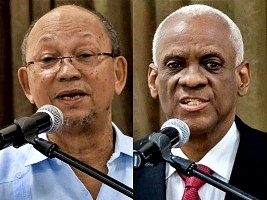
    In a bold move that challenges international influence, Haiti’s Presidential Transitional Council (CPT) has confirmed the dismissal of Prime Minister Alix Didier Fils-Aimé despite mounting global pressure. The decisive action unfolded during a Friday press conference at Villa d’Acceuil, where presidential advisors Leslie Voltaire and Edgard Leblanc Fils announced the majority-backed resolution to remove the sitting PM.

    The council members—comprising Fritz Alphonse Jean, Leslie Voltaire, Louis Gérald Gilles, Edgard Leblanc Fils, and Smith Augustin—cited failed public expectations and inadequate governmental performance as primary reasons for their decision. Voltaire emphasized that despite the CPT’s extensive efforts to support government operations, the population’s needs remained unaddressed.

    Edgard Leblanc Fils declared the international community must respect Haiti’s autonomous decisions, stating they should ‘acknowledge our decisions and support us according to the guidelines we define for the country.’ The council plans to appoint an interim Prime Minister for a 30-day term to ensure political continuity as the CPT approaches its February 7 mandate expiration.

    However, significant institutional obstacles emerge as Laurent Saint-Cyr, the Council’s President pro tempore and official Gazette publisher, vehemently opposes the dismissal. No physical evidence of the signed resolution or publication in Le Moniteur has been provided to media outlets, nor has the identity of the proposed successor been revealed.

    Adding complexity to the political landscape, Haiti’s security forces have reportedly aligned with Prime Minister Fils-Aimé and President Saint-Cyr, marking their most substantial political involvement since 1994. This development creates unprecedented tension between civil governance and military institutions during Haiti’s critical transition period.

  • Security : Graduation ceremony for 877 new police officers

    Security : Graduation ceremony for 877 new police officers

    In a significant stride toward reclaiming national stability, Haiti celebrated the graduation of 877 new police officers on January 23, 2026. The ceremony at the National Police Academy (ENP) marked the completion of training for the 35th promotion of the Haitian National Police (PNH) and the inaugural class of the ambitious P4000 program.

    The event drew high-level attendance from Haiti’s political and security leadership, including Prime Minister Alix Didier Fils-Aimé and Laurent Saint Cyr, President pro tempore and Coordinator of the Transitional Council (CPT). The ‘Aurore’ class graduation symbolized rigor and steadfast commitment to national service, witnessed by presidential advisors, the Justice Minister, military commanders, and international diplomats.

    Prime Minister Fils-Aimé, who also chairs the Superior Council of the National Police, emphasized the strategic importance of Project P4000, which aims to train 4,000 new officers between 2026 and early 2027. He characterized this initiative as a decisive response to the national security emergency, reaffirming the government’s determination to restore state authority and reclaim territories currently controlled by criminal organizations.

    ‘The State is no longer backing down. It is fully assuming its mission,’ declared Fils-Aimé, describing the program as a comprehensive strategy for ‘regaining, stabilizing, and consolidating State authority.’

    The Prime Minister extended gratitude to international partners including the United States, Canada, and the European Union for their sustained support in security restoration, economic revitalization, and election organization.

    Laurent Saint Cyr addressed the security forces, urging unwavering focus on restoring security despite destabilization attempts. ‘I pledge that decisions made at the highest levels of government will always be aligned with the fundamental aspiration of the people: the restoration of security,’ he stated, emphasizing that security remains prerequisite for national stability, credible elections, and normalcy.

    Justice Minister Patrick Pélissier charged the new officers with serving their country honorably, protecting the population diligently, and operating within legal boundaries and respect for fundamental rights.

    U.S. Chargé d’Affaires Henry Wooster affirmed that Haiti’s security remains America’s top priority, noting that ‘Haitians have suffered enough from gang violence.’ He characterized the 40% personnel increase over 16 months as not merely a numerical target but a strategic response to the country’s security realities.

  • Politic : Statement from the OAS General Secretariat on the situation in Haiti

    Politic : Statement from the OAS General Secretariat on the situation in Haiti

    The Organization of American States (OAS) has issued a critical statement addressing Haiti’s ongoing political transition, emphasizing the impending expiration of the current transitional government’s mandate on February 7, 2026. This deadline stems from the April 3, 2024 agreement that established the transitional framework.

    In its comprehensive assessment, the OAS General Secretariat underscored that determinations regarding Haiti’s future governance structures must originate from domestic leadership and key national stakeholders. The international body stressed that any emergent political arrangement should feature clearly defined parameters and temporal limitations to preserve the transitional nature of these mechanisms.

    The OAS outlined essential components for successful transition, prioritizing security restoration and electoral organization through a results-driven methodology. The organization emphasized that operational effectiveness will require robust coordination mechanisms, including constructive collaboration with international partners. Most significantly, the Secretariat highlighted the necessity for national unity, placing Haitian citizens’ welfare at the core of all political deliberations.

    Characterizing Haiti’s current situation as a historical crossroads, the OAS acknowledged the nation’s simultaneous grappling with urgent security concerns while working toward reestablishing democratically elected institutions. The organization noted that maintaining existing stability, preserving institutional continuity, and fostering dialogue remain crucial during this delicate period.

    The General Secretariat concluded with an appeal to all political actors and national leaders to exercise responsibility in service of peace and public interest. Reaffirming Haiti’s priority status within the organization, the OAS reiterated its commitment to supporting stable governance and strengthening democratic institutions in accordance with its established mandates and principles.

  • Education : Launch of the National Conference on the Refounding of the Education System

    Education : Launch of the National Conference on the Refounding of the Education System

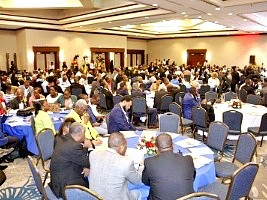
    Haiti has initiated a comprehensive national dialogue to fundamentally restructure its beleaguered education system. The Ministry of National Education officially commenced the National Conference on the Refounding of the Haitian Education System this week in Pétion-ville, framing the three-day event under the ambitious theme “For Transformative Education.”

    The conference, running from January 21-23, 2026, represents a critical response to the systemic challenges plaguing Haiti’s educational infrastructure. The gathering brings together teachers’ unions, parent associations, educational experts, private sector representatives, and diaspora members to diagnose structural deficiencies and develop strategic solutions.

    At the core of the reform effort are four strategic pillars: operationalizing the High National Council for Education, restoring educational governance and school authority, improving learning environments and school infrastructure, and combating academic failure and dropout rates.

    The discussions align with Haiti’s Ten-Year Education and Training Plan 2020-2030, addressing ten critical themes including educational access and equity, teacher development, digital education innovation, infrastructure improvement, school safety, and crisis resilience.

    Prime Minister Alix Didier Fils-Aimé, represented by Ms. Axène Joseph, reaffirmed the government’s commitment to allocating 4% of GDP to education, characterizing the overhaul as an “imperative national necessity” amid the country’s multidimensional crisis. The Prime Minister emphasized that these consultations aim to mobilize national resources toward achieving meaningful social and economic mobility through education reform.

    Education Minister Antoine celebrated the broad participation as evidence of a shared commitment to addressing the challenges jeopardizing the future of Haitian youth. Conference Coordinator Guy Serge Pompilus emphasized that the success of this transformation will depend on the substantive contributions of all participants, with the proceedings expected to produce strategic documents capable of reversing the education system’s decline.

  • Politic : Democrats try to force a vote on extending TPS for Haiti

    Politic : Democrats try to force a vote on extending TPS for Haiti

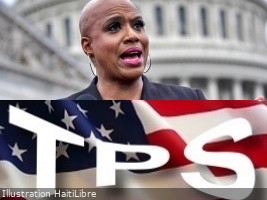
    WASHINGTON — Congressional Democrats initiated a procedural maneuver on Thursday to compel a House vote extending Temporary Protected Status for approximately half a million Haitian immigrants facing imminent deportation threats.

    Led by Representative Ayanna Pressley, co-chair of the Congressional Haiti Caucus, lawmakers filed a discharge petition that would bypass standard committee procedures and force floor consideration of a three-year TPS extension. The controversial parliamentary tactic requires 218 signatures to succeed, representing a majority of the House membership.

    The urgent legislative action comes with Haiti’s TPS designation set to expire on February 3, 2026, potentially exposing between 350,000 and 500,000 Haitian nationals to removal proceedings. Many beneficiaries have established deep roots in American communities and occupy critical positions in healthcare and elder care sectors.

    At a Capitol Hill press conference, Pressley was joined by Representatives Maxwell Frost (FL-10) and Yvette D. Clarke (NY-09), alongside a coalition of immigration advocates and healthcare representatives. They emphasized the devastating human consequences of termination and its potential disruption to already strained medical systems.

    Industry representatives presented compelling data showing immigrant workers constitute approximately 25% of healthcare facility staff and over 30% of home care aides. While TPS holders represent a small demographic segment, they comprise 15% of all non-citizen healthcare professionals. Notably, more than 20% of Haitian immigrants work within healthcare sectors.

    The timing creates a particularly complex policy challenge as demographic projections indicate America’s population aged 65 and over will grow by 50% before 2050, while simultaneously facing an estimated shortage of 3.5 million healthcare professionals by 2030.

    Among organizations endorsing the extension were the American Business Immigration Coalition, National TPS Alliance, SEIU, Black Alliance for Just Immigration, National Domestic Workers Alliance, LeadingAge, Haitian Bridge Alliance, and Goodwin Living.

  • FLASH : Dismissal of the PM raises tensions between the international community and the CPT

    FLASH : Dismissal of the PM raises tensions between the international community and the CPT

    Haiti faces escalating political turmoil as the Presidential Transitional Council (CPT) has defiantly moved to dismiss Prime Minister Alix Didier Fils-Aimé, directly challenging pressure from the United States and other international partners. This controversial decision has triggered a significant diplomatic confrontation just weeks before the Council’s mandate expiration on February 7, 2026.

    The dismissal process encountered internal resistance from Laurent Saint-Cyr, the Council’s President pro tempore and Coordinator, who has blocked the resolution’s implementation. Saint-Cyr formally opposed what he characterized as “any resolution aimed at undermining governmental stability as February 7th approaches” in official correspondence to CPT members.

    The political drama intensified with the fluctuating position of Presidential Advisor Smith Augustin, who initially withdrew his signature from the dismissal resolution on January 21st, only to reverse course the following day and confirm his support for the Prime Minister’s ouster via WhatsApp message.

    International reaction has been swift and severe. The U.S. Embassy declared any government composition change by the non-elected CPT “null and void,” warning that supporters of such “disruptive steps” would be considered as “favoring the gangs” and acting against Haitian and international interests.

    The U.S. State Department’s Western Hemisphere Office delivered particularly harsh criticism, asserting that Haiti’s chronic instability stems from “corrupt Haitian politicians who use gangs and other armed groups to create chaos.” The statement explicitly labeled CPT members following this path as “criminals like the gangs they conspire with” rather than Haitian patriots.

    Canada expressed deep concern that replacing the Prime Minister would “weaken the stability and security of the country,” while the European Union, Germany, Spain, and France jointly warned that any leadership change would “jeopardize the encouraging momentum of the security forces against criminal gangs.”

    The United Kingdom similarly characterized the proposed government changes as “inopportune and destabilizing,” emphasizing that such moves would undermine security efforts precisely as the CPT’s mandate approaches expiration.

    This developing crisis represents a critical test for Haiti’s transitional governance amid ongoing security challenges and gang violence, with the international community presenting a united front against the CPT’s actions.

  • Economy : Towards a revision of the personal income tax

    Economy : Towards a revision of the personal income tax

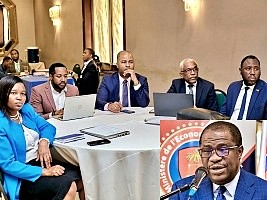
    Port-au-Prince, Haiti – In a significant move toward fiscal modernization, Haiti’s Ministry of Economy and Finance convened a high-level technical meeting on January 20, 2026, to advance revisions to the nation’s Personal Income Tax (IRPP) structure. Minister Alfred Fils Metellus led the session alongside members of the Tax Policy Committee (CPF), engaging economists and chartered accountants in substantive dialogue regarding proposed changes to the tax scale.

    The initiative represents a strategic effort to address systemic inefficiencies within Haiti’s current taxation framework. Ministry officials identified several critical areas for improvement, including the need to eliminate structural distortions and create a more equitable system aligned with contemporary economic realities. The revision process emphasizes technical precision while upholding fundamental taxation principles.

    Minister Metellus highlighted the reform’s potential impact on small and medium enterprises (SMEs), identifying them as crucial engines for economic expansion and employment generation. “Our objective is to establish a fiscal environment that actively promotes SME development through thoughtful policy adjustments,” Metellus stated during the proceedings. He further committed to maintaining inclusive dialogue with private sector stakeholders throughout the reform process.

    Technical discussions organized around four central pillars: equitable contribution according to economic capacity, systemic effectiveness promoting formal economic participation, simplified tax scale transparency, and overall structural coherence within Haiti’s tax architecture.

    CPF President Andral Joseph outlined complementary initiatives including the ongoing revision of Haiti’s General Tax Code and planned modernization of tax administration systems. Directors Romel Troissou and Carl-Edwice Estima presented analytical frameworks detailing multiple revision scenarios, emphasizing three core objectives: restoring fiscal justice, protecting low-income households, and maintaining budgetary sustainability.

    Prominent private sector representatives including economists Kesner Pharel and Duval Lucnaire contributed substantive assessments and recommendations. Their participatory engagement reflects a concerted effort to develop a taxation system characterized by enhanced fairness, operational transparency, and improved adaptation to Haiti’s distinctive economic conditions.

  • FLASH : More than 8,100 Haitians killed in 11 months (2025)

    FLASH : More than 8,100 Haitians killed in 11 months (2025)

    A stark United Nations assessment has revealed Haiti descended into unprecedented violence throughout 2025, with armed gangs inflicting a devastating human toll and bringing the nation to a critical juncture. According to the latest report from the UN Integrated Office in Haiti (BINUH), presented to the Security Council on January 15, 2026, more than 8,100 Haitians were killed between January and November 2025 due to armed violence, a figure believed to be a significant undercount given limited access to gang-controlled territories.

    The crisis has evolved beyond the capital, Port-au-Prince, with gang networks expanding their influence into strategic regions including Arcahaie, Mirebalais, Lascahobas, and the Artibonite department. This geographical spread has effectively paralyzed vital commercial and humanitarian routes, severely undermining state authority. Armed groups systematically targeted individuals suspected of collaborating with or resisting police forces, employing sexual violence primarily against women and girls as a punitive weapon of war.

    In response, the Haitian National Police (PNH), supported by the Haitian Armed Forces and the Gang Suppression Force (GSF), intensified counter-operations. These efforts succeeded in reopening several major national roads, though the overall security situation remains critically fragile. Despite a marginal 6.2% decrease in violence within the capital in the final quarter, violence exploded in provincial areas, nearly doubling in certain rural regions. The Artibonite and Center departments reported 1,916 deaths in 2025, a sharp increase from the 1,050 recorded during the same period in 2024.

    Beyond killings, gangs sustained campaigns of kidnapping for ransom, extortion, and systematic property destruction. These actions have severely hindered public access to essential services, including healthcare and education, while exacerbating severe food insecurity and economic hardship. The report also highlights a disturbing rise in child trafficking, with gangs coercing minors into various roles, including participation in violent attacks.

    The coordinated assaults, often executed with weapons of war on multiple fronts, signify a grave and deteriorating security situation that demands urgent international attention and a reinforced response to prevent further humanitarian catastrophe.

  • FLASH : Attempt to revoke the PM defeated by the USA

    FLASH : Attempt to revoke the PM defeated by the USA

    In a dramatic political showdown on January 21, 2026, Haitian Prime Minister Alix Didier Fils-Aimé retained his position after a failed dismissal attempt within the Presidential Transitional Council (CPT). The resolution for his removal initially garnered support from five council members before Advisor Smith Augustin unexpectedly reversed his position, refusing to provide the crucial final signature needed for passage.

    The four advisors who endorsed the dismissal motion were identified as Fritz Alphonse Jean, Leslie Voltaire, Louis Gérald Gilles, and Edgard Leblanc Fils. Their effort faced strong opposition from Laurent Saint-Cyr, the Council’s President pro tempore and Coordinator, who circulated a formal correspondence condemning the initiative.

    Saint-Cyr’s communication emphasized the critical need for governmental stability ahead of the February 7 institutional deadline, warning against ‘any initiative likely to fuel instability, confusion or a breakdown of trust’ that would carry ‘serious risks for the country.’ He advocated for structured dialogue representing Haiti’s diverse political sectors rather than rushed decisions.

    The decisive factor in quashing the dismissal attempt emerged from explicit diplomatic pressure from the United States Embassy. In unequivocal language, U.S. officials declared that changing Haiti’s government composition at this late stage would be considered ‘an effort to undermine’ American objectives for security and stability. The correspondence contained a direct threat that the U.S. would regard supporters of such measures as ‘acting contrary to the interests of the United States, the region, and the Haitian people’ and would ‘act accordingly.’

    This diplomatic intervention highlights the ongoing influence of international actors in Haiti’s fragile political transition and the continuing challenges facing the Caribbean nation’s governance structures.