标签: Haiti

海地

  • 2026 World Cup : Haitian Prime Minister visited the Grenadiers the day before their opening match

    2026 World Cup : Haitian Prime Minister visited the Grenadiers the day before their opening match

    On the eve of one of the most defining matches in Haitian sports history, the country’s top political leadership traveled to Massachusetts to rally the national men’s football team, the Grenadiers, ahead of their opening 2026 FIFA World Cup fixture against Scotland’s Tartan Team. Kickoff for the match, held at Gillette Stadium in Foxborough, just outside Boston, is scheduled for 9:00 p.m. local Haiti and U.S. Eastern time on June 13, 2026.

    Haitian Prime Minister Alix Didier Fils-Aimé led the official delegation, which included Foreign Minister Raina Forbin and Minister for Haitians Living Abroad Kathia Verdier, for the morale-building visit with players and technical staff on Friday, June 12. The encounter was steeped in raw emotion and collective national pride, as Fils-Aimé delivered a unifying message of solidarity from both the Haitian government and the entire Haitian community — including millions of citizens and diaspora members around the globe.

    The Prime Minister framed the team’s World Cup qualification as a watershed historic moment for the Caribbean nation, noting that the run to the tournament has already united Haitians across divides behind a shared national goal. He positioned the Grenadiers as far more than just a group of athletes, calling them a powerful symbol of hope, unity, and what the country can achieve against steep odds.

    “You are much more than a football team. You are the face of Haitian youth who refuse to give up, who dare to dream, and who prove that, despite the difficulties, Haiti is capable of rising to the ranks of the world’s best nations,” Fils-Aimé told the squad. “You are hope, you are opportunity. You are an example; we are watching you and counting on you.”

    Speaking after the Prime Minister, Foreign Minister Forbin extended her own congratulations to the team for achieving the unprecedented feat of qualifying for the World Cup. She highlighted the behind-the-scenes diplomatic and consular work that cleared logistical hurdles to enable Haiti’s participation in the global tournament, adding that the squad serves as a powerful showcase of the exceptional talent nurtured among Haitian youth.

    For her part, Minister Verdier praised the team’s achievement as one that transcends the boundaries of sport. She noted that the Grenadiers’ journey has already become a source of inspiration for current and future generations of Haitians both at home and abroad.

    In a gesture of gratitude for the government’s support, the entire squad presented Fils-Aimé with an official team jersey bearing the signatures of every player. The Haitian government used the occasion to reaffirm its full confidence in the national team, and issued a call to all Haitians, regardless of their location, to rally behind the Grenadiers during this historic milestone.

    Closing his remarks, the Prime Minister emphasized the unifying power of the team’s moment on the world stage: “Together, as our Grenadiers are demonstrating today on the world stage, we can accomplish great things when we move forward united.”

  • 2026 World Cup : The Scottish national team, a difficult opponent but…

    2026 World Cup : The Scottish national team, a difficult opponent but…

    On the evening of June 13, 2026, football fans across the Caribbean and the United Kingdom are gearing up for a historic 2026 FIFA World Cup group stage encounter that will make history for both competing nations. Taking place at Gillette Stadium in Foxborough, Massachusetts, just outside Boston, this match will kick off at 9:00 p.m. local Haiti and U.S. time, marking the first-ever meeting between Haiti’s men’s national team, the Grenadiers, and Scotland’s beloved Tartan Army side. It will also be Haiti’s first-ever competitive match against a British Isles national team, adding an extra layer of novelty to the already anticipated fixture. For both sides, the match marks a long-awaited return to the world’s biggest football stage. Haiti, currently ranked 83rd in the global FIFA rankings, is stepping onto a World Cup pitch for the first time in nearly 52 years, while Scotland – sitting 43 places higher at 40th – is ending its own 28-year drought from the tournament, having last competed in 1998 in France. Scotland, led by long-tenured head coach Steve Clarke, enters the contest as the clear favorite on paper. The side has enjoyed a steady upward trajectory in European football in recent years, built around a core of experienced, in-form Premier League talent that drove its successful qualifying campaign. Central to Scotland’s threat is Manchester United midfielder Scott McTominay, who led the team’s attacking stats in qualifying with two goals and one assist – more direct goal involvements than any other player in the squad. McTominay is one of three key players, alongside Aston Villa captain John McGinn and Liverpool left-back Andy Robertson, who started all six of Scotland’s qualifying matches to secure their spot in the 2026 tournament. Despite their consistent qualification for major tournaments over the decades, Scotland’s World Cup history is defined by underperformance and heartbreak. The Tartan side has qualified for the World Cup on eight previous occasions – 1954, 1958, 1974, 1978, 1982, 1986, 1990, and 1998 – but has never managed to progress beyond the group stage in any of their campaigns. Across their 23 total World Cup matches, Scotland holds a record of four wins, seven draws, and twelve losses, having scored 25 goals and conceded 41 overall. This first-round elimination curse extends to all of their appearances at the UEFA European Championship as well: across twelve total appearances in major men’s international tournaments, Scotland has exited at the group stage every single time. For Haiti, the underdog side heading into the contest, supporters are focusing their hopes on two star attacking forwards: Frantzdy Pierrot and Duckens Nazon. The Grenadiers’ modest pre-match aim is to secure at least a draw or get on the scoresheet in their return to the World Cup. Early match prediction models on matchday morning gave Haiti just a 20% chance of a victory, with a 22% probability of a draw and a 67% chance of a Scotland win. Still, Haitian football supporters have remained optimistic, noting that upsets are always possible in the World Cup’s group stage. Nazon in particular comes into the match in red-hot form following CONCACAF qualifying. The Haitian attacker finished the qualifying campaign as joint top scorer across the confederation with six goals, including a memorable second-half hat-trick after coming off the bench against Costa Rica. He also led all CONCACAF qualifying players in total shots (34) and touches in the opposition penalty area (59), marking him as the most dangerous goal threat for the underdog Grenadiers.

  • Education : Day of discussions with Protestant leaders on the accreditation of educational institutions

    Education : Day of discussions with Protestant leaders on the accreditation of educational institutions

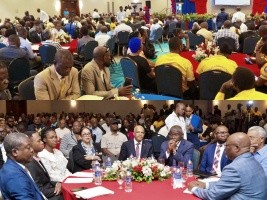
    Against the backdrop of milestone anniversaries for Haiti’s Protestant educational community, the Haitian Ministry of National Education and Vocational Training (MENFP) brought together more than 600 Protestant sector education leaders on June 10, 2026, for a full-day collaborative discussion focused on advancing the national accreditation process for private educational institutions. Attendees included heads of primary and secondary schools, vocational training center leaders, university deans, and rectors from across the country’s Protestant-led education network.

    The gathering was intentionally timed to align with major commemorations: the 40th anniversary of both the Protestant Federation of Haiti (FPH) and the Federation of Protestant Schools of Haiti (FEPH), as well as the 210th anniversary of the founding of Protestantism in Haiti. The core goal of the meeting was to align religious and secular education leaders around the urgent need to bring private Protestant-led institutions into compliance with national education standards, a change that officials say will cement consistent educational quality and open doors to stronger collaboration between the sector, public regulators, and global development partners.

    Addressing the assembled delegates on behalf of Prime Minister Alix Didier Fils-Aimé, Ms. Axène Joseph opened the event by noting, “On behalf of the Head of Government, I feel a sense of national pride and a great honor to address this assembly of representatives from Protestant schools and universities in Haiti today.” She emphasized that the Haitian government, through the MENFP, has launched an ambitious national education reform agenda that aims to fundamentally reshape the country’s entire school system, framing the gathering as a critical milestone in that broader transformation.

    MENFP Minister Vijonet Déméro framed the discussion as a proactive step to clear up confusion around accreditation protocols, helping Protestant denominations navigate the multi-step process of gaining national recognition for their institutions. He stressed the outsized influence that the Protestant education sector holds in Haiti: “If we consider the country’s school system, it’s easy to see that Reformed churches manage many schools, with a presence in rural areas and disadvantaged urban neighborhoods. If the Protestant sector succeeds in modernizing, Haitian schools will be transformed. If it commits to change, the Republic will move forward.” Déméro also outlined the ministry’s broader transformation agenda, which includes sweeping curriculum reform, standardization of core instructional materials, expanded access to digital, civic, and financial education, new investments in student mental health and well-being, infrastructure upgrades, and expansion of the national school canteen program.

    Raina Forbin, Haiti’s Minister of Foreign Affairs and Religious Affairs, praised the initiative for centering the critical work of the Protestant education sector and pledged her department’s full support throughout the three-stage accreditation process, which begins with institutional opening authorization, moves to issuance of an operating permit, and concludes with the award of a full accreditation certificate.

    FPH President Calixte Fleuridor and FEPH Executive Director Christon St. Fort both commended the MENFP for organizing the collaborative dialogue, while calling for continued investment in and expansion of public-private partnerships in Haiti’s education sector.

    The second half of the day was dedicated to practical, step-by-step procedural guidance for attending institutions. Walex Pierre, Director of the Directorate for Support to Private Education and Partnerships (DAEPP), laid out the core pillars of the National Policy for the Accreditation of Private Schools (PONAEP). Yves Villefranche of the National Institute for Vocational Training (INFP) walked attendees through recognition protocols for vocational training centers, while Jean Judson Joseph of the National Agency for Higher Education and Scientific Research (ANESRS) outlined the specific process for private universities. Elysé Colagène, Director General of the National Education Fund (FNE), explained how institutions can access national school grants, and Lucson Philémon, Coordinator of the National School Canteen Program (PNCS), detailed the requirements for schools to join the widely used meal program.

    To cap off the day of collaboration, the MENFP’s Directorate of Academic and Professional Development issued more than 300 operating permits to school representatives in attendance, marking tangible progress toward national compliance even as the broader accreditation process continues.

  • Launch of the 2026-2027 Budget Preparation Work in Haiti

    Launch of the 2026-2027 Budget Preparation Work in Haiti

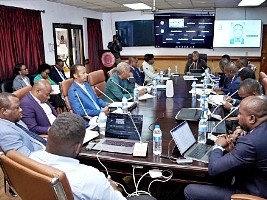
    On June 11, 2026, Haitian national authorities officially kicked off the drafting process for the 2026-2027 fiscal year state budget during a dedicated working session that brought together all key public bodies involved in the country’s budget cycle. The launch was led jointly by the Ministry of Planning and External Cooperation (MPCE) and the Ministry of Economy and Finance (MEF), with senior representatives in attendance from core revenue and administrative institutions, including the General Customs Administration (AGD), the General Directorate of Taxes (DGI), and multiple technical departments and directorates from both lead ministries.

    This budget development initiative is rooted in the Haitian government’s overarching vision to deliver a budget framework that is pragmatic, trustworthy, and actionable, designed to tackle the nation’s most pressing ongoing challenges while advancing core national policy priorities.

    In her opening address to participants, Sandra Paulemon, Haiti’s Minister of Planning, highlighted that the 2026-2027 budget is being developed against a backdrop of profound interconnected security, economic, and social crises that demand deliberate, rigorous, and strategic stewardship of limited public resources. Paulemon underscored the central coordinating role her ministry plays in aligning long-term development planning, programming public investment projects, and harmonizing development interventions that draw on both domestic national resources and international cooperation funding.

    Minister Paulemon emphasized that all public investments included in the upcoming budget must be directed toward high-impact initiatives that deliver measurable, tangible improvements to the daily lives of Haitian citizens. She clarified that all selected projects must align with the priorities outlined in the National Pact for Stability and the Organization of Elections, as well as the government’s established sector-specific policy roadmaps.

    Top priority areas for budget allocation include initiatives that strengthen the security of civilian lives and private property, raise national living standards, build stronger public institutions, support logistical and administrative preparation for upcoming elections, drive broad economic recovery, and rehabilitate critical public infrastructure that serves communities across the country.

    Paulemon also outlined the formal project selection criteria adopted by the MPCE to vet proposed investments. These criteria include alignment with core government priorities, consistency with existing national and international state commitments, the urgency and strategic relevance of the proposed work, the technical readiness of the project to move forward, the completion of all required project documentation, and the proven implementation capacity of the public institution leading the initiative.

    Reaffirming the government’s commitment to delivering tangible outcomes for the Haitian public, the minister called on all sectoral ministries, Planning and Development Units, and public agencies to adhere to the formal procedures and strict deadlines laid out for budget preparation, and to work closely with technical teams from both the MPCE and MEF throughout the drafting process.

    In closing, she restated that thoughtful public investment programming is a foundational strategic decision that will shape Haiti’s long-term future, urging all participating public institutions to uphold standards of responsibility, rigor, and collaborative partnership. This collective effort, she noted, will ensure the final 2026-2027 budget accurately reflects the government’s priorities and supports national stabilization, the successful organization of key democratic processes, and accelerated inclusive development across the country.

    For his part, Serge Gabriel Collin, Haiti’s Minister of Economy and Finance, laid out the core guiding principles that will shape the new budget. Collin stressed that the budget must prioritize sustaining and expanding ongoing national security efforts, particularly through sustained resourcing for the Haitian National Police (PNH) and the Armed Forces of Haiti (FAd’H), as well as strengthened border security infrastructure and operations.

    Collin also underscored the urgent need to reverse a years-long trend of economic contraction and return to positive GDP growth, noting that Haiti has faced seven consecutive years of negative economic expansion. He expressed strong support for fiscal policies designed to achieve zero net cash flow as a mechanism to curb persistent high inflation, and called for targeted policies to drive broad-based economic development, protect domestic Haitian production, and implement continuous improvements to public financial management practices across all government bodies.

  • World Cup 2026 : PM Fils-Aimé in the United States to support our Grenadiers

    World Cup 2026 : PM Fils-Aimé in the United States to support our Grenadiers

    Haiti’s journey at the 2026 FIFA World Cup is set to kick off this weekend, and the nation’s top political leadership is stepping up to rally behind its national football team, the Grenadiers. On Thursday, June 11, 2026, Prime Minister Alix Didier Fils-Aimé departed Haiti for the United States, where he will be in attendance for the team’s opening group stage match against Scotland, scheduled for 9:00 p.m. local (and Haitian) time on June 13 at Foxborough’s Gillette Stadium, located just outside Boston, Massachusetts.

    For the Haitian nation, this World Cup appearance marks a historic milestone, and the prime minister’s trip carries far more meaning than simply attending a sporting event. Through his in-person presence at the match, Fils-Aimé aims to demonstrate unwavering, full-hearted support for the Grenadiers and every member of the Haitian national delegation. This moment stands as a source of collective national pride, and the prime minister’s attendance also serves as a public gesture of encouragement to Haitian youth and the broader domestic sports community, which the government frames as central pillars of national unity and shared hope.

    In the lead-up to the team’s first match, Jean Willio Patrick Chrispin, Haiti’s Secretary of State for Communication, released a statement extending warm congratulations and sincere encouragement to the Grenadiers as they prepare to take the global stage to defend Haiti’s national colors.

    The statement from the Haitian government went further, issuing a nationwide call for all Haitian citizens to rally behind the national squad. Officials emphasized that beyond final match scores, every World Cup appearance by the Grenadiers is an opportunity to showcase to the global community the strength of Haitian unity, the resilience that defines the nation, and the unshakable loyalty Haitians hold for their homeland. The government encouraged every household, neighborhood, city, and community across the country to turn into a hub of collective support for the team.

    A special fraternal appeal was also extended to the vast Haitian diaspora spread across every continent, particularly for diaspora members who will be in attendance at the U.S.-hosted matches. “Your presence, your songs and your fervor will constitute an invaluable source of motivation for our players,” the statement read, adding that diaspora fans serve as living ambassadors for Haiti, extending the nation’s energy as the entire country unites in excitement for the global tournament.

    Amid this moment of national communion, the Fils-Aimé administration called on every Haitian citizen to send positive energy to the national team. “May our prayers, our encouragement and our confidence accompany the Grenadiers throughout their journey,” the statement concluded. “Together, let’s make this World Cup a symbol of unity, national pride and renewed hope. Go Grenadiers! Go Haiti!”

  • Leisure : Did you know ? #32

    Leisure : Did you know ? #32

    In the latest installment of HaitiLibre’s popular twice-weekly general knowledge quiz series “Did You Know?”, readers are invited to discover a little-known geographic fact that highlights one of Asia’s most dynamic and misunderstood capital cities. The answer to this week’s trivia question confirms what climate data has long recorded: Ulaanbaatar, the capital of Mongolia, officially holds the title of the coldest national capital on Earth.

    Nestled in the Tuul River valley at an elevation of 1,350 meters above sea level, Ulaanbaatar is home to nearly half of Mongolia’s total population, and faces some of the harshest winter conditions on the planet. During the coldest winter months, temperatures regularly plummet below -40°C, a climatic extreme that cements its status as the coldest capital worldwide.

    Beyond its frigid reputation, the city carries a rich layered history that shapes its unique modern identity. Founded originally as a nomadic Buddhist monastic settlement, Ulaanbaatar today blends a striking mix of urban landscapes: imposing Soviet-era architecture stands alongside gleaming contemporary skyscrapers, while traditional ger (yurt) neighborhoods still dot the city’s outer edges, preserving the nomadic roots of the Mongolian people.

    As the gateway to Mongolia’s vast, sweeping steppes, Ulaanbaatar also serves as a thriving cultural hub for the country. It hosts world-renowned natural history museums, famous for their extensive collections of dinosaur fossils unearthed from the Gobi Desert, and remains a center of Buddhist life with active historic monasteries such as the iconic Gandan Monastery. Caught between millenia-old nomadic traditions and rapid 21st-century urbanization, the Mongolian capital is a rapidly changing metropolis that has adapted to thrive despite the unforgiving Northern Hemisphere climate it calls home.

    This fun fact is pulled from the trivia question bank of Quiz.HaitiLibre, the free general knowledge platform operated by HaitiLibre that serves audiences looking to expand their knowledge across global and Haiti-focused topics. In a recent monthly update rolled out on June 1, 2026, the platform added 31 new quiz games, pushing its total library of accessible content to 150 unique games. The platform adds new content on a monthly rolling basis to keep challenges fresh for returning users.

    All of Quiz.HaitiLibre’s exclusive content is free to access, requires no user registration, and is built to suit audiences of all ages and knowledge levels. Each quiz offers three difficulty tiers: easy, intermediate, and hard, and is available in both French and English to serve a broad multilingual audience. Visitors can explore topics ranging from Haitian current affairs and culture to global geography, history, science, and more, with expert-level challenges available for users seeking a more rigorous test of their knowledge.

  • Strategic visit of the haitian PM to the base of the Gang Supression Force

    Strategic visit of the haitian PM to the base of the Gang Supression Force

    In a high-stakes move to advance the Haitian government’s nationwide campaign to reestablish public order and state sovereignty over violence-plagued areas, Prime Minister Alix Didier Fils-Aimé carried out a strategic working visit to the Gang Suppression Force (GSF) headquarters in Tabarre on Wednesday, June 10, 2026.

    The prime minister was not alone in the visit: he was joined by Vladimir Paraison, the acting director general of the Haitian National Police (PNH), for talks with a cross-institutional senior delegation that included GSF Special Representative Jack Christofides, Daniela Kroslak — Deputy Secretary-General and head of the United Nations Support Office in Haiti (BANUH) — and Major General Erdenebat Batsuuri, commander-in-chief of the FRG.

    Central to all closed-door and open discussions was a shared agreement to ramp up coordinated joint security operations across Haiti. The core priorities laid out during the talks included reestablishing long-term stable security, recapturing swathes of national territory currently controlled by armed gang factions, and consolidating the tactical and strategic gains that security forces have already secured on the ground.

    During the visit, Fils-Aimé reiterated the Haitian government’s unshakable commitment to rooting out remaining pockets of gang-related violence and insecurity. He emphasized that a top policy goal is guaranteeing unimpeded, safe movement for all Haitian citizens across every region of the country, a basic right that has been disrupted by years of gang activity.

    Beyond diplomatic and strategic discussions, the prime minister conducted an on-site inspection of multiple operations coordination rooms and ongoing infrastructure development projects at the base. A key site on his inspection itinerary was a set of new dormitories currently under construction, which are designed to accommodate incoming additional contingents that will boost the GSF’s on-the-ground intervention capacity.

    Fils-Aimé also carved out time to meet with the base’s on-site medical personnel, where he conducted a first-hand review of the healthcare and support systems in place to serve security force members deployed to frontline anti-gang operations. He used the meeting to publicly commend the professionalism, courage and relentless dedication of all security and support personnel deployed to advance Haiti’s national security goals.

    Closing out his visit, Fils-Aimé reaffirmed his personal commitment to shaping government policy and action around the on-the-ground realities facing security forces. He stressed that the administration will continue to provide full support to the GSF and allied security bodies as they carry out their critical mission, with the end goal of speeding up the full restoration of legitimate state authority across every corner of Haiti.

  • Leisure : Did you know ? #31

    Leisure : Did you know ? #31

    As of June 2026, Haiti’s leading local information platform HaitiLibre has announced the expansion of its popular free general knowledge quiz platform, QuizHaitiLibre, growing its total offering to 150 interactive multiple-choice quiz games after adding 31 new entries in its monthly June update. The 31st entry in the platform’s ongoing “Did You Know?” series shines a light on a little-discussed but foundational component of Haiti’s economy and food security: the bulk carriers that keep the country supplied with essential goods.

    Bulk carriers are a specialized class of cargo ship engineered specifically to move large volumes of unpackaged “bulk” goods across international waters. For Haiti, which relies on imports to meet the vast majority of its population’s basic food needs and construction demand, these vessels are far more than just commercial shipping assets—they are lifelines. Key staples that Haitian consumers depend on, including rice sourced from the U.S. and Asian markets, and core construction materials such as cement, all arrive in the country via bulk carriers.

    Unlike many major international ports, most Haitian docking facilities lack advanced, automated cargo-handling infrastructure. To address this gap, many bulk carriers calling on Haitian ports come pre-equipped with on-board cranes that allow them to unload cargo directly at docks that lack permanent heavy lifting equipment. Even with this adaptation, unloading bulk cargo remains a labor-intensive process that relies heavily on skilled stevedores, as well as carefully coordinated storage logistics to move goods to nearby silos and warehouses immediately after unloading.

    The efficient management of bulk carrier deliveries is not just a logistical concern—it is a critical determinant of national food security. Any extended delay in unloading a single bulk carrier can quickly ripple through local markets, triggering product shortages and sudden spikes in food and construction material prices that disproportionately impact low-income Haitian households.

    Beyond this deep dive into Haitian port logistics, QuizHaitiLibre offers audiences a wide range of engaging, accessible general knowledge content covering hundreds of topics related to Haitian life, culture, infrastructure and global affairs. Designed to accommodate all age groups and knowledge levels, every quiz on the platform is 100% free to access, requires no user registration, and offers three distinct difficulty tiers: easy, intermediate, and hard. All content is available in both French and English to serve Haiti’s diverse linguistic communities.

    The platform updates its content library with new quizzes every month, giving returning users fresh material to test their knowledge on a steady basis. Readers are invited to visit the QuizHaitiLibre platform at https://quiz.haitilibre.com/en to explore the full collection of quizzes, share the resource with family and friends, and submit feedback to the platform’s development team.

  • Hurricane Season : «Let’s prepare, before it is too late»

    Hurricane Season : «Let’s prepare, before it is too late»

    As the 2026 Atlantic hurricane season got underway on June 1, Haiti’s interim government under Prime Minister Fils-Aimé has rolled out a coordinated national preparedness strategy, urging collective action to mitigate avoidable harm from extreme weather that routinely devastates the Caribbean nation. Key cabinet departments and public disaster management agencies laid out their operational plans during a press briefing hosted at the General Directorate of Civil Protection headquarters in Clercine, marking a unified push to address longstanding climate vulnerability.

    The multi-agency effort brings together a wide range of stakeholders: beyond the prime minister’s office, participating bodies include the Ministries of the Interior, Environment, Public Works, Public Health, Economy and Agriculture, alongside technical agencies such as the Haiti Hydro-Meteorological Unit, National Risk and Disaster Management System, and National School Canteens Program.

    Leading on-the-ground pre-season interventions, Haiti’s Ministry of Public Works has already kickstarted a nationwide campaign to clear clogged gullies and river channels ahead of projected heavy rainfall events. Clearing operations are prioritizing high-risk zones in major population centers including Port-au-Prince, Cap-Haïtien, Petit-Goâve, Léogâne, Jacmel, Les Cayes and Ouanaminthe, with supplementary drainage improvement projects underway in the capital cities of all 10 of Haiti’s administrative departments.

    Despite the aggressive proactive push, ministry officials acknowledged deep structural challenges that put communities at continued risk. Years of environmental degradation have left nearly all of Haiti’s watersheds, rivers, and ravines in compromised condition, meaning even with full mobilization, the goal of eliminating flood risk entirely is out of reach for the 2026 season. In light of this, officials emphasized that public vigilance remains a critical line of defense.

    To support emergency response and pre-season work, the ministry has deployed a fleet of 162 fully operational heavy machinery units across every region of the country, including excavators, bulldozers, graders, compactor rollers, loaders, bobcats, and transport trucks. Parallel to the clearing campaign, key subsidiary agencies under the ministry’s oversight – including the National Directorate of Drinking Water and Sanitation (DINEPA), Haiti’s Maritime and Navigation Service (SEMANAH), and the National Telecommunications Council (CONATEL) – have been directed to activate their own tailored emergency response plans.

    The ministry has also bolstered staffing and operations at Emergency Operations Centers at both the national and departmental levels, enabling real-time information sharing and rapid response coordination if a storm makes landfall. In a closing appeal to local stakeholders, officials called on mayors, municipal section coordinators, and private sector actors to mobilize available local labor, materials, and technical expertise to support preparedness efforts. Leadership stressed that the success of all hurricane season mitigation measures depends on broad collective mobilization across national authorities, international financial partners, local media, and individual Haitian citizens.

    Finally, the ministry urged the public to maintain a strong spirit of mutual solidarity and pay close attention to all official guidance and safety instructions issued throughout the hurricane season, which runs through November. The U.S. National Oceanic and Atmospheric Administration has forecast a below-average 2026 Atlantic hurricane season, though disaster officials warn that even one major storm can have catastrophic consequences for Haiti’s vulnerable infrastructure and population.

  • Economy : The DGI celebrates its 102 years of existence

    Economy : The DGI celebrates its 102 years of existence

    Haiti’s Directorate General of Taxes (DGI), the country’s central tax administration body founded on June 6, 1924 during the presidential administration of Louis Borno, officially celebrated its 102nd anniversary on June 8, 2026. The milestone event centered on the core theme “The DGI is modernizing to serve better”, bringing together senior government leaders, international development partners, and private sector stakeholders to reflect on the agency’s legacy and outline its roadmap for future reform.

    In her keynote address opening the ceremony, Haitian Prime Minister Alix Didier Fils-Aimé reaffirmed the national government’s unwavering commitment to building a business-friendly policy environment that attracts domestic and foreign investment. He emphasized that a streamlined, transparent tax authority is a foundational pillar of this goal, highlighting the irreplaceable strategic role of robust tax collection in powering core state functions, funding public policy initiatives, and advancing national development priorities—from strengthening national security to expanding access to critical public services.

    Prime Minister Fils-Aimé also publicly commended the leadership and frontline staff of the DGI for their consistent efforts to upgrade administrative processes, noting that their work has already delivered tangible improvements for taxpayers and the state alike. He went on to restate the administration’s pledges to advance tax transparency, crack down on systemic corruption, and uphold the rights and dignity of all Haitian taxpayers.

    Serge Gabriel Collin, Haiti’s Minister of Economy and Finance, used the anniversary occasion to reaffirm his department’s full backing for the DGI’s ongoing reform and modernization agenda, which is a core component of broader public administration upgrades across the Haitian government. DGI Director General Chesnel François detailed the specific changes already underway at the agency, outlining ongoing work to accelerate full digital transformation, expand user-friendly remote tax services, and roll out new institutional management frameworks designed to build a more efficient, transparent, and taxpayer-centric tax administration.

    François also outlined key upcoming priorities aligned with the government’s broader economic strategy, including the full deployment of the new Revenue Management System (RMS), the finalization of DGI’s foundational organic law, nationwide public consultations to shape a updated national Tax Code, and the expanded rollout of digital tax declaration and electronic payment systems to reduce administrative friction for filers.

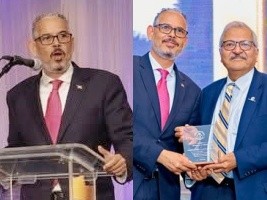
    A key highlight of the anniversary celebration was the recognition of Haiti’s top corporate taxpayers for the 2024-2025 fiscal year. During a formal award ceremony, Prime Minister Fils-Aimé, joined by Minister Collin and Director General François, presented honorary merit plaques to 25 companies honored as “major payers” for their consistent, compliant tax contributions. A full list of the top 100 largest taxpayers in Haiti for the 2024-2025 fiscal year has been made publicly available for download via the HaitiLibre documentation portal.

    Key performance data released during the event confirms that the DGI’s ongoing modernization efforts are already delivering strong fiscal results. Between October 2025 and May 2026, a total of 58 billion Haitian gourdes in tax revenue was collected, representing a nearly 10% increase in collections compared to the same 8-month period in the prior fiscal year.

    Several of Haiti’s key international development partners also participated in the anniversary event, including Expertise France, the European Union, the International Monetary Fund, and the World Bank. All four organizations reaffirmed their ongoing support for the DGI’s modernization efforts, which align with broader international goals to strengthen Haiti’s public financial management and support inclusive economic growth.