标签: Haiti

海地

  • Politic : Amending Public Investment Program 2025-2026

    Politic : Amending Public Investment Program 2025-2026

    As Haiti enters the final quarter of its 2025-2026 fiscal cycle, national planning officials have brought together cross-agency stakeholders to update the country’s core public investment framework, aligning ongoing and planned projects with the government’s top priorities for stability and institutional recovery.

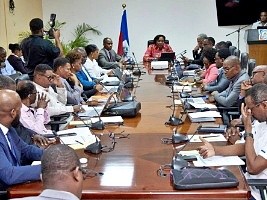
    On June 12, 2026, Haiti’s Ministry of Planning and External Cooperation (MPCE) hosted a dedicated working session focused on amendments to the 2025-2026 Public Investment Program (PIP). The gathering drew leadership from the nation’s Planning and Programming Units (UEPs), senior representatives from all sectoral ministries, and executives from Haiti’s autonomous public agencies, uniting key decision-makers across the public planning ecosystem.

    Opening the workshop, Planning Minister Sandra Paulemon reaffirmed her ministry’s central mandate: steering national development planning, aligning public investment flows, and ensuring all state-backed projects advance the government’s stated strategic goals. She highlighted the foundational role UEPs play across the full project lifecycle, from initial identification and programming to ongoing monitoring and final impact evaluation.

    Paulemon stressed that every project included in the revised PIP must directly advance priorities laid out in the government’s National Pact for Stability and the Organization of Elections, as well as established sectoral development roadmaps. Priority focus areas include public governance reform, expanded infrastructure, improved access to basic social services, broad economic recovery, and long-term institutional strengthening—all core to addressing Haiti’s ongoing systemic challenges.

    With just three months remaining in the current fiscal year, the minister issued a clear call for adhering to strict monitoring and reporting protocols set by the MPCE. She urged all participating institutions to submit required project data within mandated deadlines, a step critical to maintaining transparent and effective management of the country’s entire national investment portfolio.

    A key topic of discussion among attendees was updating PIP performance metrics to be finalized by September 30, 2026. Participants prioritized developing indicators that are measurable, realistic, and objectively verifiable, creating a clear framework to assess exactly how public investments are delivering tangible benefits to Haitian communities.

    In her closing remarks, Paulemon called for deeper collaboration across all branches of the national planning system, urging strengthened inter-institutional coordination, more open information sharing, and a sustained shift toward a results-oriented institutional culture. The ultimate goal, she emphasized, is to amplify the positive impact of all public interventions for the Haitian people.

    MPCE Director General Guy Roméro Latry echoed this call, urging stakeholders to increase their efforts to strengthen project delivery. Latry noted that the success of the revised PIP will hinge on the collective ability of all participating bodies to turn allocated resources into concrete, measurable, and sustainable outcomes that improve daily life across the country.

    Frantz Bastien, Director of Public Investment at the MPCE, framed the workshop as a critical mobilization effort for the national public investment system, designed to accelerate implementation over the remaining fiscal quarter. Bastien emphasized that the revised PIP is far more than a routine administrative adjustment: it is a strategic management tool that allows officials to update existing projects to reflect Haiti’s evolving national context, revise project costs, timelines and delivery strategies, and integrate newly adopted government priorities into active planning.

    Following opening remarks, the workshop moved into a hands-on working phase, where participants conducted a line-by-line review of all projects included in the amended 2025-2026 PIP, assessed current implementation progress, and mapped out next steps for project completion in the coming months.

  • Increased attention to the protection of haitians vulnerable children

    Increased attention to the protection of haitians vulnerable children

    Against a backdrop of pervasive insecurity and ongoing national crisis, Haiti came together on June 14, 2026 to mark National Children’s Day, centering this year’s observance around the unifying theme “Solidarity, Responsibility, Action for Children, Strengthening, and Hope for Tomorrow”. Hosted at Port-au-Prince’s Oasis Hotel, the national celebration became a platform for Haiti’s government to publicly reaffirm its long-term strategic commitment to improving outcomes for the country’s most vulnerable young people, even as widespread instability continues to strain public institutions and resources.

    Speaking on behalf of Prime Minister Marc Elie Nelson, Haiti’s Minister of Social Affairs used the event to unveil a slate of targeted policy measures designed to expand support for at-risk children and adolescents. The cornerstone of this new agenda is the official launch of the “Tripolar System of Rehabilitation Centers for Children and Adolescents”, a transformative five-year program that has already entered its pilot phase in the Grand Sud region, centered in the coastal city of Les Cayes.

    The minister detailed that the initiative has received an initial allocation of 100 million Haitian gourdes, backed by technical and financial partnership from UNICEF. Over the course of the program, it is projected to deliver comprehensive psychosocial support, formal educational access, and vocational training to more than 600 vulnerable children and young people pulled from cycles of marginalization and neglect that have long impacted this underserved segment of Haitian society.

    Against the growing crisis of armed gang violence that has destabilized the Port-au-Prince metropolitan area in particular, the prime minister’s office also reaffirmed its commitment to addressing the urgent crisis of forcibly recruited child soldiers. Prime Minister Nelson confirmed that concrete, community-centered reintegration programs are already being rolled out to provide these children with sustainable pathways away from armed conflict and violence — an issue of critical urgency, as thousands of Haitian children remain displaced or trapped in active conflict zones across the country.

    In a personal, heartfelt address to young people in attendance, the Minister of Social Affairs called for resilient persistence amid hardship, delivering his message in Creole: “Kenbe espwa nou vivan” — Keep hope alive. “Despite all the difficulties we face today, we must never cease to believe in our hearts and in our future. Remember, we are the strength of the country, we are its wealth, we are its hope,” he told attendees.

    Vijonet Déméro, Haiti’s Minister of National Education, also addressed the gathering at the invitation of the Institute for Social Welfare and Research (IBESR). In his remarks, Déméro emphasized that honoring children requires more than rhetorical celebration: it demands intentional, urgent action in the present. “Celebrating children is not simply honoring the future; it is acting in the present. Children are not only citizens of tomorrow, they are a reality of today, beings with inalienable rights, legitimate dreams, and infinite potential. Investing in children, protecting them, and educating them is laying the foundation for the rebuilding of our nation,” he said.

    Déméro went on to outline the Ministry of National Education’s cross-cutting commitments to child development at every stage of growth. For early childhood preschool programs, he emphasized the critical need for safe, stimulating learning environments, noting that early development years shape lifelong cognitive, psychomotor, and emotional outcomes. For primary and secondary education, he framed schools as critical sanctuaries: spaces that prioritize protection from all forms of violence, abuse, exploitation, and exclusion alongside formal learning. For vocational training and higher education, he committed to expanding clear career pathways and building marketable skills that allow young Haitians to become productive economic and social leaders equipped to tackle the country’s long-term challenges.

    Déméro stressed that the ambitious national agenda for child protection and development cannot succeed through the work of a single institution. The plan requires full, coordinated synergy across government agencies, particularly between the education sector and social services departments. Ultimately, he added, sustained progress depends on unwavering political commitment from national leadership. “Despite a complex national context, the Government places social protection, education, and the future of youth at the heart of its strategic priorities […] the dignity of our children is non-negotiable,” he said.

  • Chile : Complaint filed for child trafficking from Haiti

    Chile : Complaint filed for child trafficking from Haiti

    A shocking alleged child trafficking scheme involving unaccompanied Haitian minors has triggered a formal criminal complaint in Chile, pulling back the curtain on a complex cross-border criminal operation that authorities have spent months probing. On June 15, 2026, Frank Sauerbaum, head of Chile’s National Migration Service (SERMIG), submitted the official complaint to the Central-North Metropolitan Regional Prosecutor’s Office, launching a full criminal probe into suspicious movements of Haitian children on charter flights between January and October 2025.

    The complaint is backed by six dossiers of technical evidence compiled during joint audits conducted by SERMIG, the Comptroller General of the Republic and Chile’s Investigative Police, following months of coordinated investigation into irregular migration patterns involving minor arrivals. Investigations have so far uncovered that at least 12 individuals—both Chilean citizens and foreign nationals—repeatedly entered Chile posing as authorized chaperones for groups of Haitian children and adolescents, with group sizes ranging from just 2 minors up to 18.

    What makes the case particularly alarming is that none of the accused chaperones share any familial or blood ties to the minors they escorted into the country. Further, authorities confirm none of these individuals held the mandatory legal authorization required under Article 28 of Chile’s Immigration and Foreigners Law. This blatant violation of existing regulations directly undermines the fundamental rights and best interests of the children involved, and authorities say the activity meets the legal definition of migrant smuggling under Article 411 bis of Chile’s Penal Code.

    The complaint does not only target the alleged chaperones. It names multiple potential parties that may share criminal responsibility, including the commercial airlines that operated the charter flights, the travel agencies that arranged the trips, and any other third party found to have participated in or facilitated the scheme.

    Complicating the investigation further, between January and April 2025, many of the irregular flights were framed as official family reunification travel. As of the complaint filing, ongoing probes have failed to locate several of the minors who entered Chile under this false pretext, raising urgent questions about how the original travel authorizations for these trips were granted in the first place. Prosecutors are now expected to launch a full, expanded investigation to map the full scope of the alleged trafficking network, identify all co-conspirators, and trace the current whereabouts of the missing children.

  • Haiti’s Amending Budget adopted (2025-2026)

    Haiti’s Amending Budget adopted (2025-2026)

    In an early-June Council of Ministers meeting, Haiti’s governing administration formally adopted an amended 2025-2026 national budget, marking a 4.3% upward adjustment from the fiscal period’s initial spending plan to total 360.3 billion Haitian gourdes. The revised budget is crafted to advance three core national priorities that top the government’s current agenda: restoring widespread public security, organizing long-planned national elections, and stabilizing Haiti’s fragile macroeconomic landscape.

    Beyond addressing pressing immediate public security needs, the supplementary budget is structured around three overarching strategic pillars that guide all allocated spending. First, the plan prioritizes advancing food security across the country, expanding existing government social safety net programs, and expanding access to critical basic social services for vulnerable populations. Second, it targets broad economic rebound through large-scale infrastructure rehabilitation and the revitalization of Haiti’s agricultural sector, a backbone of rural employment and domestic food production. Third, it allocates dedicated resources to fully support the administration of upcoming national elections.

    Based on current projections for public revenue collection, policymakers forecast that Haiti’s overall tax burden will remain largely unchanged from the 2024-2025 fiscal year. To cover the adjusted spending totals, the government plans to modify planned Treasury bond issuances to align with current market conditions and the absorption capacity of Haiti’s domestic financial system.

    Breaking down the budget’s funding structure, 67.5% of the total 360.3 billion gourdes, equal to 243.1 billion gourdes, will come from tax revenue collected by Haiti’s Directorate General of Taxes and customs revenue administered by the General Customs Administration. Combined international grants and concessionary loans contribute an additional 70 billion gourdes, accounting for 19.4% of the total budget. When combined with other domestic funding sources—including 24.8 billion gourdes from Treasury bonds, 16.45 billion gourdes from a loan from the Bank of the Republic of Haiti, and 4.3 billion gourdes in other domestic project financing—total domestic resources reach 288.7 billion gourdes, covering 80.1% of the full amended budget.

    On the expenditure side, current operating spending makes up 59.3% of the total budget at 213.7 billion gourdes, with personnel costs accounting for 31.5% of the overall budget and goods and services expenditures making up 19.4%, the two largest spending categories. Capital expenditures, totaling 146.6 billion gourdes, represent 40.6% of the total revised budget—a notable increase from the initial budget’s capital allocation. This expanded capital spending underscores the government’s stated commitment to advancing the public investments required to improve security conditions and lay the groundwork for long-term economic recovery.

    Compared to the original 2025-2026 budget, the amended plan increases domestic resources from 279.61 billion gourdes to 290.2 billion gourdes, while external resources rise from 65.9 billion gourdes to 70.12 billion gourdes. Current operating expenditures see only a minor uptick from 213.56 billion to 213.72 billion gourdes, while capital expenditures get a far more substantial boost from 131.95 billion to 146.59 billion gourdes. The share of total budget funding covered by current tax and customs revenue has edged down from 70.5% in the initial plan to 67.5% in the amended version, offset by increases in both domestic borrowing and external financing.

  • 2026 World Cup : Coach Migné confident the Grenadiers can qualify for the second round (video)

    2026 World Cup : Coach Migné confident the Grenadiers can qualify for the second round (video)

    Three matchdays remain in Haiti’s 2026 FIFA World Cup group stage campaign, and head coach Sébastien Migné is refusing to count his side out of a spot in the tournament’s knockout round, even after a narrow 1-0 opening defeat to Scotland on June 13.

    Speaking to reporters just one day after the tough opening result, the French manager acknowledged the disappointment of falling short in their first outing, but stressed that Haiti’s World Cup dream is far from over.

    “Of course we’re disappointed. But this tournament isn’t over for us, and we’re still in the fight,” Migné said. “From the very beginning of our preparation, we knew this would not be an easy group. We don’t have the depth or the global ranking that some of the other teams here boast, and we went into this campaign ready to fight for every chance we get.”

    Migné broke down where his side fell flat against Scotland, noting that Haiti’s build-up play consistently broke into dangerous areas, with the side moving the ball effectively into the final 25 yards of the pitch. The issue, he explained, came in the final moments of attacking sequences: the Grenadiers lacked clinical spontaneity in front of goal, and made uncharacteristically poor decisions when chances opened up.

    With the score sitting at 1-0 for the full 90 minutes, Migné told his side to prioritize controlled attacking pressure rather than throwing all players forward in a reckless chase for an equalizer— a decision rooted in the reality that final group stage placings can be decided by just a single goal of difference.

    Under the 2026 World Cup format, the top two teams from each group advance directly to the knockout round, while the four best third-placed teams across all groups also qualify for the second round. That structure, Migné pointed out, leaves Haiti with a clear path forward: if the side can claim victory in just one of their three remaining group fixtures, they remain firmly in contention to advance.

    Beyond the results, Migné reflected on the once-in-a-lifetime experience of competing on the world’s biggest football stage. “Above all else, what an incredible privilege it is to play in this kind of atmosphere,” he said. “It was truly fantastic. We won’t give up this fight, and we’ll be ready to compete again when we step onto the pitch for our next match.”

  • 2026 World Cup : The Prime Minister of Haiti meets with the Boston diaspora

    2026 World Cup : The Prime Minister of Haiti meets with the Boston diaspora

    Amid the buzz of the 2026 FIFA World Cup where Haiti’s national team is competing, a high-stakes diplomatic and community engagement unfolded on June 12, 2026. Haitian Prime Minister Alix Didier Fils-Aimé carved out time from World Cup-related official activities to sit down with members of the large Haitian diaspora community based in Boston, in what both sides described as a warm and collegial gathering. The discussion, framed as open and solution-focused, centered on one core topic: the long-term trajectory of the Caribbean nation amid its ongoing security and political challenges.

    During the meeting, Prime Minister Fils-Aimé laid out a detailed update on the key policy priorities his administration has advanced over recent months. Top of the agenda was the Haitian government’s ongoing push to reclaim stability across the country, after years of widespread gang violence that has disrupted daily life and derailed political processes. A central pillar of this effort, he explained, is preparing the groundwork for democratic elections that are free, inclusive, open to all segments of Haitian society, and widely recognized as credible, with the administration targeting the earliest possible timeline for polls.

    The Prime Minister specifically highlighted the government’s sustained work to boost the operational capabilities of two core national security institutions: the Haitian National Police (PNH) and the Armed Forces of Haiti (FAd’H). Both domestic forces, he noted, are continuing their frontline mission to restore public order, backed by the Multinational Force for the Suppression of Gangs (GSF), the international mission deployed specifically to counter the power of armed gangs and terrorist groups operating within Haiti’s borders.

    Beyond security and electoral planning, Fils-Aimé took time to recognize the critical role the Haitian diaspora plays in the country’s ongoing development. He praised the deep, enduring connection that Haitians living abroad maintain to their home country, noting that diaspora contributions—both financial and social—form a backbone of Haiti’s economic activity and social resilience. The Prime Minister also reaffirmed the national government’s formal commitment to keeping an open, consistent channel of dialogue with Haitian expatriate communities around the world, and to increasing their inclusion in key decisions that will shape Haiti’s future.

    The closed-door gathering itself serves as a clear signal of just how much priority the Haitian government places on strengthening ties with the global diaspora. For the current administration, the millions of Haitians living outside the country are not just a community to engage, but an indispensable partner that will be central to advancing Haiti’s recovery, entrenching long-term stability, and building shared prosperity for all Haitians—whether at home or abroad.

  • FLASH: The Inspector General of the PNH, his wife and his 6-year-old daughter kidnapped

    FLASH: The Inspector General of the PNH, his wife and his 6-year-old daughter kidnapped

    In a brazen act of violence that has shaken Haiti’s already unstable security landscape, a top Haitian law enforcement and defense official was abducted alongside his family last week in a zone officially marked as high-security, marking the most high-profile kidnapping of a senior government figure in the country in years.

    On June 11, 2026, Inspector General James Boyard of the Haitian National Police (PNH) — who also serves as Chief of Staff to Haiti’s Minister of Defense and is a widely respected senior security expert — was intercepted by a heavily armed gang contingent on the highway connecting the Port-au-Prince neighborhoods of Bourdon and Lalue. The kidnappers did not stop at seizing Boyard; they also took his wife and 6-year-old daughter, who holds United States citizenship, according to confirmation from the Associated Press.

    Haitian police investigative sources have linked the abduction to the Ti Bwa gang, a violent faction led by Christ-Roi Chéry, who operates under the alias “Chrisla”. Shortly after the kidnapping, the perpetrators issued a ransom demand for the safe return of the three hostages, though the exact sum requested has not been disclosed to the public. To date, Haiti’s Ministry of Defense has declined to issue any public statement or share details of ongoing response operations, a standard practice in high-stakes kidnapping cases designed to protect hostage lives and prevent disruption to sensitive negotiation or rescue efforts.

    Security analysts warn the abduction exposes alarming weaknesses in Haiti’s security framework and the growing boldness of armed gangs that control large swathes of the country. “A person of this rank usually receives significant police protection,” noted Diego Da Rin, an Haiti-focused analyst with the International Crisis Group. In his assessment, the successful kidnapping in a designated high-security zone points to extensive pre-planning and almost certainly required inside complicity from someone within Boyard’s own security detail.

    Da Rin added that gangs deliberately target two groups in high-value kidnappings: public officials and individuals with dual nationality, a strategy that serves two key goals. First, it allows gangs to demand far larger ransom payments. Second, it creates pressure on government authorities to hold off on offensive operations against gang-held territories where hostages are commonly held, giving the factions more breathing room to consolidate power.

    In recent weeks, Haitian security forces launched a major raid on Village de Dieu, a strategic territory controlled by the 5 Segond gang led by Johnson André — widely known as “Izo,” one of the most powerful and notorious gang leaders in Haiti. Da Rin confirmed that gangs have a history of moving high-profile kidnapping victims to hideouts within Village de Dieu, raising questions about whether Boyard and his family are being held there.

    This abduction comes amid a surging wave of kidnappings and gang violence that has crippled daily life across Haiti. In just three months between December 2025 and February 2026, at least 267 people were kidnapped across the country, according to recent United Nations data, with the majority of victims being adult men. Recent high-profile targets have included Haitian investigative journalists and foreign missionaries, demonstrating that gangs do not limit their attacks to private citizens and have increasingly targeted individuals connected to the Haitian government and international community.

  • 2026 World Cup : Haiti suffers a narrow defeat against Scotland [0-1] but impresses (video)

    2026 World Cup : Haiti suffers a narrow defeat against Scotland [0-1] but impresses (video)

    The 2026 FIFA World Cup delivered a standout opening match for underdog Haiti on June 13, as the Caribbean side fell 1-0 to Scotland but earned widespread praise for a fearless, disciplined performance at Foxborough’s Gillette Stadium, near Boston, Massachusetts. Played before a near-capacity crowd of 64,146 spectators, the Group C clash marked a historic milestone for Haiti’s national men’s team, nicknamed the Grenadiers, who defied pre-match ranking gaps to push Scotland to the final whistle.

    Managed by Sébastien Migné, Haiti lined up in a well-drilled 4-4-2 formation with a starting 11 featuring players plying their trade across top leagues in Europe, North America, and South America: goalkeeper Johnny Placide (SC Bastia, France), defenders Ricardo Adé (LDU Quito, Ecuador), Carlens Arcus (Angers SCO, France), Duke Lacroix (Colorado Springs, USA), Martin Expérience (AS Nancy-Lorraine, France), midfielder Jean-Jacques Danley (Philadelphia Union, USA), playmaker Jeanricner Bellegarde (Wolverhampton, UK), winger Louicius Deedson (FC Dallas, USA), forward Frantzdy Pierrot (Çaykur Rizespor, Turkey), midfielder Ruben Providence (Almere City FC, Netherlands), and striker Wilson Isidor (Sunderland AFC, England). Migné made three second-half substitutions to reinvigorate his side: Josué Casimir replaced Deedson in the 61st minute, Lenny Joseph took Isidor’s place in the 75th minute, and Yassin Fortuné came on for Providence in the 85th minute.

    Ranked 83rd in the FIFA global rankings compared to Scotland’s 40th spot, Haiti weathered an early Scottish storm to grow into the game. Scotland got off to a fast start, coming close to breaking the deadlock in the 17th minute when Scott McTominay’s effort rattled the woodwork behind Placide. Eleven minutes later, after Placide made an initial reflex save to deny Ché Adams, the loose ball fell to John McGinn just outside the 18-yard box. McGinn’s shot took two deflections off Haitian defenders before looping over the goalkeeper to put Scotland ahead 1-0, a scoreline that would hold until full time.

    After halftime, Haiti shifted into a higher gear and began to threaten Scotland’s goal consistently, proving sharp and dangerous on counter-attacks. Midway through the second half, Ruben Providence cut down the left wing and fired a powerful strike that Scottish goalkeeper Angus Gunn could only parry away. A chaotic scramble in the six-yard box followed, but Scotland’s backline managed to clear the danger before a Haitian attacker could poke home the equalizer. Later, Scotland looked to extend their lead through young winger Ben Doak, but Martin Expérience made a game-saving tackle to snuff out the chance.

    In the closing 10 minutes, Haiti threw all their players forward in search of the equalizer that would earn their first-ever World Cup point. First, Wilson Isidor came within inches of connecting with a dangerous cross from Providence, before striker Frantzdy Pierrot’s powerful header grazed the outside of the Scottish post. Scotland’s players spent the final minutes clinging to their narrow lead, visibly on edge as Haiti’s persistent pressure nearly produced a late equalizer. When the final whistle blew, Scotland held on for three points, but the story of the match was Haiti’s impressive performance.

    While the result leaves Haiti at the bottom of Group C with zero points after one match, following Scotland’s three points, and a 1-1 draw between Morocco and Brazil that leaves both with one point, the performance has given Haitian fans plenty of optimism ahead of their remaining group stage fixtures. Haiti will face five-time world champions and pre-tournament group favorites Brazil on June 19 at Philadelphia’s Lincoln Financial Field, before taking on 2022 World Cup semi-finalists and the highest-ranked African side Morocco on June 24 at Atlanta’s Mercedes-Benz Stadium.

  • 2026 World Cup : Ambassador Henry Wooster wishes Haiti the greatest success !

    2026 World Cup : Ambassador Henry Wooster wishes Haiti the greatest success !

    It has been 52 years since Haiti’s men’s national football team last qualified for the FIFA World Cup, and the small Caribbean nation’s long-awaited return to the global tournament has already captured the imagination of millions of Haitian fans at home and across the diaspora. As the team – nicknamed the Grenadiers – prepared to kick off its first group stage match against Scotland on June 13, 2026, followed by upcoming fixtures against global powerhouses Brazil and Morocco, the top American diplomat in Port-au-Prince extended a message of warm congratulations and well wishes.

    Ambassador Henry Wooster, the United States Chargé d’Affaires in Haiti, released a public statement honoring the national team’s historic milestone, highlighting the far-reaching significance of the achievement beyond the pitch. “This is a moment of great pride for Haiti. After more than five decades, Haiti is back on one of the biggest stages in world football, inspiring millions of people both at home and abroad,” Wooster said in his address.

    The ambassador emphasized that the current squad, a new generation of Haitian football talent, earned their spot in the 2026 tournament through relentless effort, collective dedication, and unwavering belief in their shared goal. For a nation that has navigated ongoing political instability, economic hardship, and widespread social challenges in recent years, Wooster noted that the team’s success stands as a powerful symbol of Haitian perseverance, resilience, and collective national identity.

    “This achievement goes far beyond football. It represents a celebration of perseverance, resilience, and national pride. This team embodies the aspirations and dreams of an entire nation that continues to move forward with courage, despite the challenges it faces,” he added.

    On behalf of the U.S. Embassy in Port-au-Prince, Wooster extended congratulations to every person who contributed to the team’s historic qualification: the players who trained and competed for years, the coaching staff that built a cohesive and competitive squad, the families that supported the athletes through every setback, and the passionate fans that never lost faith in their national team.

    Addressing the Grenadiers directly, the envoy urged the team to compete with confidence, carry their national flag with pride, and savor every moment of their once-in-a-lifetime World Cup journey. “We wish Haiti the greatest success. May you inspire young people across the country to dream big, work with determination, and never give up,” Wooster closed his statement with the rallying cry “Grenadye alaso!” – Go Grenadiers!

  • Politic : Validation of the recovery and development plan (2025-2030) for the Great North

    Politic : Validation of the recovery and development plan (2025-2030) for the Great North

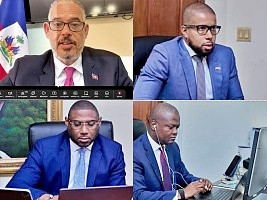
    On June 13, 2026, the Haitian government formally approved the Medium-Term Recovery and Development Plan for the country’s Great North region, a strategic roadmap spanning 2025 to 2030, during a national videoconference hosted under the patronage of Prime Minister Alix Didier Fils-Aimé. The cross-sector gathering drew more than 120 stakeholders, including representatives from national public agencies, local governing bodies, the private business community, domestic civil society organizations, and international technical and financial partners (TFPs) backing the initiative.

    In his opening address to attendees, Marc-Kenley Mogene, Chief of Staff for Haiti’s Ministry of Economy and Finance, outlined the plan’s core mission: to drive accelerated economic transformation across the Great North by rolling out large-scale structuring investments, generating thousands of new formal jobs, and boosting the region’s overall competitiveness to attract additional outside investment. Mogene stressed that successful execution of the plan depends on three non-negotiable foundational conditions: mobilizing sufficient domestic and international financing to fund planned projects, strengthening collaborative alignment between all public and private sector stakeholders, and leveraging the central coordinating role of the Northern Corridor Development Council, which will oversee implementation tracking, cross-initiative alignment, and accountability for all activities outlined in the plan.

    Prime Minister Fils-Aimé framed the plan’s validation as a landmark milestone for Haiti’s broader national efforts to rebuild the economy and address long-standing territorial development imbalances across the country. He reiterated that the regional planning initiative grows out of a new national development vision centered on leveraging the unique realities, inherent strengths, and untapped potential of each of Haiti’s geographic regions. The prime minister added that the region-first framework, first piloted in the Great North, will be gradually rolled out to other parts of the country, with the Far South slated as the next region to receive a customized development plan, all in service of building more inclusive, sustainable national growth.

    Senior public sector officials presented the plan’s four mutually reinforcing strategic pillars that guide all priority actions. First, the plan prioritizes broad economic diversification to reduce the Great North’s dependence on a small set of vulnerable industries. Second, it targets transformative infrastructure upgrades and private sector revitalization to build a resilient productive base that supports long-term expansion. Third, it commits to large-scale investments in human capital and expanded access to essential public services to widen economic opportunity and advance social inclusion for marginalized communities. Fourth, it includes targeted reforms to strengthen regional governance, rebuild public trust in state institutions, and ensure long-term accountability for results.

    The plan was developed over months of collaborative work under the leadership of Haiti’s Ministry of Economy and Finance, in close coordination with national sectoral ministries, and with technical and financial support from key international partners including the Inter-American Development Bank (IDB), the World Bank, the European Union, and the United Nations system operating in Haiti. It now serves as the official strategic framework guiding all public and private investments, policy reforms, and priority development actions focused on the Great North for the next six years.

    Following the formal validation, representatives of international technical and financial partners, local government leaders, and private sector executives all expressed broad support for the initiative, and reaffirmed their ongoing commitment to working alongside the Haitian government to turn the plan’s development vision into tangible results for residents of the Great North. With the approval process complete, the milestone marks the end of an extensive nationwide consultation process that incorporated input from all affected stakeholder groups, and clears the way for the formal implementation phase, where planned investments, governance reforms, and accountability mechanisms will be put in place to drive lasting, sustainable development across the Great North region.