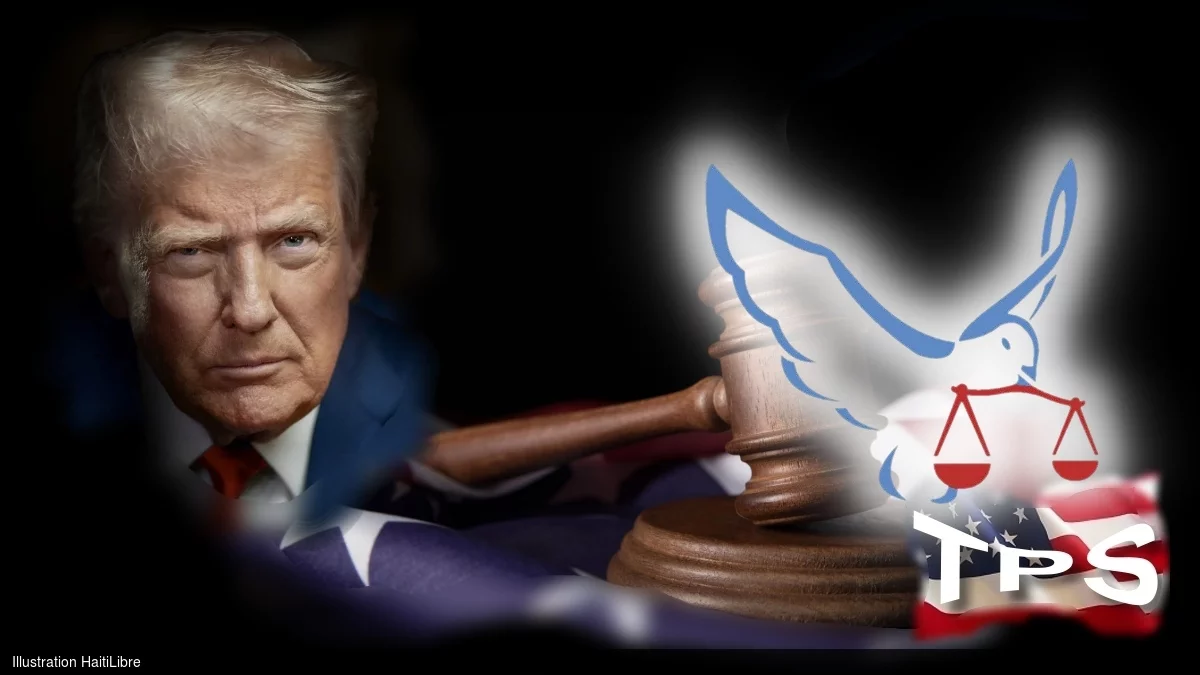
On June 25, 2026, the U.S. Supreme Court delivered a landmark ruling upholding the Trump administration’s plan to end Temporary Protected Status (TPS) for approximately 350,000 Haitian migrants currently residing in the United States. The decision has triggered widespread condemnation from human rights organizations and immigration advocates, who warn of devastating humanitarian consequences for the affected community.
The Boston-based Institute for Justice & Democracy in Haiti (IJDH), a leading human rights non-profit that operates in close collaboration with Haiti’s Bureau des Avocats Internationaux (BAI) and local Haitian activists, issued a scathing statement expressing deep dismay over the court’s outcome.
Just one week before the ruling, the organization noted, Haitian TPS holders were living ordinary, legally protected lives across the U.S. — holding jobs, attending school, participating in religious and community life, and contributing to local economies. Now, these same individuals face the immediate threats of forced family separation, arbitrary immigration detention, and deportation back to Haiti, a country grappling with widespread insecurity, political collapse, and catastrophic living conditions.
IJDH also criticized the legal reasoning behind the Supreme Court’s majority decision. The group condemned the ruling for stripping lower courts of the authority to review challenges to overreaching actions by the executive branch. Most pointedly, IJDH expressed incredulity that the court’s majority concluded former President Trump’s widely publicized, hostile statements about Haitian people did not qualify as overtly racist.
Despite the disappointing outcome, IJDH confirmed that it and its partner organizations had anticipated the ruling and have spent months preparing for the next phase of advocacy to protect TPS holders. The group is working in coordination with congressional allies in Washington D.C. and a broad coalition of other immigration advocates to continue the fight for Haitian TPS beneficiaries.
Legal experts have outlined the timeline and next steps for affected migrants. Emi MacLean, lead counsel for the American Civil Liberties Union of Northern California — which represents TPS holders from Haiti, Venezuela, Honduras, Nicaragua, and Nepal — explained that Supreme Court rulings typically go into effect 32 days after they are publicly announced. During this window, Haitian and Syrian TPS holders retain their current right to work in the U.S.
Once the 32-day period concludes, however, all Haitian and Syrian TPS holders who received work authorization through the program will almost certainly lose that permission, according to Ahilan Arulanantham, co-director of the Miñana Family Center for Immigration Law and Policy.
In response to the ruling, legal teams and immigration activists are urging all affected TPS holders to immediately explore alternative immigration pathways that would allow them to remain in the United States legally. These potential options include applying for asylum or seeking work-based visas, but advocates note that the current U.S. administration has enacted significant barriers that make these alternatives far more difficult to access than in previous years. For many of the 350,000 affected Haitians, the final choice will likely come down to voluntary return to Haiti or facing formal deportation proceedings.