标签: Haiti

海地

  • Interview : Minister of Defense’s vision on the reconstruction of the FAd’H (video)

    Interview : Minister of Defense’s vision on the reconstruction of the FAd’H (video)

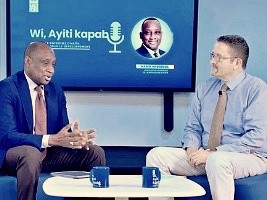
    Against the backdrop of Haiti’s ongoing, years-long struggle with rampant gang violence and persistent national security instability, a high-profile televised interview has laid out a clear, ambitious government strategy to rebuild the country’s armed forces as a core solution to the nation’s crises. The conversation, organized as part of public outreach initiative “Wi, Ayiti Nou Kapab”, brought together Xavier Michon, the resident representative of the United Nations Development Programme (UNDP) in Haiti, and Haiti’s Defense Minister Mario Andrésol to discuss the future of the Armed Forces of Haiti (FAd’H), national sovereignty and security sector reform.

    Andrésol, a seasoned former military commander who previously led the Haitian National Police (PNH), framed the decades-long security challenges facing the Caribbean nation as directly tied to the 1995 dissolution of the original Haitian army. In his remarks, he argued that disbanding the force created a critical national security vacuum that allowed violent armed gangs to expand their territorial control across the country, while also leaving Haiti overly reliant on foreign military support to address domestic instability. Reconstructing a functional, professional FAd’H, he emphasized, is not just an institutional priority — it is a long-term, sustainable fix for the security crisis that has paralyzed Haitian governance and daily life for years.

    Under the current framework, the newly reconstituted FAd’H is already playing a supporting role alongside the Haitian National Police in ongoing counter-gang operations, working to dislodge criminal groups from occupied territory. Moving forward, Andrésol laid out a clear division of long-term responsibilities: the armed forces will take ownership of full territorial security and reconquest of gang-held land, while the national police will refocus its core mission on maintaining day-to-day public order across communities.

    To turn this vision into action, the Haitian Ministry of Defense is rolling out a series of concrete initiatives to boost the FAd’H’s operational capacity. The centerpiece of these efforts is a nationwide recruitment drive that aims to grow the force’s current roster of 2,000 active soldiers to 5,000 by the end of 2026. The campaign, which will reach all 10 of Haiti’s administrative departments, is prioritizing candidates who demonstrate strong community engagement, a clear sense of national duty, and commitment to social solidarity, alongside traditional military qualifications. Alongside expanding personnel, the government is also working to rehabilitate crumbling, outdated military infrastructure across the country to support expanded operations.

    In closing, Andrésol stressed that the end goal of reconstruction is to build a modern, professional, republican army that operates fully under civilian oversight and upholds international human rights standards. Beyond security, he added, the future FAd’H will also play an active role in advancing national development projects, including public infrastructure construction, large-scale reforestation initiatives, and support for small-scale agricultural production across rural Haiti.
  • Washington offers its full support to Haitian Prime Minister Fils-Aimé

    Washington offers its full support to Haitian Prime Minister Fils-Aimé

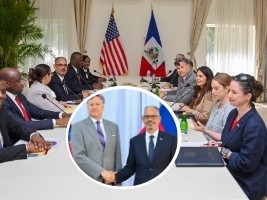
    In a high-stakes diplomatic gathering held at Haiti’s National Palace on May 29, 2026, U.S. Deputy Secretary of State Christopher Landau met head-on with Haitian Prime Minister Alix Didier Fils-Aimé to coordinate next steps in addressing the country’s ongoing political and security crisis. The U.S. delegation included U.S. Ambassador to Haiti Dennis B. Hankins and a team of senior State Department policy advisors, while top Haitian cabinet members—including Foreign Affairs Minister Raina Forbin, Planning Minister Sandra Paulémon, Justice and Public Security Minister Patrick Pelissier, and Defense Minister Mario Andrésol, plus Acting Commander Vladimir Paraison of the Haitian National Police (PNH)—joined the talks on the Haitian side.

    Two core priorities dominated the meeting’s agenda: the ongoing campaign to dismantle violent armed gangs that have destabilized large swathes of Haiti, and preparations for upcoming general elections, with discussions centered on mapping out the conditions needed to hold a free, fair, and credible vote. According to statements from the Haitian Prime Minister’s Office, this high-level visit marks a defining political turning point for the Caribbean nation, with the White House issuing a clear, unambiguous statement of total, unwavering, and exclusive backing for Fils-Aimé’s government.

    After months of international ambiguity around Haiti’s leadership transition, Washington has made its position clear: the U.S. stands firmly aligned with Fils-Aimé to rebuild state authority, dismantle transnational criminal networks that have terrorized civilian populations, and stabilize Haiti’s fractured democratic institutions. During the bilateral discussions, Landau publicly praised Fils-Aimé’s leadership and steady determination in the face of unprecedented crisis, reiterating that the current Haitian government is the only legitimate body empowered to lead the country toward sovereign, democratic elections.

    Following the closed-door talks, Landau and his delegation toured the National Palace and the adjacent Champ de Mars—two iconic symbols of Haiti’s republican governance—to inspect newly implemented security upgrades. During the tour, Fils-Aimé outlined key progress his administration has already made on the security front: the gradual “territorial reconquest” of strategic districts across the Haitian capital that had been seized by armed gangs; the full restoration of institutional operations at the National Palace, long paralyzed by security threats; and deepened joint coordination between the PNH and the Haitian Armed Forces (FAd’H), a collaboration boosted by the bilateral U.S.-Haiti P4000+ security assistance program.

    By the end of the meeting, both governments reaffirmed their long-standing strategic alliance, committing to continued joint action to eradicate armed violence and lay the groundwork for a stable, democratic future for the Haitian people.

  • Opening of the National Conference of Religious Leaders in Haiti

    Opening of the National Conference of Religious Leaders in Haiti

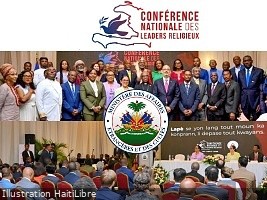
    Against the backdrop of long-standing political and social unrest that has shaken Haiti to its core, a landmark two-day gathering focused on national healing got underway on May 28, 2026, at Port-au-Prince’s Royal Oasis Hotel in the district of Pétion-Ville. Headlined by Prime Minister Alix Didier Fils-Aimé and Foreign Affairs and Religious Affairs Minister Raina Forbin, the National Conference of Religious Leaders for Peace, Stability, and Civic Engagement has drawn a diverse cross-section of stakeholders to build collective solutions for the crisis-battered country.

    More than 100 religious leaders representing every major faith tradition across Haiti — from Catholic and Protestant communities to practitioners of Vodou — joined sitting government officials, members of the diplomatic and consular corps, representatives from leading international organizations, and civil society advocates for the convening. The conference is structured around four core pressing themes: violence prevention, civic education, targeted support for Haiti’s large youth population, and the development of long-term, sustainable strategies to embed lasting peace, strengthen democratic civic engagement, and rebuild fractured social cohesion across the nation.

    In her opening remarks, Minister Forbin underscored the Haitian government’s formal commitment to embedding religious leaders as core partners in all state-led reconstruction initiatives. She emphasized that no project aimed at rebuilding Haiti can achieve lasting success without drawing on the deep spiritual, moral, and community-rooted human capital that faith leaders bring to the table. “Peace is not a task for the government alone — it is a collective project that requires every sector of society to come together,” Forbin stated, adding that sustainable national reconstruction depends on a strategic, peace-centered alliance between the state, faith leaders, local communities, and Haiti’s young people.

    Prime Minister Fils-Aimé echoed this framing, praising religious authorities as an “essential moral force” that is critical to rebuilding Haiti’s tattered social fabric and restoring public trust in national institutions. He also reaffirmed his administration’s core priorities: securing the country against ongoing violence, delivering support to the hundreds of thousands of displaced Haitians, and paving the way for a return to full constitutional order through the organization of transparent, credible general elections.

    The conference turned next to the socio-economic roots of Haiti’s instability, with Social Affairs and Labour Minister Marc-Élie Nelson bringing a critical focus on equity to the discussions. Nelson argued that efforts to root out widespread insecurity cannot be separated from a broader push for meaningful social justice. Framing religious leaders as the “guardians of the collective conscience” of the Haitian people, he called for a people-centered approach to shaping public policy that centers the needs of the most vulnerable, rather than elite interests. He urged faith leaders to lean into their unique community role to advance solidarity and cohesion across the country.

    Pédrica Saint-Jean, Haiti’s Minister for the Status of Women and Women’s Rights, joined a slate of cultural and religious leaders to highlight the urgent work of rebuilding frayed social ties at the local level. Saint-Jean emphasized the critical need to expand social protection for marginalized groups including children, women, and girls, and to empower every Haitian citizen to act as an agent of peace in their own communities.

    Following the formal opening ceremony, attendees split into working groups focused on three key strategic priorities: preventing further violence and delivering support to survivors of conflict; expanding civic education to foster a culture of civic responsibility across the country; and developing sustainable economic and social alternatives for Haitian youth, who make up a large majority of the country’s population and have been disproportionately impacted by ongoing instability.

    In a break from past national gatherings that have been concentrated exclusively in the capital, the Haitian government has plans to expand the conference model to outlying regions in the coming months. After concluding the inaugural convening in Pétion-Ville, the government will replicate the gathering in Haiti’s Great North and Far South regions, ensuring that community and faith leaders from across the country have a seat at the table shaping Haiti’s reconstruction agenda. The conference marks a major step forward in the government’s effort to position religious communities as core, ongoing partners in building a more stable and peaceful future for Haiti.

  • High-level meeting on securing production areas in Tabarre, Haiti

    High-level meeting on securing production areas in Tabarre, Haiti

    On May 27, 2026, Haitian government officials held a high-stakes inter-ministerial meeting in Tabarre to address escalating threats to local industrial operations, marking a critical milestone in the country’s efforts to reverse economic stagnation and protect thousands of private-sector jobs.

    The gathering grew out of commitments first made by Haiti’s Ministry of Public Works (MTPTC) in May 2025, when ministry leadership held initial consultations with major industrial firms operating across Tabarre municipality. This latest meeting expanded the conversation to include cross-government stakeholders from national security and economic portfolios, answering repeated calls for a coordinated, whole-of-government response to the region’s overlapping crises.

    Attendees included three top cabinet members: Public Works Minister Joseph Almathe Pierre Louis, Defense Minister Mario Andrésol, and Trade and Industry Minister James Monazard. They joined C-suite executives and official representatives from some of Haiti’s most prominent private companies, including iconic rum producer Société du Rhum Barbancourt, leading beverage manufacturer Brasserie de la Couronne, energy firms ECEM S.A. and E-Power, and local industrial leaders Comme Il Faut and Séjourné.

    Over the course of frank, solution-focused discussions, participants mapped out the two most pressing barriers to stable production: crumbling road infrastructure that disrupts supply chains, and a worsening regional security crisis that has brought many industrial operations to a standstill. Both challenges have put thousands of direct and indirect jobs at immediate risk, making swift intervention a priority for both government and private sector leaders.

    By the close of the working session, attendees agreed on a concrete next step: the establishment of a dedicated, cross-agency Task Force to oversee progress. The new body will be responsible for coordinated, rigorous monitoring of all ongoing discussions and action initiatives, aligning road rehabilitation projects led by the Ministry of Public Works, security enhancement strategies developed by the Ministry of Defense, and economic support programs rolled out by the Ministry of Trade and Industry.

    Through the creation of this Task Force, the Haitian government has reaffirmed its public commitment to turning rhetorical pledges into tangible action. The overarching goal of the initiative is to rebuild a stable, secure investment climate and clear the way for the safe, full resumption of economic activity across Tabarre’s key production zones.

  • FLASH : Krisla’s gang takes control of EDH Power Plant #2

    FLASH : Krisla’s gang takes control of EDH Power Plant #2

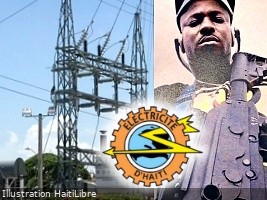
    Haiti’s already crumbling public infrastructure faced a devastating new blow on May 28, 2026, when an armed gang led by notoriously powerful gang chief known as “Krisla” seized full control of Electricity of Haiti (EDH) Power Plant #2. The strategic facility, located in the Thorland district of Carrefour municipality, was the last operational power plant serving the Port-au-Prince metropolitan area, leaving the capital region on the brink of a total energy collapse.

    Preceded by a week of explicit takeover threats, the gang’s incursion unfolded without major violent confrontation: the armed contingent ordered all on-site plant personnel to evacuate immediately, and internal sources confirm no employees suffered physical harm, nor was the plant infrastructure significantly damaged during the seizure. In a striking justification for the occupation of critical public infrastructure, Krisla laid out a clear, unorthodox demand: Carrefour must be guaranteed a continuous 8-hour daily power supply, specifically to ensure uninterrupted broadcast of 2026 FIFA World Cup matches.

    The takeover is not an isolated disruption, but the final blow to a national energy sector already teetering on collapse. As early as June 2025, the Péligre hydroelectric plant, one of Haiti’s largest power generation facilities, was taken offline, and sabotage left five 115 kV high-voltage transmission pylons destroyed. Of the three power plants operating in Carrefour that supplied the capital, only Power Plant #2 remained functional before this incident, contributing just 5 megawatts of steady power to the EDH national grid.

    With that plant now under gang control, the entire Port-au-Prince metropolitan area is forced to depend entirely on power supplied by private energy firm E-Power, which can only deliver 25 megawatts to the grid. This meager supply is enough to serve only 10 of the 45 public energy circuits that serve the capital region, leaving the vast majority of residents and businesses without access to consistent public power.

    The seizure has deepened an ongoing crisis of essential public services that has already been brought to its knees by widespread gang influence across the Haitian capital. Schools, medical facilities, public transportation networks, and other core services that already struggled to operate amid persistent instability now face even greater disruption, pushing the already vulnerable metropolitan population deeper into crisis.

  • Leisure : Did you know ? #28

    Leisure : Did you know ? #28

    As HaitiLibre continues to grow its popular QuizHaitiLibre online knowledge platform, the 28th installment of the outlet’s popular ‘Did You Know?’ leisure series shines a spotlight on the complicated life and enduring legacy of J. Robert Oppenheimer, the iconic theoretical physicist forever tied to the dawn of the nuclear age.

    Widely known as the ‘father of the atomic bomb’, Oppenheimer led the top-secret Manhattan Project’s Los Alamos Laboratory during World War II. Under his direction, the ambitious initiative produced the world’s first functional nuclear weapons, a scientific breakthrough that permanently reshaped the course of global history. After the first successful test detonation in the New Mexico desert in 1945, Oppenheimer famously echoed a line from the sacred Hindu scripture the Bhagavad Gita: ‘Now I am become death, the destroyer of worlds.’ This haunting quote captures the profound moral conflict he grappled with after the atomic bombings of Hiroshima and Nagasaki, which killed hundreds of thousands of Japanese civilians and brought World War II to a close.

    In the post-war years, Oppenheimer emerged as a leading voice pushing for international regulation of nuclear energy, and he openly opposed the United States’ push to develop the far more powerful hydrogen bomb. His public dissenting stance made him a target during the anti-communist McCarthyism purges that swept the U.S. in the 1950s, leading to his security clearance being revoked and his effective marginalization from mainstream government policy circles. Today, Oppenheimer’s life journey stands as one of the most powerful modern symbols of the heavy ethical burden that scientists carry when pursuing discoveries that can either transform or annihilate human civilization.

    This insight is pulled directly from the answer fact sheets for the Expert Quiz ‘Famous Men 1.1’ hosted on QuizHaitiLibre, a growing free online quiz platform that invites visitors to test their general knowledge across a vast range of topics, from Haitian history and culture to global current events, science, and more. For knowledge-hungry users seeking more challenging content, the platform’s expert menu offers specialized deep-dive topics that match advanced skill levels.

    Unlike many online quiz platforms that require paid subscriptions or user registration, all QuizHaitiLibre’s exclusive multiple-choice games are 100% free to access for audiences of all ages and knowledge levels. Every quiz includes three adjustable difficulty tiers: easy, intermediate, and hard, and all content is offered in both French and English to serve a broad cross-section of users.

    As part of the platform’s monthly content update launched on May 4, 2026, the site added 30 brand new quizzes, pushing the total number of available games to 119. New quizzes are added on a monthly basis to keep content fresh and engaging for returning visitors. Users can explore the full collection of quizzes at any time via the official QuizHaitiLibre website, share their favorite quizzes with family and friends, and leave public comments on their experiences. Visitors can also browse previous installments of the ‘Did You Know?’ series directly through the HaitiLibre news portal to discover more little-known facts about iconic figures and global events.

  • Review of French cooperation in Haiti in 2025

    Review of French cooperation in Haiti in 2025

    Against the backdrop of ongoing instability and humanitarian challenge in Haiti, France reinforced its long-standing cooperation commitment to the Caribbean nation throughout 2025, allocating a total of €45 million across four core priority areas: security, emergency humanitarian aid, cultural exchange, and inclusive economic development.

    ### Security Cooperation: Building Capacity for Local Stability
    Security remained the top pillar of France’s engagement, with a focus on strengthening the operational capacity of Haiti’s domestic security forces. France deepened its strategic partnership with the Haitian National Police (PNH), delivering four tons of specialized equipment across different PNH units and leading 11 targeted training courses that upskilled more than 400 officers from elite units including the SWAT team, Anti-Gang Tactical Unit (UTAG), Border Police (PoliFRONT), Departmental Operations and Intervention Brigade (BOID), and Intervention and Research Brigade (BRI). Several of these training programs were co-supported by France’s own elite law enforcement units, namely the RAID counterterrorism unit and the Anti-Narcotics Office (OFAST).

    The bilateral training partnership between Haiti’s Armed Forces (FAd’H) and French Armed Forces based in the Antilles also advanced in 2025, with three new cohorts of Haitian soldiers completing training in Martinique. Since the program launched in 2024, roughly 100 FAd’H soldiers have received training, and the initiative is scheduled to continue expanding in 2026.

    On the multilateral front, France threw its support behind the UN-backed Gang Suppression Force (GSF), which replaced the outgoing Multinational Security Support Mission. By 2025, France had contributed an additional €3.5 million to the GSF’s trust fund, adding to the €10 million it had already committed since 2023. France also worked to coordinate support from other European allies, helping secure a €10 million EU contribution to the Organization of American States (OAS) earmarked for constructing forward operating bases for the PNH and GSF.

    ### Humanitarian Aid: Addressing Urgent Needs Across Vulnerable Communities
    France sustained a robust humanitarian commitment to Haiti in 2025, allocating €17 million to United Nations agencies, local and international non-governmental organizations, and human rights groups operating in the country.

    A key €5 million investment went toward school canteen programs, implemented through a local procurement policy designed to bolster small-scale Haitian agricultural producers. Running under the joint management of Haiti’s National School Canteen Program (PNCS) and the World Food Programme (WFP), the initiative reached 80,000 students across all 10 of Haiti’s administrative departments for the 2025/2026 academic year.

    An additional €3.5 million was allocated to Solidarités International and the WFP to tackle acute malnutrition and deliver emergency food assistance to the most vulnerable households in Haiti’s capital metropolitan area. The remaining €8.5 million was directed to supporting internally displaced persons and returned migrants, with a particular focus on women and girls. These funds provide critical access to medical care, clean water, and sanitation services, delivered through partnerships with UN agencies including UNICEF, UNHAS and IOM, and NGOs such as Solidarités International, ALIMA, Handicap International, ACTED, and Save the Children.

    ### Cultural and Educational Exchange: Sustaining Connections Amid Disruption
    Even amid operational challenges that forced the temporary closure of the French Institute in Haiti (IFH) main premises, France maintained high levels of cultural cooperation through a partnership with Brazil’s Cultural Center and the existing network of local branches. In 2025 alone, IFH organized 183 cultural events spanning concerts, film screenings, theater and comedy performances, art exhibitions, workshops, academic conferences, public broadcasts and festivals, including special programming marking the institute’s 80th anniversary.

    Cultural and linguistic engagement is anchored by the network of Alliance Française branches across five Haitian cities: Cap-Haïtien, Gonaïves, Les Cayes, Jérémie, and Jacmel. This expansive local network offers cultural programming, French language courses, and technical training to more than 5,000 registered learners annually. France also continued its long-standing support for leading Haitian cultural events, including the Quatre Chemins Festival, En Lisant Festival, PAPJazz, and the Port-au-Prince Book Fair, alongside funding the production of the Haitian artist spotlight podcast *Terre des Érudits* and the publication of the academic journal *Conjonction*.

    In the education sector, France issued 247 student visas to Haitian learners in 2025, and awarded 15 master’s level scholarships and 12 Anténor Firmin doctoral scholarships for study in France. This investment in developing the next generation of Haitian leaders complements the academic excellence provided by the Lycée Français Alexandre Dumas in Port-au-Prince.

    ### Economic Development and Governance: Fostering Long-Term Inclusive Growth
    For long-term economic development, the French Development Agency (AFD) disbursed €16.7 million in 2025 to fund development projects across Haiti focused on education, healthcare, and the cultural and creative industries. This core support was extended through AFD’s specialized subsidiaries: the Civil Society Organizations Support Unit disbursed an additional €3.9 million to local Haitian civil society groups, while Proparco, AFD’s private sector investment arm, issued a €1.5 million loan to support 2,000 local micro-enterprises.

    Expertise France also expanded its presence in Haiti, delivering multiple projects backed by AFD and the European Union that aim to strengthen national governance systems, including civil registration, customs administration, and civil security. The French Embassy in Haiti additionally provides support to around 30 local civil society organizations working to advance human rights, with a specific focus on expanding gender equality and women’s rights across the country.

  • Suspension of sand quarrying activities in Pèlerin, Laboule and Boutillier (video)

    Suspension of sand quarrying activities in Pèlerin, Laboule and Boutillier (video)

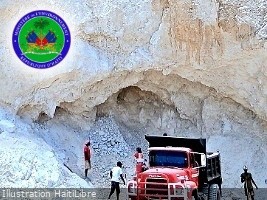
    In a regulatory action aimed at curbing unregulated resource extraction and protecting at-risk local populations, Haiti’s Ministry of the Environment (MdE) has ordered an immediate, indefinite suspension of all sand quarrying operations across three communities in the municipality of Pétion-ville: Pèlerin, Laboule, and Boutillier. The decision comes on the heels of mounting resident complaints and multi-agency field assessments that confirmed alarming degradation of the region’s already fragile environmental and geological landscape. Technical teams from the West Departmental Directorate, the Directorate of Environmental Inspection and Monitoring (DISE), and the National Bureau of Environmental Assessment (BNEE) collaborated to inspect the sites, documenting a suite of severe hazards tied to the unlicensed, illegal quarry operations. These risks include destabilized hillside slopes, accelerated soil erosion, and elevated threats of catastrophic landslides and rockfalls that pose direct, life-threatening dangers to local residents and critical nearby infrastructure. The Ministry emphasized that regulatory restrictions on quarrying in these geologically vulnerable zones have been in place for decades, with formal prohibitions first enacted and renewed in 2012, 2016, 2021, and 2025. All existing restrictions remain fully enforceable and legally binding, the agency confirmed. The MdE also clarified the legal framework governing extractive activities in the country, noting that Article 36.5 of Haiti’s amended 1987 Constitution explicitly designates all mines and quarries as part of the state’s public domain, meaning they cannot be claimed as private property. Additionally, all quarry operations are required to adhere to strict national environmental protection standards laid out in Article 253 of the Constitution and Article 64.8 of the 2006 Framework Decree on Environmental Management and Citizen Conduct. Citing its statutory mandate to safeguard Haiti’s natural environment and enforce existing environmental legislation, the Ministry finalized the suspension order, halting all sand extraction activities in the three affected communities until further official notice.

  • Diaspora : Preparations for the general elections in Haiti

    Diaspora : Preparations for the general elections in Haiti

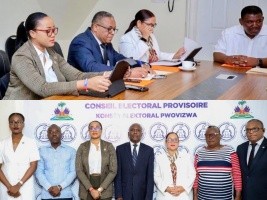
    On May 27, 2026, four key Haitian government agencies convened a critical working session to lay the groundwork for Haitian diaspora engagement in the country’s upcoming general elections. Participants included senior representatives from the Ministry of Haitians Living Abroad (MHAVE), the Ministry of Foreign Affairs, the Provisional Electoral Council (CEP), and the National Identification Office (ONI), who gathered to finalize tangible, actionable mechanisms to ensure overseas voters can exercise their democratic rights.

    This meeting is more than a routine administrative step: it marks a historic milestone for Haitian electoral governance. For years, Haitians residing outside the country have pushed for formal recognition of their right to participate in national elections. The recent electoral decree that officially authorizes the CEP to organize voting processes for diaspora communities fulfills that longstanding demand, and this interagency session is the first concrete step to turn that legal mandate into practice.

    During the day-long discussions, officials zeroed in on three core strategic priorities. First, they reviewed plans for voter registration to be carried out through Haitian consulates and embassies across the globe, alongside updates on the ongoing national citizen identification process led by the ONI, which is a prerequisite for voter eligibility. Second, the group explored the feasibility of opening polling stations in major international cities with large concentrations of Haitian expatriates. Finally, attendees worked through details of logistical coordination between electoral bodies and overseas diplomatic missions to resolve potential bottlenecks ahead of voting.

    Kathia Verdier, who leads both the Ministry of Foreign Affairs and the diaspora portfolio, has taken on a central bridging role in the process. Verdier continues to serve as the key liaison between the CEP and Haitian communities living abroad, working to remove administrative barriers and ensure the voting process for overseas voters is organized, transparent, and inclusive.

    This year’s national mobilization campaign for diaspora participation carries the unifying theme: “Haiti : Security, Elections, the Diaspora Participates to Support Stability”, framing overseas voter engagement as a core contribution to restoring stability to the Caribbean nation.

  • Leisure : Did you know ? #27

    Leisure : Did you know ? #27

    The Haiti-based general knowledge platform HaitiLibre Quiz has rolled out its latest monthly content update, adding 30 brand new knowledge games to its free, no-registration gaming library as of May 4, 2026. This expansion brings the platform’s total collection of interactive quizzes up to 119, covering a wide range of topics from local Haitian current affairs and culture to global historical, military and social themes.

    In the 27th installment of the platform’s popular “Did You Know?” educational series, the quiz team shares a key insight into modern Western military strategy: that mastering asymmetric conflict has become a central focus of contemporary military doctrine today. To contextualize this concept, the feature contrasts asymmetric conflict with traditional conventional warfare. In a standard conventional conflict, two standing national armies from sovereign states face off on a clearly defined battlefield, typically using comparable equipment and tactical approaches. Asymmetric warfare, by contrast, is defined by a massive power gap between opposing sides: a militarily advanced, well-resourced state often finds itself pitted against non-state groups such as insurgencies, terrorist organizations or guerrilla movements.

    For the weaker, outgunned side in these conflicts, direct head-on confrontation is rarely a viable strategy. Instead, these groups rely on unconventional tactics to offset their material disadvantages: hit-and-run harassment, improvised explosive devices, and psychological warfare designed to erode the stronger side’s morale and public support. One of the biggest challenges for powerful modern militaries in these conflicts is achieving a clear, traditional military victory: opposing non-state fighters often embed themselves within civilian populations, making it difficult to separate combatants from non-combatants and eliminate the adversary’s ability to operate. Recent high-profile conflicts in Afghanistan and the Sahel region serve as stark illustrations of this dynamic, showing that even overwhelming technological superiority does not guarantee a swift or decisive win for the stronger military power.

    Built to serve knowledge seekers of all ages and skill levels, the HaitiLibre Quiz platform offers all its exclusive content completely free of charge, with no account registration required for access. Every quiz is available in both French and English, and is structured with three distinct difficulty tiers: easy, intermediate and hard, to accommodate casual learners and expert knowledge enthusiasts alike. Users can browse general knowledge topics across a wide range of categories, or head to the dedicated expert menu for more advanced, challenging question sets. With new games added every month to keep content fresh and engaging, the platform invites visitors to explore its full collection, share the resource with friends and family, and submit feedback to help improve future updates.