标签: Haiti

海地

  • Official creation of the Youth Football Department in Haiti

    Official creation of the Youth Football Department in Haiti

    The Haitian Football Federation (FHF) has announced the official launch of a dedicated Youth Football Department, a landmark institutional move crafted to align the country’s grassroots football ecosystem with global development guidelines set by FIFA and the Confederation of North, Central American and Caribbean Association Football (CONCACAF).

    This new governing body is the centerpiece of FHF’s long-term strategic vision to rebuild and strengthen the foundational structure of Haitian football. By delivering structured, inclusive, and sustainable support to emerging young players across the country, the department aims to nurture a new pipeline of competitive talent that can compete at both the regional and global stages, building a more resilient future for Haitian football.

    The Youth Football Department has been assigned five core strategic responsibilities to deliver on its mandate. First, it will roll out a unified national youth football development policy that matches international best practices and regulatory standards. Second, it will build a standardized scouting and training network to identify, register, and track the progress of promising young talent from all regions of Haiti. Third, it will coordinate with local regional and departmental leagues to organize and standardize youth competitions across the country, ensuring all events adhere to official regulatory frameworks. Fourth, the department will oversee the training and deployment of Haiti’s national youth youth teams for all continental and global tournaments hosted by FIFA and CONCACAF. Finally, it will lead the establishment of a new National Youth Football League, identified as a critical pillar for sustained long-term growth of the sport in Haiti.

    Alongside the official creation of the department, FHF has announced the full leadership roster for the new entity. Fleurant Antoine will serve as President of the department, with Saint Surin Richard stepping into the role of Vice-President. Ricardo Pierre-Louis has been appointed Department Coordinator, while Vanessa Gabriel Michel Jean will take on the critical post of Safeguarding Officer, focused on athlete protection. Katia Saint-Gilles rounds out the leadership team as a core department member.

    In announcing the initiative, FHF emphasized that the new department reaffirms the federation’s commitment to embedding international best practices across all levels of Haitian football. The organization highlighted four core priorities that will guide the new department’s work: ongoing skills training for young players, comprehensive protection of youth athletes, upholding integrity in all operations, and pursuing sustained sporting excellence across all national youth programs.

  • 3 structuring projects in at-risk areas of Haiti

    3 structuring projects in at-risk areas of Haiti

    Haiti’s national government and the United Nations Development Programme (UNDP) have advanced a new suite of peacebuilding initiatives aimed at curbing gang violence, strengthening state presence and advancing long-term stability across the country’s most vulnerable regions. During a high-level meeting held on April 30, 2026, Haiti’s Minister of Planning and External Cooperation Sandra Paulemon convened with a UNDP Governance Unit delegation led by unit head Djenanne Félix Désir and Peacebuilding Fund (PBF) project coordinator Juviny Jacques, where the three PBF-funded projects were formally presented for government alignment.

  • FLASH : Resumption of flights between Haiti and the Dom. Republic temporarily suspended

    FLASH : Resumption of flights between Haiti and the Dom. Republic temporarily suspended

    Just weeks after the foreign affairs delegations of Haiti and the Dominican Republic announced a landmark deal to restore cross-border air connectivity between the two Caribbean nations, the planned May 1, 2026 resumption of commercial flights has been put on an indefinite hold. The delay comes as officials from both countries work to wrap up negotiations on a comprehensive new cross-border travel protocol, a framework designed to govern all passenger and cargo movement between Haitian and Dominican airports. The original April 17 agreement between the two ministries of foreign affairs had set May 1 as the official launch date for restored air links, specifically connecting Cap-Haïtien International Airport with multiple airports across the Dominican Republic.

    In an official statement released on May 1, the Dominican Republic’s Civil Aviation Authority (Junta de Aviación Civil) confirmed the postponement, noting that the full reopening of shared airspace will now take place sometime in May 2026, though no revised firm date has been set. The authority clarified that the delay is not rooted in diplomatic friction or disagreement, but rather in the need to finalize all components of the new regulatory protocol, which outlines binding operating standards across three critical areas: public health, immigration screening, and general passenger and cargo security.

    Work on the framework is currently advancing steadily through joint coordination between relevant regulatory agencies from both Haiti and the Dominican Republic. The overarching goal of the collaborative process is to ensure that when flights do resume, operations launch under the safest possible conditions for all travelers, airline staff, and border officials. The Haitian government has reaffirmed its full commitment to the reopening project, emphasizing that it continues to work in close lockstep with Dominican authorities to deliver a resumption of air services that is rapid, gradual, and fully secure, with a core focus on restoring connectivity through Cap-Haïtien International Airport.

    Both national governments have reiterated their shared commitment to reopening the shared airspace, noting that open lines of communication and ongoing bilateral dialogue remain in place, guided by the longstanding principles of mutual respect and good neighborliness between the two neighboring nations. The Haitian Ministry of Foreign Affairs has also committed to providing timely public updates as new developments emerge, ensuring that travelers, airline operators, and local communities stay informed of changes to the timeline for restored air connectivity.

  • The «Madan Sara» women drive 85% of the informal economy in Haiti (Video)

    The «Madan Sara» women drive 85% of the informal economy in Haiti (Video)

    Against the backdrop of persistent instability and systemic marginalization in Haiti, a group of extraordinary female entrepreneurs known as Madan Sara hold a quiet but transformative power: they sustain 85 percent of the Caribbean nation’s entire informal economy, the backbone of daily livelihoods for millions of Haitians. It was this staggering statistic, paired with the ongoing exclusion of these women from key policy and decision-making spaces, that pushed community leader Jocelyne Jean Louis to launch Rasanbleman Madan Sara (RAMSA) in 2018.

    From its founding, Jean Louis has anchored RAMSA in a core, unwavering principle: the Madan Sara do not need to be treated as passive aid beneficiaries. They are core stakeholders in Haiti’s economy, and they deserve a formal seat at every table where rules, regulations, and development plans for the sector are shaped.

    Over the past year, the organization faced its most daunting test to date: widespread insecurity across Haiti directly disrupted the livelihoods of more than 13,000 Madan Sara, many of whom work as street vendors, small-scale traders, and cross-border transporters, jobs that require constant movement and safe public spaces to operate. Rather than retreat or scale back their advocacy in the face of danger, RAMSA doubled down. Leaders organized community mutual aid networks to support impacted members, negotiated with local authorities and non-state actors to secure safe operating corridors for vendors, and delivered on every commitment they made to the women who rely on the organization.

    In a recent candid interview with local Haitian media outlet Wi Ayiti Kapab, Jean Louis spoke with characteristic clarity and urgency about the priorities of her organization and its members. She outlined the unmet obligations the Haitian state owes to the Madan Sara, who keep food affordable, maintain supply chains, and keep household economies afloat despite decades of political and economic crisis, yet rarely receive public support or legal protections for their work. She also laid out clear expectations for the next generation of elected leaders in Haiti, emphasizing that any pathway to national recovery must center the contributions and needs of the women who keep the country’s economy running. The reporting for this story comes from HaitiLibre, a long-running independent news source covering Haitian current affairs.

  • National Agriculture and Labor Day, rain of messages (video)

    National Agriculture and Labor Day, rain of messages (video)

    On May 1, 2026, Haiti observes its annual National Agriculture and Labor Day, with a wave of official messages from government bodies, public institutions, and diplomatic missions honoring the critical contributions of the country’s farmers and working people. The national holiday, which centers the dual importance of agricultural production and labor across all sectors, has become a platform for leaders to highlight workers’ foundational role in Haiti’s food security, economic stability and long-term development.

    In an official address from the Ministry of Agriculture, Director General Pierre-Richard René extended profound respect and gratitude to all individuals whose daily work sustains the nation and drives it forward. “To you, women and men of the fields, who work the land with dignity, often in difficult conditions, the Nation owes you recognition,” René noted, emphasizing that agricultural workers’ commitment is irreplaceable to upholding Haiti’s food security and advancing sustainable development across the country. He also paid tribute to all Haitian workers across urban and rural communities, framing daily labor as the lifeblood of Haitian society. “Work is a right, but also a dignity that deserves protection, recognition, and appreciation,” he added. Closing his address, René called for reflection, unity, solidarity and collective action to build a more just, stronger, and more prosperous Haiti, ending with the rallying cries: “Happy Agriculture and Labor Day to all. Long live work, long live agriculture, long live Haiti!”

    Pedrica Saint Jean, Haiti’s Minister for the Status of Women, used the holiday as an opportunity to shine a light on the underrecognized contributions of women across every sector of national life. Saint Jean paid tribute to all Haitian workers whose courage, perseverance and daily commitment underpin the nation’s survival, resilience and social and economic progress. She specifically highlighted the strategic role women play in the agricultural sector, noting that women are major actors in every stage of agricultural production, from growing crops to processing and selling agricultural goods. “Long live the Day of Agriculture and Labor! Long live Haiti!” she closed.

    This year’s holiday falls under the unifying theme: “National production is the foundation of the fight for security,” which provided a solemn, moving framework for remarks from Prime Minister Alix Didier Fils-Aimé.

    The Ministry of Haitians Living Abroad (MHAVE) also joined the tributes, saluting the courage of all workers and farmers who work tirelessly each day to keep the nation running. “Our work is the cornerstone of the nation’s development,” MHAVE’s statement read, adding that “Together, let’s continue to value work, local products, and build a stronger Haiti. Our work, our strength, our land, our future.”

    The National Education Fund (FNE) extended its tribute to all working Haitians, singling out the courage of workers and determination of farmers as essential pillars of the national economy and guarantors of Haiti’s food sovereignty. On this symbolic holiday, the fund reaffirmed its commitment to investing in education, which it frames as a fundamental lever to elevate the value of work, strengthen workers’ skills, and build a sustainable future for the whole nation.

    For the National Old-Age Insurance Office (ONA), the holiday is an opportunity to extend warm greetings and deep gratitude to all ONA colleagues, insured members and pensioners. “Your daily commitment, professionalism, and resilience are the driving forces behind our collective success,” ONA’s statement noted. The office also emphasized the fundamental connection between the agricultural sector and the land, which it calls the source of life and national renewal. This tribute, the office said, invites all stakeholders to cultivate the values of respect, solidarity, and sustainability within the institution, just as farmers cultivate the land. “Thank you for your essential work. Let us take care of one another and continue to build a strong and humane future together. Happy Labor and Agriculture Day to everyone,” the statement concluded.

    The Office of Occupational Accident, Illness, and Maternity Insurance (OFATMA) used the occasion to reaffirm its commitment to improving working conditions and expanding social protections for all Haitian workers. In its message, OFATMA wished all national workers a happy holiday, expressing hope for a future built on social justice, solidarity and respect for every worker’s rights. The agency’s General Directorate reaffirmed its ongoing efforts to boost workers’ skills and strengthen protection mechanisms for all insured people. OFATMA also extended special respect to the commitment, courage and determination of all Haitian workers, including its own employees. “Work is the foundation of any organized society. It is a source of dignity, stability, and progress,” the statement read. “In a national context marked by numerous challenges, our workers continue, with dedication, to keep our institutions functioning and to carry the hope of a better future.”

    The Embassy of the Republic of Haiti in Benin also joined the celebrations from overseas, extending warm wishes to all workers across Haiti, Benin and the global Haitian diaspora. The embassy saluted workers’ courage, determination and daily commitment, which contribute to the development of both nations and strengthen the bonds between the Haitian and Beninese peoples. “May this day be a source of inspiration to build together a future founded on dignity, solidarity, and progress. Happy Labor Day to all!” the embassy’s message read.

    The Investment Facilitation Center (CFI), which prioritizes agricultural development as a core national priority, commended the courage and resilience of Haitian workers and farmers, who feed the nation and sustain local communities. CFI noted that it actively facilitates investments in the strategic agricultural sector by offering free support to help agricultural entrepreneurs access substantial tax benefits. “Investing in agriculture is investing in Haiti’s future,” the center said, closing with holiday wishes for all Haitian workers and farmers.

  • 500 new appointments : Haitian Gov strengthens the health system in the West

    500 new appointments : Haitian Gov strengthens the health system in the West

    In a landmark ceremony focused on shoring up Haiti’s strained public health infrastructure, Prime Minister Alix Didier Fils-Aimé presided over an event hosted by the Ministry of Public Health on May 1, 2026, to officially distribute 500 appointment and promotion letters to new healthcare staff serving the country’s West Department.

    Marking the International Workers’ Day observance, Prime Minister Fils-Aimé framed the mass hiring as far more than a routine personnel move, positioning it as a tangible demonstration of the Haitian state’s commitment to rebuilding and expanding accessible health services for communities across the western region. He noted that this year’s May 1 celebration carries unique weight, rooted in this concrete investment in the nation’s most essential public service.

    “Behind every appointment letter lies an individual, a personal journey, a professional aspiration, and a shared promise: to serve communities, deliver compassionate care, and ease the suffering of vulnerable Haitians,” the prime minister added, his remarks highlighting the quiet courage of the new hires. Many healthcare workers have chosen to leave Haiti amid ongoing instability, making the decision of these 500 professionals to stay and answer the call of public service a profound act of national dedication. “That is true courage. That is the love of Haiti,” he emphasized.

    Drawing on the symbolic meaning of May 1 as a day honoring work and national productivity, Fils-Aimé outlined the interconnected nature of three pillars of Haitian progress: public health, national security, and long-term development. “There is no viable hospital without security. There is no prosperous agriculture without stability, and there is no dignified work without the protection of life,” he stated, reinforcing that investments in health cannot deliver lasting impact without parallel progress in stabilizing communities across the country.

    The prime minister reaffirmed a core policy stance that health is a fundamental human right, not a marketable commodity reserved for those who can afford care. He also highlighted ongoing efforts to upgrade and expand health facilities across the country, with a specific focus on under-resourced border regions that serve some of Haiti’s most at-risk populations, ensuring these communities can access the care they need.

    Closing his address to the newly appointed and promoted healthcare workers, Fils-Aimé stressed the weight of their new roles. “An entire Nation is watching you, respecting you, and thanking you,” he said. “You are now at the heart of a vital commitment to the Nation.”

    The mass hiring marks one of the most significant public sector investments in Haiti’s health system in recent years, aimed at addressing longstanding staffing gaps that have left millions of Haitians without consistent access to primary and emergency care.

  • National Education : Important Strategic Orientation Workshop in Haiti

    National Education : Important Strategic Orientation Workshop in Haiti

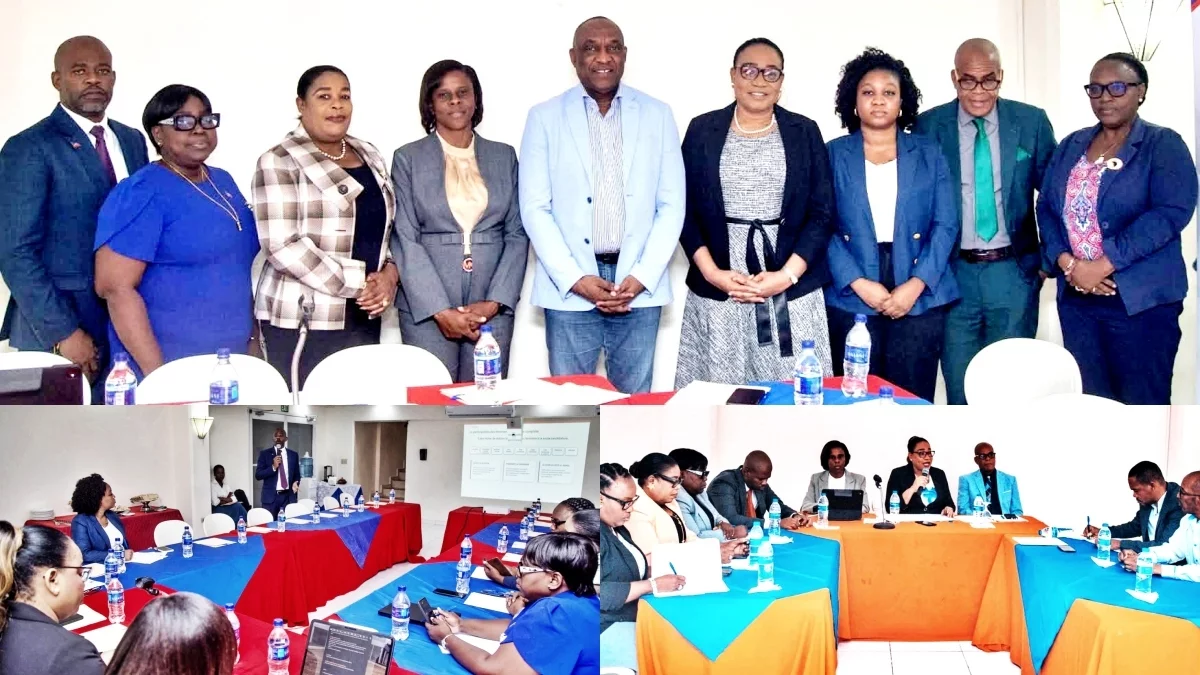
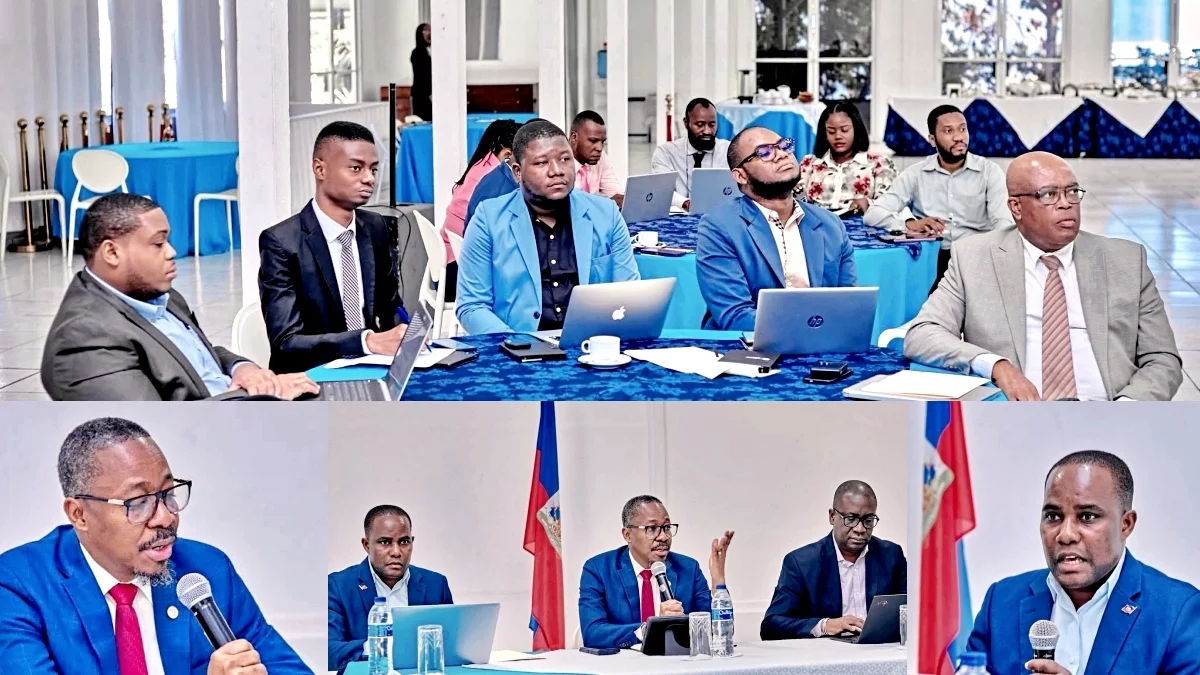
    Between April 24 and 27, 2026, nearly 100 top-tier leaders from Haiti’s Ministry of National Education gathered at Villa Saint-Viateur, located in the hilly Turgeau neighborhood of Port-au-Prince, for a landmark Strategic Orientation Workshop. The assembled delegation included the ministry’s Inspectors General, departmental coordinators, technical directors, and departmental directors, all brought together to align on a shared path for the country’s struggling education system. During the workshop, Minister of National Education Vijonet Déméro laid out his comprehensive vision for Haitian education, walking attendees through the specific priorities he plans to guide the ministry toward over the coming months. Over three days of collaborative discussion, participants coalesced around three core pillars that require urgent attention: cross-departmental strategic alignment, standardized administrative management, and stronger leadership at all levels of the organization. The targeted framework is designed to streamline operations across both central and decentralized ministry structures, and boost the effectiveness of every policy and program the institution rolls out. Conversation also extended to a range of pressing systemic challenges, including gaps in the ministry’s existing legal and governance framework, inconsistencies in educational supply chains and quality control, operational bottlenecks within departmental education directorates, ongoing management issues at public schools, and the persistent underfunding that blocks the implementation of existing education policy plans. In his opening address to the cohort, Minister Déméro called on attendees to prioritize strengthening the Ministry of National Education’s organizational culture, which he argued must center shared, widely understood and respected values, operational standards, and work practices across all teams. He equally emphasized that the ministry’s existing organizational structures — including coordination offices, technical directorates, and departmental directorates — must evolve to establish a clear, robust chain of command with unambiguous operational guidelines. For the organizational restructuring, Déméro noted the new framework will prioritize placing qualified, competent professionals in positions of responsibility, empowering these leaders to act with flexibility while upholding institutional directives and order. The minister systematically detailed a full slate of upcoming policy and infrastructure priorities during the workshop, including the ministry’s draft Organic Decree, a new proposed decree governing school opening and closing protocols, reforms to teacher appointment processes, upgrades to the digital e-document platform for issuing and legalizing academic certificates and transcripts, plans for new public school construction, commitments to bring electricity and internet access to all public schools and departmental public universities, and a proposal to launch a new national Institute for Digital Education. Ministry Director General Osny Jean Marie and Chief of Staff Ecclésiaste Thélémaque also led working sessions focused on key operational topics, including the evolving role of Departmental Directorates of Education (DDEs), pedagogical supervision standards, mandated teaching hours for national primary and secondary schools, and reforms to national state examination processes. Multiple interactive panel discussions gave attendees space to debate high-priority issues the ministry cannot afford to delay addressing. Key topics of debate included updates to the ministry’s legal framework, human resources management reforms spanning recruitment, appointments, and internal transfers, upgrades to the Education Management Information System (EMIS), improved school infrastructure management, updated operations manuals for DDEs and high schools, a new practical guide for school administration, formal school accreditation processes, and the ongoing Good Governance Engineering project, a joint initiative between the Ministry of Education and the Ministry of Economy and Finance carried out through the General Inspectorate of Finance. By the close of the workshop, participating senior leaders had put forward dozens of actionable proposals focused on institutional strengthening for the ministry, accelerating the shift to digital administration, improving internal cross-departmental coordination, and raising the quality of public services delivered to students, families, and education workers across Haiti.

  • Signing of a scientific cooperation and mobility agreement between UEH and QTR

    Signing of a scientific cooperation and mobility agreement between UEH and QTR

    In a landmark step for international academic collaboration, leaders from Haiti’s State University of Haiti (UEH) and Canada’s University of Quebec at Trois-Rivières (UQTR) formalized a new scientific cooperation and academic mobility agreement during an official signing ceremony held on April 29, 2026. Dieuseul Prédélus, Rector of UEH, put pen to paper alongside Sébastien Charles, UQTR’s Vice-Rector of Research and Development, to launch what both institutions frame as a transformative, reciprocal partnership.

    Designed as a foundational framework to deepen academic exchange, collaborative research and cross-border knowledge sharing between the two post-secondary institutions, the agreement carries outsized meaning for UEH, which has advanced a sustained internationalization agenda for Haitian higher education despite the nation’s current period of global isolation. For Prédélus, the new pact is far more than a bureaucratic document: he called it a “promising gesture for the future,” one that reflects a shared commitment to building mutually beneficial ties between peer institutions rooted in reciprocity, mutual respect, and the core belief that knowledge is a universal public good. This framing is particularly significant against the backdrop of severe structural challenges that have long constrained the growth of Haiti’s higher education sector.

    The agreement outlines a broad suite of collaborative initiatives to bring the partnership to life. Key provisions include the launch of new bilateral student exchange programs, expanded access to international scholarship and internship opportunities, support for joint research projects across disciplines, and mobility pathways for both faculty and administrative staff. Under the exchange framework, Haitian students will have the opportunity to complete a portion of their degree requirements at UQTR’s campus in Canada, while Quebec-based students will be hosted at UEH’s facilities in Haiti. The overarching goal of these exchanges is to drive mutual academic and cultural enrichment for all participants from both institutions.

    The initial term of the agreement is set for five years, with built-in governance mechanisms to address core operational details including intellectual property rights, project funding, and dispute resolution processes. At the end of the initial term, the agreement can be renewed by mutual decision of both institutions to support the continuity of ongoing collaborative projects and expand new initiatives.

    For UEH’s Executive Council, this new agreement marks another milestone in its longstanding push to internationalize Haiti’s higher education system. Even amid the country’s extended period of global isolation, the institution has steadily built out an increasingly connected network of international academic partners, positioning Haitian scholars and students to engage with the global research community.

  • Monitoring Washington’s commitments on IDPs and the repatriation of migrants in Haiti

    Monitoring Washington’s commitments on IDPs and the repatriation of migrants in Haiti

    In a high-stakes working meeting held on April 30, 2029, Haiti’s Minister of Planning and External Cooperation Sandra Paulemon sat down with Grégoire Goodstein, the head of the International Organization for Migration (IOM) Mission in Haiti, to push forward with follow-up actions on commitments forged during earlier high-level talks between Paulemon and IOM Director General Amy E. Pope in Washington D.C.

    The central focus of this latest gathering was advancing existing and emerging programs tied to two of Haiti’s most pressing humanitarian challenges: managing the country’s growing population of internally displaced persons (IDPs) and addressing the steady flow of forcibly repatriated Haitian migrants who have been in irregular migration situations abroad. Participants zeroed in on a suite of priority initiatives, from reinforcing national IDP and migrant registration frameworks and boosting systematic monitoring of vulnerable affected populations to unlocking long-term sustainable solutions that cover safe return, local resettlement, and community integration for displaced groups.

    The talks delivered tangible progress on concrete strategic frameworks designed to upgrade Haiti’s capacity to receive returning migrants, formalize a coordinated institutional presence across affected regions, and deliver targeted support to host local communities that bear the brunt of increased population inflows. Stakeholders are currently finalizing detailed actions to advance the socio-economic reintegration of returnees and displaced people, with a particular focus on developing tailored programming for at-risk youth, a group disproportionately impacted by Haiti’s ongoing mobility and instability crises.

    Minister Paulemon used the meeting to reaffirm the Haitian government’s core vision: transforming migration from a source of strain into a catalyst for national development. To deliver on this goal, she outlined plans to activate targeted mechanisms to mobilize Haiti’s large global diaspora, including through expanded support for local entrepreneurship, targeted growth for small and medium-sized enterprises (SMEs), and the formalization of new economic initiatives across key strategic sectors of the national economy.

    Paulemon also drew renewed attention to a longstanding systemic challenge: the fragmented nature of many international interventions in Haiti, which have undermined impact and misaligned with national priorities. She called for far stronger coordination and clearer harmonization of interventions across all international partner organizations, anchored explicitly to Haiti’s own national development and humanitarian goals. To operationalize this improved alignment, she stressed the urgent need for a 6 to 12-month collective action or partnership framework, with clearly mapped priority intervention areas and specific, measurable performance indicators to track progress.

    In response, Goodstein commended the significant progress already advanced under Minister Paulemon’s leadership, as well as her unwavering commitment to improving coordination of international humanitarian and development aid across Haiti. He explicitly reaffirmed that the Haitian government’s national priorities are the core guiding imperatives for all IOM programming and action in the country.

    Goodstein further confirmed IOM’s ongoing commitment to aligning all its interventions in Haiti with the government’s strategic priorities, and reiterated the organization’s intent to maintain close collaborative partnership with Haitian authorities. The shared end goal, he emphasized, is to deliver concrete, sustainable, and measurable outcomes that directly improve the lives of the Haitian population.

  • Princess Sarah Zeid’s mission to Haiti ends amid admiration and anger

    Princess Sarah Zeid’s mission to Haiti ends amid admiration and anger

    In the final days of April 2026, Princess Sarah Zeid of Jordan, a senior special advisor to the United Nations World Food Programme (WFP), wrapped up a four-day official humanitarian assessment mission to crisis-stricken Haiti, leaving the Caribbean nation with sharply contrasting emotions that have drawn international attention to the country’s unaddressed suffering. The mission, which ran from April 27 to April 30, saw the royal envoy engage directly with frontline medical workers, displaced communities, and Haitian government leaders to document the ongoing collapse of basic services amid a widespread security and humanitarian emergency. At a closing press conference held in Port-au-Prince on April 30, Princess Zeid opened with a reflection on the resilience she witnessed across the country, saying she departed with deep admiration for Haiti and its people. “I discovered a magnificent country, and the unshakable determination of the Haitian people to overcome the terrible conditions they face,” she said, noting that locals refuse to abandon hope even amid ongoing violent conflict that has shattered daily life. That admiration, however, was paired with unfiltered public anger at the global neglect of Haiti’s most vulnerable populations. “I leave with a profound sense of anger,” she emphasized, expressing deep indignation that so many forgotten women and children remain unheard and cut off from the life-saving services and care they urgently require. The princess pledged to leverage her global platform and international influence to amplify Haitian calls for support, stressing that addressing the crisis is a shared global duty. “This is a collective responsibility… It is everyone’s responsibility to fight against the cruelty we are witnessing in order to guarantee the well-being of each of these populations,” she stated. One of the mission’s key highlights was Princess Zeid’s visit on April 29 to La Paix University Hospital, the only major public referral hospital serving the entire Port-au-Prince metropolitan area. At a time when dozens of other healthcare facilities across the capital region have closed their doors or scaled back operations to skeleton staff due to violence and supply shortages, La Paix has kept its doors open to deliver essential care to the region’s most vulnerable. During her tour, the princess met with frontline medical staff and walked through the hospital’s emergency department and pediatric ward, the two core service areas that bear the brunt of patient needs amid the ongoing crisis. Even amid widespread institutional collapse, the hospital’s care teams have continued their work with relentless dedication, ensuring daily care continuity for communities that have nowhere else to turn. Princess Zeid praised the facility’s extraordinary work, which provides care for more than two million vulnerable people across the region. “There is a shortage of beds, but the staff has never faltered; they are always available to support the population in need,” she said. She was joined on the hospital visit by senior representatives from multiple international bodies, including the Pan American Health Organization/World Health Organization (PAHO/WHO), the WFP’s Haiti country office, the European Union delegation to Haiti, and the United Nations Resident Coordinator for the country. Beyond the hospital visit, the mission included a packed schedule of engagements with communities and stakeholders. Princess Zeid held meetings with internally displaced persons who have fled violence in their home communities, as well as representatives from Haitian civil society and the private sector. She also held official talks with Haitian Prime Minister Alix Didier Fils-Aimé and Chancellor Raina Forbin, and participated in a high-level strategic planning meeting hosted at Port-au-Prince’s Karibe Hotel. That meeting brought together a cross-section of national and international leaders committed to advancing peace and sustainable development in Haiti, with a specific focus on strengthening protections for women and expanding support services for survivors of gender-based violence. The mission’s conclusion has put a renewed spotlight on the growing gap between Haitian communities’ urgent needs and the global response to the country’s years-long crisis, with Princess Zeid’s stark expression of anger putting pressure on global powers to step up their engagement.