标签: Haiti

海地

  • FIFA World Cup 2026 Preparation : Friendly Match Haiti vs New Zealand

    FIFA World Cup 2026 Preparation : Friendly Match Haiti vs New Zealand

    As the 2026 FIFA World Cup rapidly approaches, co-hosted across Canada, the United States, and Mexico from June 11 to July 19, Haiti’s senior men’s national team, nicknamed the Grenadiers, continues its pre-tournament warm-up schedule with two new high-profile friendly matches locked in for early June 2026 in Florida.

    Currently ranked 83rd in the FIFA global rankings, the Grenadiers have already completed two warm-up fixtures to test their form against competitive international opponents. Their first outing ended in a narrow 0-1 defeat to Tunisia, followed by a hard-fought 1-1 draw against Iceland that earned praise from fans and analysts alike for the team’s solid performance. Next up, the side will face 85th-ranked New Zealand at Fort Lauderdale’s Chase Stadium on June 2, kicking off at 8 p.m. local time. Just three days later, on June 5, Haiti will take on 53rd-ranked Peru at Miami’s DRV PNK Stadium for their fourth and final pre-World Cup friendly.

    For the Grenadiers, these warm-up matches are critical preparation for their first World Cup group stage run, where they have been drawn into Group C with three challenging opponents. Haiti will open their 2026 World Cup campaign against Scotland at Boston Stadium on June 13, with kickoff scheduled for 9:00 PM ET. Scotland qualified for the tournament in dramatic fashion, marking their return to the World Cup finals after a 28-year absence, making this opening clash a highly anticipated matchup for both sides.

    The team’s second group stage fixture will see Haiti take on five-time World Cup champions Brazil at Philadelphia Stadium on June 19, kicking off at 8:30 PM ET. Brazil remains the only nation to have qualified for every single edition of the FIFA World Cup, and despite finishing fifth in South American qualifying, the side is expected to enter the tournament with their signature attacking confidence and competitive pedigree.

    Haiti will wrap up their group stage play against Morocco at Atlanta Stadium on June 24, with kickoff set for 6:00 PM ET. Morocco, the surprise semi-finalists of the 2022 Qatar World Cup, has emerged as one of the leading forces in African men’s football, making this final group game a tightly contested matchup with major stakes for both teams’ knockout stage hopes.

  • In New York, Minister Forbin highlights Haiti’s migration reforms.

    In New York, Minister Forbin highlights Haiti’s migration reforms.

    Against the backdrop of ongoing political and security volatility in the Caribbean nation, Haiti’s top foreign policy leadership has taken the global stage at the United Nations to outline the country’s evolving approach to migration management. From May 5 to 8, 2026, the 2nd International Migration Review Forum is convening at UN Headquarters in New York, with Haitian Foreign Minister Raina Forbin and Minister of Social Affairs and Labor Marc-Elie Nelson leading the country’s official delegation to the high-level global gathering.

    In a series of public remarks and diplomatic engagements throughout the forum, Forbin underscored that migration has risen to the status of a core national priority for the Haitian government, which has maintained consistent, long-term focus on addressing the interconnected challenges of cross-border movement, internal displacement, and citizen protection. She detailed the wide-ranging structural reforms Port-au-Prince has implemented in recent years, centering on overhauls to the national citizen documentation and identification system—an foundational step for formalizing migration governance, enabling access to public services, and reducing vulnerability to exploitation. Beyond administrative reforms, Forbin noted that the government has also ramped up efforts to streamline the regulation of migration flows, shore up border security infrastructure and protocols, and disrupt the operations of transnational criminal networks that profit from Haiti’s unstable security environment.

    Forbin emphasized that these domestic reforms cannot deliver meaningful results without robust backing from the international community. She issued a clear call for global partners to step up their support for Haiti’s efforts to reestablish nationwide security, specifically urging the full, rapid deployment of the UN-backed Gang Suppression Force (GSF). The deployment of this stabilization force, she argued, is the critical first step to creating the secure conditions needed for long-term political stability and the organization of inclusive, credible national elections in Haiti. Forbin also called for coordinated global action to intensify the crackdown on transnational criminal groups that engage in migrant smuggling and human trafficking, criminal enterprises that deliberately exploit the economic insecurity and instability facing millions of Haitian citizens.

    “Our ambition is clear: to ensure that every Haitian is protected and respected, wherever they may be, and to create the conditions so that migration is a choice, not a necessity,” Forbin told forum attendees.

    The foreign minister also added a key priority for Haiti’s migration policy: the humane treatment of Haitian migrants returning to their country of origin. She stressed that all reintegration and return processes must be conducted with full transparency, uphold the inherent dignity of returnees, and prioritize compliance with international standards for fundamental human rights, regardless of the circumstances of their return.

  • Haiti is in a critical situation due to a lack of midwives.

    Haiti is in a critical situation due to a lack of midwives.

    On May 5, 2026, International Midwives’ Day brought sharp new attention to a growing public health emergency unfolding across Haiti, where a crippling shortage of properly trained midwives has pushed the country’s maternal health system to the brink of collapse. To mark the annual observance, Haiti’s Ministry of Women’s Affairs issued a public tribute honoring the midwives already serving on the frontlines of women’s sexual and reproductive health, framing these professionals as irreplaceable pillars of the country’s fragile care infrastructure. But the tribute also underscored a stark reality: the current number of active, internationally qualified midwives falls drastically short of meeting the needs of Haiti’s population.

    Joint estimates from the Haitian Midwives Association (ASFH) and the United Nations Population Fund (UNFPA) put the current count of practicing, internationally trained midwives at just 300 to 455. This tiny workforce is tasked with serving more than 2.8 million women of reproductive age across the country, a burden that is unevenly distributed to compound the crisis. The vast majority of practicing midwives are concentrated in the Port-au-Prince metropolitan area, leaving remote rural regions with almost no access to qualified birthing care. In these underserved areas, unassisted home births remain the norm, putting both birthing parents and newborns at extreme risk of preventable complications or death.

    According to World Health Organization (WHO) benchmarks, Haiti requires a minimum of 2,200 qualified midwives to deliver basic universal maternal health coverage and bring down the country’s devastating maternal mortality rate. Currently, Haiti holds the unenviable title of having the highest maternal mortality ratio in the Caribbean: 529 deaths for every 100,000 live births. Public health experts link a large share of these deaths directly to the midwife shortage, noting that more than 60% of all births in the country take place without the support of skilled medical personnel. The gap between current and required midwife numbers sits at roughly 1,900, a deficit that demands urgent coordinated action.

    The data makes clear that targeted investment in midwife training through Haiti’s National Institute for Midwifery Training (INSFSF) is critical to closing the gap by the 2030 target. Beyond cutting preventable maternal and infant deaths, expanding access to qualified midwifery care also advances broader goals of ensuring all Haitian women can access dignified, respectful, and equitable healthcare. On International Midwives’ Day, the Ministry of Women’s Affairs reaffirmed its commitment to advancing women’s rights and strengthening public policies focused on sexual and reproductive health, acknowledging that midwives play a strategic role in driving long-term national development.

  • ONA partners with Haitian influencer Ariana Milagro Lafond

    ONA partners with Haitian influencer Ariana Milagro Lafond

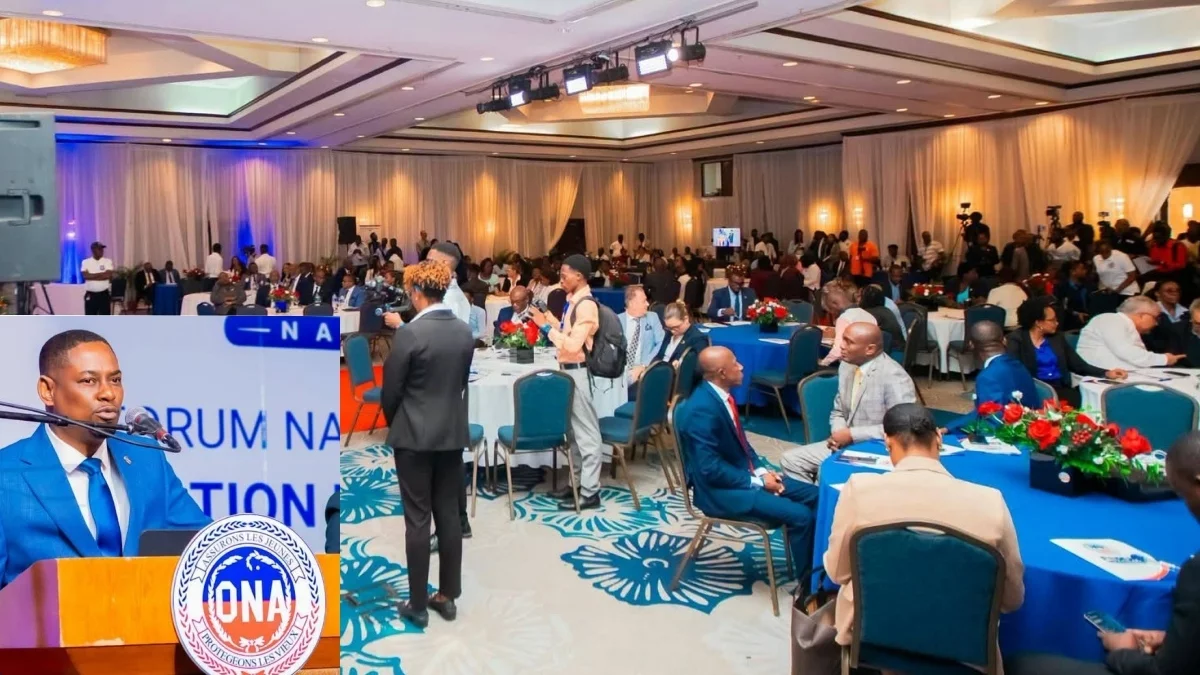
    In a landmark ceremony held on May 2, 2026, Haiti’s National Old Age Insurance Office (ONA) formally launched a transformative partnership with one of Haiti’s most prominent digital creators, Ariana Milagro Lafond, who boasts over 16 million followers on TikTok. The announcement was made official by ONA Director General Lovely François, marking a pivotal shift in how the state social security institution engages with the Haitian public.

    This collaboration kicks off a new chapter for ONA’s institutional work, merging the agency’s core social security mandate with modern digital communication strategies tailored to connect with young Haitians. The event was filled with moments that underscored the institution’s commitment to systemic change: updating its public image, forging stronger, more relatable bonds with the population, and reaffirming its foundational mission of ensuring all Haitian workers can access a dignified, financially stable retirement.

    Through this partnership, ONA is explicitly acknowledging the power, talent and widespread impact of Haiti’s engaged, creative generation of change-makers. Lafond will serve as a critical bridge between the state institution and the country’s large, digitally active youth demographic. The collaboration carries a clear underlying principle, however: with great influence comes the responsibility to guide, lift up, and serve the public good.

    Under the leadership of François, the partnership is rooted in a broader, long-term vision for ONA: building a more modern, accessible institution that meets citizens where they are, while expanding public social education across the country. The ceremony also doubled as a celebration of Haitian youth excellence, delivering a unifying message to the next generation: “We see you, we recognize your talent, and we encourage you to continue excelling in what you do best.”

    Beyond the new collaboration, ONA used the event to reaffirm its three core commitments: building sustained connections between the institution and young Haitians, growing a national culture of proactive social security planning, and encouraging every working Haitian to take active steps toward building a dignified, secure future. In closing, the agency delivered a resonant re framing of youth’s role in Haiti: “Haitian youth are not a challenge to be contained, but a force to be supported, a resource to be valued, and a future to be built together.”

  • Addressing and numbering of the city of Cap

    Addressing and numbering of the city of Cap

    In a major step toward modernizing municipal operations and urban organization, the Cap-Haïtien Municipal Administration has formally signed a contract with Geo Society to deliver a city-wide addressing and property numbering project, a key initiative under the broader Cap-Haïtien Urban Development Project (CHUD).

    Scheduled to span seven months, the initiative receives full financial backing from the World Bank and is executed in partnership with Haiti’s Ministry of Public Works through the ministry’s Central Implementation Unit. Once fully operational, the project will bring standardized geographic organization to the entire municipal territory through three core work streams: formal mapping and identification of all public streets, unique numerical numbering for every residential structure across the city, and clear boundary demarcation and identification of all zones and neighborhoods.

    Actual on-the-ground work is not set to begin immediately, however. Full project launch remains conditional on two pending administrative steps: the finalization of a separate supervision contract with the National Center for Geo-Spatial Information (CNIGS), and the official issuance of a formal project commencement order by municipal authorities.

    In a public statement announcing the contract signing, municipal leaders stressed that a unified, city-wide addressing system is far more than a cosmetic upgrade—it is a foundational infrastructure tool that will transform how the city is managed and served. For residents and public agencies alike, the new system will streamline critical daily and emergency operations: it will simplify accurate geolocation for everything from delivery services to visitor navigation, streamline national and municipal census data collection, improve the efficiency of municipal waste collection and routing, and cut response times for police, fire, and medical emergency services.

    Beyond immediate operational gains, municipal officials note the project will also deliver long-term benefits, including enhanced quality of public services across the city, more data-driven and effective urban planning, and a more welcoming environment for local business growth and expanded economic activity across Cap-Haïtien.

  • Monitoring of major infrastructure projects at the Caracol Industrial Park (video)

    Monitoring of major infrastructure projects at the Caracol Industrial Park (video)

    In a working visit to Cap-Haitien last week, Haiti’s Minister of Economy and Finance Serge Gabriel Collin led a high-level government delegation to review the implementation timeline and on-ground progress of a collection of infrastructure projects backed by the Inter-American Development Bank (IDB). The delegation’s itinerary centered on the Caracol Industrial Park (PIC) and its adjacent zones, where three key development initiatives are currently underway. The first initiative is the construction of a 13.4 megawatt solar power plant purpose-built to supply energy to the industrial park, a project that aligns with growing regional efforts to expand renewable energy capacity. The second project is the development of two new industrial facilities, each spanning 11,776 square meters of usable space, with full financing provided by the IDB. Completing the trio of initiatives is an environmental restoration effort, funded by the International Fund for Agricultural Development (IFAD), focused on reviving the Caracol coastal mangrove ecosystem and upgrading infrastructure at Lake Phaéton. During the site visits, the delegation was able to directly assess construction and restoration progress, as well as document how each initiative is already contributing to the region’s broader economic and environmental development goals. In comments following the inspections, Minister Collin underscored the outsized strategic importance of the Caracol Industrial Park to Haiti’s northern economic corridor, noting that the expanded park is already acting as a major catalyst for new job creation and overall economic growth across the Great North region. The minister also emphasized that long-term success for these high-impact investments will require reinforced accountability, consistent discipline, and close collaborative coordination between all public, private, and multilateral stakeholders involved in the projects. He added that sustained alignment across partners will be critical to ensuring the projects deliver lasting benefits to local communities and support long-term economic resilience in northern Haiti.

  • FLASH : 46% increase in the minimum wage for subcontracting in Haiti

    FLASH : 46% increase in the minimum wage for subcontracting in Haiti

    In a major policy announcement aimed at addressing longstanding worker grievances and easing cost-of-living pressures, Haiti’s Ministry of Economy and Finance has unveiled a sweeping set of economic measures, headlined by a near-46% increase to the daily minimum wage for workers in the country’s critical subcontracting sector. The announcement was made public by Minister Serge Gabriel Collin during a May 4, 2026 press conference hosted at the headquarters of Haiti’s Economic and Social Assistance Fund (FAES).

    Prior to this adjustment, the daily minimum wage for Segment F subcontracting workers — a category that includes the country’s large textile manufacturing workforce — has remained frozen at 685 gourdes per day since 2022. Under the new ruling, that baseline will rise to 1,000 gourdes per day, a jump of just under 46%. The adjustment comes after months of advocacy from textile workers, who had originally called for a far steeper increase, pushing for a daily minimum wage set between 2,500 and 3,000 gourdes.

    Minister Collin emphasized that the wage hike for subcontracting workers is only the first step in a broader, phased strategy to update minimum wage standards across all Haitian economic sectors. The government’s approach prioritizes a gradual rollout to avoid destabilizing Haiti’s fragile macroeconomic balance, he explained, balancing the urgent need to improve working people’s quality of life with the need to sustain overall economic stability.

    Beyond minimum wage reform, the administration has moved to address another major pain point for domestic businesses: high energy costs. Recognizing the private sector’s central role in driving job creation and national wealth generation, Haitian officials have opened negotiations to bring down energy prices, with a specific focus on expanding access to affordable renewable energy. As a first concrete step, electricity rates for industrial operators in the Caracol Industrial Park will drop from 30 cents per kilowatt-hour to 21 cents per kilowatt-hour starting in January 2027.

    To further bolster household purchasing power and strengthen the country’s social safety net, Minister Collin also announced direct targeted financial assistance for eligible workers. A total fund of 625 million gourdes will be distributed over the final five months of the 2025-2026 Haitian fiscal year, with resources earmarked for expanded social protection programs and direct support to offset rising consumer costs.

  • Digicel Haiti celebrates 20 years of presence alongside Haitians

    Digicel Haiti celebrates 20 years of presence alongside Haitians

    In 2026, telecommunications provider Digicel Haiti is celebrating two decades of continuous service and partnership with communities across the country, marking a milestone defined by shared resilience, mutual trust, and long-term commitment to national development.

    Jean-Philippe Brun, Chief Executive Officer of Digicel Haiti, outlined the company’s 20-year journey in an official press release, emphasizing that the anniversary is as much a tribute to customers, employees, and local partners as it is a celebration of corporate achievement. “Two decades driven by unwavering commitment, made possible above all by the trust of our customers, partners, and communities, and the steadfast dedication of our employees,” Brun stated.

    Since the company first launched its operations in Haiti in 2006, its core mission has never shifted: to connect Haitian people across regions and expand access to economic and social opportunities that improve quality of life. Brun stressed that this two-decade legacy extends far beyond building telecommunications infrastructure. It is, at its core, a story of deep human connection, collective resilience, and lasting partnerships forged alongside Haitian communities through every high and low.

    Over the past 20 years, Digicel Haiti has stood with the Haitian people through both moments of celebration and periods of profound crisis. The company has been a core supporter of local cultural life, sponsoring beloved national traditions including Carnival, football competitions, and the popular Artisanat en Fête crafts festival that highlights local creators. When crisis has struck, from the devastating 2010 earthquake to destructive hurricanes and repeated periods of national instability, Digicel Haiti’s on-the-ground teams have remained mobilized to support communities and maintain critical connectivity.

    This commitment to public good is institutionalized through the Digicel Foundation, which has delivered large-scale, impact-focused educational programs and community development projects across the country. These initiatives have opened new pathways for Haitian young people and marginalized communities, delivering tangible hope and opportunity where it is most needed.

    Brun acknowledged that the past two decades have brought significant, unforeseen challenges, and company leadership remains fully aware of the ongoing difficulties facing Haitian society. Through every turning point, however, one constant has endured: the trust that Haitian customers, partners and communities have placed in Digicel Haiti. That trust, Brun noted, has been the driving force behind the company’s constant efforts to upgrade services, innovate its offerings, and move forward with purpose even in the most difficult contexts.

    “For 20 years, Digicel has been part of the daily lives of Haitians. This relationship is built on trust; a trust we never take for granted,” Brun said. “It compels us to do better every day, to stay close to our customers, and to continue playing a vital role in the country’s development. These 20 years are yours, and our commitment to the future remains unwavering.”

    As the company kicks off its anniversary celebrations, Brun extended the company’s deepest gratitude to all those who made its 20-year journey possible. “Thank you for being part of this story. Thank you for continuing to inspire us to do even better. Let’s continue to build connections that matter. Together,” he said.

  • US$10 million from Rotary International (District 7020) for DINEPA in Haiti

    US$10 million from Rotary International (District 7020) for DINEPA in Haiti

    At the 2026 annual conference of Rotary International District 7020, hosted in Jamaica between April 28 and May 1, Haiti’s leading water and sanitation public agency secured a landmark multi-year investment to expand critical public services across the country. The National Directorate of Drinking Water and Sanitation (DINEPA), led by Director General Théophil Ostinvil, held a series of targeted high-level strategic talks with top Rotary leaders during the event, including former Rotary International President Barry Rasin, former Zone 33/34 Director Jeremy Hurst, and incumbent District 7020 Governor William Bill Aiken, alongside multiple past district and organizational leaders.

    These in-depth discussions successfully aligned the institutional priorities of both organizations around advancing Haiti’s drinking water and sanitation goals, laying a solid foundation for deeper long-term collaboration. After productive negotiations, the two sides finalized a binding financial commitment of $10 million that will be disbursed over the coming five years. This injection of capital marks a major milestone in resource mobilization for Haiti’s underfunded water and sanitation infrastructure.

    The new funding falls under the ongoing partnership between DINEPA and Rotary International District 7020, managed through the Haiti National Water, Sanitation and Hygiene Initiative (HANWASH) — the official technical implementation body for Rotary’s development work in Haiti. Beyond addressing the urgent need for capital, this commitment carries broader strategic meaning: it signals broad international confidence in DINEPA’s institutional leadership and validates the impact of recent sectoral reforms implemented by the agency. It also opens new doors for expanded technical and financial partnerships with other global development actors, a critical enabler for Haiti’s goal of achieving universal access to safe drinking water and formal sanitation services for all citizens.

  • Argentina is preparing to join the GSF in Haiti

    Argentina is preparing to join the GSF in Haiti

    In a step that expands the multinational response to Haiti’s ongoing security crisis, Argentina is moving forward with plans to deploy military personnel to the Caribbean nation as part of the international Gang Suppression Force (GSF), multiple sources confirm. As of May 1, 2026, the Argentine Armed Forces General Staff was in the final stages of preparations, wrapping up the selection of officers who will fill key roles within the GSF’s multinational command structure, including positions in planning, coordination, liaison, operational support, and overall command coordination.

    Unlike several contributing nations that are sending frontline combat troops to Haiti—most notably Chad, which has already deployed 1,500 soldiers to the region—Argentina has framed its contribution as focused on non-combat, enabling support for the mission. The South American country plans to send a specialized contingent that will be primarily made up of military engineers, with additional medical personnel assigned to support GSF operations.

    A core component of Argentina’s deployment will be a fully operational field hospital, designed to provide medical care to GSF personnel and potentially local populations affected by the ongoing conflict between gangs and security forces. While Buenos Aires has not yet released an official public figure for the total number of military personnel it will send to Haiti, the mission’s core objectives have already been finalized ahead of the first deployment.

    This participation marks a notable shift from Argentina’s traditional foreign military engagements, which have long centered on traditional United Nations peacekeeping operations. The GSF itself is a purpose-built multinational force created to address Haiti’s unique security breakdown, in which heavily armed criminal gangs have seized control of large swathes of national territory, including most of the capital Port-au-Prince, and have carried out widespread violence against civilians and state institutions. The first contingent of 400 Chadian fighters already arrived in Haiti several weeks ago and have begun carrying out discreet initial operations against gang strongholds, according to earlier local reports.