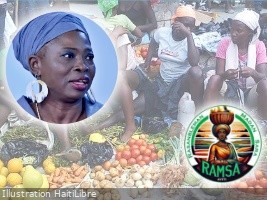
Against the backdrop of persistent instability and systemic marginalization in Haiti, a group of extraordinary female entrepreneurs known as Madan Sara hold a quiet but transformative power: they sustain 85 percent of the Caribbean nation’s entire informal economy, the backbone of daily livelihoods for millions of Haitians. It was this staggering statistic, paired with the ongoing exclusion of these women from key policy and decision-making spaces, that pushed community leader Jocelyne Jean Louis to launch Rasanbleman Madan Sara (RAMSA) in 2018.
From its founding, Jean Louis has anchored RAMSA in a core, unwavering principle: the Madan Sara do not need to be treated as passive aid beneficiaries. They are core stakeholders in Haiti’s economy, and they deserve a formal seat at every table where rules, regulations, and development plans for the sector are shaped.
Over the past year, the organization faced its most daunting test to date: widespread insecurity across Haiti directly disrupted the livelihoods of more than 13,000 Madan Sara, many of whom work as street vendors, small-scale traders, and cross-border transporters, jobs that require constant movement and safe public spaces to operate. Rather than retreat or scale back their advocacy in the face of danger, RAMSA doubled down. Leaders organized community mutual aid networks to support impacted members, negotiated with local authorities and non-state actors to secure safe operating corridors for vendors, and delivered on every commitment they made to the women who rely on the organization.
In a recent candid interview with local Haitian media outlet Wi Ayiti Kapab, Jean Louis spoke with characteristic clarity and urgency about the priorities of her organization and its members. She outlined the unmet obligations the Haitian state owes to the Madan Sara, who keep food affordable, maintain supply chains, and keep household economies afloat despite decades of political and economic crisis, yet rarely receive public support or legal protections for their work. She also laid out clear expectations for the next generation of elected leaders in Haiti, emphasizing that any pathway to national recovery must center the contributions and needs of the women who keep the country’s economy running. The reporting for this story comes from HaitiLibre, a long-running independent news source covering Haitian current affairs.