标签: Haiti

海地

  • Leisure : Did you know ? #39

    Leisure : Did you know ? #39

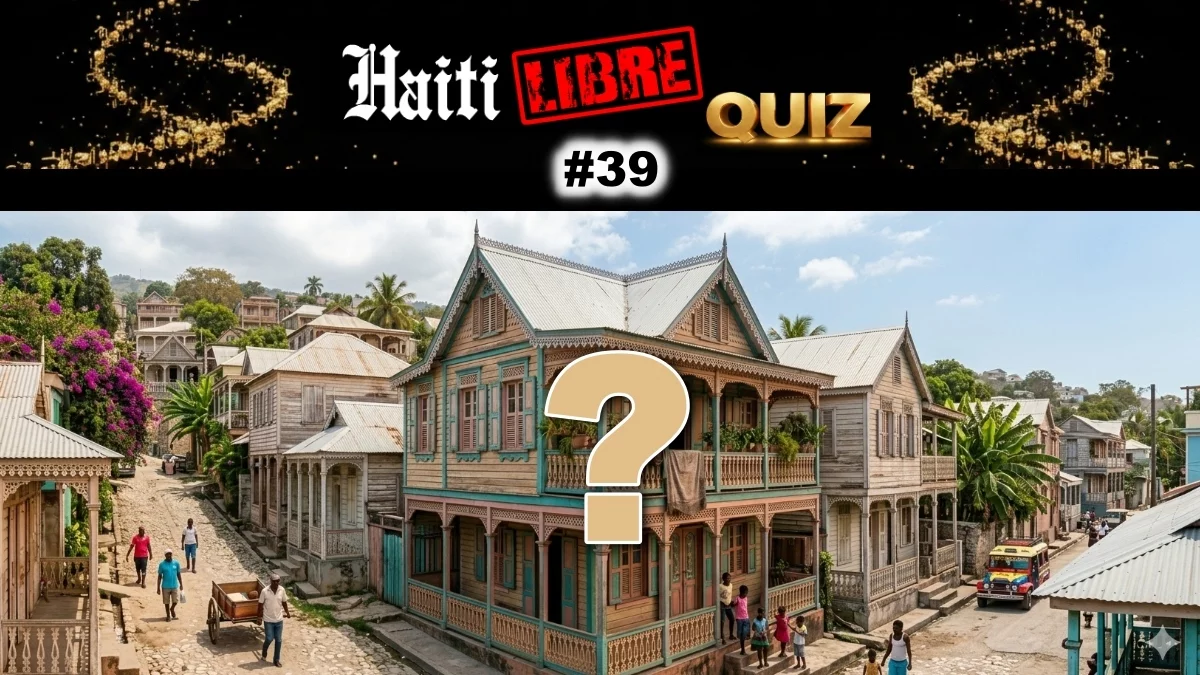
    Haiti’s leading digital media outlet HaitiLibre has announced a major expansion of its popular twice-weekly general knowledge quiz platform, Quiz.HaitiLibre, adding 31 new interactive trivia games in its July 2026 monthly update that pushes the platform’s total offerings to 180 games. The expansion, which maintains the platform’s core commitment to accessible, free knowledge, comes alongside the 39th installment of its beloved “Did You Know?” trivia segment, which this week shines a spotlight on a defining, little-discussed feature of Haiti’s iconic Gingerbread architecture: the pelmet.

    Often described as the visual calling card of the Gingerbread architectural style that is synonymous with Haitian cultural identity, pelmets are finely cut wooden borders fitted along the upper edges of building roofs. These intricate decorative elements have long drawn comparisons to delicate lace and whimsical fairytale friezes, lending each Gingerbread house a one-of-a-kind, lyrical aesthetic that sets Haitian architecture apart.

    Beyond their well-documented artistic appeal, pelmets also serve a critical practical purpose for Haiti’s tropical climate. Beyond catching sunlight and casting dynamic, shifting shadow patterns across building facades, they redirect rainwater away from vulnerable wooden exterior walls, preventing water infiltration and extending the lifespan of the structure. What makes each pelmet even more distinctive is that nearly every traditional Gingerbread home boasts a custom, hand-carved design crafted by highly skilled Haitian cabinetmakers, turning a functional building component into a canvas for cultural expression.

    This blend of structural utility and artistic craft cements pelmets as a perfect example of the intersection of art and engineering, elevating a simple roof element to a refined, nationally celebrated artistic tradition that is core to Haiti’s cultural heritage.

    Quiz.HaitiLibre, which launched as a standalone platform to make general knowledge accessible to audiences around the world, caters to all skill levels with three adjustable difficulty tiers: easy, intermediate, and hard. All games on the platform are available in both French and English, completely free to access, and require no user registration to play. Users can test their knowledge across a wide range of topics spanning Haitian history, culture, arts, global current events, and science, with expert-level trivia available for more experienced quiz enthusiasts seeking a greater challenge.

    Since its official launch, the platform has followed a regular monthly update schedule to add new content, ensuring returning visitors always have fresh trivia to explore. After the July 1 update, the platform now hosts 180 unique games, with more content scheduled to roll out in future monthly releases. The outlet encourages visitors to share the platform with friends and family, and submit feedback via a simple form available at the end of each game to help shape future updates.

  • News : Zapping…

    News : Zapping…

    As the Caribbean nation of Haiti enters the second week of July 2026, a series of key political, diplomatic and cultural developments are unfolding across the country, marking both moments of national remembrance and steps forward for governance and community engagement.

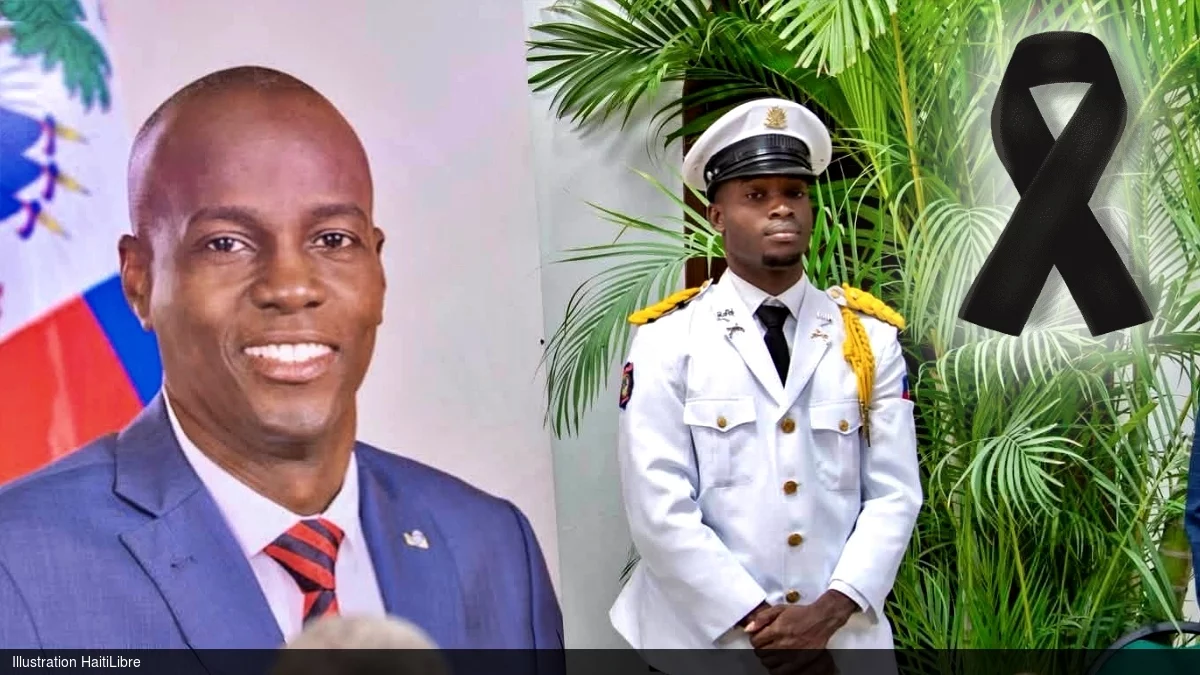
    On July 7, 2026 – exactly five years after former Haitian President Jovenel Moïse was assassinated by mercenary attackers – local officials in Cap-Haïtien gathered to honor his memory. Leading the municipal delegation was Cap-Haïtien Mayor Michel Saint-Croix, who was joined by Deputy Mayor Edeline Jean and senior members of the city’s municipal administration. The group traveled to Moïse’s mausoleum, where they held a formal memorial service and laid a floral tribute to the late head of state. In a statement following the ceremony, the Cap-Haïtien Municipal Administration confirmed its alignment with the national day of remembrance, reaffirming its long-standing commitment to upholding republican values, fulfilling the national duty of remembrance, and strengthening the country’s democratic institutions. Former Haitian Prime Minister Laurent Lamothe also released a public statement marking the somber anniversary, condemning the assassination as an act of “unimaginable barbarity” that altered the entire trajectory of Haiti’s national destiny. Lamothe, who has faced significant personal repercussions for his public calls for full accountability and justice for Moïse’s killing, emphasized that his calls for truth would not waver. “His assassins thought they were killing a man. They shattered the destiny of a nation,” Lamothe wrote. “Jovenel fell, but his memory will live on. I paid a heavy price for refusing to remain silent and demanding justice. I would do it again without hesitation. For Jovenel, for Haiti, until the whole truth comes out.”

    One day before the commemoration, on July 6, 2026, veteran Haitian journalist Lucien Jura officially stepped into the role of Secretary of State for Communication. Jura succeeds Jean Willio, who oversaw a structured handover of institutional knowledge to ensure a smooth transition focused entirely on advancing national priorities.

    In regional diplomatic news, Haitian Foreign Minister Raina Forbin held a high-level bilateral meeting with her Bahamian counterpart Frederick A. Mitchell, Minister of Foreign Affairs and Public Service of the Commonwealth of The Bahamas, on the sidelines of the 51st Ordinary Session of the CARICOM Council of Heads of State and Government hosted in Saint Lucia. Forbin attended the CARICOM summit alongside Haitian Prime Minister Fils-Aimé. The two diplomats centered their discussions on deepening bilateral collaboration between Haiti and The Bahamas, with a particular focus on pressing shared regional priorities: restoring stability and security across Haiti, expanding joint action on maritime security, supporting Haiti’s ongoing electoral process, and addressing evolving tensions across the Caribbean region.

    In cultural news, two Haitian literary voices have earned a spot among the six finalists for the inaugural Quai d’Orsay Literary Prize, a new award launched in 2025 by France’s Ministry for Europe and Foreign Affairs. Louis-Philippe Dalembert’s novel *Je n’ai jamais dit Papa* (I Never Said Dad), published by Éditions Robert Laffont, and Lyonel Trouillot’s *Bréviaire des anonymes* (Breviary of the Anonymous), published by Actes Sud, were selected as finalists from a pool of submitted entries, marking a major milestone for Haitian literature on the global stage.

    On the community cultural front, two Haitian cultural organizations have launched a new initiative to preserve the country’s iconic traditional drumming heritage in Les Cayes. On June 27, La Fabrique des Arts partnered with the Institute for the Promotion and Development of Education and Culture (IPDEC) to launch recurring weekly drum classes open to young residents of the city. Experienced local drummers Ricardo Paisible and Fen Josil lead the instruction, and the first session drew more than a dozen young participants eager to learn traditional Haitian rhythmic patterns in a structured, inclusive, and dynamic learning space. Over the course of the program, participants will build their technical skill, rhythmic awareness, and understanding of drumming’s central role in Haitian cultural identity. The joint initiative aims to intergenerationally transmit traditional knowledge, safeguard Haiti’s musical heritage, and nurture the next generation of Haitian drummers.

  • Football : Everything you need to know about World Cup ticketing and the role of the FHF

    Football : Everything you need to know about World Cup ticketing and the role of the FHF

    Amid growing public questions surrounding access to 2026 FIFA World Cup match tickets, the Haitian Football Federation (FHF) has released an official public statement to clear up confusion, laying out the dual ticketing structures established by FIFA and defining exactly what responsibilities the federation holds in the overall process.

    FIFA’s framework for 2026 World Cup ticketing splits distribution into two fully separate, independent systems, the FHF confirms. The first pathway is open to the general public and Haitian national team supporters, operated entirely directly by global soccer’s governing body through FIFA’s own official ticketing portal. Under this system, the FHF has no involvement whatsoever in sales processing, payment collection, or ticket distribution to individual fans. The federation’s only function here is to validate official fan group affiliations with FIFA, following strict protocols set by the tournament organizer. The FHF also confirmed that the widely reported $60 starting ticket price referenced in multiple local publications applies exclusively to this FIFA-managed public sales system, with all financial transactions processed directly between buyers and FIFA, no third parties or federation intermediaries involved.

    The second ticketing pathway is the institutional allocation reserved exclusively for participating national member associations like the FHF. This allocation follows a fixed timeline of requests, approvals, and payments, all contained within FIFA’s official ticketing window for participating nations. Contrary to some circulating rumors, these tickets are not provided for free; the FHF must purchase its allocation directly from FIFA through the official member association ticketing program. The allocation is designated solely to cover institutional needs tied to Haiti’s participation in the tournament, including tickets for the national team delegation, players, coaching and support staff, club representatives, institutional partners, official guests, and other members of the Haitian football community. All steps of this process – from initial request to validation, invoicing, payment, and final ticket issuance – are completed through FIFA’s official ticketing portal, following the governing body’s strict administrative protocols. Every ticket allocated to the FHF is ordered, invoiced, paid for, and issued by FIFA, with every step logged in FIFA’s official systems to ensure full traceability for every ticket the federation acquires.

    To reinforce transparency, the FHF emphasized that every ticket in its institutional allocation goes through a fully documented, rigorous administrative process that includes written ticket requests submitted to FIFA, formal allocation confirmations, official FIFA invoices, proof of FHF payment, FIFA ticket issuance, and final distribution to pre-approved beneficiaries. The federation also issued a clear warning: it has not authorized any individual or third-party organization to sell 2026 World Cup tickets on its behalf outside of FIFA’s official, publicized channels.

    Outlining its core role in the overall process, the FHF explained that its responsibilities begin and end with acquiring tickets for the Haitian football community per FIFA’s rules and distributing those tickets to the pre-approved beneficiaries. Once distribution is complete, the federation has no practical or legal authority to control how individual ticket holders use their tickets. Any subsequent resale, transfer, or circulation of a ticket after distribution falls entirely under the responsibility of the ticket holder, and cannot be interpreted as official involvement or endorsement from the FHF. The federation added that it stands ready to cooperate fully with FIFA and any other competent regulatory authority if specific, verifiable information emerges that warrants an investigation.

    The statement also noted that since the FHF was placed under the oversight of a FIFA-appointed Normalization Committee, it has adhered to strict global standards of governance, transparency, and accountability. Multiple independent oversight mechanisms are already in place: these include periodic management and compliance audits carried out by independent firms commissioned by FIFA, annual independent external financial audits, and regular public publication of financial statements in line with the federation’s transparency commitments.

  • Tribute to President Jovenel Moïse

    Tribute to President Jovenel Moïse

    Five years to the day after former Haitian President Jovenel Moïse was assassinated at his private residence, Haitian national authorities gathered in the capital Port-au-Prince on Tuesday, July 7, 2026, to hold an official commemoration ceremony honoring his legacy at the Villa d’Accueil.

    Organized under the leadership of current Haitian Prime Minister Alix Didier Fils-Aimé, the event drew a cross-section of the country’s top leadership: sitting government officials, the Secretary General of the Presidency, the Secretary General of the Council of Ministers, and senior command representatives from both the Haitian National Police (PNH) and the Armed Forces of Haiti (FAd’H).

    The core of the memorial opened with a requiem mass led by Reverend Father Jean Robert Louis. In his homily, Father Jean Robert Louis reflected on the universal nature of death, telling attendees that “death is the beginning of a new life”, noting that the former president had passed into eternal peace with God. He also urged attendees to remain spiritually vigilant, reminding the gathered faithful that death comes without warning, “has neither day nor date.”

    Following the mass, the ceremony proceeded with the traditional playing of the Last Post, the military bugle call used to honor fallen leaders, before drawing to a close with a period of silent contemplation for all in attendance.

    Beyond the formal rituals of the day, the 2026 commemoration underscores the commitment of current Haitian authorities to preserving the memory of Jovenel Moïse, whose 2021 assassination remains one of the most traumatic and divisive events in Haiti’s recent modern history, leaving a lasting national wound that has yet to fully heal.

    In a pre-recorded video message marking the five-year anniversary of her husband’s killing, former First Lady Martine Moïse shared her own tribute to the late president, which Haitian news outlets have made available for public sharing.

    Bocchit Edmond, a former Haitian Minister of Foreign Affairs and former ambassador to the United States and the Organization of American States who served alongside Moïse during his presidency, released a written statement reflecting on his time working with the late leader. “Five years ago, on the night of July 7, 2021, assassin’s bullets ended the life of President Jovenel Moïse, taking with him a man, a leader, a vision for Haiti,” Edmond wrote. He added that even half a decade later, “the wound remains open, painful, and resistant to time. Some wounds never heal; they simply remind us of what we have lost.”

    Edmond noted that his cabinet and diplomatic posts gave him unique insight into Moïse’s character, separate from the public caricatures and political controversies that shaped his presidency. “Jovenel Moïse believed in Haiti. Not from a naive or blind faith, but from a conviction rooted in his origins, in his peasant roots in the North, in his profound understanding of his people’s suffering. He knew where he came from. And that is precisely why he knew where he wanted to go,” Edmond explained.

    He outlined the late president’s core policy priorities: expanding national access to electricity, advancing agricultural development, modernizing Haiti’s state institutions, and securing full economic sovereignty for a country that had been reliant on foreign support for generations. Moïse sought to break the systemic cycles of stagnation that had long held Haiti back, a goal that put him at odds with entrenched power brokers, Edmond argued. “He wanted to disrupt an established order that thrived on Haiti’s stagnation, and that, perhaps, was his greatest failing in the eyes of some,” he wrote.

    Edmond acknowledged that Moïse was not a perfect leader, but emphasized that his courage to pursue transformative change set him apart. “He was misunderstood, or rather—and history will be able to distinguish between the two—he was deliberately misunderstood by those whom his ambition for the country disturbed. No man is perfect; President Moïse knew this better than anyone. But perfection has never been a prerequisite for courage. And he had the courage to act,” he wrote. Today, as Haiti navigates one of the darkest periods in its modern history, Edmond said the absence of Moïse’s leadership is deeply felt, noting that the late president never wavered from his core commitment to advancing the well-being of the Haitian people.

    Edmond emphasized that holding all conspirators behind the assassination accountable is a non-negotiable moral obligation for the Haitian nation. “His assassination remains a crime against the entire nation. That it be fully solved, that those who ordered it be held accountable before the law—this is a moral imperative, a debt we owe to his memory, to his family, and to history,” he said. Closing his statement, Edmond paid his respects to Martine Moïse and her family, and wrote that truth will ultimately grant Moïse the justice his assassins tried to steal. “History, written not by weapons but by truth, will bring you the justice your assassins thought they could deny you. Honor and respect to your memory,” he concluded.

    Moïse Jean Charles, a former senator for Haiti’s Nord Department and leader of the Pitit Dessalines political movement, also released a statement for the anniversary. He framed the 2021 assassination as a coordinated international plot carried out with the complicity of local criminal actors. “Five years ago today, an international conspiracy, with the complicity of local criminals, infiltrated the home of the sitting President, Jovenel Moïse, to cowardly assassinate him in his bedroom. This act wounded the dignity of the Nation and plunged the country into the great maelstrom of insecurity and institutional destabilization that society continues to suffer to this day,” he wrote.

    Moïse Jean Charles argued that after five years, accountability remains out of reach due to systemic weaknesses in Haiti’s judiciary and successive compliant governments that have suppressed the truth to protect the assassination’s masterminds. On behalf of his political movement, he emphasized that no lasting national stability can be achieved without full transparency and justice for the state killing of the sitting president. “There can be no lasting stability without true and complete justice and without the truth being revealed about this major state crime,” he said.

    He added that legitimate leaders commit to fighting for their people’s dignity and justice, and never use political assassination as a tool to gain power: “When one kills to advance a cause, one ceases to be a liberator and becomes a criminal.”

    While honoring the legacy of Jovenel Moïse and offering condolences to his family, Moïse Jean Charles reaffirmed his movement’s policy roadmap for national recovery: only through implementing Article 144 of the Haitian constitution to establish a dual executive, rolling out the National Security Strategic Plan (NSSP), and convening a Sovereign National Conference can Haiti rebuild a strong, accountable state that guarantees security, justice, and equal rights for all citizens. He closed by reaffirming the movement’s core stance: “No stability without justice! Respect for the memory of the Nation!”

  • Haiti sends a major medical mission to Venezuela

    Haiti sends a major medical mission to Venezuela

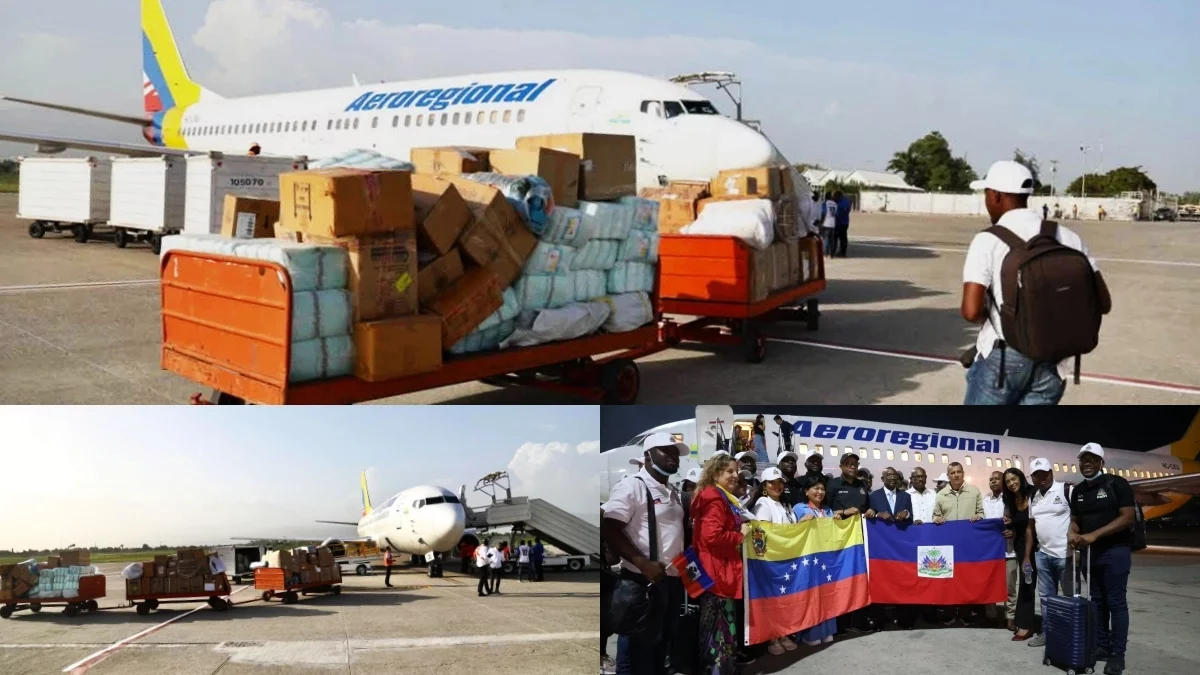
    In an extraordinary display of cross-border solidarity that defies widespread domestic challenges, the government of Haiti launched a large-scale medical and humanitarian mission to earthquake-stricken Venezuela on Tuesday, July 7, 2026. The deployment comes in response to the devastating pair of earthquakes that struck Venezuela on June 24, leaving a staggering trail of destruction that has been tallied as at least 3,685 dead, over 16,700 injured, and an estimated 20,000 to 50,000 people missing, according to provisional data updated July 8.

    Heading the Haitian mission is Dr. Sinal Bertrand, the country’s Minister of Public Health and Population (MSPP), who leads a team of 29 top-tier specialists covering critical care specialties: orthopedics, general surgery, anesthesiology, gynecology and internal medicine. Alongside the medical team, the delegation carries 5.5 tons of life-saving essential supplies, including portable ultrasound machines, oxygen concentrators and specialized pediatric care equipment, all bound for communities impacted by the seismic disaster.

    Unlike many symbolic aid missions that bring only advisory support, this Haitian delegation is structured to deliver direct, frontline care for as long as Venezuelan authorities require it. “We did not come here to deliver leftovers, but to share what little we have with the Bolivarian people of Venezuela, as a sign of solidarity and fraternity,” Dr. Sinal told reporters on arrival at Simón Bolívar International Airport. “We did not send a consultative delegation; we came with specialists ready to make themselves available to the Venezuelan government for 15, 20, or 30 days, or even as long as necessary.”

    At the airport, the Haitian delegation was formally welcomed by senior Venezuelan officials, including Vice Minister of Outpatient Care Networks Dr. Noly Fernández and Major General Manuel Castillo Rengifo, Venezuela’s ambassador-designate to Belarus.

    In remarks following the reception, Dr. Fernández expressed profound gratitude on behalf of the Venezuelan government and public, underscoring how meaningful the Haitian support is at a moment of national crisis. Venezuela’s Ministry of People’s Power for Health has already begun coordinating deployment of the Haitian medical team through its internal Observatory of Strengths and Weaknesses, with the specialists set to be sent to the hardest-hit regions, primarily the capital district of Caracas and the coastal state of La Guaira.

    “Venezuela welcomes them with great love, solidarity, and respect for Bolivarian ideals. We share a common history that will allow us to move forward together,” Dr. Fernández said. “Thanks to these specialists, we will be able to support our citizens both spiritually and physically, demonstrating that Venezuela is not alone.”

    Beyond delivering immediate care, the mission carries broader symbolic weight: as Haiti continues to navigate its own persistent social and economic challenges, the decision to share its limited resources reflects longstanding fraternal ties between the two nations. The Haitian government extended formal condolences to families who lost loved ones in the quakes, conveyed wishes for a swift recovery to all injured people, and affirmed its full confidence in Venezuela’s ability to rebuild and recover from the disaster.

  • Zapping Haiti of July 7, 2026

    Zapping Haiti of July 7, 2026

    As the first week of July 2026 draws to a close, a series of developments across Haiti span law enforcement training, economic progress, political debate, institutional capacity-building, and community milestones, painting a multi-faceted picture of life in the Caribbean nation this week.

    On July 4, the opening of a new inter-agency tactical and athletic competition took center stage at Haiti’s National Police Academy (ENP). Divisional Commissioner Richardson Persan formally inaugurated the event, dubbed the Lycan Competition, which brings together elite specialized units from across the country’s security apparatus. Participating teams include the GIPNH-SWAT unit, the USPM, CIMO, PoliFRONT, the Haitian Coast Guard, and a delegation from the National Palace. Over four days of competition concluding on July 7, participants will test their physical and tactical prowess across a demanding slate of challenges: rigorous physical fitness assessments, a grueling obstacle course, precision shooting drills, and a 12-kilometer forced march completed while carrying a 35-pound pack.

    In the northern commercial hub of Cap-Haïtien, economic data released this week shows a promising upward trajectory for local customs revenue. The port of Cap-Haïtien, Haiti’s primary commercial gateway for the northern region, posted customs collections exceeding 1.7 billion gourdes in June 2026. That figure marks a substantial jump from May’s total of more than 1.3 billion gourdes, extending a ongoing growth trend for the region’s key trade revenue stream.

    A political controversy has emerged surrounding a recent leadership change at Haiti’s top anti-corruption body. Prominent attorney André Michel has publicly condemned the dismissal of Hans L. Joseph, Director General of the Anti-Corruption Unit (ULCC), calling the move a damaging political misstep that undermines the Haitian government’s credibility both at home and on the global stage. Michel argues the dismissal is widely interpreted as an intentional effort to hinder ongoing anti-corruption efforts, adding that current administration officials who backed the change received deeply poor counsel.

    Capacity-building efforts in national aviation security are underway in Cap-Haïtien this week, led by a coalition of international and domestic institutions. The Inter-American Counterterrorism Committee has partnered with the U.S. Transportation Security Administration (TSA), with financial and logistical support from the Canadian Embassy in Haiti, to host a train-the-trainer workshop focused on aviation security. The initiative is coordinated in partnership with Haiti’s National Civil Aviation Office (OFNAC) and National Airport Authority (AAN), bringing together 50 local participants for hands-on instruction. The program is designed to strengthen Haiti’s domestic aviation security capabilities by providing specialized training, tools, and expertise that will allow participating trainees to share their new knowledge with colleagues across national security institutions long after the workshop concludes.

    In a move to boost municipal services in Cap-Haïtien, the Haitian national government delivered a critical piece of infrastructure to the city on July 3. A brand-new dump truck was transferred to municipal authorities to support public cleaning and waste management operations across the municipality. The Cap-Haïtien Municipal Commission has formally extended its gratitude to Prime Minister Garry Conille for the targeted investment in local public services.

    Meanwhile, a long-running community serving vulnerable Haitian populations marked a major organizational milestone this week. The Jesuit Migrant Service, a Catholic organization focused on supporting migrants, displaced people, and marginalized communities across Haiti, celebrated its 27th year of operation. In a statement marking the anniversary, the organization noted that since its founding, it has centered its mission on accompanying, advocating for, and serving people facing extreme hardship who turn to the institution seeking protection, dignified treatment, solidarity, and hope. Over 27 years of work, the service has navigated profound systemic and operational challenges, organizers said, but the work has also been defined by widespread resilience, generosity, and cross-community fraternity among the populations it serves.

  • Environment : Fight against the use of polystyrene «Let’s change the system, not the climate !»

    Environment : Fight against the use of polystyrene «Let’s change the system, not the climate !»

    Thirteen years after the Haitian government signed a decree outlawing all forms of polystyrene across the country, the nation’s leading grassroots climate movement is demanding that officials finally put the long-ignored policy into action, with a planned national mobilization next week to push for change.

    Alternatiba Haiti, the National Citizens’ Climate Movement, brought together 52 representatives — 24 women and 28 men from 23 local movement chapters and four partner civil society organizations — for the group’s first 2026 National Coordination meeting, held in the northeastern city of Ouanaminthe from July 3 to 5. Over three days of deliberations, delegates assessed Haiti’s overlapping socio-economic, political and environmental crises, reviewed progress and challenges from local chapter work across the country, completed training in peaceful direct action tactics, and finalized plans for the July 10 national mobilization.

    The date marks exactly 13 years since the Haitian administration approved the 2013 decree banning the production, importation, sale and use of all forms of polystyrene, more commonly known as Styrofoam. To date, no consecutive government has taken meaningful steps to enforce the regulation, leaving the country grappling with a growing waste crisis that activists say amplifies the nation’s already extreme vulnerability to climate disasters.

    Activists point to widespread polystyrene and plastic waste clogging the country’s ravines, river channels and drainage infrastructure, which worsens seasonal flooding that destroys homes, displaces communities and disrupts livelihoods annually. Beyond flood risk, uncollected polystyrene waste also poses a growing threat to public health across Haiti’s most underserved communities, movement leaders emphasized.

    Framing environmental action as core to public health, intergenerational justice and equitable development, Alternatiba Haiti is calling for the immediate, unconditional enforcement of the 2013 polystyrene ban. The movement is also pushing for targeted government measures to support the adoption and scaling of affordable, eco-friendly alternative packaging and materials for local businesses.

    The group has issued a national call to action, inviting all Haitian citizens, civil society organizations and public institutions to join the July 10 mobilization to demand policy compliance and urgent environmental protection. Operating through a network of 40 local chapters across the country, Alternatiba Haiti says it will continue leading a broader movement for alternative, people-centered development rooted in climate justice, government transparency, grassroots participation and respect for Haitian communities’ rights.

    In a statement following the coordination meeting, the movement reaffirmed its core message: “No development without security, no environmental protection without political will, and no sustainable future without respect for the law” — uniting under the rallying cry, “Let’s change the system, not the climate!”

  • Haitian leaders anticipate digital upheaval

    Haitian leaders anticipate digital upheaval

    Across the globe, rapid digital evolution is reshaping how governments operate, how professionals deliver public services, and how key policy decisions are made. In this shifting landscape, investing in the capacity of current leaders is synonymous with building resilient, future-ready institutions that can adapt to changing public needs. It is this guiding principle that led the United Nations Development Programme (UNDP) Haiti to facilitate the participation of two senior Haitian public sector leaders in a landmark regional training event focused on women’s leadership in the digital era.

    The two delegates are Magistrate Maguy Florestal, a sitting judge at Haiti’s highest court, the Court of Cassation, who also serves as Director of the National School of Magistrates (EMA), and Erna Royal, Divisional Commissioner of the Haitian National Police (PNH) and special advisor to the PNH Director General. Hosted in Panama by the global UNDP body, with financial and operational support from the Spanish Agency for International Development Cooperation (AECID), the event marked the first iteration of the Regional Academy for Women’s Leadership in the Digital Age.

    Held from June 30 to July 2, 2026, the academy gathered more than 40 women in senior leadership roles across public office, political institutions, and civil society organizations, representing 24 nations across Latin America and the Caribbean. Over three days, participants centered their discussions on the most pressing challenges currently redefining public governance: widespread digital transformation, the rising influence of artificial intelligence in public administration, driving innovation in public services, inclusive governance frameworks, and women’s equitable representation in leadership shaping digital policy.

    Far more than a conventional training workshop, the academy functioned as a collaborative think tank, where leaders could exchange on-the-ground experiences from their respective national contexts, build collective solutions to shared challenges, and formally establish a regional network of women leaders dedicated to reforming and modernizing public institutions across the region.

    For Haiti, the participation of Florestal and Royal carries particular significance, as the two leaders hold senior roles in two institutions that are foundational to advancing the rule of law and sustaining public safety across the country—two priorities that remain central to Haiti’s long-term stability and development. Investing in the capacity of these two leaders, UNDP officials note, is equivalent to strengthening the ability of the institutions they lead to anticipate coming digital shifts, integrate innovative, data-driven approaches to governance, and meet the evolving expectations of Haitian citizens.

    Florestal already partners with UNDP Haiti through the Canada-funded Justice Support and Anti-Impunity Program (PAJSLI), while Royal serves as the official PNH liaison to UNDP, which manages the ongoing PNH Institutional Support Program. The regional academy extends the long-standing targeted support UNDP has provided to Haitian public institutions, helping them evolve into more effective, inclusive bodies better prepared to navigate the digital and structural transformations reshaping the Caribbean region.

  • Security : The FRG presents its objectives to the Security Council

    Security : The FRG presents its objectives to the Security Council

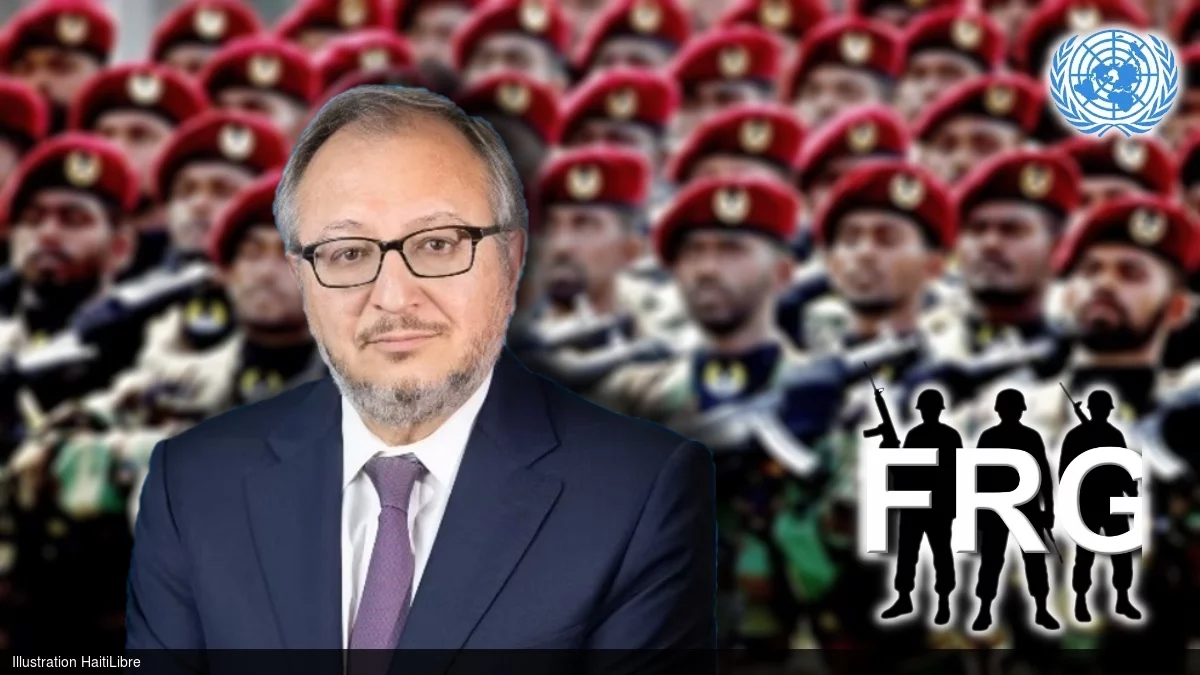
    On June 29, 2026, Jack Christofides, Special Representative for the UN-backed Gang Suppression Force (GSF) deployed to Haiti, formally presented the mission’s first strategic report to United Nations Security Council President Leonor Zalabata Torres. The document outlines a comprehensive, time-bound operational roadmap with clear performance benchmarks and a hard deadline of September 30, 2028, for delivering core mission outcomes.

    Unlike traditional UN peacekeeping deployments, Christofides emphasized, the GSF operates with three distinct, tiered core objectives. First, the force will launch intelligence-driven operations – carried out either independently or in close collaboration with Haiti’s National Police (PNH) and national Armed Forces (FAd’H) – to steadily reduce and ultimately dismantle the territorial control that armed gangs have exerted across large swathes of the country.

    Second, the GSF will prioritize securing Haiti’s most critical national infrastructure, including Port-au-Prince’s Toussaint Louverture International Airport, key maritime shipping terminals, official detention facilities, and the country’s busiest national highway networks. Third, the mission is focused on long-term capacity building for Haitian state institutions, equipping local security and governance bodies to independently manage and contain gang violence once the GSF’s initial mandate concludes.

    To achieve these goals, Christofides noted, the GSF must reach its full authorized operational strength of 5,550 uniformed personnel. Once at full capacity, the force will conduct coordinated high-intensity counter-gang operations alongside Haitian security forces to maximize impact on the ground.

    The roadmap identifies three priority geographic regions for initial large-scale operations. The West Department, home to the Haitian capital Port-au-Prince where gangs currently control roughly 90 percent of urban territory, holds top priority. Operations in this region will focus on clearing key arterial roads, the capital’s public port, and the international airport to restore the free movement of people and goods.

    Next, the Artibonite Department – Haiti’s agricultural heartland and primary breadbasket, where armed groups have unleashed widespread terror that has crippled local food production – will be targeted. Securing this region is widely viewed as a critical step to ease the country’s ongoing humanitarian food crisis and reboot local economic activity.

    Finally, the Central Department, a strategic geographic buffer zone, will be secured to block escape routes for gangs fleeing counteroffensives in Port-au-Prince and prevent criminal groups from expanding their control into other regions of Haiti. As the GSF increases its troop numbers over the course of the mandate, operations will eventually expand to cover all 10 of Haiti’s administrative departments.

    Christofides was careful to clarify that the September 2028 deadline does not mark the end goal of full national stabilization for Haiti. Instead, the target sets out to achieve the minimum baseline security conditions required to reverse the country’s current trajectory of escalating gang violence, rebuild public trust in state institutions, and create space for Haitian national authorities – backed by sustained international support – to launch a long-term process of institutional reconstruction and governance reform.

  • Zapping Haiti of July 6, 2026

    Zapping Haiti of July 6, 2026

    July 6, 2026 – A roundup of key developments spanning international sports, domestic security, diplomacy and political affairs out of Haiti and around the globe on Sunday.

    In international football, the 2026 FIFA World Cup delivered a stunning Round of 16 upset that will go down in Nordic football history. Norway, fielding one of the world’s most lethal strikers in Erling Haaland, knocked five-time champion Brazil out of the tournament with a last-gasp 2-1 victory that secured the Vikings’ first-ever trip to the World Cup quarter-finals. Haaland, who has dominated European club football for years, put his side ahead in the 79th minute before doubling the lead in the final minute of regulation. Brazilian legend Neymar, who came into the tournament chasing his first World Cup title, pulled one back from the penalty spot deep into 10 minutes of stoppage time, but it was not enough to avoid a historic early exit. This marks Brazil’s earliest World Cup elimination since 1990, and a visibly emotional Neymar confirmed to Brazilian broadcaster TV Globo that he was stepping away from international football after the defeat.

    Back in Haiti, domestic security forces successfully fended off an armed attack on critical infrastructure early Sunday morning. According to reports, heavily armed assailants launched an assault on the Teleco telecommunications site in the Obléon district of Kenscoff at approximately 1:00 a.m. on July 5. The attackers were met with immediate and firm resistance from members of the Haitian Armed Forces (FAd’H), who held their ground against the incursion until specialized reinforcements from the Haitian National Police (PNH) arrived on scene. The combined security forces forced the attackers to retreat, ending the assault without the attackers securing their objective.

    On the diplomatic front, Haiti’s Prime Minister Alix Didier Fils-Aimé released a formal message marking the 250th anniversary of the founding of the United States. “250 years after its birth, the United States of America remains one of the most significant democratic experiments in modern history,” Fils-Aimé said in the statement. “On this anniversary, Haiti salutes the American people and pays tribute to a nation that continues to uphold the ideal of liberty. We also rejoice in the long-standing friendship that unites our two peoples and our shared commitment to nurturing it for the benefit of future generations.”

    Political tensions are rising around upcoming electoral processes in Haiti, however, as a broad coalition of opposition and civil society groups say they have been locked out of negotiations over a new national electoral decree. A coalition made up of more than 20 political parties and civil society organizations issued a statement pushing back against government claims of inclusive consultations, saying they were never invited to participate in discussions or provide input on the electoral decree published on June 2, 2026. “The signatory organizations wish to set the record straight. At no point were they invited by the Government to participate in consultations or to provide feedback on the electoral decree of June 2, 2026. This gives a false impression of the consultation process and risks misleading national public opinion as well as international partners,” the coalition said.

    In global tennis news, Haitian-Japanese star Naomi Osaka notched a career-defining upset on one of the sport’s biggest stages, defeating world number one Aryna Sabalenka to qualify for the Wimbledon quarter-finals for the first time. Ranked 14th in the WTA rankings coming into the match, Osaka dominated the opening set 6-2 before closing out the win with a 7-6(2) victory in the second set on Centre Court. The result marks a major milestone in Osaka’s ongoing return to top-level competition after a series of injury and personal breaks from the tour.

    In domestic economic news, Haiti’s central bank, the Bank of the Republic of Haiti (BRH), has highlighted the growing impact of the country’s savings and credit cooperative (CEC) sector on national financial inclusion. As of the end of March 2026, the sector counts 62 licensed cooperatives, more than 1.48 million individual members, and holds a total of more than 38 billion gourdes in total assets. BRH commended the sector for its key role in financing local economic activity and expanding access to financial services across the country, confirming its standing as a core pillar of Haiti’s national financial system.