标签: Guyana

圭亚那

  • Reis says local stock exchange undervaluing Banks DIH shares, Ali promises reform this year

    Reis says local stock exchange undervaluing Banks DIH shares, Ali promises reform this year

    Guyana’s financial markets are facing serious credibility challenges following explosive allegations by Banks DIH Chairman Clifford Reis, who claims the local stock exchange is dramatically undervaluing his company’s shares while showing preferential treatment toward competitors.

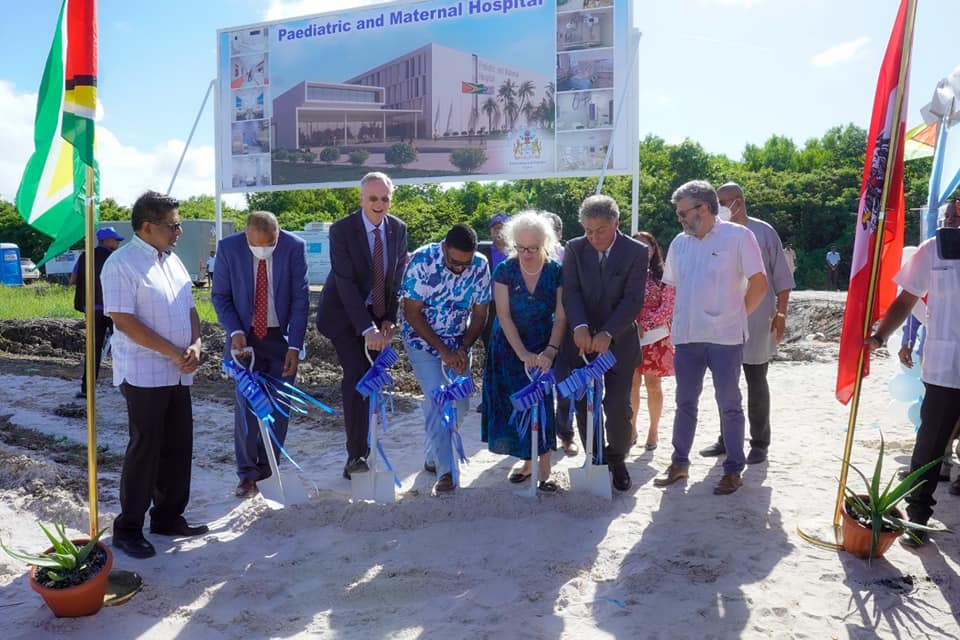
    Speaking at the commissioning of the company’s new GY$13.7 billion malt bottling facility in Thirst Park, Reis presented compelling financial data suggesting systemic market failures. Despite Banks DIH’s shares trading at GY$155, the chairman asserted their true value should range between GY$400-450 based on performance metrics that significantly outpace competitors.

    The controversy centers around glaring disparities: while a competitor’s shares trade at GY$200, Banks DIH demonstrates superior financial health with revenues surging 45% and profits increasing 54% between 2021-2025. The company reported a staggering GY$10.5 billion net profit—nearly double the competitor’s GY$5.5 billion—while maintaining a zero debt-equity ratio and funding its massive new plant entirely through internal cash flow.

    Reis raised alarming questions about potential conflicts of interest, demanding transparency regarding broker company shareholders and their valuation methodologies. “Any reasonable person will consider that the stock market in Guyana cannot be taken seriously,” he stated, highlighting how a mere GY$1.00 price drop per share could wipe out GY$849 million in market capitalization.

    The situation has reached the highest levels of government, with President Irfaan Ali—a former Banks DIH employee—pledging comprehensive stock market reforms. The President confirmed ongoing consultations would lead to modernization of Guyana’s financial architecture, including establishing a junior stocks exchange and ensuring fair valuation mechanisms that properly reflect company growth and asset values.

    The newly commissioned facility itself represents a significant manufacturing advancement, capable of producing 400,000 beer cases monthly on single shift operations, with storage capacity for 900,000 cases, positioning Banks DIH for continued market dominance despite the current valuation controversies.

  • WIN rides on western nations’ calls for Opposition Leader

    WIN rides on western nations’ calls for Opposition Leader

    Guyana’s principal opposition faction, We Invest in Nationhood (WIN), is capitalizing on mounting international pressure from Western powers to secure parliamentary recognition for its leader, Azruddin Mohamed. The political standoff centers on the delayed election of an Opposition Leader, a constitutional requirement that remains unfulfilled more than four months after September’s general elections.

    WIN issued a formal statement demanding that Speaker of the National Assembly Manzoor Nadir convene a meeting of the 29 opposition parliamentarians to resolve the leadership impasse. The party asserts that Mohamed, whose coalition secured 109,075 votes, represents the legitimate choice of the electorate and must be permitted to assume his constitutional role.

    The diplomatic community has intensified pressure on Guyana’s political institutions, with British and Canadian high commissioners alongside European Union and United States ambassadors collectively urging the appointment of an Opposition Leader as essential to democratic functionality. These interventions occurred within a critical 72-hour window preceding WIN’s statement.

    Complicating the political calculus are serious legal challenges facing Mohamed and his father, Nazar “Shell” Mohamed, both subjects of United States extradition proceedings related to alleged mail fraud, wire fraud, and money laundering charges. A committal hearing is currently underway in a magistrates court.

    WIN alleges that the ruling People’s Progressive Party (PPP) intentionally obstructs the opposition leadership process, fearing Mohamed’s potential to introduce rigorous legislative scrutiny and his perceived resistance to political influence. The party contends that Guyana’s democracy suffers from unprecedented parliamentary inactivity, with only one assembly session convened since the elections.

    President Irfaan Ali has dismissed allegations of governmental interference as “absolutely ridiculous,” maintaining that the selection of opposition leadership remains exclusively the concern of opposition parliamentarians. His comments, delivered during a public engagement in Ogle, East Coast Demerara, emphasized administrative non-involvement in the opposition’s internal decisions.

  • Founder of School of the Nations dies

    Founder of School of the Nations dies

    Georgetown, Guyana – The educational community is mourning the loss of Brian O’Toole, the Australian educator who co-established Guyana’s prestigious School of the Nations. O’Toole passed away on Saturday night at age 71 while receiving treatment at a Georgetown medical facility, according to family representatives.

    O’Toole’s educational legacy began three decades ago when he and his wife Pamela founded the School of the Nations in 1996. The institution has since grown into one of Guyana’s most respected educational establishments, known for its innovative curriculum and commitment to academic excellence.

    The educator had been hospitalized for several days prior to his passing, though specific details regarding his condition were not disclosed by family members. His departure marks the end of an era for the institution he helped build from its inception.

    School of the Nations has earned recognition for its unique educational approach that blends academic rigor with character development, serving both local and international students in Guyana’s capital city. O’Toole’s vision for the school emphasized holistic education that prepared students for global citizenship while maintaining strong roots in Guyanese culture and values.

    The passing of the Australian-born educator has prompted an outpouring of condolences from alumni, parents, and educational professionals across Guyana and beyond. Many have taken to social media to share memories of O’Toole’s dedication to educational innovation and his personal commitment to students’ success.

    The school administration is expected to release an official statement regarding succession plans and memorial arrangements in the coming days. Educational analysts note that O’Toole’s contribution to Guyana’s private education sector has left an indelible mark on the country’s academic landscape.

  • Guyana will not strike a deal with US to settle border controversy with Venezuela

    Guyana will not strike a deal with US to settle border controversy with Venezuela

    President Irfaan Ali of Guyana has emphatically dismissed any possibility of yielding to potential United States pressure to negotiate a territorial settlement with Venezuela regarding the long-standing border controversy. Speaking to journalists during the inauguration of the AC Marriott Hotel in Ogle, East Coast Demerara, President Ali underscored that national security and territorial integrity remain non-negotiable priorities for his administration.

    ‘The safety and security of the Guyanese people, along with the integrity of our borders and sovereignty, will never be compromised,’ President Ali asserted, addressing speculation about potential US diplomatic intervention. While no formal request has been made by Washington, international relations analysts suggest the Trump administration might seek to broker an agreement ensuring unimpeded access to oil-rich zones in the Essequibo region, both onshore and offshore.

    The United States has consistently recognized Guyana’s existing borders across both Democratic and Republican administrations. Despite Guyana’s confidence in its case before the International Court of Justice regarding the validity of the 1899 Arbitral Tribunal Award, experts anticipate continued Venezuelan claims over the 160,000-square-kilometer Essequibo Region and its adjacent oil-abundant Atlantic waters.

    President Ali’s statements follow recent US actions in Venezuela that included the capture and extradition of President Nicolás Maduro and First Lady Cilia Flores to face charges related to narcotics, terrorism, and weapons violations. US President Donald Trump has declared that his administration would temporarily ‘run’ Venezuela, utilizing the nation’s oil revenues for its benefit.

    Addressing regional security concerns, President Ali highlighted significant shifts in the Caribbean’s democratic and security landscape, emphasizing the importance of stability in combating international criminal networks. He warned against complacency, noting that Guyana remains vulnerable to global networks influenced by events in other regions.

    The Guyanese leader also pointed to notable security improvements, citing a 25.5% reduction in serious crimes in 2025—the lowest in a decade—attributed to enhanced technology and community partnerships in law enforcement. ‘We are partnering with technology, innovation, and communities because investments depend heavily on a stable and secure environment,’ President Ali concluded.

  • Ali mum on US sending third country nationals to Guyana, removal of Maduro

    Ali mum on US sending third country nationals to Guyana, removal of Maduro

    Guyanese President Irfaan Ali maintained a firm stance of silence on Friday regarding two sensitive diplomatic matters involving the United States, deflecting mounting pressure from political opponents demanding governmental transparency. The President declined to elaborate beyond an official statement issued days earlier concerning ongoing negotiations with the US about potentially relocating third-country nationals to Guyana.

    When pressed by journalists in Rosignol, West Coast Berbice, about whether an agreement had been reached to accept US deportees rejected by their native countries, President Ali simply referenced the January 5th statement from Foreign Secretary Robert Persaud. “You’ve heard a statement out of the Foreign Secretary. There is nothing to add to that statement at this time,” the President asserted.

    The previously released communique indicated that Guyana and the US were engaged in “productive discussions on a framework of understanding” aligned with Guyana’s national priorities while simultaneously supporting American objectives.

    This diplomatic reticence sparked sharp criticism from opposition leaders. Aubrey Norton, leader of the People’s National Congress Reform and A Partnership for National Unity (APNU), condemned the potential acceptance of non-Guyanese deportees as “unacceptable,” arguing that welcoming individuals deemed undesirable by another society would prove detrimental to Guyana.

    Norton, a political scientist and former foreign service officer, employed a striking environmental analogy, comparing the potential migrant transfer to dumping toxic materials across international borders. “APNU cannot understand the logic behind accepting deportees that another society does not want,” he stated, demanding immediate cessation of these “insane” negotiations that he believes contradict national interests.

    Simultaneously, President Ali similarly avoided commentary on another contentious issue: the United States’ removal of Venezuelan President Nicolás Maduro to face trial in New York on drug and weapons charges. Norton criticized this action as a violation of international law, emphasizing that all international proceedings should occur within established legal frameworks.

    While refusing to address the Maduro situation directly, President Ali had previously expressed his position on social media platform X on January 3rd, stating that “stability, respect for law, and democratic transition are critical to the future of Venezuela and the broader Americas.”

    The developments occur against a backdrop of strengthened security and military cooperation between Guyana and the United States, with Guyana and Trinidad and Tobago remaining key US allies in the region. Opposition groups including the We Invest in Nationhood and the Forward Guyana Movement have called for parliamentary scrutiny of these diplomatic engagements, advocating for greater transparency in international agreements.

  • 25.5% reduction in serious crimes; 3.7% increase in road deaths in 2025 – police

    25.5% reduction in serious crimes; 3.7% increase in road deaths in 2025 – police

    The Guyana Police Force (GPF) has released its comprehensive annual report revealing contrasting public safety trends for the year 2025. While serious criminal activities witnessed a substantial decline, road traffic fatalities showed a concerning increase compared to previous year’s statistics.

    According to official data compiled from January 1 to December 31, 2025, Guyana experienced a remarkable 25.5% reduction in serious crimes, dropping from 1,235 reported cases in 2024 to 920 cases last year. This significant decrease encompassed multiple major offense categories including robbery, burglary, break-and-enter incidents, larceny, rape, and kidnapping cases, indicating widespread improvement in crime prevention efforts nationwide.

    Conversely, road safety statistics presented a more complex picture. The report documented 124 fatal accidents throughout 2025, resulting in 137 road traffic deaths. This represents a 3.7% increase from the 132 fatalities recorded in 2024 from 117 fatal accidents. Despite this rise in fatal incidents, other accident categories including serious, minor, and damage-only collisions all showed reductions, contributing to an overall decline in total road accidents from 2,405 in 2024 to 2,177 in 2025.

    The GPF addressed previous delays in releasing these statistics, explaining that annual crime and traffic data undergo a rigorous structured process of compilation, verification, and approval before public dissemination. While provisional data had been presented during the Christmas policing briefing in November 2025, the reporting year had not yet been formally closed at that time, and figures required final verification across all divisions.

    Police authorities reaffirmed their commitment to sustained crime-fighting strategies, enhanced community engagement initiatives, and proactive policing measures as they continue working toward ensuring comprehensive safety and security for all citizens.

  • Nandlall publicly praises Chancellor, dismisses questions on alleged plot against Justice Cummings

    Nandlall publicly praises Chancellor, dismisses questions on alleged plot against Justice Cummings

    In a significant development within Guyana’s judicial landscape, Attorney General Anil Nandlall has publicly commended Acting Chancellor Roxane George-Wiltshire’s contributions to the justice system while vehemently rejecting allegations of government conspiracy against former judiciary member Justice Yonnette Cummings.

    The statements emerged during a ceremonial event at the United Nations complex in Georgetown, where substantial IT equipment and software valued at US$400,000 were transferred to multiple law enforcement and judicial agencies. This technological enhancement initiative falls under the Partnership of the Caribbean and the European Union (PACE) Justice Project, representing a major investment in modernizing Guyana’s legal infrastructure.

    Nandlall characterized Chancellor George-Wiltshire as possessing “extremely high ideals” and praised her dedicated work ethic, describing her as “a special asset” to the nation’s judicial framework. The ceremony highlighted the government’s commitment to strengthening judicial capabilities through technological advancement.

    Following the event, journalists pressed the Attorney General regarding circulating media reports suggesting possible government involvement in Justice Cummings’ departure from the judiciary. Nandlall dismissed these allegations as “ridiculous” during an impromptu exchange, asserting that Justice Cummings remained “a qualified, very respected jurist” who would not submit to such conduct.

    The controversy stems from recent correspondence by Former Chief Magistrate Kalam Juman Yassin, who speculated about a potential coordinated effort against Justice Cummings-Edwards. This occurred amidst a backdrop of public criticism from government officials, including Vice President Bharrat Jagdeo and former Local Government Minister Nigel Dharamlall, regarding the Guyana Court of Appeal’s decisions in several politically sensitive cases.

    The judicial landscape has undergone notable transitions since late October 2025, when President Irfaan Ali announced Justice Cummings’ move into pre-retirement status, subsequently maintaining Navindra Singh as Acting Chief Justice and George-Wiltshire as Acting Chancellor.

    Notably, the Caribbean Court of Justice has upheld the majority of Chancellor George-Wiltshire’s judicial decisions during her tenure as Chief Justice, even after several were previously overturned by the Guyana Court of Appeal, underscoring her judicial competence and the complex dynamics within Guyana’s legal system.

  • Overhauled regulation of juries coming- Attorney General

    Overhauled regulation of juries coming- Attorney General

    Guyana’s Attorney General Anil Nandlall announced on Thursday a sweeping modernization initiative for the nation’s justice system, with particular focus on establishing a formal regulatory framework for jury operations—a system currently operating without statutory foundation.

    Speaking at a ceremony marking the delivery of US$400,000 in information technology equipment to key justice institutions, Nandlall revealed ongoing discussions with Chancellor of the Judiciary Roxane George-Wiltshire to develop comprehensive jury regulations. “The Chancellor and I are discussing some type of framework to regulate juries and the way juries function,” Nandlall stated, acknowledging that Guyana currently operates without the formal jury systems common in other jurisdictions.

    The technology transfer, facilitated through the Partnership of the Caribbean and the European Union (PACE) Justice Project, will bolster the capabilities of multiple agencies including the judiciary, Director of Public Prosecutions’ Chambers, Guyana Police Force, and forensic services. Chancellor George-Wiltshire confirmed that eight additional Liberty court recording systems would join recently acquired equipment, bringing the total to 18 courtrooms equipped with modern recording technology. “These systems will definitely enhance court efficiency. A modern judiciary requires clear and reliable systems to ensure a secure official record of court proceedings,” she emphasized.

    Nandlall identified critical gaps in Guyana’s current jury system, noting the absence of standardized procedures for juror oaths, protection mechanisms, exemption protocols, transportation expenses, and overnight sequestration arrangements. He further highlighted that dozens of new companies and agencies remain excluded from the jury pool, necessitating comprehensive reform.

    Beyond jury reform, the Attorney General outlined additional legislative modernization efforts, including plans to replace the 1893 Evidence Act inherited from British colonial rule—legislation he described as “clearly out of sync with modern realities.” Additional initiatives include legislation enabling judge-alone trials, completion of an Alternative Sentencing Bill, and review of the Summary Jurisdiction Offences Act to eliminate outdated provisions. “We don’t necessarily have to wait for the judiciary to strike them down as unconstitutional or as outmoded. We can aggressively and proactively do that,” Nandlall asserted, indicating planned tabling of relevant legislation in the National Assembly.

  • WIN, FGM slam govt’s plan to settle foreigners from US

    WIN, FGM slam govt’s plan to settle foreigners from US

    Guyana’s political landscape erupted in controversy as two major opposition parties vehemently condemned the government’s clandestine negotiations with the Trump administration regarding the settlement of third-country nationals from the United States.

    The We Invest in Nationhood (WIN) and Forward Guyana Movement (FGM) issued separate statements on Wednesday, January 7, 2026, castigating President Irfaan Ali’s administration for engaging in talks about accepting deportees or refugees without parliamentary oversight or national consultation. Both parties characterized the negotiations as a fundamental breach of democratic principles and national sovereignty.

    FGM denounced the potential agreement as a ‘direct affront to the sovereignty of the Guyanese people,’ particularly given the absence of a functioning Parliament to provide legislative scrutiny. The party emphasized that any policy substantially altering Guyana’s demographic composition or imposing new social responsibilities must undergo rigorous parliamentary debate and national consultation.

    Foreign Secretary Robert Persaud confirmed on January 5 that ‘productive discussions’ were underway with the US to establish a ‘framework of understanding’ consistent with Guyana’s national priorities while supporting US objectives. This initiative forms part of the Trump administration’s broader strategy to relocate unwanted migrants, with several Caribbean nations including Antigua and Barbuda, Dominica, and Belize having already signed similar agreements.

    The opposition parties raised multifaceted concerns spanning security, economic, and social dimensions. FGM challenged the government to disclose the agreement’s contents publicly, subject it to parliamentary debate, and conduct comprehensive security and economic impact assessments. Critical questions emerged regarding the verification systems for migrant backgrounds, administrative oversight mechanisms, and the potential strain on Guyana’s already stretched infrastructure.

    WIN explicitly rejected supporting any agreement until the government provides full disclosure, ensures parliamentary oversight, and presents a clear plan prioritizing Guyanese citizens’ well-being. The party highlighted the existing pressure from over 100,000 Venezuelan migrants on hospitals, schools, housing, and essential services, questioning how additional influxes would be managed.

    Both opposition groups demanded transparency regarding financial contributions from the US, long-term integration plans, housing arrangements, and the potential diversion of resources from Guyanese citizens already facing challenges in accessing land and affordable homes. The parties insisted that any demographic transformation affecting the nation’s future stability and security must not be decided through secretive negotiations without clear disclosure to the Guyanese people.

  • Guyana can withstand oil price decline if US sells Venezuela’s crude

    Guyana can withstand oil price decline if US sells Venezuela’s crude

    Amidst global oil price fluctuations, Guyana’s burgeoning petroleum sector demonstrates resilience against potential market pressures from US marketing of Venezuelan crude. Business analyst Christopher Ram asserts that while increased Venezuelan oil supplies could drive prices down to the early $50s range—representing a 12-15% decline—Guyana’s simultaneous production scaling will counteract revenue impacts through volume increases.

    ExxonMobil’s current Stabroek Block operations yield approximately 900,000 barrels daily from Liza 1, Liza 2, and Payara developments. The consortium, including China National Overseas Oil Corporation and Chevron, anticipates reaching 1.7 million barrels per day by 2029 as additional projects (Uaru, Whiptail, Longtail, and Hammerhead) commence operations. Ram emphasizes that Venezuela’s heavy crude presents no direct competitive threat to Guyana’s premium light sweet oil due to fundamental quality differences.

    The market context reveals significant oversupply concerns, with Brent crude closing at $59.96 per barrel on January 7, 2026—well below Guyana’s projected $71.90 average for the previous year. Actual 2025 prices averaged $69.00 annually, declining from January’s $79 peak to December’s $63 low—the weakest monthly performance since early 2021.

    Meanwhile, civil society activists including Ram and Vanda Radzik staged symbolic protests near the US Embassy in Kingston, condemning the military capture of Venezuelan President Nicolás Maduro and First Lady Cilia Flores. The demonstration, constrained by police barriers, featured accusations of US oil-motivated interventionism and demands for evidence regarding narco-terrorism charges against Maduro. Radzik characterized the operation as undermining Caribbean peace initiatives and regional sovereignty.

    International relations expert Professor Mark Kirton warns that Venezuelan production resurgence could introduce competitive pressures within an already saturated market, potentially affecting Guyana’s revenue streams. However, energy analysts note that substantial investment in Venezuela’s deteriorated infrastructure remains prerequisite to significant output restoration, creating natural market buffers for Guyana’s continued development.