标签: Guyana

圭亚那

  • Asset Recovery Interagency Network of the Caribbean drafting legal frameworks to go after dirty money

    Asset Recovery Interagency Network of the Caribbean drafting legal frameworks to go after dirty money

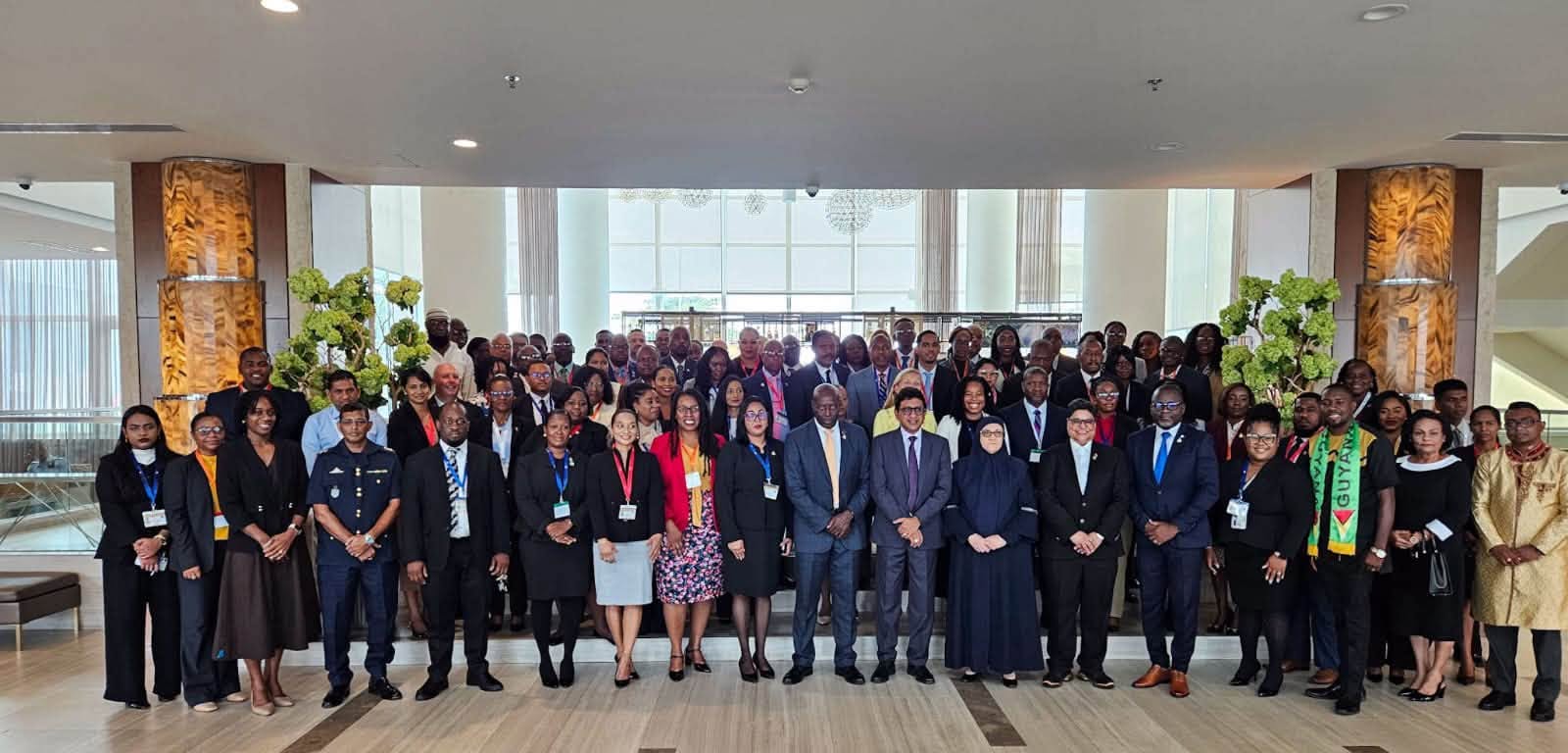
    On Wednesday, 15 July 2026, senior Caribbean law enforcement and anti-crime officials gathered for the annual general and steering group meetings of the Asset Recovery Interagency Network of the Caribbean (ARIN-CARIB), where they laid out a coordinated regional plan to crack down on illicit proceeds from transnational organized crime and strengthen cross-border asset recovery frameworks.

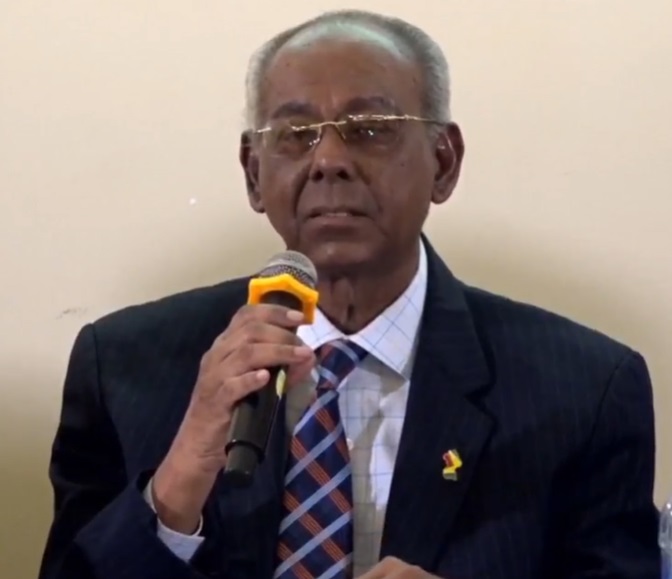
    Shalimar Hack, Guyana’s Director of Public Prosecutions and ARIN-CARIB’s 2026 president, opened the summit held under the theme “From Tracing to Transformation: Building An Asset Recovery-Ready Caribbean” by emphasizing that binding regional legal frameworks must embed mandatory inter-agency cooperation to speed up asset recovery investigations.

    Hack explained that fragmented regulatory structures and siloed agency operations slow progress in targeting criminal wealth. “When all relevant stakeholders are aligned under clear laws that support collaborative action, and understand the critical role of a unified approach to cutting off criminal proceeds, we can sustain an effective fight against transnational criminal activity,” she told attendees. She added that a regional interagency network is foundational to upholding rule of law across individual Caribbean jurisdictions and the region as a whole.

    Moving beyond traditional anti-crime approaches, Hack stressed that securing criminal convictions alone is not enough to dismantle organized crime groups. “If we do not undermine the financial foundations that allow these networks to operate, we have not truly solved the problem of transnational crime,” she said. Hack called for a systemic transformation of Caribbean asset recovery practices: authorities must not only successfully trace illegal assets and strip criminal networks of their illicit gains, but also repurpose those seized resources for public benefit across member states.

    Atlee Rodney, Deputy Executive Director of the Barbados-based Regional Security System (RSS) – ARIN-CARIB’s coordinating secretariat – outlined the ongoing work to advance these regional goals, noting that RSS is partnering closely with the network’s steering committee and key global strategic partners to update Caribbean legal frameworks for cross-border cooperation. Major partners include the European Union’s Europe Latin America Programme of Assistance against Transnational Organised Crime and the Inter-American Development Bank, which provide technical and financial support for regulatory reform.

    Rodney, a former Police Commissioner of Antigua and Barbuda, noted that a top priority is updating national legislative and policy frameworks across Caribbean countries to match the evolving sophistication of transnational criminal enterprises. Current key initiatives include drafting a regional Model Agreement for Joint Investigations, conducting reviews of domestic legal rules governing international cooperation, and strengthening mutual legal assistance mechanisms to enable faster, more effective exchange of information and evidence across national borders.


  • Judy Latchman’s 2025 appointment as Chief Magistrate announced

    Judy Latchman’s 2025 appointment as Chief Magistrate announced

    In an unusual development that has raised unaddressed questions, Guyana’s Judicial Service Commission (JSC) has finally made public an appointment to the country’s top magistracy post that was finalized more than a year and a half ago. The commission quietly named Principal Magistrate Judy Latchman as Guyana’s new Chief Magistrate on January 7, 2025, but the official announcement of the appointment only came on July 14, 2026, via a late-night update posted to the Supreme Court of Judicature’s official Facebook page. Per the commission’s statement, Latchman’s appointment has been retroactively effective from the original nomination date in January 2025. Notably, no official explanation has been provided for the 18-month gap between the appointment decision and its public disclosure.

    Latchman brings over two decades of legal and judicial experience to the role, with a well-documented professional trajectory rooted in Guyana’s legal system. She earned her Bachelor of Laws degree from the University of Guyana in 2002, followed by a Legal Education Certificate from the Trinidad-based Hugh Wooding Law School in 2004. Later that same year, in October 2004, she was formally admitted to the Bar of Guyana, marking the official start of her legal career.

    Her first professional role was as a State Counsel in the Chambers of the Director of Public Prosecutions, a position she took up immediately after admission to the bar. She rose through the ranks quickly, earning a promotion to Senior State Counsel in that same department by 2008. In 2009, Latchman made the transition to the magistracy, building a reputation for consistent judicial service over the next eight years that led to her elevation to Principal Magistrate in 2017, the role she held before her 2025 appointment to Chief Magistrate.

    Beyond her active judicial duties, Latchman maintains prominent professional ties within commonwealth judicial circles. She is a fellow of the Commonwealth Judicial Education Institute, and holds membership in both the Commonwealth Magistrates and Judges Association and the Judicial Education Institute of Guyana.

    Alongside the long-delayed announcement of Latchman’s appointment, the JSC also revealed that six new judicial officers have been appointed to the rank of magistrate. The new appointees are Ocelisa Marks, Nikkisha Logan, Jimelle Joseph, Shareefah Parks, Taneisha Saygon and Caressa Henry. All six are scheduled to take their oaths of office before Guyana’s Prime Minister Mark Phillips on July 15, 2026, the day following the public announcement of the appointments.

  • Another Azruddin Mohamed associate wanted for “Paper Shorts” murder

    Another Azruddin Mohamed associate wanted for “Paper Shorts” murder

    Guyanese authorities have issued a murder warrant for Satrohan “Depo” Rajkumar, a former associate of the country’s Opposition Leader Azruddin Mohamed, in connection with the 2021 fatal shooting of gold miner Ricardo “Paper Shorts” Fagundes, law enforcement officials confirmed Wednesday. The killing took place outside Georgetown’s popular Palm Court venue on Main Street in March 2021, and a renewed investigation into the high-profile case has now unearthed new developments that have sent shockwaves through Guyana’s political landscape.

    Three other associates connected to Mohamed’s now-defunct motor racing venture Team Mohameds – Udoh Kanu, used car dealer Amarnauth Ramsook, and security officer Mark Richmond – have each been granted bail set at 1 million Guyanese dollars as the probe continues. Investigators have confirmed that the getaway vehicle used by the attackers was later discovered burned out along the Linden-Soesdyke Highway, and the registered owner of the car has since passed away.

    Mohamed, whose We Invest in Nationhood (WIN) party secured 13 seats in last September’s general and regional elections to cement his position as Guyana’s Opposition Leader, has launched fierce public pushback against the renewed investigation, claiming the probe is a politically motivated plot to tarnish his name. The allegations come after Mohamed publicly exposed a large-scale agricultural development owned by sitting President Irfaan Ali along the Linden-Soesdyke Highway.

    “The People’s Progressive Party has never faced a determined, vocal Opposition Leader in recent history. That is why they have waged a relentless campaign to bring me down ever since I entered mainstream politics,” Mohamed wrote in a post on his official Facebook page linked to Team Mohameds.

    The opposition leader also claimed that two of his former innocent employees were detained for six days as part of what he called a deliberate manipulation of Guyana’s judicial system and a blatant violation of the men’s constitutionally protected rights. Already wanted by United States authorities on allegations of unrelated financial crimes, Mohamed further claimed that the deceased getaway car owner, Shemroy Stewart, was a known contracted killer for Shaheed “Roger” Khan – a drug kingpin who was convicted and imprisoned in the U.S. years ago on cocaine trafficking charges. Mohamed has denied ever having any personal or professional connection to Stewart. He also alleged that senior police officials have approached multiple inmates in Guyanese prisons offering incentives to issue false statements that would directly tie him to Fagundes’ murder.

    For his part, Khan broke his silence on the case Monday, stating that Fagundes – whom Khan described as his “son” – was killed in an attack that was actually meant for him. Khan repeated longstanding claims that he previously helped prevent the collapse of the former Bharrat Jagdeo administration, and accused police of intentionally dragging their feet in the initial response to the 2021 shooting, a claim he first made publicly weeks after the killing.

  • Group of armed, patrolling Chinese arrested in Suriname

    Group of armed, patrolling Chinese arrested in Suriname

    On a Tuesday in mid-July 2026, a sweeping joint security operation carried out by Suriname’s National Police Force (KPS) and national military in the remote interior Sarakreek district resulted in the arrest of 14 Chinese men, according to official statements from Suriname’s law enforcement leadership. The operation was launched after authorities received credible tips and video evidence showing armed individuals matching the suspects’ descriptions moving through the area in uniformed attire, allegedly conducting patrol activities.

    Following a coordinated consultation between the Public Prosecution Service and the Office of the Surinamese President, officials greenlit an immediate deployment of a combined police-army task force, supported by two military helicopters to access the hard-to-reach interior region. The mission was commanded by the Central Regional Commander of the Suriname Police Force, with Minister of Justice and Police Harish Monorath confirming key details in an interview with local outlet Starnieuws.

    In addition to taking the 14 suspects into custody, law enforcement teams seized multiple firearms including semi-automatic weapons, other heavy weaponry, and an undisclosed amount of ammunition. A full inventory of seized items is still pending after one of the deployed helicopters experienced technical complications that disrupted initial counting efforts, so Monorath was unable to share an exact final count of confiscated weapons as of Wednesday’s update.

    All suspects have since been transferred to the capital Paramaribo, where ongoing criminal investigations and pre-trial arraignment processes are underway. Social media circulated images and video that showed former vice president and ruling ABOP party chair Ronnie Brunswijk present at the operation site, prompting public speculation about his involvement. However, Monorath clarified that Brunswijk did not lead or command the security mission, noting that the former leader traveled to Sarakreek independently to gather on-the-ground information and shared relevant details with official security teams.

    Monorath pushed back against early unconfirmed speculation about the suspects’ activities in the region, noting that initial tips suggested the group claimed to be carrying out private security work. He emphasized that any security operations within Suriname’s borders fall under the purview of the country’s own national army and police forces, and the investigation will fully clarify the legal status of the group’s activities. The minister also added that not all of the arrested Chinese men are in Suriname illegally: some hold valid residency and entry documentation, so officials will wait for the full outcome of the investigation before releasing any formal conclusions on the case.

  • Three cows perish “excellent” forecast for majority of others

    Three cows perish “excellent” forecast for majority of others

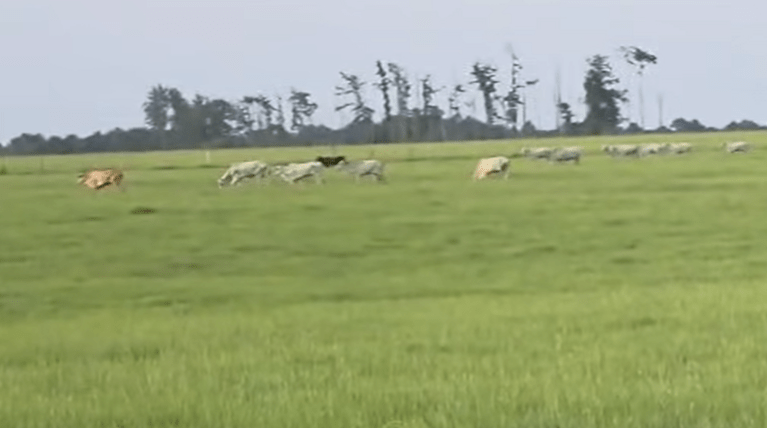
    On Tuesday, July 14, 2026, a senior official from Guyana’s Ministry of Agriculture pushed back on opposition misinformation surrounding the transport of 1,000 pregnant Brazilian heifers imported to boost the South American nation’s domestic beef and milk production, confirming only three animals died en route to the Ebini research station in East Bank Berbice.

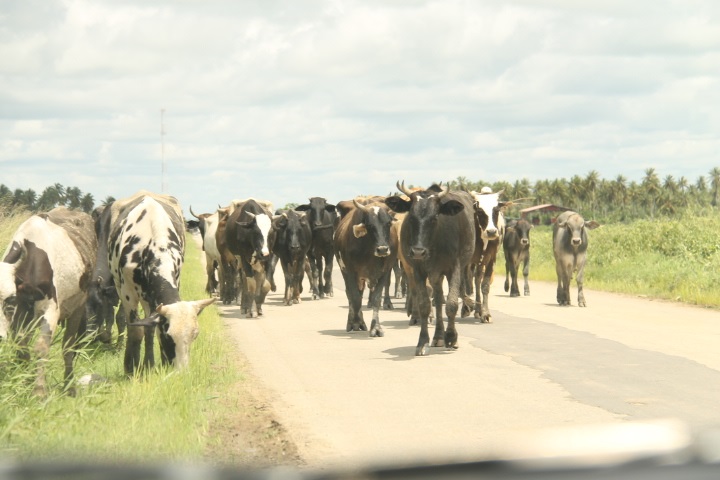
    Dwight Walrond, Chief Executive Officer of the Guyana Livestock Development Authority (GLDA), told local outlet Demerara Waves Online News that the latest on-the-ground report from his team recorded just three mortalities, contradicting a claim from main opposition party We Invest in Nation (WIN) that as many as 15 heifers had died. Walrond added that while four other animals were experiencing significant cramping, and one remained severely distressed as of Tuesday morning, most of the remaining imported cattle are in stable condition. The mortality count, he emphasized, falls well below the 5% acceptable benchmark for long-distance cattle transport – a journey that covered more than 1,000 kilometers from Brazil’s Roraima State to the Ebini facility.

    Walrond expressed cautious optimism that the four animals experiencing cramps will recover, noting that a humane decision will be made to euthanize the severely distressed heifer if its condition does not improve. Per the procurement agreement, any animals lost during the journey will be replaced at no additional cost to Guyana by the Brazilian supplier, with each heifer originally valued at GY$245,000. As for the surviving herd, Walrond reported that most have already acclimated to their new location: “Those animals are already running around in the pastures. They are feeding and they’re resting. They were drinking water last Monday night.”

    The GLDA CEO openly acknowledged one planning misstep that delayed the journey: the team failed to account for Berbice River tidal flows, which slowed the crossing of the herd even with three pontoons available. “I would say that we dropped the ball with respect to the tide. That was something that no consideration was given to,” Walrond admitted.

    The imported heifers are part of a long-term government initiative to grow Guyana’s national cattle herd and expand livestock output. Officials project each mature heifer will produce one calf per year, with low-performing animals culled and high-yielding individuals retained to grow the national herd. The tropical Brazilian breed was specifically selected for its proven resilience to Guyana’s wet and dry seasonal cycles, as well as its natural resistance to ticks and tick-borne diseases that commonly impact local cattle.

    Walrond also addressed public concern over social media claims that some of the 14- to 26-week-old heifers appeared underweight. He explained that reduced forage rations during transport were an intentional, precautionary veterinary measure, not a sign of neglect or poor care. As long-distance transport experts and an experienced veterinarian himself, Walrond noted that overfeeding ruminant animals during multi-day journeys leads to life-threatening complications including bowel impaction, rumen dysfunction, excess bloating, and severe diarrhea. Restricted forage intake keeps animals hydrated and nutrient-stable without putting their digestive systems at risk. “When you have animals being transported on these long distances for so long, this is not something that is outside of the norm but within the next few days when you see those animals, you won’t even recognise them,” he said.

    Finally, Walrond refuted opposition speculation that the herd was originally meant for a private farm along the Linden-Soesdyke Highway, and only diverted to Ebini after opposition leader Azruddin Mohamed publicly posted about the cattle’s arrival from Brazil. He confirmed that the official inter-regional transport permit clearly routed the herd through Lethem, Linden, and the bauxite mines directly to Ebini, with no plan to stop or rehome the cattle along the highway. “There was no need for them to come to Linden whatsoever,” he added.

  • Pregnant Brazilian cows on scheduled journey to Ebini research station

    Pregnant Brazilian cows on scheduled journey to Ebini research station

    As of Monday, July 13 2026, 300 pregnant Brazilian dairy and beef heifers continued their overland and river crossing journey to Guyana’s Ebini Livestock Research Station in East Berbice, facing only minor scheduling delays that have not derailed the national agricultural initiative, according to senior leadership of the Guyana Livestock Development Authority (GLDA).

    Dr. Dwight Walrond, GLDA’s Chief Executive Officer, confirmed in an interview with Demerara Waves Online News that a portion of the imported cattle had already arrived at the research facility by midday Monday, with the remaining head expected to reach the destination by 2:00 PM local time. He clarified that the shipment aligned with its overall projected timeline, with the only unplanned hold being an overnight delay at the Berbice River crossing, where low tide created operational challenges for the pontoon ferry carrying the trucked cattle.

    Citing safety for both the animals and transport staff, Dr. Walrond explained that GLDA officials made the proactive decision to postpone the river crossing until daylight on Monday, rather than attempting to navigate the risky nighttime crossing. A second minor delay of approximately one hour also occurred at the Kurupukari crossing on the Essequibo River, as the operation adjusted schedules to accommodate all cattle shipments.

    While Dr. Walrond confirmed reports of some mortalities during transit, he noted that the total number of lost cattle and unborn calves could not be immediately confirmed, and the exact cause of death will only be determined following official post-mortem examinations.

    The shipment has drawn scrutiny from opposition Members of Parliament belonging to the APNU alliance, who visited the Berbice River crossing site to observe the operation. Parliamentarians Sherod Duncan, Saiku Andrews, and Dr. Terrence Campbell released observations that many of the heifers appeared undernourished, fatigued, and severely stressed by the long journey. Dr. Campbell emphasized that the multi-day overland trip is already physically draining for healthy, non-pregnant cattle, posing far greater risk to pregnant heifers. Andrews added that the conditions on site suggested insufficient pre-transport preparation, raising unaddressed questions about whether the cattle are actually destined for the Ebini research station as officially stated.

    In response to these concerns, Dr. Walrond outlined the comprehensive care protocols GLDA has implemented throughout the journey, which begins in northern Brazil and travels over the Lethem-Linden trail to Ebini. Every four to six hours, transport stops are scheduled to provide the heifers with fresh water, feed, electrolyte supplements, and veterinary care as needed. A dedicated GLDA escort team, including two livestock production specialists, a licensed veterinarian, and a veterinary technician, accompanied the entire shipment, carrying emergency medical kits, rehydration supplies, and other critical resources. Vehicles were also intentionally not loaded to full capacity, giving each animal enough space to move and rest during transit, eliminating the need to unload cattle for feeding during scheduled stops.

    The current movement of 300 heifers is part of a larger government import initiative: Guyana’s administration is purchasing a total of 1,000 pregnant heifers from Brazil for a total cost of 245 million Guyanese dollars, with the core goal of expanding domestic beef and dairy production. “This investment reflects the Government’s continued commitment to building a modern and resilient livestock industry,” Dr. Walrond said of the program. “By expanding the national herd with quality breeding animals, the initiative will support increased livestock production, improve income and market opportunities for local smallholder and commercial farmers, reduce Guyana’s longstanding dependence on imported breeding stock, and directly contribute to advancing the country’s national food security objectives.”

  • APNU-backed election commissioners “not morally entitled” to remain in office- Ramkarran

    APNU-backed election commissioners “not morally entitled” to remain in office- Ramkarran

    A brewing constitutional dispute over three Guyana Elections Commission (GECOM) seats aligned with the former APNU+AFC coalition has intensified, with former National Assembly Speaker Ralph Ramkarran calling for the commissioners’ immediate resignation following the 2025 general and regional elections. In his weekly Conversation Tree column published Saturday, Ramkarran argued that the three commissioners – Desmond Trotman, Vincent Alexander, and Charles Corbin – appointed on the recommendation of a previous opposition leader no longer hold any moral or legitimate claim to their posts after the 2025 vote reshaped Guyana’s political opposition landscape.

    The 2025 general election installed We Invest in Nationhood (WIN), a new 16-seat opposition party founded by Azruddin Mohamed and his father Nazar “Shell” Mohamed, as the official main opposition, replacing the 12-seat APNU bloc that originally backed the three sitting commissioners. Ramkarran, a senior counsel and former executive member of the ruling People’s Progressive Party Civic (PPPC), noted that while the principle that an opposition leader should be able to recommend their own representatives to the election commission is widely undisputed, Guyana’s constitution contains no clear framework for removing sitting commissioners outside of cases of death, incapacity, misconduct findings by a tribunal, or voluntary resignation. The three incumbents have so far refused to step down, creating an immediate deadlock.

    The standoff has been further complicated by long-running political tensions between the PPPC administration and WIN. The Mohameds, once close allies of President Irfaan Ali and prominent PPPC supporters, broke ranks to form WIN in 2024 after the United States imposed sanctions on them over alleged financial crimes tied to their gold trading operations. Shortly after the sanctions were announced, the Guyanese government revoked the pair’s foreign exchange dealer licenses and gold sector operating permits, and forced all domestic commercial banks to close their company accounts. Relations deteriorated further when WIN contested the 2025 general elections to become the largest opposition bloc.

    Ramkarran warned that the PPPC’s deep-seated hostility toward WIN will likely block any path to constitutional amendment to resolve the vacancy issue. “The government’s hostility to WIN is so deep-seated that it might prefer to have the three Commissioners retain their positions rather than amend the Constitution to have the three Commissioners unseated,” he wrote. Well-placed government sources confirmed that Opposition Leader Azruddin Mohamed’s formal request to President Ali to appoint three new nominees – Roysdale Forde, Damien Da Silva, and Siand Dhurjon – to replace the sitting commissioners has been rejected on the grounds that no official vacancies exist on the commission.

    According to Ramkarran, the only remaining path for WIN to resolve the deadlock is to bring the dispute before Guyana’s judiciary. The former speaker, who specializes in constitutional and electoral law, expressed cautious optimism that courts would rule in WIN’s favor. He argued that under Article 161(3) of Guyana’s constitution, GECOM commissioners nominated by the opposition leader are required to hold the confidence of the sitting opposition leader. Since Mohamed has formally submitted new nominations, the court could find that the incumbents no longer hold that confidence and could even rule their continued occupation of the seats unlawful. At the same time, Ramkarran cautioned that the absence of explicit constitutional language for removal may lead courts to stop short of formally declaring the seats vacant, prolonging the impasse.

    The ongoing stalemate already threatens to derail planned 2026 local government elections, sources familiar with GECOM operations confirmed. Retired Justice Claudette Singh, GECOM’s chair, has not convened a full commission meeting for months. While technical staff have drafted and updated a detailed workplan for the upcoming local polls, the inability of the commission to convene and make formal decisions puts the timeline for the elections at serious risk.

    The sitting APNU-aligned commissioners have echoed the government’s position, stating that no vacancy exists and the deadlock can only be resolved either by a court ruling or a formal constitutional amendment. Ramkarran noted that prior to the 1992 democratic transition, Guyana’s electoral laws explicitly required the entire election commission to resign within three months of a general and regional election, a provision that was not carried forward into the current constitutional framework.

  • Pregnant cows from Brazil to expand Guyana’s cattle production

    Pregnant cows from Brazil to expand Guyana’s cattle production

    In a strategic move to strengthen domestic agricultural output and advance national food security goals, the South American nation of Guyana has acquired 1,000 pregnant heifers from neighboring Brazil, the country’s Ministry of Agriculture has confirmed. The procurement project, valued at a total of 245 million Guyanese dollars, represents a key government investment to expand both beef and dairy production across the country.

    As of the latest update dated 12 July 2026, 300 of the imported cattle have already cleared entry protocols and are en route to a dedicated facility in Ebini, located along Guyana’s Berbice River. Once settled, these animals will be integrated into a state-led national breeding program crafted to upgrade the country’s cattle genetic stock and scale up overall national cattle production capacity.

    All imported heifers have met strict biosecurity and health standards required by Guyana’s regulatory framework, according to official statements from the ministry. The animals completed full veterinary inspections, diagnostic testing, and pre-export quarantine protocols before leaving Brazil, confirming they comply with all the country’s animal health import requirements.

    The procurement process followed all national public tender regulations outlined in Guyana’s Procurement Act. In total, four bids – one from a domestic supplier and three from international operators – were submitted and reviewed by regulatory authorities. After a transparent evaluation process, the National Procurement and Tender Administration Board (NPTAB) awarded the contract to Brazilian supplier Coopera, which secured the deal with a price of 245,000 Guyanese dollars per pregnant heifer.

    Government officials framed the purchase as a reflection of the administration’s ongoing commitment to developing a modern, shock-resistant livestock sector for Guyana. By expanding the national cattle herd with high-quality breeding animals, the initiative is expected to drive growth in domestic livestock output, create expanded economic opportunities for local cattle farmers, cut the country’s reliance on imported breeding cattle, and advance core national food security targets.

  • APNU proposes Integrity Act amendment to allow for disclosure of asset declarations

    APNU proposes Integrity Act amendment to allow for disclosure of asset declarations

    As public debate continues to swirl around President Irfaan Ali’s technology-focused agricultural project along the Linden-Soesdyke Highway, Guyana’s main opposition bloc A Partnership for National Unity (APNU) has tabled a legislative proposal to amend the country’s Integrity Act, mandating public release of asset declaration summaries for the President, cabinet ministers and other senior public officials.

    In a formal letter submitted to Clerk of the National Assembly Sherlock Isaacs alongside the draft bill, APNU parliamentary leader Dr. Terrence Campbell outlined that the proposed reform is designed to reinforce transparency, accountability and public trust in government. The amendment would require the Integrity Commission to publish summaries of statutory asset declarations held by top elected and executive officeholders, while retaining confidentiality for sensitive information that does not require public disclosure. Under the plan, these summaries would be officially circulated via the country’s Official Gazette.

    Campbell argued that any lawmaker or political party that rejects the broad framework of the bill would send a clear signal they have something to conceal from the Guyanese public. “I want the public to know that anybody who does not support this generally — there might be some changes that they may require — but anybody in Parliament, any parliamentarian, any party that does not support this, has something to hide,” Campbell stated in a public address accompanying the bill.

    Drawing on a regional precedent, Campbell noted that Jamaica’s Integrity Commission already publishes asset declaration summaries for the country’s Prime Minister and Opposition Leader, and proposed extending the same level of transparency to a broad range of senior positions across Guyana’s public sector. The bill would require public summaries for positions including parliamentary secretaries, permanent secretaries, the commissioners of Land Surveys, Geology and Mines, and Forestry, the Commissioner of Police, Deputy Commissioner of Police, chairs and managing directors of state agencies and state-owned corporations, as well as municipal mayors and deputy mayors.

    If the National Assembly declines to convene to debate the proposed amendment, Campbell has called on President Ali and leaders of all parliamentary parties to set an immediate example by voluntarily publishing their full 2025 asset declarations. The opposition leader also offered to lead by example, confirming he would release his own complete asset declaration first thing Monday morning if a cross-party agreement to do so is reached.

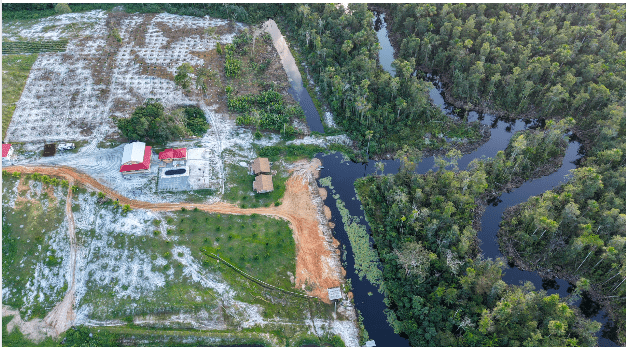
    The legislative push comes amid ongoing public uncertainty over the size and financing of President Ali’s Long Creek farm project. Campbell acknowledged that he had prior knowledge of the President’s agricultural venture, but had no idea it spanned as much as 150 acres — a figure first claimed by Opposition Leader Azruddin Mohamed. President Ali has only stated the holding is smaller than 75 acres, refusing to release an exact acreage, and no independent, documented verification of the property’s size has been made public to date.

    President Ali has thus far rejected calls to release public financial records for his business, which includes poultry and livestock operations. He has maintained that he funded the farm through commercial bank lending, that all required asset disclosures have been submitted to the Integrity Commission, and that he has never used his presidential authority to secure improper favors or preferential treatment for the venture. Campbell also confirmed that he has no knowledge of the Integrity Commission launching a formal investigation into the assets submitted by senior officeholders to date.

  • East Ruimveldt Market reconstruction plan unveiled

    East Ruimveldt Market reconstruction plan unveiled

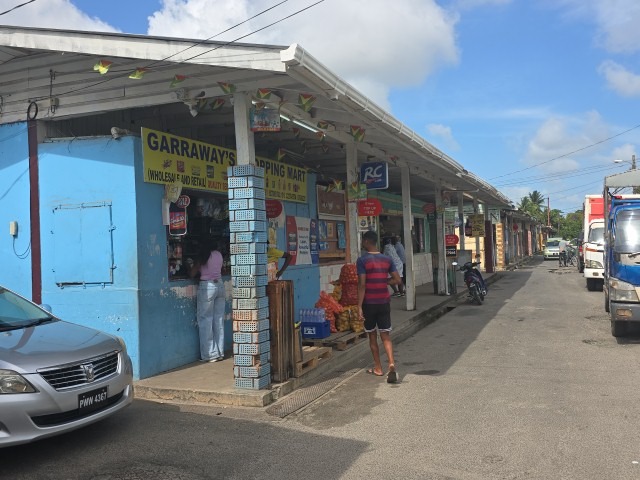
    On Saturday, July 11, 2026, Guyanese officials announced a major GY$528.3 million infrastructure project to completely reconstruct the aging East Ruimveldt Market, a decades-old community hub that has fallen into significant disrepair in recent years.

    Ahead of the official sod-turning ceremony that marked the start of pre-construction preparations, Local Government Minister Priya Manickchand conducted a walkthrough of the existing wooden and concrete market, speaking directly to current vendors to address their concerns about displacement during construction. She stressed that no local small business would be forced to shut down throughout the rebuilding process, outlining three alternative accommodation options to keep vendors operating: temporary sales spaces built from prefabricated containers, relocation to currently unused stalls at nearby markets, or phased construction that would allow half the market to remain operational while the other half is rebuilt – an approach that would extend the total project timeline by eight months.

    Once reconstruction is completed, the upgraded market will feature 237 modern stalls, up from the current count that is far smaller and more cramped. Every new stall will be expanded by six feet in length and built to a higher clearance, giving vendors more space to display goods and serve customers. A democratically elected market committee will also be established to oversee daily operations, including sanitation management and setting standardized opening hours for different vendor categories, from fresh produce to prepared foods.

    Minister of Labour Keoma Griffith, who is a native of the East Ruimveldt community, emphasized that the market rebuild and an adjacent new community centre are flagship development projects designed to raise quality of life for local residents. The existing market has long suffered from neglect: key sections including the meat and fish vending area are structurally degraded, and critical safety infrastructure such as the market’s fire fighting hose has been non-functional for years, leaving only a rusted, broken reel behind.

    Beyond the market itself, the project scope includes complementary infrastructure upgrades for the surrounding neighborhood. Contracts have already been awarded to five local construction firms – A.M.I.C General Contracting, Khan Contracting Services, MAEC Enterprises, Terraform Solutions and Lispen Enterprises – to carry out full cleaning of local drains and trenches, install new street lighting along surrounding access roads, rehabilitate damaged paved roadways, and construct a new pedestrian bridge connecting the market area to nearby residential blocks.

    According to official project profiles, the redesigned market’s expanded layout of 237 stalls is purpose-built to address growing demand from vendors and shoppers alike. The overhaul will not only modernize vending conditions but also boost the market’s long-term capacity to serve the rapidly growing East Ruimveldt population for decades to come.