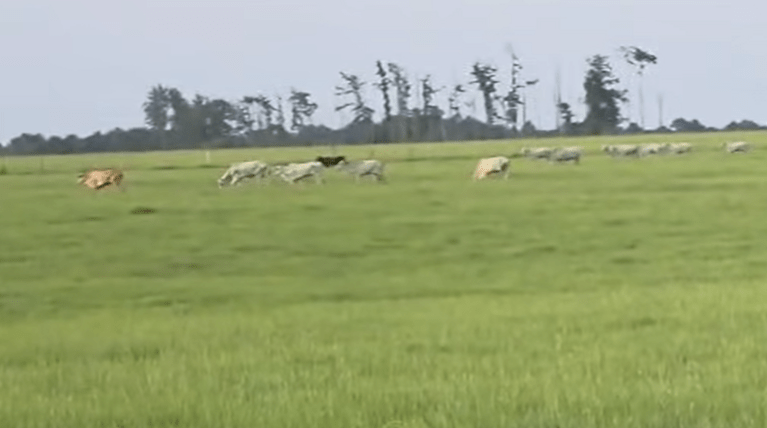
On Tuesday, July 14, 2026, a senior official from Guyana’s Ministry of Agriculture pushed back on opposition misinformation surrounding the transport of 1,000 pregnant Brazilian heifers imported to boost the South American nation’s domestic beef and milk production, confirming only three animals died en route to the Ebini research station in East Bank Berbice.
Dwight Walrond, Chief Executive Officer of the Guyana Livestock Development Authority (GLDA), told local outlet Demerara Waves Online News that the latest on-the-ground report from his team recorded just three mortalities, contradicting a claim from main opposition party We Invest in Nation (WIN) that as many as 15 heifers had died. Walrond added that while four other animals were experiencing significant cramping, and one remained severely distressed as of Tuesday morning, most of the remaining imported cattle are in stable condition. The mortality count, he emphasized, falls well below the 5% acceptable benchmark for long-distance cattle transport – a journey that covered more than 1,000 kilometers from Brazil’s Roraima State to the Ebini facility.
Walrond expressed cautious optimism that the four animals experiencing cramps will recover, noting that a humane decision will be made to euthanize the severely distressed heifer if its condition does not improve. Per the procurement agreement, any animals lost during the journey will be replaced at no additional cost to Guyana by the Brazilian supplier, with each heifer originally valued at GY$245,000. As for the surviving herd, Walrond reported that most have already acclimated to their new location: “Those animals are already running around in the pastures. They are feeding and they’re resting. They were drinking water last Monday night.”
The GLDA CEO openly acknowledged one planning misstep that delayed the journey: the team failed to account for Berbice River tidal flows, which slowed the crossing of the herd even with three pontoons available. “I would say that we dropped the ball with respect to the tide. That was something that no consideration was given to,” Walrond admitted.
The imported heifers are part of a long-term government initiative to grow Guyana’s national cattle herd and expand livestock output. Officials project each mature heifer will produce one calf per year, with low-performing animals culled and high-yielding individuals retained to grow the national herd. The tropical Brazilian breed was specifically selected for its proven resilience to Guyana’s wet and dry seasonal cycles, as well as its natural resistance to ticks and tick-borne diseases that commonly impact local cattle.
Walrond also addressed public concern over social media claims that some of the 14- to 26-week-old heifers appeared underweight. He explained that reduced forage rations during transport were an intentional, precautionary veterinary measure, not a sign of neglect or poor care. As long-distance transport experts and an experienced veterinarian himself, Walrond noted that overfeeding ruminant animals during multi-day journeys leads to life-threatening complications including bowel impaction, rumen dysfunction, excess bloating, and severe diarrhea. Restricted forage intake keeps animals hydrated and nutrient-stable without putting their digestive systems at risk. “When you have animals being transported on these long distances for so long, this is not something that is outside of the norm but within the next few days when you see those animals, you won’t even recognise them,” he said.
Finally, Walrond refuted opposition speculation that the herd was originally meant for a private farm along the Linden-Soesdyke Highway, and only diverted to Ebini after opposition leader Azruddin Mohamed publicly posted about the cattle’s arrival from Brazil. He confirmed that the official inter-regional transport permit clearly routed the herd through Lethem, Linden, and the bauxite mines directly to Ebini, with no plan to stop or rehome the cattle along the highway. “There was no need for them to come to Linden whatsoever,” he added.