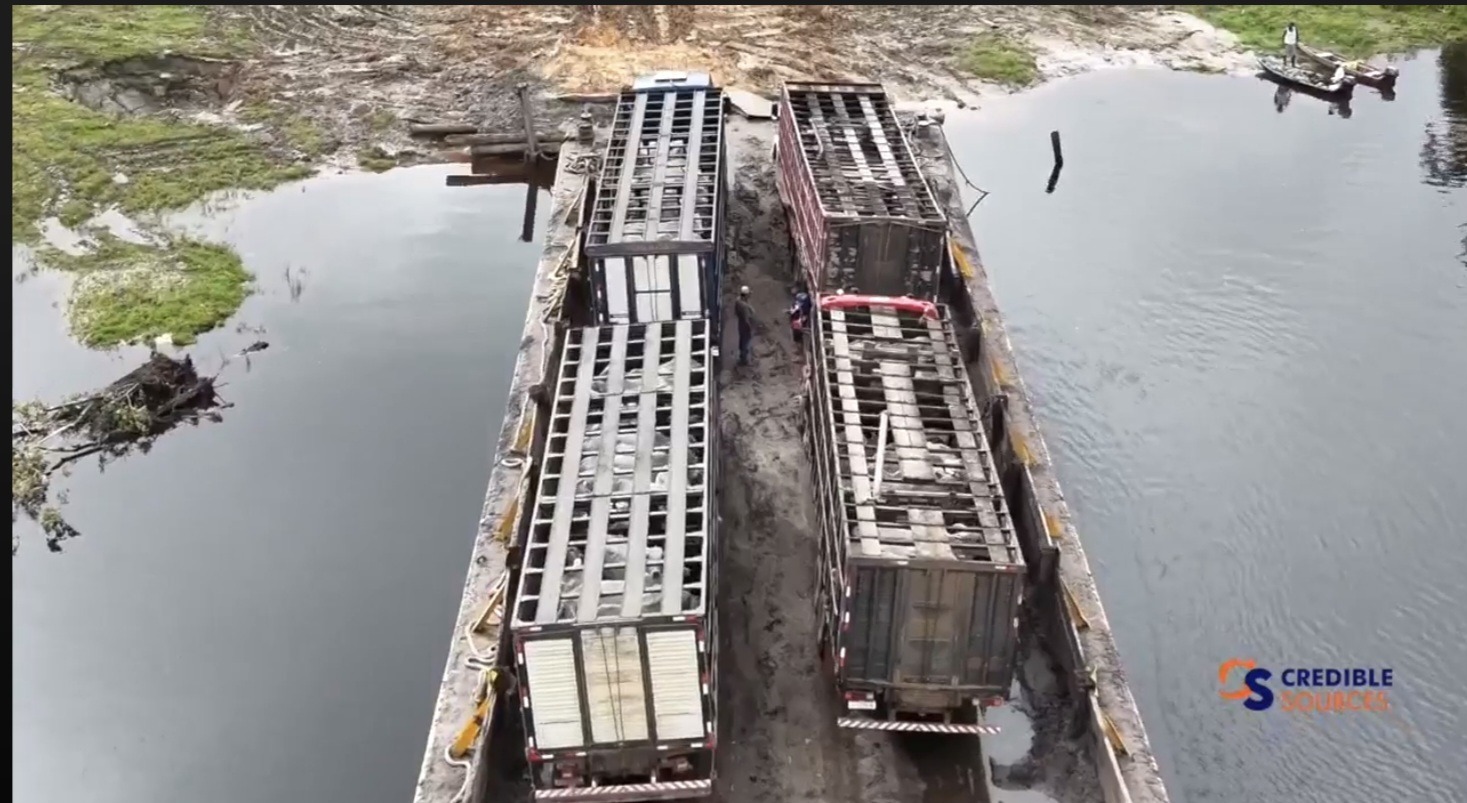
As of Monday, July 13 2026, 300 pregnant Brazilian dairy and beef heifers continued their overland and river crossing journey to Guyana’s Ebini Livestock Research Station in East Berbice, facing only minor scheduling delays that have not derailed the national agricultural initiative, according to senior leadership of the Guyana Livestock Development Authority (GLDA).
Dr. Dwight Walrond, GLDA’s Chief Executive Officer, confirmed in an interview with Demerara Waves Online News that a portion of the imported cattle had already arrived at the research facility by midday Monday, with the remaining head expected to reach the destination by 2:00 PM local time. He clarified that the shipment aligned with its overall projected timeline, with the only unplanned hold being an overnight delay at the Berbice River crossing, where low tide created operational challenges for the pontoon ferry carrying the trucked cattle.
Citing safety for both the animals and transport staff, Dr. Walrond explained that GLDA officials made the proactive decision to postpone the river crossing until daylight on Monday, rather than attempting to navigate the risky nighttime crossing. A second minor delay of approximately one hour also occurred at the Kurupukari crossing on the Essequibo River, as the operation adjusted schedules to accommodate all cattle shipments.
While Dr. Walrond confirmed reports of some mortalities during transit, he noted that the total number of lost cattle and unborn calves could not be immediately confirmed, and the exact cause of death will only be determined following official post-mortem examinations.
The shipment has drawn scrutiny from opposition Members of Parliament belonging to the APNU alliance, who visited the Berbice River crossing site to observe the operation. Parliamentarians Sherod Duncan, Saiku Andrews, and Dr. Terrence Campbell released observations that many of the heifers appeared undernourished, fatigued, and severely stressed by the long journey. Dr. Campbell emphasized that the multi-day overland trip is already physically draining for healthy, non-pregnant cattle, posing far greater risk to pregnant heifers. Andrews added that the conditions on site suggested insufficient pre-transport preparation, raising unaddressed questions about whether the cattle are actually destined for the Ebini research station as officially stated.
In response to these concerns, Dr. Walrond outlined the comprehensive care protocols GLDA has implemented throughout the journey, which begins in northern Brazil and travels over the Lethem-Linden trail to Ebini. Every four to six hours, transport stops are scheduled to provide the heifers with fresh water, feed, electrolyte supplements, and veterinary care as needed. A dedicated GLDA escort team, including two livestock production specialists, a licensed veterinarian, and a veterinary technician, accompanied the entire shipment, carrying emergency medical kits, rehydration supplies, and other critical resources. Vehicles were also intentionally not loaded to full capacity, giving each animal enough space to move and rest during transit, eliminating the need to unload cattle for feeding during scheduled stops.
The current movement of 300 heifers is part of a larger government import initiative: Guyana’s administration is purchasing a total of 1,000 pregnant heifers from Brazil for a total cost of 245 million Guyanese dollars, with the core goal of expanding domestic beef and dairy production. “This investment reflects the Government’s continued commitment to building a modern and resilient livestock industry,” Dr. Walrond said of the program. “By expanding the national herd with quality breeding animals, the initiative will support increased livestock production, improve income and market opportunities for local smallholder and commercial farmers, reduce Guyana’s longstanding dependence on imported breeding stock, and directly contribute to advancing the country’s national food security objectives.”