标签: Guyana

圭亚那

  • Opposition protesters storm Watooka House where VP Jagdeo is holding outreach

    Opposition protesters storm Watooka House where VP Jagdeo is holding outreach

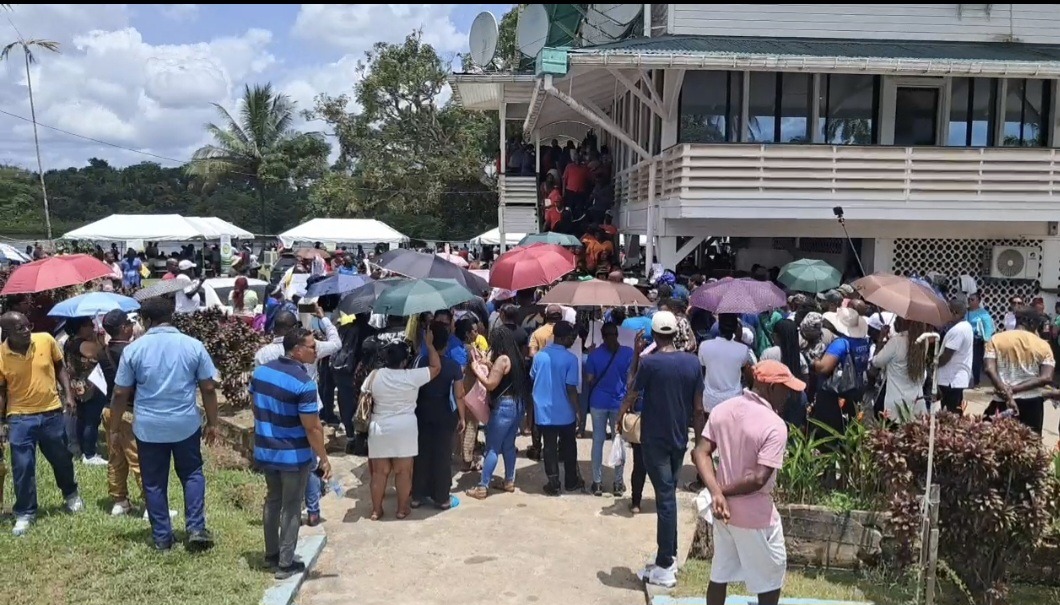
    On Tuesday, 4 August 2026, hundreds of opposition-aligned protesters led by two major Guyanese opposition parties breached police barriers and advanced into the Watooka House compound in Linden, the capital of Guyana’s Region 10. The demonstration was organized to confront Vice President Bharrat Jagdeo, who was leading a government ministerial outreach event at the location, and to voice public fury over the incumbent administration’s handling of the deadly MV Barima ferry disaster last month.

    The protest was backed by Azruddin Mohamed, leader of the 16-seat main opposition party We Invest in Nationhood (WIN) and Guyana’s official Opposition Leader, as well as Aubrey Norton, head of the 12-seat A Partnership for National Unity (APNU). Eyewitness accounts confirm Mohamed was at the front of the crowd when a segment of protesters pushed through a reinforced police barrier, pushing the demonstration all the way to the main entrance stairs of Watooka House.

    Speaking from the protest line, WIN General Secretary Odessa Primus accused the government of delaying and misleading demonstrators. Primus stated that police had promised the Vice President would come down to speak with the crowd, but he never appeared. She said, “We would agree to stand peacefully if he engaged us, but he is hiding inside. Why are you lying to the Guyanese people?”

    The mass action, the largest opposition-led demonstration in Guyana in recent years, was directly triggered by the MV Barima ferry tragedy that killed more than 100 people, with 76 others rescued from the incident. While the outreach event was ongoing inside Watooka House, the government’s Department of Public Information posted photos to its Facebook page as late as 1:01 PM showing Jagdeo and cabinet members meeting with local residents, though the timing of the photos before publication remains unclear. On his own official Facebook page, Jagdeo posted a video of former APNU+AFC housing minister Valerie Patterson-Yearwood praising infrastructure development across Linden since the People’s Progressive Party/Civic (PPP/C) won national office in 2020.

    Protesters maintained sustained chants throughout the demonstration, including calls of “No retreat, no surrender” and demands for the resignation of Juan Edghill and Deodat Indar, the two cabinet ministers with oversight of Guyana’s maritime sector. They also repeatedly called for the urgent recovery of the sunken MV Barima, saying that the government’s extended procurement process to hire an experienced salvage firm that can preserve forensic evidence for the official Commission of Inquiry (COI) is an unnecessary delay that could destroy critical evidence. Protesters chanted “Bring up the evidence” to emphasize their demand for immediate action.

    Beyond the ferry tragedy, demonstrators also pushed for resolution of a months-long leadership vacuum in Region 10. WIN parliamentarian Tabitha Sarabo-Halley led calls for the Regional Executive Officer to immediately schedule a vote to fill the empty Regional Chairman position. The region has been without a permanent Chairman since the September 1 2025 general and regional elections, after the election resulted in a tied vote for the post. Mohamed, who has styled himself as a voice for Region 10’s overwhelmingly pro-WIN electorate, argued that the incumbent government is intentionally blocking the appointment to maintain control over the region. He warned that if the administration refuses to reconvene the regional council and instruct the Regional Executive Officer to hold a vote, opposition groups will organize large-scale protests at every future government outreach event across the country.

    Mohamed, a relatively new political figure who was once an ally of Jagdeo’s governing PPP/C, cut ties publicly with the ruling party shortly after he and his father Nazar “Shell” Mohamed were sanctioned by the U.S. Treasury Department’s Office of Foreign Assets Control in June 2024. The sanctions were imposed over allegations the pair smuggled more than 10,000 kilograms of gold and evaded more than $50 million USD in taxes owed to the Guyanese government.

    PNCR-APNU parliamentarian and former Linden Mayor Sharma Solomon told reporters on the protest line that the five-member COI appointed by the government to investigate the MV Barima tragedy is inherently biased toward the PPP/C administration. He noted that the government has a long pattern of unilaterally appointing commission members and setting the inquiry’s terms of reference, arguing that “this commission of inquiry is discredited from its very start. Families will never get the justice they are seeking as long as this government continues to railroad the public inquiry process.” Solomon also defended three public servants who have already been charged with murder in connection with the 72 passenger and crew deaths, saying that political leaders should be held accountable rather than low-level public officials. He called for Edghill and Indar to step down immediately to allow a truly impartial investigation.

    APNU leader Aubrey Norton, who is a native of Linden, echoed these criticisms, saying Tuesday’s mass protest was inevitable because the government has repeatedly refused to address public concerns over the tragedy. “The government bears full responsibility for this situation,” Norton stated, stressing that the administration has a fundamental obligation to be accountable to all Guyanese people. He joined calls for immediate salvage of the MV Barima, arguing that the government’s reliance on a formal competitive procurement process is nothing more than a deliberate delay tactic. Noting that the PPP/C administration frequently uses no-bid single-source contracting for other projects, Norton said the public would fully support using the same approach here to raise the vessel as quickly as possible. “This work has to get done, and it has to get done urgently,” he emphasized.

    This report was compiled from monitoring published content from Royston Drakes Productions’ Facebook page, with original photos sourced from the same outlet.
  • Brace for water shortage due to extreme hot weather, say forecasters

    Brace for water shortage due to extreme hot weather, say forecasters

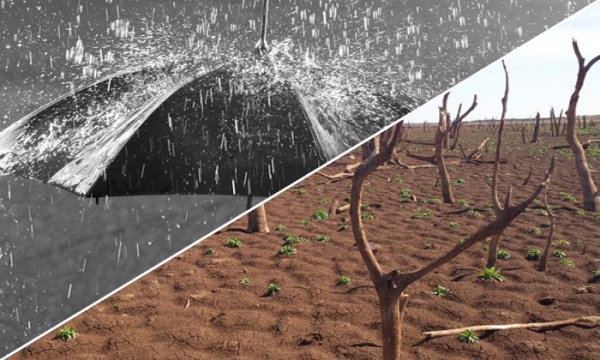
    On August 3, 2026, Guyana’s national Hydrometeorological Service (Hydromet) issued an urgent official warning, cautioning residents across the South American nation that the strengthening El Niño climate pattern will trigger an extended period of extreme heat through much of the rest of the year, raising the threat of severe, widespread water shortages.

    El Niño, a recurring climate phenomenon defined by unusual warming of surface waters across the central and eastern equatorial Pacific alongside weakened trade winds, is the core driver behind the forecasted extreme conditions. Hydromet’s latest seasonal climate outlook projects a dramatic spike in the number of extreme hot spell days for 2026, a sharp deviation from the country’s historical climate averages. While Guyana normally records a maximum of 30 hot spell days in a full year, the updated forecast predicts the total could reach as high as 80 this year, with the most intense heat concentrated between August and at least October 2026.

    Hydromet defines a hot spell as a consecutive stretch of two or more days of record-breaking extreme temperatures. The agency confirmed that every region across Guyana will see fewer rainy days than the long-term average, with both daytime and overnight temperatures remaining well above normal seasonal benchmarks. The highest frequency of extreme hot days is expected to impact five key regions: Demerara-Mahaica (Region 4), Mahaica-West Berbice (Region 5), East Berbice-Corentyne (Region 6), Potaro-Siparuni (Region 8) and Upper Demerara-Upper Berbice (Region 10). Hinterland and remote vulnerable communities will face the most acute risks from the extended dry period, which will cut access to reliable water supplies for residential use, agricultural production and other core economic activities.

    The ripple effects of the prolonged heat and drought will extend across nearly every major sector of Guyana’s economy and public life. For the agricultural industry, reduced rainfall and sustained high temperatures will leave crops suffering from critical moisture stress, degrade the quality of grazing pasture, and increase water demand for livestock herds. In forested and savannah regions, parched vegetation combined with record high temperatures will drastically raise the risk of uncontrolled bush and forest fires.

    The transportation sector will also face significant disruptions: lowered river water levels will impede inland river navigation in many areas, interrupting the movement of residents, commercial goods and essential public services. Unpaved rural roads will become extremely dusty as dry conditions persist, cutting driver visibility and raising road safety risks. While Hydromet did not forecast widespread power outages, the agency noted that sustained extreme heat will push up electricity demand, as households and businesses ramp up use of air conditioning and cooling systems, placing extra strain on the country’s national power grid.

    Public health and education systems are also bracing for impacts. Sustained extreme heat will increase discomfort in school classrooms and raise the risk of heat-related illness among students. For public health, prolonged exposure to extreme high temperatures is projected to increase cases of dehydration, heat exhaustion and life-threatening heat stroke, with children, older adults, people with pre-existing chronic medical conditions, and outdoor workers facing the highest vulnerability.

    In response to the forecast, Hydromet has issued a comprehensive set of public advisories to help residents and communities prepare for the extreme conditions. The agency urges the public to stay consistently hydrated, practice ongoing water conservation throughout the extended dry period, limit strenuous outdoor activity between 11 a.m. and 2 p.m. when temperatures peak, and wear lightweight, loose-fitting clothing to reduce heat absorption. It also called on education authorities to ensure all schools maintain adequate supplies of safe drinking water, and to prioritize heat safety protocols for students and staff. To reduce wildfire risk, the public has been warned to avoid any activity that could spark unintended fires, including open burning of waste or vegetation. Farmers are advised to closely monitor crop and livestock conditions and ensure consistent access to high-quality water for their operations.

    Hydromet emphasized that even though El Niño brings overall warmer and drier conditions to Guyana, periods of heavy rainfall remain possible during the forecast period. The agency confirmed it will continue ongoing monitoring of evolving climate conditions and will issue regular, timely updates to support community preparedness and help public and private stakeholders make informed adaptation decisions.

  • Roadside snackettes to be relocated to new Zeelugt market

    Roadside snackettes to be relocated to new Zeelugt market

    On Monday, August 3, 2026, Guyana’s President Irfaan Ali outlined sweeping community improvement plans under the government’s new model villages initiative during two public consultations held in Zeelugt, West Coast Demerara and Tuschen, East Bank Essequibo, promising transformative upgrades to quality of life for residents across Region Three.

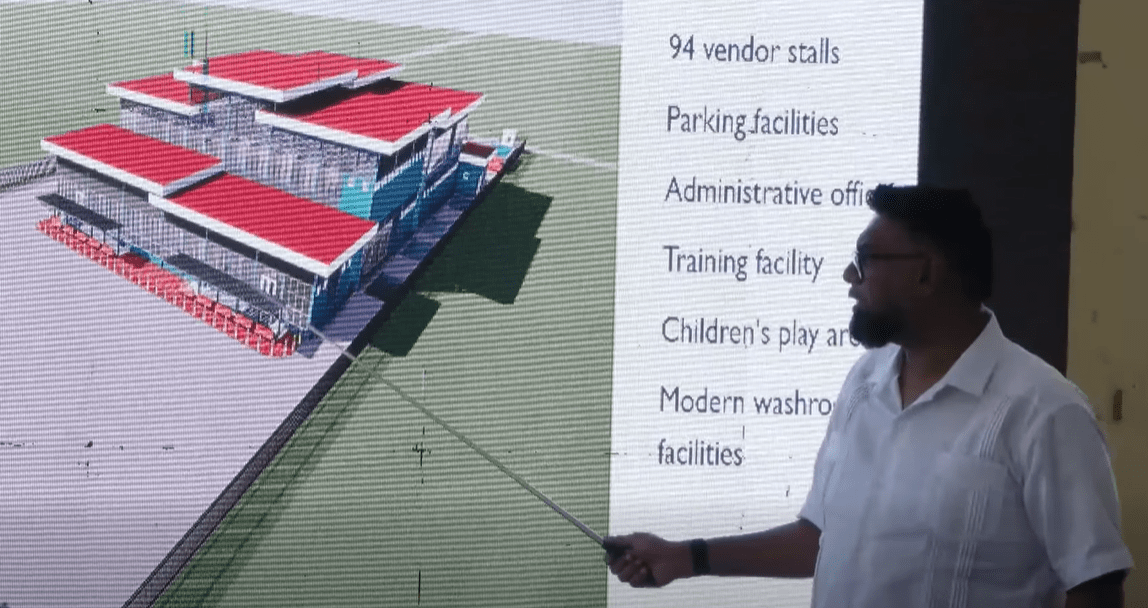
    During a meeting at Zeelugt Primary School, President Ali confirmed that the village’s popular but hazardous roadside snackettes – small food vendors that currently operate directly along the main public thoroughfare – will be relocated to a purpose-built new public market. The new facility will feature a dedicated section for these vendors, alongside a clean, safe, hygienic, and visitor-friendly food court designed to draw local patrons and tourists alike. Complementing the market development, the government has a large-scale waterfront regeneration project in the works that will add a public park and dedicated event spaces designed to host community gatherings without disrupting residential areas. Beyond food vendors, the plan also calls for consolidating spray-painting workshops, mechanic garages and other similar businesses into a single zoned location that minimizes noise, traffic and pollution impacts on nearby residential neighborhoods.

    For Tuschen, located across the Essequibo River on the East Bank, the government plans to build a dedicated centralized logistics hub that will serve as a large-scale truck parking lot to remove heavy commercial vehicles from residential streets. Minister of Public Utilities and Aviation Deodat Indar, a Tuschen resident himself, detailed the breadth of infrastructure upgrades planned for the community: 89 kilometers of newly expanded, deep concrete drains that will double as water reservoirs to address flooding and water storage needs; reinforced road shoulders for all two-lane routes; pre-installed ducts for future utility service expansions; and a new bypass road connecting Tuschen to Windsor Forest that will redirect through traffic away from the village’s crowded residential core.

    A centerpiece of the Tuschen upgrade is a GY$1.5 billion, 32,000 square-foot modern public market to be constructed at the rear of the village. Indar emphasized that the new facility will replace the informal, makeshift pallet-built stalls that currently serve vendors, raising community living and commercial standards long-term. Additional public safety and infrastructure upgrades include 168 new security cameras to support local law enforcement in crime reduction, the installation of new fire hydrants for improved emergency response, and 1,500 new street lights to boost nighttime safety and visibility. Maintenance of the upgraded community spaces will fall jointly to the Region Three administration and the Ministry of Local Government, Indar confirmed.

    Housing Minister Collin Croal added clear expectations for community standards under the model villages initiative, stating that the government will not allow ongoing issues including derelict vehicles abandoned on public land, unregulated improper garbage disposal, long-term open storage of construction materials on public rights-of-way, and poorly maintained drainage systems that contribute to flooding. President Ali framed the model villages project as a holistic effort to improve resident quality of life, addressing not just physical infrastructure but also social cohesion, environmental cleanliness, and noise pollution reduction. “The quality of life that we experience in the community depends on the quality of our values, our culture, the way we treat the environment, the way we dump our garbage and the way in which we look out for each other,” he told attendees.

  • Edghill now stumbling block to Public Accounts Committee meetings, as APNU walks out

    Edghill now stumbling block to Public Accounts Committee meetings, as APNU walks out

    A planned meeting of Guyana’s key parliamentary oversight body, the Public Accounts Committee (PAC), adjourned abruptly within minutes on Monday, 3 August 2026 after the entire opposition delegation from A Partnership for National Unity (APNU) staged a walkout to protest the participation of Public Works Minister Juan Edghill, a senior parliamentary source has confirmed. The protest was led by APNU’s PAC representative Ganesh Mahipaul, who argued that Edghill must step back from all committee duties and resign from his cabinet post entirely, amid widespread public scrutiny over the 19 July sinking of the MV Barima. The deadly maritime disaster has left more than 100 people unaccounted for and presumed dead, and opposition parties have pinned institutional blame on Edghill and fellow cabinet minister Deodat Indar, demanding both step down. The main opposition bloc We Invest in Nationhood (WIN) has joined APNU in this call for the ministers’ removal. After Mahipaul raised the objection, PAC Chairman Vishnu Panday ruled against the demand, noting that Edghill retains his legal status as both a sitting government minister and an appointed member of the bipartisan committee. Sitting government PAC representative Gail Teixeira backed the chairman’s ruling, dismissing the opposition’s objection as procedurally out of order and insisting the committee’s scheduled work must move forward. Undeterred by the ruling, Mahipaul and fellow APNU PAC member Juretha Fernandes exited the meeting, leaving the body without the quorum required to conduct official business, forcing an immediate adjournment. The collapse of the meeting comes amid an odd contradiction for APNU: the party has repeatedly pushed for more frequent PAC sessions to clear a years-long backlog of unaddressed Auditor General’s reports. The PAC, as a bipartisan National Assembly mechanism, exists explicitly to investigate and question non-transparent government spending documented in the Auditor General’s annual audits. As of Monday afternoon, it remains unclear whether APNU will adjust its position in coming days to allow the committee to resume its work.

  • MV Barima’s murder charges trumped up to cover officials’ failures – chief mate’s friends

    MV Barima’s murder charges trumped up to cover officials’ failures – chief mate’s friends

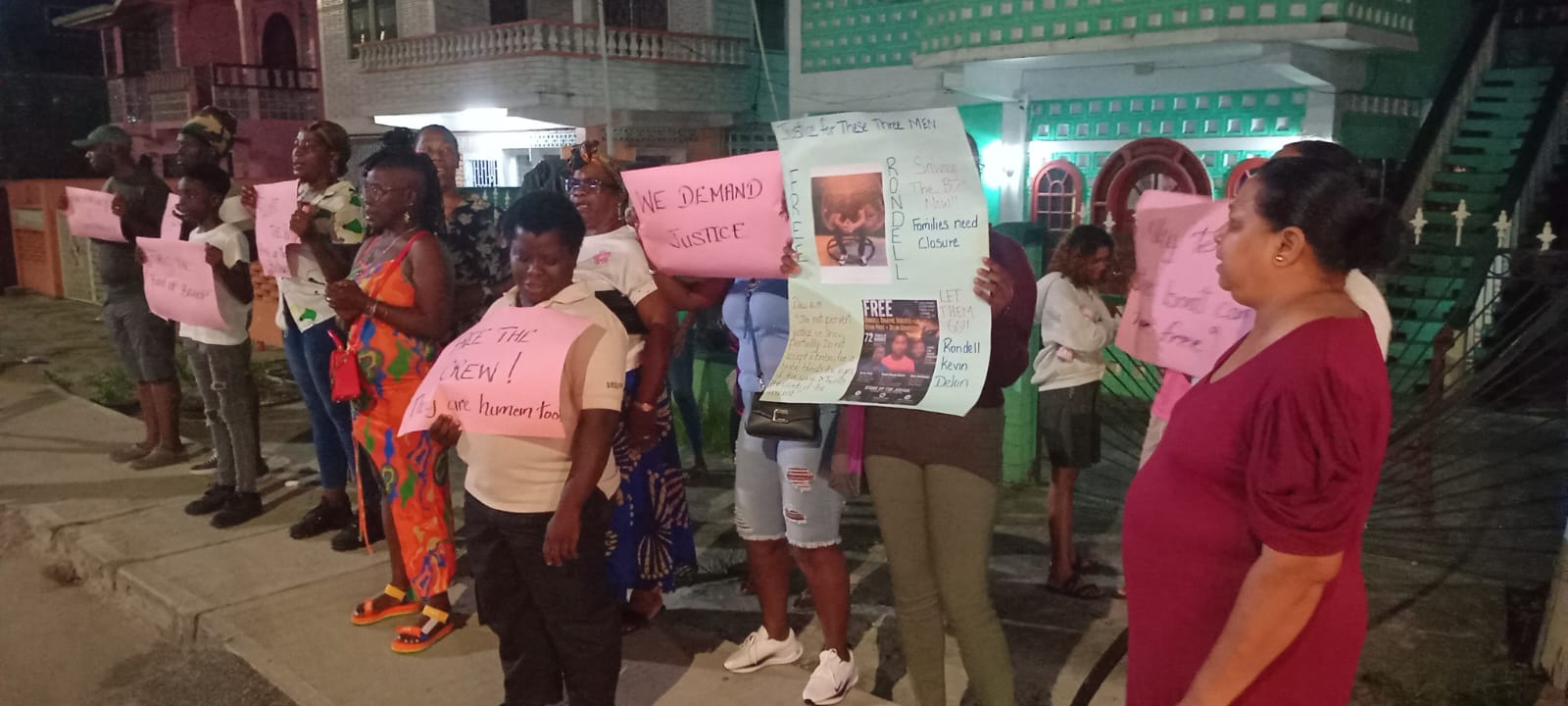
    On Sunday evening, August 2, 2026, dozens of supporters including family members, friends, and local residents gathered outside the Grove, East Bank Demerara home of Rondell Dwayne Roberts, the first mate of the sunken Guyanese ferry MV Barima, to stage a solidarity demonstration. The 42-year-old father of three, along with two other marine and transport officials, is currently facing 72 counts of murder in connection with the July 18 sinking that has been linked to an estimated 102 unconfirmed fatalities out of 179 total passengers and crew on board. Protesters argue the charges against the trio are fabricated to deflect blame from senior government officials who they claim bear ultimate responsibility for the disaster.

    Protesters carried hand-painted placards bearing slogans calling for transparency, accountability, and the immediate release of all three accused men. Beyond calling for Roberts’ exoneration, demonstrators also demanded justice for vessel captain Kevin “KP” Price, 40, of Melanie Damishana, East Coast Demerara, and Delon Granderson, 33, a Transport and Harbours Department goods superintendent based in Fellowship, West Coast Demerara. Additional slogans pressed officials to salvage the sunken ferry to retrieve submerged evidence, called for the dismissal of senior government leaders linked to maritime oversight, and highlighted the need for closure for the families of both the accused and the victims.

    One close friend of Roberts told Demerara Waves Online News that the entire community is convinced he has been wrongfully accused and wrongfully imprisoned. A female friend of the first mate reiterated that sentiment, stressing that accountability must start with the senior government officials in charge of maritime regulation and safety. “They just can’t put all the blame on a low-level employee. That is plain injustice, and all the critical evidence is still sitting at the bottom of the water,” she stated.

    Dr Dexter Todd, the attorney representing the accused, confirmed last week that he intends to file a legal challenge disputing the legality of the murder charges. Picket participant Morti also forcefully refuted unconfirmed reports that Roberts had tested positive for marijuana use while on duty aboard the ferry. “This boy does not smoke or drink. He would only drink a Vita Malt, he doesn’t even smoke cigarettes,” Morti said. “He never got out of bed that morning to go to work and kill anyone.”

    Supporters of the accused uniformly back the plan to salvage the MV Barima from its resting place nine miles offshore, arguing that retrieving the vessel is the only way to uncover conclusive evidence of what caused the sinking and identify all parties responsible, including senior government decision-makers. “The proof of what happened is right there on that boat,” one friend of Roberts explained. “Bring it up so everyone can see the evidence. If the evidence from the vessel proves they are guilty, then justice will be served. But right now, we’re being denied that proof.” Morti went a step further, proposing that once salvaged, the ferry could be brought ashore and converted into a permanent memorial to honor the lives lost during the voyage from Georgetown to Port Kaituma, instead of constructing a memorial at sea.

    Director of Public Prosecutions Shalimar Hack has defended the decision to bring charges, stating that her office recommended prosecuting the three men based on submitted evidence, binding legal principles, relevant case law from the United Kingdom, Commonwealth jurisdictions, and the European Court of Human Rights, as well as broader public policy considerations.

    Sunday’s demonstration marks the third public protest held in support of the accused in recent weeks, with previous rallies taking place in Melanie Damishana and Den Amstel, West Coast Demerara. Separately on Sunday, Deodat Indar, the minister responsible for maritime administration, confirmed that he had received intelligence that opposition supporters were planning a separate protest outside his personal residence.

    Multiple opposition groups including We Invest in Nationhood, A Partnership for National Unity, and Forward Guyana Movement, alongside the Amerindian People’s Association and other civil society activists, are currently calling for Indar and the country’s minister of maritime transportation to resign or be removed from office over the disaster. In response to growing public pressure, President Irfaan Ali has already taken two formal steps to investigate the incident: he has appointed a five-member Commission of Inquiry to conduct a comprehensive investigation into the sinking, and assembled a specialized technical team to review existing safety and compliance standards for all vessels operating in Guyana’s waters. The technical review team includes former Maritime Administration Department Director-General Dr. Ivor English, Guyana Defense Force Colonel Julius Skeete, and experienced marine officer and ship surveyor Captain Joseph Lewis.

  • AFC recommends captains refuse to operate ferries if faulty

    AFC recommends captains refuse to operate ferries if faulty

    ### Updated: Friday, 31 July 2026, 21:25 By Denis Chabrol

    Weeks after the fatal July 19 capsizing of the MV Barima killed more than 100 passengers and crew off Guyana’s coast, political opposition and civil society activists escalated public pressure on the Guyanese government during a 100-person protest outside the Office of the President on Friday. The demonstration centers on demands for full accountability, immediate salvage of the sunken vessel, and broader safety reforms for the country’s state-operated ferry network.

    Addressing protesters from the picket line, David Patterson, leader of the opposition Alliance For Change (AFC), issued a direct warning to captains and senior crew of all ferries run by the state’s Transport and Harbours Department (T&HD): refuse to sail any vessel that you deem unfit for service. He reminded crews that three of their colleagues already face unprecedented murder charges over the MV Barima disaster, a stark departure from the negligence charges that typically follow maritime accidents.

    The three charged crew members—40-year-old captain Kevin “KP” Price from Melanie Damishana, 42-year-old chief mate Rondell Dwayne Roberts from Grove Public Road, and 33-year-old goods superintendent Delon Granderson from Fellowship—all face the same severe criminal charges. Patterson stressed that captains who choose to operate a known defective vessel put themselves at equal legal risk. “If you take a boat that you know is defective, sail it, and a tragedy happens, authorities will frame the incident as if you intentionally meant to harm people,” he said. “You won’t just face negligence charges—you’ll be charged with murder, just like your three colleagues.”

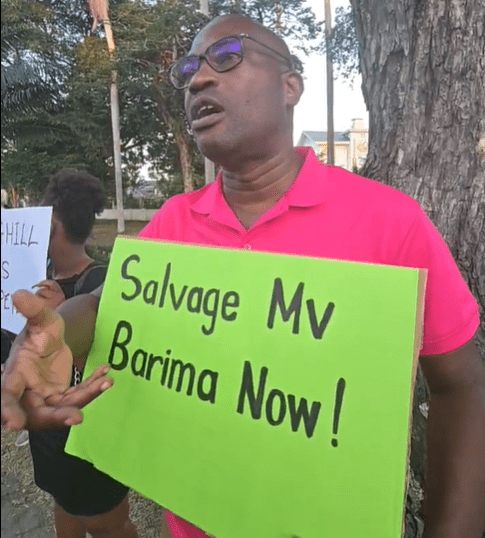
    Beyond his warning, Patterson shared practical guidance for ferry crews to protect themselves: formally document all safety concerns about vessel conditions in writing to senior officials, including the Minister of Public Works, and require all orders to sail in unsafe conditions to be provided in writing. “If something goes wrong, you will have clear proof that you followed official instructions,” he explained. Holding a protest placard reading “Salvage MV Barima”, Patterson also revealed he has already been in contact with a marine salvage firm based in the United Kingdom, which has outlined a salvage plan that would cost far less than the Guyana government’s current US$8 million estimated price tag.

    Patterson also pushed back against any suggestions that political leadership had previously pressured crews to cut safety corners, noting that when he served as Minister of Public Infrastructure, he never ordered any captain to overrule their own safety concerns or force vessels to carry excess cargo beyond safe limits.

    The call for salvage has gained broad support across Guyanese civil society, including from prominent Guyanese international environmental activist Janet Bulkan, who joined Friday’s protest. Bulkan emphasized that the sunken ferry itself is critical evidence for the ongoing investigation, calling it the “murder weapon” at the center of the criminal case against the three crew members. “If authorities are pressing murder charges against these men, we need the vessel raised to get the full truth,” she told Demerara Waves Online News. She added that recovering the ferry would also give closure to the families of the over 100 victims, allowing them to bury their loved ones properly. Bulkan also noted that the investigation must follow the formal requirements laid out in Guyana’s Shipping Act and the international Safety Of Life At Sea (SOLAS) Convention.

    In response to recent comments from Prime Minister Mark Phillips that the government would only salvage the vessel if victim families request it, Bulkan pushed back, arguing that such a major decision should not be left solely to grieving families. Instead, she said, it should be made by a multi-stakeholder group including investigators, legal representatives, civil society leaders and family advocates.

    One young protester at Friday’s demonstration carried a placard calling for the resignation of Public Works Minister Juan Edghill, and defended that demand in an interview. “The Ministry of Public Works has a legal and moral responsibility to provide safe, reliable public transportation for every Guyanese citizen,” she said. “Over 100 people died simply trying to travel to their destinations. This is the result of gross negligence, incompetence and complacency. If Minister Edghill truly considers himself an honorable person, the only honorable step he can take right now is to resign.”

    In response to growing public outcry, President Irfaan Ali has approved a formal Commission of Inquiry to conduct a full, wide-ranging probe into the MV Barima tragedy. On Friday, Ali appointed three experts to lead the inquiry’s review of maritime safety compliance: Dr. Ivor English, former Director-General of the Maritime Administration Department (MARAD); Colonel Julius Skeete of the Guyana Defense Force; and Captain Joseph Lewis, a veteran marine officer and ship surveyor. The commission’s mandate includes examining whether existing maritime safety rules were followed, and making actionable recommendations to strengthen regulatory oversight, improve enforcement, and bring Guyana’s vessel operations, operator protocols and regulatory systems up to the highest achievable international standards for safety and accountability.

  • MV Barima Inquiry Commissioners sworn in, media not invited

    MV Barima Inquiry Commissioners sworn in, media not invited

    On Thursday, July 30, 2026, a five-member international Commission of Inquiry officially took office to investigate the sinking of the Guyanese ferry MV Barima, a maritime disaster that occurred earlier this month that has left more than 100 people unaccounted for or confirmed dead. The closed-door swearing-in ceremony, which notably excluded media presence, was overseen by Chief Justice Judy Latchman and attended by Guyana President Irfaan Ali, who appointed the panel. Commission Chairman Justice Godfrey Philip Smith, a veteran judicial official from Belize who also serves as the CARICOM High Level Representative for Law and Criminal Justice and an ad hoc judge of the Eastern Caribbean Court of Appeal, completed his oath of office remotely.

    The disaster, one of the deadliest maritime incidents in Guyana’s recent history, unfolded when the MV Barima sank with 179 passengers and crew members on board. To date, rescue teams have recovered 72 fatalities, rescued 76 survivors, and 31 people remain missing, bringing the unofficial total of lives lost to over 100. In the weeks since the sinking, three people – the ferry’s captain, chief mate, and the Transport and Harbours Department’s Goods Superintendent – have been charged with murder, though Prime Minister Mark Phillips has publicly stated he does not believe the incident was a deliberate act of killing.

    President Ali defended the panel’s credibility in remarks following the ceremony, emphasizing that the commission brings together cross-disciplinary maritime experts from across the Caribbean and Europe to deliver a rigorous, unbiased investigation. “This Commission meets the highest benchmarks of independence, impartiality, and objectivity,” he said, noting that Guyana’s people deserve a full, transparent accounting of what led to the tragedy to prevent similar losses in the future. The head of state also committed that the Guyanese government would allocate full administrative, technical, financial and logistical resources to support the inquiry, saying “Every resource required to facilitate a thorough, professional, and independent inquiry will be made available.”

    The commission’s broad mandate covers multiple core objectives: establishing an authoritative factual record of the sinking, analyzing the root causes and contributing factors behind the disaster, assessing whether all relevant parties complied with existing maritime laws and operational safety standards, evaluating the effectiveness of the initial search, rescue and body recovery operations, identifying systemic or operational shortcomings and failures that led to the incident, and drafting targeted recommendations to strengthen the safety and resilience of Guyana’s entire maritime transportation system. “The nation awaits such report. The families who have suffered unimaginable loss await these answers,” President Ali added.

    The inquiry panel is composed of highly credentialed international experts with deep specialized experience in maritime affairs. Joining Chairman Smith are Dr. Andre Jesse Anungski, a Polish naval architect and marine engineer who has consulted on investigations into numerous major global maritime disasters; Captain Hamada Fauda, a senior maritime surveyor and compliance auditor with Jamaica’s Maritime Authority; Nairi Dawn Alfonso, an attorney from Trinidad and Tobago specializing in admiralty and maritime law; and retired Rear Admiral Hayden Pritchard, also from Trinidad and Tobago, who brings decades of hands-on experience in maritime operations and security. As of the swearing-in date, the government has not yet announced a appointment to the role of Commission Secretary.

    Despite the President’s assurances of the panel’s impartiality, public questions have already emerged about the transparency of the process and the potential for bias among the commissioners. The decision to bar media from the official swearing-in ceremony has fueled concerns about openness in the inquiry, which carries high stakes for the families of victims and Guyana’s maritime regulatory reform moving forward.

  • Protests against murder charge for MV Barima captain, others; Indigenous Amerindians among activists picketing President’s office

    Protests against murder charge for MV Barima captain, others; Indigenous Amerindians among activists picketing President’s office

    On Wednesday, July 29, 2026, widespread coordinated protests broke out across Guyana, sparked by public outrage over murder charges filed against three Transport and Harbours Department (T&HD) employees in the deadly July 18 sinking of the MV Barima passenger vessel. The disaster has left 72 people confirmed dead and another 30 missing, presumed drowned, and protesters are demanding both accountability for senior government officials and justice for the accused workers.

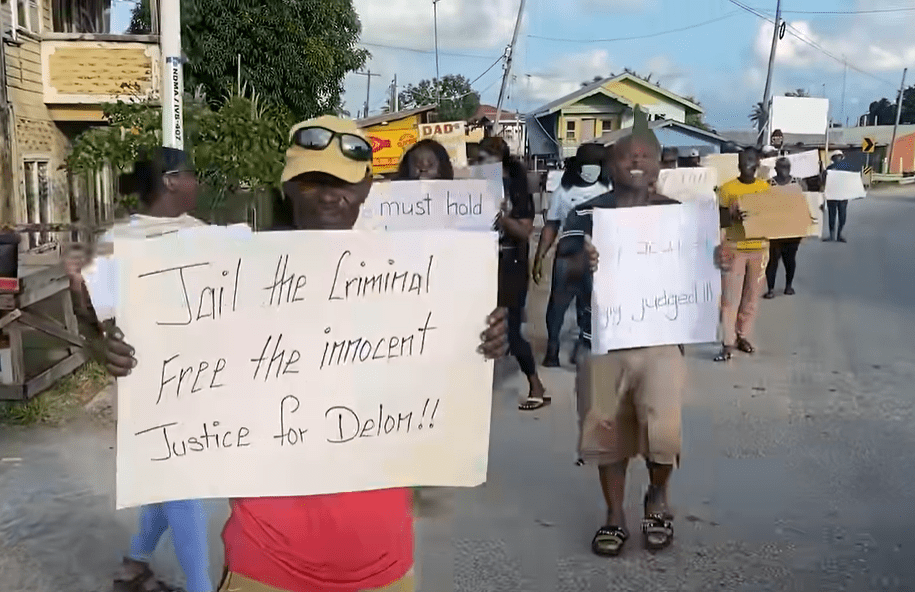
    Demonstrations were held at three key locations: two coastal road sites on Demerara’s East and West coasts, and a mass picket outside the Office of the President in Georgetown. At Den Amstel Public Road on West Coast Demerara, roughly 30 demonstrators gathered in solidarity with 33-year-old Delon Granderson, a T&HD Goods Superintendent from Fellowship. Carrying hand-painted placards, protesters chanted “jail the criminals, free the innocent,” and called for the immediate removal of two senior cabinet members: Juan Edghill, the minister responsible for maritime transportation, and Deodat Indar, minister of maritime regulation. Placard messages included “wrongly accused, wrongly judged,” “free Delon Granderson,” and direct accusations that the two ministers “sank the evidence.”

    A separate protest at Melanie Damishana Public Road on East Coast Demerara centered on support for 40-year-old MV Barima captain Kevin “KP” Price, a local villager. Protesters there joined calls to release Price, Granderson, and the third accused, Chief Mate Rondell Dwayne Roberts, while also condemning the government for what they called selective justice. Demonstrators drew a contrast between the swift murder charges against the T&HD workers and the ongoing lack of progress in the death investigation of Adrianna Young, whose body was recovered from a hotel pool in Tuschen, East Bank Essequibo. Protesters chanted that “Anil Nandlall and the DPP were silent with Adrianna’s case but they suddenly have voice,” rejecting claims of equal treatment under the law.

    The three accused workers—Granderson, Price, and Roberts, 42, of Grove Public Road, East Bank Demerara—were formally charged with the murder of the 72 confirmed victims of the July 18 sinking, when the overloaded passenger vessel went down in rough coastal waters overnight.

    Outside the Office of the President, a larger coalition demonstration brought together Indigenous Amerindians organized by the Amerindian People’s Association (APA), joined by civil society activists, opposition politicians, and ordinary members of the public. Many of the victims of the sinking were Indigenous people traveling to coastal communities, leading protesters to highlight systemic neglect of Indigenous safety and rights. Placards carried messages including “indigenous lives matter,” “our First People deserve first class treatment,” and calls to hold senior leaders accountable for the disaster. One protester told Demerara Waves that the tragedy exposed deep-rooted failures across Guyana’s entire public transportation system, both on land and at sea. “It is reckless, it is lawless and the protocols are not in place. The same thing translates on the sea,” he said, calling for full systemic reform and stricter enforcement of safety rules to protect all Guyanese commuters.

    Representatives from three opposition groups—We Invest in Nationhood (WIN), the People’s National Congress Reform/ A Partnership for National Unity, and the Alliance For Change—joined the demonstration, with unarmed police maintaining a presence at the site. Opposition Leader Azruddin Mohamed reiterated a longstanding demand for the MV Barima wreck to be salvaged, arguing that recovering the vessel is the only way to recover remaining victims, give grieving families closure, and uncover the full truth of the disaster. He accused the government of blocking salvage efforts to avoid accountability, saying “they know they will be held accountable.” Mohamed also announced he had assembled a team of lawyers to secure substantial compensation for survivors and bereaved families, and revealed plans to organize rolling protests across all 10 of Guyana’s administrative regions in the coming weeks.

    The murder charges have split official response, even within the government. On Tuesday, Prime Minister Mark Phillips publicly stated he did not believe the captain and his crew had any intention to kill the passengers on board. Lawyers for the accused have already argued there is no evidence of premeditation or intent to kill required for a murder conviction. But Director of Public Prosecutions Shalimar Hack defended her decision to recommend the elevated charges, saying the decision was rooted in evidence presented to her office, relevant legal principles, binding case law from the United Kingdom, other Commonwealth jurisdictions, and the European Court of Human Rights, as well as broader public policy considerations.

    For his part, President Irfaan Ali has continued to hold one-on-one meetings with survivors and bereaved families, posting on his official Facebook page Wednesday that he remains committed to standing with affected communities through their healing process, beyond just the immediate aftermath of the disaster. “I continued my one-on-one engagements with survivors and families affected by the MV Barima tragedy,” he wrote, adding that the meetings uphold his earlier commitment to ensure all families receive the care, support, and assistance they need.

    Prime Minister Phillips clarified earlier this week that any final decision on salvaging the MV Barima will be guided by the wishes of victim families. He rejected opposition claims of a government cover-up, saying “Government has nothing to hide. I can tell you up front, we have nothing to hide.” He also denied that the government was pressuring families to oppose salvage efforts, and confirmed that no compensation would be offered to families before the Commission of Inquiry investigating the tragedy releases its final findings and recommendations.

  • Venezuelan, Colombian arrested in 55 kilo cocaine bust

    Venezuelan, Colombian arrested in 55 kilo cocaine bust

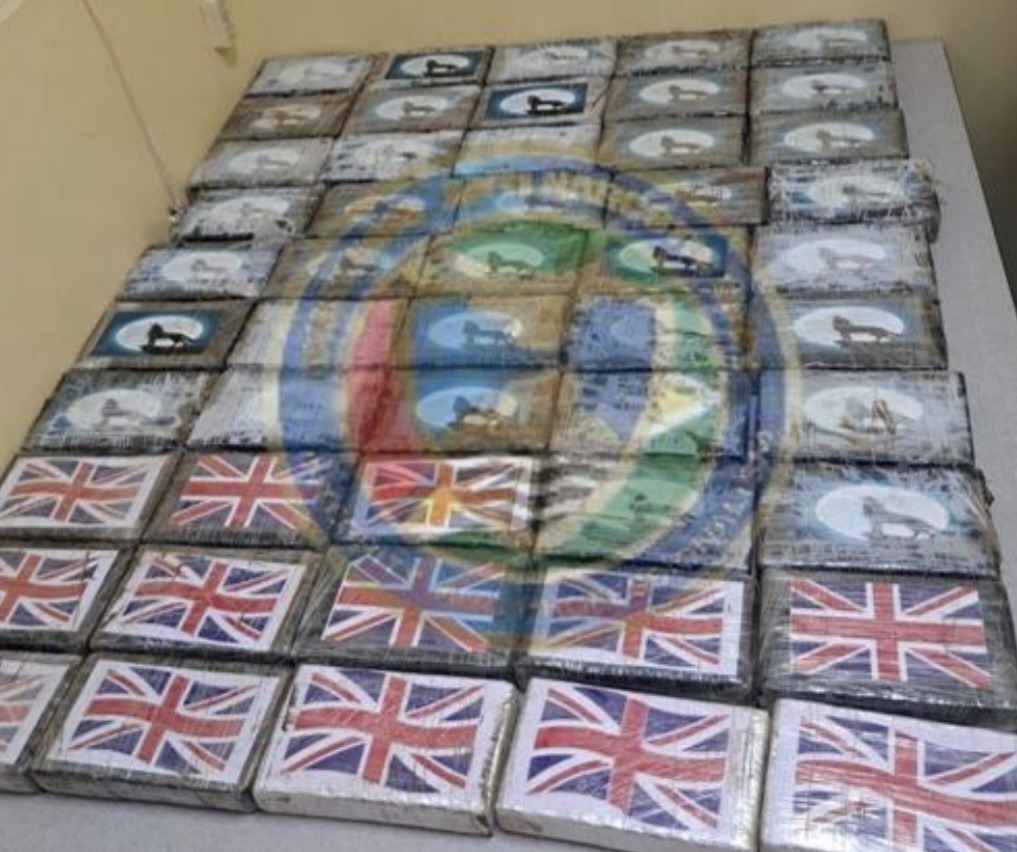
    In a major anti-narcotics operation in Guyana, one man has received a prison sentence and heavy fine after admitting to large-scale cocaine trafficking, while multiple other suspects remain in custody for ongoing investigations, the country’s Customs Anti-Narcotics Unit (CANU) announced Wednesday. The operation was first launched on July 24, when CANU officers intercepted a moving vehicle along Providence Public Road, located in the East Bank Demerara region. Two men — Venezuelan national Gerardo Martinez and Colombian national Revelino Ascue — were taken into custody at the scene of the stop.

    A systematic search of the intercepted vehicle uncovered 50 tightly compressed, brick-shaped parcels containing cocaine, with a total recorded weight of 55.296 kilograms. A third Colombian suspect, whose identity has not been released in detail by authorities, has also entered a guilty plea to charges of possession of 56.296 kilograms of cocaine with intent to traffic, bringing the total seizure weight connected to the case to more than 56 kilograms.

    During a court hearing before Diamond Magistrate Dylon Bess, the guilty-pleading Colombian defendant was formally sentenced: he will serve four years behind bars and is required to pay a fine of 82,944,000 Guyanese dollars, equivalent to approximately $316,000 USD. Martinez, the second suspect arrested in the July 24 vehicle stop, has entered a not guilty plea to the trafficking charges against him. He has been remanded to prison as the legal process moves forward.

    In addition to the two men arrested during the vehicle stop, CANU confirmed that multiple other individuals — including both foreign nationals and Guyanese citizens — are currently being held as the agency continues its probe into what authorities believe is a coordinated cross-border drug trafficking ring operating in the region. CANU, a specialized law enforcement division under Guyana’s Ministry of Home Affairs, has not released additional details on the other suspects or the broader investigation timeline as of Wednesday’s update.

  • Govt willing to leave MV Barima on sea floor even if there is useful evidence for probe

    Govt willing to leave MV Barima on sea floor even if there is useful evidence for probe

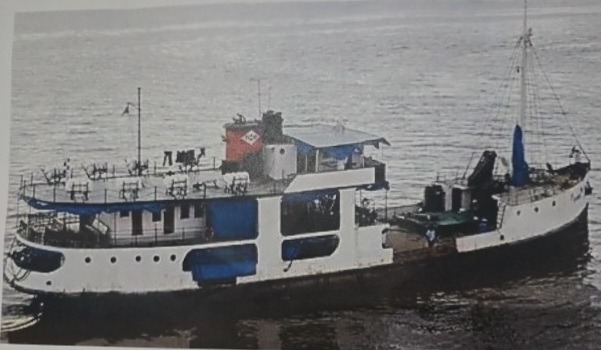
    As of Tuesday, July 28, 2026, Guyana’s Prime Minister Mark Phillips has confirmed that multiple international firms have offered to salvage the sunken ferry MV Barima, but the final call on whether to raise the wreckage will be determined entirely by the families of missing passengers. The sunken vessel is believed to hold the remains of unaccounted-for occupants and key physical evidence that will feed into the official Commission of Inquiry into the sinking, but the government has prioritized family preferences over immediate recovery, Phillips said at a recent press conference.

    When pressed on whether the government’s delay to order salvage was an attempt to suppress concrete evidence of potential engine failure that would be uncovered from a full inspection of the vessel, Phillips denied the accusation but did not provide a direct response. Both Phillips and Captain John Flores, Emergency Operations Coordinator at the Maritime Search and Rescue Coordination Centre, have argued that the inquiry can still draw conclusions from survivor and crew testimony even if the wreckage and its engine are never recovered. “Even if you don’t pull the boat and the engine out for inspection, crew and passengers can testify to whether the engine stalled or required emergency repairs at sea,” Phillips explained. “From that testimony, the commission can still draw conclusions about any underlying problems. This can work either way.”

    The government is currently circulating a questionnaire among family members of victims asking whether they support salvaging the MV Barima or prefer to leave the wreck on the seabed as a permanent memorial site. Phillips emphasized that the administration stands ready to honor whatever decision the families reach. “We already have multiple formal offers for salvage on the table, but at this stage, the wishes of the families are the only priority,” he said. “If families indicate they would prefer for the site to remain undisturbed as a memorial, we will move forward with that option.”

    In response to questions about why the government would defer to families when the wreck holds critical evidence about the state of the vessel’s engines, navigation equipment and other factors tied to the sinking’s cause, Phillips reiterated that the government is committed to uncovering the full truth while also respecting the needs of grieving relatives. He added that President Irfaan Ali has held multiple direct meetings with families of survivors and the 30 passengers still listed as missing, and the choice between a memorial and salvage has been a core topic of those discussions.

    Phillips pushed back firmly against speculation that the government is attempting to cover up details of the sinking, and denied claims that officials are quietly pressuring families to oppose salvage. “The government has nothing to hide. I can say that clearly and upfront: we have nothing to hide,” he stated. When asked if the administration was trying to persuade families to support leaving the wreck in place, he replied, “No, no, no. Government is not trying to convince anybody to say anything.” He also declined to answer a specific question about which party first floated the idea of a seabed memorial.

    Beyond questions of salvage, Phillips acknowledged that the Public Works Ministry had lost multiple all-terrain vehicles, fuel, and other supplies when the ferry sank. Unconfirmed reports also indicate an unregistered large generator was among the heavy cargo aboard the vessel. When it comes to lingering questions about whether the MV Barima was overloaded when it sank, Phillips said that determination will be left to the Commission of Inquiry. “From the very start, the government has acknowledged that there are multiple discrepancies in the existing information about this incident,” he said. “There have been public statements that the vessel was not overloaded, but the fact that we have already identified one inconsistency means there may be others that need to be fully examined.”

    In a separate announcement, the Prime Minister confirmed that once the Commission of Inquiry begins its work, the government will cover all transportation costs to bring witnesses from across the country to give testimony.