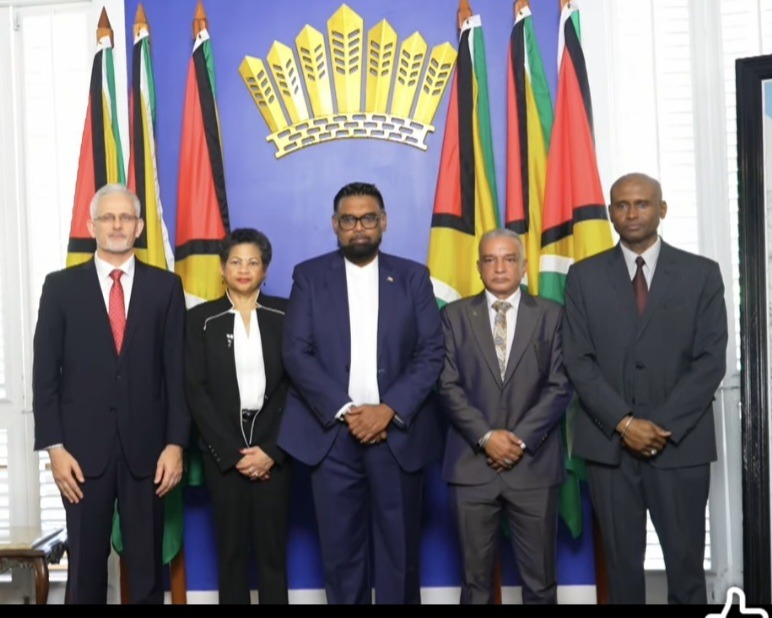
On Thursday, July 30, 2026, a five-member international Commission of Inquiry officially took office to investigate the sinking of the Guyanese ferry MV Barima, a maritime disaster that occurred earlier this month that has left more than 100 people unaccounted for or confirmed dead. The closed-door swearing-in ceremony, which notably excluded media presence, was overseen by Chief Justice Judy Latchman and attended by Guyana President Irfaan Ali, who appointed the panel. Commission Chairman Justice Godfrey Philip Smith, a veteran judicial official from Belize who also serves as the CARICOM High Level Representative for Law and Criminal Justice and an ad hoc judge of the Eastern Caribbean Court of Appeal, completed his oath of office remotely.
The disaster, one of the deadliest maritime incidents in Guyana’s recent history, unfolded when the MV Barima sank with 179 passengers and crew members on board. To date, rescue teams have recovered 72 fatalities, rescued 76 survivors, and 31 people remain missing, bringing the unofficial total of lives lost to over 100. In the weeks since the sinking, three people – the ferry’s captain, chief mate, and the Transport and Harbours Department’s Goods Superintendent – have been charged with murder, though Prime Minister Mark Phillips has publicly stated he does not believe the incident was a deliberate act of killing.
President Ali defended the panel’s credibility in remarks following the ceremony, emphasizing that the commission brings together cross-disciplinary maritime experts from across the Caribbean and Europe to deliver a rigorous, unbiased investigation. “This Commission meets the highest benchmarks of independence, impartiality, and objectivity,” he said, noting that Guyana’s people deserve a full, transparent accounting of what led to the tragedy to prevent similar losses in the future. The head of state also committed that the Guyanese government would allocate full administrative, technical, financial and logistical resources to support the inquiry, saying “Every resource required to facilitate a thorough, professional, and independent inquiry will be made available.”
The commission’s broad mandate covers multiple core objectives: establishing an authoritative factual record of the sinking, analyzing the root causes and contributing factors behind the disaster, assessing whether all relevant parties complied with existing maritime laws and operational safety standards, evaluating the effectiveness of the initial search, rescue and body recovery operations, identifying systemic or operational shortcomings and failures that led to the incident, and drafting targeted recommendations to strengthen the safety and resilience of Guyana’s entire maritime transportation system. “The nation awaits such report. The families who have suffered unimaginable loss await these answers,” President Ali added.
The inquiry panel is composed of highly credentialed international experts with deep specialized experience in maritime affairs. Joining Chairman Smith are Dr. Andre Jesse Anungski, a Polish naval architect and marine engineer who has consulted on investigations into numerous major global maritime disasters; Captain Hamada Fauda, a senior maritime surveyor and compliance auditor with Jamaica’s Maritime Authority; Nairi Dawn Alfonso, an attorney from Trinidad and Tobago specializing in admiralty and maritime law; and retired Rear Admiral Hayden Pritchard, also from Trinidad and Tobago, who brings decades of hands-on experience in maritime operations and security. As of the swearing-in date, the government has not yet announced a appointment to the role of Commission Secretary.
Despite the President’s assurances of the panel’s impartiality, public questions have already emerged about the transparency of the process and the potential for bias among the commissioners. The decision to bar media from the official swearing-in ceremony has fueled concerns about openness in the inquiry, which carries high stakes for the families of victims and Guyana’s maritime regulatory reform moving forward.