标签: Guyana

圭亚那

  • RJLSC to hold transparent and independent review of allegations against CCJ President

    RJLSC to hold transparent and independent review of allegations against CCJ President

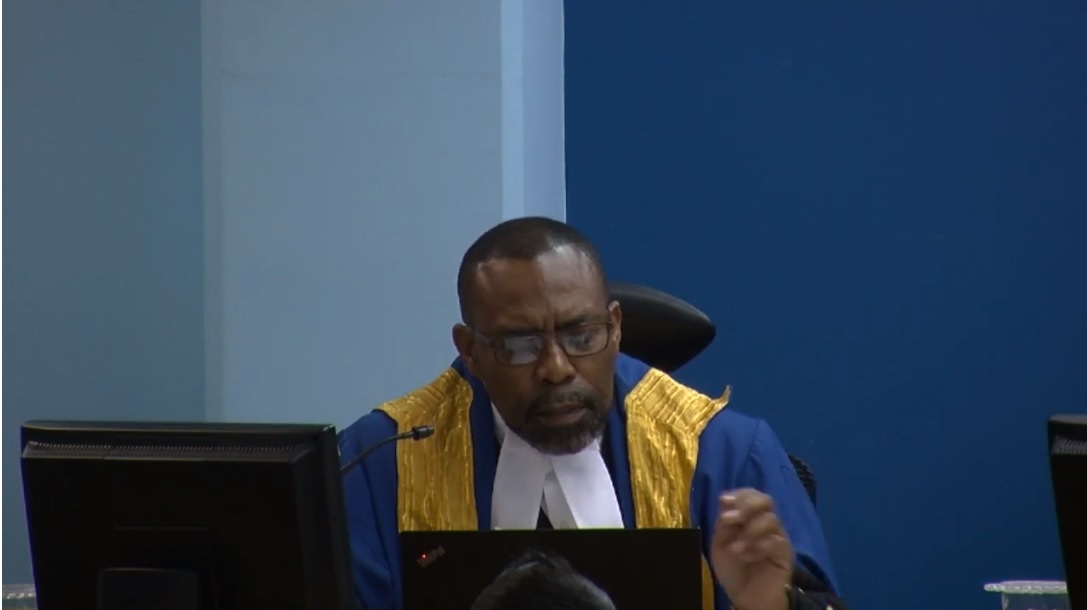
    On Wednesday, 12 August 2026, the Regional Judicial and Legal Services Commission (RJLSC) confirmed it will launch a transparent, independent review into a series of serious misconduct allegations leveled against Caribbean Court of Justice (CCJ) President Justice Winston Anderson, a development that has sparked public debate over judicial governance in the Caribbean regional court system.

    The allegations first came to light in an exclusive report published by the *Sunday Express* earlier this week, pulled from internal email exchanges between sitting CCJ judges between June and July 2026. Beyond claims that Anderson imposed an uneven judicial dress code, the accusations include far more serious charges of so-called “panel fixing,” improper attempts to sway case outcomes, and a pattern of authoritarian, dictatorial leadership that has been endorsed by a majority of the court’s sitting judges.

    Established under the founding agreement of the CCJ, the RJLSC is a specialized oversight body composed of legal practitioners, public sector leaders, and civil society representatives. Per its official mandate, the commission holds authority over disciplinary action, appointment regulation, and employment terms for all CCJ judges (with the exception of the court president) and all court staff. It also plays a key role in shielding the regional court from political interference while overseeing judicial appointments and operational governance.

    In an official statement released to media outlet CCN, the RJLSC acknowledged the gravity of the claims, noting, “The Commission recognises the seriousness of these matters and the importance of addressing them in a manner that protects public trust and confidence in the Court and the broader administration of justice throughout the Caribbean.”

    The commission confirmed it would pursue the review through its established internal governance frameworks, adding, “these concerns are best addressed through… a transparent and independent review undertaken in the best interest of the Region.” The body also noted it maintains an open-door policy for all CCJ judges and staff to raise concerns, and highlighted its 23-year track record of independent operation free from influence from both court leadership and outside political actors.

    Stressing its history of autonomous governance under past and present CCJ presidents who serve as commission chairs, the RJLSC urged against premature judgment, adding “no conclusions should be drawn about the allegations until they have been examined fairly and objectively.” The commission did not, however, confirm whether Anderson himself would recuse himself from any part of the review process.

    The RJLSC’s announcement drew immediate comment from Martin Daly, a former commission member and senior counsel, who argued that a full formal investigation is non-negotiable given the severity of the claims.

    “The matters alleged in the Express reports have the potential to seriously undermine the independence and effectiveness of the court. The commission should therefore have no difficulty in getting on with an investigation of the allegations,” Daly said, criticizing the commission’s statement as vague and meandering.

    Daly also questioned the RJLSC’s reference to its open-door policy for raising internal concerns, asking, “Is it a veiled invitation to the aggrieved judges to hasten to lodge formal complaints? I ask how helpful is such a statement? How does that posture advance the public interest?”

    Noting that the allegations center on administrative decisions tied to the court’s core functioning, Daly clarified that the RJLSC has clear authority to investigate these claims, but must draw a firm line between administrative conduct and the exercise of judicial power, which falls outside the commission’s oversight remit.

    Most critically, Daly emphasized that Anderson—who serves as chair of the RJLSC by virtue of his role as CCJ president—must step aside from any involvement in the probe. “The president of the court is chairman of the RJLSC, but he must, of course, recuse himself from participating in an investigation of administrative decisions made by him,” Daly said, adding that the discontinuation of a formal deputy chair position was unfortunate, but that multiple sitting commissioners have the experience and independence to lead an impartial probe. Daly also noted that the matter does not require involvement from Caribbean heads of government at this stage.
  • CCJ leaks won’t sway Jamaica’s opposition PNP

    CCJ leaks won’t sway Jamaica’s opposition PNP

    Amid newly emerged public allegations over internal operations at the Caribbean Court of Justice (CCJ), Jamaica’s main opposition People’s National Party (PNP) has reaffirmed its longstanding commitment to replacing the UK-based Privy Council with the regional body as the country’s final court of appeal, party leader Mark Golding has confirmed.

    The controversy stems from a series of leaked internal emails obtained and published by Trinidad and Tobago’s *Sunday Express*, which claimed to expose deep-seated friction among CCJ judges, strained interpersonal dynamics, and what one message described as a growing ‘toxic’ internal working environment at the regional appellate court. To date, Jamaica’s *The Gleaner*, the original outlet of this reporting, has not independently obtained or verified the content of the alleged leaked messages.

    In an interview with *The Gleaner*, Golding pushed back against framing the leaks as evidence of institutional failure at the CCJ. He argued that the released correspondence instead demonstrates that CCJ judges feel comfortable voicing dissenting and independent perspectives directly to the court’s president, a level of open debate he calls a foundational strength for any robust judicial body.

    “We remain convinced that Jamaica would derive substantial benefits from designating the CCJ as our final court of appeal,” Golding stated. “The court is geographically and procedurally accessible to Jamaican citizens, and it has built a robust global reputation for excellent, rigorous adjudication of the cases brought before it.” The PNP has long tied its support for broad national constitutional reform to Jamaica’s formal adoption of the CCJ as its highest appellate body, a position Golding confirmed remains unchanged by the current controversy.

    Golding did note that the unauthorized public release of private judicial discussions is deeply regrettable, emphasizing that there is no indication any of the judges involved expected or agreed to have their internal communications disclosed.

    Other prominent Jamaican legal and political figures have offered more critical perspectives on the leak. Marlene Malahoo Forte, former co-chair of Jamaica’s Constitutional Reform Committee, called the decision to leak internal correspondence a major failure of judgment. “It is deeply troubling that individuals who should understand the importance of confidentiality in institutional deliberations chose to disclose internal matters to the public,” she said. “I have to question what would lead someone to be so dissatisfied that they could not allow internal processes to run their course to resolve disagreements.”

    Forte added that the controversy has already damaged public trust in the CCJ, a setback that comes at a particularly sensitive moment, as Jamaica and other CARICOM member states that have not yet adopted the CCJ as their final court actively debate the change. “This public airing of internal disputes does nothing to advance support for the court,” she noted. “When voters and policymakers weigh in on this issue, they will scrutinize every detail, and this leak only creates unnecessary uncertainty.”

    Constitutional scholar and CCJ proponent Dr. Lloyd Barnett, who previously served as deputy chairman of the Regional Judicial and Legal Services Commission (RJLSC) — the independent body that oversees CCJ judge appointments and disciplinary processes — offered a measured take on the allegations. Barnett acknowledged that the claims will provide political ammunition to opponents of the CCJ, who he says will seize on the controversy while ignoring similar internal disputes that have long been part of other leading appellate courts, including the UK’s Privy Council.

    Even so, Barnett characterized the allegations outlined in the leaked emails as much ado about nothing, describing the claims as ‘a lot of air, a lot of smoke without any true fire.’ He explained that many of the disputed issues raised in the messages are normal procedural realities for a small appellate body like the CCJ, which currently counts just seven judges including its president. For example, the court’s president is tasked with selecting judges for hearing panels, and the small size of the court means the same judges will frequently sit together on multiple cases. Changes to institutional rules such as judicial dress codes also require full consensus among judges, he added.

    Barnett emphasized that differences of opinion are an inherent, healthy part of the appellate judicial process. ‘Judges will hold divergent views, they will advocate for their positions, and each stands firm on what they believe is right — that is how the system works,’ he said. He also noted that existing governance guardrails prevent institutional deadlock: while the CCJ president chairs the RJLSC, the president will recuse themselves from any proceedings involving a conflict of interest, leaving the deputy chairman to preside.

    A lifelong supporter of the CCJ’s role as CARICOM’s leading appellate body, Barnett said he remains confident the regional court will resolve its internal differences through established internal processes. He pointed to a long history of resolved disputes within other leading global courts, noting that serious internal disagreements have long been recorded in the Privy Council and the UK Supreme Court, yet those disputes rarely draw the same level of public condemnation that the CCJ is currently facing. ‘We have inherited a colonial mindset where we tend to condemn our own regional institutions while excusing the same issues in older foreign bodies,’ he said. ‘In reality, internal disagreement is a normal part of any independent judiciary.’

    In a statement carried by the *Sunday Express*, the CCJ has defended its track record, reaffirming its commitment to upholding independence, impartiality, and integrity in all its duties to maintain public confidence in its work.

  • US to help Guyana monitor airspace with high-tech system to tackle drug trafficking, strengthen border security

    US to help Guyana monitor airspace with high-tech system to tackle drug trafficking, strengthen border security

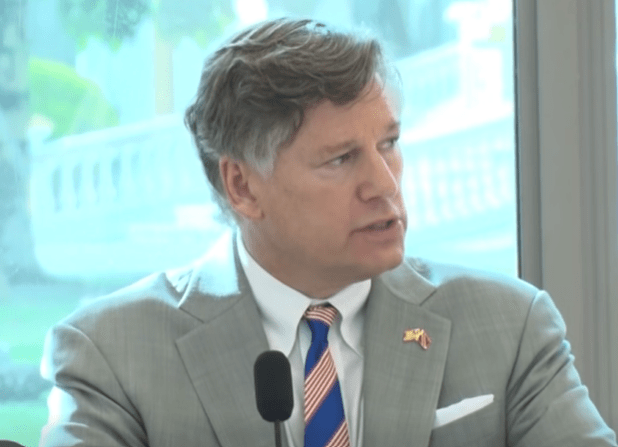
    During a high-profile diplomatic visit to Guyana this week, senior U.S. and Guyanese officials have formalized an expansion of bilateral security cooperation, with Washington set to deliver $2 million in funding to help the South American nation build out advanced capabilities to monitor its sovereign airspace. The announcement, made public Tuesday by the U.S. Embassy in Georgetown, frames the new support as a targeted measure to crack down on transnational drug trafficking and shore up Guyana’s border protection frameworks, building on a broader security partnership first codified in a 2025 memorandum of understanding (MoU).

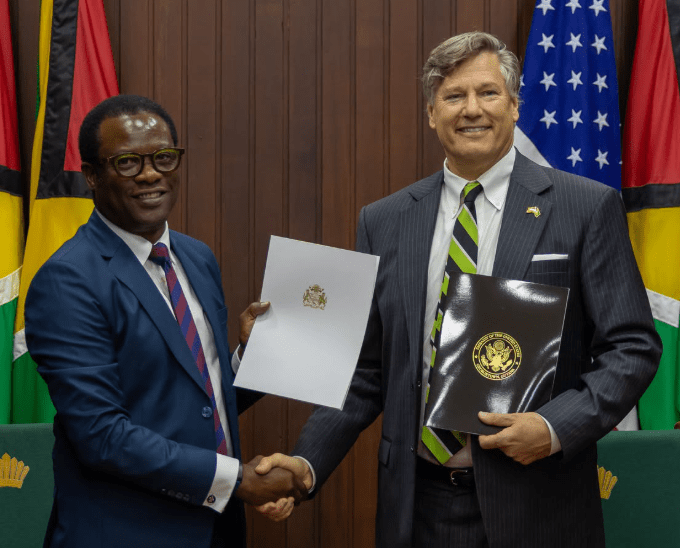
    The commitment was unveiled during Deputy Secretary of State Christopher Landau’s official trip to the country, where he joined Guyana’s Foreign Affairs Minister Hugh Todd for a formal MoU signing ceremony that updates and expands the existing 2025 security cooperation agreement. President Irfaan Ali was in attendance for the signing, alongside other senior Guyanese cabinet members including Finance Minister Ashni Singh, Natural Resources Minister Vickram Bharrat, and senior foreign affairs officials. U.S. Ambassador to Guyana Nicole Theriot also participated in the event.

    Per the embassy’s official statement, the $2 million investment will fund a new initiative focused on developing Guyana’s air domain awareness infrastructure and expand the country’s unmanned aerial system (UAS) capabilities. U.S. Department of Homeland Security guidance identifies air domain awareness as a foundational capability for a full spectrum of national security and defense operations, particularly critical for detecting and responding to unauthorized incursions and other illegal activity at a country’s points of entry.

    The new security assistance directly addresses longstanding concerns raised by President Ali and his administration over unregulated illicit air traffic linked to the global drug trade. For years, drug trafficking organizations have used Guyana’s airspace and remote territory as a transit route for narcotics shipments, with multiple drug-carrying aircraft seized in Guyana and neighboring Suriname in recent years.

    Beyond counternarcotics work, the upgraded air monitoring capabilities also come against a backdrop of persistent low-level tensions along Guyana’s western border with Venezuela. The two countries have maintained a decades-long territorial dispute over the resource-rich Essequibo Region, with sporadic armed incursions targeting Guyanese military personnel reported in recent months.

    During Landau’s visit, the two sides also addressed priorities beyond security cooperation, holding discussions on expanding bilateral economic ties and attracting new foreign investment to key strategic sectors of Guyana’s economy, including offshore energy and critical mineral development. The U.S. Embassy emphasized that Landau’s trip reaffirms Washington’s commitment to deepening partnerships across the Western Hemisphere, advancing shared goals ranging from regional security and energy resilience to broad-based economic prosperity for the region.

    In a social media post following the signing ceremony, President Ali noted that the updated MoU strengthens and deepens the long-standing bilateral security partnership between the two nations, building on years of existing collaboration in counternarcotics and cross-cutting security work. While he did not share additional details of the new funding package in the post, the announcement confirms the two countries’ shared commitment to tackling shared security threats in the region.

  • Nine Guyanese doctors for advanced training in China

    Nine Guyanese doctors for advanced training in China

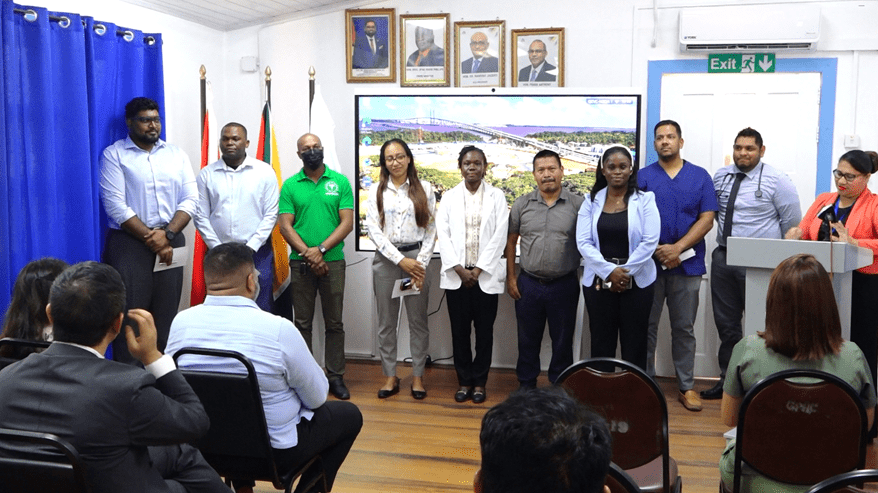
    In a major collaborative push to strengthen Guyana’s flagship public healthcare system, nine doctors from the Georgetown Public Hospital Corporation (GPHC) are set to travel to China this week for a three-month advanced specialized training program, marking the third cohort of Guyanese medical professionals to benefit from the bilateral health initiative, officials confirmed in an announcement Tuesday.

    The participating physicians will build expertise in eight high-demand clinical specialties critical to GPHC’s expanding service delivery: ophthalmology, pathology, nephrology, orthopedics, anesthesiology, obstetrics and gynecology, plastic surgery, and general surgery. GPHC Chief Executive Officer Robbie Rambarran explained that the targeted upskilling is timed to meet growing demand for care at the nation’s leading hospital, which now serves both Guyana’s resident population and a rising number of international patients seeking treatment.

    “What we are seeing right now is that GPHC has earned confidence from people far beyond Guyana’s borders. We have not just foreign residents accessing our services—even short-term visitors to the country choose to seek care here during their stay. That trust is directly built on partnerships like this training program, and the skills these doctors bring back will only deepen that confidence,” Rambarran said.

    Beyond personnel training, Rambarran added that the 21st Chinese Medical Brigade, which has a long-running deployment in Guyana, is preparing to donate a new shipment of medical equipment and supplies to GPHC to further bolster the institution’s clinical capabilities.

    Energy major China National Offshore Oil Corporation (CNOOC), a key co-venturer in Guyana’s productive Stabroek Block, has stepped in as a major sponsor for the initiative, directly funding five of the nine trainees. Bayney Karran, representative for CNOOC Petroleum (Guyana) Limited and a former Guyanese ambassador to China, noted that the investment aligns with the company’s long-term commitment to advancing Guyana’s public health outcomes.

    “We urge this third cohort of doctors to make the most of this opportunity, absorb all the knowledge and hands-on experience available during their training, and return home better equipped to carry out their life-changing work caring for Guyana’s patients,” Karran said. He added that CNOOC also provides ongoing support to the work of the Chinese Medical Brigade across the country.

    Chinese Ambassador to Guyana Yang Yang framed the training program as a core component of China’s health diplomacy with Guyana, calling for more Guyanese medical professionals to take advantage of the opportunities on offer. She emphasized that the initiative is designed to build long-term, sustainable capacity for Guyana’s entire healthcare system, not just individual clinicians.

    “Our goal is to cultivate a new generation of Guyanese medical professionals with strong technical expertise, a global perspective, and an innovative drive to advance care. This foundation will support the long-term growth of Guyana’s healthcare sector,” Yang said. She reaffirmed China’s commitment to deepening pragmatic cooperation with Guyana across key health priorities, including medical technology exchange, workforce development, and collective response to emerging public health challenges.

    Yang also highlighted the decades-long impact of Chinese medical support to Guyana, noting that a total of 313 Chinese medical professionals have served in the country under the Chinese Medical Brigade program with consistent, unwavering dedication to patient care.

    In a side note, the announcement also referenced that Guyana is among several Caribbean and South American nations that currently receive healthcare system capacity-building support from the United States Southern Command (SOUTHCOM) alongside bilateral cooperation with China.

  • Suriname threatens ferry MV Canawaima with sailing ban over safety concerns

    Suriname threatens ferry MV Canawaima with sailing ban over safety concerns

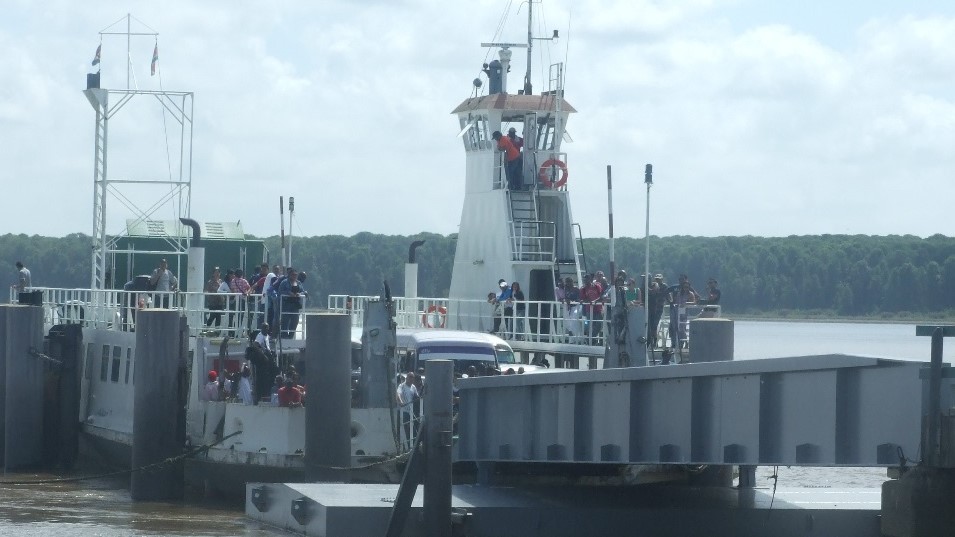
    The Maritime Authority of Suriname (MAS) has delivered a formal final ultimatum to Canawaima Management Company NV, giving the firm one last chance to address critical outstanding safety and operational deficiencies on the cargo vessel MV Canawaima, according to official correspondence dated August 7, 2026.

    The ultimatum comes after a months-long process of regulatory follow-up that began with an initial inspection that identified multiple gaps in the vessel’s compliance with international and national maritime safety standards. In a July 26, 2026 notice, MAS first ordered the company to submit a formal corrective action plan within seven days of receiving the original inspection report. When the deadline passed without a complete response, regulators scheduled a follow-up inspection on August 5, 2026. That re-inspection confirmed that the vast majority of the previously flagged deficiencies had not been remedied, prompting the agency to issue the final warning.

    Under the terms of the new ultimatum, Canawaima Management Company NV must submit a comprehensive corrective action plan that includes a clear, time-bound schedule for addressing all identified deficiencies, completing required major structural repairs, and scheduling mandatory drydocking for the vessel. MAS has set a hard deadline of August 13 for all core safety requirements to be brought into full compliance.

    Key non-negotiable requirements laid out by the regulator cover multiple domains of vessel safety. First, all legally mandated safety equipment must be fully on board, tested, and ready for immediate deployment at all times. All fire-fighting tools and systems must be present, up to date on required inspections, and fully operational, including the vessel’s fire detection and suppression infrastructure.

    The regulator also added documentation and personnel certification requirements to the compliance checklist. All crew members must hold valid, up-to-date Basic Safety Training and Crowd Management certification. For any crew members who have not yet completed the required training and obtained their certificates, the company must provide formal written proof that the relevant training courses will be finished within 30 days.

    Additionally, MAS requires an independent, internationally recognized ship surveyor to conduct a full inspection and risk assessment of the watertight integrity of the MV Canawaima’s hull and cofferdams. A positive, passing assessment from this independent inspection is a prerequisite for the company to be considered for a temporary exemption from the mandatory drydocking requirement.

    MAS has clearly outlined the severe consequences that will take effect if the company fails to meet all requirements by the August 13 deadline. Starting at midnight on August 14, 2026, the MV Canawaima will be placed under a full sailing ban that will remain in force until every single compliance requirement is fully satisfied and verified by MAS regulators.

    In its official communication, MAS emphasized that the safety of the vessel, its crew, and all other commercial shipping traffic in Suriname’s waters is the agency’s top priority. The regulator has called on Canawaima Management Company NV to immediately prioritize and implement all required corrective measures to avoid the upcoming sailing ban.

  • People are electing parties that will deliver – US deputy secretary of state

    People are electing parties that will deliver – US deputy secretary of state

    On Monday, August 10, 2026, U.S. Deputy Secretary of State Christopher Landau delivered remarks during a stop in Trinidad and Tobago, ahead of a planned diplomatic visit to neighboring Guyana. During his address, Landau outlined a shifting global political trend he has observed across democratic nations: voters are increasingly rejecting status-quo politics that prioritize empty rhetoric over tangible progress, and instead electing administrations they trust to deliver measurable results for their populations.

    “Business as usual has stopped delivering meaningful outcomes for ordinary people across the globe,” Landau stated. “Voters everywhere are demanding change.” To illustrate his point, he cited the recent electoral victories of Prime Minister Kamla Persad-Bissessar of Trinidad and Tobago and U.S. President Donald Trump, arguing that both leaders have centered their governance on action rather than lip service.

    “Unlike many former leaders around the world, these two leaders are laser-focused on delivering results, not just speeches,” Landau noted. His comments came during an event marking a major new energy development in the region: energy giant bp Trinidad and Tobago announced that Trinidad and Tobago’s state-run National Gas Company has acquired a 20% stake in the cross-border Manakin-Coucina gas field shared with Venezuela. Separately, bp has purchased the remaining 70% share of Woodside Energy’s Block TTDAA14, which hosts the deepwater Calypso Gas project, bringing bp’s total ownership of the project to 100%.

    The event coincided with another major economic announcement for Trinidad and Tobago: Edwin Bennet, CEO of U.S.-based Pinnacle Steel and Vanadium Company, confirmed the firm would inject an initial $250 million into reopening the idled Point Lisas steel plant, which shut down operations back in 2016. The company targets full commercial production of steel and vanadium by the end of 2027, marking a significant revitalization of the country’s industrial sector.

    Landau lauded Persad-Bissessar’s administration and Trump’s leadership for laying the policy and infrastructure groundwork that has unlocked these new energy projects, in partnership with major firms including ExxonMobil, Curlew, and bp. These developments, he said, will reshape the long-term energy trajectory of both the United States and Trinidad and Tobago.

    “This is what mutually beneficial diplomacy and commercial partnership looks like: both nations advance their own national interests while finding shared solutions that lift all parties. This is a true win-win collaboration,” Landau added. He told Prime Minister Persad-Bissessar that international “capital flows to where it is welcome,” crediting her administration’s pro-investment policies for making the revitalization of shuttered industrial sites like Point Lisas possible.

    Looking ahead, Landau’s upcoming visit to Guyana will center on deepening bilateral cooperation in high-priority strategic sectors, including energy development and critical minerals extraction. As of Monday, the Guyanese government has not yet issued an official public statement confirming the visit to Georgetown.

  • APNU tells CCJ President to resign amid internal rift over management style

    APNU tells CCJ President to resign amid internal rift over management style

    On Sunday evening, Dr. Terrence Campbell, parliamentary head of Guyana’s main opposition bloc A Partnership for National Unity (APNU), issued a public call for Dr. Winston Anderson, the embattled president of the Caribbean Court of Justice (CCJ), to step down. The demand comes following allegations of mismanagement leveled against Anderson by several of his fellow judges at the regional tribunal, which has served as a key final appellate body for a growing number of Caribbean nations.

    Campbell framed the call around the core institutional values that underpin the CCJ’s legitimacy. “The Caribbean deserves a final court whose judges are free from political influence and whose President commands the confidence of his fellow judges, the legal profession, governments and the people of the region,” Campbell stated in his released statement. “Justice Anderson should therefore resign as President of the Caribbean Court of Justice.”

    Campbell argued that the Trinidad-headquartered court currently faces a crisis of public confidence, as regional citizens, governments and legal practitioners expect the tribunal to uphold strict standards of independence, impartiality, and freedom from political interference. Emphasizing that the institution’s integrity outweighs individual tenure, he noted that Anderson’s resignation would not constitute an admission of wrongdoing, but rather an act of responsible institutional leadership that would clear the way for the court to address emerging concerns, repair public trust, and reaffirm its commitment to judicial independence.

    “It would create the space for the CCJ to address the concerns that have emerged, restore confidence in its leadership, reaffirm the principle of judicial independence and demonstrate that the integrity of the institution must always take precedence over the tenure of any individual office-holder,” Campbell added.

    Campbell also stressed that if the CCJ hopes to expand its role as the final court of appeal for additional Caribbean countries, it must first prove beyond any doubt that its own leadership meets the high standards of independence, impartiality, and collaborative governance that the role demands. “The restoration of confidence in the CCJ must begin with accountability at the highest level. Justice Winston Anderson should resign,” he reiterated.

    In his statement, Campbell referenced a previously unpublicized engagement between Anderson and Aubrey Norton, Leader of the Opposition in Guyana, regarding the appointment of a substantive Chancellor and Chief Justice of Guyana. The appointment process has been roiled in controversy over the position of incumbent Justice Yonette Cummings-Edwards. Campbell confirmed that Norton has verified Anderson reached out to him on the matter, expressed opposition to any move that would supersede Cummings-Edwards, and ended the discussion after determining the engagement was not in Guyana’s best interests.

    Beyond the Guyana judicial appointment controversy, Campbell pointed to reporting from the *Trinidad Express* that uncovered a deep internal rift among CCJ judges, including widespread concerns about Anderson’s leadership style and allegations of unfair treatment of fellow jurists. These reports, he argued, raise systemic questions not just about a single intervention in Guyana’s domestic judicial affairs, but about how Anderson exercises institutional authority and interacts with his colleagues on the court.

    These broader tensions have already played out in a high-profile extradition case involving two Guyanese billionaires: Azruddin Mohamed and his father Nazar “Shell” Mohamed, who challenged a portion of their extradition proceedings before the CCJ. The case has been publicly cited as a key flashpoint in the rift between multiple CCJ judges and President Anderson.
    According to the *Trinidad Express* reporting, an internal email among CCJ judges includes allegations from Justice Chile Eboe-Osuji that Anderson pushed to rush a decision in the Mohamed case. The case centered on the Mohameds’ challenge of a decision by Guyana’s Home Affairs Minister Oneidge Walrond, who authorized a magistrate to hear an extradition request from the United States on alleged financial crime charges. Anderson’s push for an early announcement, the allegation claims, stemmed from claims of political bias against Walrond.

    The CCJ has not directly addressed the specific claims about Anderson’s management style and decision-making. In an official response to the *Trinidad Express*, the court did not outright discredit the newspaper’s reporting, only noting that the outlet did not have access to the full context of internal court dynamics. “The Court is mindful that questions and allegations presented without the benefit of context, background, or an appreciation of the nature of judicial deliberations, collegial discussions, and institutional governance may lend themselves to misunderstanding or mischaracterisation,” the regional tribunal said.

  • US Deputy Secretary of State to hold energy, minerals talks with Pres Ali in Guyana

    US Deputy Secretary of State to hold energy, minerals talks with Pres Ali in Guyana

    In an official announcement released Sunday, the U.S. State Department confirmed that Deputy Secretary of State Christopher Landau will embark on a four-day diplomatic tour of the Caribbean this week, spanning August 9 to 12, 2026. The trip will include stops in two key regional partners: Guyana and Trinidad and Tobago, with a core agenda focused on advancing U.S. economic and strategic interests across the Western Hemisphere.

    Landau’s first stop will be Georgetown, Guyana, where he is scheduled to hold formal talks with President Irfaan Ali. Senior State Department officials outlined that discussions will center on deepening bilateral collaboration in high-priority strategic sectors, most notably energy development and critical minerals supply chains. This visit comes on the heels of two major recent U.S. investments in Guyana that signal Washington’s growing commitment to expanding its economic and strategic footprint in the South American nation.

    Less than one week before Landau’s trip, the U.S. Department of War (DOW) announced an $85.5 million investment through its Industrial Base Analysis and Sustainment (IBAS) program to support the acquisition of a bauxite mine in Guyana. The initiative is designed to secure a steady domestic supply of refractory-grade bauxite for U.S. industrial and defense needs, reducing American reliance on Chinese sourcing for this strategically critical material. Refractory-grade bauxite is an essential raw material for manufacturing heat-resistant components used in a wide range of high-stakes applications, including military aircraft, guided missiles, rocket systems, space infrastructure, and defense-grade thermal shielding. Beyond defense applications, the material is also a foundational input for commercial steel and aluminum production, energy infrastructure development, and industrial manufacturing, making it a critical commodity for overall U.S. economic security. The DOW’s public investment will be paired with an additional $64.5 million in co-investment from private sector partners, bringing total funding for the project to $150 million.

    Landau’s meeting with President Ali also follows a recent White House briefing on the Wales Gas-to-Energy project, a large-scale energy infrastructure initiative based in Guyana that has received substantial U.S. backing. The project is partially financed through a $526 million loan from the U.S. Export-Import Bank (EXIM), and the briefing was led by Grean Fuentes, Chief Financial Officer of Lindsayca, the project’s lead developer.

    Following the briefing, Jarrod Agen, Executive Director of the White House National Energy Dominance Council, praised the project in a post on his official LinkedIn page. Agen highlighted that the initiative delivers dual benefits: it will create hundreds of new jobs for American workers while expanding the global footprint of U.S. energy businesses, all while delivering immediate, reliable, and affordable electricity access to communities across Guyana. “Under President Trump, U.S. companies have truly helped transform the Western Hemisphere into the center of energy dominance for the world,” Agen wrote in the post.

    After concluding his engagements in Guyana, Landau will travel to Port of Spain, Trinidad and Tobago, to meet with Prime Minister Kamla Persad-Bissessar. The two leaders will discuss efforts to further strengthen bilateral ties, align on shared energy and national security priorities, and expand cross-border economic cooperation. The visit comes as energy major ExxonMobil leads ongoing ultra-deepwater oil and gas exploration operations off the coast of Trinidad and Tobago, a project that has drawn significant U.S. commercial interest.

    State Department officials emphasized that Landau’s regional tour underscores the Biden administration’s long-term commitment to strengthening partnerships across the Western Hemisphere and advancing shared priorities that benefit all parties, including enhanced regional security, more resilient global energy supply chains, and broad-based economic prosperity across the Caribbean and South America.

  • US govt invests in Guyana’s bauxite sector to eliminate reliance on bauxite from China

    US govt invests in Guyana’s bauxite sector to eliminate reliance on bauxite from China

    Three months after a senior U.S. diplomatic delegation signaled American interest in developing access to Guyana’s rich bauxite reserves, the U.S. Department of War (DOW) has announced a $150 million combined public-private investment to acquire and expand a local bauxite operation, in a move explicitly designed to cut reliance on Chinese-sourced supplies of the strategically critical mineral.

    Of the total funding, $85.5 million comes from the DOW’s Industrial Base Analysis and Sustainment (IBAS) program, an initiative targeted at resolving critical supply chain gaps that private investors have long avoided due to the long lead times associated with mineral development projects. An additional $64.5 million is being contributed as co-investment by private sector partner Strategic Bauxite.

    In an official statement released Friday, the DOW outlined that the capital will be allocated to three core objectives: completing the acquisition of First Bauxite (FBX), a U.S.-owned bauxite mining operation already active in Guyana; expanding the existing mine site and constructing new on-site calcination facilities for primary mineral processing; and supporting a subsequent project to build a domestic brown-fused alumina (BFA) production facility within the United States. The acquisition transaction already moved forward last month, when First Bauxite confirmed that Strategic Bauxite had finalized a purchase agreement for the company.

    The core goal of the initiative, DOW officials explained, is to eliminate the U.S. industrial and defense sectors’ heavy dependence on imported refractory-grade bauxite, a material of which more than 90% of current U.S. supplies are sourced from China or Chinese-controlled entities. Once the project reaches full operational capacity, DOW projects it will meet 100% of total U.S. domestic demand for refractory-grade bauxite, as well as 100% of the U.S. military’s total BFA requirements.

    George K. Kollitides II, director of the DOW’s Economic Defense Unit, emphasized that the U.S. is moving proactively to address risky supply chain dependencies rather than waiting for vulnerabilities to be exploited. “This agreement shows how EDU and the Department can partner with the commercial sector to rapidly turn opportunities into advantages for the warfighter,” Kollitides said.

    Refractory-grade bauxite is a non-substitutable input for manufacturing high-temperature-resistant components that are critical to U.S. defense capabilities, including heat shields, thermal barriers, and turbine engines for guided missiles, military aircraft, rockets, and national security space systems. Beyond its defense applications, the high-purity mineral is also an essential raw material for civilian industrial sectors, including steel and primary aluminum production, energy infrastructure construction, and high-temperature industrial furnaces, making it a foundational input for the entire U.S. industrial economy.

    The investment is part of a broader interagency coordinated effort by the U.S. government to strengthen critical mineral supply chains, with the U.S. Department of State providing supporting infrastructure funding to accelerate project development and lock in long-term supply chain resilience. The push for Guyanese bauxite access follows a May 2026 visit to Guyana by Under Secretary of State for Economic Affairs Jacob Helberg, where he explicitly outlined U.S. interest in expanding private and public investment in the country’s bauxite sector.

    “We did talk about things that were prospective, but obviously because the reserves of bauxite are known and there are already investments today, we talked a fair amount about those,” Helberg noted during that May visit.

    Guyana currently hosts two active bauxite producers: Chinese firm BOSAI Minerals and the U.S.-owned First Bauxite. Russian miner RUSAL, which suspended operations in the country in 2018 amid a large-scale labor dispute, has announced plans to resume production later this year.

    Michael Cadenazzi, Assistant Secretary of War for Industrial Base Policy, framed the investment as a key step to protect U.S. and allied defense readiness by securing Western Hemisphere-based access to critical minerals. “Our defense readiness relies on secure, regional access to critical minerals,” Cadenazzi said. “This partnership with Strategic Bauxite through the equity funding and analysis provided by the IBAS program ensures that critical materials in the western hemisphere stay in supply chains that protect the United States and its allies.”

    For its part, Strategic Bauxite General Partner Michael Smith expressed optimism about the venture’s long-term prospects. “We are delighted to invest in First Bauxite and look forward to working with its employees, management team, customers, communities, and government partners,” Smith said. “We believe the Company has significant growth opportunities and we are committed to supporting its continued success.”

  • Veteran Guyanese politician launches autobiography “Enter the Political Kingdom”

    Veteran Guyanese politician launches autobiography “Enter the Political Kingdom”

    Guyana is set to host the official launch of *Enter the Political Kingdom*, a sweeping autobiography by veteran activist Moses Bhagwan, this Saturday, August 8, 2026. Organizers have announced last-minute changes to the event venue, shifting the gathering from the originally planned Umana Yana to Georgetown Club on Camp Street, between Middle and New Market Streets, kicking off at 5:00 PM. The venue change comes after the Ministry of Culture reallocated Umana Yana to serve as the MV Barima Information Centre for families affected by the recent maritime disaster that has shaken the nation.

    Curated and edited by a team of scholars including Alissa Trotz, Sasha Ann Panaram, and Nigel Westmaas, Bhagwan’s memoir traces seven decades of the author’s life, weaving together his firsthand experiences of Guyana’s unified anti-colonial movement, the fractious political landscape of the post-independence era, and the country’s Civil Rebellion. Rooted in the ideological legacy of the Working Peoples Alliance and its iconic leader Walter Rodney, the book offers intimate, incisive reflections on community organizing, grassroots social activism, and the central role of family in shaping Bhagwan’s life and values.

    The launch coincides with a period of national mourning, as Guyana grapples with the aftermath of the MV Barima tragedy, an unprecedented disaster in the country’s modern history that has claimed multiple lives, left survivors traumatized, and devastated families of the victims. Against this somber national backdrop, event organizers have made the decision to dedicate the entire launch to all those grieving the disaster, paying special homage to the lives lost and the still missing, whose absence compounds the suffering of affected families.

    Organizers argue that the timing of the memoir’s release carries particular resonance for the current moment. Across its pages, the book highlights the long history of Guyanese resilience, ingenuity, and collective solidarity in the face of hardship — qualities that have already been on display in the wake of the MV Barima disaster, as civil society groups, community organizations, and political leaders across divisions have joined together for rescue efforts and coordinated action.

    In a statement released ahead of the event, organizers said: “We take this opportunity to commend all efforts to locate the sources and causes of this catastrophe, as well as initiatives taken to sustain the families impacted. We call upon all Guyanese to continue to exercise intense vigilance as the process of unearthing the facts as they unfold, so as to ensure that no stone is left unturned in the effort to recover all the missing and dead, and to determine the truth of the causes of this tragedy in an honest, collective, transparent and accountable manner.”

    The event schedule has been adjusted to set aside dedicated time for messages of sympathy, solidarity, and support for all victims and their families, and will include prayers to comfort grieving communities.